Pet Waste Removal for Golf Courses Las Vegas
Pet waste removal for golf courses Las Vegas is a grounds plan, not a home yard route. A superintendent or clubhouse manager maps cart paths, dog-friendly holes, practice greens, and the lawn by the bag drop. A1 Pet Waste Maintenance has picked up pet waste in Southern Nevada since 1998. The company does not publish a golf-course price. The visit is a custom proposal based on acreage, access windows, and how often players bring dogs.
Request a commercial pet waste proposal for cart paths, clubhouse lawns, and tee-time windows.
Left on a fairway edge, waste is more than a complaint at the turn. The U.S. Environmental Protection Agency pet waste fact sheet says stormwater can carry pet waste into streams and lakes, where it adds nutrients and bacteria. On a desert course, irrigation and monsoon rain do the same job. Waste near a drain, a lake, or a wash can leave the hole with the water. A set route keeps that material off the playing surface before the first tee time.
What Pet Waste Removal for Golf Courses Las Vegas Covers
The job is outdoor waste on the course and around the clubhouse. It is not kennel sanitation, and it is not a home weekly plan priced by dog count. A1 already lists parks and special events on its commercial property page. A golf course uses that same custom-proposal path, with a map built for play.
A useful scope names the ground a technician may walk. Most Las Vegas courses care about five zones. Each zone below is part of the regular walk a technician will make.
Cart-path edges and the short grass just off the path come first. Tee boxes and the walk from the tee to the fairway come next. Practice greens, chipping areas, and the range line belong in the scope if dogs are allowed there.
The clubhouse lawn, bag drop, patio, and parking path are the guest-facing zone. Any marked dog-friendly hole, including the rough beside that hole, is the fifth zone. Name all five so the crew and the starter share one map before the season starts.
Out-of-bounds desert, steep bunker faces, and locked maintenance yards stay off the walk unless the proposal says otherwise. A technician cannot chase waste into a wash or under a fence during a live round. Say that in the scope so the crew and the starter share the same map.
A1 bags waste, hauls it off the property, and sends it out with city sanitation. Nothing stays in a course dumpster as an open pile. That matters on a hot afternoon, when odor builds fast beside a patio or a halfway house. If the course has artificial turf at a practice tee or a dog relief patch, cleaning that surface is a separate turf visit. A1 cleans and deodorizes pet turf. It does not install it. Installation stays with a turf contractor after the surface is already in place.
Residential rates on the homepage do not apply here. Those prices are for one to four dogs at a house. A course has guest dogs, member dogs, and sometimes a resident dog at the shop. Count visits and zones, not a household dog total. The Las Vegas commercial manager guide explains how HOA and apartment proposals work. Use it for the service model. Do not copy its community rate talk onto a scorecard operation.
Which Course Areas Need a Cleanup Route
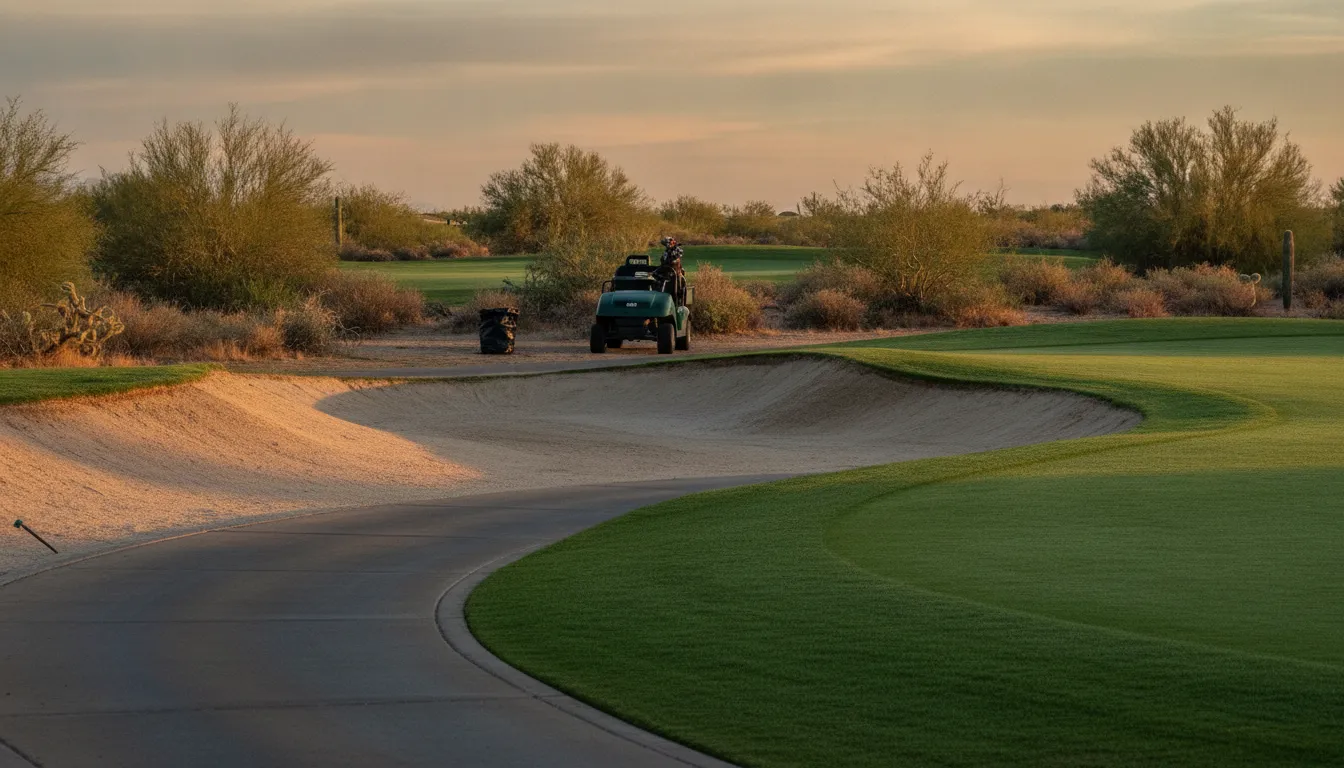
Start where players and dogs actually stop. On most desert courses, that is the cart path, not the center of the fairway. Dogs ride in carts, hop out at the tee, and relieve themselves in the rough or on decomposed granite beside the path. A route that only walks greens will miss the mess members notice first. The starter hears about the path long before anyone mentions a back-nine green.
Walk the course once with the superintendent before the first paid visit. Mark three kinds of spots.
- High-repeat spots. The first tee, the clubhouse lawn, holes that allow dogs, and any shade tree where carts stack up.
- Water-risk spots. Edges of lakes, drains, and washes. Waste here can move when the course irrigates or when a storm hits.
- Guest-facing spots. Bag drop, patio, range entrance, and the path from visitor parking. These shape the first impression more than a back-nine rough.
Desert landscaping needs a rule too. Gravel beds and native plants hide waste, and a scoop can damage drip lines. Agree on whether the crew stays on turf and path only, or steps into marked beds. Write the rule down. A new starter should not have to guess.
Tournament weeks change the map. Hospitality tents, extra parking, and a pro-am pairing party pull dogs into places that are empty on a Tuesday. Add those zones for that week only. Take them off when the tent comes down. A standing Monday route should not pretend the course looks the same during a member-guest.
If the club also runs a public park hole or a trail easement, keep that ground in its own note. Public park contracts, including Clark County park work, are a different job from a private course proposal. Link the park question to the Clark County park contract guide instead of folding it into the golf scope.
How to Schedule Around Tee Times
Timing is the part home routes never face. A course sells the morning. A cleanup crew cannot cross a fairway while a group is teeing off. The proposal should name a window, not a hope that the crew will work around play. A named window protects both the round and the crew from a last-minute conflict.
Most clubs do well with one of three windows:
- Before the first tee time. Best for cart paths, the first three holes, and the clubhouse lawn. The crew is off the course when players arrive.
- Midday gap. Useful in summer, when morning groups finish and afternoon shotgun starts are later. Confirm the gap with the starter, not from last month's sheet.
- After the last group. Works for a dog-friendly nine that stays busy all day. It does not help a dawn tournament.
Heat changes the choice. Summer rounds start early. A 7 a.m. crew can be in the way. Winter golf spreads through the day, so a late-morning visit may fit. Ask the shop for the real first and last times that week. Las Vegas tee sheets move with the season.
Access is part of the schedule. The crew needs a gate code or a staff escort. They also need a cart or a walking route that does not cross live holes. Give them a place to stage bags away from members. If the only path is a cart road that doubles as a player path, the window must be empty. Do not assume a maintenance gate stays open. Name the entrance in the proposal.
Frequency follows dog traffic, not a default weekly house plan. A private club that allows dogs on two holes may need two visits a week in peak season and one in summer. A resort course with a dog-friendly stay package may need a dawn visit every day dogs are on property. A course that bans dogs except for a member event needs a one-time cleanup after that event, plus a clubhouse check if the shop dog uses the lawn. A1 offers one-time cleanups and recurring commercial visits. Both are quoted, not pulled from the home price chart.
Build a simple week so the starter and the crew share it:
- Confirm the week's first tee time and any shotgun or tournament hold.
- Walk only the zones in the scope during the open window.
- Bag and remove waste the same visit. Do not leave bags at the turn.
- Note new repeat spots for the superintendent. Adjust the map, not the whole contract, when a hole rule changes.
- Skip a visit only when the course closes the window. Reschedule inside the same week when weather or a frost delay blocks the path.
Rain on a desert course is rare and sudden. Waste on a path becomes a smear, and irrigation can move it toward a lake. If a visit is delayed, put water-risk spots first on the makeup day. The EPA fact sheet is clear that pet waste left on the ground is a pollutant once water moves it. A makeup visit is part of course care, not a favor.
What a Superintendent Should Send Before the Proposal
A1 prices commercial work from the property, not from a posted golf rate. A short brief gets a faster, fairer proposal. Send the items below before the first call so the walk has a purpose.
Send the course name, the Las Vegas or Henderson address, and the main contact. Say whether dogs are allowed on the course, only on certain holes, or only at the clubhouse. Include a map or hole list of paths, practice areas, and the clubhouse lawn.
Add the usual first tee time by season, and any day the course is closed. Note gate, cart, and escort rules, plus where a crew may stage. List tournament or outing dates in the next quarter.
Flag artificial turf at a range, a relief area, or a patio if the course has it. Name who approves the proposal. That person may be the superintendent, the general manager, or the club board.
Do not send a dog count as if the course were a house. Guest dogs change daily. Describe the policy and the zones. If the club wants a one-time reset after a busy member-guest, say so. If it wants a standing dawn route, say how many mornings. Those are different proposals.
Insurance and access questions belong in that note too. Ask what the club requires before a vendor walks the grounds. A1's commercial work is set up as a proposal for each property. The guide to choosing a Las Vegas commercial pet waste company covers vendor questions for property managers. Use it as a checklist. Keep the golf scope on this page.
Skip claims the course cannot verify. Do not promise a license number, a discount, or a "first visit" fee in the article or the brief. Home pages sometimes mention a 25 percent first month or a start charge for a backed-up yard. Those offers are not a golf-course price. The proposal is the only number that counts.
Call A1 at (702) 521-2624 to review course access, cart-path rules, and tee-time windows before the first visit.
How This Differs From Office Parks and Home Routes
| Property | Schedule | Price path |
|---|---|---|
| Golf course. | Tee times. | Custom proposal. |
| Office park. | Weekday doors. | Campus plan. |
| Public park. | Open lawn. | Park contract. |
| Home yard. | Dog count. | Posted rates. |
Office campuses and golf courses both have shared lawns. They do not share a schedule. An office park plan is about employee dogs, visitor spots, and weekday doorways. A golf plan is about tee sheets, cart paths, and playing surfaces. Read the office park pet waste guide if the property is a business campus. Do not use it to set a course route.
Public parks are closer, and still different. A park contract often covers open lawn, stations, and a posted pickup rule for the public. A private or daily-fee course controls who brings a dog and when a crew may enter. The dog park waste removal guide helps if the club also maintains a park. It is not the golf proposal.
Home service is the wrong comparison for budget talk. Weekly house rates start from a dog count and a yard. A course proposal uses area, access, and frequency. Quoting a home rate to a superintendent underprices the walk and confuses the board. Point price questions to the proposal. Point home price questions to the signup page, not to this plan.
Turf is the other split. Many Las Vegas courses keep natural grass on greens and tees. Some practice areas use synthetic turf. Pet urine on that surface needs a cleaning visit, not only a scoop. Book turf cleaning when odor stays after waste is gone. Keep installation talk with a turf builder. A1 maintains pet turf after it is already in place. The artificial grass cleaning page is the right next step for that surface.
Odor at the clubhouse is usually a station, a patio edge, or a relief patch, not a fairway. If the complaint is smell by the bag drop, look there first. A commercial odor-control note can help a manager separate station smell from course waste. Fix the source. Do not add a second full-course visit for a single patio.
What to Agree on Before the First Visit
A clear proposal keeps the starter, the crew, and the board on one page. Confirm the points below in writing before the first morning.
Confirm zones in and zones out, including water edges and desert beds. Set the days, the windows, and who calls if the tee sheet changes. State the cart or walking rule, and the entrance the crew will use.
Say where bags leave the property the same day. Explain how tournament weeks add or pause zones. Keep a separate line if turf cleaning is included. Record the price as a custom proposal, with no home-rate substitute.
A1 has served Southern Nevada courses of a different kind for years: parks, communities, and events. The golf job uses that commercial habit and a tighter clock. The crew works the open window, stays on the agreed ground, and hauls waste away. Members see a clean path. The superintendent sees a scope the board can approve.
If dog rules change mid-season, update the map before you update the invoice. A new dog-friendly hole adds ground. A summer ban on course dogs may leave only the clubhouse lawn. Either change is a normal edit to a custom plan. It is not a reason to switch the club onto a residential signup.
Frequently Asked Questions
Does A1 publish a price for pet waste removal on Las Vegas golf courses?
No. Golf-course work is a custom proposal. Home weekly rates and one-time yard ranges are for houses, not for a course. Share the zones, the tee-time window, and how often dogs are on the property. A1 will price that scope. The number belongs on the proposal, not on a residential chart meant for houses.
Can the crew work during live play?
The plan should avoid live holes. Set the visit before the first tee time, in a real midday gap, or after the last group. If a shotgun or tournament closes that window, move the visit. Do not send a crew across a fairway during play.
What if the course only allows dogs at the clubhouse?
Then the scope is the clubhouse lawn, bag drop, patio, and parking path. It is still a commercial proposal. It is smaller than a full cart-path route. Say that clearly so the quote matches the ground the crew will actually walk each visit.
Does a golf-course visit include artificial turf cleaning?
Scooping waste is the course visit. Enzyme cleaning and deodorizing for synthetic turf are a separate service. A1 does that cleaning. A1 does not install artificial grass. Ask for turf cleaning only where the course already has that surface.
How is this different from a park or office park cleanup?
Parks and office parks have their own guides and their own schedules. A golf course adds tee times, cart paths, and playing surfaces. Use those other pages for their properties. Keep this plan for the course so the scope stays on play, not on a campus lawn or a public park.