Pooper Scooper Clark County Park Contracts
A pooper scooper Clark County park contract covers named public grounds, not your backyard. Compare that scope with a home route and request a proposal.
A pooper scooper Clark County park contract is a written scope for public grounds, not a substitute for the separate route that cleans one private yard. Parks staff, facility managers, and homeowners often use the same words for two different jobs, even though the jobs are not interchangeable. One job covers a named park, trail edge, or county facility. The other covers a fenced yard on a weekly home route. Mixing them up leads to a proposal that misses the ground people actually use, so the visit solves the wrong problem.
Ask A1 Pet Waste Maintenance for a Clark County proposal
A1 Pet Waste Maintenance has served the Las Vegas market since 1998, including City of Las Vegas work from that year. It also works with Clark County and the City of Henderson, without assigning those relationships the same start year. That work also includes HOAs and property managers.
The history is useful context. It does not mean every park, neighborhood, and backyard shares one visit, because each site still needs its own scope. If you need city-by-city home coverage, start with the pooper scooper service guide for Clark County. This page stays on the contract question: what a park or facility agreement includes, and what still belongs on a home route.
What a Pooper Scooper Clark County Park Contract Covers
A park contract names the public place, the surfaces, and the visit rhythm. It is written for the agency or manager who controls that ground. A home route is written for one address and the dogs that live there. The paperwork, access, and proof of work differ even when the same crew bags the waste, so treat them as separate agreements.
Clark County Parks and Recreation posts its general park rules from the Sunset Administrative Offices at 2601 E. Sunset Road in Las Vegas. The current rules allow dogs and cats when a handler keeps them on a leash no longer than six feet. Other animals need permission from the Director of Parks and Recreation or a designee. No animals except trained service animals are allowed in buildings.
Those rules say who may bring a dog into a county park. They do not hire a cleanup vendor or list a price, and a leash rule is not a service contract.
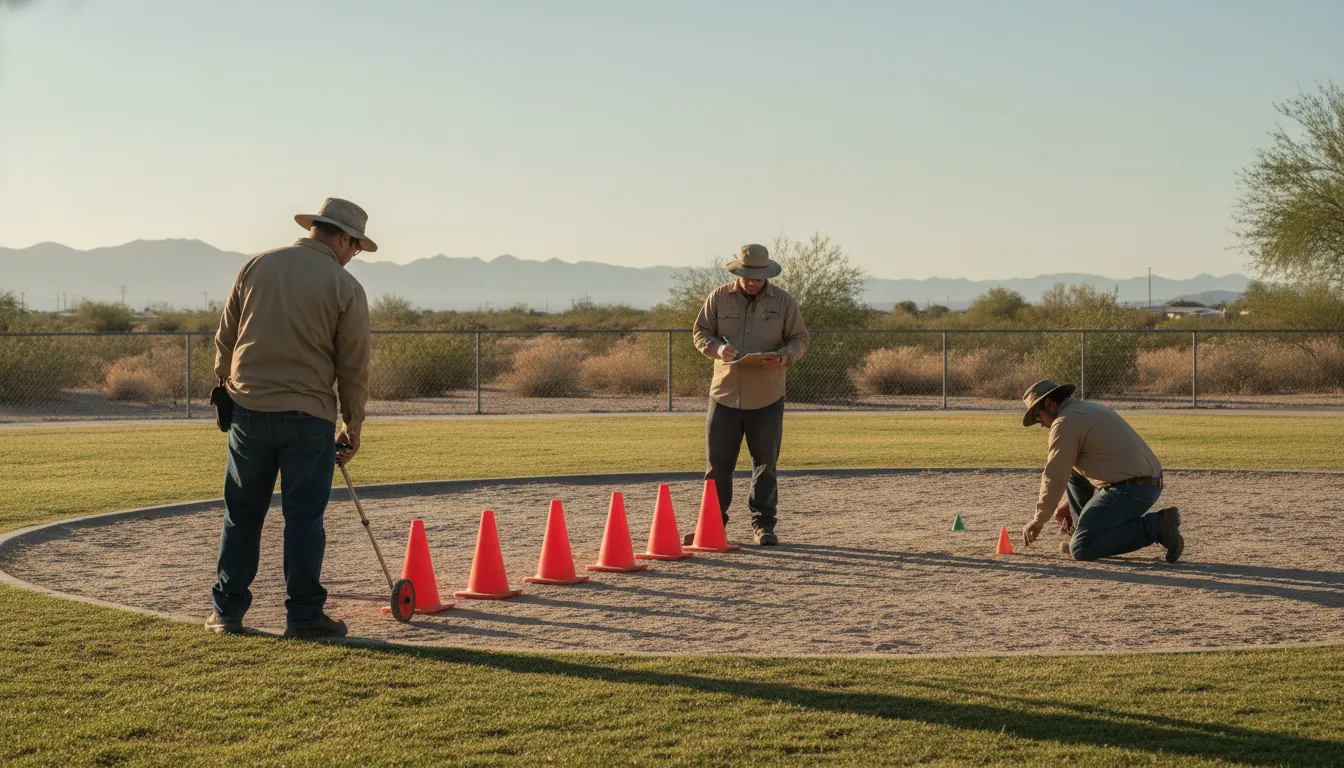 A useful pooper scooper Clark County park contract should spell out five things before anyone talks about a monthly home rate:
- Named sites. List each park, trail segment, facility edge, or event lawn. "Countywide" is not a map.
- Surfaces. Grass, decomposed granite, turf, and parking-lot edges do not clean the same way.
- Visit days and windows. Public parks stay busy early and after work. Say which days the crew comes.
- Access and gates. Note locked yards, maintenance roads, and who meets the crew.
- Proof. Ask what the agency will receive after a visit, such as a simple completion note.
The CDC's dog health guidance says dog poop can carry germs that make people and animals sick. It also says cleaning up after dogs, including in your own yard and especially where children play, reduces that risk. A contract should put that standard on a schedule rather than leaving it to whoever happens to walk by with a bag.
Clark County Water Quality makes a local version of the same point. Its scoop-pet-poop flyer says waste left on sidewalks, trails, or near streets can wash into storm drains. Those drains flow to the Las Vegas Wash and Lake Mead without treatment. The flyer tells people to bag waste and put it in the trash, or flush it. A vendor contract does not replace that public message, because it covers only the ground the agency assigns on the days the scope names.
How a Pooper Scooper Clark County Home Route Differs
A home pooper scooper route is a private-yard visit. The crew needs a gate, a dog count, and a place to leave bagged waste for city sanitation pickup. A1 Pet Waste Maintenance publishes home rates for that job on its site.
One visit a week is $65 a month for one dog, $75 for two, $85 for three, and $95 for four. Two visits a week are $110, $130, $150, and $175 for those same dog counts. Five or more dogs are priced one property at a time. Those published home rates are the schedule to use. Do not add a signup discount unless the current signup page states one for that address.
 Those figures are for homes and are not a bid for a park, because publishing a home chart does not set a facility price. A one-time yard cleanup is also separate. A1 Pet Waste Maintenance lists one-time cleanups at $50 to $150, based on the yard and how much waste has piled up. A neglected park lawn or a special-event field needs its own proposal, so do not assume the one-time yard range covers a park field.
Use this split when you are deciding which request to send:
Park contract versus home route
Who signs?
Park or facility contract: The agency or facility contact signs.
Home route: The household signs for one address.
What ground is included?
Park or facility contract: Named public areas are included.
Home route: The private yard is included.
What sets the price?
Park or facility contract: The site list and visit frequency set it.
Home route: Dog count and weekly visits set it.
What does the customer see?
Park or facility contract: The customer sees a proposal and visit proof.
Home route: The customer sees a monthly home bill.
What is excluded?
Park or facility contract: A private backyard is excluded.
Home route: The public park is excluded.
If the mess is in your yard, the home route is the right tool, and you should send the dog count plus the gate notes. If the mess is on ground the public uses, you need a scope, not a dog-count signup. The one-time cleanup page is the place to start for a single yard reset. It is not a park bid form. Park work starts from a site list.
What to Put in the Park Scope
People writing a first park scope often copy a home signup, and that copy misses the public ground. That form asks for dog names and a gate code, whereas a park scope needs a site list instead. Walk the ground, or ask the person who walks it, and write down where waste actually collects.
Typical trouble spots are trail entries, shade ramadas, turf edges, and the strip between a parking lot and a sidewalk. A dog park inside a larger park should be its own line. A sports field that allows dogs only on event days should be its own line too, because event days are not the weekly pattern. If a line is missing, the crew can do a careful job and still miss the complaint, and the missing line is the usual cause.
Write the scope in this order:
- Name every site and the edges that are in bounds.
- Mark surfaces that need more than a bag, such as artificial turf.
- Set the visit days and the earliest and latest arrival.
- Say where bagged waste goes and who hauls it.
- State what proof comes back after each visit.
- Say what is excluded, including private yards and other cities' parks.
Artificial turf needs a separate note. Bagging solids does not pull urine odor out of infill. A1 Pet Waste Maintenance cleans and deodorizes pet turf in the Las Vegas area, and that work is quoted on its own. The artificial grass cleaning page explains the turf visit, including an optional infill recommendation. Do not fold turf cleaning into a bag-and-haul line, and do not treat an infill refresh as a guaranteed step, because the odor result will not match.
Waste handling should be plain. On home routes, A1 Pet Waste Maintenance bags waste, hauls it off the property, and leaves it for city sanitation collection. A park agreement should say whether the crew uses on-site containers or removes bags from the site. Clark County's water flyer asks residents not to dump waste in the street or a storm drain. The scope should match that disposal rule, since storm drains are not a disposal option.
Visit proof can stay short. A completion note with the date, the site name, and anything that blocked access is enough for most facility contacts. Photos help when a gate was locked or a new pile showed up outside the mapped edge. Skip vague notes that only say the park looked fine, and name the edges the crew walked. The next complaint will ask where the crew walked.
Seasonal use changes the scope even when the park name stays the same. Summer evenings pack shade structures. Winter weekends move people onto sunny turf. A scope written in January can miss the June pile under the ramada. Ask the site contact which month draws the most dogs, and set the first 30 days of visits against that pattern. You can tighten the schedule after you see the real load, using the first month as the measurement period.
Shared edges cause the most disputes. A county trail may stop at a city sidewalk. A park lawn may back onto HOA turf. Write the boundary in feet or landmarks, not in "around the park." If both sides need service, they need two requests. One contract should not silently cross a property line, because continuous waste is not continuous ownership.
Access rules belong in the same document as the site list. A public site may require its own certificate wording, a party named on that certificate, or a check-in at a maintenance yard. Ask the agency which of those items it needs before the first visit so you do not discover a locked gate on day one. Do not assume a general business credential satisfies that site's paperwork.
Special events need their own line even when the park is already on a weekly route. A dog walk, a club trial, or a weekend tournament can drop a day's worth of waste in one morning. The weekly visit will not be on site that morning. Add a start time, an end time, and the lawn or parking edge the event will use. A1 Pet Waste Maintenance already supports event waste work for community groups. That support is still a scoped visit, not an open promise to cover every gathering in the county.
Where This Differs From City Park Service
Las Vegas, Henderson, and Clark County are separate public clients in A1 Pet Waste Maintenance's history. A city park program and a county facility scope are not interchangeable. The live guide to municipal pet waste removal in Las Vegas is about City of Las Vegas parks. Use the city guide when the ground is a city park, and use a county scope when the ground is a Clark County park or facility, because the jurisdiction has to match the dirt.
That boundary matters for the person requesting service. A homeowner who wants the pocket park on a county road should not be sent a home dog-count form. A parks contact who wants a neighborhood yard program should not be handed a city park proposal, because yard programs use the home or HOA path. Commercial properties sit in a third bucket, because they are neither county parks nor single backyards. HOAs, apartments, and event lawns are scoped as properties, not as county parks. The commercial property page lists the kinds of communities and events already on recurring service, including work with Clark County.
None of those pages is a promise that every county park is under contract today. Public vendor history is real. Current site lists change, so ask which sites are on the active scope. The honest next step is a proposal for the sites you can name, and unnamed parks stay off the route. If you only need a home visit inside the valley, use the county service guide and the signup form instead of this contract path.
How to Request the Right Visit
Send a park or facility request when you control the site or you are asking on behalf of the agency that does. Include the site names, surfaces, gate or check-in notes, and how often waste becomes a complaint. A1 Pet Waste Maintenance will price that scope. Do not expect the published home chart to be the answer, because facility pricing follows the scope.
Send a home request when the waste is in a private yard. Give the address, the number of dogs, and whether you want one visit a week or two. The published monthly rates above are the home schedule. Five or more dogs, heavy buildup, and turf odor are quoted from the property, and the chart does not cover those cases.
Call A1 Pet Waste Maintenance at (702) 521-2624 or use the contact form. Say whether you need a park contract or a home route in the first sentence so the reply matches the ground. If you are comparing a commercial property bid with a public site, the commercial pooper scooper guide walks through property scope. Keep this page for the county park question, and send property bids to the commercial guide.
Request a site-specific proposal from A1 Pet Waste Maintenance
A clear request saves a week of mismatched quotes, while vague requests produce the wrong form. Name the ground, name who signs, and keep the home chart out of the park file.
Bring a simple site note if you can. One page is enough: the park or facility name, the edges that are in bounds, the surfaces, and the days waste draws complaints. Add gate codes or a check-in name only if the crew cannot enter from the public side. Leave out dog names and breed lists. Those fields belong on the home signup, and they confuse a park file.
If you are a homeowner worried about a nearby park, you can still call. Say what you see and where. A1 Pet Waste Maintenance can tell you whether that ground is something a facility contact must request. You will not be signed onto a park contract through a backyard form, because public ground needs the facility contact. If your own yard is also overdue, ask for the home route in the same call and keep the two jobs separate on the invoice.
Facility contacts should expect a written scope back, not a one-line dog-count price. Review the site list before you accept it. Add any edge the crew would not see from the parking lot. Remove any private yard that slipped in because it shares a fence with the park. That edit is the whole point of a pooper scooper Clark County park contract, because public ground stays public and the home route stays at the house.
Frequently Asked Questions
Does a Clark County park contract clean my backyard?
No. A park or facility contract covers the sites named in the scope. Your backyard needs its own home route, priced by dog count and visits per week.
Are the $65 monthly rates for county parks?
No. Those rates are the published home schedule for one to four dogs. A park, trail edge, or county facility is quoted from the site list and visit plan.
Does A1 already service every Clark County park?
A1 Pet Waste Maintenance works with Clark County as a public client. The 1998 date in its records is tied to the Las Vegas market and City of Las Vegas work, not to a start year for every county park. That history is not a list of every park on this week's route. Ask for a proposal for the sites you need cleaned.
Who should sign the request?
The agency or facility contact should request public ground. The household should request a private yard. A neighbor can report a problem, but the contract follows the party that controls the site.
What if the park has artificial turf?
Bagging waste and cleaning turf are different visits. Put turf deodorizing on its own line so urine odor is not left in the infill after the solids are gone. An infill refresh, when the turf page offers one, is optional.