What Should Property Owners Know About Animal Waste Cleanup?
Plan animal waste cleanup for a home or shared property. Compare one-time and weekly service, then call A1 to set the right scope.
Animal waste cleanup is easier to manage when the plan matches the property, the number of animals, and how often people use the space. For a homeowner or a shared-property contact, the first choice is a one-time reset or a repeating visit.
Call 702-521-2624 to plan a cleanup
What does animal waste cleanup include?
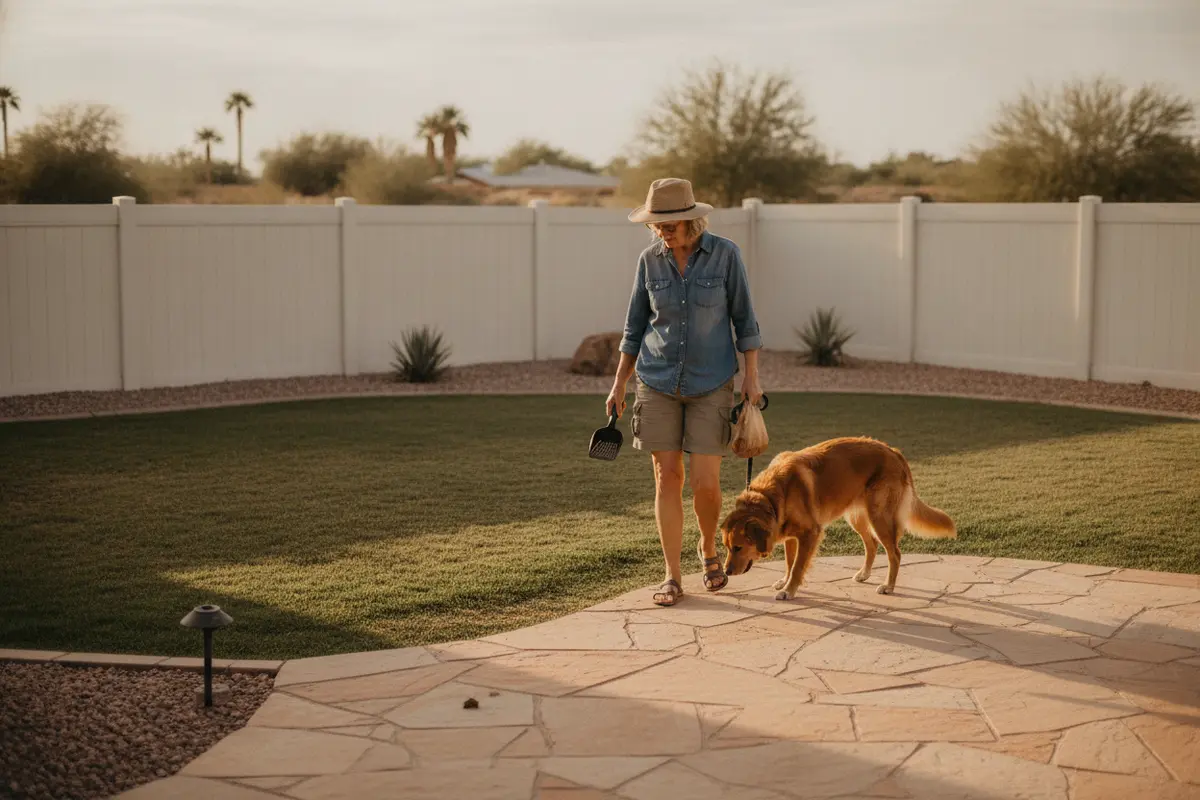
On a normal property, animal waste cleanup means finding and removing pet waste from the places people and animals use. At a home, that can be the lawn, a side yard, patio edges, and the path from the door to the usual relief spot. At an apartment community or HOA, the work may cover shared lawns, pet areas, walkways, and the route between them.
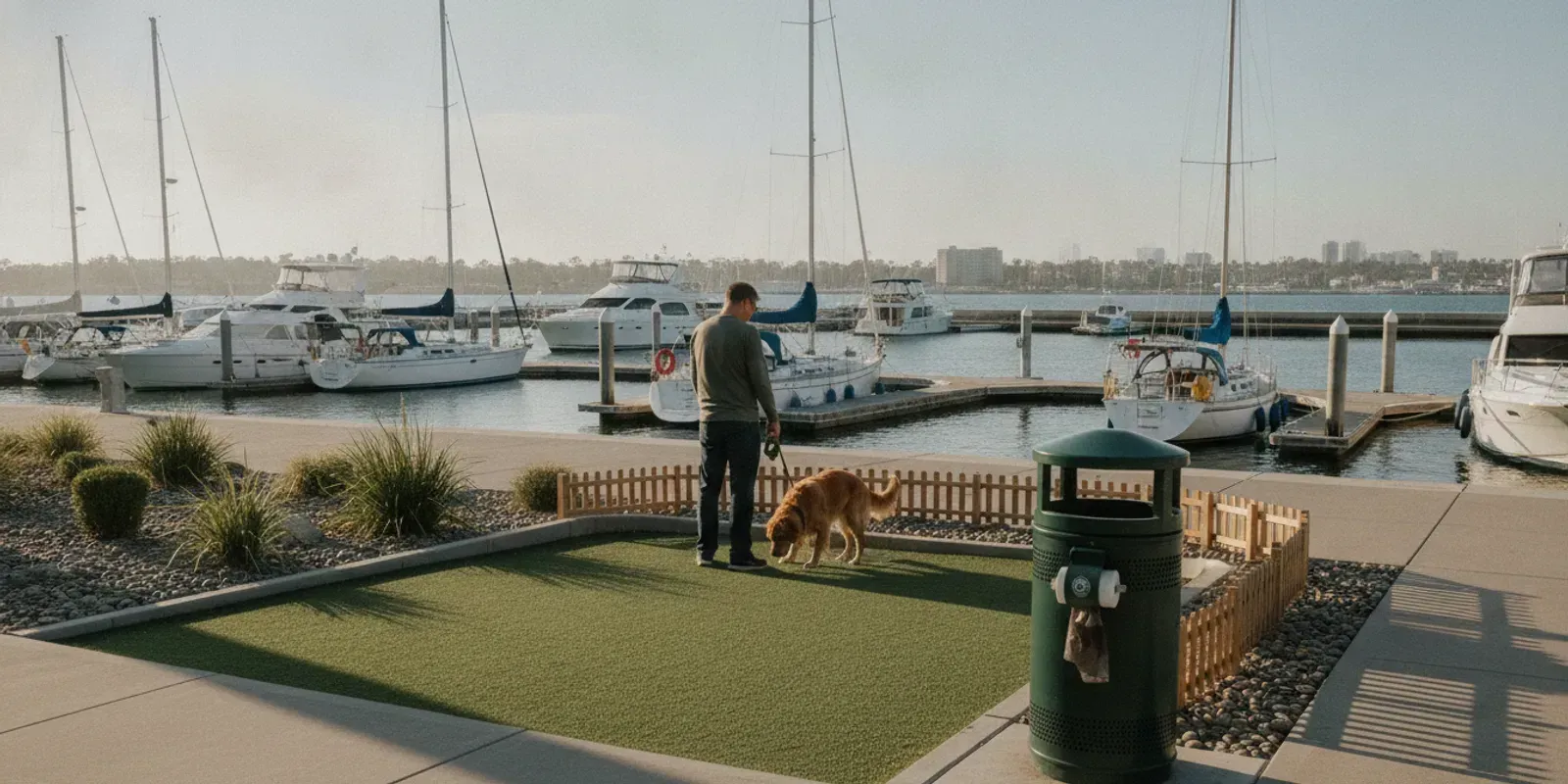
Start by naming the area instead of treating the whole property as one space. Mark where pets go, note the busy paths, and flag corners or landscaping that are easy to miss. On a shared property, ask which spaces are included and whether a pet relief area or waste station is already there.
 Cleanup is not the same as broader yard care. It does not automatically include mowing, landscaping, pressure washing, or picking up non-pet debris. If the area has artificial grass, say so when you arrange service. Cleaning synthetic turf can be a separate job. A1 offers
artificial grass cleaning and maintenance for that surface, and that work is priced by quote rather than the home pickup chart.
How should you assess the cleanup before choosing a plan?
A short walk makes the scope and the schedule easier to choose. Note these points before you call:
- Area: Estimate which parts of the yard or grounds need attention. Separate private yards from shared spaces.
- Use: Identify where pets spend time and how many animals use the area.
- Condition: Decide whether the waste is recent or has piled up over time.
- Access: Note gates, locks, codes, obstacles, and any area that should stay off limits.
- Surface: Point out lawn, gravel, hardscape, or artificial turf so the expectations are clear.
- Timing: Consider when residents, visitors, or pets are most likely to use the space.
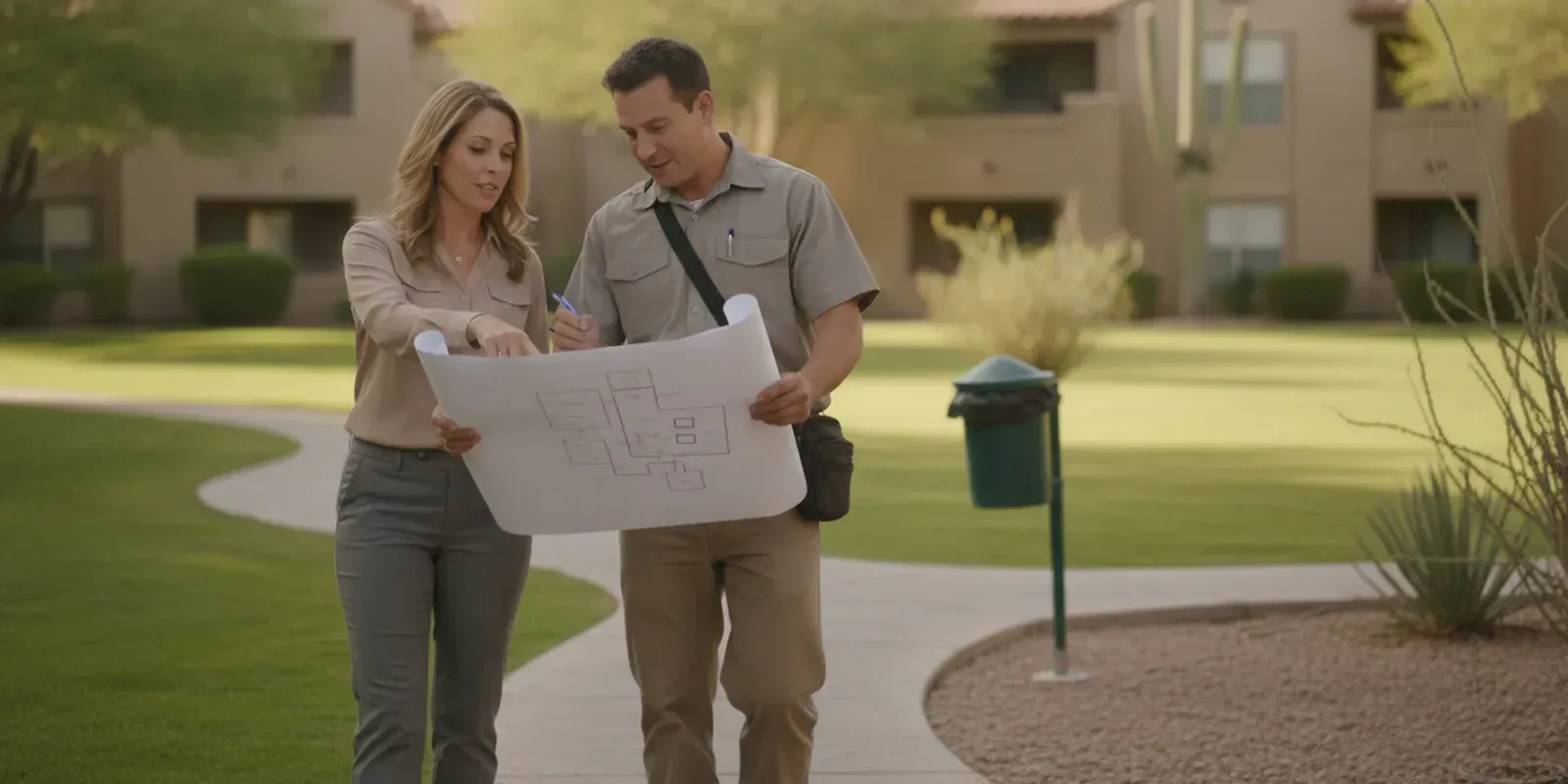
Those details separate a routine visit from a one-time cleanup. They also keep the owner and the provider from assuming different boundaries. For a larger property, a marked site plan or a short list of included areas is enough.
How do the cleanup options compare?
Match the option to the job in front of you. A published home rate is not a quote for a shared property, a station route, or turf cleaning. Confirm the current plan before you book.
The home rates above are the monthly chart on A1's site for one visit a week or two visits a week. They are not a price for commercial grounds, dog waste stations, or artificial-grass cleaning. If you want a home plan, request service and confirm the current rate before you book.
When is a one-time cleanup the better fit?
A one-time visit fits when waste has built up and you want the yard usable before you maintain it yourself or start regular service. It can also fit before a gathering, a move-in, a seasonal reset, or a change in who handles yard care. Describe the current condition honestly. A yard with months of buildup is a different visit from a space that already gets routine attention.
Before you schedule, say how long the area has gone without cleanup, how many pets use it, and which sections are affected. Say whether the waste is spread across a large yard or piled in one spot. Ask what the visit includes, what it leaves out, and whether the property must stay open for the full service window.
A1 lists one-time pet waste cleanups at $50 to $150. If you may want ongoing help afterward, ask how a reset visit turns into a recurring schedule. A one-time cleanup handles what is there now. It does not stop new waste from collecting.
When does recurring cleanup make more sense?
Recurring service fits when pets use the yard every day, when the household cannot keep a pickup routine, or when several residents share outdoor grounds. A set visit frequency keeps the area from turning into a catch-up project. The right interval depends on how many animals use the space, the size and layout, and how much work the owner wants to do between visits.
For a home, decide whether one visit a week or two visits a week fits, then confirm which areas are included. A1's recurring pet waste removal is offered on those two schedules. Arrangements are described as flexible and without a required contract, but details vary by property, so confirm the plan before you start. The service and billing FAQs cover common billing questions.
For a shared property, recurring cleanup often covers common areas rather than individual yards. Name the route, the frequency, the access plan, and how residents report a missed spot. A1 outlines commercial property pet waste cleanup for that kind of site. The scope should be discussed for the specific property, and there is no published shared-grounds rate to copy from the home chart.
How do you choose between a one-time visit and regular service?
Look at the job you need now and the work you want to manage later. A one-time visit addresses waste that is already there. Recurring service is meant to keep up with ongoing use. Neither choice is automatically best. The useful question is which one fits the condition of the space and the owner's routine.
Choose a one-time cleanup when the need is temporary
A reset can fit after travel, during a move, before guests arrive, or when a household is changing who handles yard care. It can also give an owner a clean start before they take over regular pickup. Before you confirm, describe how long waste may have sat there and whether every part of the yard can be reached. Ask how a change in scope would be handled.
Consider recurring service when the need repeats
If the same spaces need attention week after week, a schedule removes the need to remember every pickup. It can help a busy household, a home with several dogs, or a team that covers shared grounds. Ask how often visits can be set, what happens around a holiday or a locked gate, and whether the schedule can change as use changes. Confirm the terms instead of assuming every plan works the same way.
Keep doing it yourself when the routine is manageable
Some owners handle a small amount as part of normal yard care. If that works every week, a professional visit may not be needed. A one-time cleanup can still help when the routine slips or a larger reset is required. For a community, decide whether residents pick up after their pets, whether staff cover common areas, and who checks that the arrangement is working.
Whichever route you choose, set a simple review point. After a few visits, or a few weeks of doing it yourself, check whether the area stays manageable and whether the same spots keep getting missed. Change the plan from what you see, instead of locking a schedule once and never looking again.
How do home and shared-property plans differ?
The basic task is similar, but the planning is not. At a home, one owner can usually name the yard, the pets, and the preferred schedule. In a community, responsibility may be split among residents, management, maintenance staff, and a service provider. Clear boundaries keep the expectations practical.
For a private yard
- List the areas to be cleaned, including side yards and pet paths.
- Share the number of dogs and any change in normal yard use.
- Choose one visit a week or two, and decide whether you will pick up in between.
- Arrange gate access and keep pets secure during the visit.
For an HOA, apartment community, or other shared site
- Identify common areas, pet relief zones, and any space left out of service.
- Decide who approves the work, coordinates access, and takes service questions.
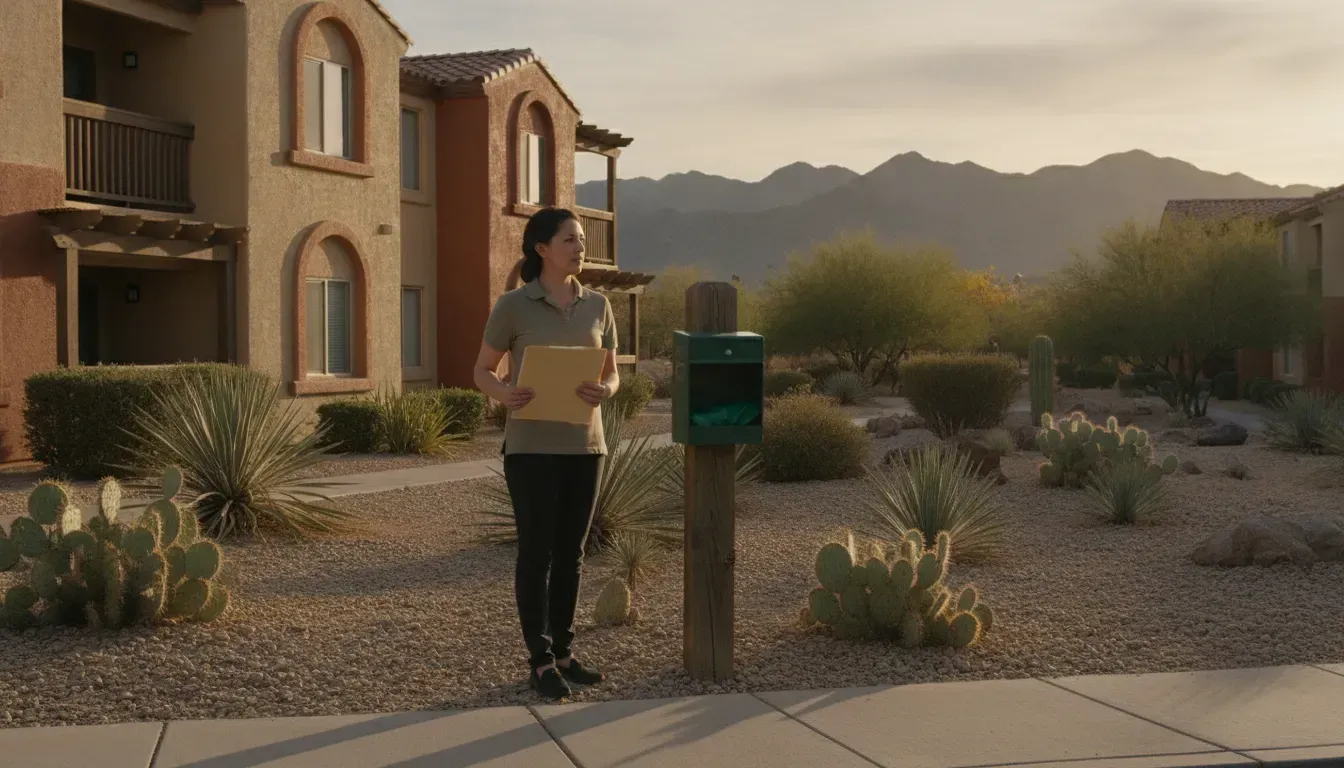
- Note whether waste stations are present and who handles bags and receptacles.
- Plan the route around resident access and the busiest outdoor times.
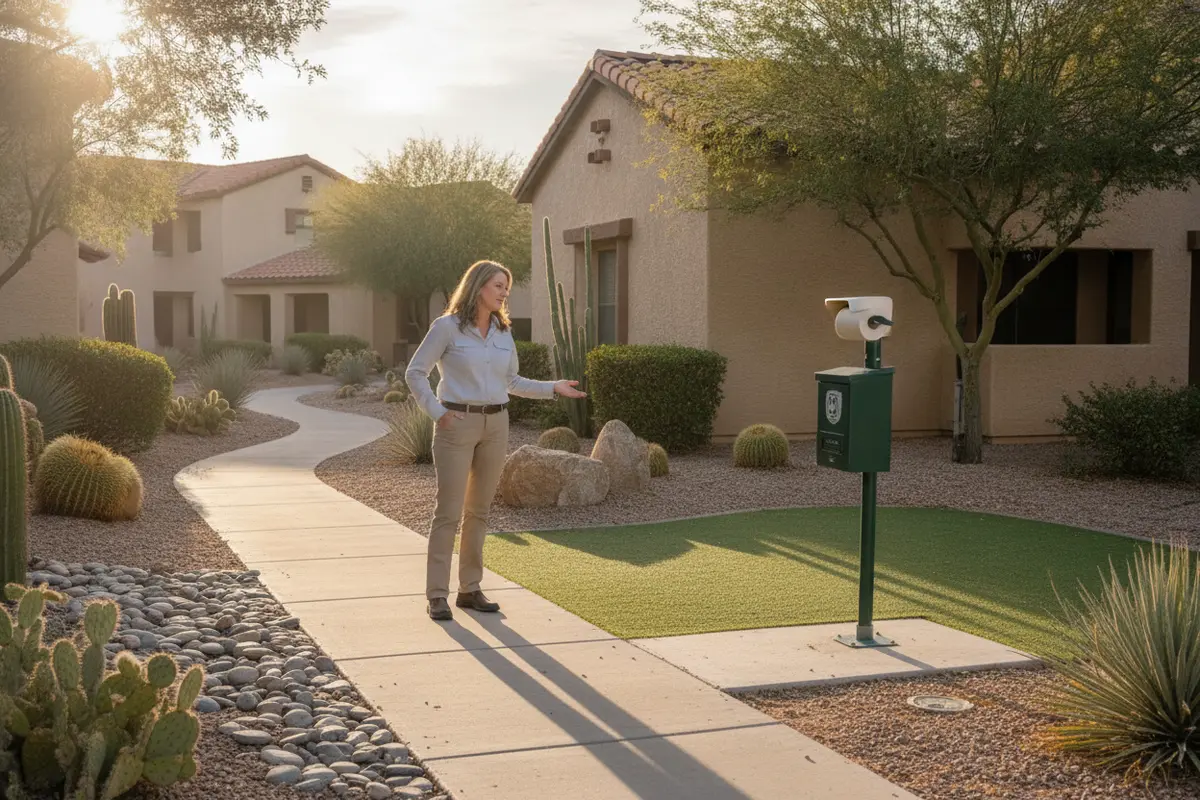
A community may also need a separate decision about pet waste stations. Station service and ground cleanup are related, but they are not the same task. A1 explains dog waste station service options that a property team can compare with the grounds plan.
 Who should own the routine on a shared property?
Shared grounds stay easier to maintain when one person communicates the plan. A property manager or a designated staff member can keep the area list current, check that access instructions work, and pass along a change such as a closed walkway. That person does not have to do every task. Residents, staff, and any provider still need one place to send questions and updates.
Before service starts, agree on which spaces count as common areas and who handles private patios or fenced yards. A route can be a simple list of lawns, paths, and pet relief zones, as long as it is specific enough to avoid guesswork. If a community has more than one entrance or several separate outdoor areas, describe each location and how the crew reaches it. Where stations are in use, record who supplies bags and who empties the receptacles. Do not assume those tasks are part of ground pickup.
Set a simple way to report a concern. Tell residents who to contact, what details to include, and how soon the team will look. Avoid passing the same note from person to person. One contact makes it easier to see a repeating trouble spot and decide whether the route or the schedule needs a change.
What should you do before and after a cleanup visit?
A little preparation prevents most delays. Before a visit, make the agreed area accessible. Unlock gates or share current access instructions, move items that block the route when you can, and keep pets inside or supervised as arranged. Tell the provider about any area that should not be entered.
On a shared property, tell residents or onsite staff which areas are included and when service is expected if that avoids conflicts. Keep the waste station or pet area usable for the crew. Mention a temporary closure or construction work before the scheduled visit.
Afterward, check the agreed areas and report a concern promptly through the normal contact process. If use changes, such as a new pet in the yard or a new gate code, update the service details. A consistent plan depends on current information, not only the original instructions.
What about animal waste from wildlife?
Pet waste cleanup and a wildlife situation are not always the same problem. Seeing a wild animal on a property is not, by itself, a reason to try to catch it. If you suspect a bite, see an injured animal, or see behavior that concerns you, keep people and pets away and call the local animal-control or wildlife authority. Use the authority for Southern Nevada or Tucson, not a rule written for another state.
Dog waste is the part of animal waste cleanup with clear everyday guidance. The Centers for Disease Control and Prevention says dog poop can carry germs that make people and animals sick, and that cleaning it up reduces that risk. The CDC also says to pick up dog poop even in your own yard, especially where children may play, and to wash hands after contact with it. That CDC guidance on dogs is a health reference, not a local service directory. If you are unsure how to handle waste that is not from a pet, ask the local authority before you treat it like a routine yard visit.
How can owners keep the yard manageable between visits?
Even with a regular provider, a few habits keep the next visit from turning into a larger reset. If you handle pickup between visits, pick a repeatable time, such as after a walk or before you close the yard for the evening. Do not wait until waste is easy to miss. Check edges, the space behind outdoor furniture, and the spots pets favor. Walking the same route each time makes a missed area easier to notice.
Keep supplies where you will actually use them, and follow the disposal rules for your home or community. If you are unsure about local rules, check with the city or with property management instead of assuming every place works the same way. Keep bags and containers closed, and use the designated receptacle. For artificial turf, follow care instructions for that surface and ask before using a cleaner that may not suit the material.
For a community, management can make pickup easier by keeping pet areas open, posting clear resident instructions, and checking that waste stations are stocked when that is the property's job. Those steps do not replace cleanup. They make the expectation clearer and support a cleaner shared space.
What information should you share when requesting help?
A short, accurate description helps a provider understand the job before a visit. Include:
- The property location, and whether it is a home or a shared site.
- The area to be cleaned and the surface, including any artificial turf.
- The number of pets, and whether the waste is routine or built up.
- The timing you want, and whether you need a one-time visit or a recurring plan.
- Gate, parking, access, and pet-safety instructions.
- Any property rule or coordination need, such as calling an onsite manager.
Do not leave out the condition of an area that has gone uncleaned for a while. Setting that expectation up front lets you compare plans on the same basis: which areas are covered, how often service happens, and which work is not included.
How can you keep the service scope clear?
Before you confirm a visit, repeat the plan in plain language. Name the areas, the type of visit, and the access instructions. For a home, point out any fenced section that is not part of the work. For a community, name the buildings, lawns, paths, and pet relief areas. Do not say "the whole property" if some parts are left out. A short written list is easier to update than a long verbal explanation.
Ask the questions that change the visit. Is this a one-time cleanup or the first visit on a recurring schedule? Does the crew need a gate code or an onsite contact? Should pets stay indoors? What should you do if construction, weather, or a locked gate blocks access? Confirm who to call if the property changes before the visit. These are planning questions, not assumptions about what any provider includes.
After service starts, use that same scope when you review the work. If a spot is missed often, show where it is and ask whether it is on the agreed route. If the route needs to change, tell the provider instead of relying on an informal expectation. Clear communication makes the plan useful for both the customer and the crew.
Call 702-521-2624 about your property
Frequently Asked Questions
How often should animal waste be cleaned up?
It depends on the number of pets, how often they use the area, and how much pickup you plan to do yourself. One visit a week or two visits a week may suit a home. A heavily used shared area may need a site-specific plan. Describe the property and ask which schedule is available.
Can a service handle a yard that has been neglected?
A one-time cleanup can suit accumulated waste, but the provider needs an accurate description of the condition and the area. A1 lists that visit at $50 to $150, based on yard size and buildup. Ask whether the visit matches the amount of work, and what happens if the site is larger than expected.
Is a pet waste station the same as ground cleanup?
No. A waste station has its own equipment and servicing needs. Ground cleanup focuses on waste in the areas pets use. A property may need one or both, so name the scope when you plan.
What if my yard has artificial grass?
Mention the turf when you request service. Synthetic grass can need a separate cleaning approach from ordinary waste pickup. Ask which service applies to your surface and what it includes. A1 prices artificial-grass cleaning by quote, not from the home monthly chart.
Plan cleanup around the property
A useful animal waste cleanup plan starts with clear boundaries, an honest look at current conditions, and a schedule that fits how the property is used. Decide whether you need a one-time reset, recurring home service, or a coordinated plan for shared grounds. Then share the details that set the right expectations, and call 702-521-2624 if you want A1 to look at the property.
| Option | Best fit | What to confirm | Published A1 starting point |
|---|---|---|---|
| One-time cleanup | Waste has built up, or you need a reset before a visit, a move, or a change in who handles the yard. | Yard size, how long it has gone without pickup, and whether every section can be reached. | One-time cleanups are listed at $50 to $150, based on yard size and buildup. |
| Weekly home pickup | Dogs use the yard every day and you want one visit a week. | Dog count, included areas, gate access, and whether you will pick up between visits. | One dog is $65 a month. Two dogs are $75, three are $85, and four are $95. Five or more are arranged individually. |
| Twice-weekly home pickup | Several dogs, a small yard, or a household that wants waste gone more often than once a week. | The same home details, plus whether the extra visit matches actual use. | One dog is $110 a month. Two dogs are $130, three are $150, and four are $175. Five or more are arranged individually. |
| Shared-grounds plan | An HOA, apartment community, or other site where the work is common area, not one backyard. | The route, access, a site contact, and which private patios are excluded. | No published shared-property rate. Ask for a site proposal. |