Dog Park Waste Removal Service Planning Guide
Plan a dog park waste removal service for public-space operators. Get guidance on stations, routes, inspections, odor control, communication, and vendors.

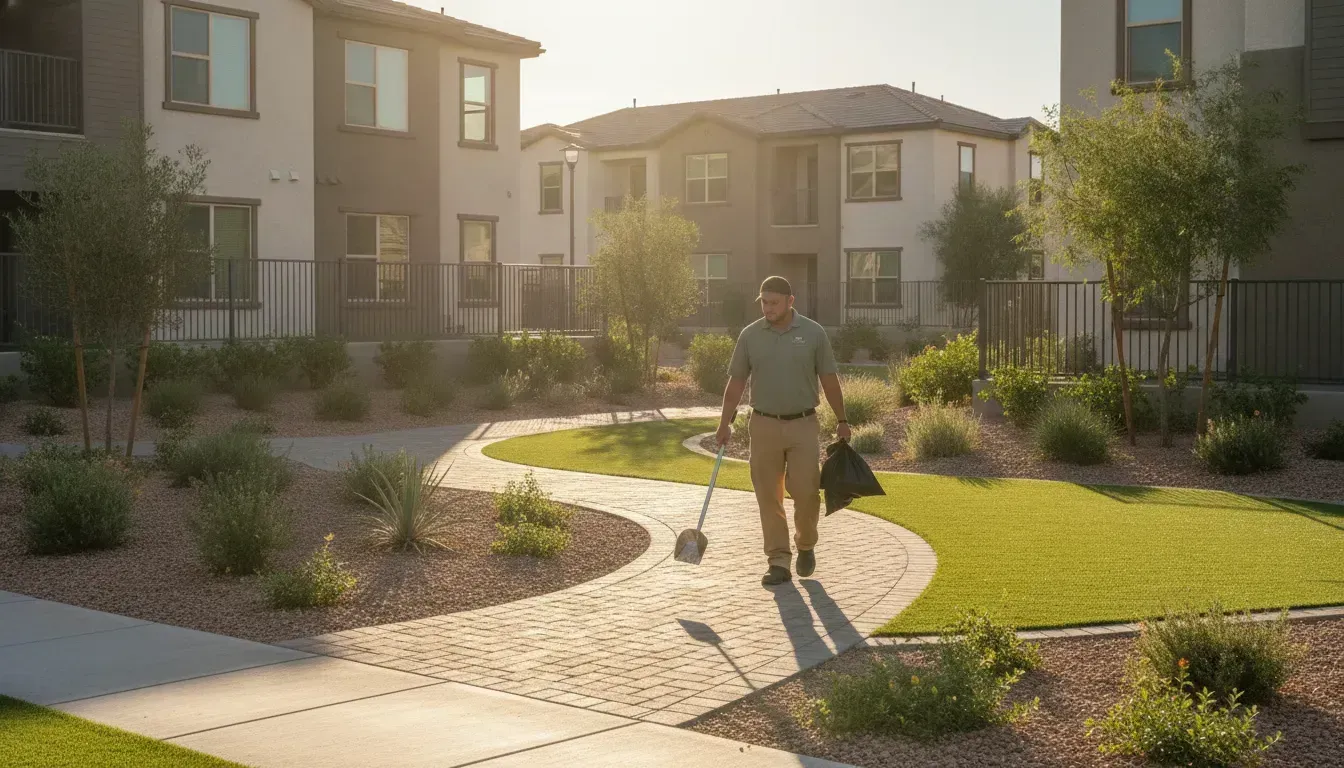
A complete dog park waste removal service combines scheduled waste collection and disposal with bag replenishment, station checks, surface cleanup, and practical reporting. The right frequency depends on park traffic, station capacity, weather, and the operator's priorities. A clear written scope keeps municipalities, HOAs, and park operators from relying on overflowing bins or last-minute complaints.
Call (702) 521-2624 to discuss your dog-park service plan today.
What Should a Dog Park Waste Removal Service Include?
A dog park waste removal service should define the full maintenance cycle, not only visible waste pickup. A useful scope names collection points, bag replenishment, receptacle checks, surrounding cleanup, disposal handling, inspection notes, and the person who receives follow-up items. That structure makes service measurable across one park or an entire route.
Scheduled collection and station maintenance
Each visit should include collection from dog-park receptacles, removal of bagged waste, and a quick check of the station itself. The technician should confirm that containers are secure, usable, and free of obvious damage or buildup. This prevents a full receptacle or neglected dispenser from becoming the weak point in an otherwise maintained public space.
Bag replenishment should be explicit in the contract. An empty dispenser can make cleanup harder, even when a receptacle is nearby. The scope should identify which dispensers are included, what type of bags are supplied, and how shortages, vandalism, or damaged hardware are reported. A provider that serves commercial properties and communities can help operators define these responsibilities before the first route begins.
Disposal, reporting, and site consistency
Complete removal and disposal should be a named deliverable, not an assumption. Operators should know who removes collected material, how sealed waste is handled, and whether cleanup around the receptacle is included. A service record can list the date, locations serviced, supplies added, equipment concerns, and conditions requiring follow-up.
A1 Pet Maintenance has operated since 1998 and services more than 400 properties weekly. That experience supports a practical program built around dependable visits, usable stations, complete removal, and straightforward communication with the people responsible for the property. A related guide to professional dog waste removal explains why defined service can reduce the burden on onsite teams.
How Does a Dog Park Waste Removal Service Plan Stations and Supplies?
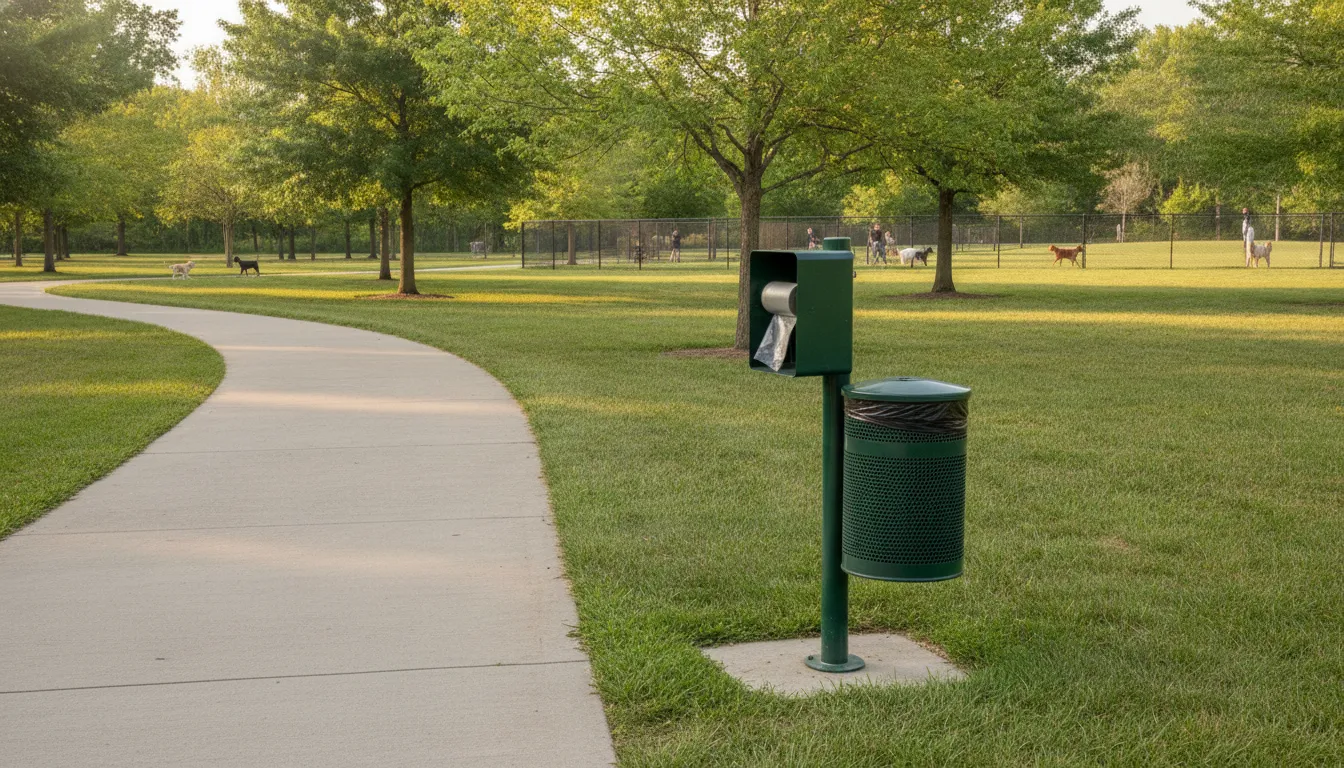
A dog park waste removal service should place visible bag dispensers and receptacles near the paths visitors use, then match capacity to actual traffic. A1 Pet Maintenance recommends treating stations as part of the service plan. Operators should review placement, supplies, hardware, and overflow history rather than choosing equipment from square footage alone.
Match equipment to the park's workload
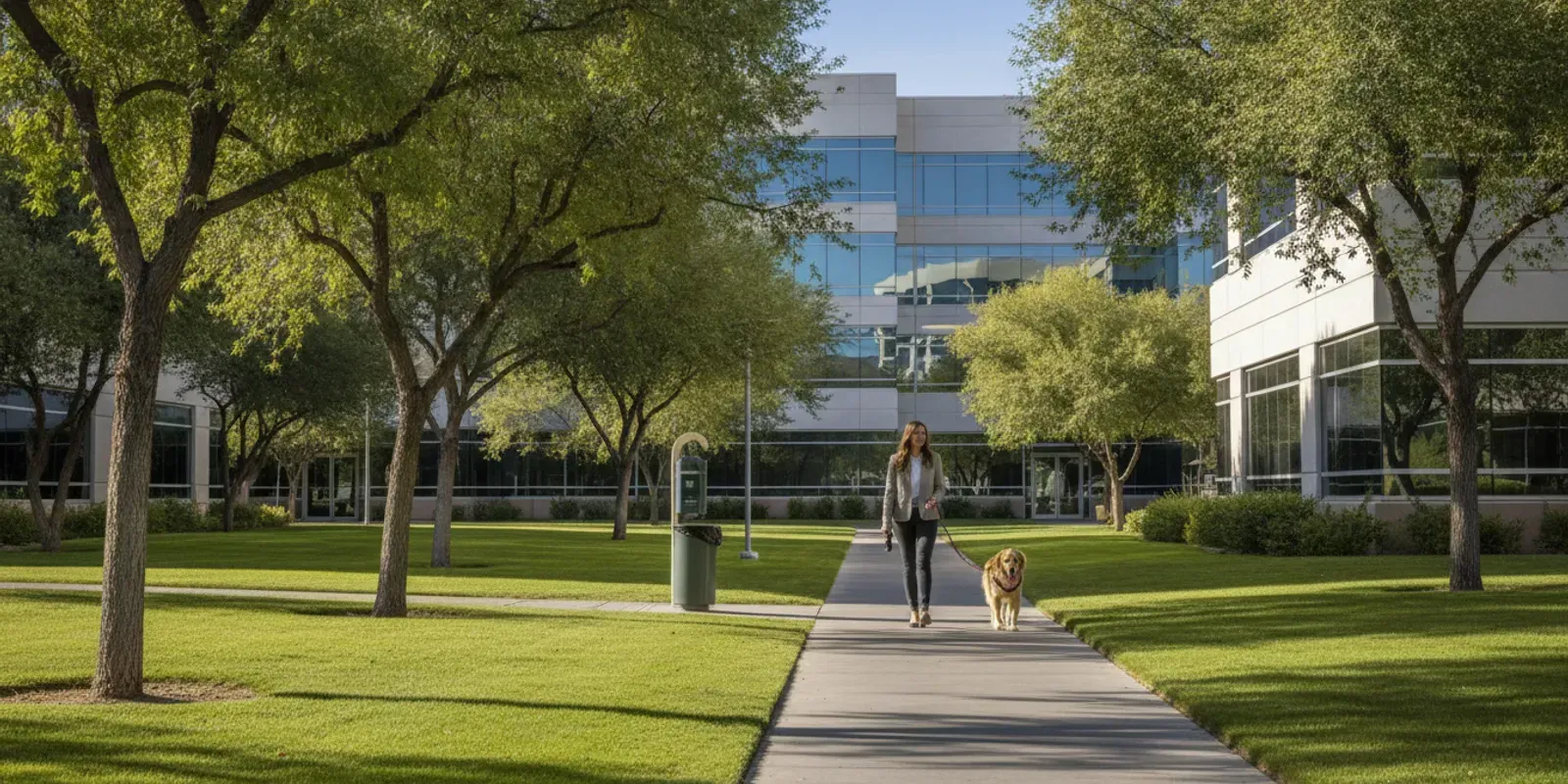
Review entrances, fenced areas, activity zones, and the number of dogs using the park. A small dog run may need one well-placed station, while a larger or divided park may need several. Keep each dispenser close enough to a receptacle that visitors do not have to carry a used bag across the park.
Choose receptacles with enough capacity for the expected workload and planned service interval. Durable bags, secure lids, and mounting hardware help reduce leaks and loose waste. Operators should also decide how damaged equipment will be tagged, who authorizes repairs, and whether a temporary replacement is available when a station is vandalized.
 Build a station checklist into every visit
A station checklist turns a general promise of cleanliness into a repeatable inspection. It should confirm that the dispenser is stocked, the receptacle has usable capacity, the lid and mounting points work, and the surrounding ground is free of spills or loose bags.
- Confirm each dispenser is stocked with durable bags.
- Check receptacles for capacity, damage, and secure closures.
- Look for spills, torn bags, or loose waste around the station.
- Verify entrance and station signage remains visible.
- Record shortages, repairs, vandalism, and follow-up locations.
For municipalities, HOAs, and property managers, the inspection record creates a useful handoff between park staff and the service provider. It can also show that one station needs greater capacity or a more durable replacement. Operators can review A1's guide to commercial pet waste station maintenance for a deeper equipment checklist.
How Often Should Dog Parks Be Serviced and Inspected?
There is no universal service interval for every dog park. A practical starting schedule considers daily traffic, peak days, station capacity, weather, overflow history, and sanitation priorities. The objective is to remove waste before containers overflow, keep bags available, and find equipment problems before they affect visitors or park staff.
Use a measured route plan
- Classify each park by traffic. Review daily activity, busiest days, special events, and the number of dogs using the space. Higher traffic generally requires more frequent removal and inspections.
- Set a starting frequency. Define the expected visit frequency for each site and explain the conditions that would trigger an adjustment. This is more useful than promising the same schedule for every park.
- Inspect every station during the route. Check receptacles, dispensers, lids, hardware, and the immediate area. A finding is useful only when it reaches the person responsible for replenishment or repair.
- Track overflow and exceptions. Log the date, location, station condition, supplies added, waste removed, and follow-up needed. Repeated overflow signals that frequency, capacity, or peak-period coverage needs review.
- Reassess with operating data. Review route notes after seasonal changes, construction, amenity updates, special events, or a sustained shift in park use.
A recurring dog waste pickup schedule can give a parks team a consistent operating framework without forcing every location into the same calendar. Grouping nearby sites can make routes efficient, but mileage should not dictate a schedule that misses a high-use park. A short service log gives managers a reason for changing frequency.
How Can a Service Control Odor and Protect Sanitation?
Odor control comes from consistent field operations, not masking products alone. A dog park waste removal service should remove waste before receptacles overflow, clean contact surfaces, address spills around stations, and handle sealed waste through the operator's established disposal process. These steps keep odor and sanitation concerns visible in the service plan.
The U.S. Environmental Protection Agency explains that improperly managed pet waste can wash into storm drains and waterways, creating water-quality problems and health risks. Operators can review the EPA pet waste management guidance for environmental context. This is operational guidance, not a claim that one schedule guarantees compliance or eliminates every risk.
 What should routine sanitation include?
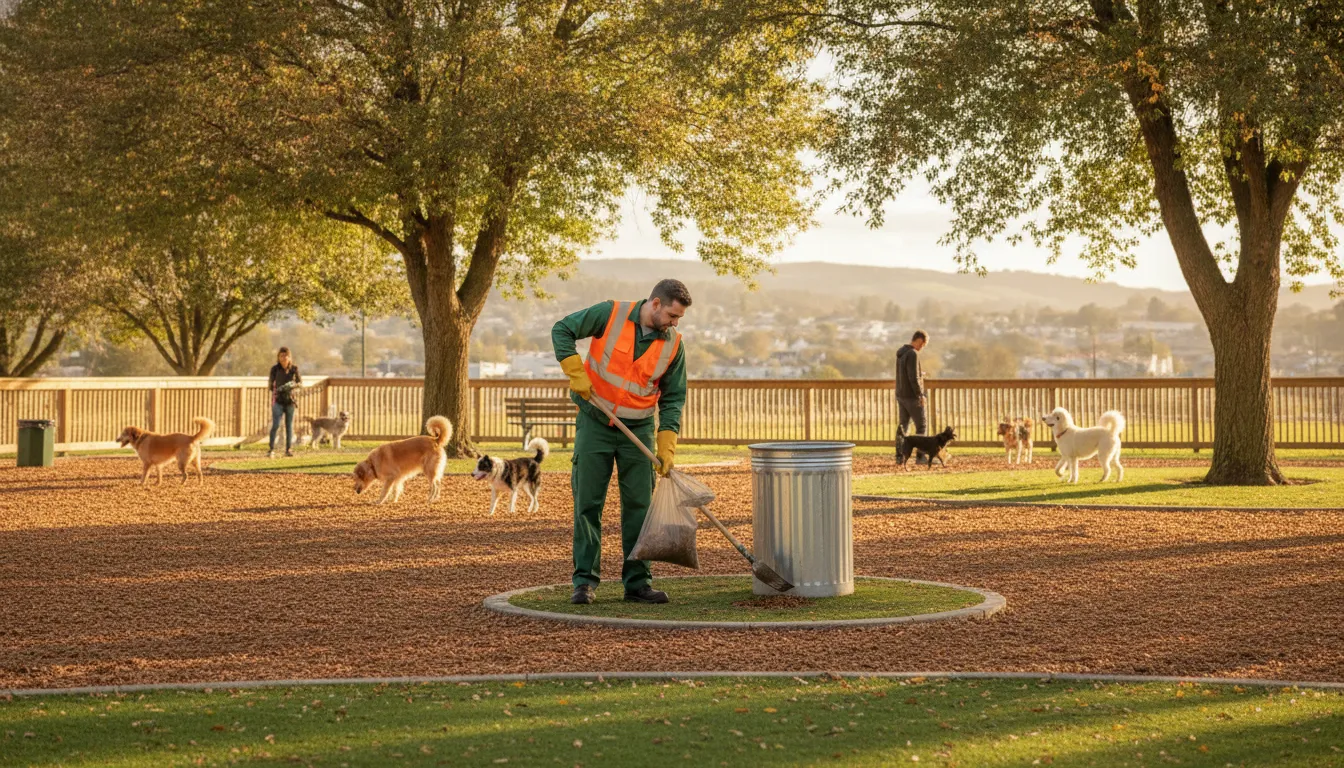
A field visit should address the whole waste area, not only the bag inside the receptacle. The technician can inspect the lid, handle, rim, and exterior surfaces for residue or buildup, then follow the site plan and product instructions for cleaning. The ground around the station also deserves attention because leaks and dropped waste can leave odors behind.
A practical checklist can include the pad or turf immediately around the station, nearby paths, fence lines, shaded areas, and other places where dogs or visitors commonly pass. For synthetic turf, A1's artificial turf cleaning guide explains how surface cleaning and deodorizing can complement routine pickup in high-use pet areas.
How does responsible disposal reduce risk?
Waste should be bagged securely, removed on schedule, and transferred through the operator's established disposal process. Leaving filled bags beside a receptacle only moves the problem and can invite odor, pests, or accidental contact. The National Park Service explains that cleaning up after dogs helps protect water quality and reduce harmful bacteria concerns in shared outdoor areas.
The CDC also notes that dog waste can contain parasites such as Toxocara, which may affect people and other animals. Operators can review the CDC information on Toxocara transmission. Clear visitor instructions and consistent service make responsible disposal easier without overstating what a maintenance contract can guarantee.
How Should Municipalities Communicate and Measure the Program?
A well-run program should be easy for visitors to understand and easy for staff to evaluate. Put basic rules at every entrance: owners should pick up after their dogs, place tied bags in designated receptacles, and report full or damaged stations. Use the same language on the park website, community notices, and staff response scripts.
Make the rules visible and actionable
Give visitors a clear way to report an overflow or supply problem. Record the location, date, time, issue type, and response. Recurring complaints may reveal a missed route, an undersized receptacle, poor sign placement, or a supply gap. The EPA's pet waste outreach guidance describes outreach as a process of planning, implementation, and evaluation.
Budget for the complete operating picture
Separate routine service, disposal, bags, dispenser supplies, station cleaning, inspections, repairs, and eventual replacement. A budget that covers only collection can leave the operator without a plan for broken hardware or recurring overflow. Written responsibilities also prevent park staff and vendors from assuming that the other party handles supplies or repairs.
Track a short list of useful KPIs
- Overflow incidents by park, station, and date.
- Missed or delayed visits, including the reason and resolution time.
- Bag, receptacle, and dispenser supply gaps.
- Response time for complaints and urgent maintenance reports.
- Repeat complaints by location and issue type.
The goal is not a complicated dashboard. It is a short record that shows where frequency, equipment, signage, or communication needs to change. If an isolated event or accumulated condition needs immediate attention, a one-time cleanup service can restore the site while the operator addresses the underlying issue.
What Should Operators Compare When Choosing a Vendor?
Operators should compare the full operating model, not only a quoted pickup rate. Ask who supplies bags, checks stations, removes and disposes of waste, responds to missed service, documents visits, and handles changes across multiple locations. A written scope lets a municipality, HOA, or park operator compare vendors on accountability and coverage.
Dog park waste management models comparedModelBest fitStrengthsWatch-outsSelf-managedOne site with available parks or maintenance staff.Direct control over timing, supplies, and standards.Work can compete with other priorities, absences, and repairs.Staff-assistedSites where employees can handle inspections with limited outside support.Retains internal oversight while adding help during heavier periods.Responsibilities between staff and provider must be clearly assigned.Professional serviceMultiple sites, high-traffic parks, HOAs, and teams seeking consistent coverage.Scheduled maintenance, replenishment, removal, disposal, and reporting follow a defined scope.Operators should confirm visit frequency, escalation, documentation, and change procedures.
For a professional proposal, ask for each station and service area to be listed. The scope should state the expected visit frequency, bag and receptacle responsibilities, disposal handling, inspection criteria, and contact path for changes. Municipal operators should also confirm access, procurement, reporting, and public communication requirements.
HOA boards and property managers may value a consistent service that reduces the burden on onsite teams while supporting a cleaner shared amenity. Municipalities can evaluate whether a vendor has experience with multiple sites and long-term public-space relationships. A1's commercial and HOA pet waste removal guide provides a related framework for property decision-makers.
Operators serving Southern Nevada can also review A1's Las Vegas, Henderson, and North Las Vegas service-area information when considering local coverage. As a final comparison, ask who receives an urgent overflow report, how missed visits are documented, when frequency can change, and what the manager receives after service.
Call (702) 521-2624 to discuss a dog-park waste removal plan with A1 Pet Maintenance.
Frequently Asked Questions
How does a dog park waste removal service work?
A professional route removes waste, maintains stations, replenishes bags, checks receptacles, and records conditions that need follow-up. The schedule can change when traffic, seasonal conditions, or several park locations require more attention.
How often should a public dog park be serviced?
Start with visitor traffic, station capacity, overflow history, odor concerns, and public-health priorities. Busier parks and warmer periods may require more frequent visits, but inspection and complaint records should guide the final schedule.
What should a dog waste station include?
A station should pair a visible bag dispenser with a durable receptacle, clear instructions, and enough capacity for expected use. Inspect the dispenser, container, hardware, and surrounding area during every service visit.
How can dog parks control odor and sanitation problems?
Remove waste consistently, clean receptacle surfaces, and address spills or buildup around the station instead of masking odors. The EPA explains that improperly handled pet waste can wash into storm drains and waterways, creating water-quality concerns.
What should municipalities and HOAs look for in a vendor?
Compare visit frequency, station maintenance, bag replenishment, disposal procedures, inspection reporting, multi-location coverage, and the process for missed service or changing conditions. A written scope should make each responsibility easy to verify.
Call (702) 521-2624 to plan dependable dog-park waste removal.