Pet Waste Removal for Retail Centers Tucson
Plan pet waste removal for retail centers Tucson with mapped zones, visit timing, and a custom proposal from A1 Pet Waste Maintenance.
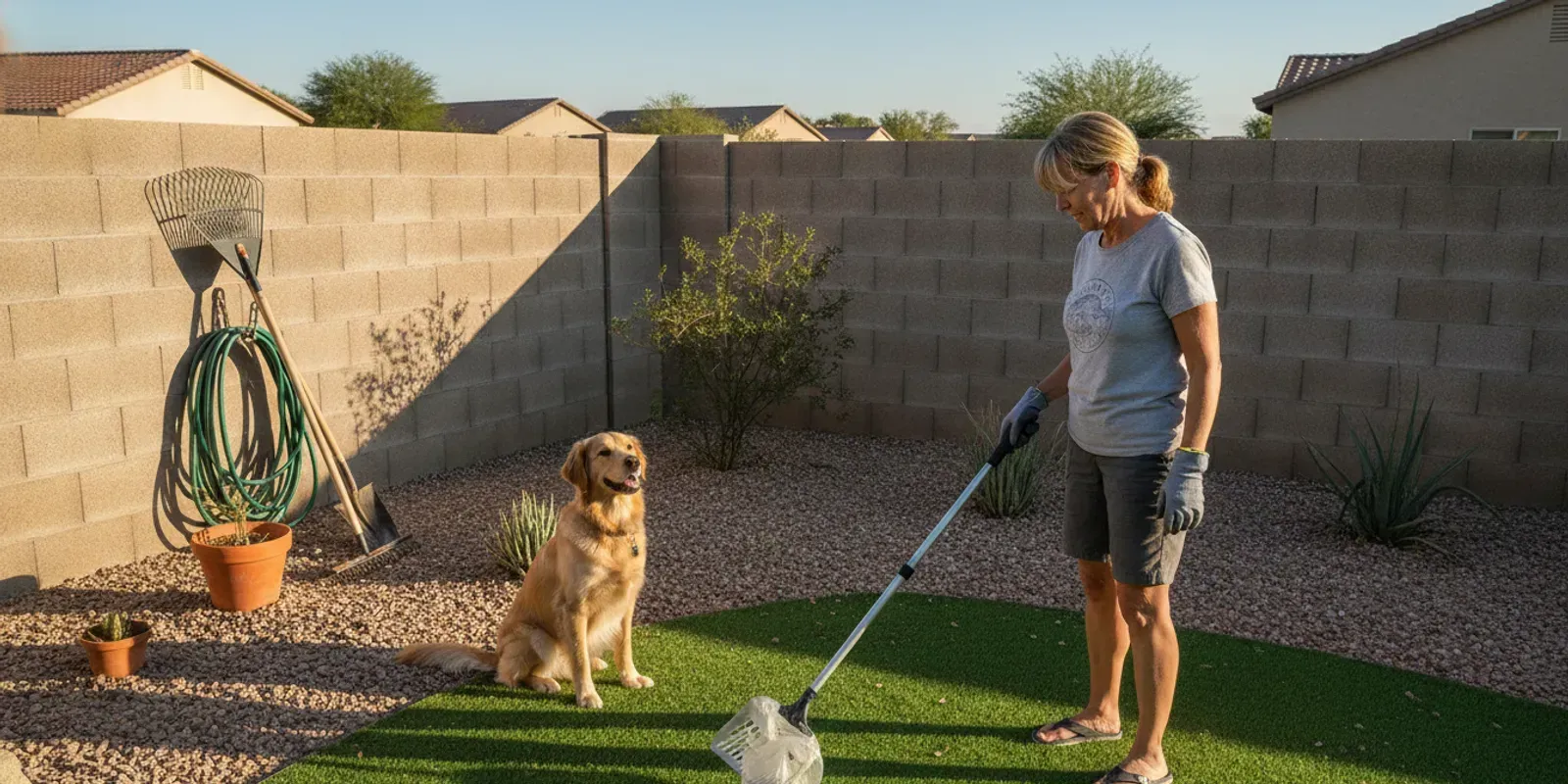
Pet waste removal for retail centers Tucson property teams can plan starts with the shared ground shoppers and employees actually cross. A few piles by a storefront, a patio edge, or a landscaped path become a complaint fast. Heat does not make that waste disappear, and a general request to clean the whole parcel does not tell a crew where the landlord's ground ends and a tenant's patio begins.
Discuss a service plan for your retail center
A1 Pet Waste Maintenance picks up pet waste and can quote commercial grounds as a custom proposal. Call (702) 521-2624. There is no published retail-center rate, no customer portal, and no automatic photo report. The useful first step is a marked map, not a guessed price.
What does pet waste removal for retail centers Tucson need to include?
A retail center is a patchwork of public paths and private edges. Customers walk from parking to storefronts. Employees use side doors. Restaurants open patios. Landscape beds sit beside those walks. A dog may cross several of those spaces in one visit, while the maintenance duty may sit with the owner, a tenant, or another contractor.
A site-specific route names the shared areas the crew should walk. It also names the areas it should skip. That list is more useful than a note that says clean the property. The same note should say whether the request is ground pickup only, or whether station checks are part of the ask. Those are different tasks.
Retail use also changes. Outdoor dining, a seasonal event, construction, or a new tenant can move the foot traffic and block a gate. A current map gives the property team a way to point at the change. For shared-property planning that is not limited to storefronts, see community pet waste solutions.
Which areas should you mark on the property map?
Walk the site the way a shopper or employee would. Note the paths between parking, entrances, storefronts, and outdoor seating. Then compare those paths with the maintenance lines in the leases and vendor contracts. A bed that is visible from a walkway is not automatically common area.
- Storefront approaches: Mark the walks and landscaped edges by entrances. Note where foot traffic is heaviest, and whether a tenant keeps the strip right outside its door.
- Perimeter beds and lawn strips: Mark grass, gravel, or soil where dogs are walked. Note steep edges, narrow strips, and sections a landscape contractor already controls.
- Outdoor seating and patio edges: Show where a patio meets shared ground. A fenced tenant patio may stay off the route even when it is easy to see from the walk.
- Loading and service areas: Mark docks, dumpster pads, and employee doors only when the team wants them included. Note delivery hours that block a crew.
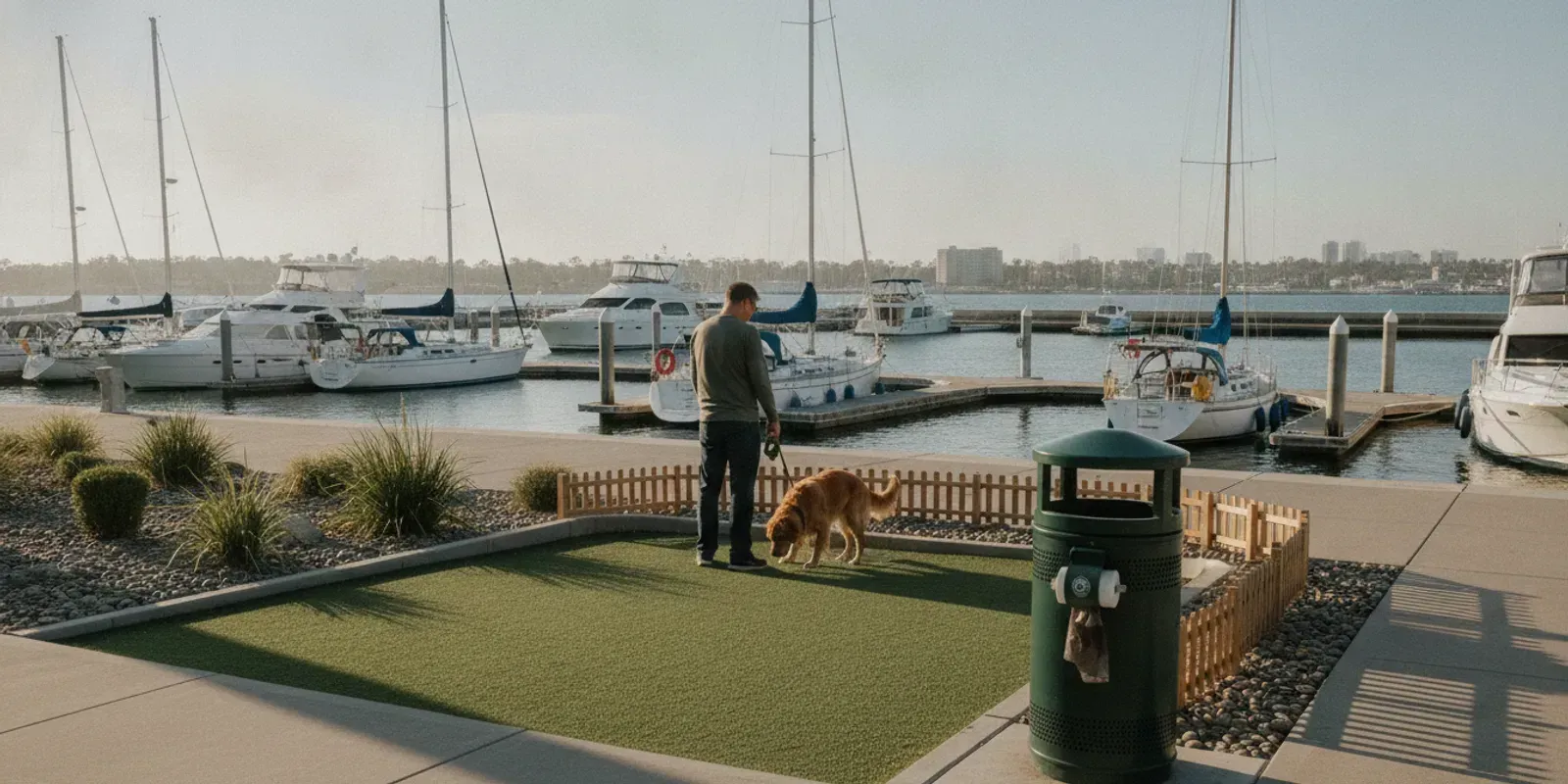
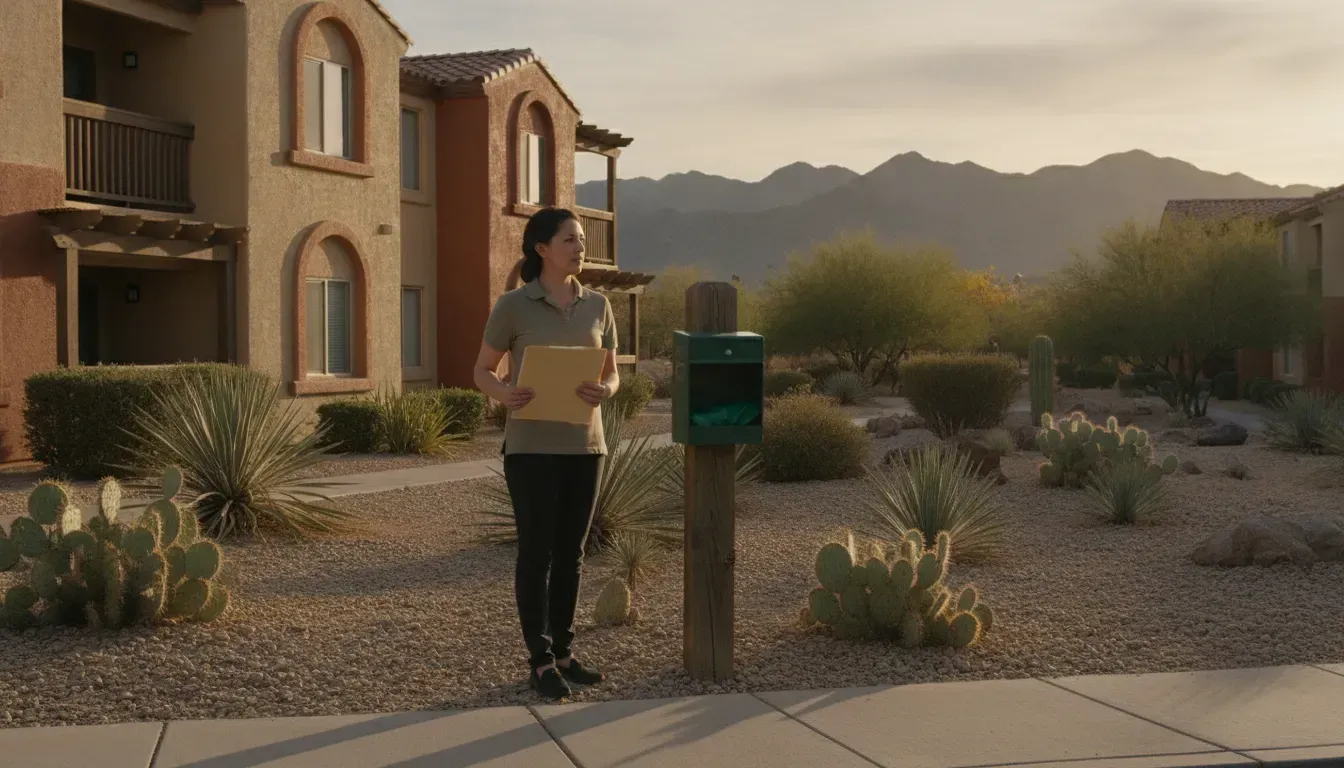
- Stations and bag spots: If stations exist, mark each one. Say whether the ask is ground pickup, a station check, or both.
- Excluded and locked areas: Label tenant yards, construction zones, and gates a crew cannot open. A blank area on the map reads as included.
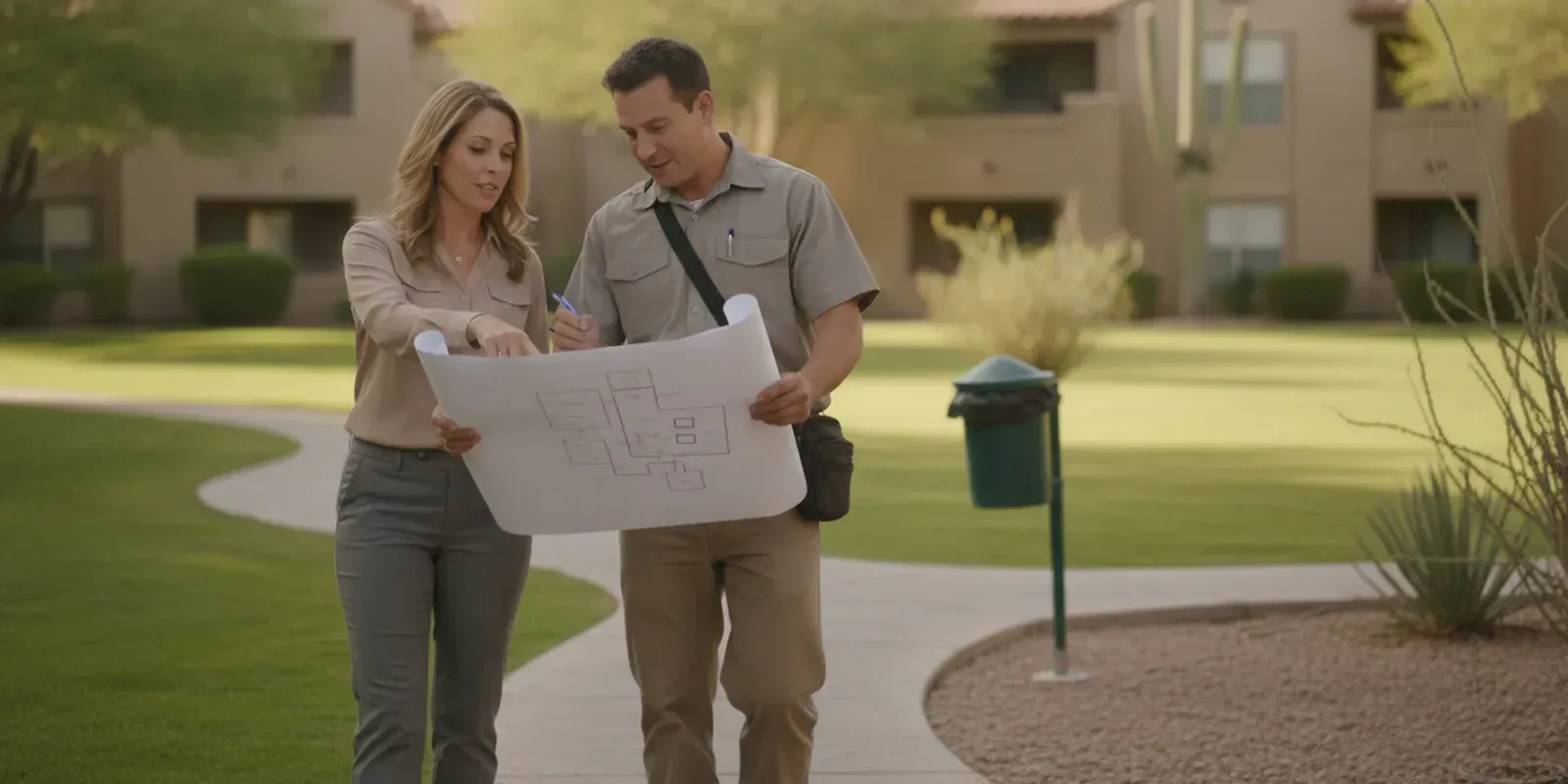
A marked aerial photo plus a short zone list is enough to start. The on-site contact should be the person who can answer a boundary question the same day. A1's commercial property page covers multifamily complexes, parks, and events. It is not a substitute for this retail map.
How can visit timing fit a retail center's daily activity?
Shopper peaks, patio service, and truck deliveries decide when a crew can work. A visit that lands in the lunch rush may be blocked by tables, strollers, and cars at the curb. A visit after close may find gates locked. Name the window that matches the site, then say what happens on event days.
Weekly and twice-weekly visits are patterns A1 already uses on other properties. A one-time cleanup is a separate job when waste has piled up before a route starts. None of those labels sets a retail price. The property team still has to describe the zones, the access, and whether the first pass is a backlog clear or a normal walk.
Put the constraints in the request. Busy patio hours, delivery windows, and days when landscapers occupy the beds all change the route. If a holiday market closes a walk, send that date before the visit, not after a missed zone.
How do service choices differ before you request a proposal?
Compare the work, not a slogan. Ground pickup, a station check, a one-time backlog clear, and a recurring walk are easy to blur into one line item. The table below uses only choices a property team can describe. It does not list a retail price, because A1 does not publish one.
Ask every provider to answer the same map. If one proposal says common grounds and another names the blue-marked walks, those are not the same job. A1's one-time pet waste cleanup page is the place to separate a first clear from the ongoing walk.
What should be included in the service scope?
Write the scope as a short list tied to the map. Say which zones are in, which are out, and whether stations or a first clear are part of the ask. Leave price, license claims, and a start fee out of that note. A retail proposal is custom.
Ground pickup
Ground pickup is the walk of marked shared areas. Name the walks, beds, and other common ground. Name the tenant patios and contractor zones that stay off the route. If a dock is in the ask, say so. If it is not, mark it out so a later crew does not guess.
Station servicing
Stations are a separate conversation. Record each location and the task you want discussed, such as a visual check or a note when a unit is damaged or moved. Do not treat a station's presence as proof it is on the pickup route. A1's dog waste station planning information can frame that talk. Keep station work off the ground-pickup list until it is agreed.
Initial cleanup versus recurring visits
If waste has piled up, describe that condition on its own. A first clear can be heavier than a later maintenance walk. Say which zones hold the backlog. Do not assume a normal visit includes that clear unless it was agreed. The station installation guide is about placing stations, not about this pickup scope, so use it only if installation is actually the question.
What details help a manager request a useful proposal?
A short packet is enough. Send the address, a marked map, access notes, schedule limits, and one contact who can answer a boundary question. The goal is to show where the work would happen.
- Name the site and the decision-maker. Give the address and the person who can discuss scope. Add an on-site contact if someone else handles gates.
- Attach the route map. Outline included zones. Label tenant areas, locked sections, and beds another contractor maintains.
- Describe current conditions. Note repeat spots, whether the ask is a one-time clear or an ongoing walk, and any area that is blocked right now.
- Explain access. Share gate procedures through a secure channel, restricted hours, escort needs, and places a crew must not enter.
- State station expectations. Say whether stations are on site and whether servicing them should be in the proposal.
- Share scheduling limits. Include patio peaks, delivery windows, events, and days when other crews occupy the route.
- Name the communication path. Say who reports a changed area, a locked gate, or a boundary question.
A sample note can be this direct: please discuss routine pickup on the blue-marked shared paths and perimeter beds. The patio inside the tenant fence is excluded. Two stations are on the map. Please say whether servicing them is available. The west gate is locked outside business hours. That note does not set the final agreement. It keeps the first call specific.
For a Tucson site, access details matter more than a regional weather paragraph. A locked gate, a narrow planting strip, or a shared lot line changes the walk more than acreage does. If a tenant moves or a landscape project shifts a bed, send a new map. Do not expect the old request to cover a new layout.
How does a Tucson retail plan differ from an apartment route?
The live commercial pet waste removal in Tucson guide is written for apartment communities and HOAs. It covers resident lawns, pet stations, and shared housing walks. A retail plan follows shoppers, storefronts, patio edges, and loading areas instead. Copying the apartment route leaves the tenant line and the patio edge unmarked.
An office campus or a public park can be different again. Those sites organize access around employees or park hours, not around store leases. Use the apartment guide when the property is housing. Use this retail map when the question is a shopping center in Tucson. The Las Vegas retail page answers another city and should not be reused as the Tucson scope.
The City of Tucson tells people to bag pet waste and put it in the trash. The city's stormwater sheet says animal waste carries bacteria that can reach desert washes, and that the waste does not just go away or turn into fertilizer. Read that sheet at the City of Tucson pet waste guidance. It points to City Code Chapter 4, Section 4-28. A retail route should follow that bag-and-trash practice on common ground. It does not replace the property's own leases or a question for the city.
How should the team review service after it starts?
After the first visits, compare the walked zones with the map. A note that a pile was still by a storefront is more useful than a note that says check everywhere. If a section belongs to a tenant or another contractor, mark it out so the route stays stable.
Review access and timing in the same pass. Were gates open? Did a delivery block a zone? Did an event move the foot traffic? If work could not happen, decide whether the site contact should open a gate, shift the hour, or revise the map. Keep one current version so staff and the provider are not using two maps.
Say who takes service questions. The manager may own scope. An on-site person may report a locked gate. Each person should know which issues they can close and which need approval. Account questions can sit with A1's service FAQs. Housing questions still belong on the Tucson commercial guide, not on this retail map.
Request a proposal for your Tucson retail center
Frequently Asked Questions
Can a retail center arrange recurring pet waste removal?
Yes. A property team can ask A1 Pet Waste Maintenance for a recurring walk of the marked common areas. The route, the visit window, and any station work are set from the site layout and access, not from a published retail package. Call (702) 521-2624 to start that proposal.
Should the landlord or tenants be responsible for each area?
That follows the leases and the maintenance contracts. Mark common ground and tenant-controlled space before you define the route. A visible patio is not automatically the landlord's zone.
Does recurring pickup automatically include station maintenance?
No. List the stations and ask whether a station check is part of the proposal or whether the request is ground pickup only. Do not assume a station on the property is included.
Should a first-time cleanup be included in the recurring request?
Describe piled-up waste separately from the ongoing walk. Ask how the first clear and the later visits will be scoped so each part of the work is clear. A normal visit does not automatically include a large backlog.
What should a property manager send before requesting a proposal?
Send the address, a map of the requested zones, access notes, scheduling limits, station details, a short note on current conditions, and the name of the person who can answer scope questions. Do not send a guessed price.
Plan the route around the Tucson property
A workable retail plan starts with boundaries, access, and timing that match how shoppers use the site. Mark the shared spaces. Separate routine pickup from station work and from a first clear. Give the provider one current map and one person to call when the layout changes.
With that packet, the property team can ask for a proposal without pretending one route fits every center. A1 Pet Waste Maintenance will quote the marked work. It will not invent a retail rate or a login where the plan lives.
| Choice | What the property team describes | What it does not assume |
|---|---|---|
| Recurring ground pickup. | Shared walks, beds, and other marked common areas on a repeating visit. | There is no published retail rate. A visible patio is not automatically included. |
| One-time backlog clear. | Zones where waste has already built up before a route starts. | A later weekly walk does not include that same heavy first pass. |
| Station check. | Each station location, and whether bags or a damaged unit should be discussed. | A station on the map is not serviced just because pickup is requested. |
| Apartment or HOA route. | Resident lawns, pet areas, and building walks on a housing site. | That housing plan does not fit storefronts, patios, and loading docks. |