Pet Waste Removal for RV Parks Tucson
Plan pet waste removal for a Tucson RV park with practical guidance on shared areas, guest traffic, cleanup frequency, waste stations, and vendor questions.

Pet waste removal for RV parks Tucson operators can be planned around shared paths, guest turnover, and the places dogs actually use. The right approach is not simply to add more bins. First map the pet-use areas, decide who checks them and how often, and make the cleanup expectations clear to guests. This guide explains how to build that plan and what to ask before arranging outside help.
Ask about pet waste cleanup for your property
What should a pet waste plan cover at a Tucson RV park?
An RV park has a different pattern of use from a private yard. Guests arrive and leave throughout the week. Dogs may walk from individual sites to a dog relief area, along internal roads, or around the perimeter. A plan needs to account for those shared spaces without confusing animal waste cleanup with other park maintenance.
Start by identifying the areas where dog waste can affect the guest experience:
- Designated pet relief areas and dog runs.
- Walking paths, grass or gravel strips, and landscaped edges near sites.
- Common lawns, picnic areas, and routes to amenities.
- Waste stations, bins, and the approach to those stations.
- Perimeter areas where guests may walk dogs when internal paths are busy.
Then define the work. Pet waste removal means locating and collecting animal waste from agreed areas. It does not automatically include emptying RV holding tanks, handling wastewater, general litter pickup, mowing, landscape work, or cleaning every guest site. List what is included and excluded in writing so staff and a vendor have the same scope.
For guidance specifically about RV waste disposal, Pima County has a sustainability resource that includes responsible RV waste disposal. Keep that separate from the pet-waste procedure: they are different kinds of waste and may have different handling requirements.
How do guests, sites, and paths shape the service area?
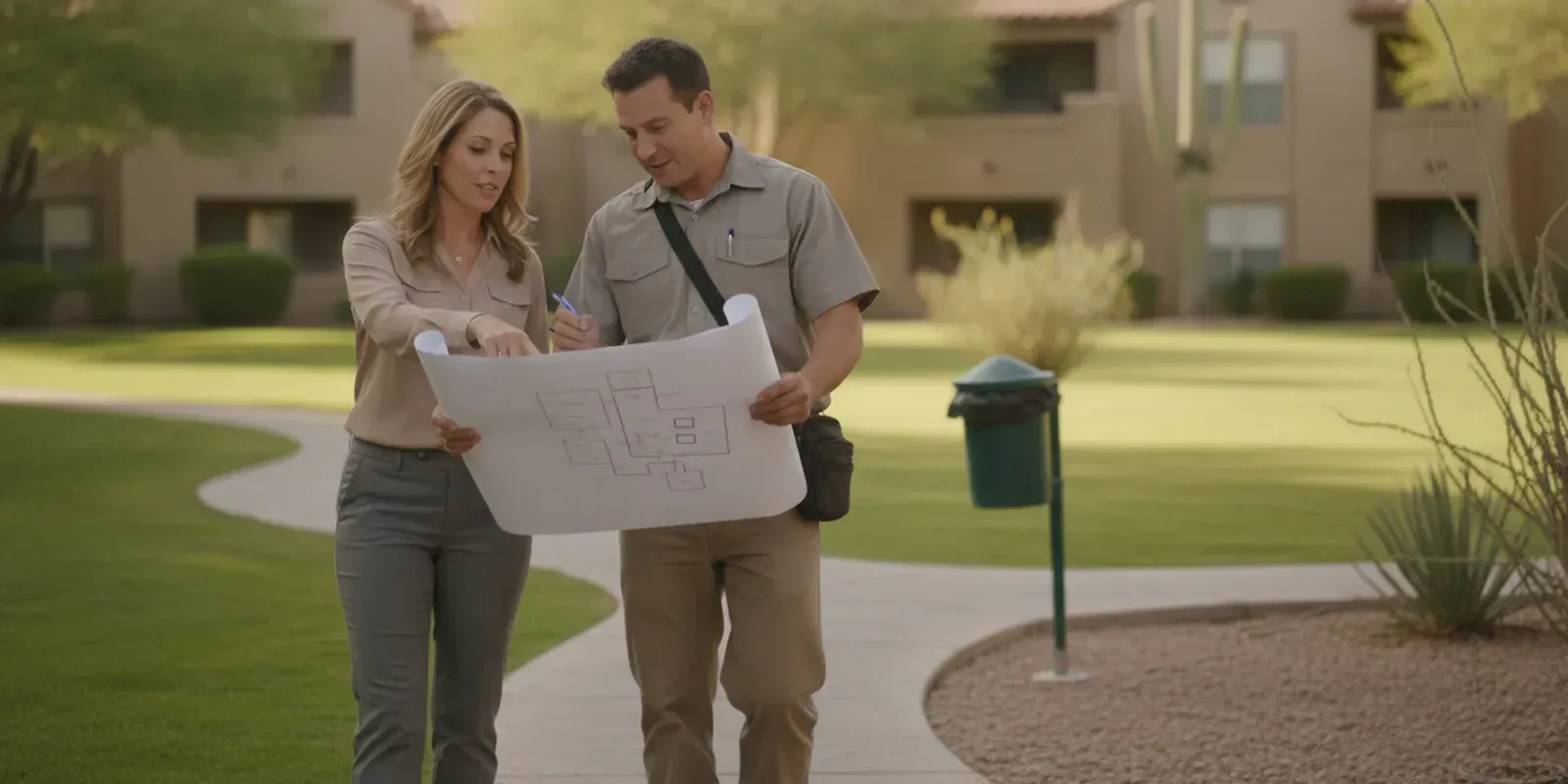
Do not begin with an assumed square footage or a generic route. Walk the property and record where guests can take dogs, where dogs commonly relieve themselves, and where staff have permission to enter. The goal is a clear map of shared areas, not an inspection of private RV sites.
Make a simple site map with three categories:
- Routine public areas: shared paths, common lawns, and designated pet zones that need regular checks.
- Problem spots: edges behind landscaping, corners near fences, or places where waste tends to be missed.
- Limited-access areas: private sites, occupied spaces, or locations that should only be entered with permission.
Mark entrances, gates, paths, pet stations, and any areas that are closed at certain times. If the property has separate loops or sections, name them on the map. A clear layout lets staff or a service provider discuss the same spaces rather than relying on vague instructions such as âthe dog area.â For examples of how a provider may think about shared-space scope, see this guide to commercial property pet waste cleanup and this overview of community pet waste solutions.
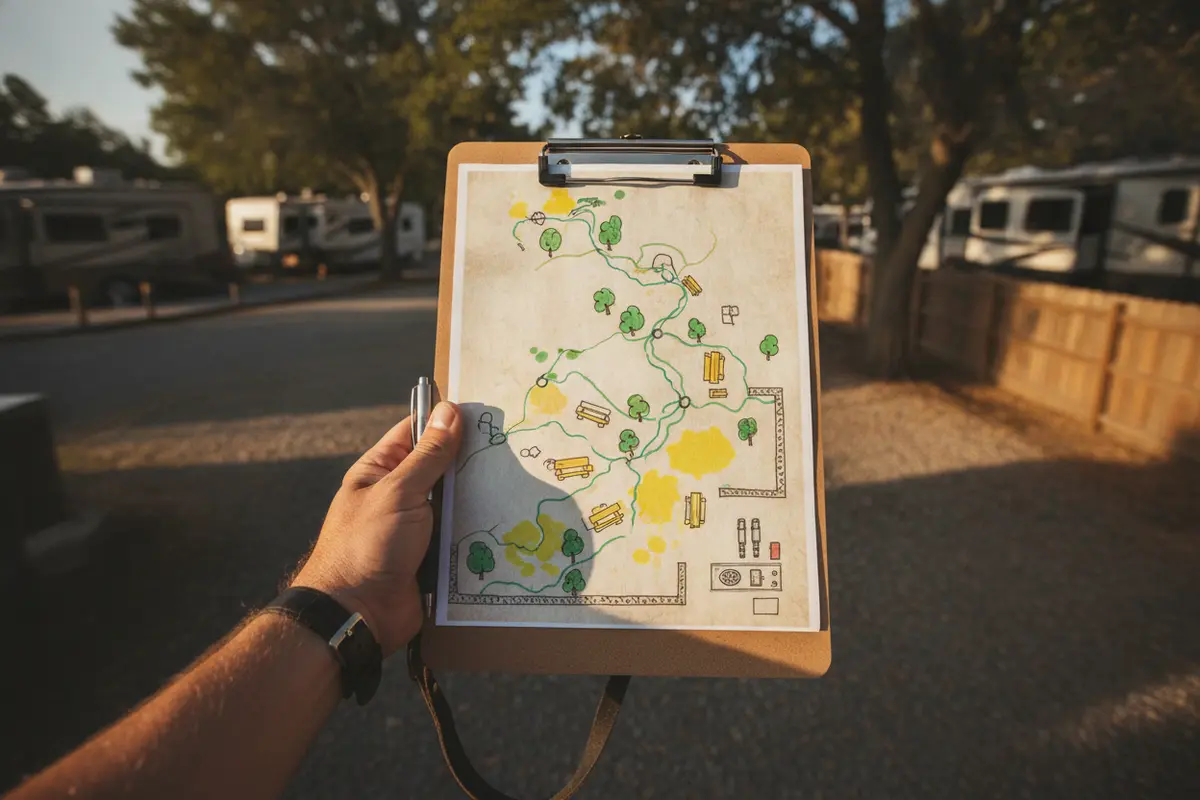 Be specific about boundaries. For example, a plan might include the common path from the entrance to the pet relief area but exclude guest patios and occupied sites. Whether a provider can cover a particular space depends on access, local arrangements, and the agreed scope. Confirm those details before work begins.
How often should shared areas be checked?
There is no single schedule that fits every RV park. Guest volume, number of dogs, layout, season, and the condition you want to maintain all matter. A quiet park with a small defined dog area may need a different plan from a busy property where guests use several long paths and common lawns.
Use a short observation period to develop a practical schedule. Have staff note the locations and approximate times when waste is found, especially around arrival and departure days, weekends, and busy periods. Record missed waste and full or overflowing bins separately; they point to different problems. Recheck the map after a change in occupancy or guest rules.
Use the table as a starting point, not a promise that any particular option will be available. A recurring route or one-time cleanup should be scoped to the actual property. If accumulated waste has become the main issue, review what a one-time pet waste cleanup involves before deciding whether a reset is appropriate.
Where should pet waste stations go?
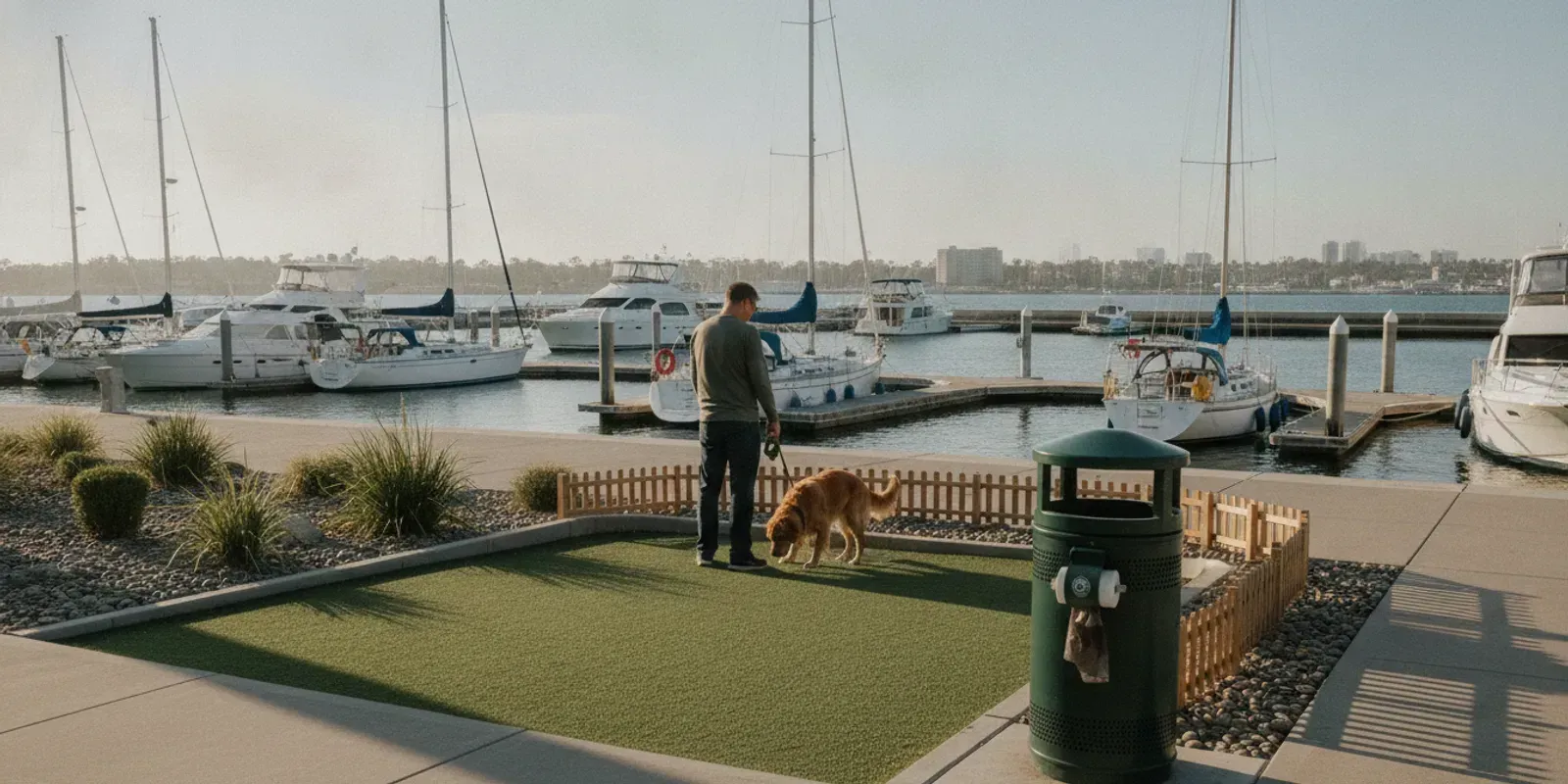
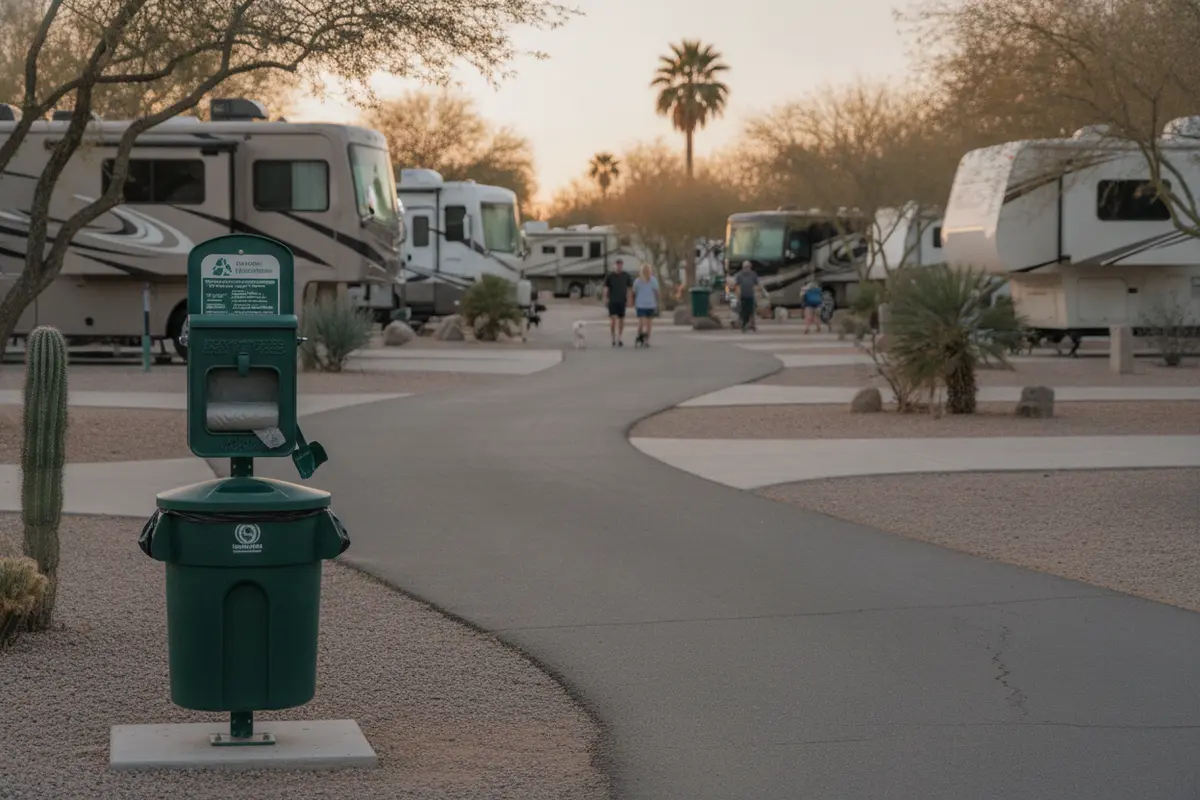
Stations can make it easier for guests to pick up after dogs, but placement should follow how people move through the park. Look for convenient points near dog relief areas and walking routes. Avoid placing a station where it blocks a path, interferes with an RV site, or creates a nuisance beside a gathering area.
Before choosing locations, walk the route as a guest with a dog. Ask whether a person can see the station, reach it without crossing an inconvenient stretch, and return to the route easily. Check that the location is accessible to staff responsible for servicing the bin. A station that is poorly placed, empty, or hard to reach can be less useful than a smaller number of well-sited stations.
Decide who provides bags, who checks supply, who empties the receptacle, and where collected material goes under the parkâs procedures. Do not assume that a pet waste cleanup visit includes station installation, bag restocking, or bin emptying. Confirm those items directly. A dog waste station planning guide and the pet waste station installation guide can help a property team prepare questions about placement and ongoing care.
 What should the park tell guests?
Clear guest instructions support any cleanup plan. Put the rules where people are likely to see them, such as at check-in, in park information, or near a designated pet area. Keep the message brief and consistent. Explain where dogs are permitted, where owners should pick up waste, and where to dispose of it.
Use neutral, direct wording. For example: âPlease pick up after your dog throughout the property and use the marked pet waste bins. Keep dogs out of closed or restricted areas.â Adapt the wording to your parkâs actual policies and locations; do not name a pet area or bin location unless it exists.
Make sure front-desk staff and grounds staff know what to do when a bin is full or a guest reports a missed cleanup. A simple reporting process can include the location, time, and whether the issue is a full bin or waste on the ground. That information helps the team see patterns and decide whether station placement or the inspection schedule needs attention.
What should you ask before choosing a cleanup provider?
Before requesting a proposal, prepare the property map and a short description of the problem you want to solve. A provider cannot make a useful recommendation from the phrase âwe need the park cleanedâ alone. Share the shared areas, approximate number of pet zones, access limitations, preferred timing, and any guest-facing standards the park wants to maintain.
Ask focused questions and get the answers in writing:
- Which exact areas are included, and which are excluded?
- Can the service cover the parkâs location and proposed access conditions?
- What visit frequency is being proposed, and how can the park request a change?
- Does the scope include stations or bins, or only collection from the ground?
- How should staff report a missed area or a concern after a visit?
- What happens when access is blocked, weather affects work, or a site is closed?
- Is the proposal for a recurring schedule, a one-time reset, or both options?
- What does the provider need from park management before the first visit?
Do not select a service based only on a general description or a low headline figure. Compare the actual boundaries, visit frequency, responsibilities, and communication process. A provider may need to review the property details before confirming availability or scope.
For a Tucson-area property, A1 Pet Maintenance lists Tucson among its service markets, but that does not by itself confirm availability for every RV park or site configuration. Share the address and requirements to verify fit. You can also read the multifamily pet waste management planning guide for questions about shared-property routines, while keeping an RV parkâs guest access and layout in view.
How can you compare staff cleanup with outside service?
There is no need to choose by assumption. Compare the complete workload. Staff may already be on site and know the property, while an outside service may provide a separate recurring cleanup routine. The right fit depends on who is available, which areas need attention, and whether responsibilities can be tracked reliably.
Use these points to make the comparison:
- Ownership: Name the person accountable for checking each shared zone.
- Consistency: Consider whether the work is completed on the schedule the park needs, including busy periods.
- Coverage: Compare the map of included areas, not just a broad service label.
- Communication: Agree how a missed spot, closed access, or full bin is reported.
- Flexibility: Ask how the plan can adjust when guest traffic or property use changes.
- Boundaries: Confirm that everyone understands the difference between animal waste pickup and RV wastewater handling.
If the park wants to keep cleanup in-house, use the map and schedule as a checklist. If management wants outside support, send the same information to each provider so the responses are comparable. A1âs guide to dog poop scooping service can help explain common service-planning questions, but the final scope should reflect the RV park itself.
What should happen before the first cleanup?
Once the plan is agreed, make the first visit straightforward. Provide the current map, confirm access arrangements, identify restricted areas, and tell staff what work has been arranged. If guests are likely to be affected by a temporary change, communicate that before the visit.
- Confirm the route: Mark the included areas and any exclusion zones.
- Confirm entry: Explain gates, check-in procedures, hours, and who can answer questions.
- Agree on reporting: Choose one contact method and name the person who receives updates.
- Review the result: After the first visit, inspect the agreed shared areas and note any map or schedule changes.
This first review is useful even when the cleanup is handled by park staff. It can reveal a missed path, a station that guests do not notice, or an area that should not be included. Make changes to the written plan rather than relying on informal assumptions.
Request a conversation about your Tucson RV park
Frequently Asked Questions
Does pet waste removal include RV holding-tank waste?
No. Pet waste pickup and RV holding-tank or wastewater disposal are separate tasks. Confirm the scope of any service, and use the relevant park procedures and local resources for RV waste questions.
Can an RV park use a one-time cleanup before starting regular checks?
It may be an option when waste has accumulated, but the provider needs to confirm the area and scope. A reset alone will not maintain shared areas; pair it with a clear guest policy and a routine that someone owns.
Should a park include every RV site in a cleanup route?
Not automatically. Start with shared and designated pet-use areas, then state clearly whether any individual sites are included. Respect access limits and confirm permission before entering private or occupied spaces.
How many pet waste stations does an RV park need?
There is no universal number. Consider the length of walking routes, location of pet areas, guest access, and the ability to service each bin. Test whether stations are convenient and maintained, then adjust based on guest use.
Build a plan around the property
A workable RV park pet waste plan starts with a map, defined boundaries, a realistic inspection schedule, and guest instructions that match the property. Keep pet waste pickup distinct from RV wastewater handling, and confirm service availability, access, and responsibilities before arranging outside support. With those details in place, park staff can make a clear, practical decision for their Tucson property.
| Option | When it may fit | What to confirm |
|---|---|---|
| Staff checks on a set routine | The property has staff available and a manageable shared area. | Who checks, which zones are covered, and how missed areas are reported. |
| Outside recurring cleanup | Staff need a consistent routine for shared pet-use areas. | Visit days, access, included zones, and how schedule changes are handled. |
| One-time cleanup | Waste has accumulated or the park needs a reset before setting a routine. | Area limits, access, condition, and what follow-up plan will keep it manageable. |