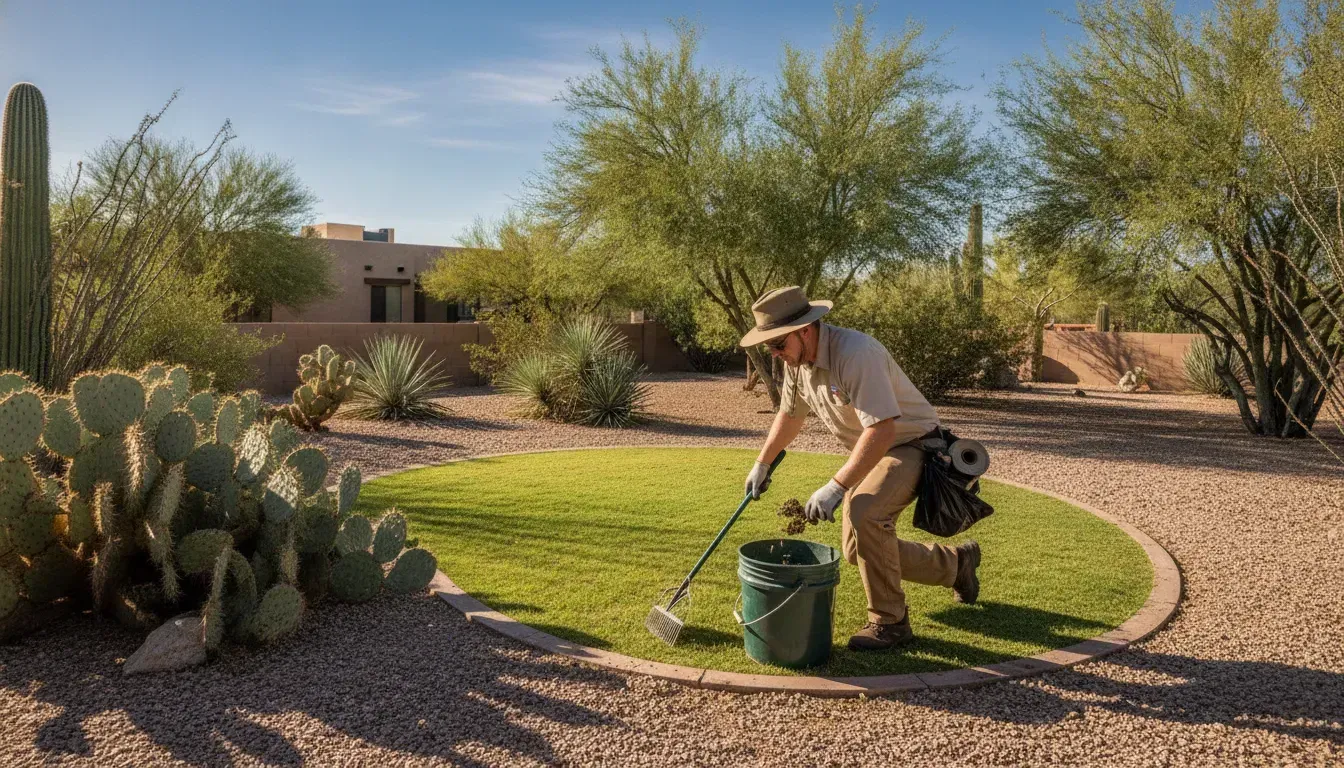
Odor Control Commercial Property Pet Waste Las Vegas Guide
This is a subtitle for your new post

In Las Vegas, a pet waste problem can become an odor problem quickly. Heat, heavy foot traffic, and missed waste around dog parks, walkways, turf, and pet stations can affect first impressions long before a property manager sees the source. The right solution is not simply masking the smell. It is consistent waste removal, sanitation, and attention to the surfaces where odors linger.
Effective odor control commercial property pet waste las vegas plans combine scheduled pickup with station maintenance, targeted deodorizing, and fast response when accumulation becomes a health or resident-satisfaction concern. A1 Pet Maintenance brings more than 26 years of licensed and insured service to commercial properties across Southern Nevada. For the broader service framework, review our Commercial and HOA Pet Waste Removal in Las Vegas guide.
Call (702) 521-2624 to set up odor control for your Las Vegas commercial property today.
For property managers, odor control is part of protecting the experience, reputation, and usability of the entire site. The priorities become clearer when you consider what persistent pet waste signals to residents, visitors, and inspectors.
Why Odor Control Is a Top Priority for Las Vegas Commercial Property Managers
In Las Vegas, outdoor common areas work hard every day. Apartment courtyards, HOA walkways, dog runs, artificial turf, and landscaped entrances all serve as shared spaces where residents. Tenants, guests, and prospective renters form an opinion about the property. When pet waste accumulates, odor quickly becomes more than an unpleasant detail. It can signal that the property is not being maintained at the standard people expect.
Resident and tenant satisfaction depends on clean common areas
Residents do not separate pet waste management from the overall quality of property management. They notice odors near elevators, sidewalks, mail areas, pools, and dog relief zones. They may also report recurring problems through the office, online reviews, or HOA meetings. A clean, odor-free environment supports resident satisfaction because people can use shared spaces without avoiding certain routes or worrying about stepping in waste.
For commercial property managers, consistent odor control is therefore part of preserving the resident experience. It is especially important in high-density communities where many dogs use the same areas throughout the day. Removing visible waste is essential, but proactive service also helps address the accumulation that creates lingering smells in turf, soil, and other outdoor surfaces.
Odor control supports health and liability priorities
Property managers and HOA boards need sanitary, odor-free environments to maintain resident satisfaction and meet applicable health and property standards. Pet waste can create a sanitation concern when it is left in common areas, tracked into buildings, or allowed to collect around pet stations. A documented maintenance routine gives management a practical way to show that these areas are being monitored and serviced instead of handled only after complaints arrive.
That consistency can also help reduce liability exposure. Prompt removal lowers the chance that residents encounter waste on a walkway or in a high-traffic area. It does not replace sound property policies, inspections, or legal guidance, but it strengthens the day-to-day maintenance process that supports them. Detailed service expectations and flexible scheduling are useful when a property has changing occupancy, seasonal traffic, or a sudden sanitation concern.
First impressions affect curb appeal and property value
Prospective renters, commercial tenants, owners, and visitors often judge a property before they speak with staff. Odor near an entrance or a neglected dog area can undermine otherwise attractive landscaping and amenities. A clean pet relief area, maintained waste stations, and fresh-smelling common spaces communicate care. That matters for apartment communities, retail properties, office campuses, and HOA neighborhoods alike.
A1 Pet Maintenance has served Las Vegas, Henderson, and Southern Nevada for more than 26 years, giving local property managers a veteran partner for recurring commercial property pet waste cleanup and odor concerns. Our commercial approach addresses waste accumulation proactively, rather than waiting for the next complaint. For a broader property-management framework, review Commercial and HOA Pet Waste Removal in Las Vegas and consider how a consistent service plan can protect the experience your property promises.
How Pet Waste Causes Persistent Odor in Outdoor Common Areas
Pet waste does not simply disappear when it is left beside a walkway or buried in the edge of a turf area. In Las Vegas, intense heat can bake waste into artificial grass, soil, concrete joints, and other porous surfaces. Those materials can hold odor-producing residue long after the visible waste has been removed, especially in high-use dog areas and shared outdoor spaces.
Why the odor gets stronger in desert heat
As waste breaks down, bacteria feed on the organic material and release unpleasant compounds, including ammonia-like odors. Warm conditions accelerate decomposition, while limited moisture can dry waste onto a surface and make the residue harder to remove. When sprinklers, irrigation runoff, or occasional rain later rehydrates that residue, trapped odors can become noticeable again.
Artificial turf is particularly important to inspect because waste can collect between blades, beneath the surface, or around seams and drainage points. Soil and porous concrete can create similar problems. A routine pickup that removes only what is easy to see may leave behind the source of recurring odor. For steps on treating turf surfaces, see how to remove pet odor from artificial grass. For a broader property-management framework, see this Commercial and HOA Pet Waste Removal in Las Vegas guide.
Pet waste is a sanitation issue, not a natural fertilizer
Some pet owners assume dog waste is an all-natural fertilizer that will take care of itself. The U.S. Environmental Protection Agency identifies that misconception as a cause of improper waste management. Pet waste contributes nitrogen, phosphorus, parasites, and bacteria when it is not disposed of properly, and those contaminants can move into water bodies through runoff. See the EPA's guidance on sources and solutions around the home.
That contamination matters beyond the immediate smell. The EPA explains that pet waste in water bodies can make people and animals sick, encourage weed and algae growth, and damage ecosystem health. On a commercial property, the same neglected waste also creates a visible cleanliness problem for residents, employees, visitors, and prospective tenants. Odor is often the first sign that bacteria, residue, and repeated accumulation are not being addressed consistently.
How neglected waste creates a recurring odor cycle
Each missed deposit adds more organic material to the same common area. Bacteria multiply in the accumulated waste, odor compounds settle into nearby surfaces, and foot traffic can spread residue across turf or pavement. Once that cycle begins, spraying fragrance over the area may mask the smell briefly without removing its source. Effective odor control commercial property pet waste Las Vegas programs start with consistent removal and attention to the surfaces where residue collects.
For property managers and HOA boards, the practical takeaway is simple: persistent odor is not just an aesthetic nuisance. It signals a sanitation and maintenance gap that becomes harder to correct as waste accumulates. Regular inspection, prompt pickup, and appropriate surface treatment help prevent a single missed deposit from becoming a property-wide complaint.
DIY vs. Professional Pet Waste Removal for Odor Control
For a small property with limited pet traffic, a maintenance employee may be able to handle occasional waste pickup. Commercial properties in Las Vegas face a different challenge. Apartment communities, HOA common areas, retail centers, and office campuses have multiple pet zones, changing traffic patterns, and little room for missed service. A single overlooked deposit can become an odor complaint, especially when waste accumulates around turf, walkways, pet relief areas, or waste stations.
DIY cleanup can appear less expensive because it uses existing staff. The real comparison, however, includes labor time, coverage, reliability, sanitation detail, and the documentation a property manager may need. The table below shows where each approach typically fits.
DIY and professional pet waste removal compared for commercial odor controlConsiderationDIY cleanupProfessional pet waste removalCostMay reduce a separate vendor bill, but uses staff hours, supplies, training, and supervisor oversight.Creates a dedicated service cost with a defined scope, while freeing property staff for resident and facility priorities.Large common areasCoverage depends on one employee's available time and knowledge of every pet relief zone.Teams can follow a property route that covers common areas, perimeter areas, stations, and known problem locations.Consistency and reliabilityService can be delayed by absences, emergencies, competing work orders, or unclear responsibility.A scheduled route provides recurring service, with flexible scheduling available when property needs change.Sanitation depthOften limited to visible waste pickup, with little time for station maintenance or odor treatment.Can include waste removal, station checks, enzyme deodorizing, and attention to odor-prone surfaces and turf areas.Liability and reportingManagers may have to reconstruct when areas were checked and what corrective work occurred.Detailed reporting and service records make it easier to track completed visits, recurring concerns, and follow-up needs.Manager timeRequires assigning work, checking results, handling complaints, and covering missed visits.Moves routine oversight to a specialized provider and gives managers a clearer escalation path. The sanitation issue is more than appearance. The EPA identifies pet waste as a leading source of nutrient and bacteria pollution in urban streams and waterways. Prompt removal helps reduce the material available to spread through runoff, foot traffic, and shared outdoor spaces.
For a commercial property, professional service is usually the stronger odor-control choice because it combines route consistency with the detail work that DIY cleanup often leaves behind. A1 Pet Maintenance can build a practical plan around your property's high-traffic areas, service needs, and reporting expectations. Review the commercial pooper scooper service for Las Vegas properties to compare planning considerations, then choose the service level that keeps common areas cleaner without adding another recurring task to your property team.
How Commercial Properties in Las Vegas Control Odor from Pet Waste
Lasting odor control starts with removing the source, not masking it. A professional crew methodically services pet relief areas, sidewalks, landscaped edges, and other common spaces so waste is not left to break down in the Las Vegas heat. That consistency matters for property managers because odors and waste accumulation can quickly affect resident satisfaction, visitor impressions, and the perceived cleanliness of the entire community.
Thorough removal keeps odors from building
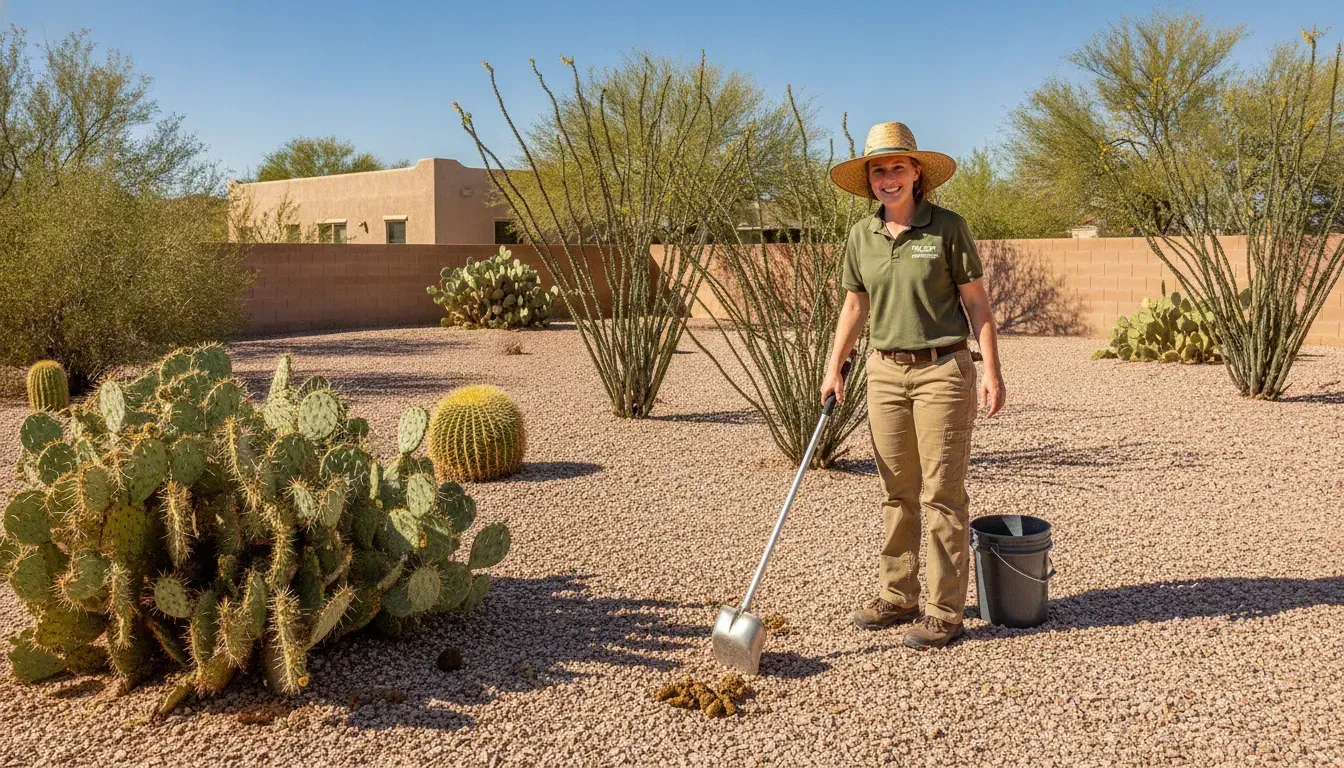
Professional service includes a systematic sweep of the property rather than a quick pass through the most visible areas. Technicians look around turf, gravel, landscaping, walkways, and other places where waste may be missed. They collect and dispose of waste properly, helping prevent repeated contamination and the buildup that makes odor complaints harder to resolve. Service can also be adjusted around high-traffic areas, pet relief zones, and recurring problem spots.
A1 Pet Maintenance combines this practical approach with more than 26 years of experience. Founded in 1998, A1 is a licensed and insured local veteran serving Las Vegas, Henderson, and Southern Nevada. For managers comparing options, that history provides an established partner for an ongoing sanitation responsibility, not a temporary cleanup workaround.
Stations, turf, and shared areas need different care
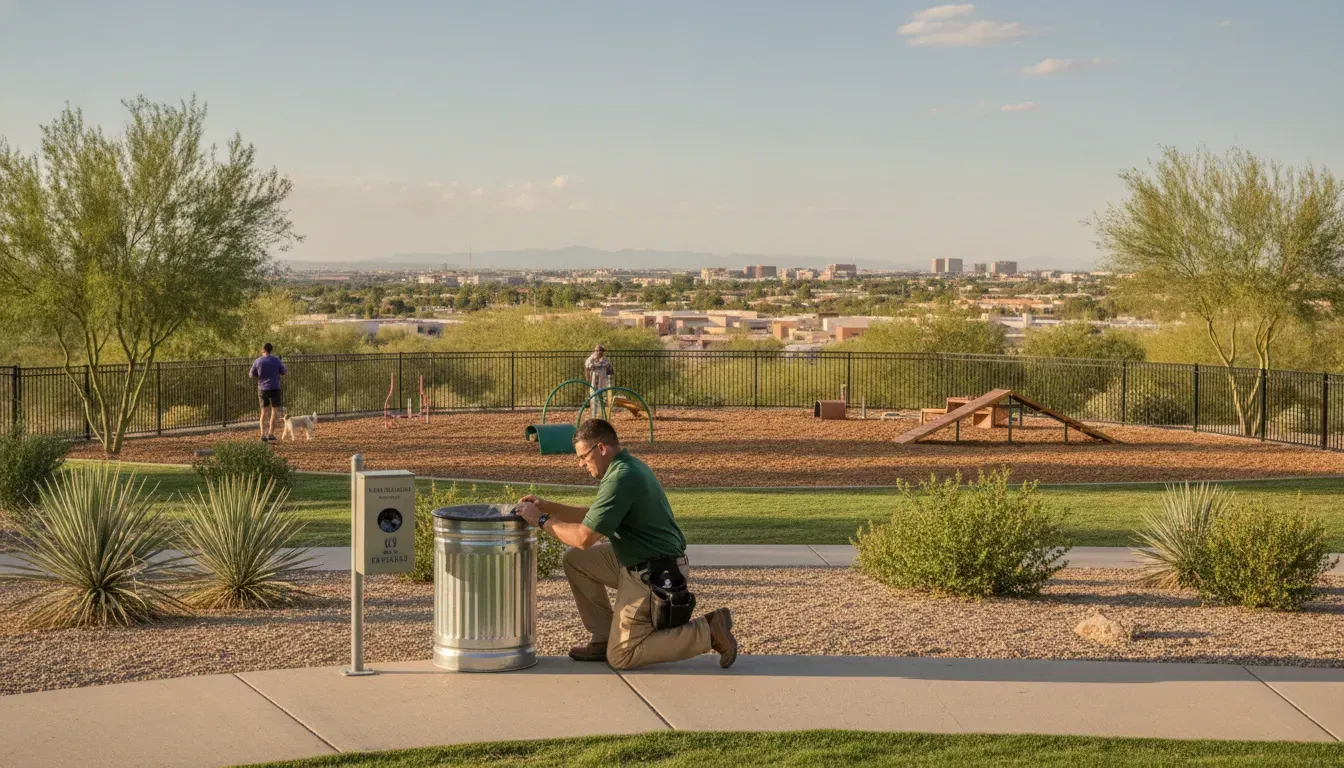
Waste stations are part of the odor-control system. A complete commercial program can include station maintenance, liner replacement, and restocking so bags remain available and overflowing receptacles do not become another source of complaints. Technicians can also address surrounding high-touch common areas and property surfaces as part of broader property sanitation.
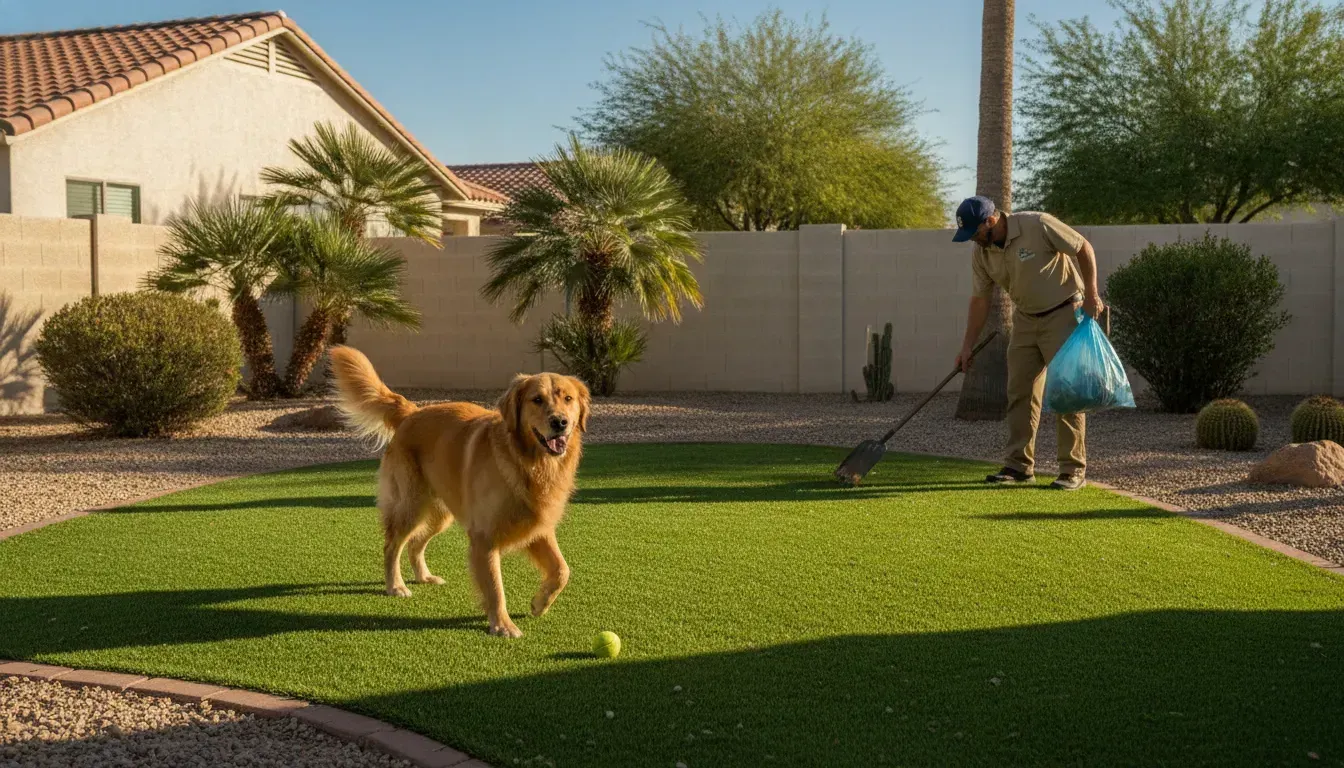
Artificial grass requires special attention because waste residue and odor can remain in the turf even after visible deposits are removed. A1 provides enzyme-based deodorizing treatments and turf sanitation for synthetic grass. These treatments target organic residue at the surface, helping neutralize pet waste odors instead of simply covering them with fragrance. For properties with dog parks, designated relief areas, or artificial-turf courtyards. This added step can make the difference between a space that looks clean and one that smells clean.
Reporting turns odor control into a managed plan
Detailed service reporting gives property managers a clearer record of what was handled, where recurring issues appear, and when additional attention may be needed. Flexible scheduling and emergency response are also valuable when an acute sanitation concern or health-code issue cannot wait for the next routine visit. This proactive model helps managers respond to patterns before they become repeated resident complaints.
For a broader planning framework, review the Commercial and HOA Pet Waste Removal in Las Vegas guide. A1 can help build a practical commercial program that combines waste removal, station care, turf sanitation, and property-specific reporting.
How Frequent Pickup Schedules Minimize Odor Complaints
Odor complaints usually become a property-management problem before they become a sanitation crisis. When pet waste remains in common areas, each additional day gives odor more time to build. Especially around dog runs, grassy areas, shaded corners, and entrances where residents and guests pass frequently. A scheduled pickup plan removes the source before accumulation becomes noticeable and keeps the property consistently presentable.
Match the cadence to the property
There is no single schedule that fits every commercial property. Daily pickup may be appropriate for a large apartment community, a busy dog run, or a property with heavy pet traffic. Weekly service can work for lower-volume areas when routes are consistent and residents have convenient waste stations. Multi-visit schedules provide a practical middle ground for properties with several high-use zones. Allowing the busiest areas to receive more attention without treating every part of the site the same way.
A1 Pet Maintenance can build a flexible schedule around the property's layout, pet population, and traffic patterns. The plan should identify where waste accumulates fastest, including dog parks, grassy common areas, sidewalks near entrances, and paths leading to parking or amenities. Servicing those locations at the right frequency helps prevent the buildup that residents notice first.
Prevent complaints instead of chasing them
Sanitary, odor-free environments support resident satisfaction and help property managers meet health-code expectations. That makes routine pickup more than a cosmetic service. It is a proactive way to reduce repeated complaints, protect the first impression of the community, and give onsite teams a dependable standard to manage. For a broader planning framework, see this Commercial and HOA Pet Waste Removal in Las Vegas guide.
Consistent service also creates accountability. A1 has retained commercial clients for an average of about 18.2 years, reflecting the value of reliable maintenance relationships. If an unusual surge occurs, a special event leaves the grounds heavily used, or an acute health-code issue requires immediate attention, A1 offers emergency response for commercial clients. That combination of scheduled visits and responsive cleanup keeps odor control commercial property pet waste Las Vegas managers can rely on from becoming a recurring resident complaint. HOA boards managing pet relief areas across their community can also compare commercial pet waste removal for HOAs.
How to Get a Commercial Odor Control Plan from A1 Pet Maintenance
A practical odor control plan starts with the property, not a one-size-fits-all pickup package. A1 Pet Maintenance can build service around the places where pet waste creates the most complaints, including apartment grounds, HOA common areas, dog runs, entrances, and artificial turf. Here is how to get started:
- Assess the property and its busiest areas. A1 reviews the layout, pet stations, dog parks, turf areas, walkways, and other high-traffic common spaces. This identifies where waste accumulates fastest and where odors are most noticeable to residents, tenants, visitors, or staff. The assessment also helps property managers choose coverage that fits actual use instead of paying for unnecessary service.
- Choose a flexible pickup schedule. Service is available without a long-term contract, so your team can choose a schedule that matches the property's traffic and seasonal needs. If conditions change, the schedule can be adjusted. A1 can also respond to urgent commercial sanitation needs, including situations involving acute health-code concerns.
- Let A1 handle removal and sanitation details. Each visit can include thorough pet waste removal, pet station maintenance, and property sanitation. For synthetic turf, A1 provides enzyme-based deodorizing treatments that help neutralize pet waste odors rather than simply covering them. This complete approach supports cleaner, more usable common areas and reduces the burden on onsite staff.
- Review reporting and adjust the plan. Reporting gives property managers a clearer record of service and recurring problem areas. Use that information to move pickup attention toward busy zones, refine the schedule, or address stations and turf areas that need additional care. For broader planning, see this Commercial and HOA Pet Waste Removal in Las Vegas guide.
- Start with a call. Call (702) 521-2624 to discuss the property and request a commercial odor control plan. A1 is a licensed and insured 26+ year veteran, founded in 1998, with government contracts serving the City of Las Vegas, Henderson, and Clark County. The company also offers a "We Will Beat All Prices" guarantee, making it easier to compare a dependable plan with your current maintenance approach.
The goal is a service plan that stays responsive as your property changes, without locking your team into inflexible terms.
Call (702) 521-2624 to build a commercial odor control plan that keeps your Las Vegas property fresh.
Frequently Asked Questions
What causes pet waste odors on a commercial property?
Odors usually come from waste left in grass, artificial turf, gravel, landscaped beds, and around pet stations. Heat can intensify the smell, while residue on porous surfaces and repeated deposits in high-traffic areas allow odors to return after a basic pickup.
How often should a commercial property schedule pet waste removal?
The right schedule depends on pet traffic, property size, weather, and the location of relief areas. High-use apartment communities and shared spaces generally need more frequent service than low-traffic properties. A site review can identify problem zones and set a practical pickup cadence.
Can artificial turf be treated when it smells like pet waste?
Yes. Odor control for artificial grass should begin with complete waste removal, followed by cleaning and a treatment appropriate for the turf and drainage system. Treating the surface without removing the underlying waste usually provides only temporary relief.
What is included in a commercial odor control service?
A professional plan may include scheduled waste removal, pet-station checks, attention to odor-prone areas, turf or surface sanitation, and service reporting. The exact scope should reflect your property's layout, pet traffic, resident concerns, and maintenance priorities.
How do I start a pet waste odor control plan in Las Vegas?
Request a property assessment and describe the areas generating complaints, the current pickup schedule, and any artificial turf or shared pet amenities. The provider can then recommend service frequency and a focused plan for your commercial property.
Ready to Set Up a Commercial Odor Control Plan?
A consistent cleanup plan can help keep shared outdoor areas more welcoming for residents, visitors, and staff. A1 Pet Maintenance can help you choose a practical service approach for your property's needs.
Call (702) 521-2624 to set up a commercial odor control plan.The body content of your post goes here. To edit this text, click on it and delete this default text and start typing your own or paste your own from a different source.