Dog Poop Picker Upper: Tools, Techniques, and Cleanup Choices
Compare dog poop picker upper tools, learn a practical cleanup routine for different yard surfaces, and decide when a cleanup service may help.

A dog poop picker upper can make yard cleanup easier when bending, touching waste, or carrying a short-handled scoop is inconvenient. The right tool depends on the surface, the size of the area, and how you prefer to transfer waste into a bag or bin. This guide compares common designs and gives you a repeatable routine for cleaner pickup.
Ask about yard cleanup options
What does "dog poop picker upper" mean?
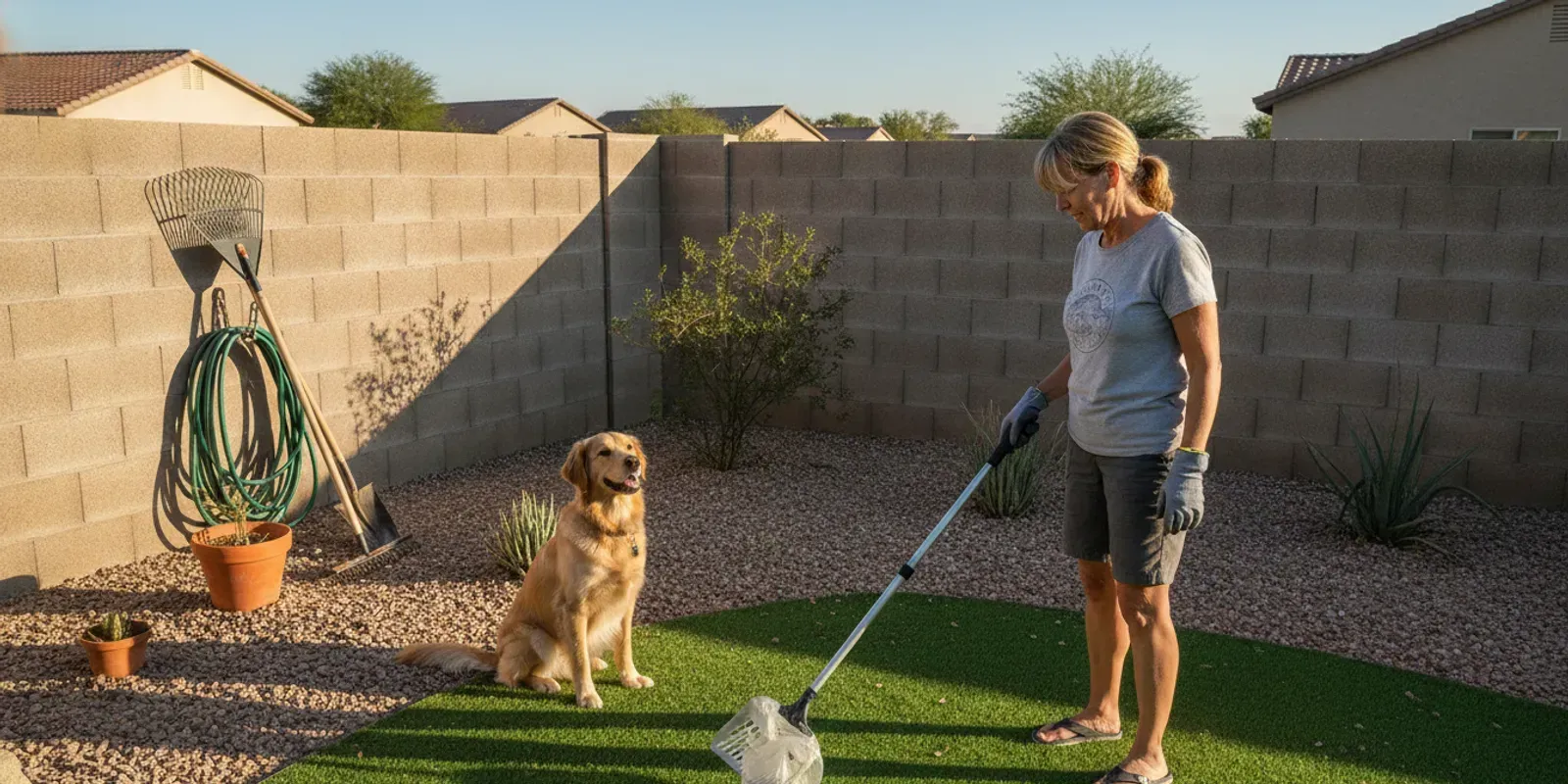
The phrase can describe several kinds of equipment: a claw-style grabber, a hinged long-handled scoop, a rake-and-pan set, or a bag dispenser used during hand pickup. These tools are meant to collect waste and keep your hands farther away from it. They do not make disposal optional. Put collected waste in a suitable bag or container and follow local disposal directions.
Start by thinking about your actual cleanup route. A narrow strip beside a patio has different needs from a broad lawn, a gravel run, or artificial turf. Consider how many deposits you typically collect, whether you need to avoid stooping, and where the waste will go after pickup. These details matter more than choosing a tool because it looks sturdy in a product photo.
Which picker style fits your yard and routine?
Check the tool's reach, grip, opening width, hinge, and contact edge. If possible, choose a design that can be rinsed and stored without handling the collection end. A large head can be useful for several deposits, but may be awkward around shrubs or fence corners. A compact tool can reach tighter spots but may require more trips to the disposal point.
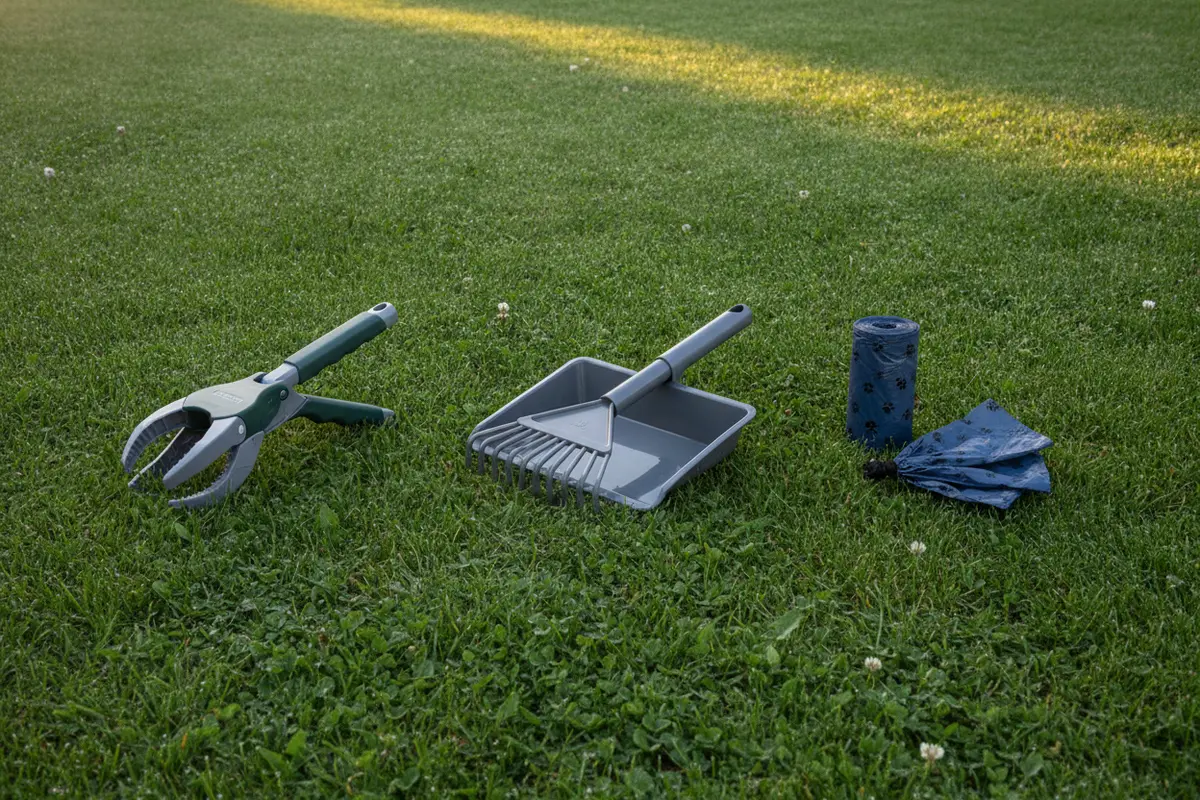 For a household that clears one small spot at a time, a hinged scoop may be simple to store beside the yard gate. If you patrol a larger lawn, a rake and pan may make it easier to gather a series of deposits without carrying them one by one. If you walk a dog away from home, compact bags may be easier to carry than a yard tool. The practical choice is the one you can operate reliably and clean after use.
How do you use a picker without spreading waste?
- Prepare the route. Scan the area first and plan where to place the bag or container. Keep pets away from the immediate work area if they tend to approach the tool or interfere.
- Set your stance. Stand on stable ground and approach the deposit from a position that lets you control the tool. Avoid twisting or reaching so far that you lose balance.
- Collect in a controlled motion. Close the jaws, slide the scoop, or guide the rake toward the pan. On a lawn, use enough pressure to lift the material without digging into soil or tearing grass.
- Transfer promptly. Move the collected waste directly into a bag or lidded container. Avoid carrying an open scoop across the yard if you can empty it at the pickup point.
- Inspect the spot. Look for residue or small pieces that might need another pass. Soft waste and uneven ground can make a single lift incomplete.
- Secure the waste. Tie the bag or close the container and place it in an appropriate disposal bin. Do not leave filled bags where pets or wildlife can reach them.
- Clean and store the tool. Follow the manufacturer's care directions. Rinse the waste-contact area when appropriate, allow it to dry, and store it away from food preparation areas.
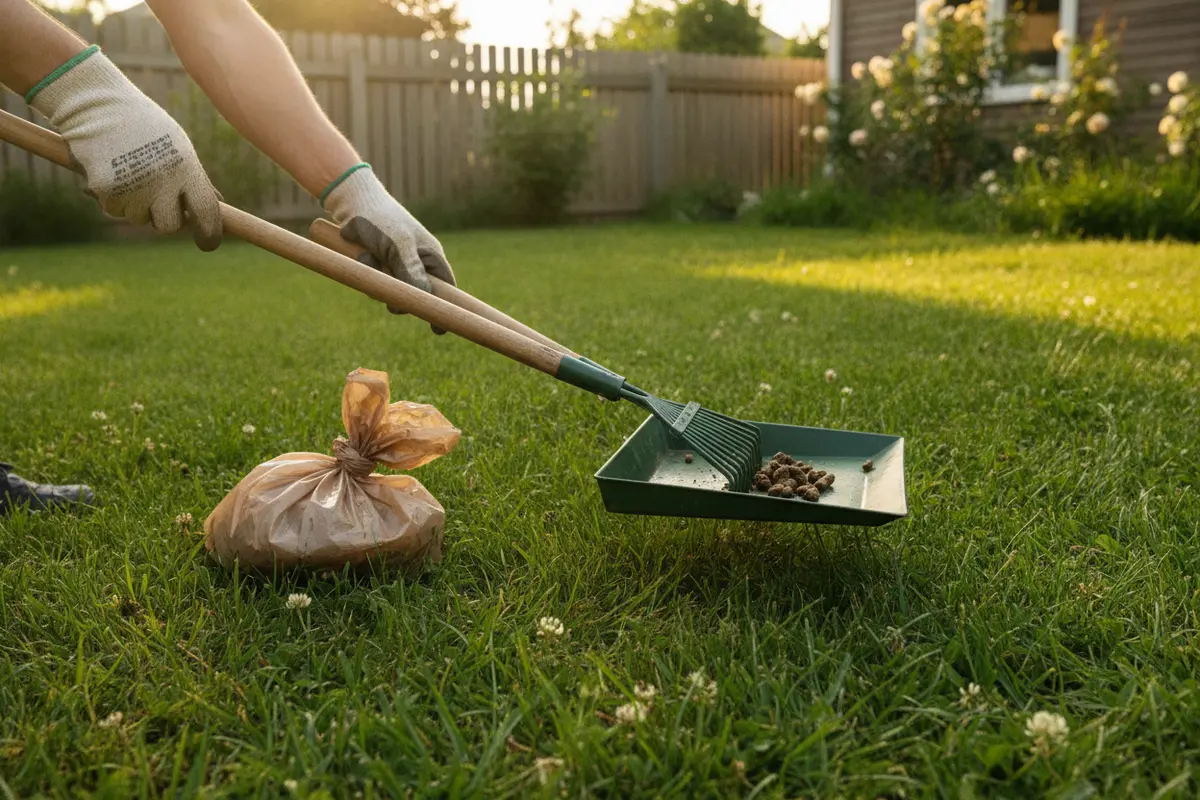
A simple example: if you have three deposits along the same lawn edge, gather each into the pan, then empty the pan into a waiting bag at a stable point. That reduces unnecessary trips while keeping the bag open only when needed. If the tool's head is difficult to empty cleanly, change the transfer method or use a bag designed to fit the tool rather than shaking the scoop over the lawn.
 What changes on grass, gravel, pavement, or artificial turf?
Grass
Use a light, controlled motion so the scoop does not pull up turf or collect excess soil. A rake and pan may be handy for several deposits, while a hinged scoop can be easier for a single spot. If the ground is wet or the waste is soft, take a second look after lifting and use a bag for any residue that remains.
Gravel
Lift slowly and try not to rake deeply into the stones. A rigid scoop edge can collect gravel along with the waste, so test the tool on a small area first. If stones are displaced, return them gently after pickup rather than leaving a bare patch or pushing waste farther into the surface.
Paving and concrete
A flat scoop edge or bag may work well on a smooth surface. Check for material in joints, cracks, and corners, where a quick pass can miss small remnants. Use a tool that is easy to wipe or rinse after the job, and avoid rinsing waste into a storm drain.
Artificial turf
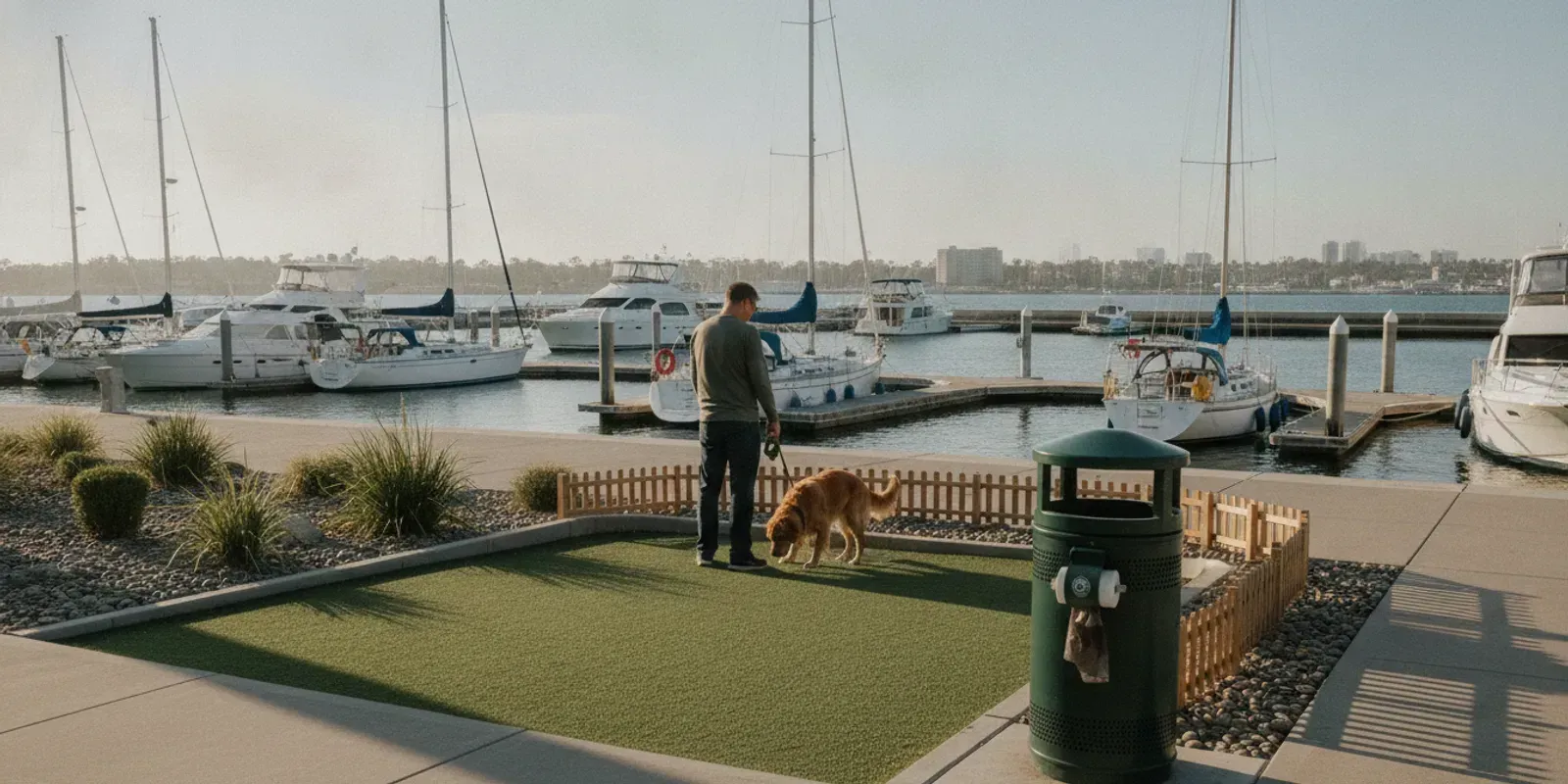
Use a gentle lift rather than scraping hard. A rigid edge can catch fibers or push material down into the infill. Inspect the spot after collection. Routine solid-waste pickup is only one part of turf care; A1 Pet offers artificial grass cleaning and maintenance. You can also read the guide to cleaning artificial grass with dogs for additional surface considerations.
How should you dispose of collected waste?
Secure waste in a bag or suitable container and use the disposal route permitted where you live. Local rules can differ, so do not assume that a method allowed in one community is accepted in another. Avoid washing waste into street gutters, storm drains, or waterways. The U.S. Environmental Protection Agency explains that stormwater can carry pollutants from developed areas into water bodies; see its overview of municipal stormwater pollution sources. That is one reason to collect waste and manage it rather than rinsing it off a paved area into a drain.
Keep the collection tool separate from household items. After rinsing, let it dry before storage, and wash your hands after handling the tool or waste. If you use a reusable bin, clean it according to its care instructions and keep its lid closed. For a bag-on-handle design, check that the bag is attached securely before pickup and that the closure will hold during disposal.
How often should you use a dog poop picker upper?
A regular schedule makes each session easier to manage than waiting for many deposits to accumulate. The workable frequency depends on the number of dogs, the size and layout of the yard, household routines, and weather. A short daily scan, a consistent weekly check, or another routine that fits your household can help you notice missed areas before they become a larger catch-up task.
For more than one dog, divide the yard into zones and follow the same route each time. For example, check the patio edge, the main lawn, then the side yard and gate area. Keep bags and the picker in one accessible spot so setup does not become a reason to skip a cleanup. If your routine is interrupted, make a deliberate sweep before children or pets return to the area.
In a large or irregular yard, use landmarks rather than relying on memory. Work around the perimeter, then cross the center in lanes. If you lose track of where you have checked, mark the last completed section mentally and resume from there. A checklist can be useful when more than one person shares the work: specify the zones, where the tool belongs, and where sealed waste goes.
What should you check before buying a picker?
- Reach and comfort: Choose a handle length and grip that let you work without excessive bending or stretching.
- Mechanism: Open and close the jaws several times. Look for a hinge that moves smoothly and a grip that does not slip.
- Head size: A wider head can gather more but may be clumsy in tight landscaping. A narrow head may suit corners but involve more passes.
- Surface compatibility: Match the edge and motion to grass, gravel, paving, or turf. Avoid sharp edges that could snag a delicate surface.
- Waste transfer: Consider whether the tool empties into a bag without dropping material along the way.
- Cleaning and storage: Check whether the waste-contact surfaces are accessible for cleaning and whether you have a separate place to store the tool.
- Replacement supplies: If the tool requires bags, confirm that suitable replacements are easy for you to keep on hand.
Before buying, imagine a full cleanup rather than testing only the pickup motion. Where will the bag sit? Can you empty the head without touching it? Can you reach the far side of the yard? Will the tool fit in your storage space? If you cannot answer these questions, choose a design you can try or return according to the seller's policy.
When is a picker enough, and when might service help?
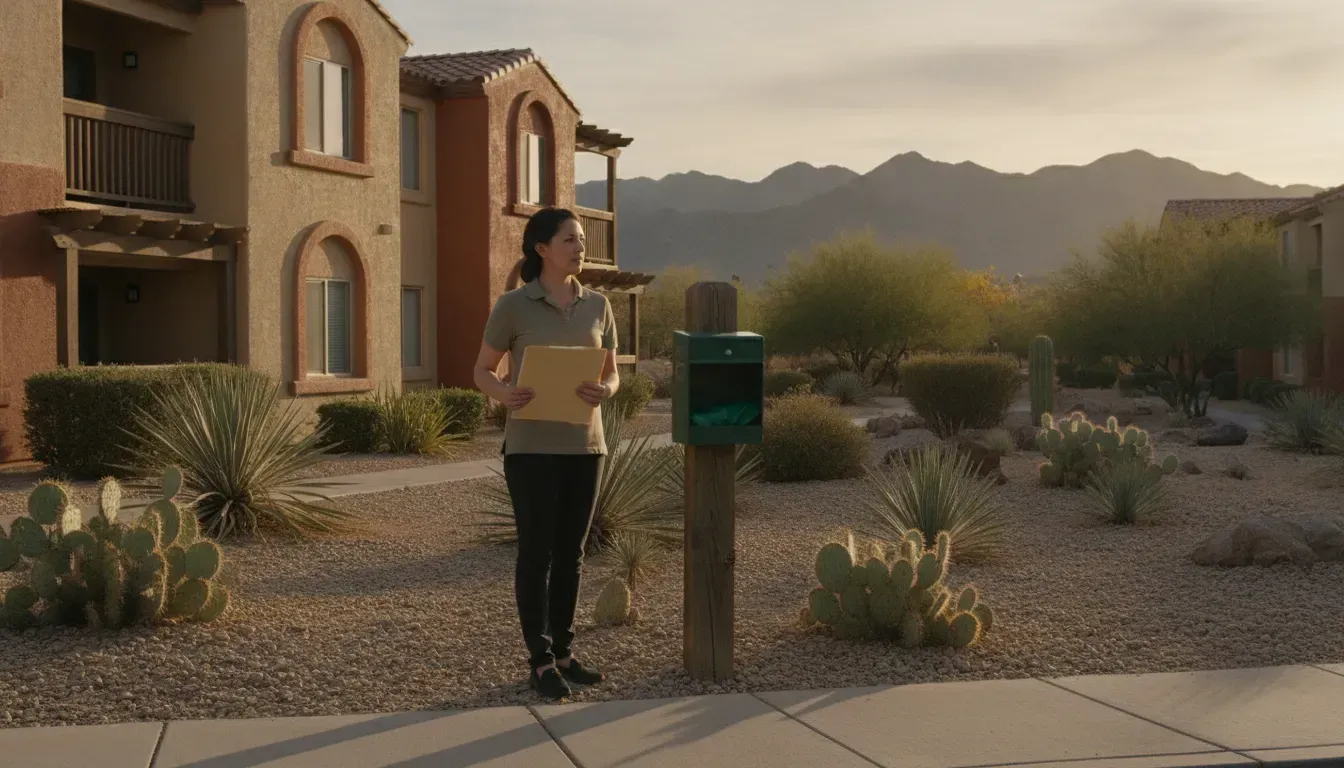
A personal tool may be a good fit when the yard is manageable and someone can maintain the routine. A service visit may be worth considering when the area is large, waste has accumulated, or regular pickup no longer fits your schedule. A one-time reset and recurring maintenance address different needs, so first decide whether you need to catch up or want ongoing help.
Describe the area and buildup when arranging a visit; see one-time cleanup informationDiscuss access and a suitable frequency; read how dog poop service works
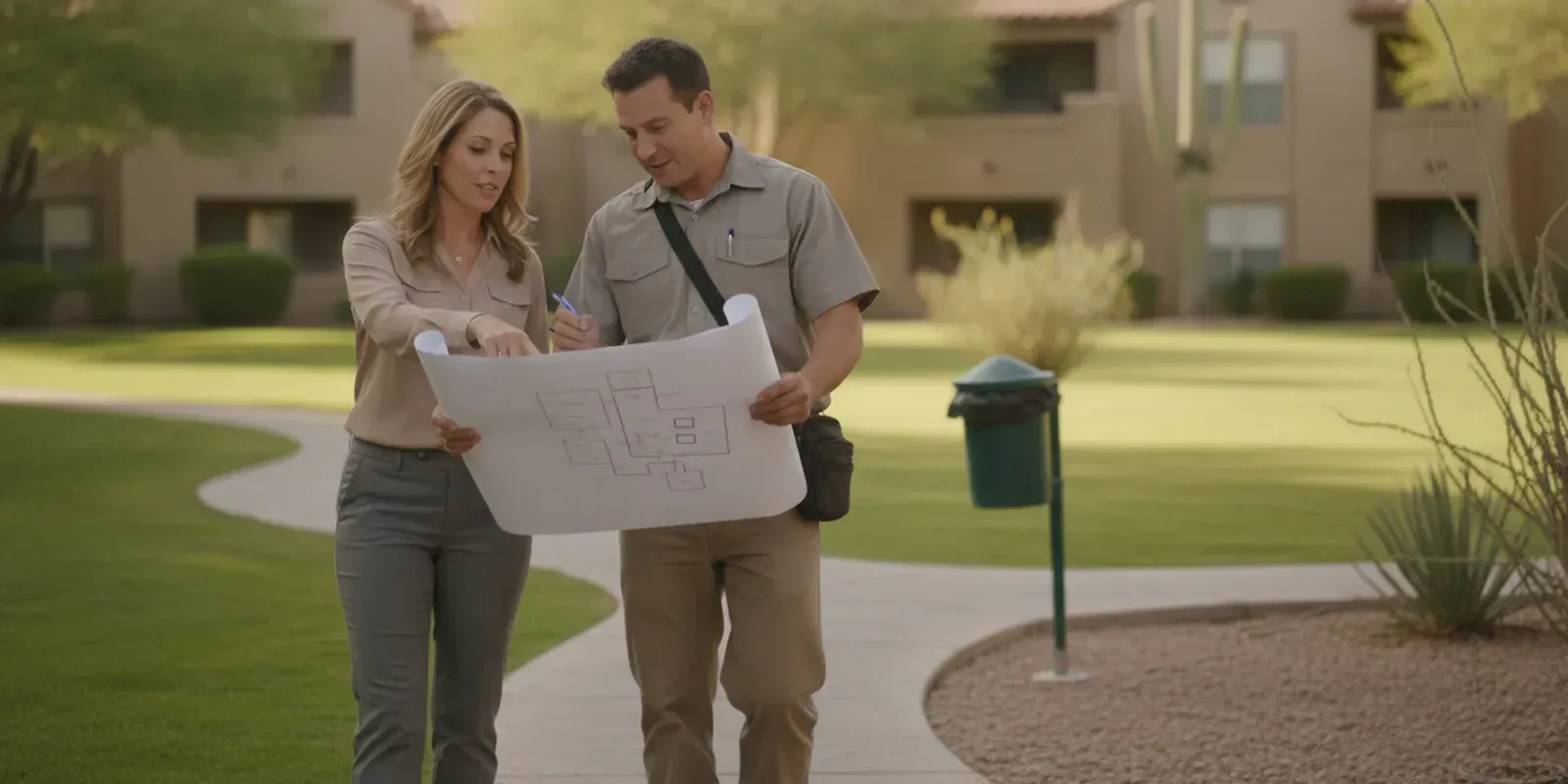
Before contacting a provider, note the size and layout of the yard, how many dogs use it, whether there are locked gates or other access details, and whether you need a catch-up visit or routine service. These specifics help clarify what kind of visit you are asking about. The pet poop removal guide and practical guide to hiring a pooper scooper offer additional questions to consider.
If you are managing a larger patch or have missed several rounds, do not rush through it with a small hand tool. Split the yard into sections, collect one section at a time, and keep pets away until the sweep is complete. If the catch-up feels impractical, review a yard cleanup plan. For a home with artificial turf, compare routine solid-waste removal with the separate needs of turf cleaning.
Frequently asked questions
Are long-handled pickers better than bags?
Neither is best for every situation. A long-handled picker can reduce bending and keep hands farther from waste, while bags are compact and allow direct pickup. Some people keep both available: a tool for the yard and bags for walks or tight spaces.
Can I use a dog waste picker on artificial grass?
Often, if you use a gentle motion and avoid scraping or digging into the turf. Lift waste from the surface, then inspect the fibers and surrounding area for material that may have been pushed down.
How do I keep the picker clean?
Follow the product's cleaning directions. Rinse or wipe the waste-contact surface when appropriate, allow it to dry, store it separately from household items, and wash your hands after handling cleanup equipment.
What if waste has accumulated in the yard?
Work in manageable sections and keep pets out of the cleanup area. If the buildup is substantial or you cannot keep up, consider whether a one-time cleanup or recurring pickup fits the situation better than trying to rush through everything at once.
The best dog poop picker upper is one you can use consistently and safely on your yard's surface. Choose a practical tool, secure and dispose of collected waste, and adjust your routine or seek help when a yard reset is more than you can manage.
| Tool style | Potential fit | Check before choosing |
|---|---|---|
| Claw-style grabber | Small pickup zones and users who prefer a hand-operated grip | Jaw width, grip comfort, and whether waste stays secure during transfer |
| Rake and pan | Grass or a larger area with several deposits | Whether the rake gathers without pulling up grass, and where to set the pan |
| Hinged long-handled scoop | Routine single pickups and users who want less bending | Handle reach, hinge reliability, and a head suited to the surface |
| Bag-on-handle tool or bags | Quick pickup and direct bagging | Bag fit, replenishment, and a secure way to close and dispose of each bag |
| Option | Useful when | Plan for |
|---|---|---|
| Do-it-yourself picker | The area is manageable and routine checks are practical | Equipment, bags, storage, cleaning, and a consistent schedule |
| One-time cleanup | Pickups were missed and the yard needs a reset | Describe the area and buildup when arranging a visit; see one-time cleanup information |
| Recurring pickup | You want ongoing help with routine waste removal | Discuss access and a suitable frequency; read how dog poop service works |