Pet Waste Removal For Marinas
Learn how marinas can plan pet waste removal, protect shared areas, support boaters, and build a cleaner routine for busy waterfront properties.
Pet waste removal for marinas requires more than picking up waste from one lawn. A marina has docks, walkways, boat launch areas, landscaped spaces, parking areas, and shared amenities that may all see pet traffic. A practical plan keeps these areas cleaner, gives boaters clear expectations, and helps staff handle routine work without letting it become an afterthought.
Talk with A1 Pet Maintenance about property cleanup
Why can pet waste be a marina management problem?
Many marinas welcome boaters who travel with dogs. That can be a benefit for customers, but it also creates a recurring maintenance need. Dogs may use grass near parking lots, landscaped edges, trails, and open areas beside the water. When waste is missed, it can be stepped on, tracked into vehicles, carried onto docks, or left near places where people gather.
Marina staff also face a different challenge from a typical residential yard. A waterfront property may have several activity zones, multiple entrances, changing visitor patterns, and a mix of public and private spaces. The area that needs attention on a weekday morning may not be the area with the most traffic on a busy weekend.
The goal is not simply to react when a complaint arrives. It is to create a repeatable system that answers four basic questions:
- Where are dogs most likely to relieve themselves?
- Who is responsible for checking each area?
- How often should each area be serviced?
- How can boaters dispose of waste without leaving it beside a dock or in a landscape bed?
For a broader look at commercial property needs, see this guide to commercial property pet waste cleanup. The same planning principles can be adapted to a marina after the property team maps its specific spaces.
Which marina areas should be included in a cleanup plan?
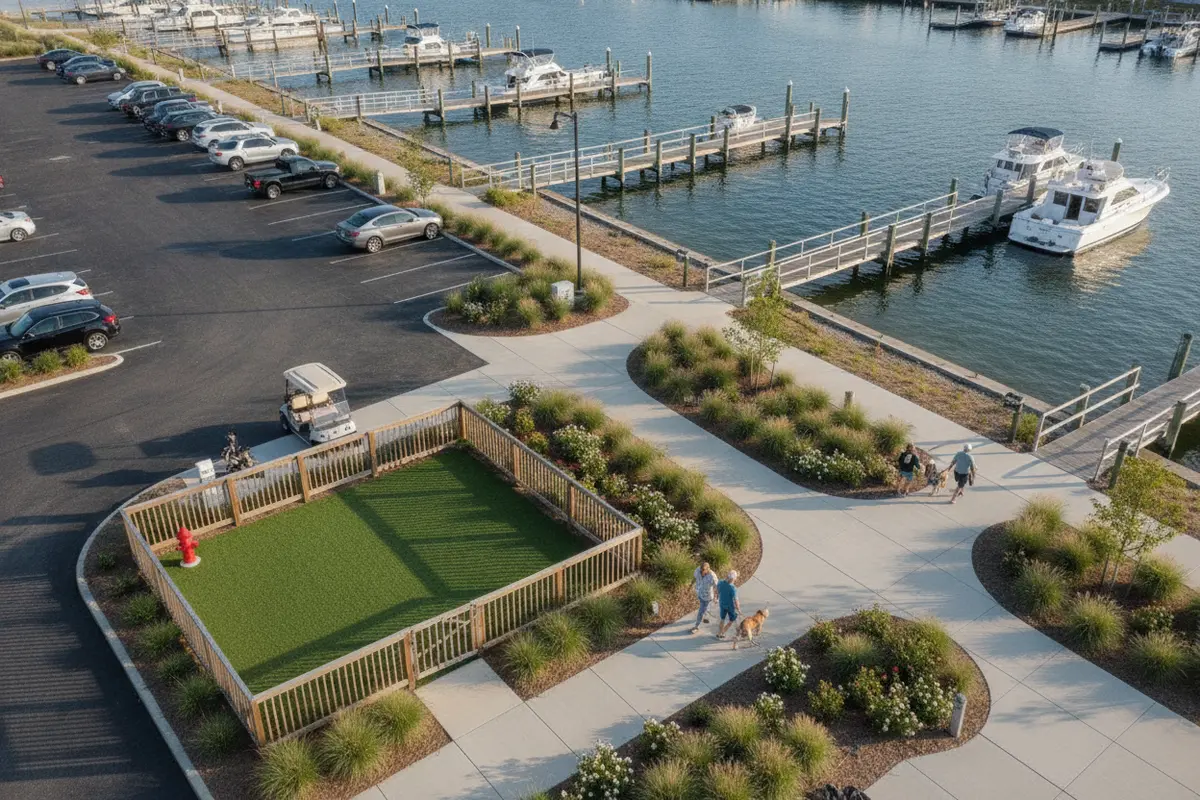
A useful plan starts with a walk-through. Do not assume that only grassy areas matter. Dogs can use narrow strips of soil, gravel, mulch, artificial turf, and the edges of paved paths. Mark every area where waste could create a problem for visitors or staff.
Landscaped areas and pet relief spaces
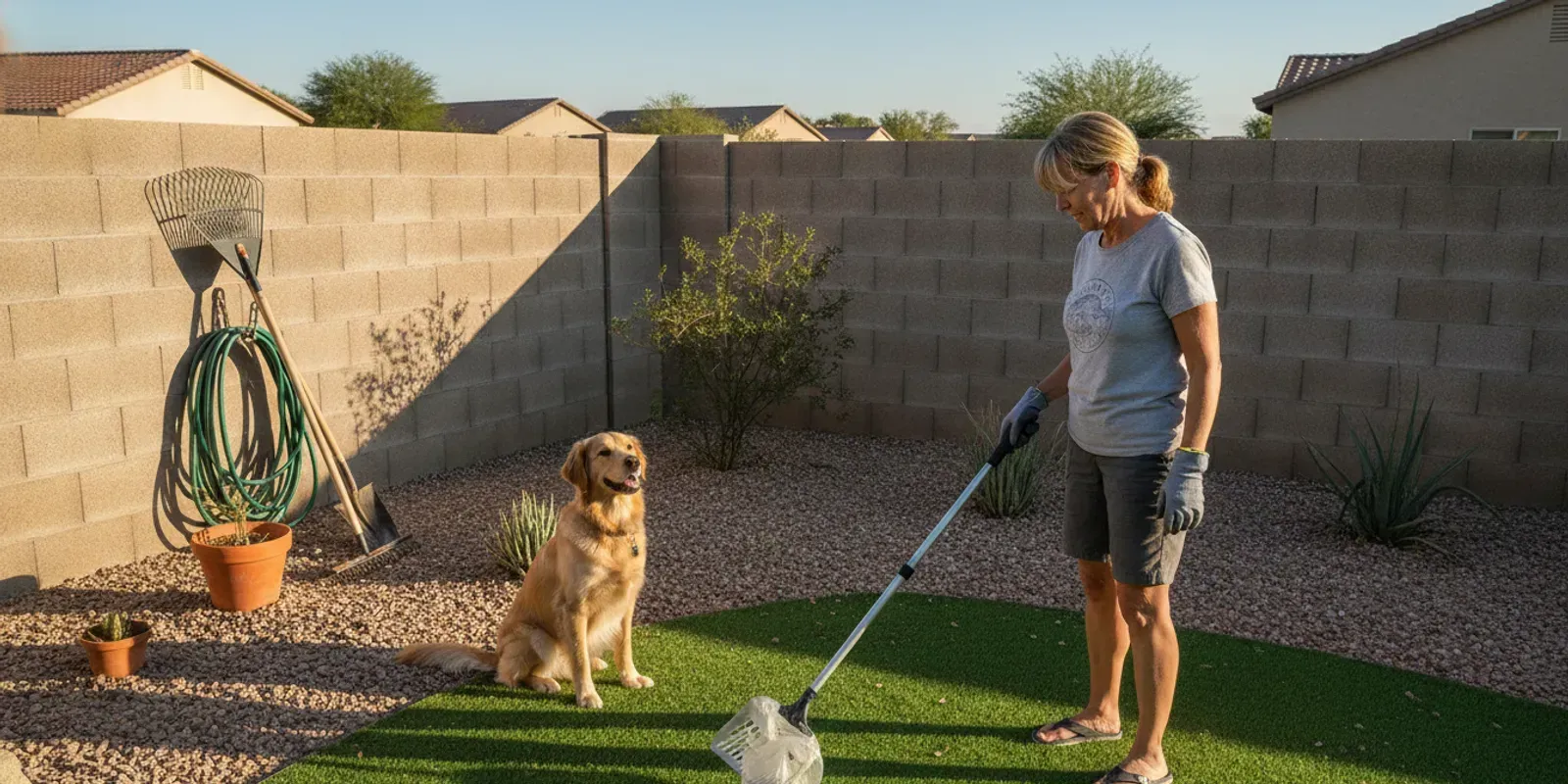
Landscaped islands, grass, planter edges, and designated pet relief areas are often the first places to inspect. These spaces may look clean from a distance while still containing waste beneath shrubs or near curbs. A relief area should be easy to find, easy to access, and included in the regular service route.
Parking lots, sidewalks, and access paths
Dogs may relieve themselves before their owners reach the dock. Check the edges of parking areas, sidewalks, ramps, and paths leading to boat slips. These places receive heavy foot traffic and may be especially noticeable when waste is left near a vehicle or entrance.
Dock approaches and common-use areas
Not every dock surface should be treated the same way. A marina team should identify which approaches, benches, picnic areas, pet-friendly amenities, and gathering spaces need frequent inspection. Waste should be removed with care around drains and waterfront edges so it is not pushed into the water.
Service roads and less visible corners
Dogs often choose quiet corners away from the main flow of people. Inspect service roads, fence lines, storage edges, and the sides of buildings. These areas are easy to overlook and can become odor sources if they are not placed on the checklist.
 How should a marina map pet traffic?
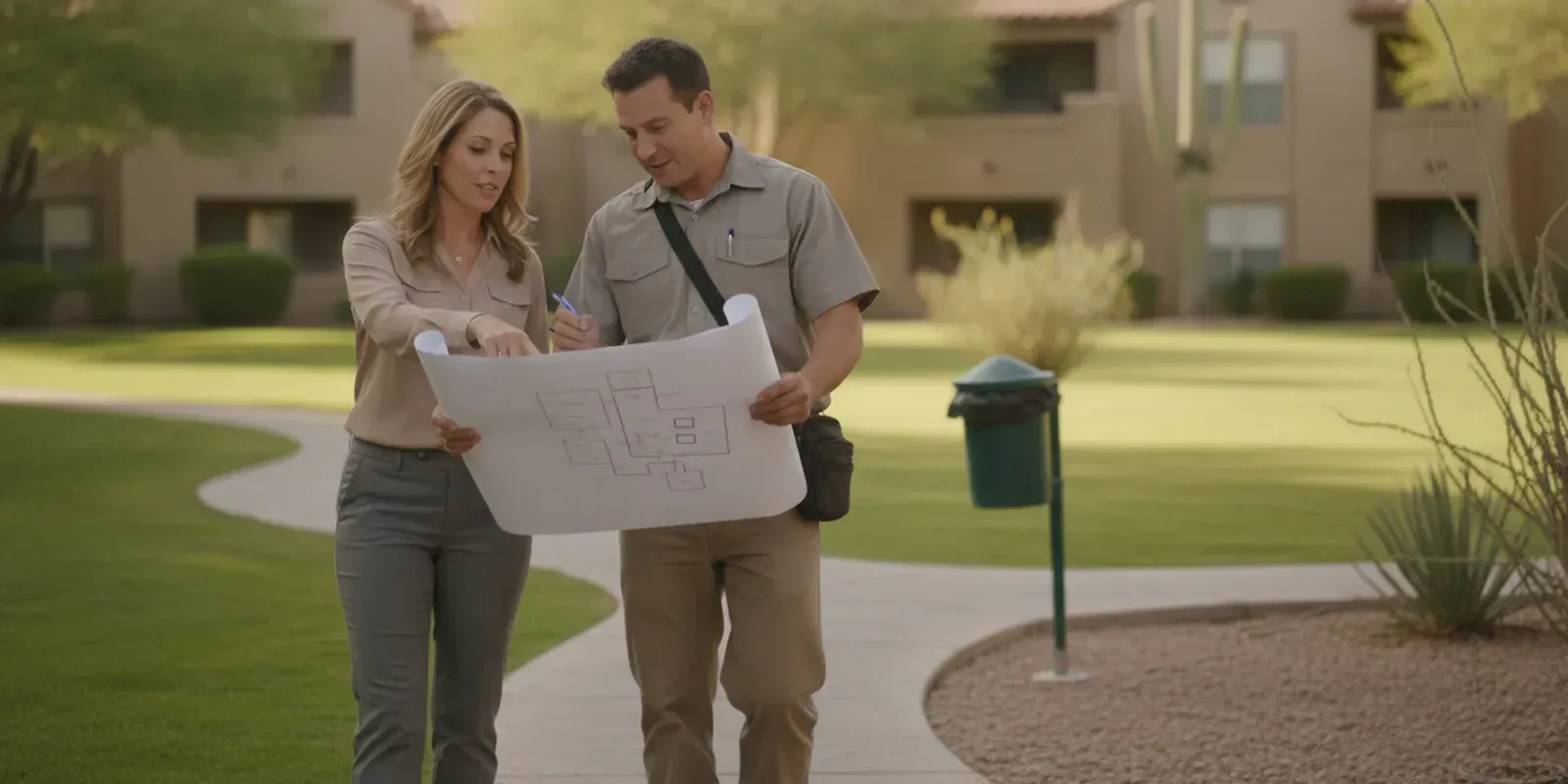
Mapping does not have to be complicated. Walk the property at different times and note where dogs actually go. Ask dock staff, office staff, maintenance workers, and regular boaters what they see. A simple site map can divide the property into zones and assign each zone a service frequency.
Consider these observations:
- Entry patterns: Dogs may stop near the first landscaped area after a parking lot or gate.
- Dock access: Slips reached by longer walks may generate more use of nearby grass or ground cover.
- Weekend changes: Visitor volume and pet traffic may increase during events, holidays, or peak boating periods.
- Shade and cover: Waste hidden under shrubs or beside structures may remain unnoticed longer.
- Surface type: Gravel, mulch, grass, and artificial turf each make waste easier or harder to see.
- Water and drainage: Areas near drains or the shoreline need careful handling and clear staff procedures.
After the first survey, mark high-use zones, medium-use zones, and low-use zones. Recheck the map after a few weeks. A plan based on assumptions may miss a popular corner, while a plan based on observation can be adjusted.
If a marina includes artificial turf, the maintenance plan should address both visible waste and the surface itself. A1's artificial grass cleaning and maintenance information explains why turf areas may need a different approach from ordinary landscaping.
What service frequency makes sense for a marina?
There is no single schedule that fits every waterfront property. Frequency depends on the number of dogs, the size of the grounds, the number of pet-friendly spaces, visitor activity, and how quickly staff need an area returned to a clean condition.
A practical starting point is to separate routine service from event or seasonal coverage:
Routine inspection and removal
Routine service covers the regular removal of waste from mapped zones. The property team should decide whether each area needs daily inspection, several checks per week, or a less frequent visit. High-traffic relief spaces and entrances generally deserve more attention than areas that see little use.
Peak-period planning
Busy weekends, holidays, fishing events, races, and other gatherings can change the amount of waste on site. Before a high-traffic period, confirm that stations are supplied, signs are visible, and the assigned inspection plan is clear. Afterward, schedule a focused walk-through instead of waiting for a complaint.
One-time reset work
If a property has fallen behind, a one-time reset may be more useful than trying to fold accumulated waste into ordinary checks. A reset identifies the affected areas, removes the buildup, and leaves the team with a cleaner starting point. A1 provides one-time pet waste cleanup for properties that need this type of service; the marina operator should discuss the site and scope before booking.
What should marina staff place near pet relief areas?
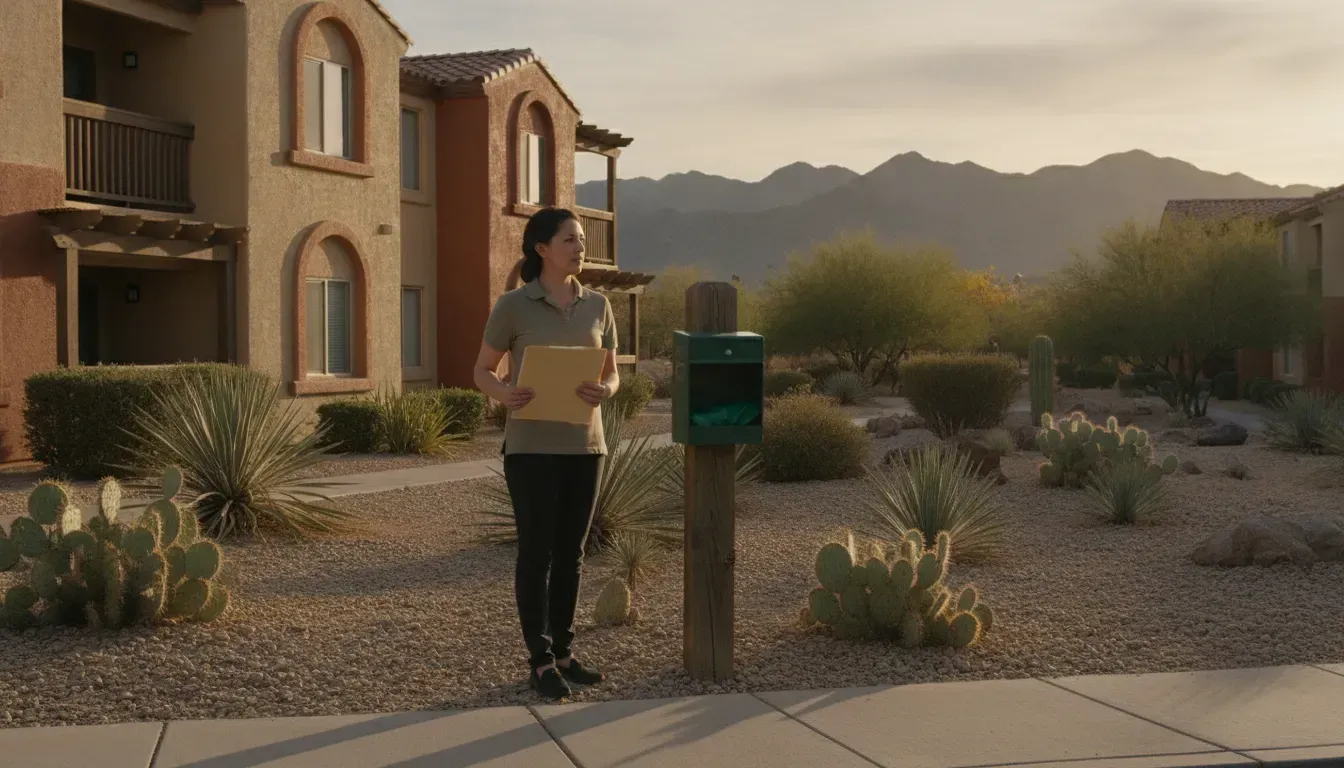
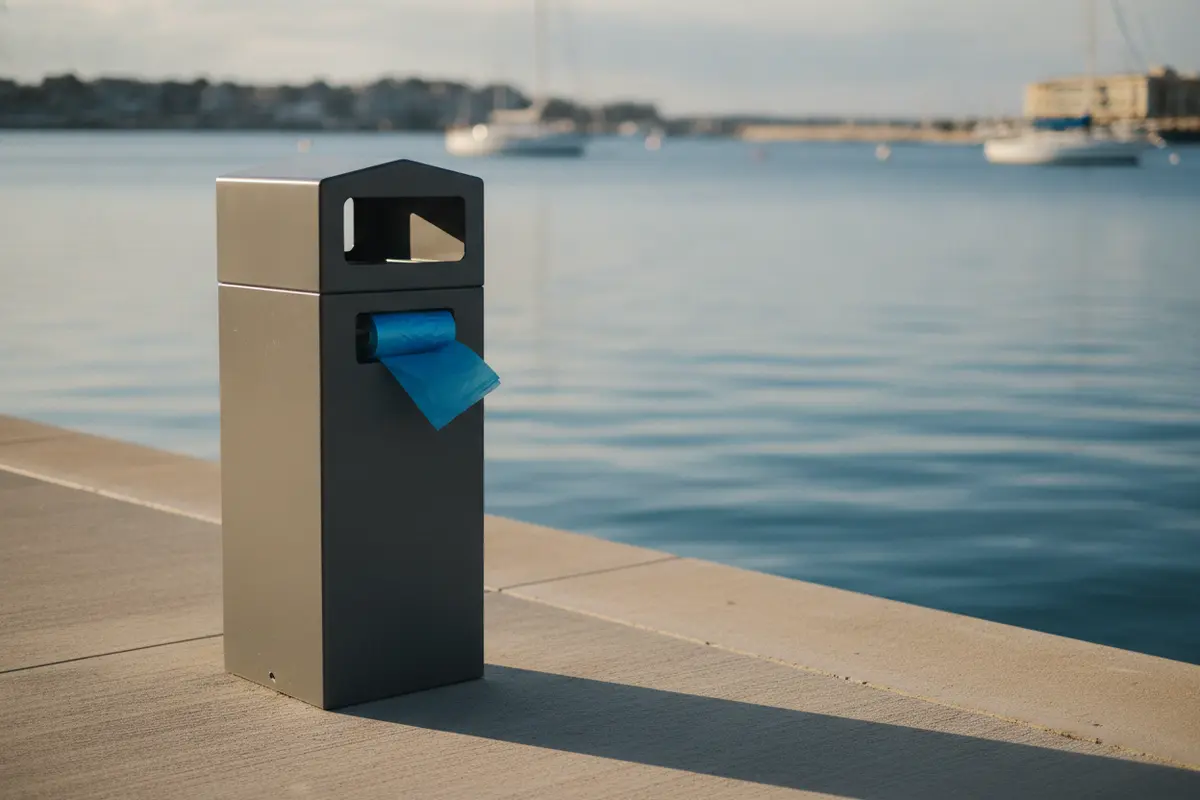
Good disposal access makes the desired behavior easier. A station should be placed where boaters can see and reach it without walking a long distance from a relief area. It should not block a path, create a trip hazard, or sit so close to the water that a spill or overflow could become a concern.
At a minimum, review the following:
- Bags: Keep an adequate supply available and check it during routine inspections.
- Waste container: Use a closed, stable container that is appropriate for the location and local disposal rules.
- Visibility: Make the station easy to spot from the path used by boaters.
- Access: Keep the area clear for people with mobility needs and for maintenance workers.
- Service access: Leave enough room for safe emptying and replacement.
- Signage: Use short, direct instructions about bagging and disposal.
A marina may also need separate waste procedures for other materials generated around boats. Pet waste should not be mixed into a container intended for oil, paint, chemicals, or other regulated materials. Oregon's government guidance for marinas recommends that waste and recycling containers be clearly marked and conveniently located, with covered dumpsters among the listed best practices. Review the Oregon marina best management practices for a broader environmental planning reference, then confirm local requirements for the property.
For ideas about station placement and planning, compare A1's guide to dog poop stations and its information on pet waste station installation. These resources are general planning references, not a substitute for local rules or site-specific engineering.
How can a marina keep pet waste out of the water?
A waterfront property should treat waste near the shoreline, drains, and runoff paths as a priority. The safest routine is to remove waste promptly and avoid washing or sweeping it toward the water. Staff should know which drains and low points require extra care and what to do if a container tips or waste is found beside the shoreline.
Clear housekeeping also helps. Keep bags and containers in usable condition, remove full bags before they overflow, and inspect the ground around each station. A station that is technically present but surrounded by loose bags or litter can encourage more poor disposal.
Training should cover basic boundaries. Pet waste is not the same as boating-related hazardous waste, and one disposal process should not be used for every material on the property. The Massachusetts guidance on hazardous waste at boatyards and marinas recommends separate, closed, labeled containers for hazardous materials. Read the Massachusetts marina hazardous waste guidance when building a broader waste-management plan.
Should a marina use staff or a service provider?
Either approach can work. The right choice depends on the property layout, staffing, visitor volume, and whether the team can complete the work consistently. The important point is to define the scope before deciding who performs it.
When in-house work may be practical
In-house work may fit a small property with a simple layout and enough staff time for regular checks. The marina still needs a written zone map, a supply checklist, a disposal process, and a way to record missed areas. Without those details, the task can become an informal responsibility that is skipped during busy periods.
When outside help may be useful
Outside help may be worth considering when staff already manage docks, repairs, customer service, grounds, and other daily demands. A provider can handle an agreed scope while marina staff focus on operations. Ask whether the provider can describe the areas covered, the expected visit pattern, access requirements, communication process, and handling of unusual buildup.
A1 Pet Maintenance has experience with recurring pet waste removal and commercial property cleanup, but this article does not claim that every marina is within its service scope. A marina in Southern Nevada or the Tucson area can contact A1 to discuss the property and determine whether the requested work is a fit. For a general comparison of service questions, see how to choose a pet waste removal company.
What should a marina ask before booking pet waste removal?
Specific questions help prevent a mismatch between the property’s needs and the proposed scope. Before requesting service, prepare a simple description of the site and ask:
- Which areas are included in each visit?
- How are docks, waterfront edges, drains, and landscaped areas handled?
- What happens when waste has accumulated beyond routine conditions?
- Who supplies bags, containers, and other disposal supplies?
- How are missed areas or access problems reported?
- Can the service be adjusted during peak boating periods?
- Are there areas the provider does not service?
- What does the property team need to do before the first visit?
Do not rely on a broad promise to keep a marina clean. A useful scope names the zones, visit expectations, access instructions, disposal responsibilities, and communication method. If the property has several separate areas, request that they be listed individually.
 How can managers tell whether the plan is working?
Use simple observations rather than complicated measurements. During regular walks, note whether waste is present in high-use zones, whether stations have supplies, whether containers are full, and whether visitors can find the disposal points. Track complaints and repeated problem areas so the plan can change when the property changes.
A short monthly review can ask:
- Are the same locations appearing in complaints?
- Are containers being emptied before they become a problem?
- Do staff know who owns each inspection?
- Did a recent event or season change pet traffic?
- Are signs, bags, and stations still positioned well?
- Does the current scope match the actual marina layout?
Cleanliness is easier to maintain when responsibility is visible. A zone map, a recurring checklist, and a clear escalation path can prevent a small missed area from becoming a larger customer concern.
Frequently Asked Questions
Is pet waste removal for marinas different from residential yard cleanup?
Yes. A marina usually has more shared spaces, more varied surfaces, changing visitor patterns, and greater concern about waste near water or drains. The service plan should map the full property instead of assuming that one yard or one relief area represents the whole site.
How often should a marina remove pet waste?
The right frequency depends on dog traffic, property size, visitor volume, and the standard the marina wants to maintain. High-use relief areas may need more frequent checks than quiet edges. Start with an observation-based schedule and adjust it after reviewing actual conditions.
Should pet waste be disposed of with boat-related waste?
Not automatically. Pet waste and boating-related materials may have different handling requirements. Keep hazardous materials, chemicals, paint, and other special wastes in their designated containers and follow local disposal rules. Ask the property’s waste contractor or relevant authority when requirements are unclear.
Can artificial turf at a marina be cleaned?
Artificial turf can require a cleaning approach that differs from natural landscaping. The plan should address visible waste, odor concerns, drainage, and the condition of the turf. Discuss the surface and the requested work before scheduling a service.
What if a marina has already fallen behind?
Begin with a site assessment and identify the areas with accumulated waste. A one-time cleanup can establish a cleaner baseline, followed by a recurring inspection and removal plan. Do not treat a reset as a substitute for deciding who will maintain the property afterward.
Request a property cleanup discussion
A well-planned marina pet waste program gives boaters a clear routine, gives staff a manageable checklist, and helps keep shared waterfront areas cleaner for everyone.