Artificial Grass Infill for Pets: A Choice Guide
Artificial grass infill for pets is a material choice, not a cleaning schedule. See what to ask an installer in Las Vegas or Tucson heat.

Artificial grass infill for pets is the loose material between the blades. That fill helps fibers stand, gives urine a path down, and changes how the surface feels under a paw in desert sun. On a finished yard, A1 Pet Waste Maintenance removes solid waste and cleans the surface in Las Vegas, Henderson, and Tucson.
Call (702) 521-2624 to plan waste pickup on finished turf
If the grass is not down yet, use this page to write better questions for the person who will put the turf in. If the grass is already in and one corner smells or mats after solids are gone, the notes below help you tell a cleaning job from a material question. A1 can clean and deodorize the finished surface.
What artificial grass infill for pets actually does
Infill is the loose material between the blades on a finished pet yard. Infill sits between the synthetic blades and down toward the backing. On a dog yard it is not decoration. It weights the fibers so they do not lie flat after daily traffic. It also gives liquid a path downward instead of a puddle on top of the blades.
A pet yard is not a sports field, and many sports fields use a deep rubber fill that a home dog run should not copy. A home run may use sand, a mineral such as zeolite, or another pet fill the installer selected for that turf system. Those products behave differently when a dog uses the same spot every day.
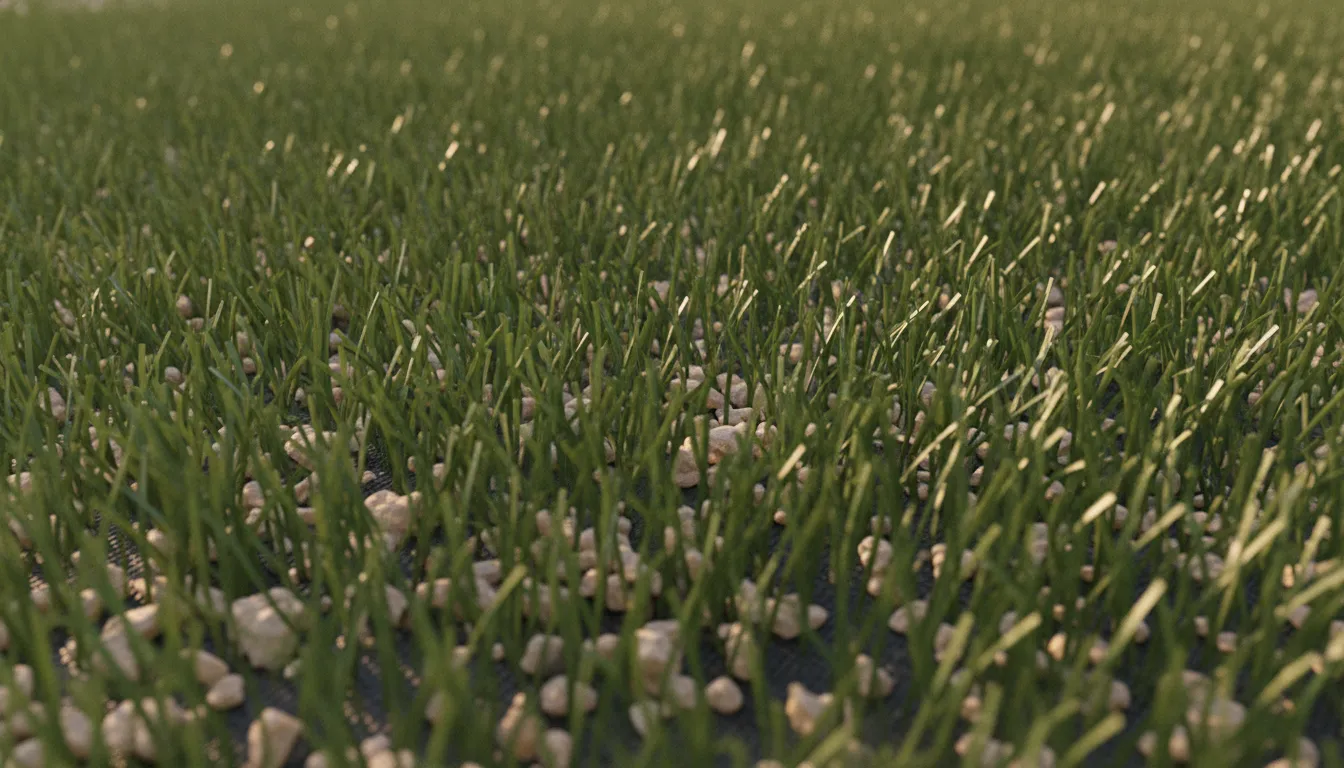 Infill is the loose material between the blades. The product in your yard is named on the installer sheet, not by a photo.
University of Florida IFAS turfgrass researchers say synthetic turf is not maintenance free. Homeowners often rinse it for pet waste, odor, and dust. They also brush it and replace infill, which IFAS describes as the granular material between the fibers. University of Florida IFAS explains that synthetic turf needs ongoing upkeep. That note is not a Las Vegas service interval, and it is not a price for a new fill.
A photo cannot identify the product in your yard, so the installer paperwork is the record that matters. If you still have that sheet, it should say what was put down, how deep it was meant to be, and whether a later top-up was part of the plan.
Which questions belong with the installer
Product name, depth, and later top-ups belong in the turf paperwork. The questions below are for that conversation. They are not a shopping list you can fill from a bag at a home store.
Ask what the fill is made of
Ask whether the proposed infill is plain sand, a zeolite or other mineral, or a product sold as antimicrobial. Ask whether it is meant for pets or for a putting green or sports field. A pet area takes urine in the same spots. A product chosen only for looks can fail that test.
Ask how it handles urine and dust
Urine has to move through the blades and the fill, then through the base. Ask how this infill is supposed to help that path, and what happens when desert dust packs the gaps. Also ask whether the fill can hold odor after the solids are gone. That answer should match the turf system, not a brochure line.
Ask about paws, depth, and later top-ups
Ask how the fill feels under a paw, how deep it should sit, and what a thin spot looks like. Also ask whether dogs can kick it out at the edges, and whether a later top-up is part of the plan. Write that answer on the quote.
Bring the same questions if you are comparing two proposals. Write the product name, the depth, and the top-up plan on the quote before you choose. For the wider install conversation, use the planning checklist for artificial grass for pets. That page covers drainage, seams, and who keeps the yard clean. It is not a second infill guide.
How common pet fills differ in a desert yard
Installers in Las Vegas, Henderson, and Tucson often talk about three pet-yard ideas: silica sand, a zeolite or similar mineral, and a fill marketed as antimicrobial. The right one depends on the turf system and the pets using it. This table is a question guide. It is not a ranking, and it is not a quote.
Question to ask
Silica sand
What it is. It is a common granular sand used to weight fibers.
What to ask about urine. Ask if it only adds weight, or if it also helps liquid move down.
What to ask about paws. Ask if the grains stay comfortable and stay put under daily traffic.
What A1 can do later. A1 can remove solids and clean the finished surface.
Zeolite or mineral
What it is. It is a porous mineral some installers choose for pet areas.
What to ask about urine. Ask if the installer expects less odor than with plain sand.
What to ask about paws. Ask if the grain size is meant for pets, not a sports field.
What A1 can do later. A1 can remove solids and clean the finished surface.
Antimicrobial fill
What it is. It is a fill sold with an added treatment against odor or bacteria.
What to ask about urine. Ask what the treatment does, how long it lasts, and what wears it out.
What to ask about paws. Ask if the coating changes how the surface feels in full sun.
What A1 can do later. A1 can remove solids and clean the finished surface. A treatment claim stays with the product maker.
Do not pick from this table alone, because two yards can use the same word, such as sand, and still have different products. Ask the installer to name the product on the paperwork. If a quote only says "pet infill," ask what that means before you sign.
Crumb rubber from a sports field is a different product, so do not assume a home dog run uses it. If a proposal mentions rubber, ask why that product fits pets and desert heat, and ask what the surface temperature has been on a similar yard.
What desert heat does to the surface
Infill choice and surface heat are related, but they are not the same decision. A UNLV and Desert Research Institute study in Las Vegas found green artificial turf could run about 62 degrees Fahrenheit hotter than the air, with surface readings as high as 169 degrees Fahrenheit. UNLV reported those summer surface readings. The study looked at one kind of turf, and it did not rank pet infill brands.
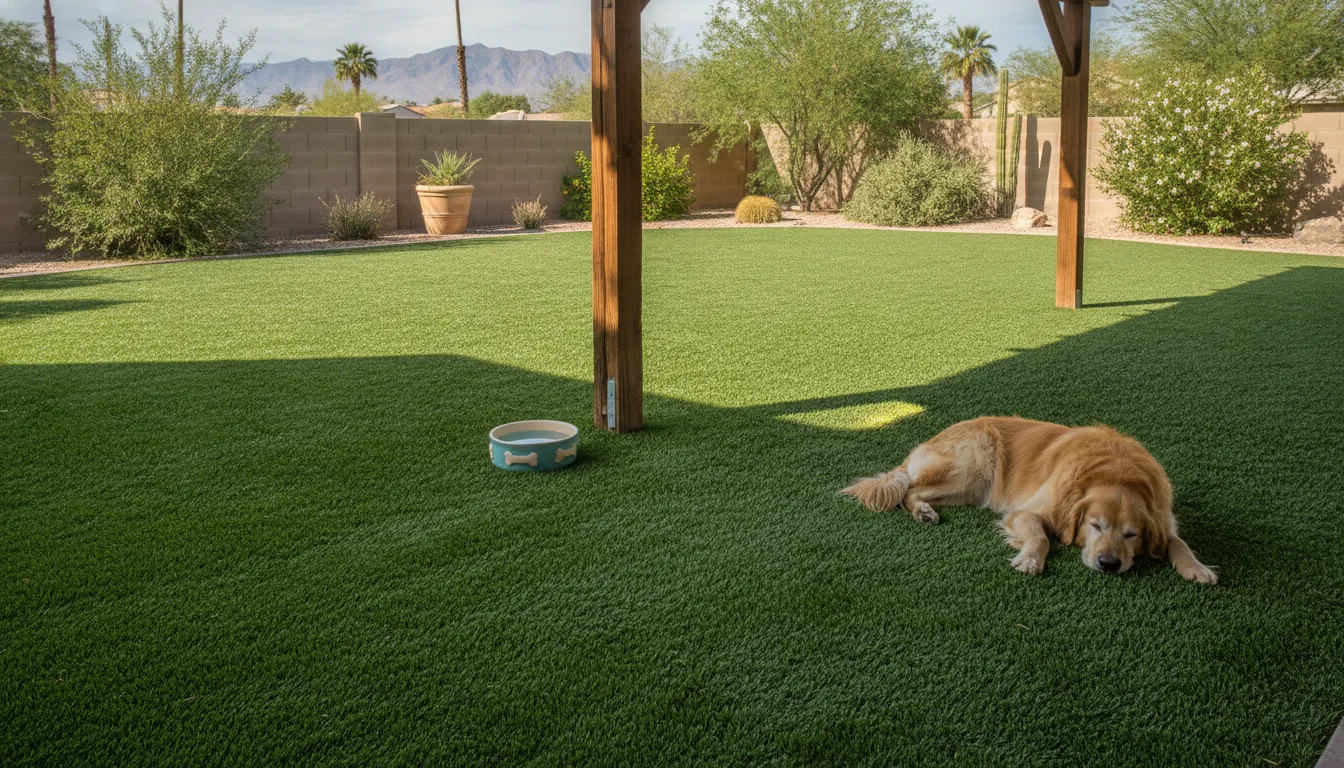 Shade and a water bowl matter on hot turf. Infill choice does not replace them.
Use that heat fact as a reason to ask questions, not as a promise that one fill stays cool. Ask the installer whether the proposed infill changes paw comfort in full sun, and where the dog can stand in shade. A water bowl in the shade is a daily habit, and it is not a substitute for the right product.
For the broader safety picture, read whether artificial grass is safe for dogs in Las Vegas. That guide covers heat, materials, and hygiene. It does not pick an infill for you. If you are still choosing between a lawn and turf, the artificial grass versus natural grass comparison is the place for that decision.
What you can see without taking the turf apart
You do not need to pull the turf up to notice a problem. Walk the yard after the solids are gone and look for a few plain signs. None of these signs proves the fill must be replaced, but they tell you what to describe on a call.
- One corner looks flat while the rest of the yard still stands up.
- You can see the backing, or you can scrape a bare spot with a shoe.
- Granules pile along an edge, a gate, or a spot the dog digs.
- The same spot smells after the solids are gone and the surface has dried.
- Water sits on top instead of moving down, even when the yard is not in a low spot.
- The dog avoids the sunny middle and only stands where the patio shade hits.
Write down which sign you see and where it is. A thin corner and a smell in the same corner are different notes from a whole yard that only smells on the hottest afternoons. The first note is useful for an installer. The second note often starts as a cleaning question.
Do not hose a suspicious spot until you have looked, because a rinse can move dust and fill and hide the clue you meant to describe. If you already rinse as a habit, say so, since frequency matters more than a perfect photo.
Where cleaning ends and installer work begins
Waste pickup and surface cleaning are the jobs A1 sells on finished turf. Solid waste on the blades is a removal job. Odor stuck in the fibers after the solids are gone is often a cleaning and deodorizing job. A thin or packed fill is a separate material question for the turf paperwork. Mixing those notes leads to the wrong call.
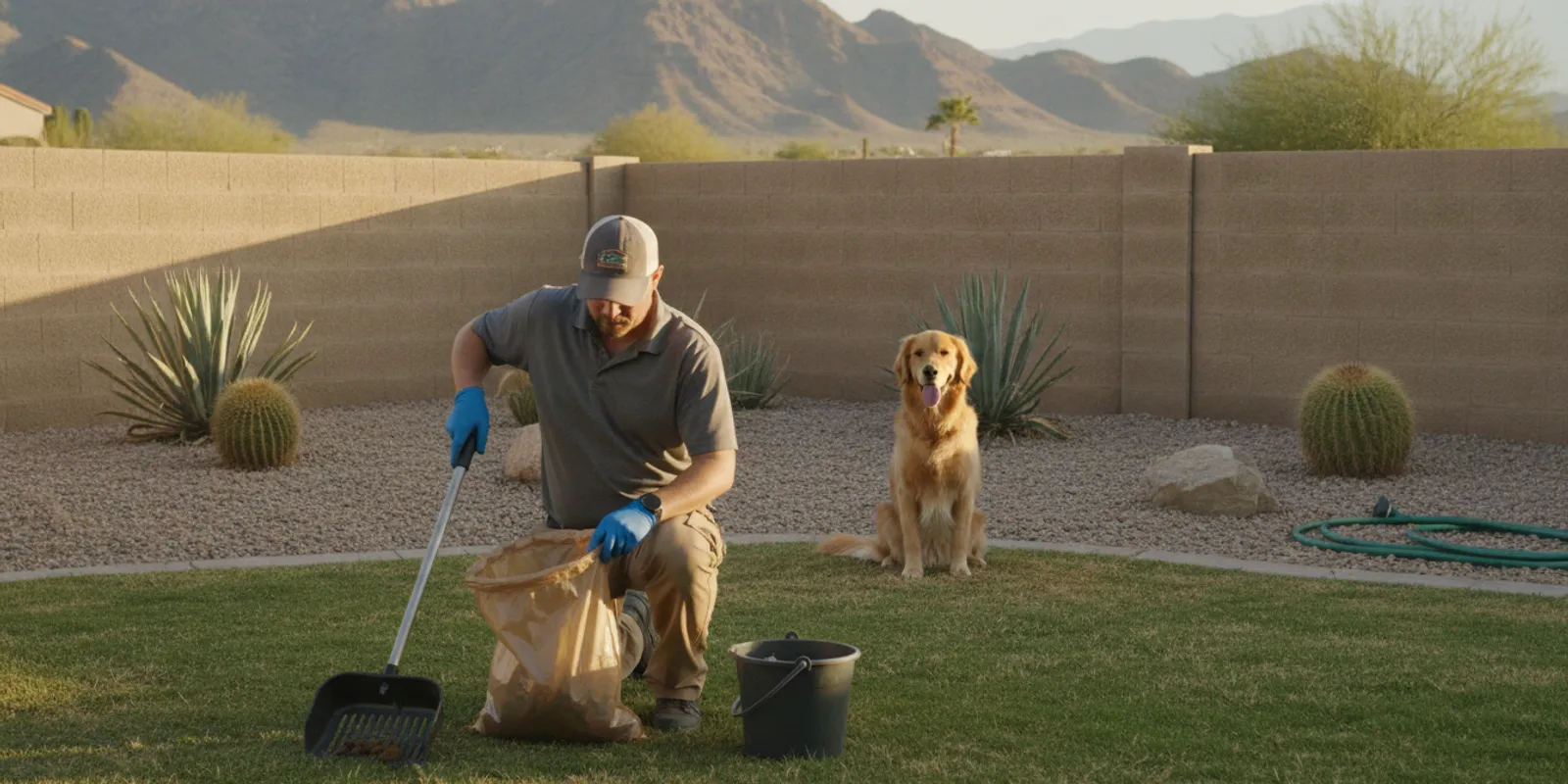
On a finished pet yard, A1 can remove solid waste, clear debris, apply an enzyme deodorizing treatment, and deep-rinse with fiber agitation. The live cleaning page also lists optional recommendations for an infill refresh when needed. A1 publishes no infill price. To discuss cleaning for a finished yard, describe its approximate size, pet use, access, and any prior treatments.
Use this order when the yard is already in use:
- Remove the solids so you are not judging a smell that is still a pile.
- Note thin spots, piled granules, standing water, and odor that remains.
- Ask A1 whether a turf cleaning and deodorizing visit fits those notes.
- If odor, matting, or standing water remains after that cleaning, use the product name on the turf paperwork to ask about the fill.
- Keep the installer sheet handy so the product name is not a guess.
The visit calendar for a dog yard is a different article, so read how often artificial turf should be cleaned for dogs when you need a schedule. Come back here when the question is the material between the blades. If you want the hands-on cleaning steps, the guide to cleaning artificial grass with dogs stays on that job and does not choose a fill.
A turf cleaning visit covers the finished surface. If solids are gone and a corner still smells, the next A1 step is a cleaning and deodorizing visit. Read what artificial grass cleaning includes before you treat a thin fill as the same job. That page lists waste removal, enzyme deodorizing, a deep rinse, and an optional note about an infill refresh.
What to say when you call
A short note gets a better answer than "the turf is bad." Use the list below whether you call A1 or the installer. A1 uses it to see whether pickup or a turf cleaning fits. The installer uses a similar note to see whether the fill needs a look.
- City: Las Vegas, Henderson, Tucson, or a nearby community A1 already serves.
- Rough turf size and how many dogs use it.
- Whether the turf is new or already in place, and whether you have the installer sheet.
- The product name on that sheet, if you have it. Do not guess.
- Where the yard looks thin, matted, dusty, or wet.
- Whether the smell remains after solids are picked up.
- Whether you want waste pickup or a turf cleaning on the finished surface.
Say which job you want. Waste pickup and turf cleaning are the A1 jobs on a finished surface. If you are still comparing turf proposals, use the questions in the table with those proposals. Call A1 when the turf is down and you want pickup or cleaning planned.
Frequently Asked Questions
What is artificial grass infill for pets?
It is the loose granular material between the blades on a pet turf system. It helps fibers stand and gives liquid a path down. The product in a given yard might be sand, a mineral, or a treated fill, and the installer sheet names it rather than A1.
What can A1 do on a finished pet yard?
A1 removes solid pet waste and can clean and deodorize a finished surface. The live cleaning page also lists an optional recommendation for an infill refresh when needed. Product choice and a new fill stay in the turf paperwork, not in a waste-pickup visit.
Can the wrong infill make a dog yard smell?
It can contribute, but smell has more than one cause. Solids left on the blades, urine in the fibers, packed dust, and a failing fill can all be part of it. Remove the solids first. If the smell remains, a cleaning and deodorizing visit is the next A1 step.
Is there a published price for pet infill in Las Vegas or Tucson?
A1 does not publish an infill price. Waste-removal plans are published. For turf cleaning, describe the yard details that may affect the cleaning scope, such as size, dogs, and access.
Should I rinse the turf before I call?
Look before you rinse, and note thin spots, piled granules, standing water, and odor after the solids are gone. A rinse can move the fill and hide those signs. If rinsing is already your habit, tell the person you call how often you do it.
Call (702) 521-2624 to ask about turf cleaning before you book