Dog poop odor remover: What A1 Customers Should Know
A dog poop odor remover works best after you remove the waste itself. If a smell remains, the right next step depends on where it is: natural grass, artificial turf, concrete, or a waste bin each needs a different approach. Start with a careful pickup, use a cleaner labeled for the surface, and avoid simply masking the smell with fragrance. These steps can help pet owners in Las Vegas, Southern Nevada, and Tucson handle routine outdoor cleanup without damaging a yard or turf.
What should you do before using an odor remover?
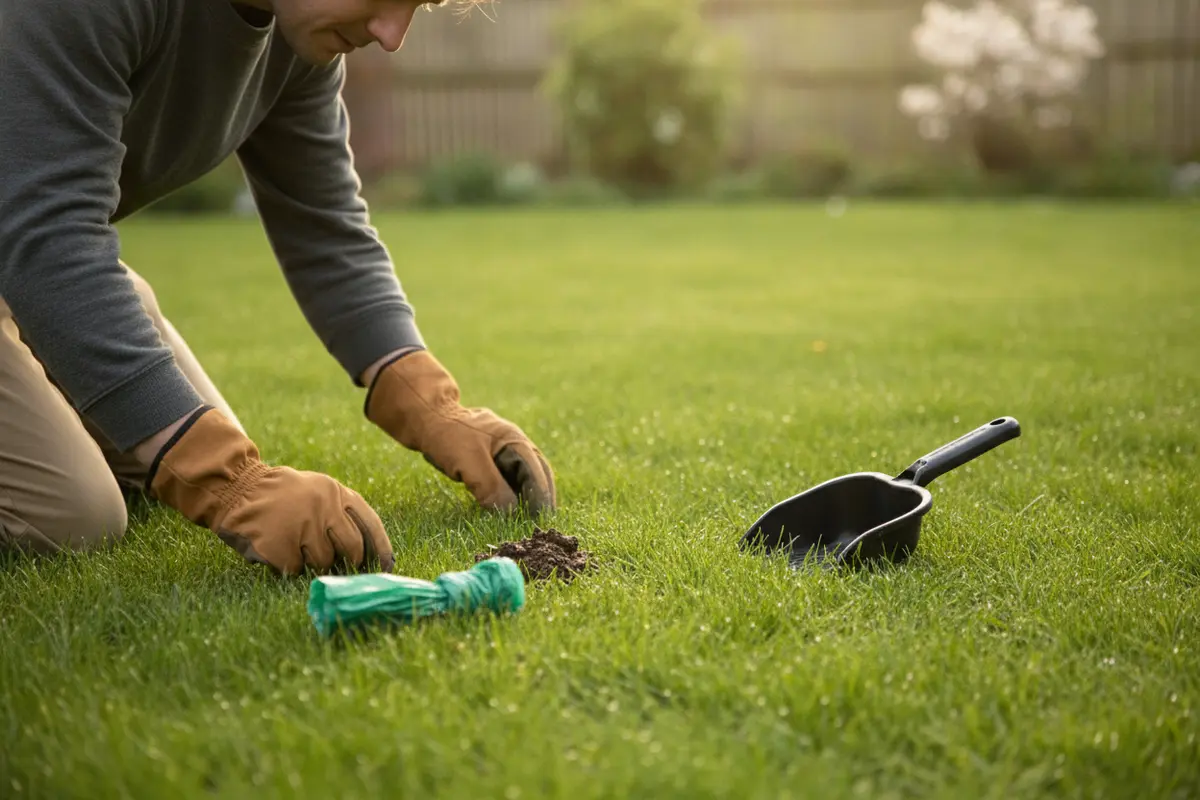
Pick up all visible waste first. A spray or deodorizer cannot substitute for removing the source. Put the waste in a tied bag and dispose of it according to local rules. Then check the immediate area for residue. On grass or turf, use a scoop or disposable material rather than rubbing the spot deeper into the surface. On concrete, lift residue with a disposable towel or scraper that will not scratch the finish.
Next, identify the surface and check the product label. A formula made for a washable patio may not be appropriate for artificial grass, and a product intended for indoor carpet may leave residue outdoors. Read the directions for dilution, application, dwell time, rinsing, and any restrictions around pets. Keep pets away while applying a cleaner and until the treated area is ready for use, following the label.
Use the smallest practical amount and test a less visible area when the label allows. That is especially useful for colored or coated surfaces. Do not mix cleaning products. Combining cleaners can create hazardous fumes or damage a surface. If the odor is coming from a large accumulation, repeated deposits, or an area you cannot clean thoroughly, remove the buildup first rather than adding more product.
A simple check before treatment can prevent wasted effort. Look at the spot in good light and ask three questions: Is any solid waste still visible? What material is directly under the spot? Where will rinse water go? The answers help you decide whether to pick up more residue, skip water because drainage is poor, or choose a surface-specific product. If the smell is spread across a broad area, check for multiple deposits instead of treating only the strongest-smelling point.
Which dog poop odor remover approach fits each surface?
Think of odor treatment as a sequence: remove waste, clean residue, then treat any remaining smell with a product intended for that surface. Water can help rinse some outdoor surfaces, but it will not remove solid waste on its own. On absorbent soil or grass, repeated heavy rinsing may spread residue rather than solve the problem. Follow product directions and avoid runoff into storm drains.
| Surface or source | First step | Odor treatment to consider | Key caution |
|---|---|---|---|
| Natural grass | Pick up waste and any visible residue | Use a lawn-safe product only if its label permits; apply as directed | Avoid overwatering and products not labeled for lawns |
| Artificial turf | Remove solids without pulling or scraping turf fibers | Use a turf-safe cleaner, rinse, and allow drainage | Do not assume a household cleaner is safe for backing or infill |
| Concrete or pavers | Lift waste and wash remaining residue | Use a surface-compatible outdoor cleaner if odor remains | Check for color, sealant, and runoff concerns |
| Waste bin | Empty the bin and remove bag leaks | Wash the container, rinse, and dry before adding a fresh liner | Do not combine bleach, ammonia, acids, or other cleaners |
The table is a starting point, not a substitute for the product label or the care instructions for your particular surface. If you are unsure what a turf system or patio finish can tolerate, check the manufacturer's guidance before applying a cleaner.
It also helps to distinguish a one-time spot from repeated exposure. A single fresh deposit may need only pickup and a careful rinse if the surface permits it. Several deposits over days can leave residue in different places and may require a systematic walk-through. Work from the cleanest area toward the dirtiest, use separate tools or clean them between surfaces, and finish by washing reusable equipment according to its instructions. This prevents moving residue from a bin area onto a patio or lawn.
How do you remove odor from natural grass?
For a fresh deposit, pick up the waste promptly and inspect the blades and soil beneath it. Remove any remaining visible material with a disposable towel or a tool that can be cleaned afterward. If you use water, use a modest rinse in the affected spot rather than flooding the lawn. Then, if a smell remains, choose a product whose label specifically permits use on lawns and follow its instructions. Products vary; do not assume that an item marketed for pet odors is suitable for every kind of grass, soil, or garden.
Keep children and pets away during treatment as the label directs. Avoid applying a cleaner near edible plants unless the label says it is suitable for that use. Do not use a scented household spray to cover the odor. Strong fragrance can make the area smell different without cleaning away residue, and outdoor use may not be appropriate for products designed for indoor spaces.
Give the area a deliberate second look before deciding that treatment failed. Move leaves or grass clippings that may hide residue, and check the edge of the affected patch. If there is no solid material left and the product label calls for a wait or drying period, allow that time before applying anything else. Adding another cleaner too soon can leave excess product on the lawn without addressing a missed source.
If odor returns after rain or watering, look for waste missed during the first cleanup, including deposits in shaded or hard-to-see spots. Check nearby edges, behind planters, and along fences. A recurring smell may point to a repeated source rather than a need for a stronger product. A scheduled pickup routine can help prevent waste from accumulating; see A1's guide to dog poop service for an overview of routine cleanup.
How should you clean dog waste from artificial turf?
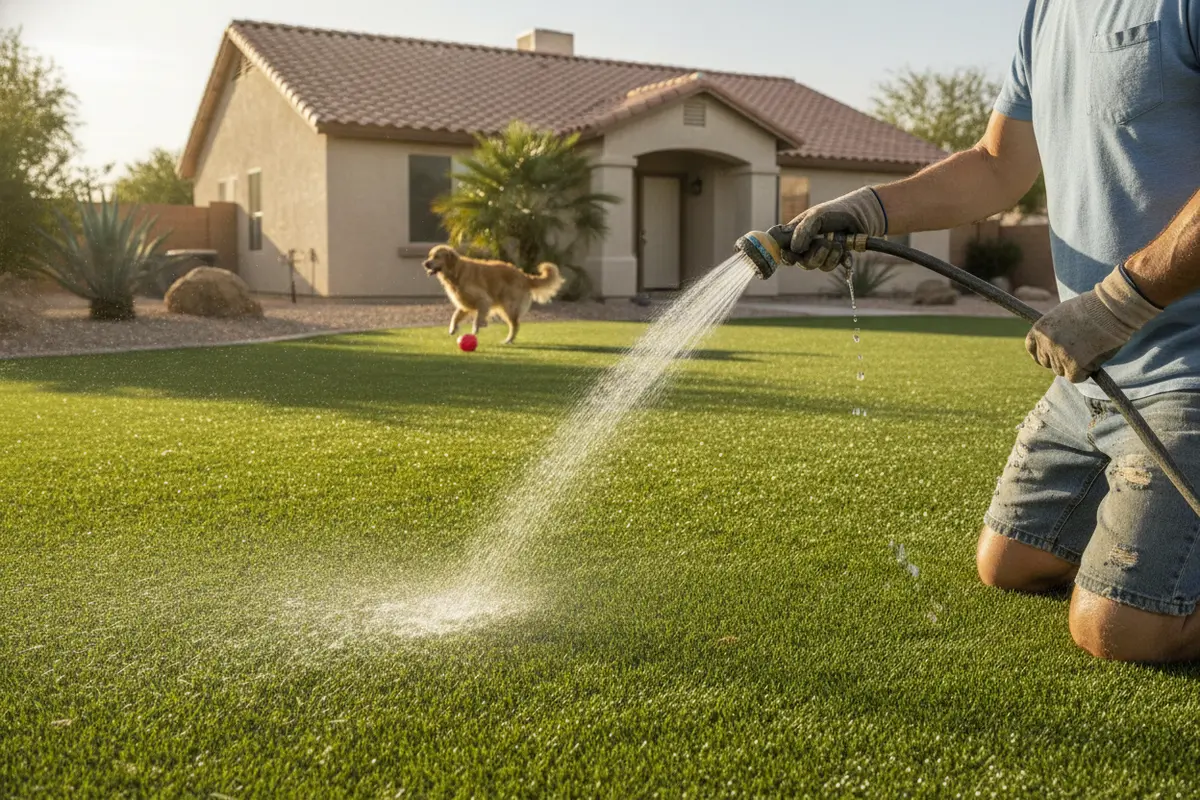
Artificial turf needs attention to both the visible surface and the material below it. Pick up solids carefully. Avoid metal tools or forceful scraping that can damage the turf fibers or backing. If the turf's care guide allows, rinse the area so residue can drain through the system. Use a cleaner specifically labeled for artificial turf, and follow its instructions for application and rinsing.
Do not pour household disinfectants, bleach, or concentrated cleaners onto turf unless the turf manufacturer and product label both allow it. A cleaner can affect fibers, backing, infill, nearby plants, or drainage. Do not combine treatments or add extra product because the odor has not disappeared immediately. Let the treated area drain and dry as directed, and keep pets away for the period stated on the label.
Consider how the turf is built before choosing a rinse. The surface may look like one continuous layer, but backing and infill are part of the system. If water pools rather than draining, avoid repeatedly soaking the same spot. Check the manufacturer's care instructions and the drainage path, and do not use pressure or tools that pull at the fibers. A gentle, targeted cleanup is a safer starting point than treating the whole lawn because one area smells.
When a small, fresh spot is the issue, careful pickup and a turf-safe rinse may be enough. Persistent odor across a wider area can require a more thorough maintenance plan. A1 offers artificial grass cleaning and maintenance; the specific approach depends on the turf and the condition of the area. You can also review what to expect from a turf cleaning service in Las Vegas.
What works on patios, pavers, and waste bins?
On concrete or pavers, remove the solid material first, then wash away residue with water and a surface-compatible cleaning method. A stiff brush can help on durable concrete, but use care with grout, painted finishes, sealants, and decorative stone. Test the method in a discreet spot if the surface may discolor. Direct rinsing so that dirty water does not run toward a storm drain, garden bed, or neighboring area.
For a waste bin, empty it and check for leaks or waste caught beneath the liner. Wash the inside with a cleaner appropriate for the bin material, rinse if directed, and let it dry before putting in a fresh bag. A tightly closed lid and a clean liner can reduce the odor that escapes between pickups. If you store a bin outdoors, keep it in a ventilated location away from direct access by pets and wildlife where practical.
For a patio, work in small sections so you can see whether residue has been lifted and where the rinse water travels. Start with a disposable towel or scoop, then use the cleaner's stated method rather than improvising a stronger mixture. Pavers can have joints that hold debris, while a coated or sealed surface may need gentler handling than plain concrete. If the first wash leaves a smell, let the surface dry enough to reassess before repeating the label-approved cleaning process.
For the bin, include the lid, rim, and the area where the liner folds over. A small leak can leave residue outside the bag even if the inside looks mostly clean. Do not seal a wet bin with a fresh liner; let it dry as practical after rinsing, and replace the bag if it is torn or loose. This routine targets the source rather than relying on a scented insert to cover what remains.
For any surface, a fragrance is not the same as cleaning. The New York State Department of Health explains that an odor is a smell detected when something in the air triggers the sense of smell; its overview of odors and health is a useful general reference. This does not identify the source of a particular yard smell. If you cannot find the source, check the area carefully and consider other possible causes instead of applying additional products indiscriminately.
Why might the odor keep coming back?
A recurring smell often means the source is still present or the cleanup did not reach all of it. Check for missed deposits behind shrubs, under outdoor furniture, beside gates, or in a low area where rinse water collects. On turf, consider whether residue or drainage conditions need attention. In a bin, inspect for a torn bag, a leak, or waste trapped around the lid. Clean the affected spot before reapplying any suitable product.
Heat can make an outdoor smell more noticeable, and wind can carry odors from a nearby location. The smell may not be coming from the spot you first suspect. If the odor is strong, sudden, persistent, or not clearly connected to pet waste, do not keep layering cleaners. Check surrounding areas and seek appropriate local guidance if there may be a sewer, drainage, or other environmental issue.
Use a simple source-tracking routine if you cannot locate the cause. Note when the odor is strongest, whether it follows watering or a particular pet route, and whether it is limited to turf, a bin, or another area. Compare the suspect spot with nearby surfaces rather than spraying everything at once. That gives you a clearer next step: pick up more waste, inspect drainage, clean a container, or stop treating the area and investigate a different source.
Consistency makes small cleanups easier. Walk the yard on a regular schedule, especially around common pet routes and areas that are partly hidden. Keep bags and a scoop accessible so waste is picked up promptly. If you need help with a buildup, A1's one-time pet waste cleanup page explains that option. For ongoing needs, see the service sign-up information and review which schedule is available for your property.
When does professional cleanup make sense?
Consider getting help when waste has accumulated across a larger yard, you cannot manage pickup consistently, or a pet area needs specialized attention. If you have artificial turf, use a service that understands turf maintenance rather than relying on a generic cleaner alone. The right choice depends on the size of the affected area, surface type, access, and whether the need is a one-time reset or recurring waste removal.
A1 Pet Waste Maintenance serves customers in Southern Nevada and Tucson. Its pet waste removal options include recurring weekly or bi-weekly service, while one-time cleanup is a separate option for accumulated waste. The appropriate schedule depends on your household and property; ask about the available service for your address instead of assuming that one frequency fits every yard. For common questions about recurring service, visit the pooper scooper FAQs.
Before arranging service, note the surface, the approximate area that needs attention, where pets use the yard, and whether access instructions are needed. Mention if the issue involves artificial turf or a substantial buildup. Those details help clarify whether you need a one-time cleanup, ongoing pickup, or turf maintenance. A1's pet poop removal guide provides more background on choosing a cleanup approach.
It can also help to distinguish what you want cleaned from what you want to prevent. A pickup visit addresses pet waste; turf cleaning is a separate maintenance need. If you are unsure which applies, describe the surface and the pattern of odor when you ask. For example, explain whether the smell is confined to one fresh spot, returns after watering, or seems to come from a broader area. Clear details make it easier to discuss a practical next step without assuming that every odor needs the same service.
Call A1 to discuss your cleanup needs
Frequently Asked Questions
What is the best dog poop odor remover for a yard?
There is no single best product for every yard. Remove the waste first, identify whether the surface is natural grass or artificial turf, and choose a cleaner whose label permits that exact use. Follow directions, and do not mix cleaners or use fragrance as a substitute for cleanup.
Does water alone remove dog poop odor?
Water can rinse some residue from a suitable outdoor surface, but it does not pick up solid waste and may spread residue if used carelessly. Scoop first, then rinse only as appropriate for the surface and drainage conditions. Use a labeled cleaner if an odor remains and the product is suitable.
Can I use bleach on dog waste odor?
Do not assume bleach is safe or needed. It can harm surfaces and plants, and it must never be mixed with other cleaning products. Use only a product labeled for the surface and situation, and follow its safety directions.
How can I control odor from a dog waste bin?
Empty the bin, remove any leaks, wash it with a compatible cleaner, rinse if directed, and let it dry before adding a fresh liner. A closed lid and regular emptying can help. Avoid mixing cleaners inside the bin.
When should I choose one-time cleanup instead of recurring service?
One-time cleanup can fit an existing buildup or a yard that needs a reset. Recurring service is for ongoing pickup needs. Ask about the service available for your property, yard size, and preferred schedule.
Start with the source, match the cleaning method to the surface, and follow the product label; if the odor persists, investigate the area before adding another treatment.