How Often Should Artificial Turf Be Cleaned Dogs? A Guide
This is a subtitle for your new post

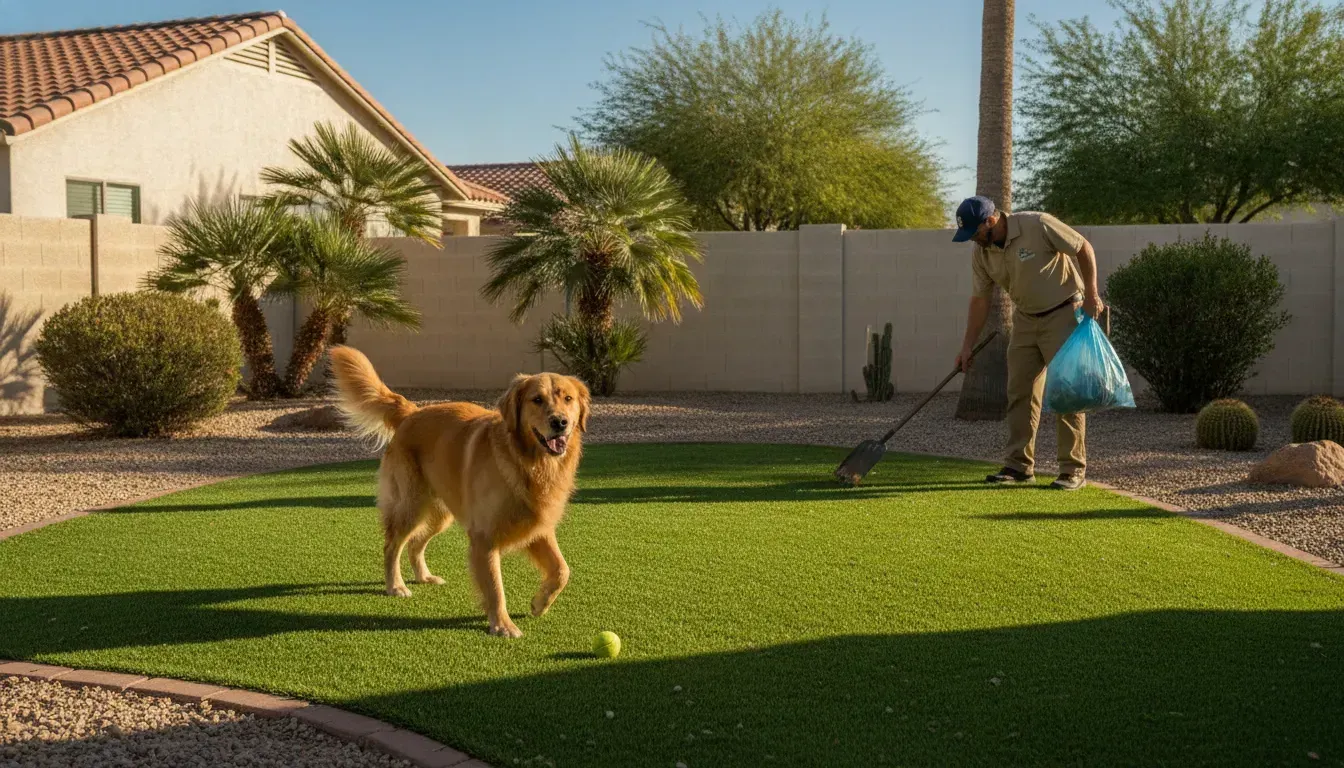
Artificial turf can look clean while holding urine residue, organic matter, and odor beneath the surface. In Southern Nevada, intense heat can make those smells noticeable faster, especially in yards used by multiple dogs.
For most homes, how often should artificial turf be cleaned dogs is best answered with immediate solid-waste removal, a weekly rinse, and a deeper enzyme-based cleaning about once a month. Homes with multiple dogs, poor drainage, or persistent odor may need professional cleaning more often.
The right schedule depends on more than the calendar. Dog count, yard size, turf use, weather, and drainage all affect how quickly residue builds up. A consistent routine helps control odor and supports a more sanitary outdoor space, while a deep rinse can reach material trapped in the infill. For the cleaning methods behind this schedule, see A1 Pet Maintenance's pro guide to cleaning artificial turf for dogs. Next, we will break down the practical frequency that works for most dog-friendly turf yards.
How Often Should Artificial Turf Be Cleaned for Homes with Dogs?
For a home with dogs, scoop solid waste immediately, remove it at least daily. Rinse or spot-clean the turf weekly, and schedule a deeper cleaning about once a month. Once-a-year cleaning is not enough for a dog household because urine, organic matter, and odor-causing residue can collect below the visible surface.
That schedule gives you a practical baseline, not a rigid rule. Homes with multiple dogs, a small potty area, or heavy daily use may need more frequent rinsing and professional sanitation. Artificial turf also requires more intensive disinfection and maintenance than natural areas, according to Colorado State University Extension.
- Immediately or daily: Pick up solid waste as soon as you see it. If that is not possible, make daily removal the minimum. Immediate waste removal is the most important sanitation step for minimizing potential pathogen spread, according to Ohio State University Veterinary Medicine.
- Weekly: Rinse high-use areas and spot-clean any visible residue. Ohio State recommends weekly sanitation for high-traffic pet areas, which is a useful benchmark for active dog yards.
- Monthly: Complete a deeper cleaning that addresses the turf fibers and the infill, not just the top surface. A thorough rinse helps move urine and organic material through the system when drainage is working correctly.
Why is a consistent schedule important?
Odor usually becomes harder to control after organic matter has had time to settle into the fibers and infill. Colorado State University Extension identifies a consistent cleaning schedule as the best prevention against long-term odor problems. Waiting until the yard smells strongly often means surface rinsing is no longer enough.
Use the monthly deep-clean interval as a starting point, then adjust it for your dogs and your yard. Hot, dry Southern Nevada weather can make odor more noticeable, while poor drainage can leave cleaning water and bacteria trapped below the surface. Follow the turf manufacturer's cleaning guidance and use products intended for pet areas.
For a complete maintenance approach, review our pro guide to cleaning artificial turf for dogs.
Q: How often should artificial turf be cleaned for dogs?
A: Scoop waste immediately or at least daily, rinse and spot-clean weekly, and deep-clean monthly. Increase the frequency when the turf has multiple dogs, heavy traffic, persistent odor, or drainage concerns. Annual cleaning alone is not sufficient.
What Factors Affect How Frequently Turf Needs Professional Cleaning?
There is no single schedule that fits every dog yard. A quiet backyard used by one dog usually needs less professional attention than a shared, high-traffic area used by several dogs. The right frequency depends on how much waste and urine the turf receives, how easily the surface drains, and how quickly local weather intensifies odor.
King County's guidance identifies the number of dogs, the size of the area, the surface material. And weather as important factors affecting the durability and drainage of outdoor pet areas. Those same variables help determine how often should artificial turf be cleaned dogs owners should schedule professional service. Consider these points:
- Number of dogs: More dogs create more solid waste and a higher volume of urine. A single-dog yard may stay manageable with routine pickup and rinsing, while a multi-dog yard may need more frequent deep cleaning and disinfection. High-traffic potty zones should be treated more like commercial-use areas than lightly used residential turf.
- Yard size and traffic patterns: A larger yard can spread waste across more surface area, but dogs often return to the same preferred spots. Small yards and concentrated potty areas receive heavier exposure in fewer square feet. Professional cleaning can focus on those high-use zones without overlooking the rest of the installation.
- Urine volume and infill type: Urine does not affect every turf system in the same way. Colorado State University Extension notes that urine acidity can change the integrity and drainage of some infill materials. Infill selected for pet use, along with a cleaning method suited to that material, can help manage odor and preserve drainage.
- Heat and dry weather: Odor buildup becomes more pronounced in hot, dry conditions, according to Colorado State University Extension. Southern Nevada's summer heat can therefore justify shorter intervals between rinses or professional treatments, especially when several dogs use the yard.
- Drainage quality: Turf needs a functioning sub-base and drainage path so urine and cleaning water can move through the system. Poor drainage can create stagnant water and encourage bacterial growth, as King County warns. If water pools or the turf stays damp, more cleaning alone may not solve the problem. The drainage issue should be assessed first.
Use your current schedule as a starting point, then adjust it when dog count, traffic, weather, odor, or drainage changes. A consistent plan is more effective than waiting until the entire yard smells, and the turf manufacturer's cleaning guidance should always be followed.
Daily, Weekly, and Monthly: A Simple Turf Cleaning Schedule
A consistent routine keeps dog-friendly artificial turf cleaner, fresher, and easier to maintain. The right schedule combines immediate waste removal with regular rinsing and a deeper monthly service. Cleaning does more than control odor. Proper maintenance can help extend the life of the turf installation, while sunlight and UV exposure provide some natural assistance in breaking down organic material. However, sunlight is not a substitute for removing waste or flushing urine from the turf.
Recommended artificial turf cleaning schedule for homes with dogsFrequencyTaskWhy it mattersDailyScoop solid waste as soon as you find it, then remove any visible residue.Immediate removal is the most important sanitation step because it limits pathogen spread and reduces organic material left in the fibers and infill. Ohio State veterinary guidance supports prompt waste removal.WeeklyRinse or flush the turf thoroughly with water and spot-clean areas that receive the most urine or traffic.Weekly sanitation is recommended for high-traffic pet areas. Flushing helps carry away odor-causing materials between deeper cleanings, which is especially useful when several dogs use the same space. Colorado State Extension recommends frequent water flushing to help prevent odor build-up.MonthlyDeep-clean with a pet-safe enzyme cleaner, followed by a high-pressure rinse that reaches into the infill.Enzymes break down organic waste and address odor at its source. High-pressure rinsing helps remove material deeper in the turf structure, where pathogens and residue can settle. Use only products approved for your turf system and follow the manufacturer's cleaning guidelines. Adjust this baseline when conditions demand it. A yard used by multiple dogs, a heavily trafficked potty area, or a hot. Dry Southern Nevada week may need extra rinsing or spot treatment before the next scheduled deep clean. Conversely, do not saturate turf repeatedly if the sub-base drains poorly, since standing water can support bacterial growth. Check the manufacturer's instructions before using pressure, enzymes, or disinfectants, and confirm that products are pet-safe.
For larger installations or persistent odor, a professional deep cleaning can reach areas that routine surface rinsing misses. The goal is not simply to make the turf look green. It is to consistently remove waste, urine residue, and organic matter throughout the turf system.
What Are the Signs Your Artificial Grass Needs Cleaning Now?
Artificial grass can look neat while waste, urine, and organic matter collect below the visible surface. Watch for these warning signs in a hot, heavily used yard. If you are asking how often should artificial turf be cleaned dogs, any of the following signs means cleaning is overdue.
- Persistent or worsening odor: A smell that returns soon after rinsing usually means urea and other organic material are trapped in the turf fibers or infill. Odor accumulation is a primary reason consistent cleaning matters, according to Colorado State University Extension.
- An ammonia-like smell: A sharp urine odor is more than an annoyance. Ammonia can build up when artificial turf is not flushed and cleaned regularly, creating a sanitation concern documented by the CDC.
- Matted, flattened, or darkened fibers: Areas that no longer spring upright may be holding moisture, urine residue, or organic debris. Dark patches can also indicate that the infill and base need more than a surface rinse.
- Flies or other pests: A sudden increase in flies around the potty area can signal decomposing organic material that has not been fully removed. Pick up solid waste immediately, then inspect the surrounding fibers and infill.
- Visible residue: Sticky film, crusted urine deposits, dirt lines, or discolored runoff indicate that waste is accumulating. A quick hose-down may move residue without removing what has settled deeper.
- Pets avoiding the area: Dogs may avoid turf that smells strongly of urine or feels unpleasant under their paws. Treat a sudden change in bathroom habits as a reason to inspect and clean the surface.
- Tears, gaps, or loose seams: Damaged turf can trap waste and moisture in places that are difficult to reach. The Ohio State University College of Veterinary Medicine recommends regular inspection for tears and loose seams because these areas can harbor pathogens.
Do not assume clean-looking fibers mean the entire installation is sanitary. Pathogens can settle below the surface, so effective sanitation needs to address the turf depth and base layer, not just the top. If odor persists after appropriate flushing, or if drainage is slow, schedule a deeper inspection and cleaning rather than adding stronger chemicals.
How the Las Vegas Climate Affects the Cleaning Schedule
Las Vegas heat changes how quickly artificial turf develops odor. Southern Nevada's hot, dry conditions make odor buildup more pronounced, so a schedule that works in a cooler. Wetter climate may not be enough for a Las Vegas dog yard. The practical answer is to keep up with routine waste removal and rinsing. Then schedule deep cleaning more often when odor returns quickly or the turf receives heavy daily use.
Heat is not the only consideration. Urine, organic matter, and fine debris can settle into the fibers and infill. Without enough flushing and drainage, those materials can become concentrated rather than washing through the system. King County's guidance notes that poor drainage can lead to stagnant water and bacterial growth. In a desert environment, water management matters just as much as the cleaning product. Use enough water to rinse the surface and infill, but avoid saturating an area that cannot drain properly.
Homes with multiple dogs should also plan for periodic disinfection, not just deodorizing. Ohio State veterinary guidance recommends disinfecting artificial turf periodically, especially in areas used by multiple dogs. Choose a pet-safe sanitizing agent that is effective against canine pathogens, including parvovirus, and follow the product's directions for dilution, contact time, and rinsing. A deodorizer may improve the smell without providing the same sanitation benefit.
Antimicrobial infill can help inhibit bacterial growth within the turf base, but it does not replace cleaning. It is one part of a maintenance system that should also include prompt waste pickup, regular flushing, adequate drainage, and occasional deep service. If the yard has a persistent odor despite those steps, the problem may be below the visible surface.
A1 Pet Maintenance has served Southern Nevada pet owners for more than 26 years. Our local team can assess the turf, infill, drainage, and odor pattern, then recommend a practical cleaning frequency for your Las Vegas or Henderson yard. For a deeper maintenance reference, see our pro guide to cleaning artificial turf for dogs.
What Happens If You Skip Professional Turf Cleaning Too Long?
Skipping cleanings does more than make an artificial lawn look neglected. Pet waste and urine can leave organic matter trapped in the turf fibers and infill, creating conditions that are harder to correct later.
Risk 1: Odor becomes embedded
Urea and other organic material can accumulate below the visible surface. As that buildup grows, odor may return quickly after a light rinse, especially during hot, dry weather. Colorado State University Extension identifies trapped organic matter in the fibers and infill as a major source of artificial turf odor. And notes that a consistent cleaning schedule is one of the best ways to prevent long-term odor problems.
Read the Colorado State University Extension guidance on artificial turf maintenance.
Risk 2: Ammonia and pathogens remain in the turf base
Persistent urine contamination can contribute to ammonia buildup, a known hazard that requires regular flushing and cleaning. Waste and pathogens also may settle below the surface, so cleaning only the top blades does not address the entire sanitation problem. The Ohio State University College of Veterinary Medicine recommends addressing the full turf depth when sanitizing, particularly where dogs use the area regularly.
This matters for pets and families that walk, play, or sit on the turf. It also matters when guests notice a strong smell or when an otherwise attractive yard no longer feels clean enough to use.
Risk 3: Drainage problems allow bacteria to thrive
If the sub-base does not drain properly, over-saturation can leave stagnant water behind. King County guidance warns that poor drainage can create conditions for bacterial growth. Artificial turf for dogs needs drainage that allows urine and cleaning solutions to pass through, rather than trapping contaminated moisture beneath the surface.
Risk 4: The installation wears out sooner
Neglect can turn a manageable maintenance issue into a property expense. Regular cleaning helps extend the life of an artificial turf installation. When odor, infill contamination, drainage trouble, or surface wear are ignored, the yard can lose comfort, appearance, and practical value before its expected service life.
Professional turf cleaning is the reliable reset when buildup has gone too far. A thorough service can remove waste, treat odor at its source, rinse deeper into the infill, and identify drainage or surface issues before they become more costly.
Professional Turf Cleaning That Keeps Your Yard Fresh
Routine pickup and rinsing help, but high-use turf eventually needs a deeper treatment. A1 Pet Maintenance provides professional artificial grass cleaning and maintenance for dog owners throughout Las Vegas, Henderson, and Southern Nevada. The service is designed to remove waste, reach below the surface, and address the organic material responsible for persistent pet odors.
Our artificial turf cleaning process includes:
- Complete waste removal: We inspect the full yard, remove solid waste, clear loose debris, and dispose of it using city-sanitation-approved practices. Prompt removal matters because solid waste can contribute to pathogen spread and odor. The Ohio State University College of Veterinary Medicine identifies immediate waste removal as a critical sanitation step: read the veterinary sanitation guidance.
- Enzyme-based deodorizing: Enzymatic cleaners break down organic matter at the source instead of simply covering the smell. This is especially important when urea and other residue become trapped in turf fibers or infill. Colorado State University Extension recommends enzymatic cleaners for breaking down organic waste and persistent odors: review the artificial turf maintenance guidance.
- Deep high-pressure rinsing: We rinse into the infill layer, where surface spraying may not reach. High-pressure rinsing helps remove organic matter deeper in the turf structure, while proper drainage allows wastewater and cleaning solutions to pass through.
- Fiber agitation and restoration: Agitation helps loosen embedded debris and lift matted blades so the turf looks cleaner and feels more usable again.
Professional cleaning can provide more consistent results on larger installations or yards that receive heavy daily use. Colorado State University Extension notes that larger artificial turf areas may benefit from professional services for thorough, reliable sanitation. A1 has more than 26 years of experience caring for pet-use properties, and our no-contract service is available through weekly or bi-weekly routes in Las Vegas and Henderson.
If your yard is holding onto odor despite regular pickup, call A1 Pet Maintenance to book a professional turf cleaning. Or start with a one-time cleanup to reset the surface, then choose a weekly or bi-weekly route that fits your dogs, yard, and schedule.
Frequently Asked Questions
How often should you clean artificial turf with dogs?
Pick up solid waste immediately, rinse the turf at least weekly, and adjust the schedule for the number of dogs, yard size, and Southern Nevada weather. Weekly sanitation is recommended for high-traffic pet areas, while a consistent routine helps prevent odor from building up in the fibers and infill. Sources: Ohio State University College of Veterinary Medicine and Colorado State University Extension.
Does artificial turf need to be deep cleaned?
Yes. A monthly deep clean is a practical starting point for many dog yards, with more frequent service when odor returns quickly or several dogs use the area. Deep cleaning should address the infill and base, not just the visible blades, because organic material and pathogens can settle below the surface. Follow the turf manufacturer's cleaning guidance.
How do you clean dog urine off artificial grass?
Flush the affected area thoroughly with water, then use a pet-safe enzyme cleaner labeled for artificial turf. Enzymes help break down organic material that causes persistent odor, while flushing carries urine and residue through properly functioning drainage. Avoid harsh products unless the turf manufacturer specifically approves them.
Is weekly cleaning enough for turf with multiple dogs?
Not always. Weekly rinsing may be enough for a lightly used yard, but multiple dogs can require more frequent flushing and periodic deep sanitation. If the turf develops a strong urine or ammonia odor, stays damp, drains slowly, or shows heavy residue, shorten the interval and have the infill and drainage evaluated.
Ready to Keep Your Artificial Turf Fresh?
A consistent cleaning routine helps manage pet waste, urine odor, and the effects of Southern Nevada's heat. A1 Pet Maintenance can help you choose professional artificial turf cleaning or pet waste removal for your Las Vegas or Henderson yard.