Dog Poop: A Practical Guide to Yard Cleanup and Safe Disposal
Dog poop is easier to manage when you have a simple routine, the right tools, and a plan for waste disposal. Whether you are cleaning up after one dog or tackling a yard that has been missed for a while, a few practical choices can make the job quicker and help keep outdoor areas usable.
Ask about yard cleanup options
Why is a regular dog poop routine useful?
Leaving waste in place makes the next cleanup harder. It can get stepped on, spread through a lawn or patio, and become less pleasant to pick up as it accumulates. A regular schedule keeps the task manageable and makes it easier to notice spots that need attention. Pickup is also a basic courtesy in a shared space: a clear path, lawn, or pet area is more usable for everyone.
Choose a frequency you can actually maintain. For one dog in a small yard, a brief daily pass may take only a few minutes. In a larger yard, divide the space into sections and rotate through them, while still checking high-use areas such as paths, gates, and the spot where your dog likes to rest. With multiple dogs, more frequent checks can help prevent a large backlog.
For shared outdoor spaces, consistency matters for another reason: residents need clear, usable areas. Property managers can set a defined service cadence, provide convenient waste stations, and communicate who handles routine upkeep. A written plan helps distinguish resident responsibilities from maintenance work. For more ideas, see this guide to community pet waste solutions.
What tools make yard cleanup easier?
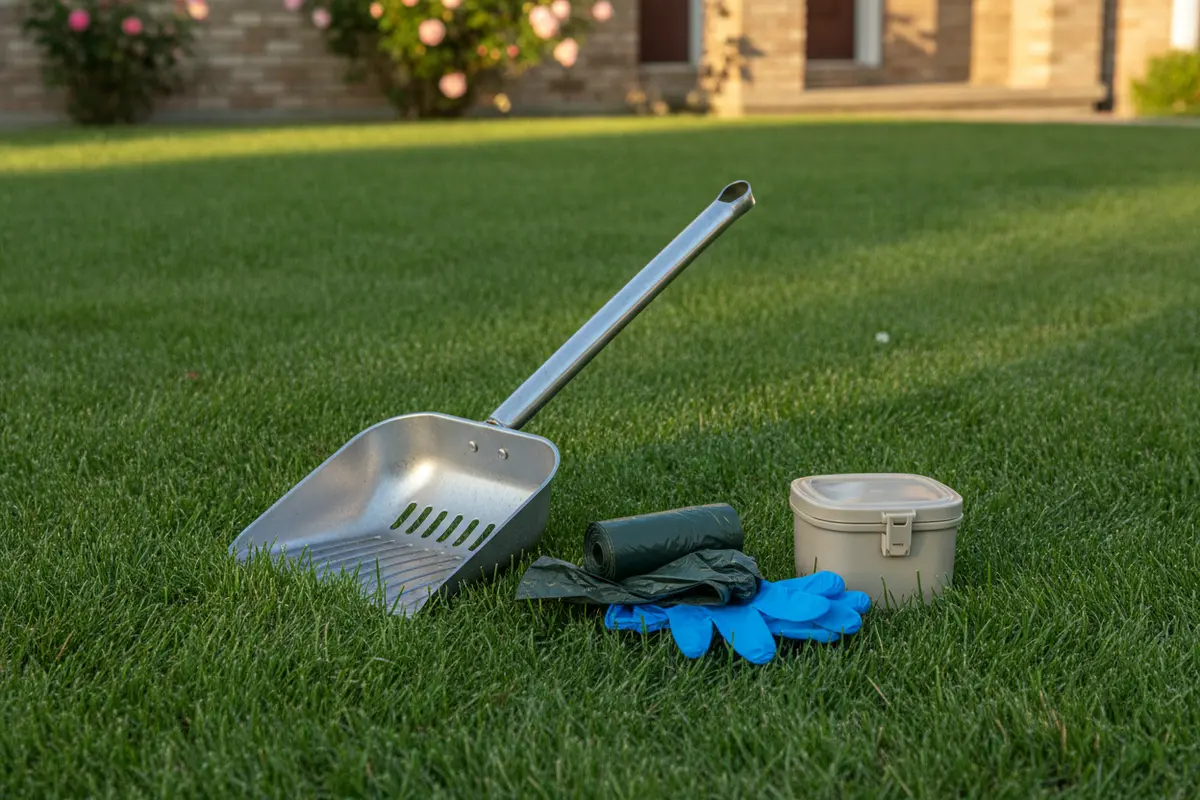
Keep supplies together so you are not searching for them when it is time to clean. A basic kit may include disposable bags, a scoop or rake-and-pan tool, and a covered waste container. Choose equipment that feels comfortable to use and suits the surface. A long-handled tool can reduce bending; a smaller scoop may be easier in narrow areas.
- Bags: Use a bag large enough to turn inside out around the waste without tearing. Keep a few extras in your kit.
- Scoop: A sturdy scoop works well on firm ground and many lawn surfaces.
- Rake and pan: This can help when waste is soft or the ground is uneven.
- Waste container: A lidded container helps keep bags contained until household disposal.
- Handwashing supplies: Wash hands with soap and water after handling waste, even if you used a bag or tool.
Check the tool after each pass. Remove residue, rinse it in an appropriate outdoor location, and let it dry before storing. Avoid rinsing waste into a storm drain or leaving contaminated water where children or pets play. Keep bags and tools out of reach of children and animals.
How do you pick up dog poop from different surfaces?
Grass and soil
Approach from the side where you can lift the waste without pressing it into the ground. Use a bag or scoop to collect it, then scan the surrounding area for smaller pieces. On a large lawn, work in a consistent pattern, such as parallel rows or a clockwise loop. This reduces missed patches and repeat walking. If grass is tall, slow down and inspect around edges, shrubs, and objects where waste can be hidden.
Patios and paths
Lift the waste first rather than smearing it across the surface. If a mark remains, use a suitable cleaner according to its label and the surface manufacturer's care instructions. Do not mix cleaning products. Keep pets off the area until it is ready for use, especially if a product label calls for a waiting period. Use only the amount of rinse water needed, and prevent dirty runoff from reaching a storm drain.
Artificial grass
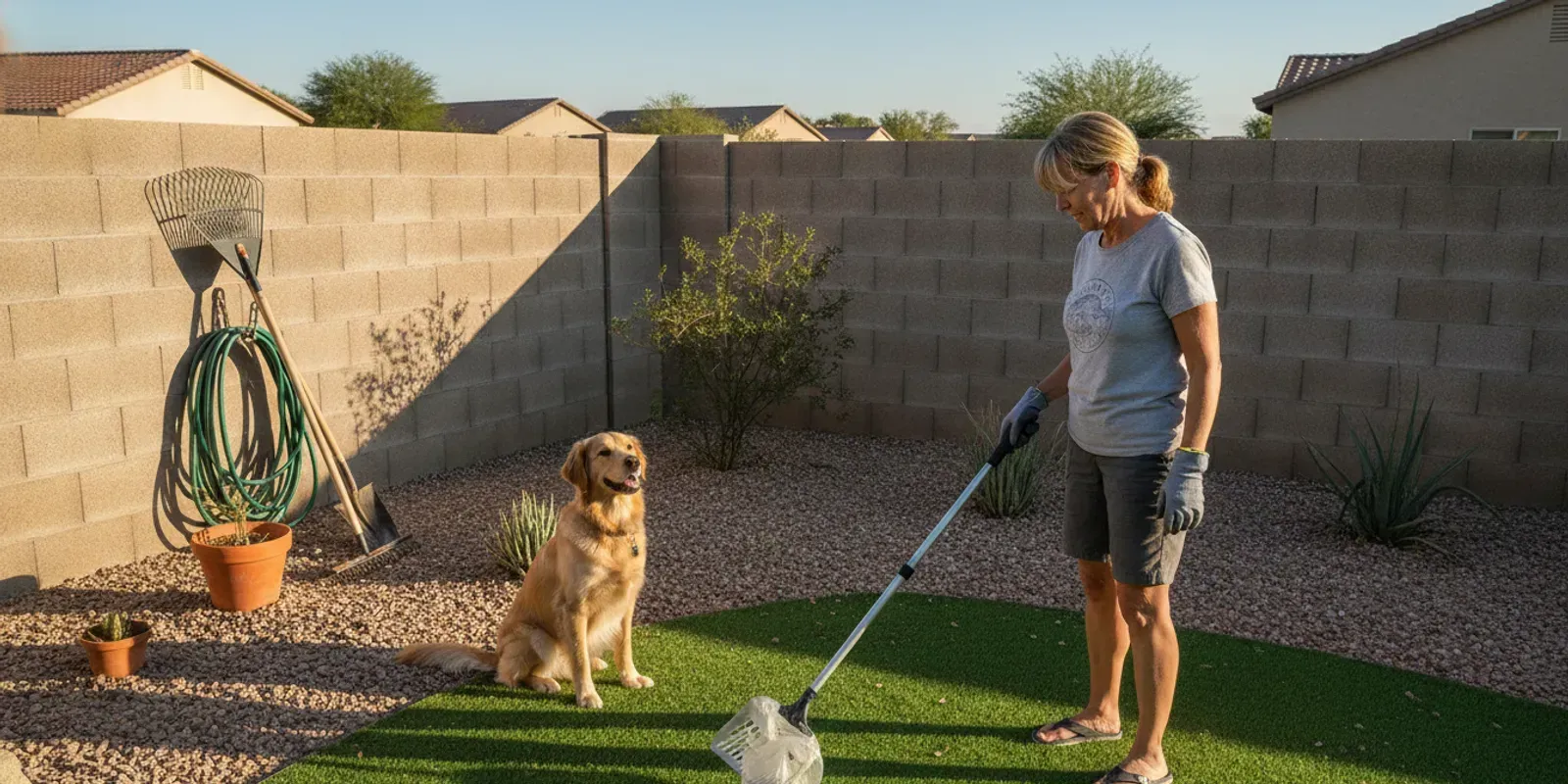
Remove solid waste promptly with a scoop or bag. If residue remains, follow the turf manufacturer's directions for rinsing and cleaning. Artificial grass products vary, so avoid assuming that a household chemical or strong disinfectant is safe for every turf system. Routine pickup and appropriate rinsing are distinct from deeper cleaning for persistent odor or buildup. A1 Pet offers artificial grass cleaning and maintenance information for pet owners.
What should you do with collected waste?
Bag the waste securely and use the disposal method permitted by your local waste service. Household rules differ, so check municipal guidance or your waste provider's instructions rather than assuming that every bin or collection program accepts pet waste. Do not leave filled bags in a yard or public area, and do not put them into recycling unless local rules explicitly allow it.
When cleaning a shared property, plan for where waste will go before service begins. A designated, accessible receptacle and regular removal schedule can prevent overflowing bins. If the site has pet waste stations, maintenance should include checking bag supplies, emptying receptacles, and confirming that lids and dispensers work. See A1's dog waste station planning resource for more on station options.
For general context on why communities monitor dog waste, EwA Trail Report describes using a dog-waste datasheet to document waste in green spaces: Why Record Dog Poo?. The page supports the practical point that tracking observations can help identify where attention is needed; it is not a local disposal rule. For bin acceptance and disposal instructions, rely on your municipality or waste provider.
How can you clear a yard with accumulated waste?
If a yard has been missed for several days or longer, do not rush through it. Divide the space into manageable sections, start at the far edge, and work back toward the exit. Wear suitable shoes and gloves if you prefer them, keep children and pets away from the work area, and bag waste as you go. Dispose of each bag according to local rules.
A useful way to organize the work is to make a quick perimeter pass first. Check along fences, behind shrubs, around outdoor furniture, and beside gates. Then sweep the open lawn or pet run in parallel rows. Mark completed zones mentally or with a simple map for a large property; this prevents you from retracing the same area while missing another. Keep the bags and tools near the exit so you do not carry them across finished sections.
For a heavy accumulation, a one-time cleanup may be more practical than trying to catch up during ordinary daily walks. Before starting, estimate the sections, identify hard-to-see areas, and decide where sealed bags can be stored temporarily while you finish. If the ground is wet, take care not to track material indoors. Once the backlog is removed, choose a repeat schedule that prevents it from building up again. A1 explains its one-time pet waste cleanup option online.
For a more detailed plan, read the guide to resetting a yard after accumulated dog waste. It can help you think through the order of work and how to maintain the yard afterward.
Which cleanup approach fits your situation?
| Approach | Best fit | What to plan |
|---|---|---|
| Do it yourself on a schedule | A household able to check the yard consistently | Set a recurring time, keep tools nearby, and follow local disposal rules. |
| One-time cleanup | A yard with a backlog or a one-off need | Estimate the areas to cover, secure access, and plan bag disposal. |
| Recurring professional service | Owners who want routine pickup handled for them | Discuss property size, dog count, desired frequency, and access details. |
| Shared-property maintenance | HOAs, apartments, or other common areas | Map high-use zones, station locations, service scope, and reporting needs. |
The table compares practical arrangements rather than fixed prices. Costs and scheduling depend on the property, number of dogs, amount of waste, and service scope. If comparing providers, ask what each visit includes, how missed access is handled, and whether the service is a one-time visit or a recurring route. The guide to hiring a pooper scooper lists useful questions to ask before you decide.
How often should you clean up?
There is no single schedule for every yard. Consider the number and size of dogs, how much outdoor space they use, and how often people walk or play there. A quick daily check keeps waste from accumulating. If daily pickup is not workable, set a repeating schedule and inspect the whole area each time rather than relying on memory.
Try a two-week trial to see whether your chosen cadence works. Note the day and time of each pass, and check whether waste is still building up in a particular zone between visits. If it is, increase attention there or shorten the interval. A simple checklist for a household might list the lawn, side yard, patio, and gate area; each person can mark the pass complete rather than assume someone else handled it.
Shared properties may need a cadence based on use and site layout. A small fenced run used by many residents may require more frequent attention than a low-traffic corner. Track complaints and observations, but do not treat them as a substitute for a consistent inspection route. Adjust the plan if waste is regularly found between visits.
How can a property manager organize shared-area cleanup?
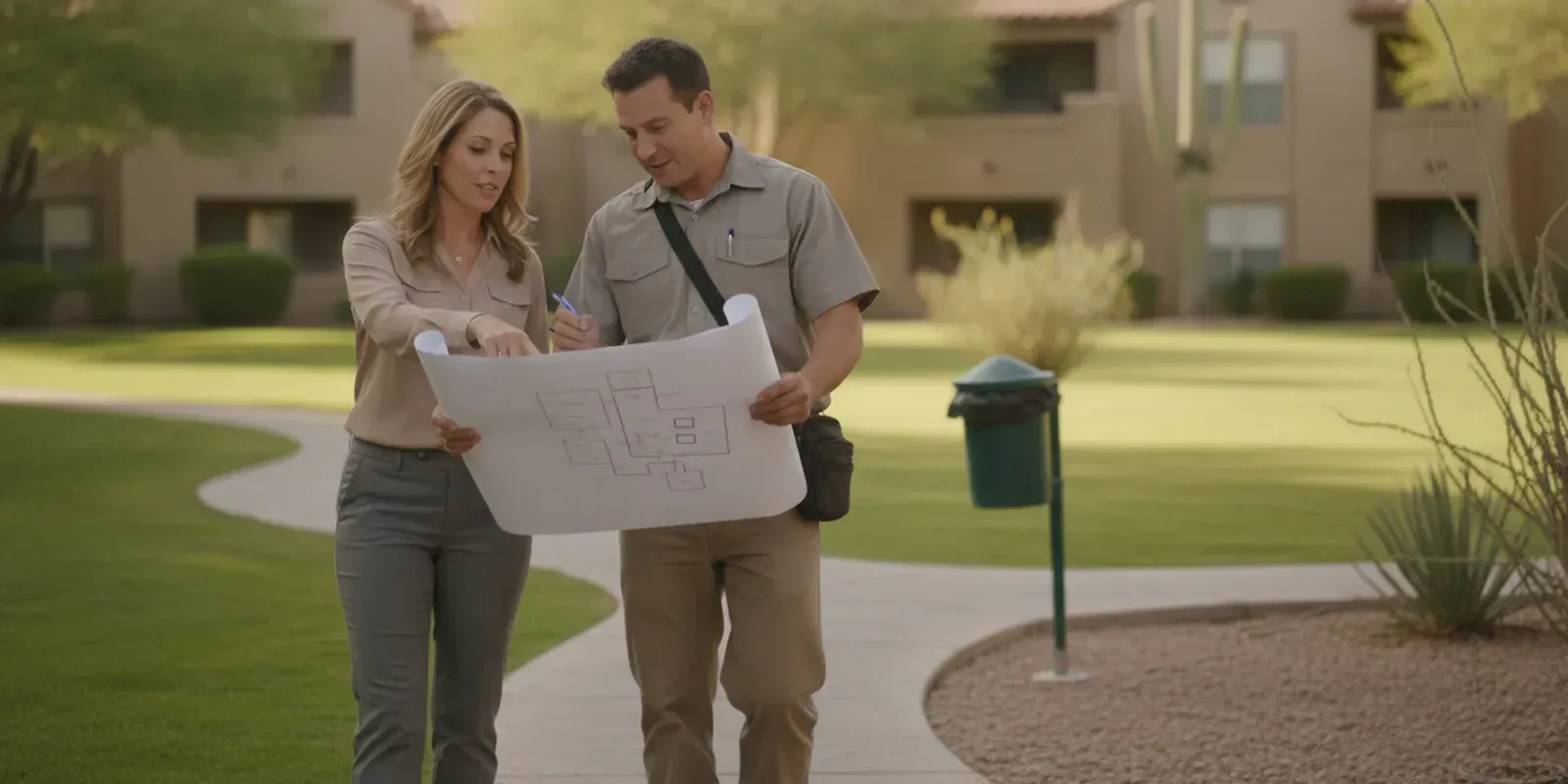
Start with a walk-through of the site. Identify entrances, pet relief areas, paths residents use, and places where waste stations could be reached without detouring far from the route. A station is useful only if residents can find it and if bags and receptacles are maintained. A property map can help staff or a vendor follow the same path each visit.
Then define ownership and a practical checklist. Specify who checks dispensers, who empties receptacles, where collected waste goes, and who reports a damaged lid or overflowing bin. Make the resident instructions clear and brief. If a vendor handles common-area pickup, agree on the areas included, access arrangements, service frequency, and a way to flag a missed or inaccessible area. A1's commercial property service page offers information for shared properties.
When the plan is new, review it after a few service cycles. Ask whether stations are placed near actual use, whether the route leaves blind spots, and whether the waste receptacle capacity suits the site's traffic. Changes can be modest: moving a dispenser closer to a path or adding a check after a busy period may solve a recurring issue more effectively than rewriting the whole plan.
When is professional service worth considering?
Professional pickup can help when work, mobility, travel, or a busy household makes regular cleanup difficult. It may also suit a property manager who needs a dependable plan for common areas. A1 Pet Waste Maintenance serves residential and commercial customers in Southern Nevada and Tucson, with pet waste removal and one-time cleanup options. Details about service scope are available through its company information and commercial property pages.
Before booking, describe the size and condition of the area, the number of dogs, and any access restrictions. Ask what the visit covers, how often service can occur, how the provider handles a locked gate, and how you can request changes. Sharing whether the yard has grass, soil, patio, or artificial turf helps clarify the work. A1's service FAQs explain common questions about scheduling and billing. You can also use the contact page to ask what is suitable for your property.
What common cleanup mistakes should you avoid?
- Waiting until waste is hard to see: Follow a route and check edges, shrubs, and areas behind objects.
- Using the wrong tool for the surface: Pick up first and follow the surface or turf manufacturer's care instructions for residue.
- Leaving bags outdoors: Secure them and use an approved disposal route.
- Mixing cleaning chemicals: Use products only as directed and never combine them.
- Assuming every location has the same rules: Check local waste guidance for the property where you live.
- Cleaning without a plan for tools: Keep the kit in one place, then clean and dry tools before putting them away.
Frequently asked questions
Can dog poop go in a home trash bin?
That depends on local rules and the waste provider. Bag it securely and confirm that your household bin accepts pet waste.
Should I rinse dog poop away with a hose?
Pick up solid waste first. Do not wash it into a storm drain or a play area. Follow local guidance and the surface manufacturer's instructions for any remaining residue.
How do I make a large yard easier to check?
Use a repeatable path, divide the yard into zones, and pay extra attention to fences, shrubs, and high-use spots. A short, consistent pass is easier to track than an irregular search.
What details should I share when arranging cleanup?
Explain the property size and surface types, number of dogs, current condition, preferred schedule, and any gate or access instructions. That helps clarify the scope before a visit.
Ask A1 about cleanup for your property
With a clear routine and a disposal plan, dog poop cleanup becomes a smaller, more predictable part of caring for your yard.