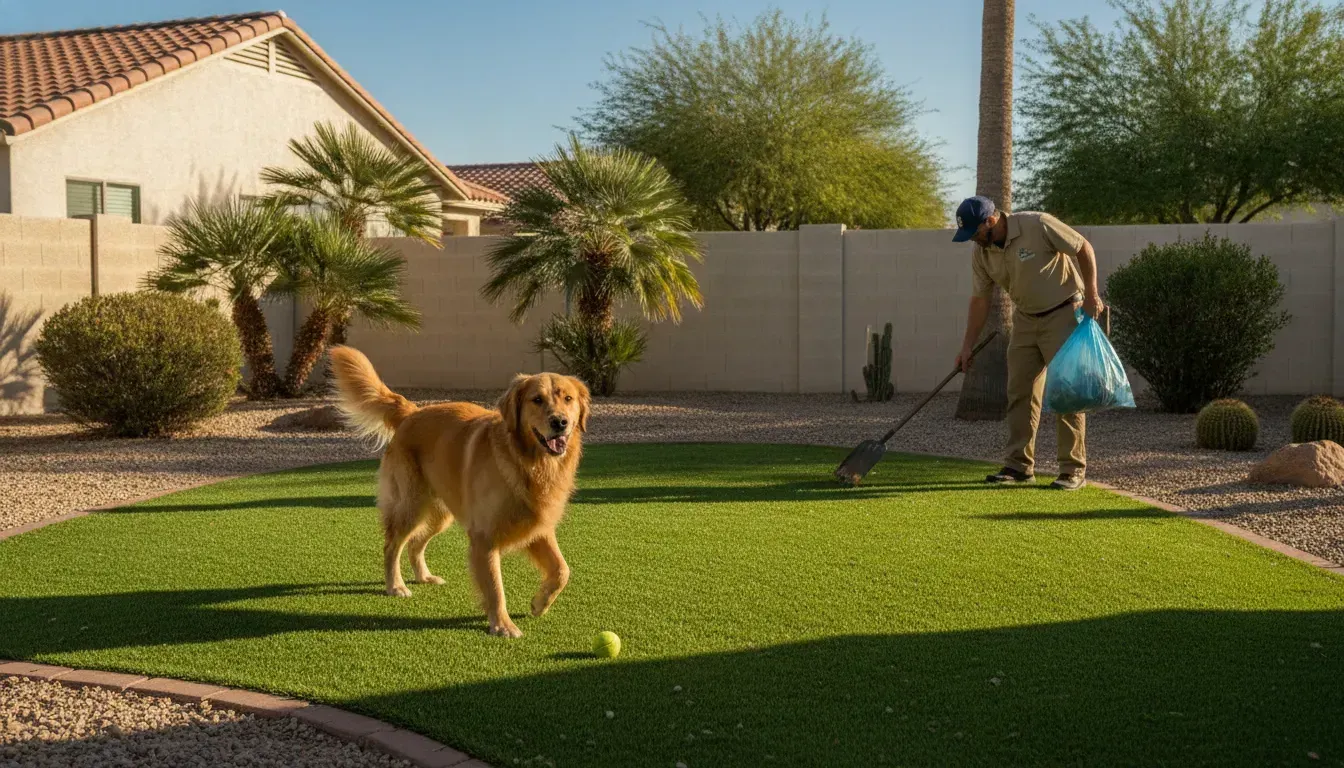
Artificial Grass vs Natural Grass for Dogs Las Vegas
Compare artificial grass vs natural grass for dogs las vegas, including heat, water, waste pickup, drainage, odor control, maintenance, and five-year costs.

In Las Vegas, the best dog-friendly yard is not simply the one that looks greener. Heat, water use, urine, daily cleanup, and the amount of maintenance you can realistically manage all matter.
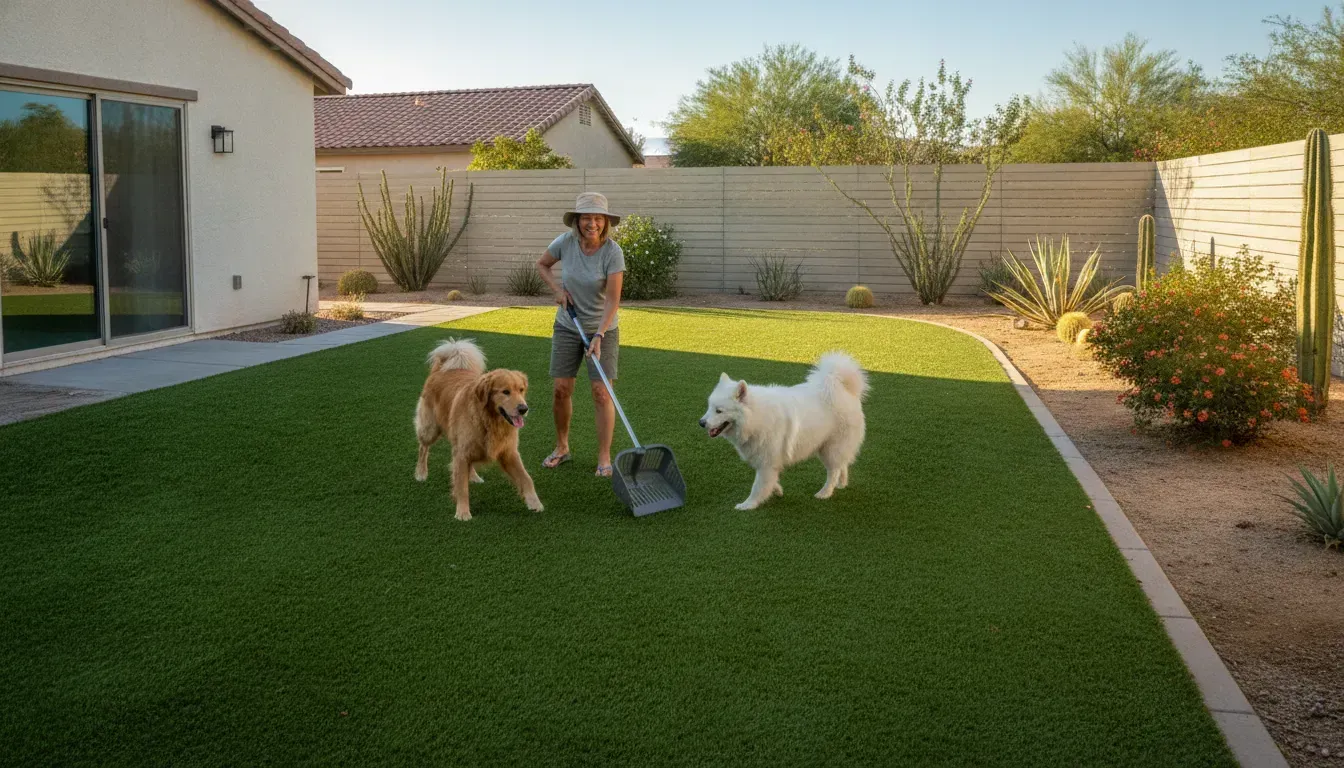
For many owners, artificial grass vs natural grass for dogs las vegas comes down to tradeoffs. Synthetic turf avoids mowing, weeding, and fertilizing. Natural grass can feel softer but may develop brown spots from concentrated pet urine. Artificial grass still needs waste pickup, rinsing, proper drainage, and odor control, and its fibers can become hot in direct sun. Natural grass also demands irrigation and ongoing lawn care. The right choice depends on your dog's comfort, yard traffic, shade, budget, and cleanup routine.
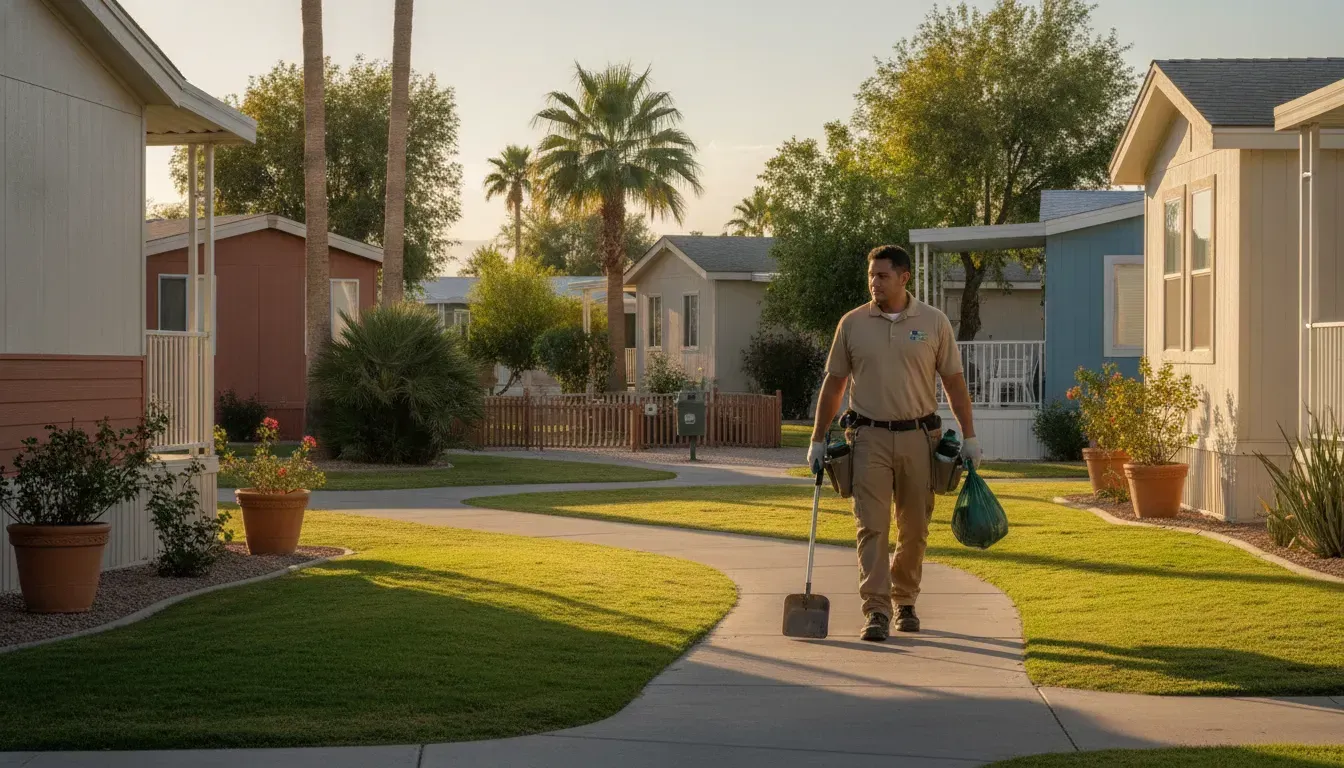
Whichever surface you choose, consistent waste removal remains the foundation of a sanitary yard. A1 Pet Maintenance has served Las Vegas-area properties for more than 26 years, helping owners keep both natural lawns and artificial turf cleaner and more manageable. Start by comparing how each surface performs in the desert climate, then weigh the long-term upkeep.
Which Surface Is Better for Dogs in Las Vegas?
There is no universal winner. Natural grass usually offers a softer, cooler-feeling place for dogs to lie down and play, while artificial grass can reduce watering and simplify everyday yard upkeep. The better choice depends on your dog's age, activity level, comfort needs, and how much routine maintenance your household can manage.
Heat and comfort matter in the desert
Natural grass can moderate backyard temperatures through transpiration, which may make it more comfortable during a Las Vegas summer. It also provides natural traction and cushioning, an important consideration for older dogs or pets with limited mobility. However, keeping that cooling surface green in the desert requires significant irrigation.
Artificial grass can become very hot in direct sun, particularly during the hottest part of the day. Owners may need to cool the surface with water before allowing pets to play. Surface quality matters, too. Some harder products may be less comfortable for senior dogs, so evaluate the backing, infill, drainage, and cushioning before choosing an installation.
Water use, durability, and daily upkeep
Natural grass brings familiar comfort, but pet urine can create brown spots and thinning because of concentrated nitrogen. High-traffic areas may also become muddy after watering or rain, making waste cleanup more difficult. Keeping a natural lawn healthy can require mowing, fertilizing, weeding, and frequent irrigation.
Artificial grass does not need mowing or watering to stay visibly green, and solid waste is often easier to scoop without collecting clippings or mud. That does not make it maintenance-free. Pet owners still need to remove waste promptly, rinse urine areas, brush fibers in busy play zones, and maintain good drainage. Heat, organic buildup, and poor drainage can contribute to odor and bacterial concerns.
Installation quality affects the long-term result. A properly designed drainage system helps move urine and rinse water away from the surface, while suitable infill helps support the fibers and may contribute to cooling. Artificial turf can reduce water use over time, but that benefit must be weighed against its initial installation cost.
Quick answer: Choose natural grass when cooling, softness, and traction are your top priorities and you can manage its water and lawn-care demands. Consider artificial grass when lower irrigation needs and easier solid-waste cleanup matter more, provided you are prepared for rinsing, brushing, and periodic sanitation.
Whichever surface you choose, neither eliminates waste pickup. Consistent removal is the foundation of a clean dog yard, and the right routine protects the lawn as well as the people and pets using it. For more surface-specific guidance, see A1 Pet Maintenance's artificial turf hygiene guide.
How Does Artificial Grass vs Natural Grass for Dogs in Las Vegas Handle Waste?
Neither lawn type removes the most important part of yard hygiene: prompt solid-waste pickup. Artificial turf can make scooping simpler because there are no grass clippings or mud mixed with the waste, but it still needs attention after every bathroom visit. On natural grass, the same routine matters, even when waste is less visible among blades or in areas that receive frequent irrigation.
Immediate removal helps limit odor development and interrupt parasite cycles. The Environmental Protection Agency identifies prompt pet-waste removal as a key residential management practice. While the CDC notes that parasites such as Giardia may be present in pet feces and contaminated soil. These concerns matter even more in shared yards, dog runs, HOA spaces, and multifamily properties where several dogs use the same area. Regular cleaning also reduces people's exposure to potential pathogens associated with dog feces.
Urine is handled differently by each surface. Natural grass absorbs some liquid into the soil, but repeated concentrated urine can contribute to brown spots and thinning. Artificial turf does not grow or burn, yet urine can remain in the infill or underneath the surface if the system lacks effective drainage. In Las Vegas heat, trapped moisture and organic residue can intensify odors. A properly designed drainage system should move urine and rinse water away instead of allowing it to pool, but drainage is not a substitute for sanitation.
Rinsing synthetic turf can help manage urine residue, and enzyme-based cleaning can support sanitation on synthetic surfaces. Use pet-safe, non-toxic products and follow a routine suited to the turf system. For a deeper look at rinsing, odor control, and safe cleaning practices, review this artificial turf hygiene guide.
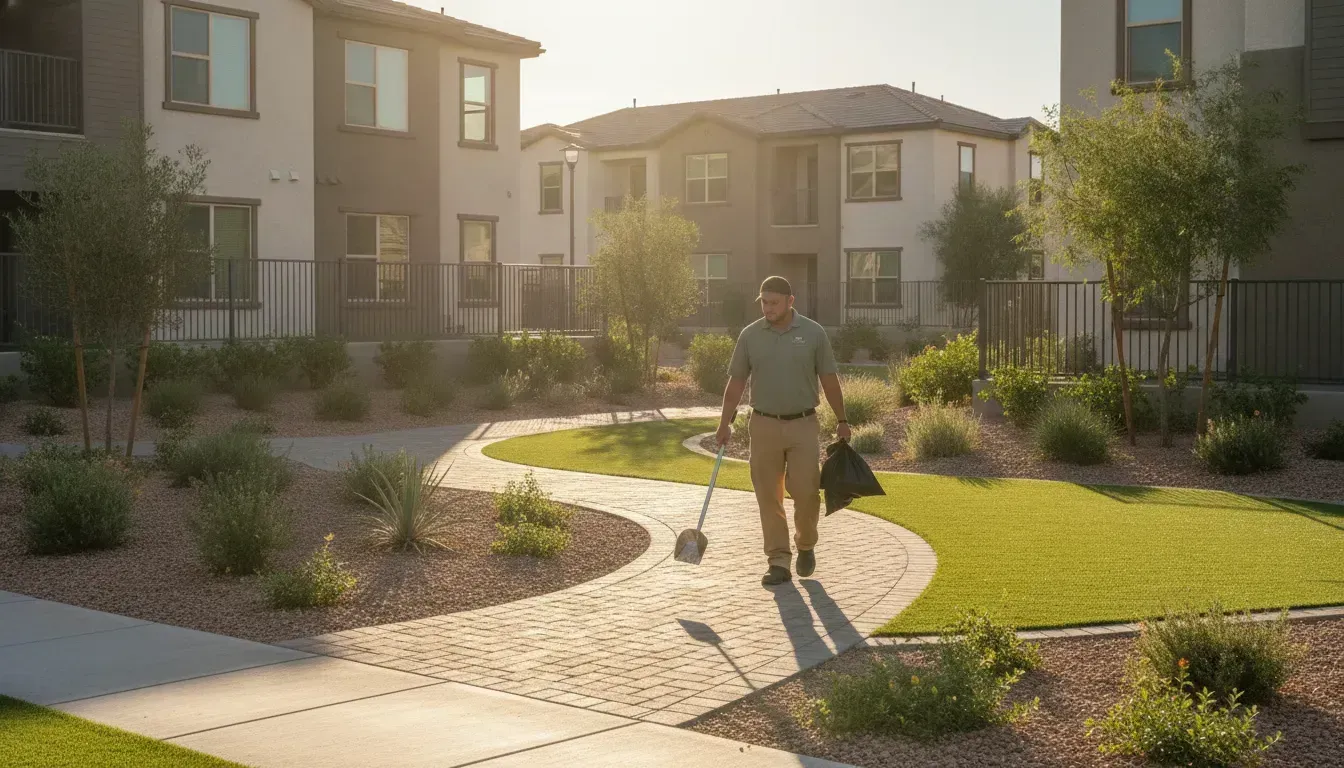
Waste can also affect stormwater. Picking up feces before irrigation or rain helps reduce contamination carried into runoff. It protects the lawn, nearby drainage infrastructure, and the people and pets using the space. Whether you choose turf or keep a living lawn, regular pet waste removal is the foundation of a cleaner yard. Artificial grass may simplify the visual cleanup, but neither surface is maintenance-free.
What Does Maintenance Cost Over Five Years?
A five-year comparison should look beyond the installation invoice. The useful question is how much time, water, labor, and upkeep each surface requires after it is established. Artificial grass generally carries a higher initial installation cost, while natural grass continues to use resources throughout its life. In Las Vegas, that ongoing balance matters because natural grass can require significant irrigation, and arid conditions make water loss a recurring maintenance concern. Learn more about pet turf maintenance costs before treating any general comparison as a project estimate.
Five-year cost categories for dog-friendly yard surfacesCost categoryArtificial grassNatural grassInstallation or establishmentUsually the larger upfront expense, including site preparation, drainage, turf, and infill.Includes sod or seed, soil preparation, irrigation setup, and establishment care.WaterUsed for rinsing and cooling when needed, rather than routine irrigation to keep grass growing.Recurring irrigation is typically necessary to keep a desert lawn viable.Routine yard workNo mowing, weeding, or fertilizing, but brushing and rinsing remain part of responsible upkeep.Mowing, fertilizing, edging, weed control, and irrigation adjustments may recur.Dog-related repairsMay include correcting drainage, replacing damaged turf, or refreshing displaced infill.May include reseeding or replacing areas affected by urine burns, thinning, traffic, or digging.Cleaning and sanitationSolid waste still needs prompt pickup. Rinsing, enzyme-based cleaning, and occasional deep cleaning help manage urine and organic buildup.Waste pickup remains essential, while urine spots, mud, thatch, and organic buildup can complicate cleanup.
What artificial grass adds to the five-year budget
Artificial grass removes several recurring lawn tasks. It does not need mowing, weeding, or fertilizing, and solid waste can usually be scooped without collecting grass clippings or mud. That can reduce routine labor, but it should not be confused with a maintenance-free surface.
Plan for regular rinsing, brushing, and pet-area sanitation. Infill, including materials such as sand or silica, helps support the turf's structure and cooling performance. Over time, owners may also need to address drainage, displaced or compacted infill, wear, or localized repairs. A properly designed drainage system is especially important for moving urine and rinse water away from the surface.
What natural grass adds to the five-year budget
Natural grass may have a lower starting cost in some situations, but its ongoing requirements can be substantial in Southern Nevada. Irrigation, mowing, fertilizing, weed control, and reseeding all contribute to the five-year picture. Concentrated dog urine can also create brown spots and thinning, leading to additional repair or replacement work.
For an honest comparison, list your actual lawn service, water, fertilizer, repair, and personal time costs. Then compare those recurring costs with the installation, infill, brushing, rinsing, repair, and cleaning needs of artificial grass. There is no universal winner. The better choice depends on the yard's drainage, traffic, shade, water priorities, and how much upkeep the household is prepared to handle.
What Should Las Vegas Dog Owners Consider Before Switching?
The best lawn for your dog depends on how your yard is used, how much shade it receives, and which maintenance tradeoffs fit your household. Artificial turf can reduce irrigation needs, while natural grass can provide a softer, naturally cooler surface. Neither choice is automatically better for every Las Vegas dog or backyard.
How hot will the surface become?
Artificial grass fibers can become very hot in a hot, dry climate. You may need to cool the area with water before letting your dog play, especially during the hottest part of the day. Shade from trees, awnings, or other structures can improve comfort, but it does not remove the need to check the surface temperature. Natural grass provides cooling through transpiration, which may help moderate temperatures in a backyard during the Las Vegas summer. That benefit comes with a substantial irrigation requirement in the desert Southwest.
Will the yard drain and handle daily traffic?
Drainage deserves careful attention before artificial turf is installed. A dog yard needs a system that can move urine and rinsing water away quickly, rather than allowing water to pool beneath the surface. Ask the installer how the base, perforated backing, grade, and surrounding soil will work together. In natural grass, frequently used areas can become muddy during irrigation or rinsing, making waste cleanup more difficult. Consider where your dog runs, eats, rests, and waits at the door. A high-traffic layout may need a more durable surface or a designated path.
What does your dog need for comfort and traction?
Age and mobility should influence the decision. Natural grass can offer better traction and comfort for older dogs than some harder, lower-quality artificial turf products. Puppies, senior dogs, and dogs with joint or balance concerns may benefit from a softer resting and walking area. If you choose synthetic turf, compare fiber height, infill, backing, and installation quality instead of treating all products as equivalent. Infill materials such as sand or silica help support the structure of the lawn and can affect how it feels underfoot.
Does the installation support sanitation?
Look for a design that makes waste pickup and rinsing practical. Artificial turf does not eliminate solid waste removal, and prompt pickup still matters. It can, however, make scooping easier because there are no grass clippings or mud to collect with the waste. An antimicrobial backing may help reduce odor and bacterial growth, but it is not a substitute for drainage, rinsing, and regular sanitation. Natural grass also needs consistent pickup and care to limit odor, lawn damage, and contamination.
Question: Should every Las Vegas dog owner switch to artificial grass?
Answer: No. Artificial turf may suit owners prioritizing water savings, predictable cleanup, and heavy daily traffic. While natural grass may better suit dogs needing natural cooling, softer footing, or more forgiving traction. Compare the yard's shade, drainage, traffic, water priorities, dog age, and installation quality before deciding.
How Can You Keep Either Lawn Clean and Odor-Free?
A clean dog yard depends less on the surface you choose than on the routine you follow. Natural grass and artificial grass both need prompt waste removal, sensible rinsing, and attention to drainage. In Las Vegas, heat can make urine odors more noticeable on synthetic turf, while natural grass may develop brown spots or thinning where urine is concentrated. Use this surface-specific routine to keep the yard comfortable for people and pets.
- Pick up solid waste promptly. Remove droppings as soon as practical, whether they land on soil, living grass, or synthetic fibers. Immediate removal helps limit odor development and interrupts parasite cycles. On artificial turf, dried waste can become harder to remove from the fibers. Consistent pickup is the foundation of lawn hygiene, and it also reduces the chance that contaminated material will enter stormwater runoff. For households that need help staying on schedule, regular pet waste removal can take the task off the weekly to-do list.
- Rinse artificial turf on a regular schedule. Use clean water to flush urine through the surface and toward the drainage system, paying extra attention to the areas dogs use most. A properly installed drainage system should move urine and rinse water away quickly. Pooling, slow drainage, or persistent damp spots deserve attention because they can contribute to bacterial buildup and recurring odor. Rinsing does not replace waste pickup, but it helps prevent residue from accumulating in the infill.
- Protect natural grass while watering. Water can help dilute urine in a natural lawn, but avoid turning high-traffic areas into muddy paths. Give the surface time to drain before allowing heavy activity, and watch for thinning or brown patches that indicate concentrated use. Natural grass also needs its broader maintenance routine, including mowing and irrigation, to remain healthy in the desert climate.
- Brush synthetic fibers and use gentle products. Periodically brush artificial turf, especially in active play areas, to prevent fibers from matting and to help maintain the infill. Choose non-toxic cleaning agents that are appropriate for pet areas. For synthetic surfaces, enzyme-based cleaners can break down organic odors embedded in the infill instead of simply masking the smell. More guidance is available in this resource on artificial grass odor control.
- Check the system when odor persists. If rinsing and routine pickup do not resolve a strong smell, inspect for blocked drainage, compacted infill, pooling, or an area that receives unusually heavy use. An antimicrobial backing may provide an additional odor and bacterial-growth control measure when artificial turf is installed or replaced, but it does not eliminate the need for cleaning. Review the recommended artificial grass maintenance schedule for ongoing care.
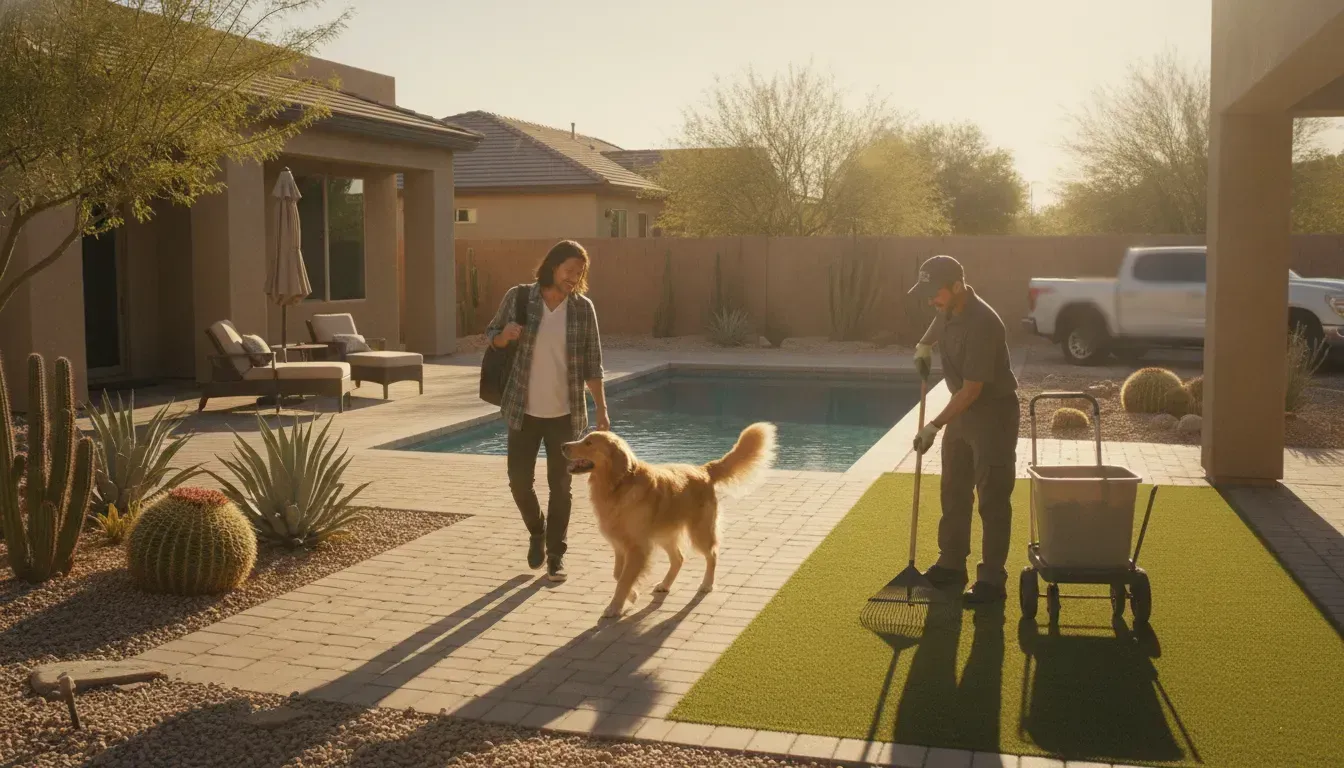
- Call for professional cleaning when buildup is established. A professional visit makes sense when odor returns quickly, the turf has heavy organic buildup. Drainage problems are difficult to diagnose, or a shared yard needs a deeper sanitation reset. A1's cleaning artificial grass for pets service uses specialized care for pet-friendly landscapes, including deep rinsing, agitation, and enzyme-based deodorizing. Keep the routine going afterward so either lawn stays cleaner between visits.
Frequently Asked Questions
Is real grass or fake grass better for dogs?
Neither surface is best for every dog or yard. Natural grass offers a softer surface and natural cooling, but urine can cause brown spots and desert lawns need substantial irrigation. Artificial grass avoids mowing and fertilizing, yet it can become hot and still needs rinsing, brushing, drainage, and waste pickup. Choose based on shade, drainage, activity level, water priorities, and your willingness to maintain the surface.
Does artificial grass get too hot for dogs in Las Vegas?
It can become much hotter than the surrounding air during direct desert sun. Check the surface before play, provide shade, and cool the turf with water when needed. Natural grass can feel cooler through transpiration, but it still needs reliable irrigation to remain healthy in this climate. Source: University of Nebraska alternative turf guidance.
How do I handle pet waste on artificial grass?
Pick up solid waste promptly, just as you would on natural grass. Rinse urine areas regularly, and make sure the turf has effective drainage so liquid does not pool beneath the surface. Consistent pickup remains the foundation of yard hygiene on either lawn type. Source: A1's artificial turf hygiene guide.
How often does artificial grass need maintenance?
Plan on regular debris removal and waste pickup, with rinsing as needed for urine buildup and periodic brushing in busy play areas. The exact schedule depends on the number of dogs, traffic, weather, drainage, and odor development. Artificial turf reduces routine lawn care, but it is not maintenance-free.
Does artificial grass help with pet odor control?
It can make odor management more predictable when the installation drains properly and the surface is cleaned consistently. Rinsing helps prevent urine accumulation, while enzyme-based cleaners can break down organic odors in the infill. Persistent odor may indicate blocked drainage, saturated infill, or a cleaning routine that needs adjustment.
Get started with a cleaner dog-friendly yard
Whether your property has artificial grass or natural grass, a consistent waste and cleaning routine can make the yard easier to enjoy and help manage everyday odors. A1 Pet Maintenance can help you choose a service approach that fits your Las Vegas-area property. From recurring pet waste removal to a one-time cleanup or artificial grass cleaning.
Call A1 Pet Maintenance at (702) 521-2624 to discuss your yard today.