Dog Poop Services: Plans for Homes and Properties
Dog poop services are not one product with one price. A home with one dog, a yard that several dogs use every day, and a shared lawn with a relief area each need a different visit. The useful choice is which plan matches how fast waste shows up, not which name sounds most thorough.
Call (702) 521-2624 to compare cleanup plans
Which dog poop services should you compare?
Start with three plans A1 Pet Waste Maintenance already lists in public: one visit a week, two visits a week, and a one-time cleanup for a defined outdoor area. A weekly route keeps ordinary household waste from sitting through a full week. Two visits a week fit a yard that fills up before seven days pass. A one-time visit clears a collected backlog and then stops.
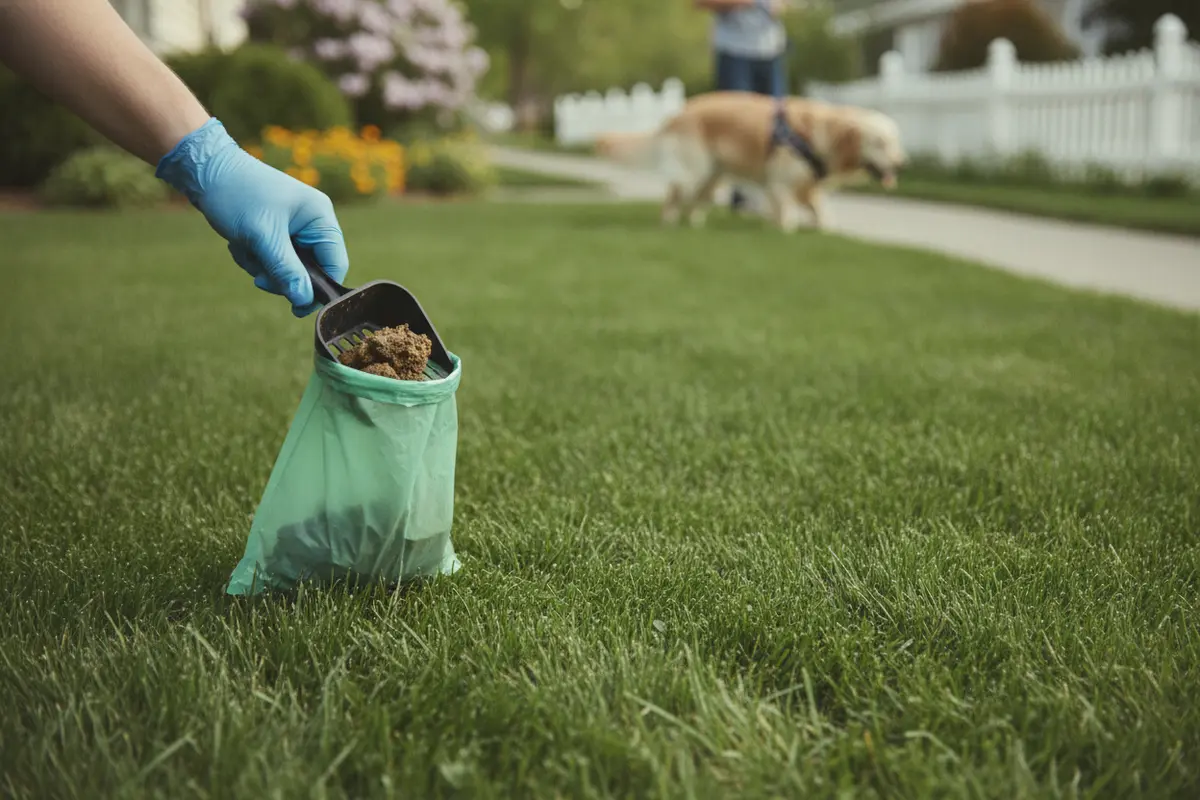
Solid-waste pickup is the job on all three of those plans. The technician walks the agreed outdoor area, collects visible dog waste, bags it, and hauls it away for city sanitation collection. That visit does not wash artificial turf, treat urine odor, repair grass, or restock a waste station. If odor on turf is the real problem, book artificial grass cleaning and maintenance as its own visit.
The EPA says pet waste adds nitrogen, phosphorus, parasites, and bacteria to water when people do not dispose of it properly. See its page on nutrient sources around the home. Leaving bags in a storm path is not the same as having them hauled off the property. Confirm disposal before you compare prices, because a cheap visit that leaves waste in your bin is a different service.
How do the public plans differ?
Use the table as a booking sheet, not as a guess. Monthly rates below are the homepage prices for one visit a week and two visits a week, billed by how many dogs live there. The one-time range is the rate printed on the one-time cleanup page. Five or more dogs, and any shared property, are quoted rather than pulled from that home chart.
| Plan. | Best fit. | Public rate. | What the visit does. |
|---|---|---|---|
| One visit a week. | One household dog, and a yard that stays usable between weekly stops. | 1 dog $65, 2 dogs $75, 3 dogs $85, or 4 dogs $95 per month. | Collects visible solid waste in the agreed yard and hauls it away. |
| Two visits a week. | Several dogs, heavy yard use, or waste that returns before the next weekly visit. | 1 dog $110, 2 dogs $130, 3 dogs $150, or 4 dogs $175 per month. | Same solid-waste pickup on a shorter gap. It is still not turf washing. |
| One-time cleanup. | A move, a gathering, or a yard that has gone uncleaned and needs a reset. | $50 to $150, based on yard size and how much waste has piled up. | Clears collectible solid waste once. It ends unless you add a route. |
| Shared-property route. | An apartment lawn, an HOA common area, or another site with more than one household. | Custom proposal. Do not use the home dog-count chart. | Covers only the mapped zones, paths, and relief areas in the agreement. |
Read a rate beside the job, not by itself. Two visits a week cost more because the gap is shorter, not because the technician washes the yard. A one-time price near the low end of $50 to $150 is a smaller, lighter reset. It is not a promise that a buried, overgrown yard lands at $50. Details on scope sit on the one-time pet waste cleanup page and in the pooper scooper service FAQs.
How should a home yard pick a plan?
Count dogs, then watch the yard for a week before you lock a cadence. One dog that uses a modest yard often fits one visit a week at the $65 monthly rate. Two, three, or four dogs move up that same weekly column, at $75, $85, and $95. If piles are already in the way before day seven, the two-visit column is the closer match, even for a single dog at $110 a month.
Five or more dogs are listed as individually arranged on both the weekly and twice-weekly columns. Do not stretch the four-dog price to cover a larger pack. Say how many dogs use the yard and whether they are outside most of the day.
A one-time cleanup is the right first call when the yard has been skipped, you are moving, or people are about to use the grass. It is a poor substitute for a route if new waste will cover the lawn again next week. Some households book the reset, live with the clean yard for a week, and then choose one visit or two. The yard cleanup guide is the place to plan that reset before you add a route.
What to set up before the first home visit
- Name the edges. Include side yards and dog runs, and mark beds or play areas that should stay untouched.
- Separate the dog. Keep pets indoors or out of the work area unless the technician agrees to another plan.
- Open the gate. Share the latch, the code, and what to do if a lock sticks.
- Clear the ground. Move toys, hoses, and tools so waste is visible.
- Say how bad it is. A buried backlog is a different visit from a yard cleaned last week.
Published service terms say service can start and stop with a phone call. There is no service contract to sign. Call 702-521-2624, or use the service sign-up page, and state the dog count and whether you want the weekly route, the twice-weekly route, or a single reset.
How should a shared property pick a plan?
A shared lawn is not a larger version of the one-dog monthly rate. Apartments, HOAs, and other multi-household sites need a written map: which lawns, paths, relief areas, and stations are in the visit, and which are not. A tidy dog run does not fix an uncovered walkway. Ask for a proposal instead of multiplying the homepage chart by the number of units.
Decide the gap the same way a home does, using evidence from the site. If common grass is hard to use halfway between weekly stops, the route is too thin. If bins overflow while the grass stays clear, you may need station service rather than more scooping. Station bags, bin emptying, and repairs are separate from a grounds route. The dog waste station page and the commercial property pet waste service page are the right next reads for that scope.
Name one contact for gates, dog notes, and days the crew cannot enter. A locked court or a loose dog can skip a zone even when the rest of the property looks finished. Write that zone down so the next visit includes it, instead of assuming the crew will guess.
What is outside every dog poop service visit?
Pickup removes the solid waste you can see and bag during that visit. It does not promise a sanitized lawn. Urine spots, turf odor, leaves, and damaged grass can all remain after a careful scoop. Treating those as a failed pickup leads people to buy more visits when they need a different service.
- Turf odor: book a cleaning visit, not another scoop of the same piles.
- A full station: ask about station service if bags or bins are the real mess.
- A hidden backlog: tell the crew about leaves or overgrowth before a one-time price is treated as final.
- A missed strip: check whether that side yard was ever inside the mapped area.
For a plain description of what a visit is, the dog poop service overview is enough. This page is the comparison you use after that overview, when you still have to choose a plan.
How do you know the schedule is working?
Judge the yard in the middle of the service gap, not only on the service day itself. If the space is already unpleasant before the next stop, the cadence is short. If it stays easy to use, there is no reason to jump from one weekly visit to two. Households can note dog count, hours outside, and the corners that fill first. Properties can note which paths residents actually use.
Separate a frequency problem from a scope problem. Waste left in a side yard that was never listed is not fixed by a second weekly visit to the front lawn. A full station is not fixed by scooping the grass beside it. Odor that remains after every pile is gone is a turf-cleaning problem. Write down which of those you see, then ask for that change.
Recheck the plan when the site changes. A new dog, a renovation, or a season when everyone moves outside can fill a yard that used to be fine on one visit a week. Share that change when you call. The same phone start-and-stop rule covers a pause, a thicker route, or a return to one visit after a busy month.
What should you ask before you book?
A short call beats a long list of assumptions. Ask these in order and write down the answers next to the plan you think you want.
- Which edges, runs, and paths are inside each visit?
- Does this yard fit one visit a week, two visits a week, or a one-time reset?
- Which public rate matches the dog count, and is this site a custom proposal instead?
- Is disposal included, or does waste stay in an on-site bin?
- What happens if a gate is locked or a dog is loose in the work area?
- Are turf washing and station service included, or are they separate bookings?
If the answers describe a different job from the one you pictured, change the plan before the first visit. Adding visits later is easy. Paying for the wrong job for a month is not.
How should you read the first visit?
Completion for a standard pickup means visible solid waste in the agreed area was collected and hauled away. It does not mean every stain, odor, leaf, or thin patch of grass was treated. If you expected a washed turf surface, say so before the crew arrives and book that service on its own.
After two or three stops, walk the area on an off day. A route that still matches the dog count and the map can stay as it is. A route that falls behind needs either a shorter gap or a wider map, and those are different requests. Keep gate notes current so a missed zone is a scope fix, not a mystery.
Southern Nevada and Tucson are the service regions named on the site. A shared property still needs its own proposal even inside those regions, because the homepage chart is a home dog-count table. Bring the dog count or the site map to the conversation so the quote starts from the real job.
Call (702) 521-2624 about a home or property plan
Frequently asked questions
Which dog poop services can I book?
A1 lists one visit a week, two visits a week, and a one-time cleanup for homes, plus custom routes for shared properties. Weekly and twice-weekly prices follow the number of dogs, from one to four. Five or more dogs, and multi-household sites, are arranged individually.
Does a weekly visit cost the same for every yard?
No. One visit a week is $65 a month for one dog, $75 for two, $85 for three, and $95 for four. Two visits a week are $110, $130, $150, and $175 for those same dog counts. A one-time cleanup is listed at $50 to $150.
Will dog poop services remove urine smell from turf?
No. Scooping collects solid waste. Turf washing and deodorizing are a separate artificial grass service. Ask for that visit if odor remains after the piles are gone.
Can a shared property use the home monthly chart?
No. Apartments, HOAs, and other shared sites need a proposal based on the mapped areas. The homepage chart is for a household dog count, not for a building or a common lawn.
How do I start or stop service?
Call 702-521-2624. Service can start and stop by phone, with no contract. Say whether you want one weekly visit, two weekly visits, or a one-time reset, and name the dogs or the property zones.