Artificial Turf Infill Replacement for Dogs Las Vegas
Artificial turf infill replacement for dogs Las Vegas starts with odor, matting, and drainage that remain after a clean.

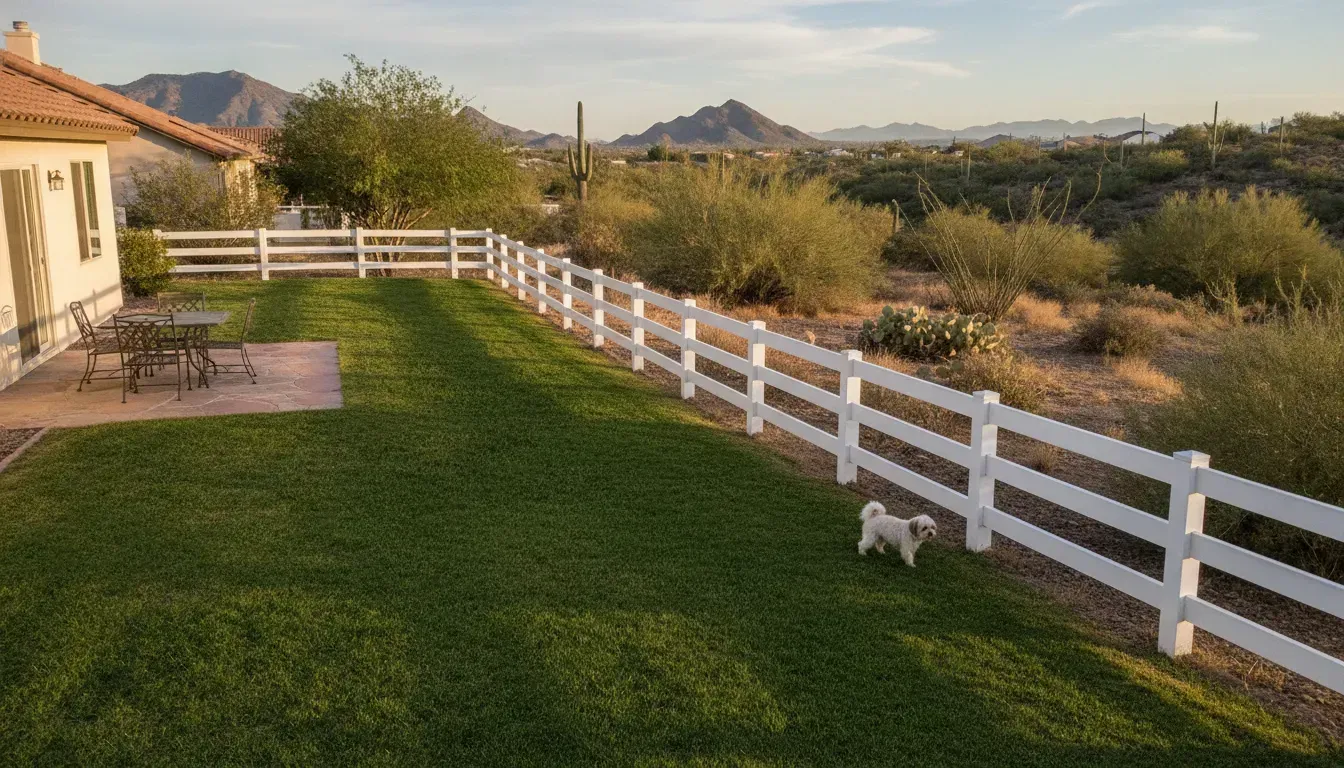
Artificial turf infill replacement for dogs Las Vegas owners ask about is a decision on the loose material between the blades, not on how often you rinse. That fill helps fibers stand and lets liquid move down. Dogs pack it, and desert dust fills the gaps. A green surface can still hold odor after solid waste is gone. Check the signs below before you assume the fill has to come out. A1 cleans and deodorizes pet turf. It does not install turf or sell a published infill replacement package.
Ask A1 about pet turf cleaning
What is artificial turf infill on a dog yard?
Infill sits between the synthetic blades, down toward the backing. On a dog yard it is not decoration. It weights the fibers so they do not lie flat, and it gives urine and rinse water a path downward instead of a puddle on top. When the fill is gone from one corner, that corner feels different underfoot and the blades look matted even if the color is still green.
Pet turf is not the same product as a sports field. Sports fields often use a deep rubber fill. A home dog run may use a sand, zeolite, or other pet fill chosen by the installer. A1 does not identify the product in your yard from a photo, and it does not install a new system. If you still have the installer paperwork, that sheet is the best record of what was put down.
University of Florida IFAS says synthetic turf is not maintenance free. Owners often rinse it for pet waste, odor, and dust. They also brush it and replace infill, the granular material between the fibers. University of Florida IFAS explains that upkeep. That note is not a Las Vegas service interval, and it is not permission to skip cleaning.
Replacement means taking out fill that no longer does its job and putting a compatible fill back, which is installer work. A refresh recommendation is narrower. A1's artificial grass cleaning can include waste removal, debris clearing, an enzyme deodorizing treatment, a deep rinse with fiber agitation, and an optional note when an infill refresh looks worth discussing. That note is not a quote to remove and replace the fill.
When does artificial turf infill replacement for dogs Las Vegas yards need a look?
Ask after ordinary care has already had a fair chance. Pick up solid waste promptly. Clear leaves and grit. If the turf maker allows a rinse, rinse the used spot and let it dry. If odor, matting, or standing water is still limited to that spot, write down where it is and how many dogs use it. One bad weekend is not a replacement decision.
Odor that returns after the surface is clean
Solid waste left in the fibers will smell on its own. Remove it first. If the smell is still there after the area has dried, and it is stronger in the corner the dogs prefer. The residue may be down in the fill rather than on the blades. Heat in Las Vegas makes that smell easier to notice. It does not, by itself, prove the fill must be removed.
A booked turf cleaning is the step to try before a replacement conversation. The visit can deodorize and rinse. If the same corner smells again after that visit and after prompt pickup, tell A1 what you observed and ask whether an installer should look at the fill. Do not buy a bag of fill and pour it over odor you have not cleaned.
Matted blades and thin spots
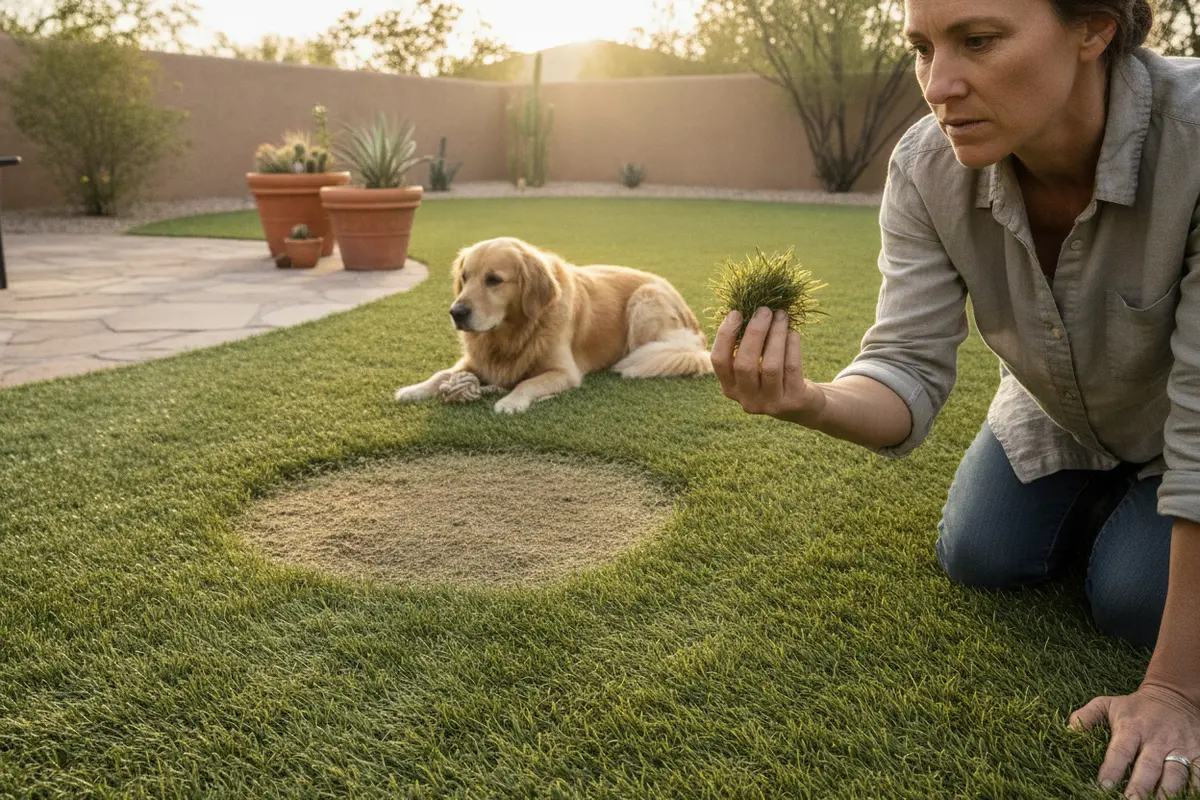
Blades that stay flat after dogs walk through, or a patch where you can see backing, can mean the fill has shifted or worn down. Dust storms and repeated paw traffic both move light material. A light top-off, when the installer says the product matches, is not the same job as removing compacted fill.
Look at the rest of the yard before you treat one thin patch as a whole-yard project. If only the gate path is thin, say so. If every high-use corner is thin and the fibers will not stand after a rinse and a brush. That is a stronger reason to ask the installer about replacement.
Water that sits after a rinse
Infill that has turned to a crust, or a base clogged with hair and sand, can hold water. A rinse that puddles in one spot and is gone in another is a drainage clue. Adding more water will not open a clogged base. Replacing fill on top of a failed base also misses the cause. Describe where water sits and how long it stays.
The how often to clean dog turf guide already covers a daily, weekly, and monthly cleaning calendar. Use that page for cadence. Use this page only when the calendar is already in place and the fill itself looks like the problem.
 How does infill replacement differ from cleaning?
Cleaning removes waste, debris, and odor from a surface that is still intact. Replacement changes the loose material in the fibers, and sometimes leads to questions about the base. Most Las Vegas dog yards need pickup and a periodic clean long before they need new fill. Skipping pickup and then replacing fill puts new material into a dirty system.
What you notice, what to try first, and when to ask about infill replacement
What you notice: Solid waste on the blades. Try first: Pick it up the same day. Ask about infill replacement when: Do not start with replacement.
What you notice: Leaves, dust, or hair on top. Try first: Clear debris, then rinse if the maker allows it. Ask about infill replacement when: The same spot mats again after clearing.
What you notice: Odor in one corner after waste is gone. Try first: Book a turf cleaning visit with deodorizing. Ask about infill replacement when: The odor returns after the visit and after dry-down.
What you notice: Blades lying flat. Try first: Brush and note whether fill is missing. Ask about infill replacement when: Backing shows, or the thin area keeps spreading.
What you notice: Water sitting after a rinse. Try first: Note the spot and how long it stays wet. Ask about infill replacement when: The installer sees clogged fill or base, not a surface film.
Read the row that matches the yard, not every row at once. A yard with only surface waste needs pickup. A yard that smells after a completed cleaning is the one that may need an installer to look at the fill. A1 can clean and can tell you if a refresh is worth asking about. The installer who put the turf in is the right person to remove and replace fill.
What should you check before you call?
A useful call is specific. Walk the yard once and write four notes: how many dogs use it, where they stand, whether you can see backing, and whether water sits after a rinse. Add the date of the last professional cleaning if you have had one. Those notes keep the conversation on the fill instead of on a general odor complaint.
- Pick up solid waste and bag it. Do not rinse waste into the fill.
- Clear leaves, seed pods, and loose grit from the fibers and the edges.
- Press the high-use corner. Note if it feels hard, thin, or soggy compared with a low-use area.
- If the turf maker allows water, rinse that corner only and see whether it drains.
- If odor or matting remains after it dries, book a cleaning before you plan a replacement.
Keep pets off a wet cleaning product for as long as the product label requires. A1 does not publish a drying time for every turf brand. Ask during booking if dogs need to stay inside until the surface is dry.
What to tell A1
Say that you are asking about artificial turf infill replacement for dogs Las Vegas yards only after cleaning has not held. Give the neighborhood, the approximate turf size, the dog count, and whether the problem is one corner or the whole run. Mention if an installer is already involved. A1's cleaning visit is not an installation visit.
There is no published price for infill replacement, and there is no published price on the artificial grass cleaning page either. The booking guide explains how to schedule a cleaning and what a visit can include. Use that page to plan the cleaning. Ask the installer for any price to remove or add fill.
Which problems are not an infill replacement?
Several turf problems look serious and still are not a fill change. Sorting them first saves a replacement that will not fix the cause.
A missed pickup schedule
Waste that sits for days will smell no matter how new the fill is. If pickup has lapsed, restart pickup and book a cleaning. The frequency guide, not this page, is the place for how often that care should happen.
The wrong cleaner
A household product poured over the yard can leave its own residue. Stop using it. Read the turf maker's care sheet before the next product. A1's enzyme treatment on a cleaning visit is not a license to mix products at home.
A new turf installation
Choosing a pet turf system, a base, and a first fill is installation. A1 does not install artificial grass. If the yard has no turf yet, talk with an installer. This article is only for turf that is already down and no longer behaving as it did.
A visit-length question
How long a cleaning crew stays is a booking question. The booking guide already says an average residential yard often takes one to three hours, and that a larger or heavily soiled yard can take longer. Do not use that range as a time estimate for removing and replacing fill.
 How should a Las Vegas yard be described to an installer?
Once cleaning has not solved a repeated corner problem, the installer needs the same notes you gave A1, plus anything still on file from the original job. The brand, the fill name, and the year of installation matter more than a guess that the yard needs rubber, sand, or zeolite. Putting the wrong fill on pet turf can make drainage or odor worse.
Walk the installer to the spot instead of describing the whole yard as failed. Show where blades lie flat, where backing shows, and where water sat. If only one panel is tired, say that. A full-yard replacement is a different project from a repair at the gate.
Ask the installer three plain questions. Will they remove the old fill or add fill on top? Is the new fill compatible with this turf and with dogs? Who checks the base if water still sits after the fill is addressed? A1 can keep cleaning the surface after that work. A1 is not the contractor for the fill change.
For the cleaning side of the handoff, the Las Vegas turf cleaning visit guide describes what a local visit is for. The pet turf sanitation guide covers home care and mentions infill only in passing. Read those for cleaning. Keep the replacement decision here.
Review artificial grass cleaning
Frequently Asked Questions
Does every dog yard in Las Vegas need new infill?
No. Many yards only need prompt pickup and a periodic cleaning. Ask about replacement when odor, matting, or standing water remains after that care, not because a calendar date arrived.
Will a turf cleaning replace the infill?
No. A1 cleaning can remove waste, clear debris, deodorize, rinse, and agitate fibers. An infill refresh is an optional recommendation, not a published replacement service.
Can I pour new infill over a smelly corner?
Do not. Clean the corner first. If the smell or the crust remains, ask the installer whether the old fill should come out. Covering odor with new fill hides the problem.
Who replaces infill, A1 or the turf installer?
The installer who knows the turf system should remove or add fill. A1 cleans and maintains pet turf and does not install artificial grass.
Is there a published price for infill replacement?
No. A1 does not publish an infill replacement price. Ask the installer for that figure. Cleaning is scheduled separately through A1.
Check the high-use corner after a real cleaning before you plan new fill. If the blades, the smell, and the drainage still point to the material between the fibers. Call the installer with notes, and keep A1 on the cleaning side of the job.