Will a Lawn Sweeper Pick Up Dog Poop?
Will a lawn sweeper pick up dog poop? Only in a narrow case. A sweeper is built to lift dry leaves, grass clippings, and twigs into a hopper. Firm, dried waste on short, even grass can ride the brushes the same way a brittle leaf does. Fresh or soft waste usually smears across the bristles, the wheels, and the surrounding lawn. That film is harder to clean than the original pile.
Call 702-521-2624 to book dog poop pickup options
A1 Pet Maintenance scoops residential yards on a set weekly route in Southern Nevada and Tucson. The crew bags the waste and hauls it off the property for disposal. A lawn sweeper does not replace that visit. It remains a leaf tool you might test on a dry day, then put away when piles are soft, hidden, or too numerous to chase by hand. If the machine is the wrong fit, the dog poop pickup options page explains what a collection visit covers instead.
Will a lawn sweeper pick up dog poop on a normal yard?
On a typical residential yard, the practical answer is no for routine cleanup. A lawn sweeper uses spinning brushes to flick loose debris into a catcher. The machine expects material that is dry, lightweight, and sitting on top of the grass. Dog waste fails that test on most days.
Fresh piles stay wet inside. The brushes mash them instead of lifting a clean piece. The smear coats the bristles, then drops fragments back onto the lawn as you continue. A tow-behind model behind a riding mower makes this worse, because you cover more ground before the mess becomes obvious.
Dried, firm waste on short grass is the only case that sometimes works. Even then, the sweeper misses piles tucked under shrubs, along a fence, or in a corner the wheels cannot reach. It also mixes waste with leaves in the same hopper. You still have to empty that hopper into a bag and wash the machine.
If the goal is a yard a child or another dog can use the same day, a sweeper is the wrong first tool. Pick up the waste, then sweep the leaves. That order keeps the hopper useful for the job it was made to do.
People ask this because a sweeper already sits in the garage and a scooper feels like one more thing to buy. The overlap is real only on a leaf day, when dried bits and brown leaves look similar from the seat of a mower. Up close they are not the same material. Leaves shatter and lift. Waste compresses and sticks. Once you have seen one smeared pass, the time saved by skipping the scoop is gone.
Which piles a sweeper can move, and which it smears
Waste condition decides the result more than the brand of sweeper. Use this as a field check before you hitch the machine or push it out of the shed.
Read each row as a yes or no before you start the machine. If your yard matches a smear row, leave the sweeper parked.
| Waste and yard | What a sweeper usually does | Better next step |
|---|---|---|
| Dry, firm piles on short grass. | May lift some pieces into the hopper. | Spot-check missed piles, then bag them. |
| Fresh or soft piles. | Smears across brushes, wheels, and grass. | Hand scoop first, then wash the tool. |
| Piles in tall grass, gravel, or mulch. | Brushes skip or grind waste into the surface. | Use a rake or a long-handled scoop. |
| Many days of buildup. | Fills the hopper with mixed waste. | Book a one-time clear-out first. |
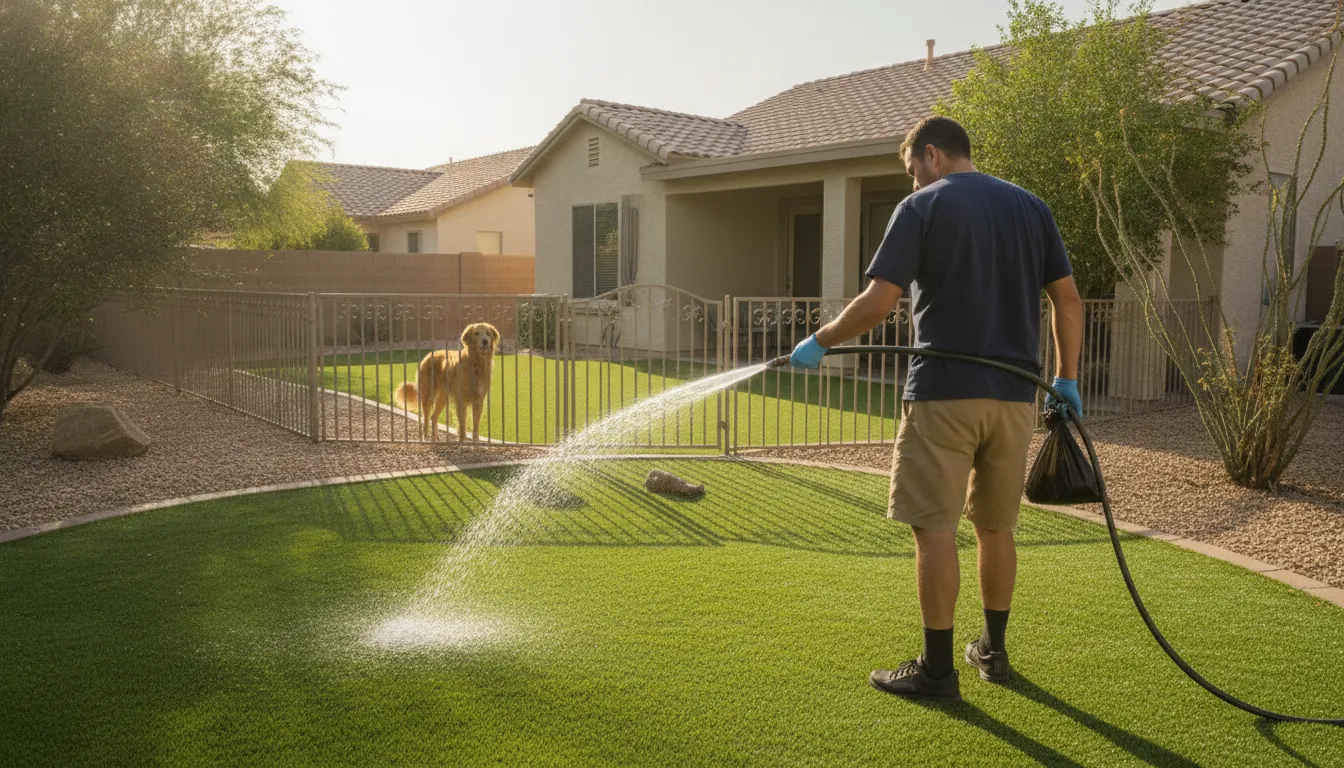
| Artificial turf. | Can drag waste into the fibers. | Scoop by hand. Book turf cleaning if odor stays. |
The middle column is the failure people underestimate. A smeared pile does not look removed. It looks spread across the grass. The next rain or irrigation cycle then carries that film farther across the lawn.
Why the brushes fail on fresh waste
A dry leaf is stiff enough for the bristles to kick upward into the hopper. Fresh dog waste is soft and sticky. The same bristle presses through it, then carries a coat onto the next turn of the reel. That behavior is a design limit, not a speed setting you can correct.
Three yard facts make the miss worse in the Southern Nevada and Tucson yards we service:
- Summer heat in Las Vegas and Tucson dries the outside of a pile while the inside stays soft. The sweeper breaks that crust and smears the center.
- Desert gravel, decomposed granite, and rock borders stop the brushes. Waste in those strips never enters the hopper.
- Irrigation on a schedule wets piles overnight. A morning sweep on a watered lawn is the smear case, even if yesterday's piles looked firm.
A push sweeper on a small, dry lawn is easier to stop and empty than a tow-behind sweeper on a large lot. Either way, plan on a rinse. Waste left in the bristles smells the next time you store the machine, and it flakes onto the garage floor.
What to do before you roll a sweeper across the lawn
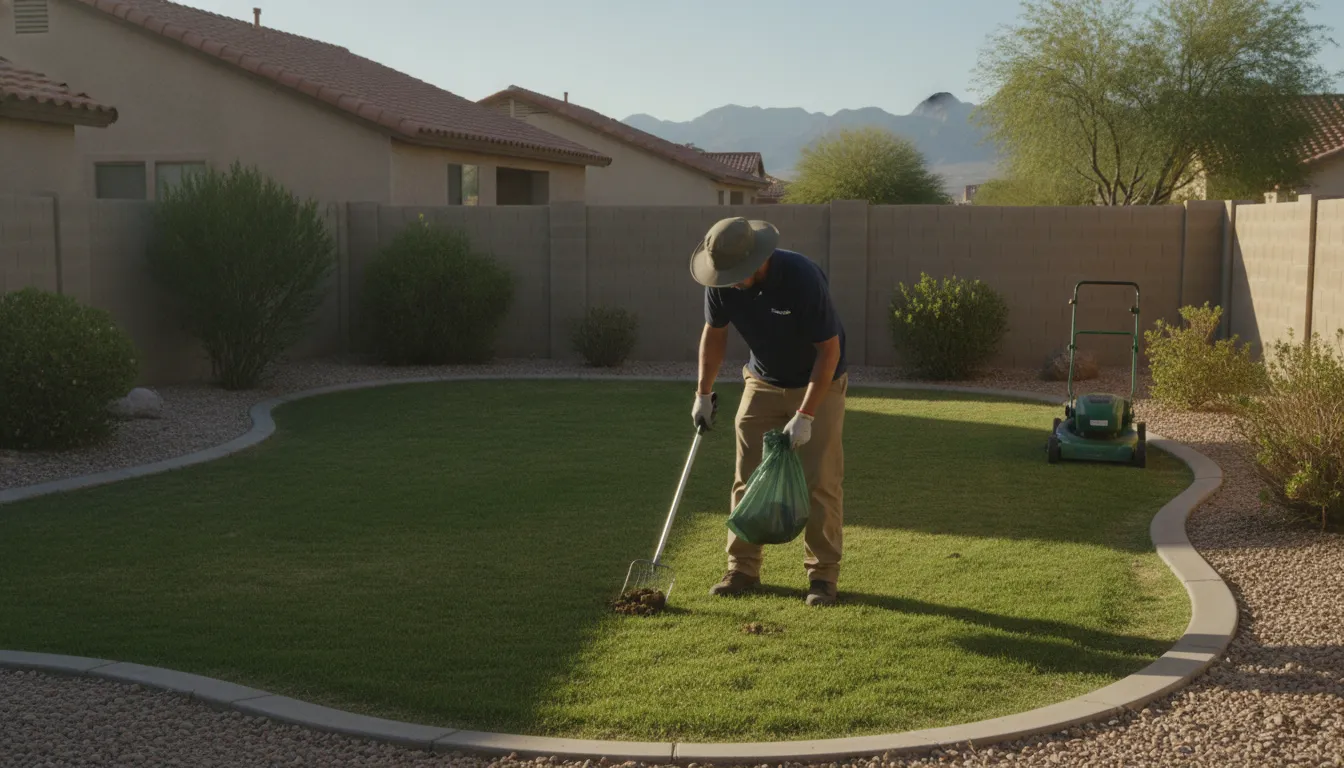
If you still want to try the machine on a leaf day, clear the waste first. This order keeps the hopper for leaves and keeps the brushes out of fresh piles.
- Walk the yard and mark every pile, including the fence line, gates, and spots under shrubs.
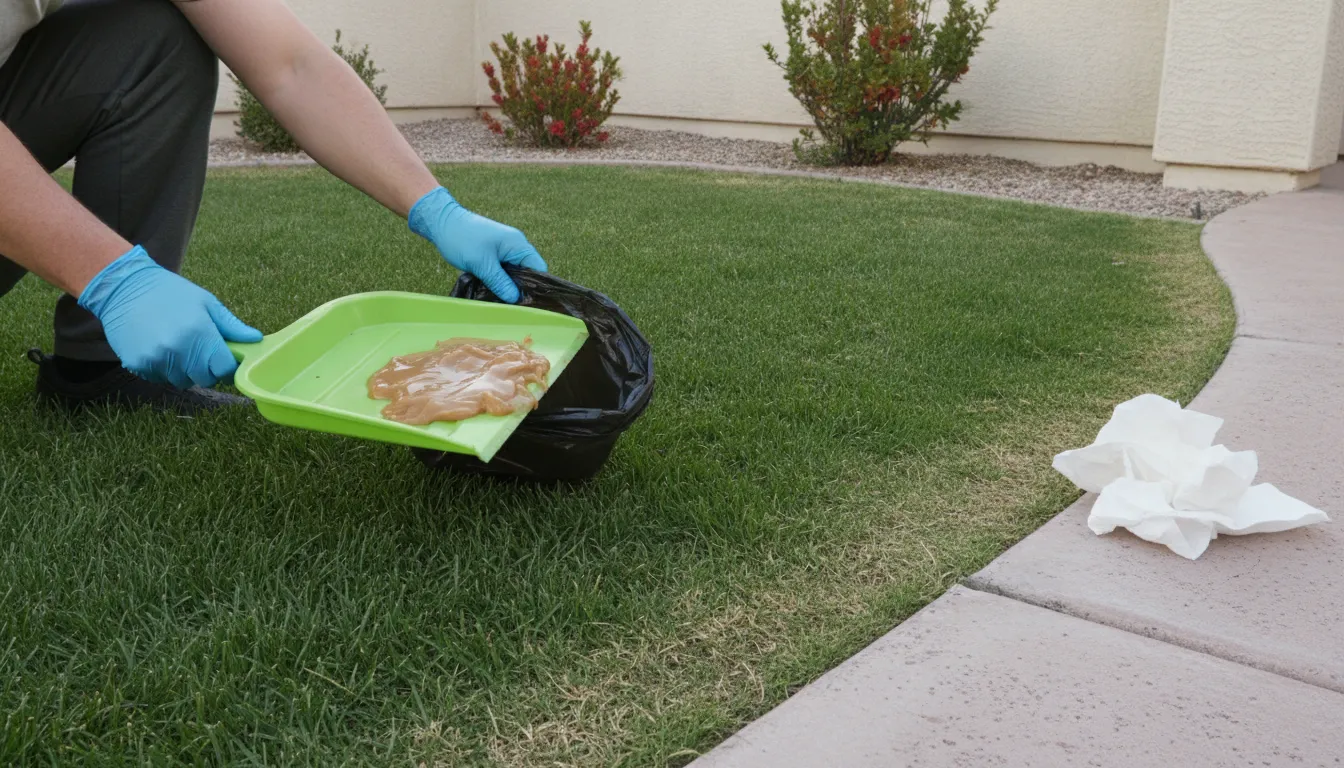
- Scoop firm and soft piles with a long-handled tool into a bag. Do not leave "almost dry" piles for the sweeper.
- Tie the bag and set it at the trash, not in the sweeper hopper.
- Run the sweeper only for leaves, clippings, and twigs.
- Rinse the brushes if you touched any waste, and wash your hands when you come inside.
That last step is not optional. The CDC says dog poop can carry germs that make people and animals sick, and that you should pick it up even in your own yard, especially where children play. Washing with soap and water after contact with poop is the cleanup step, even if you used a bag. You can read that guidance on the CDC's dogs and healthy people page.
A sweeper does not do this job for you. It can hide a miss until someone walks through the yard later. Treat any pile you can still see as unfinished work, not as debris the next pass will catch.
Hand tools that beat a sweeper for this job
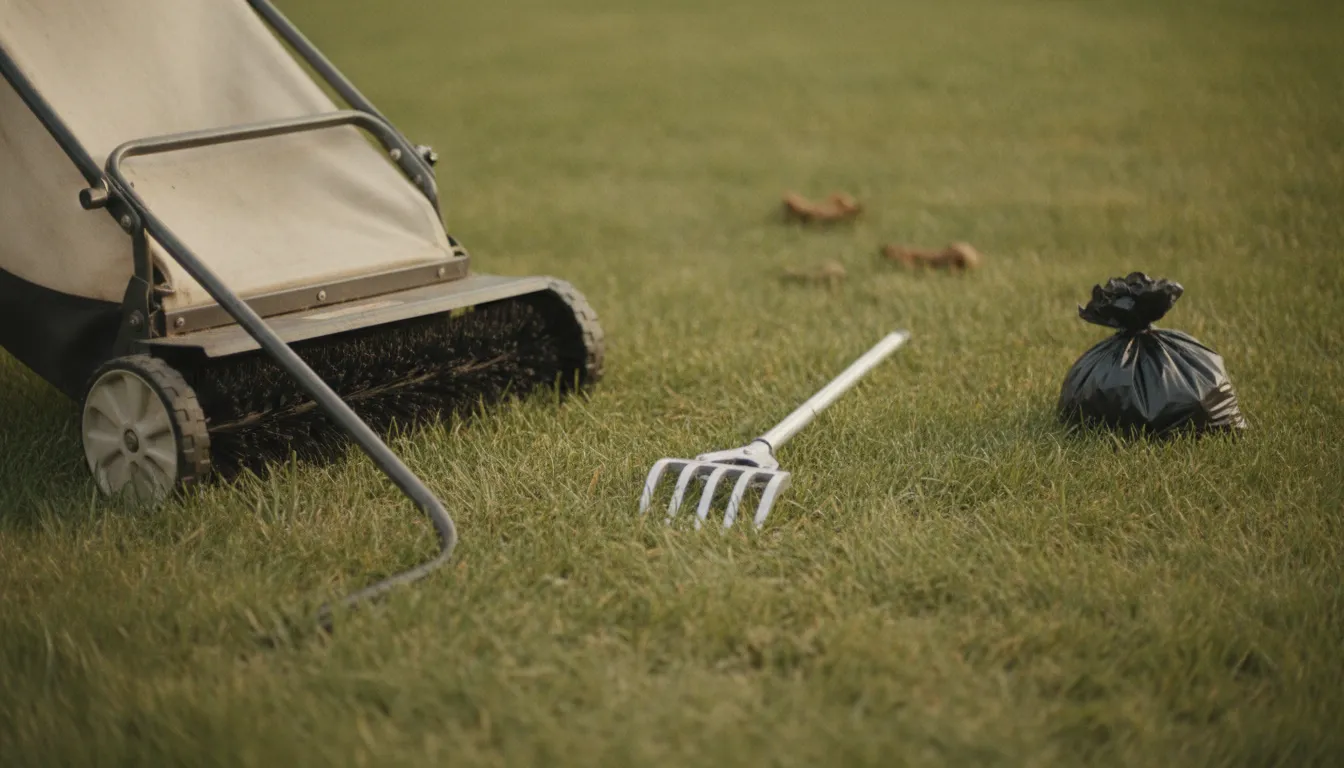
A lawn sweeper is a wide tool. Dog waste is a small, sticky target. A narrow tool wins because you can see each pile and drop it into a bag without dragging it across the grass.
A long-handled scoop or jaw picker lets you stay upright. It works on short grass when the pile is firm. It also works, more slowly, on soft piles if you bag them right away and rinse the jaws. A grass rake can gather dried pieces toward one spot, but it is a poor tool for fresh waste because the tines comb the pile apart.
Our guide to a dog poop picker upper covers which hand tool fits grass, gravel, and pavement. The separate guide on how to pick up dog poop without touching it walks through a bag-and-scoop routine. Neither of those jobs is what a leaf sweeper does.
Use the sweeper after the scoop, not instead of it. That is the whole equipment decision for a homeowner yard. If bending is the reason you wanted the sweeper, a long handle solves that without dragging waste across the grass.
Where a sweeper should stay out of the yard
Skip the sweeper for waste on these surfaces. The brushes either miss the pile or grind it into the ground, and both results leave the yard worse than a slow scoop.
- Artificial turf. Fibers hold smears, and waste worked into the infill is an odor problem, not a leaf problem. A1 cleans pet turf and deodorizes it. We do not install turf or replace infill. If a scoop leaves a smell in the fibers, turf cleaning is the next service, not another pass with a sweeper.
- Gravel, rock, and decomposed granite. Common in Southern Nevada and Tucson yards. Brushes bounce. A scoop or a close rake is the tool.
- Tall or wet grass. The pile sits down in the blades. The sweeper rides over it or tears it apart.
- Gate corners, pool decks, and narrow side yards. The machine cannot turn tightly enough to reach the pile.
If dog waste is also browning the lawn, that is a separate issue from equipment. Dog poop and lawn health covers what left-behind waste does to grass. Removing the piles still comes before any leaf sweep.
When a pickup visit is the cleaner plan
A sweeper makes sense only if you already own one, the yard is short and even, and every pile is dry. Most weeks fail at least one of those tests. A scheduled pickup removes the guess.
A1 Pet Maintenance runs weekly and twice-weekly yard visits in Southern Nevada and Tucson. The homepage rate chart lists one weekly visit from $65 a month for one dog through $95 a month for four dogs. The same chart lists two visits a week from $110 to $175 a month for that dog count.
Five or more dogs are arranged individually on that chart. The one-time cleanup page lists $50 to $150, based on the yard and how much has piled up. There is no contract. You start or stop with a phone call to 702-521-2624.
The crew finds the piles, bags them, and hauls them away for city sanitation pickup. You do not empty a hopper or rinse brushes. You also do not need to be home. That is the practical difference from a machine you still have to walk, empty, and wash.
Mowing is a different trade. A mowing crew is there to cut grass, not to hunt piles, and a mower deck can spread waste the same way a sweeper can. If that is the question you started with, read do mowing services pick up dog poop before you book a cut. Have the yard scooped first.
For the service itself, the dog poop pickup options page explains what a collection visit includes and why people hand the chore off. If the yard is already behind, the one-time cleanup page is the place to start. Weekly service is the better fit once the yard is caught up and dogs are adding piles every day.
Call 702-521-2624 and ask about dog poop pickup options
Frequently asked questions
Will a lawn sweeper pick up dog poop if it is dried out?
It might lift firm, dried pieces on short, even grass, the way it lifts a leaf. Check the yard after one pass. Corners, tall spots, and anything still soft will still be there. Bag whatever lands in the hopper instead of composting it with leaves.
Can I tow a sweeper behind the mower to clean the yard?
Not as the cleanup plan. Fresh piles smear on the brushes, and you will not see that until you have crossed the lawn. Scoop first, mow second, and use the sweeper only for leaves and clippings.
Does a sweeper replace a pooper scooper?
No. A scooper or jaw picker targets one pile and drops it in a bag. A sweeper is built for loose, dry debris across a wide path. Use the hand tool for waste. Use the sweeper for leaves after the waste is gone.
What should I do if the brushes already smeared a pile?
Stop. Scoop the smear into a bag, rinse the brushes, and wash your hands with soap and water. Do not keep sweeping, or you will spread the film farther. If the yard has days of buildup, a one-time cleanup is faster than chasing smears with a machine.
Will A1 use a lawn sweeper on my visit?
No. A1 scoops, bags, and hauls pet waste off the property. The visit is a collection route in Southern Nevada and Tucson, not a leaf-sweep. Call 702-521-2624 to set a weekly visit, a twice-weekly visit, or a one-time clear-out.