Pet Waste Station Services for HOAs Cost
Pet waste station services for HOAs cost more than the price of a post. A board that budgets only for the dispenser usually misses the bags, the bin emptying, and the grounds pickup that keep the station useful. A1 Pet Waste Maintenance quotes that ongoing work as a custom proposal. We serve homeowner associations in Las Vegas, Henderson, Clark County, and Tucson. There is no published HOA station rate on our site. A residential yard price is the wrong number for a shared path.
Call 702-521-2624 to request an HOA station proposal
What an HOA board is actually paying for
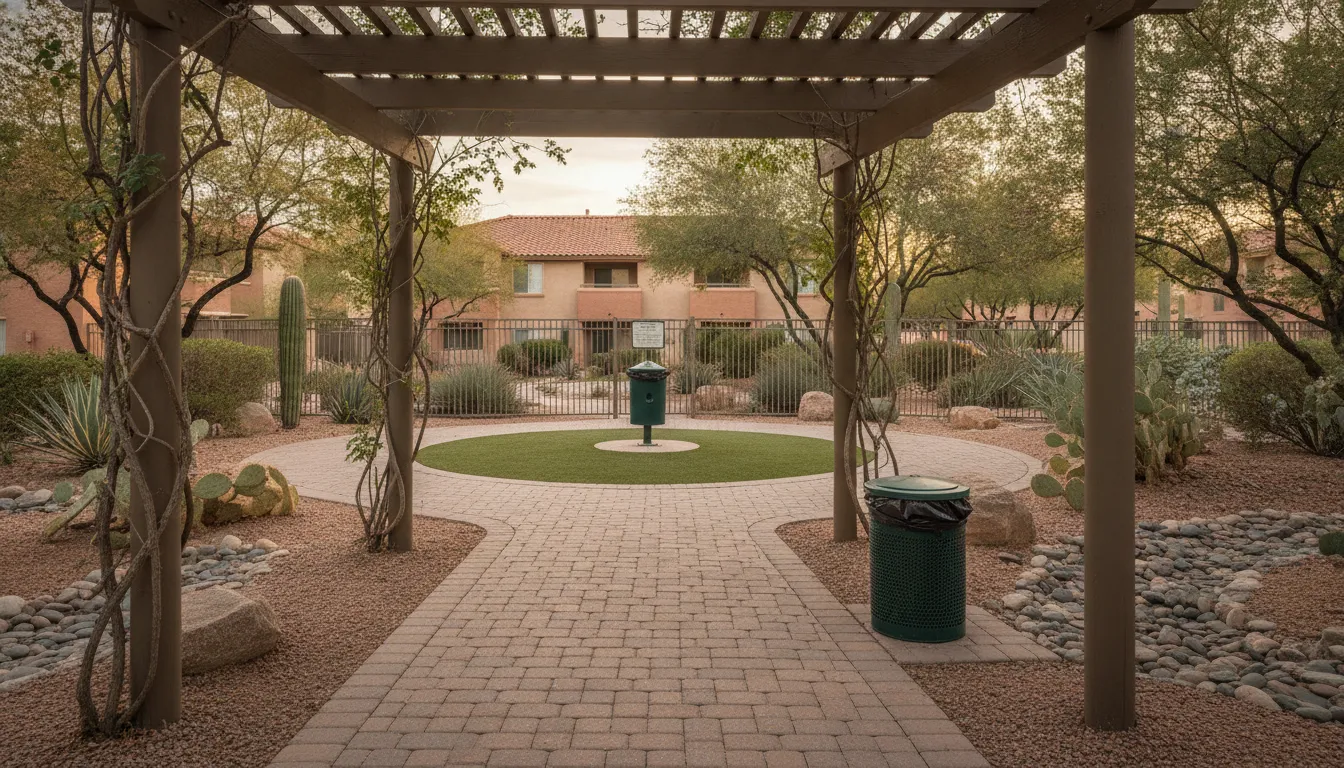
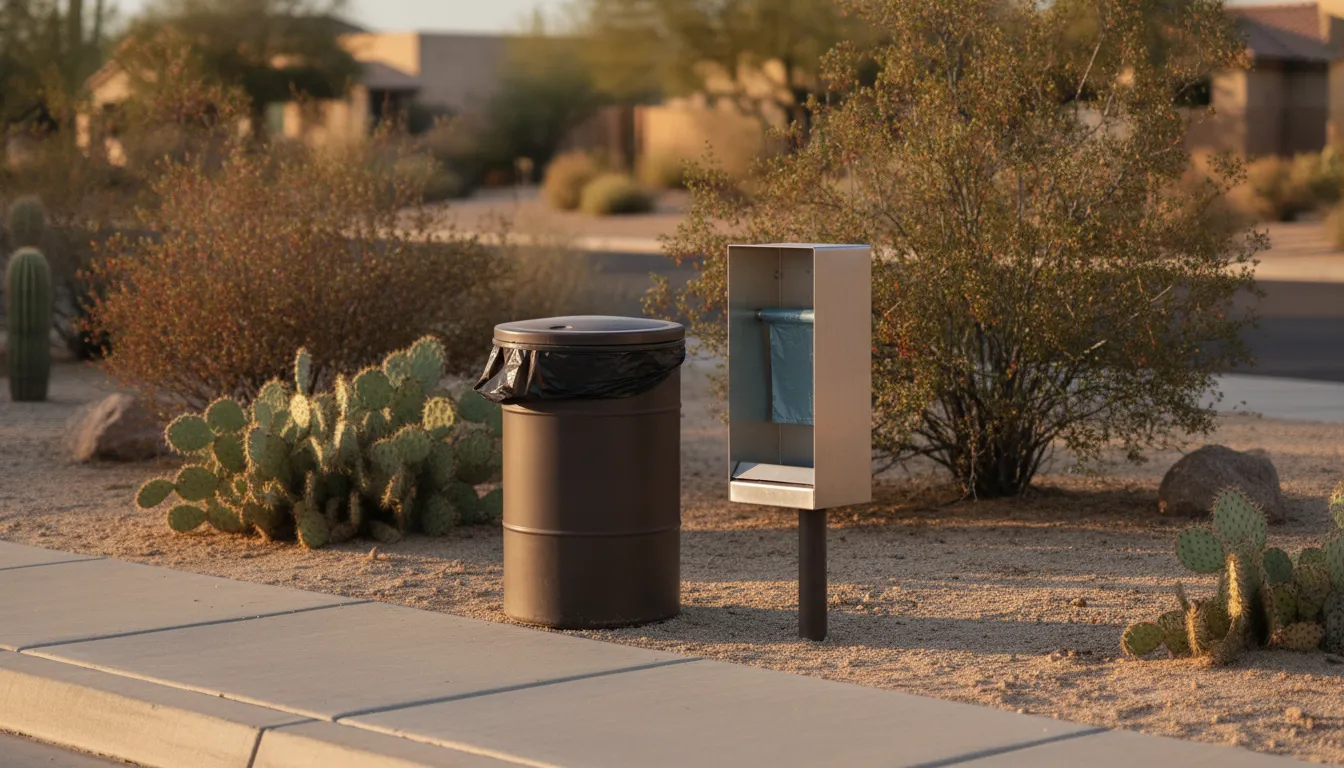
A station is only the fixture residents use between visits. The service is the recurring work that keeps that fixture stocked and the surrounding ground clear. Boards that combine those two bills often compare a hardware quote with a maintenance quote and treat them as the same scope.
Split the budget into four lines before you ask anyone for a number:
- Hardware. A dispenser, a sign, a receptacle, and a post. Some setups add a lock. This is a purchase, not a monthly visit.
- Installation. Setting the post in soil is a different job from anchoring it in concrete. Ask who owns that work. Our pet waste station installation guide covers the install decision. This article does not.
- Bags and bin service. Bags run out. Bins fill up. Both are operating costs that repeat every month the station stays up.
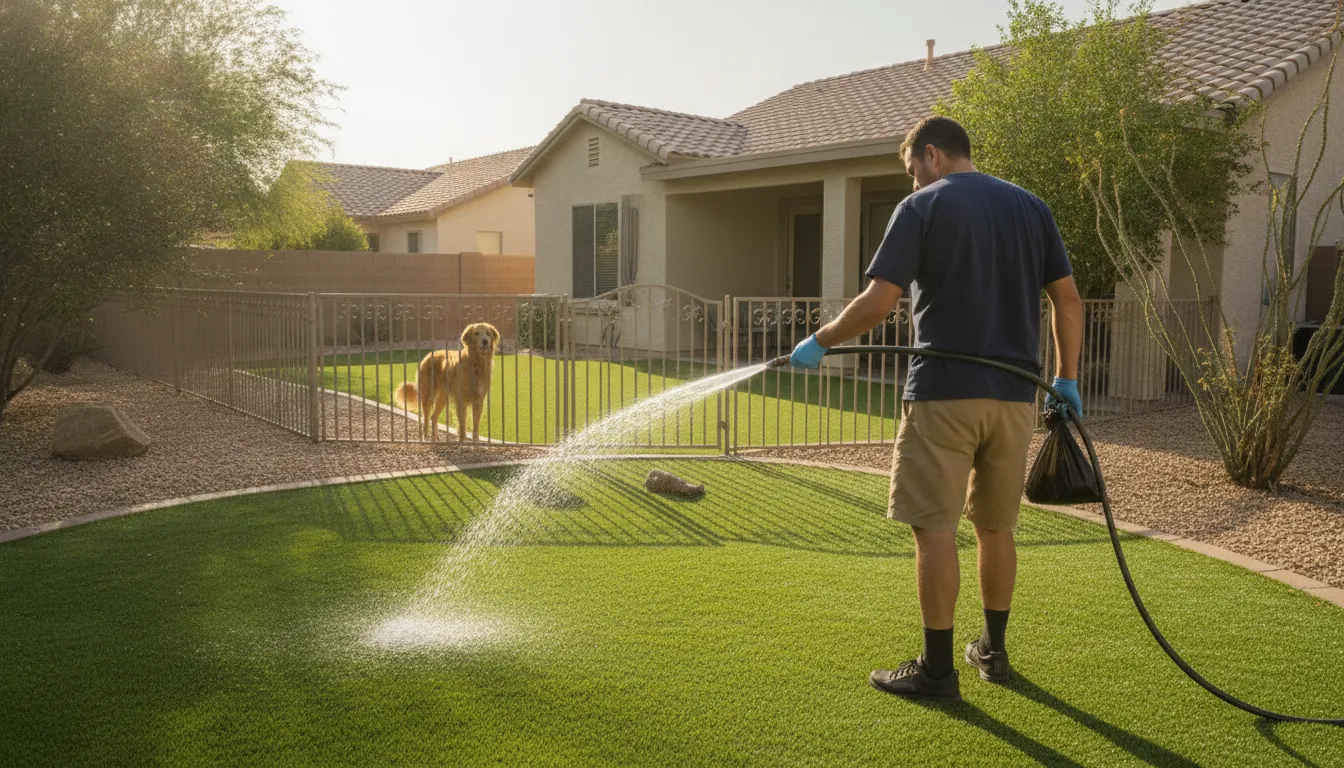
- Grounds pickup. Waste on the lawn, the path, and the dog run is not inside the dispenser. A station does not scoop the common area for you.
The U.S. Environmental Protection Agency notes that pet waste left on the ground adds nitrogen, phosphorus, parasites, and bacteria to water. Storm drains often carry that runoff straight into local streams. A stocked station gives residents a place to bag waste before it sits on the path. An empty dispenser does not. That is a sanitation reason to fund the service, not a license to invent a monthly price. Read the EPA note on pet waste and nutrient pollution around the home.
Hardware, bags, and pickup are three different bills
Use this split when a vendor quote arrives as one lump sum. If a line is missing, ask for it before the board votes.
| Budget line | What it covers | How often it repeats | What to confirm |
|---|---|---|---|
| Station hardware. | Dispenser, sign, receptacle, and post. | Once, then only if a part fails. | Who owns the unit after it is set. |
| Bag supply. | Rolls that fit the dispenser. | Ongoing, and faster on busy paths. | Who notices an empty roll, and who restocks it. |
| Bin emptying. | The receptacle at the station. | On a set route, not when a resident complains. | Where the bags go after they leave the property. |
| Grounds pickup. | Waste off the station, on lawns and paths. | Weekly, or on the route you choose. | Which areas are in the walk, and which are not. |
A cheap post with no bag plan is not a lower station cost. It is a station that residents walk past. The same is true of a full bin that nobody empties on a route. Put the repeating lines in the operating budget. Put the post in the reserve or capital line if that is how your association buys fixtures.
Boards get stuck when a catalog price is the only number in the packet. The catalog can show a dispenser. It cannot show how fast your mailbox path goes through bags, or how far the crew walks to the back bin. Ask the vendor to price the route you have, not a sample community from a brochure.
Keep the four lines even when one vendor bundles them. A bundle can still be the right contract. The board should still see bag supply, bin emptying, and grounds pickup inside it. If those words are missing, you cannot tell what happens on week eight, when the first case of bags is gone.
What changes pet waste station services for HOAs cost
We do not publish a single station price. Two associations with a similar home count can still require different routes. The details below are what move a proposal, and none of them replaces walking the property.
How many stations, and where they sit
A station at the mailbox cluster and a station at a back dog run do not get the same traffic. Placement belongs in the dog poop station planning guide. For cost, the board only needs the count, the walking distance between them, and whether a truck can reach the bins.
Who already walks the grounds
Some boards already pay a landscape crew and want stations added to that conversation. Others have stations and still get complaints about the lawn. Say which job you need. Station service alone does not replace a grounds scoop, and a grounds scoop does not refill a dispenser unless the proposal says so.
Shared paths versus private yards
HOA common area is not a single-family yard. Homeowner rates by dog count do not map onto a loop trail, a tot lot, or a row of buildings. If you also need apartment-style or HOA grounds cleanup priced as a contract, read the commercial pet waste removal cost guide and keep that quote separate from the station lines above.
Heat, gates, and access
Southern Nevada heat and Tucson summers mean waste will not wait until the next board meeting. Locked gates, pool-deck hours, and dog-park rules all change how long a visit takes. Share those limits when you call so the proposed route matches the property.
Dog count is the wrong multiplier here. A private yard with two dogs has a clear pile pattern. A community path collects waste from every dog that uses it, including guests. Pricing the station route by "number of homes" sounds tidy and still misses the corners people actually use. Walk those corners, then count stations and pickup areas.
Seasonal spikes belong in the same conversation. Holiday guests, a new phase of homes, and a busier park month can empty a dispenser early. The proposal should say whether extra bags are included or billed when the board asks for them. Guessing a yearly case count from a national chart is how communities run out in July.
What the first month is really testing
The first visits tell you whether the route matches the complaints. If the crew stocks bags and the lawn by the mailboxes is still dirty, grounds pickup was not in the scope. If the bins are empty and residents still say there are no bags, the restock stop is in the wrong place or on the wrong day. Fix the scope before you treat the price as too high or too low.
We would rather rewrite a proposal than lock in a number that skips half the job. That is also why we do not pull a figure off the residential chart and rename it an HOA rate. The chart is for a yard visit. This budget is for stations and the common ground around them.
Questions to ask before you approve a station proposal
A useful quote answers the operating job, not just the fixture. Ask these before the board packet goes out:
- Which stations are included, and is grounds pickup a separate line?
- Who supplies bags, and what happens when a roll runs out between visits?
- How often are bins emptied, and is that a set day or only on request?
- Where does the waste go after it leaves the community?
- What is excluded, such as private patios, construction areas, or a locked dog park?
- How do we change the route if the association adds a path or a new building?
Policy language is a different document. Rules, fines, and resident notices belong in your HOA pet waste management guide, not in the service price. A vendor can tell you what the crew will walk. The board still decides what residents are asked to do.
We have done this kind of community work for years. Echo Canyon HOA and Greenway Crossing HOA are among the associations on our commercial list. That history is not a rate. Each new board still gets a proposal based on the property in front of us. You can see the commercial scope on our commercial property page.
Bring the questions above to the meeting even if you already like the vendor. A one-line "station maintenance" fee hides whether bags, bins, and lawns are included. Splitting them does not mean you need three contracts. It means the board can see what it will still be paying after the posts are in the ground.
Compare vendors on the same four lines. One company may sell only the hardware. Another may restock bags and leave the lawn. A third may walk the common area and never open the dispenser. Those are three prices for three jobs. Lining them up in one column makes the cheap bid look careless when it simply left out the work.
Ask what a missed week looks like. Weather, a locked gate, or a holiday can shift a route. You want a phone number and a person who can move the visit, not a login page. A1 does not run a customer portal or send an automatic photo report. The proposal and any later change go through 702-521-2624.
How to brief A1 so the number matches the grounds
Call with a property map rather than a figure copied from a homeowner price chart. A short, specific brief prevents a second walk.
- The number of stations already installed, or the corners where you want them.
- A simple note of common areas: paths, turf pockets, mail areas, and any dog run.
- Gate codes, dog rules, and hours when a crew should not be in the pool court.
- Whether you want bag restock, bin emptying, grounds pickup, or all three.
- Who on the board or management company should receive the proposal.
We bag what we pick up and haul it off the property for city sanitation collection. We do not leave a portal login or an automatic photo report. Schedule changes and scope questions come back through the same phone call. If the association also wants yard service for a single house inside the community, that is a different job. Home service pricing on the main site is for that residential visit, not for the station budget.
A useful brief stays short. You do not need a formal bid specification to receive a workable number. You do need enough detail that we are not guessing which loops belong on the walk. If the management company holds the map, include that person on the call. If the board president already walks the property, that person is enough.
After the proposal arrives, check it against the four budget lines before anyone votes. Hardware should not be hiding inside a monthly fee unless you asked to finance the posts that way. Bag supply should name who buys the rolls. Bin emptying should name the day pattern. Grounds pickup should name the areas. Anything else can wait for a second conversation.
If the community is still deciding whether stations belong at all, settle placement first, then price the service. Buying posts before you know who refills them is how associations end up with rusting dispensers and the same complaints. Service cost is the part residents feel every week. The post is what they see on day one.
Frequently asked questions
Do you publish a price for HOA pet waste station service?
No. Station hardware, bag restock, bin emptying, and grounds pickup are quoted for the property. There is no public monthly rate for an HOA station route.
Is a homeowner pooper scooper price the same as a station cost?
No. Yard service priced by dog count is for a private yard. An HOA station budget is for shared paths, dispensers, and bins. Use the residential chart only for a single home.
Does a station replace grounds cleanup?
No. A station gives residents a place to drop a bag. Waste on the lawn and the path still needs a pickup route if the board wants those areas cleared.
Who refills the bags?
Whoever the proposal names. Ask that question before you sign. A station with no restock plan is empty the first busy weekend.
Which areas do you serve?
A1 Pet Waste Maintenance serves homeowner associations in Las Vegas, Henderson, greater Clark County, and Tucson. Call so we can confirm the community is on a route we already run.