How to Pick Up Dog Poop Without Touching It
If you want to know how to pick up dog poop without touching it, start by choosing a tool that fits the surface and makes disposal simple. A bag, long-handled scoop, or grabber can keep your hands away from the waste, but each works best in a different situation. Here is how to compare them, use them cleanly, and decide whether you want to handle every cleanup yourself.
Ask about yard cleanup options
Which hands-free method works best?
There is no single best tool for every yard. Think about the ground, how often you clean, where you will dispose of the waste, and whether you want to carry a bag or rinse a reusable tool. The simplest method is usually the one you can keep near the door and use consistently.
- Bag over your hand: A disposable bag acts as a barrier while you pick up the waste. It is compact and useful for small yards or walks, but you still need to bend close and handle the bag after turning it inside out.
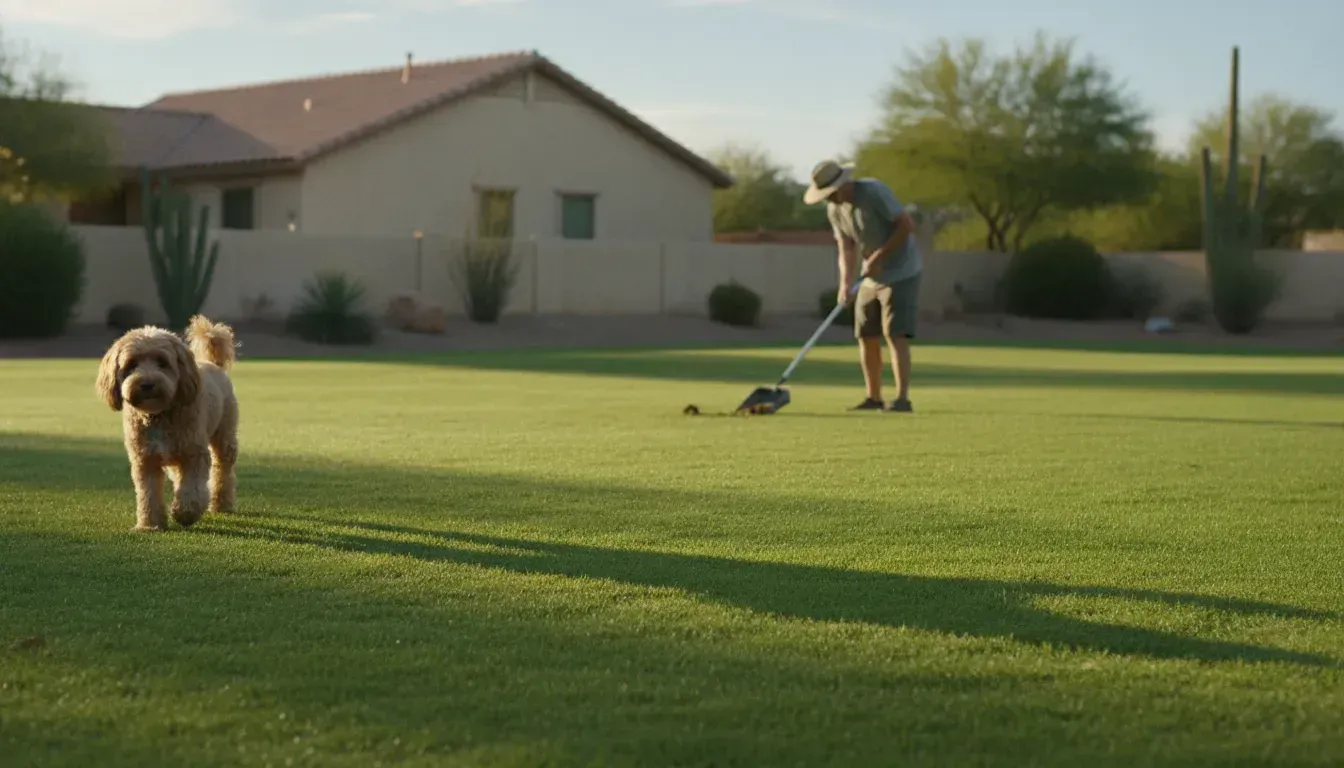
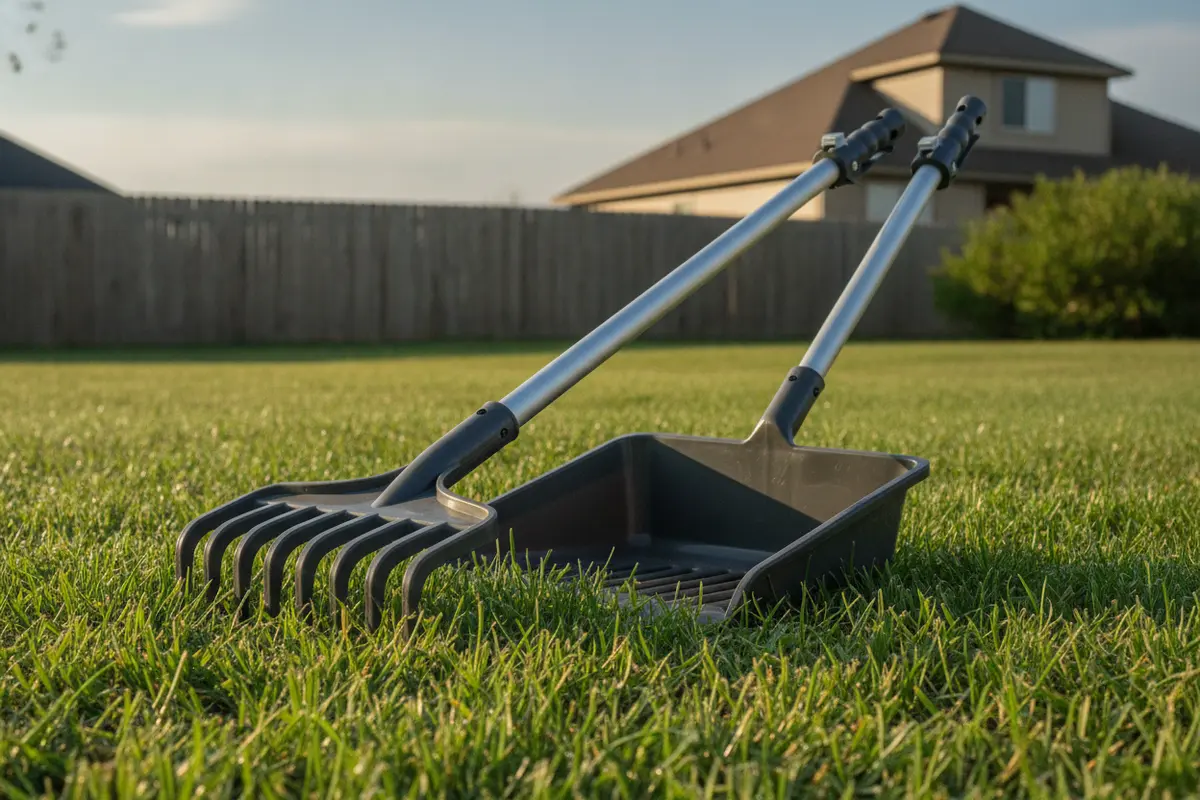
- Long-handled scoop: A rake-and-pan set or hinged scoop lets you collect waste while standing. It can be convenient for repeated yard cleanup, though it needs storage and cleaning.
- Poop grabber: A claw-style grabber can pick up waste without your hand approaching it. It may be easier to use from a standing position, but soft or flattened waste can be difficult to hold securely.
- Disposable scoop or cardboard: A scoop made from a disposable material can lift waste into a bag. It avoids washing a reusable tool, but you will need to keep supplies on hand.
For a closer look at tool styles and what to consider before buying, see this guide to choosing a dog poop picker. Focus on whether its handle, opening, and cleanup routine suit your yard rather than choosing by appearance alone.
How do you choose a tool for your yard?
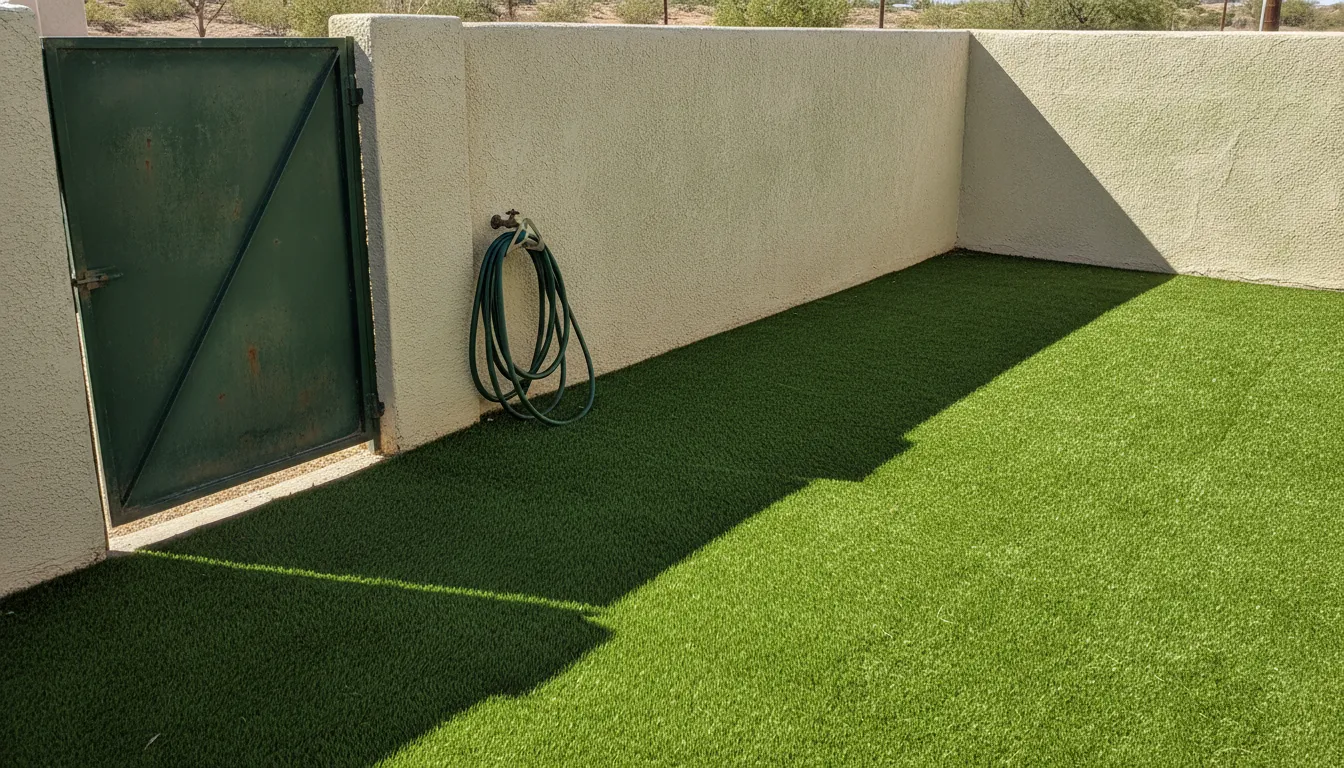
Start with the surface. Grass can hide waste, while gravel, dirt, or artificial turf may call for a scoop that lifts cleanly without collecting too much ground material. A tool that works on a flat patio may be awkward on uneven lawn or around shrubs. If the yard has several surfaces, test how the tool behaves in each area.
Next, consider the amount and frequency of cleanup. A lightweight bag solution may be enough for occasional pickup. If you collect waste daily or have several dogs, a sturdy long handle can reduce bending and make repeated work more manageable. Keep in mind that a reusable tool needs a place to live and a plan for rinsing it after use.
Grip and reach also matter. Choose a handle you can operate comfortably, and make sure the scoop can open wide enough for the waste you normally encounter. If bending or hand strength is a concern, prioritize a tool that can be operated with one hand and lets you stand upright. A short test in your yard is more useful than guessing from a product photo.
Think about who will use the tool, too. A long handle that feels comfortable for one person may be too heavy or awkward for another. If several people share cleanup, choose a simple tool and agree on where it belongs so everyone can find it. For a household that wants to avoid rinsing a scoop, bags may be easier to manage; for someone who prefers not to bend repeatedly, a standing tool may be a better fit. Compare the whole routine, not just the pickup motion: carrying supplies, collecting the waste, closing or emptying the container, cleaning up, and putting everything away.
If you are deciding between two tools, test them on a small section of the yard when it is safe and convenient. Notice whether the tool reaches the spots you need, whether it collects without smearing, and whether you can transfer the waste without awkward movements. If it leaves residue or is difficult to clean, try a different style. A tool that works reliably on your actual ground will be more useful than one with extra features you do not need.
Finally, decide what happens after collection. A hands-free pickup method only solves part of the task. You still need a bag or container, an appropriate disposal route, and a way to keep the tool clean. Put supplies close to the yard exit so the process is easy to repeat.
What is a simple hands-free pickup routine?
A repeatable sequence helps keep the job contained. Before you begin, gather a bag or lined pan, your scoop, and whatever you need to clean the tool. Choose where the closed bag will go before you start, so you are not carrying it around while deciding what to do next. If you use a reusable scoop, keep its cleaning supplies in a separate spot from household cleaning items.
- Scan the area: Walk the yard once and note where you see waste. This gives you a plan and helps you avoid stepping in a hidden spot.
- Pick up one area at a time: Work from one side to the other, placing each collected portion into a bag or lined container. Keep the tool pointed away from your body.
- Check your work: Look over the path and the areas around it before leaving. If you missed a spot, collect it before cleaning the tool.
- Close and dispose: Tie the bag or secure the container, then use the disposal arrangement appropriate for your home and local rules.
- Clean and store: Remove visible residue, wash the reusable tool as directed, and put it back in its designated storage area.
This routine works for a small lawn as well as a larger yard; the difference is how you divide the area. In a broad space, use a simple grid and finish one section before moving to the next. Around a patio or play area, check edges, corners, and the route between the yard and the gate. If a dog is outside during cleanup, keep the pet away from the section you are working in until you have collected the waste and put away the tool.
How can you pick up dog poop with a bag?
A bag is a familiar option that needs little storage space. You can put the bag over your hand, grasp the waste through the material, turn the bag inside out over the waste, and tie it closed. Your skin does not need to contact the waste, but the bag remains in your hand during the pickup, so move carefully and avoid brushing it against clothing or nearby surfaces.
- Bring a bag before you enter the yard. Check that it has no holes or tears.
- Place the bag over your hand like a glove and keep the opening accessible.
- Pick up the waste through the bag, then use your other hand to pull the bag down and turn it inside out.
- Tie the bag securely and place it in the disposal location you use for pet waste.
- Wash your hands after handling the used bag, even if it appeared intact.
For a walk, attach a bag dispenser to the leash or carry a small supply in a pocket. At home, store bags near the gate or a frequently used door. If you have trouble tying a small bag, choose a larger size or use a scoop to transfer waste into the bag instead.
One advantage of bag pickup is that it does not require a separate tool to rinse. The tradeoff is that each pickup uses a bag, and some people find bending repeatedly uncomfortable. To reduce extra handling, open the bag before you approach the waste and keep the clean side of the bag away from the ground. Do not overfill it; a bag that is too full can be harder to tie securely. If you are collecting several spots, use a larger bag or gather the waste in a scoop and transfer it once, rather than trying to carry loose waste in an open bag.
How do you use a scoop or grabber cleanly?
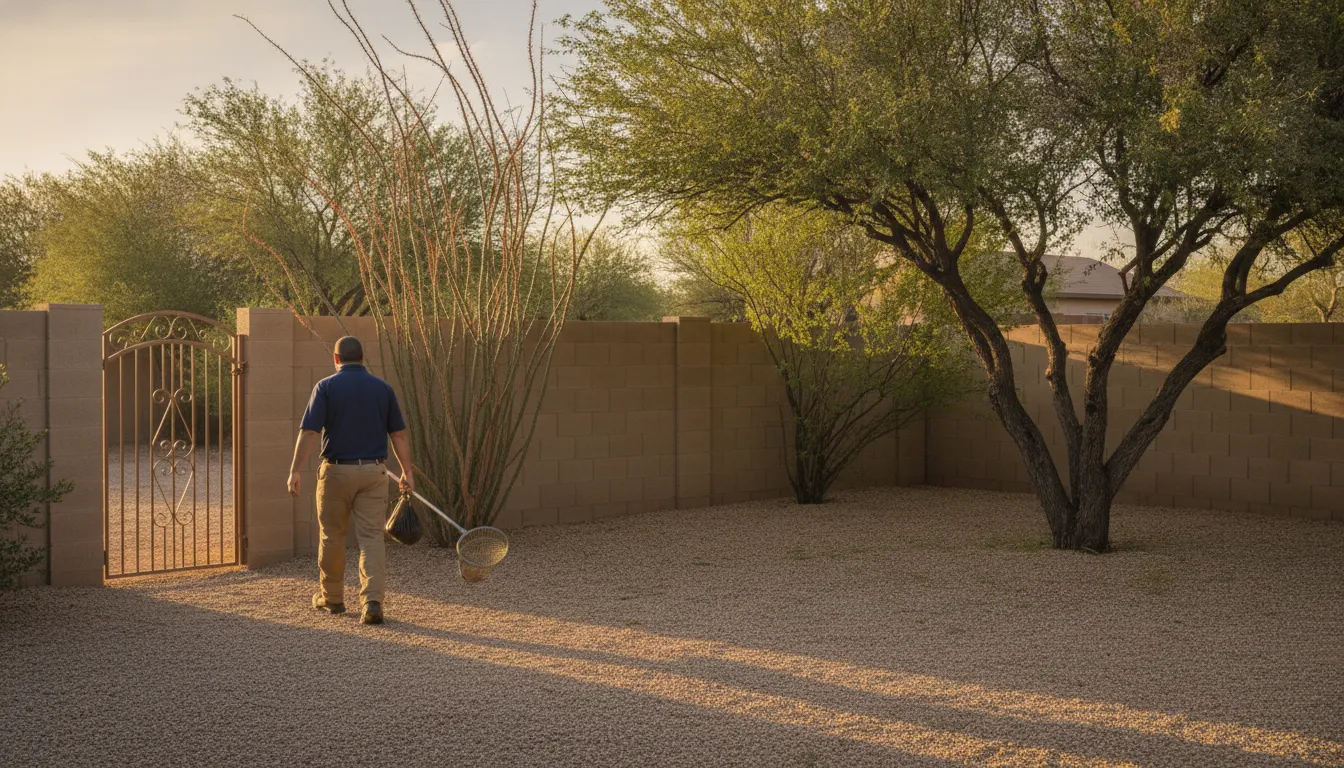
A scoop is useful when you want to stay upright or collect waste from the same area on a regular basis. With a rake-and-pan set, slide the rake under the waste and move it into the pan. With a hinged scoop or grabber, open the jaws, position them around the waste, and close the tool with steady pressure. Keep the tool close to the ground to limit scattering.
Use a bag to line the pan if its shape allows it. Otherwise, transfer waste carefully into a bag or designated container. Avoid shaking or scraping the tool against hard surfaces, which can spread residue. Check for anything left behind before you move to the next area.
After pickup, clean a reusable tool in a location where rinsing will not splash onto food-preparation areas or items people use. Follow the tool maker's cleaning directions. Wash your hands after cleaning, and let the tool dry before storage. Keep it separate from household items and out of reach of children and pets.
For more detail on routine yard cleanup and disposal, use this practical dog poop cleanup and disposal guide. General handwashing information is available from the Centers for Disease Control and Prevention.
What should you do when waste is soft or hard to reach?
Soft waste can smear when pressed, and a grabber with narrow jaws may not hold it well. Use a scoop with a broad, flat edge or a disposable scoop to lift it in one controlled motion. If the ground is uneven, approach from the firmer side and avoid dragging the tool through the waste. Put it into a bag as soon as you collect it, rather than carrying an uncovered scoop across the yard.
When waste is difficult to see in grass, check the area in good light and work in a consistent pattern. Walk slowly through the yard in rows, looking from more than one angle. A quick visual check after pickup can help you find anything missed. If you need a wider cleanup routine, this yard cleanup guide covers planning a more thorough pass.
For corners, spaces beside fences, or areas around landscaping, use a tool with enough reach to avoid leaning into plants or tight spots. Do not force a bulky scoop into an area where you cannot see it. Move a lightweight obstruction only if it is safe to do so, then collect the waste and return the area to its original state.
How do you keep the process tidy between cleanups?
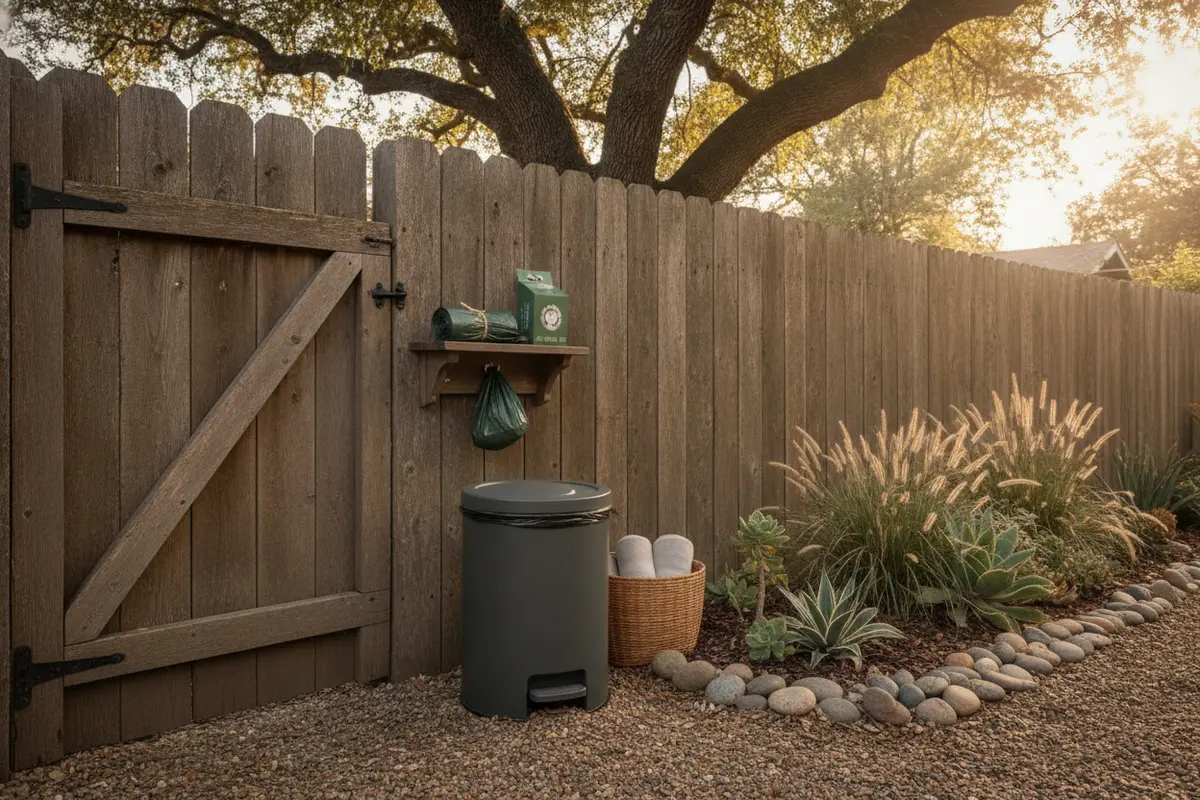
Set up a small cleanup station near the door or gate. Keep bags, a scoop, and any other supplies together in a weather-appropriate storage spot. A lidded container for unused supplies helps keep them organized; store used waste only in a container intended for that purpose and empty it on a regular schedule.
Choose a route through the yard and check the same sections each time. Regular checks make it easier to notice missed areas and keep waste from accumulating. If more than one person shares the job, agree on which area each person covers and where supplies and disposal containers belong.
Odor can linger when waste remains on the ground or residue builds up on tools and containers. Pick up promptly, clean tools as needed, and check the usual problem spots. If odor remains after cleanup, this guide can help you look for the source of dog poop odor.
Keep a simple routine for the supplies, too. Check bags when you restock so you do not discover a shortage during cleanup. If your scoop has moving parts, inspect that they open and close smoothly and remove residue from joints as directed by its maker. Replace a damaged bag dispenser or tool rather than relying on it when it no longer works as intended. A dedicated storage spot also helps prevent a waste scoop from being confused with a garden tool or brought inside by mistake.
When might recurring professional pickup make sense?
Doing it yourself gives you control over the timing, but the task repeats. If your schedule is busy, your yard is large, or you would rather not manage regular cleanup, recurring service is another option to consider. It can also be useful to arrange a one-time cleanup when waste has built up and you want to reset the yard before maintaining it yourself.
A professional collection visit handles the pickup as a scheduled yard task, rather than leaving you to do every pass. Before choosing service, consider how often you want the yard checked, how many dogs use it, which parts of the property are accessible, and whether gates or pets need special instructions. For an overview of what a collection visit can involve, read about professional poop pickup.
If you need a single reset instead of a recurring routine, learn about one-time pet waste cleanup. For ongoing service questions, the pooper scooper FAQs explain common service and billing details. You can also review the service signup information before deciding what fits.
Talk with A1 about cleanup options
Frequently asked questions
Can I use a regular kitchen utensil to pick up dog poop?
It is better to keep a tool dedicated to pet waste rather than use kitchen utensils. Choose a scoop or grabber designed for outdoor cleanup, label it if needed, and store it separately from household tools.
Is a bag enough to keep my hands clean?
A bag creates a barrier when it is intact and used carefully, but it can tear or have a small hole. Avoid pressing waste against the bag, tie it securely, and wash your hands after disposal.
How often should I clean a reusable scoop?
Remove visible residue after use and clean the tool whenever it is dirty. Follow its manufacturer's directions, let it dry, and store it separately from items used indoors.
What if I do not want to do yard pickup every week?
You can compare occasional cleanup with a recurring service based on how much waste accumulates and how often you want the yard checked. A one-time cleanup can reset a yard, while a scheduled service can take the repeated pickup task off your list.
The right hands-free method is the one that fits your yard, is easy to keep clean, and gives you a disposal routine you can follow every time.