Can Cat Waste Be Composted? A Safer Guide
Can cat waste be composted in a normal backyard pile? No. Used litter and cat feces do not belong in a home compost bin that later feeds a vegetable garden, an herb bed, or a fruit tree. The parasite that causes toxoplasmosis can move from cat feces into soil. And a typical pile does not give you a reliable way to prove the finished material is safe for food plants. Bag the waste, tie the bag, and put it in the trash your city or your trash hauler already accepts. If the box or the yard is already ahead of you, our pet waste disposal guide shows how a regular removal visit works.
Call A1 Pet Maintenance at (702) 521-2624 if the litter box, a stray-cat corner, or a kennel run is more than you want to keep up with. We scoop yards, kennels, and litter boxes in Southern Nevada and Tucson, then bag the waste and haul it away for city sanitation collection.
Can Cat Waste Be Composted in a Home Pile?
A home compost pile is built for leaves, kitchen scraps, and ordinary yard trimmings. Cat feces are not the same material, and they should not be treated as one more green ingredient. Cats are the animal that sheds Toxoplasma gondii, the parasite that causes toxoplasmosis. The CDC explains that people can pick up that parasite through contact with cat feces or with soil that already contains it. Most healthy adults never notice an infection. Pregnant people, and anyone with a weakened immune system, face a higher chance of serious illness.
That is why "it breaks down" is not a useful safety test. A pile can look finished, dark, and crumbly and still be the wrong place for this waste. You cannot see the parasite in finished compost. You also cannot tell, from color alone, whether the pile ever got hot enough, for long enough, in every part of the heap. Home piles have cold corners. They dry out in Las Vegas and Tucson heat. They get turned late, or they do not get turned at all.
These shortcuts still count as composting, even when they feel tidier than an open pile. Skip them.
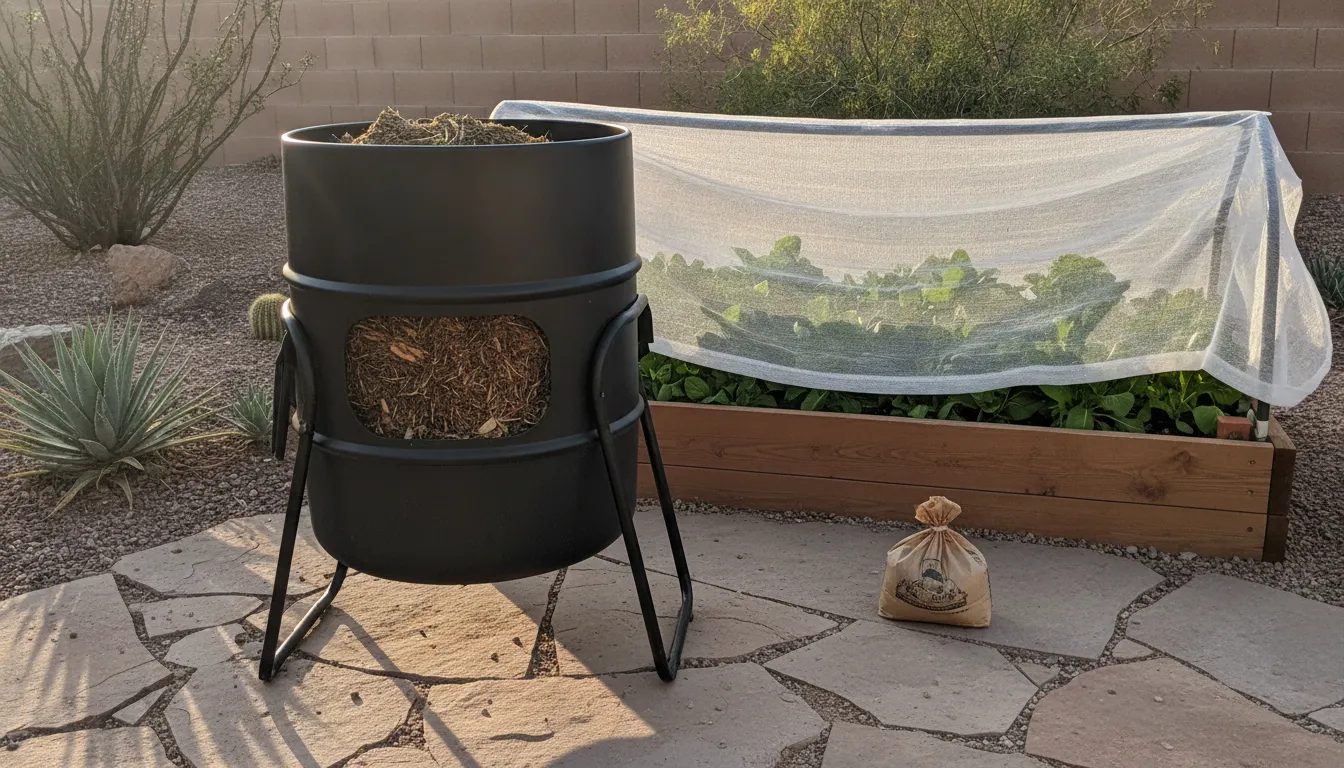
- Do not add scooped feces or used litter to a tumbler, a worm bin, or an open backyard pile.
- Do not sprinkle litter on garden beds and call it fertilizer.
- Do not bury waste in the vegetable garden or under a fruit tree.
- Do not rinse waste into a gravel side yard, a storm drain, or the gutter.
A purpose-built pet-waste system is a different product. If you already own one, follow that product's directions and keep it away from food gardens and play areas. If you have not verified the system, use the trash. The same caution is why we tell dog owners not to treat dog waste as lawn fertilizer. Dog waste and cat waste are different problems, and the dog answer lives in our dog poop fertilizer guide.
Why Litter and Feces Are a Poor Compost Input
Feces are only half the problem, because most of what leaves a litter box is the litter itself. Clay litter does not rot, since it is a mined mineral rather than a plant material. In a compost pile it stays as dusty clumps, holds moisture in odd pockets, and leaves a gritty finished product you would not want around tomatoes. Crystal or silica litter has the same issue and does not become soil either.
Plant-based, corn, wood, paper, and other biodegradable litters break apart more readily, but the feces mixed through them still carry the parasite risk. A bag label that says biodegradable or compostable describes the pellet, not a promise that the used contents are safe for a food garden. The CDC also notes that the parasite does not become infectious until 1 to 5 days after it is shed. Scooping every day removes feces before that window, which is a hygiene step, not permission to compost them.
Outdoor soil deserves the same caution. The CDC recommends gloves when you garden or touch soil or sand that cat feces may have contaminated, then washing your hands with soap and water. That advice covers a flower bed a neighborhood cat treats as a box. It also covers a sandbox. Turning that soil into the compost pile just moves the problem into the bin you planned to spread later.
Heat and drought in Southern Nevada and Tucson do not solve it either. Waste left in a side yard dries into a crust, blows as dust, and still should not be raked into a planting bed. If a corner of the yard has become a stray-cat toilet, a cat trap rental is the humane next step for trapping, not a compost plan.
What to Do With Cat Waste Instead
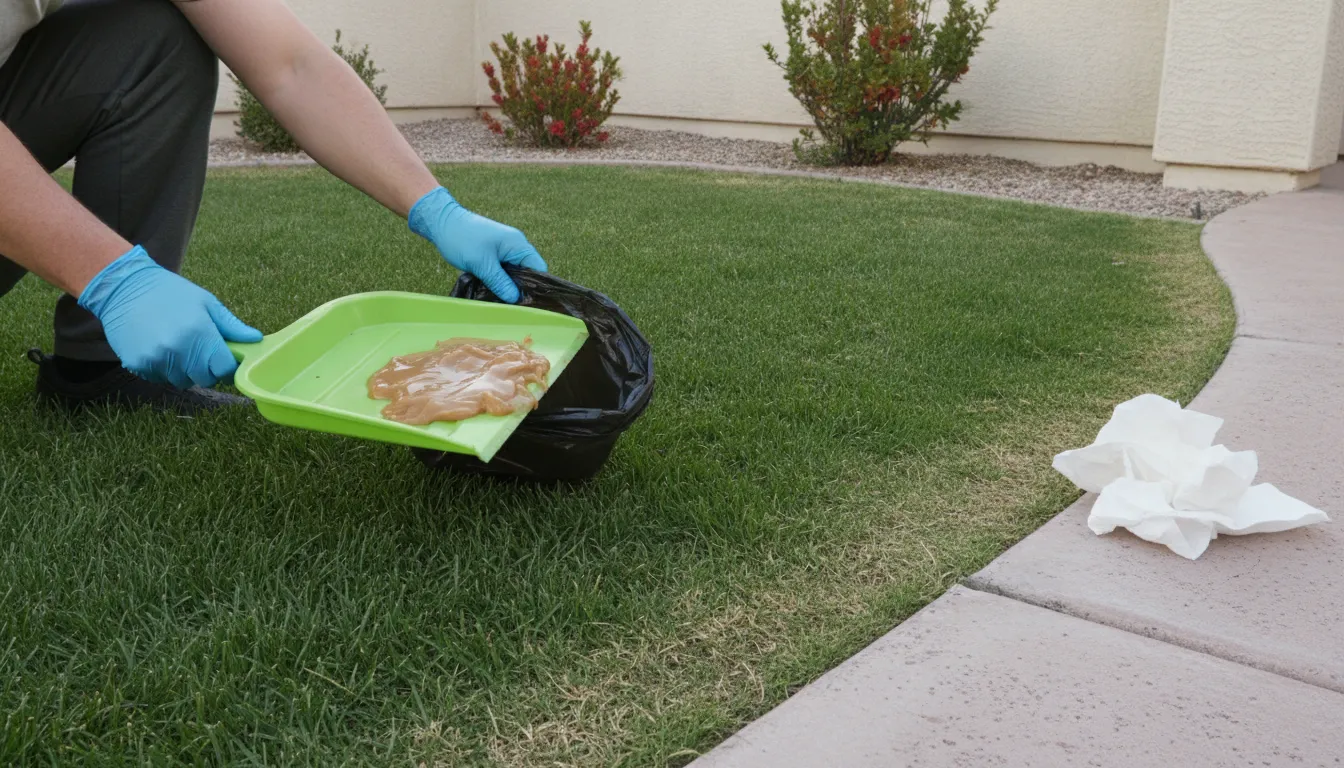
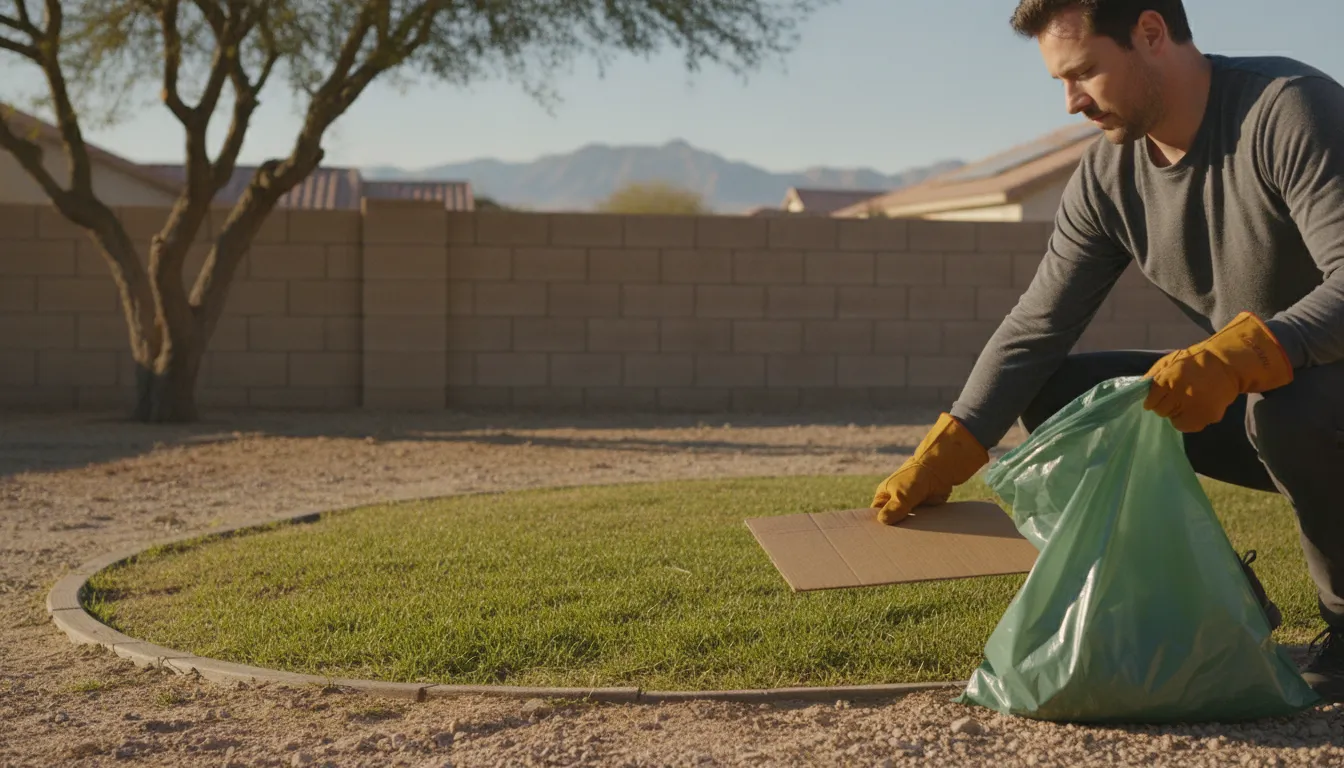
The everyday method for most households is simple and worth repeating. Scoop the box daily into a bag, tie the bag so it cannot leak. And put it in a lidded outdoor trash can on the collection day your hauler already uses. Do not set the bag beside the can. Do not drop it in a recycling bin. Do not flush clay litter, or any bag, including bags marked flushable, unless your own wastewater utility says that exact product is allowed. A clogged line is a worse cleanup than a tied bag in the trash.
Keep the bag routine short so it actually happens:
- Scoop feces and clumps every day, before the 1-to-5-day window the CDC describes.
- Put the scoopings in a bag you can tie. Double-bag if the first bag is thin or damp.
- Close the litter box and wash your hands with soap and water.
- Take the bag to a lidded outdoor can. Do not store it in a kitchen bin for days.
- On trash day, confirm the can lid shuts. Desert heat makes odor obvious fast.
If you are pregnant or you have a weakened immune system, ask someone else to scoop. That is a CDC-style precaution, not a medical diagnosis. People who want the official steps can read the CDC's toxoplasmosis prevention guidance. It covers daily litter changes, gloves for soil, and handwashing.
Dog waste has its own disposal rules, including when a sealed bag belongs in regular trash. Those steps are in our guide to disposing of dog poop. Use that page for dogs. Use this one for cats. Do not mix the two answers.
How Home Compost Compares With Safer Choices
People usually ask because they want less trash, not because they want a science project. The comparison below is the practical cut. "Safer for a food garden" means we would not send that material to vegetables, herbs, or fruit.
| Choice | What happens | Safer for a food garden? |
|---|---|---|
| Home compost pile or tumbler | Feces and litter sit in a pile you cannot verify. | No. |
| Clay or crystal litter in the pile | Mineral litter does not break down into soil. | No. |
| Biodegradable litter in the pile | The pellet may rot. The feces risk remains. | No. |
| Burying in a vegetable bed | Puts waste where food will grow. | No. |
| Sealed bag in approved trash | Leaves the property with normal collection. | Yes. This is disposal, not compost. |
| Daily scoop by someone else | Keeps higher-risk people away from the box | Yes, as a precaution |
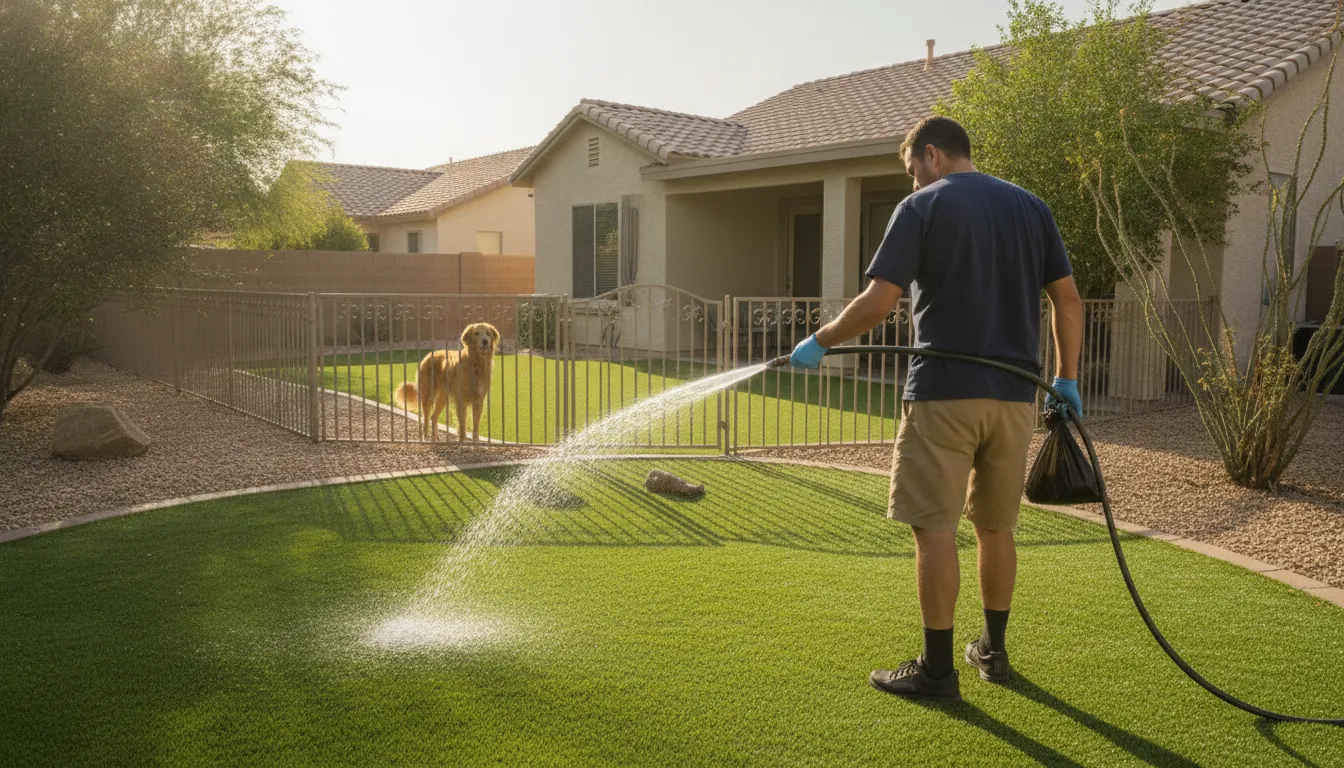
The EPA's note on nutrient pollution around the home makes a related point. Pet waste that is not disposed of properly can send nitrogen and phosphorus into local water. In our desert cities, a hose-down does not treat that waste. It moves it toward the street and the storm drain. Bagging beats rinsing.
Two more habits look thrifty and still fail the test. Dumping a tray of used litter behind a block wall is not composting. It is storage in the sun, and wind will move the dust. Mixing a "little" into an otherwise clean leaf pile also fails. Because you can no longer point to a part of that pile and call it free of cat waste.
If the goal is less trash, change the box routine before you change the disposal. A well-sized box, a daily scoop, and a can with a tight lid cut odor without sending waste into the garden. None of that turns the scoopings into compost.
What About a Hot Pile or a Store-Bought Digester?
Some gardeners answer the compost question with temperature and say a hot pile kills germs, so cat waste should be fine once the pile heats up. That plan still fails a home test. You would need a thermometer in more than one spot, on more than one day, and you would need the cool edges to heat as well. Most backyard piles never get that kind of check, and a tumbler that feels warm on the outside can stay cool in the middle.
Store-bought pet-waste digesters are a separate product from a garden compost bin. They are built to hold pet waste away from the beds where you grow food. If you use one, follow the maker's directions exactly. Keep it off the vegetable garden, off the herb bed, and away from where kids and pets play. If the directions are missing, or the unit is a repurposed trash can, do not invent a method. Use a tied bag and the trash.
Do not take composting advice from a forum thread or a product photo. Those sources do not know your trash rules, your wastewater utility, or who scoops the box in your house. The CDC page linked above is the health source. Your city or hauler is the disposal source. We do not run a composting service, and we do not install digesters.
There is a second outdoor problem that feels like composting and is not. Cats from the neighborhood will dig in a loose, damp pile because it resembles a litter box. Covering a kitchen-scrap pile keeps that from starting. Once cats have used the pile, treat the whole pile as contaminated and stop spreading it on food beds. That is also a reason not to leave scooped waste "to break down" behind the garage.
A Week of Handling Cat Waste Without a Compost Bin
Here is a week that stays inside the rule without a compost bin. Each day, one person scoops the box into a tie bag and takes that bag to the outdoor can, which stays lidded between trips. On trash morning, the can goes to the curb your hauler already uses. Nobody adds a scoop to the compost tumbler "just this once."
Once a week, wash the scoop and look at the box itself. If the plastic smells after a normal scoop, the box needs a wash with soap and hot water, then a full dry before new litter goes in. That wash belongs in a utility sink or a bathtub you then clean, not in the kitchen sink you use for food. The steps for a deeper box wash are in the litter box guide linked below. This article does not replace that how-to.
Gloves help when you handle a box that has sat, or when you pick up waste from soil. Wash your hands after the gloves come off. The CDC gives that glove advice for gardening in soil that cats may have used. It applies in a Henderson side yard and a Tucson gravel strip the same way.
If several cats share the house, one box is usually not enough, and a skipped day gets ahead of you fast. That is a scheduling problem, not a composting problem. A neighbor who is pregnant should not be the person who catches up the box. Ask someone else, or call us.
Outdoor mess is the other half of the week. Walk the side yard, the block wall, and the turf edge once. Bag what you find. Do not rake it into a planting bed and do not hose it toward the street. The EPA point above is the reason: pet waste left on the ground can ride stormwater into streams. In a desert neighborhood the "stream" is often a storm drain that does not treat what it catches.
When the Box or the Yard Is More Than a Scoop
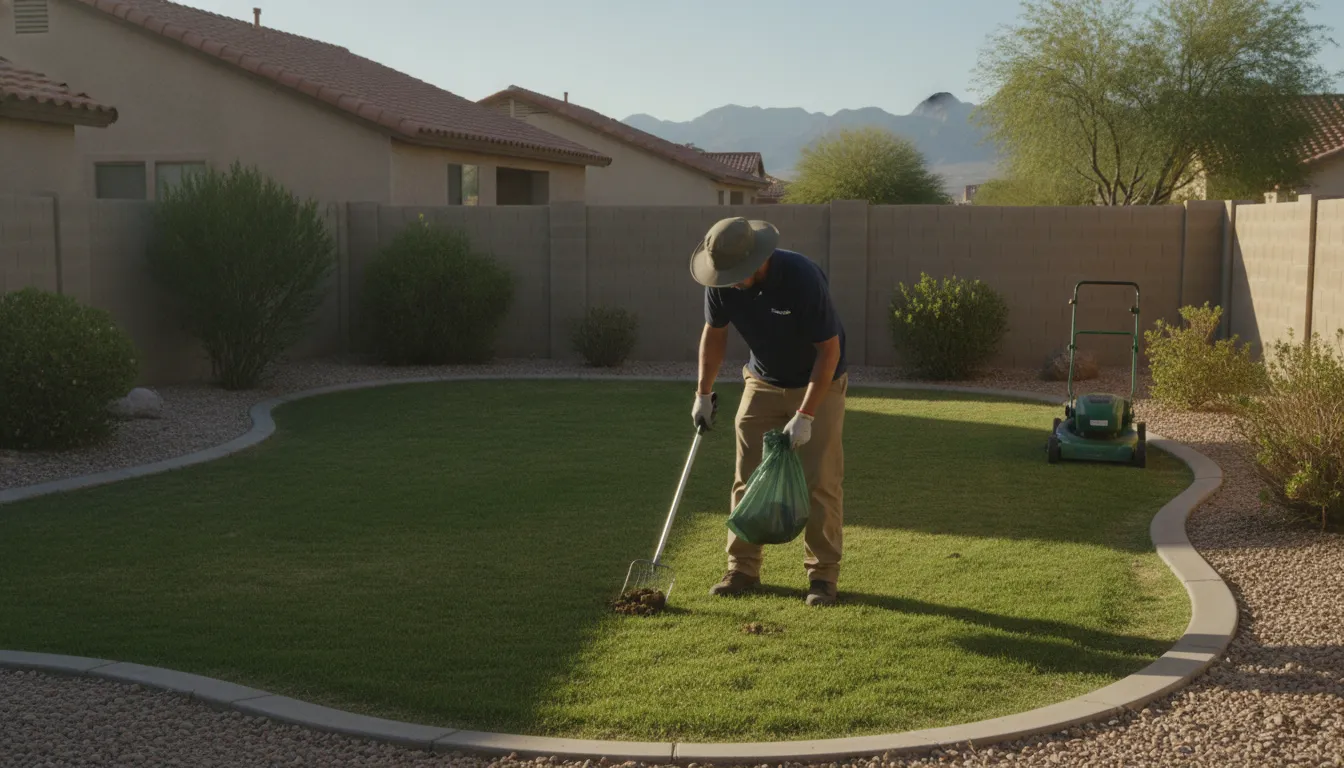
A single indoor box with a daily scoop is a household chore. It turns into a service job when the box has been skipped, when several cats share one pan, or when waste is collecting outside. Stray and feral cats often pick the same gravel strip, side yard, or turf edge. Dried piles, odor, and tracks into the house follow.
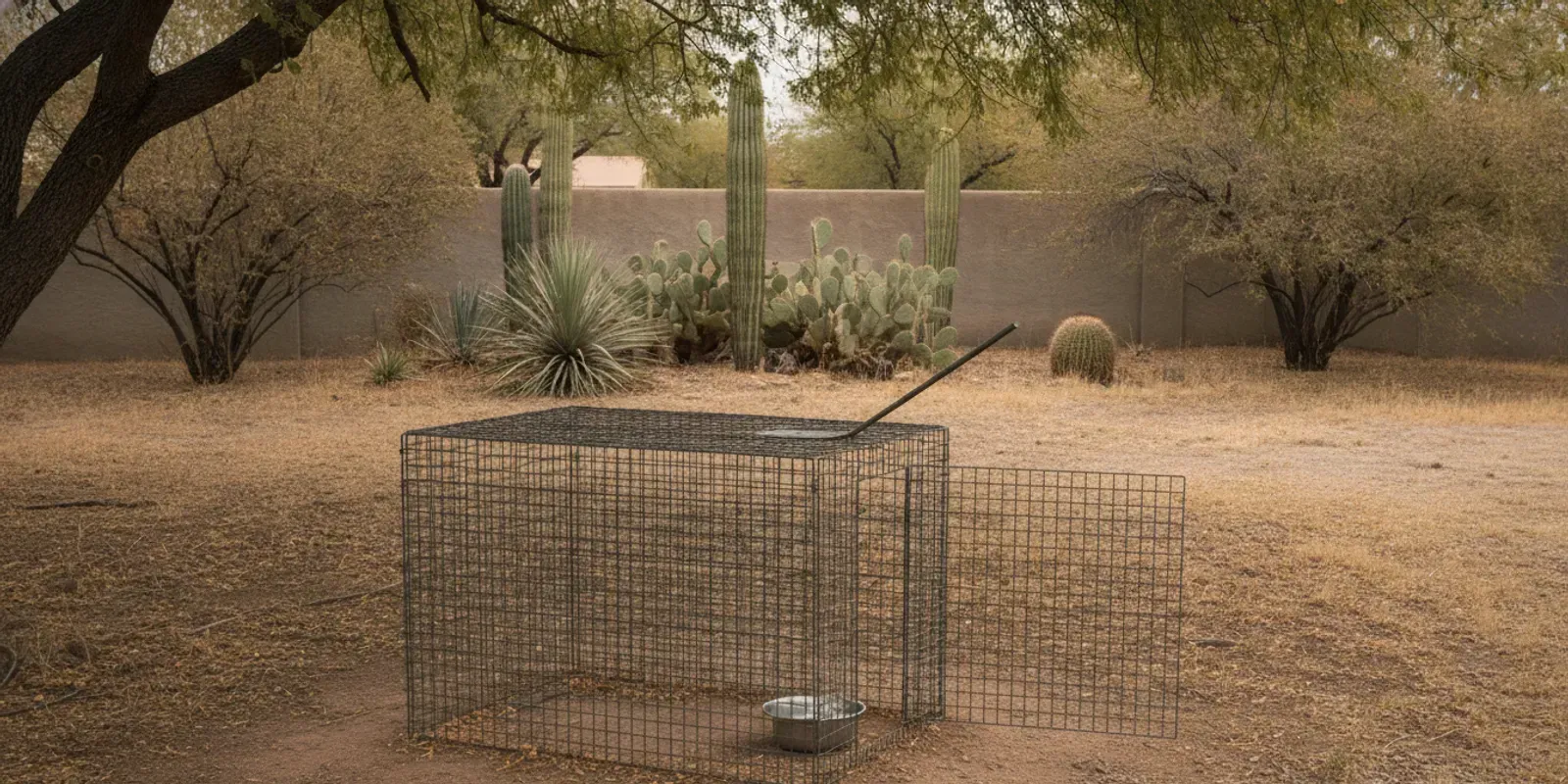
A1 Pet Maintenance has scooped pet waste since 1998. We are licensed and insured, registered with the Better Business Bureau, and we service yards, kennels, and litter boxes. Waste is bagged and hauled off the property for city sanitation collection. Weekly yard routes run across Southern Nevada and Tucson. A litter box inside the house is a separate request from a yard route, so say so when you call. We also rent cat traps when the problem is cats coming onto the property, not only the mess they leave.
Call when any of these are true:
- The box has gone uncleaned long enough that you do not want to start from zero.
- Outdoor waste has built up in gravel, rock, or along a wall.
- Someone in the home is pregnant or immunocompromised and should not scoop.
- You want the yard on a weekly route and the box handled on request.
Our residential litter box cleaning guide walks through a normal scoop and a deeper wash. Read that for the cleaning steps. This page stays on the compost question. For a one-time outdoor clear-out, our one-time pet waste cleanup is the visit that gets a neglected yard off the property. That service guide also explains how a regular dog-waste visit works if the household has dogs too.
Call (702) 521-2624 and tell us whether you need a litter box, a yard clear-out, or both. We will say what we can take and when we can be there.
Frequently Asked Questions
Can cat waste be composted if the litter says biodegradable?
No. A biodegradable label describes the litter material. It does not make used litter and feces safe for a home compost pile or a food garden. Bag it for the trash unless a verified system and your local rules say otherwise.
Can I compost cat poop if I do not grow vegetables?
We still say no for a normal home pile. Finished compost gets moved, spilled, and used in places you did not plan. Soil where cats have been is also a reason to wear gloves, which is a sign the material is not a casual garden input.
Is clay cat litter compostable?
Clay litter does not break down. It stays dusty and clumpy in a pile. Keep clay, crystal, and plant-based used litter in a tied bag for the trash, not in the compost bin.
Can I flush cat waste instead of composting it?
Do not flush clay litter or a bag. Flush only if your own wastewater utility allows that exact unbagged waste. When in doubt, use a tied bag and the outdoor trash can.
What if stray cats keep using my garden as a litter box?
Do not turn that soil into compost for food plants. Wear gloves if you have to handle it, wash your hands, and keep the beds covered if you can. Call A1 at (702) 521-2624 if the waste has built up or you want a trap rental to deal with repeat visits.