How to Choose an Artificial Turf Cleaning Company
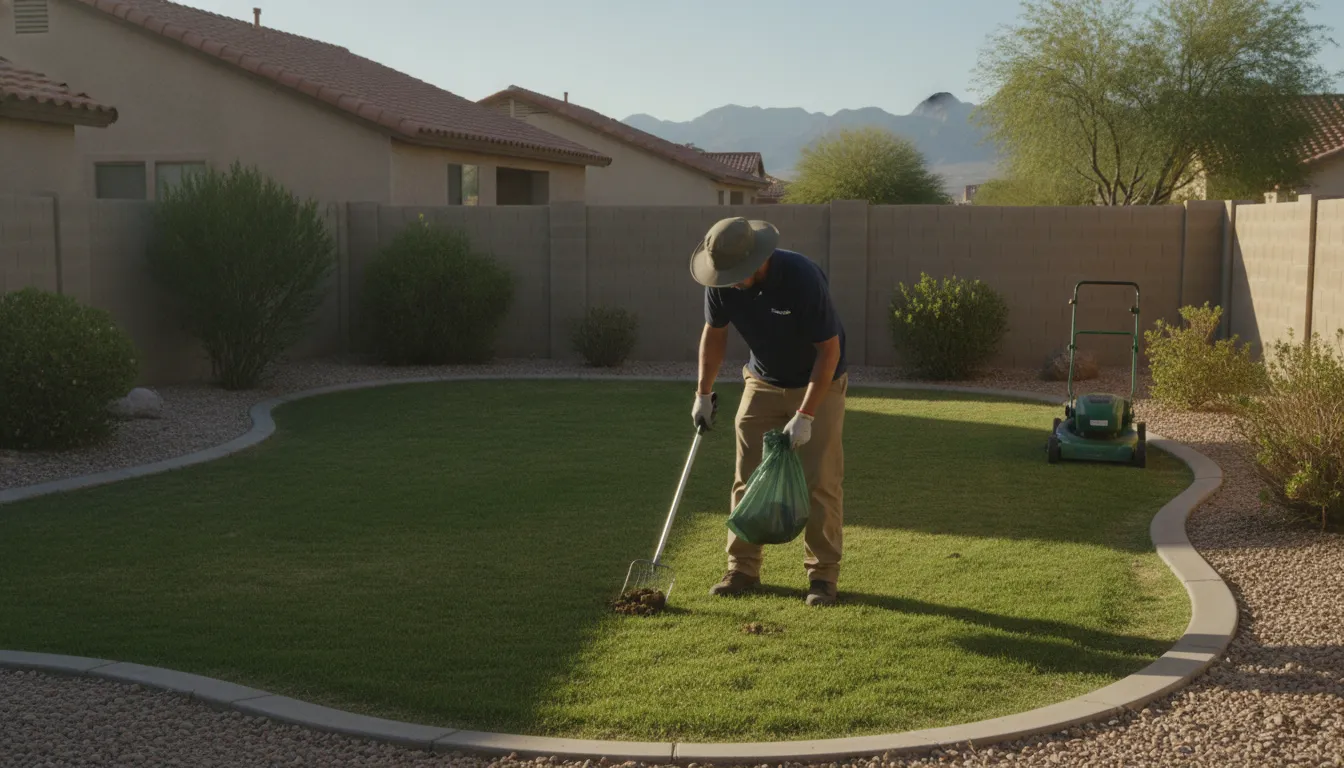
How to choose an artificial turf cleaning company starts with the work on the lawn, not with the logo on the truck. A useful company can remove pet waste, clear debris from the fibers, deodorize the smell, and rinse the surface until the blades lift. A yard crew that only offers a quick hose-down is doing a different job.
A1 Pet Maintenance cleans pet turf for homes and shared pet areas in Las Vegas, Henderson, and nearby Clark County. The crew scoops the waste first, treats odor with an enzyme product, and then rinses with agitation so the blades can stand up again.
Call (702) 521-2624 and describe the yard before you book a visit.
What Should an Artificial Turf Cleaning Company Actually Do?
Artificial turf does not break waste down the way living soil can. In a hot Las Vegas yard, urine and small bits of waste can sit in the fibers and the infill for a long time. A company that only brushes the top layer can leave that smell in place.
Ask the company to name four parts of the visit before you talk about price. If one part is missing, you are not comparing the same service, and a lower quote may simply be a smaller job.
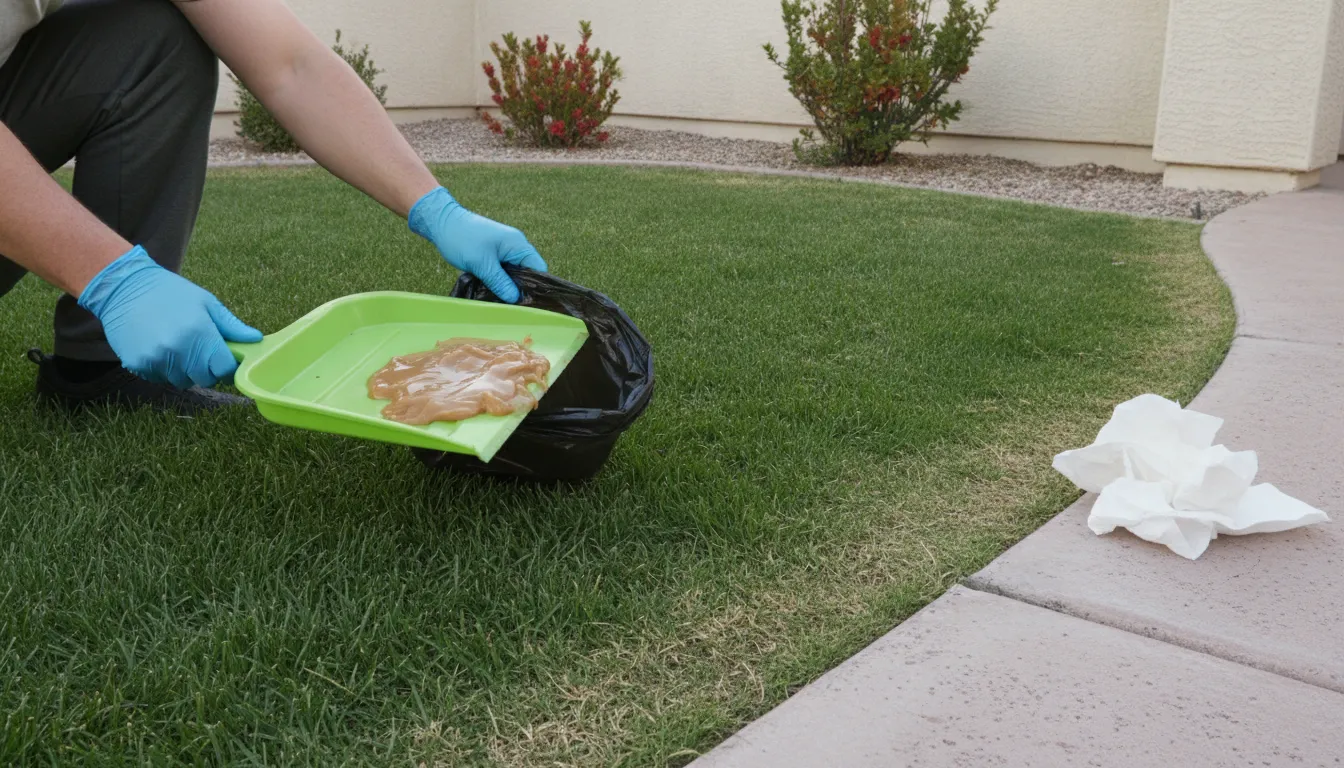
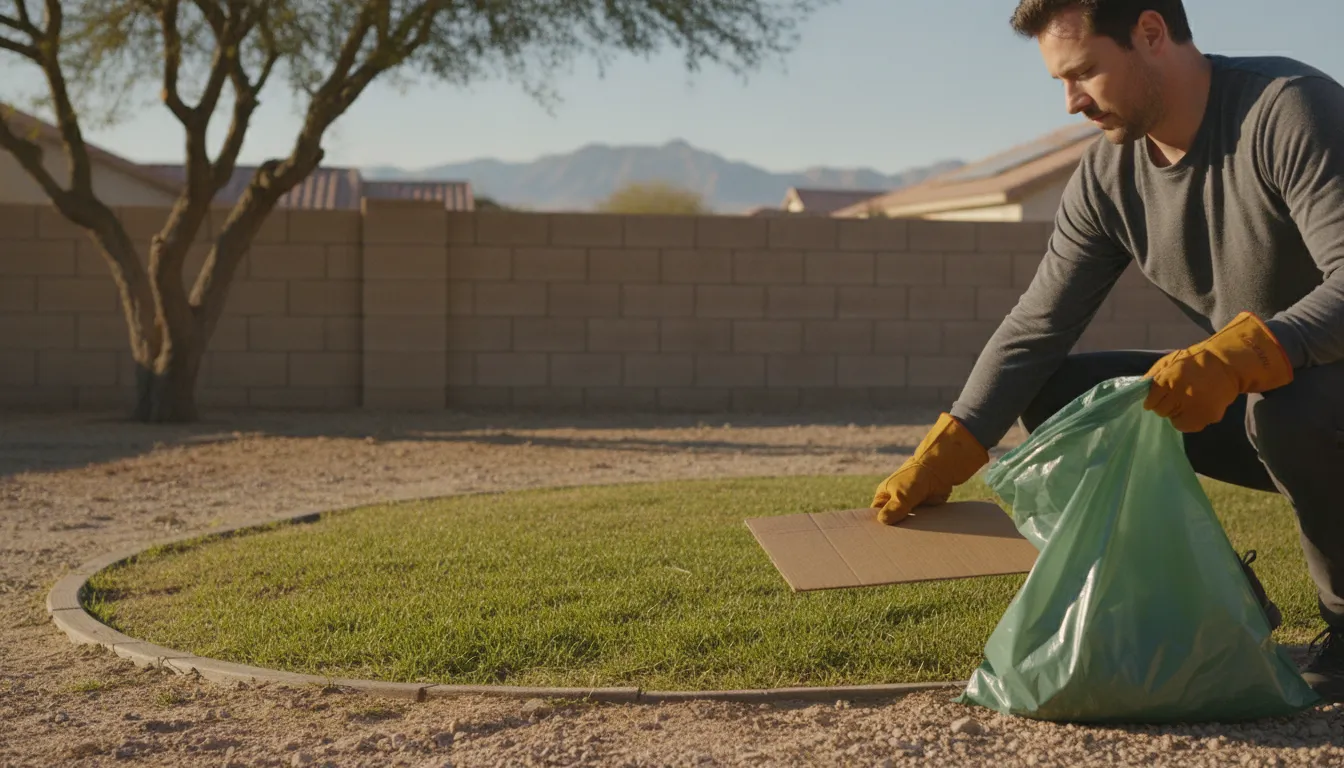
- Surface waste removal. Visible pet waste comes off the turf before any rinse. Cleaning a dirty surface just moves the mess.
- Debris clearing. Leaves, dirt, and organic buildup come off with the waste. Desert wind drops a lot of that material into a yard.
- Enzyme deodorizing. An enzyme treatment works on odor in the fibers. A perfume spray only covers it for a short time.
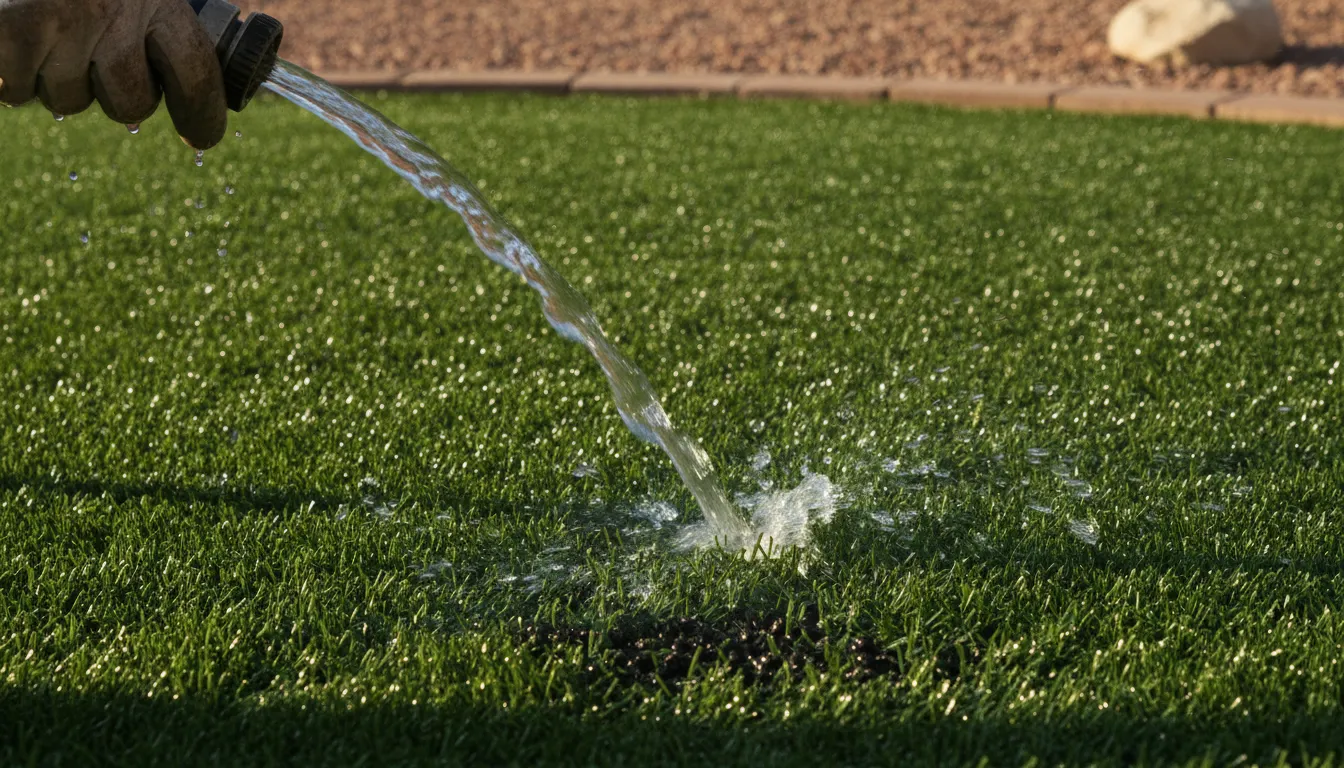
- Deep rinse and agitation. Water plus agitation lifts the blades. A light spray is not the same step.
A1 lists those four steps on its artificial grass cleaning service page. The page also says infill refresh is optional and only when the turf needs it. That is a recommendation, not a promise that every visit replaces the infill.
Keep weekly pooper-scooper visits separate from this job. Weekly and twice-weekly pickup stops new waste from piling up. Turf cleaning is the deeper reset when buildup or odor is already in the lawn. A1 does not publish one fixed interval for that reset. The yard's use decides it.
How to Choose an Artificial Turf Cleaning Company
Use this order when you call so the talk stays on the turf itself. A package name can hide a rinse that never touches pet waste or odor in the fibers.
- Confirm the company cleans turf as its own service. Some landscapers add a rinse at the end of a mow. Ask whether pet-turf cleaning is a listed service with its own scope.
- Ask them to walk the four steps. Waste removal, debris clearing, enzyme deodorizing, and a deep rinse should each get a yes or a no. A vague "we sanitize" is not enough.
- Match the company to the property. A private dog yard, a daycare run, and a shared pet area are not the same visit. A1 works on homes, pet daycares, boarding spots, apartments, and other pet-friendly landscapes in Las Vegas and Henderson.
- Ask how the quote is built. Square footage, how much waste is there, how strong the odor is, and access all change the job. A1 quotes turf cleaning after that picture is clear. There is no public flat rate.
- Ask what they will not guess. A careful company will not promise that every odor vanishes, and it will not invent a cleaning calendar from a weekly scoop plan.
The artificial turf service guide is the place to sort one-time cleanup from ongoing waste removal. Read that after you know the company can do the four steps. This checklist is only about the choice.
Which Questions Separate a Real Turf Cleaner From an Add-On?
You do not need a long interview to sort this out. Five direct questions show whether the company does this work every week or only when a customer happens to ask for it.
| Question to ask | A useful answer | A weak answer |
|---|---|---|
| Do you remove pet waste before you rinse? | Yes. Surface waste comes off first. | We spray the whole yard and bag what we see. |
| How do you treat pet odor? | An enzyme treatment on the fibers, not a cover-up scent. | We use a freshener, or we skip odor unless you ask. |
| What does the rinse include? | A deep rinse with agitation so the blades can stand up. | A hose pass or a pressure wash with no plan for the fibers. |
| Do you replace infill every visit? | Only if the turf needs it. They will say when they will not. | Every cleaning includes new infill, with no look at the yard. |
| How do you price the visit? | From the area, the buildup, the odor, and access. | One price for every yard, or a rate copied from weekly scooping. |
Write the answers down. If two companies describe different work, their prices are not comparable. The Las Vegas turf cleaning cost guide explains why quotes move with yard size and odor. Use it for the price talk, not as a second checklist.
Left on a yard, pet waste can also wash nutrients into storm drains. The EPA notes that pet waste adds to nutrient pollution when it is not thrown away properly, because roadside drains often lead to local streams. A company that bags the waste and keeps it out of the gutter is doing a basic part of the job. You can read the EPA note on sources of nutrient pollution around the home.
What Should You Tell the Company Before They Quote?
A quote is only as good as the picture you give. Have these facts ready before you call, then let the company ask the rest.
- About how many square feet of turf the dogs use.
- How many dogs use it, and whether guests or daycare dogs add to that.
- Whether the problem is piled waste, a smell, or both.
- When the area was last scooped or rinsed.
- Gate, hose, and parking notes so the crew can reach every section.
That is the call list. The visit-day list is different. On the day of service, the gate should be open, the hose should reach the turf, and the dogs should be off the lawn. Those steps live in our note on what to have ready before artificial turf cleaning. Do not treat them as part of choosing the company.
If you want to see how two providers line up on scope and reliability after this checklist, read how to compare a pet turf cleaning service. That piece is the side-by-side. This one is the first screen.
Which Red Flags Mean You Should Keep Looking?
A few answers should end the call right there. They usually mean the company is selling a different service, such as a simple yard rinse, under a turf-cleaning name.
- They cannot name waste removal, debris clearing, deodorizing, and a rinse as separate steps.
- They price the job from a weekly pooper-scooper chart without looking at the turf.
- They promise the smell will be gone no matter how long it has sat in the infill.
- They say they install turf, replace all the infill, or rebuild the yard as part of a cleaning visit.
- They will not say which cities they serve. A1's turf cleaning is for Las Vegas, Henderson, and nearby Clark County.
A1 does not install artificial grass. Cleaning, deodorizing, and maintaining pet turf is the work. If the infill is worn out or the base has failed, that conversation belongs with the installer who put the lawn in. A cleaning quote should not pretend to be a replacement quote.
Shared pet areas need one more check. Ask who will meet the crew and which zones are in the visit. A daycare run and a home yard can both use the same four steps, but the access and the traffic are not the same. Say that on the first call so the quote matches the site.
How Should a Home Yard and a Shared Pet Area Change the Call?
The four cleaning steps stay the same on every property. The facts you lead with should change with the site and the way dogs use it. A company that uses one script for every caller is not really listening to the yard.
Private dog yards
Start with the dog count and the main turf patch. Say whether the smell sits in one corner or across the whole lawn. A one-dog side yard and a four-dog run are different quotes, even when the square footage looks close. Also say if a weekly scoop is already in place. That tells the company the visit is a reset, not a substitute for pickup.
Daycare, boarding, and apartment relief areas
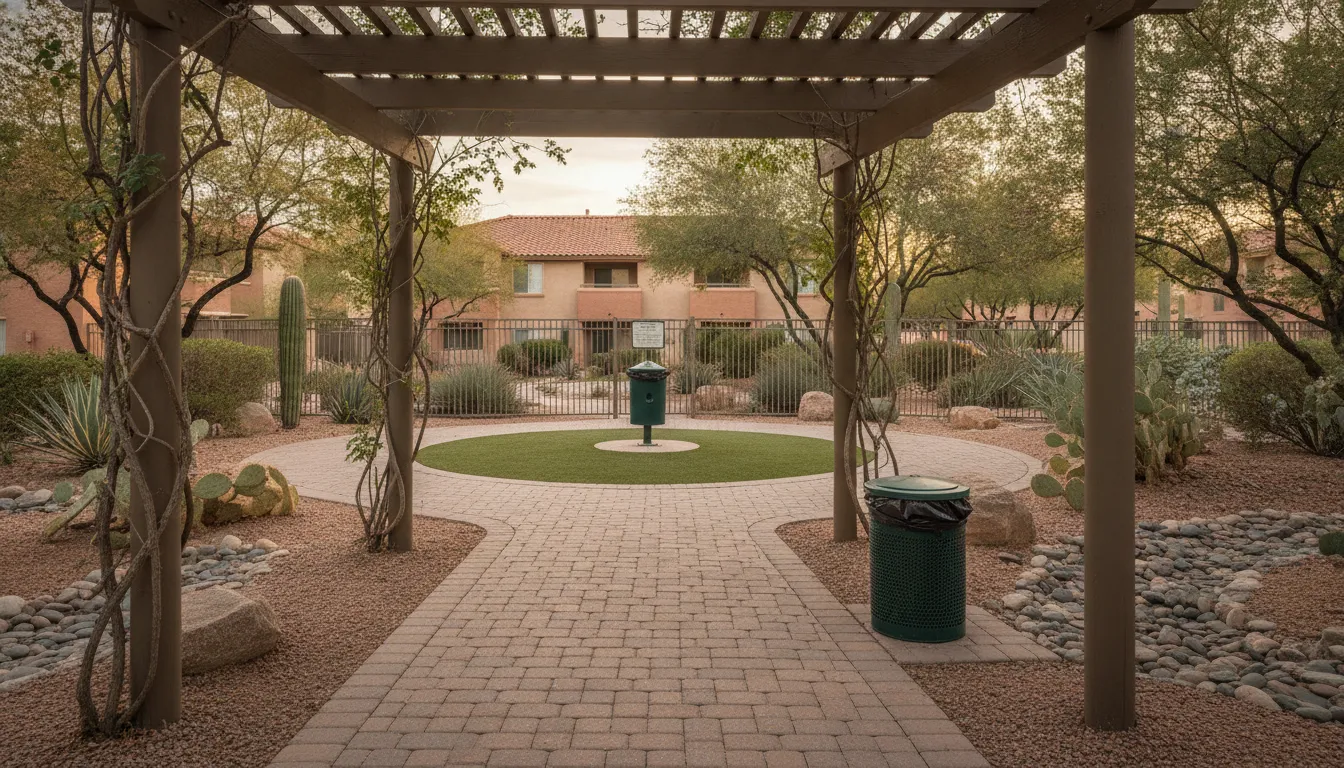
Lead with traffic and hours. More animals use the same fibers, so waste and odor build faster than they do in a home yard. Name the zones: the relief run, the path to the gate, and any spot guests use. Ask who unlocks the area and whether dogs can be moved during the rinse. A1 takes these jobs as custom quotes. There is no published daycare or apartment rate to copy from a flyer.
If the site is an HOA lawn or another shared landscape, say who approves the visit. A cleaner who will only talk to the resident, when the board controls the gate, will stall the job. Get that name before you compare prices.
What Can You Check After the First Visit?
The first visit is the proof of the company you chose. You should be able to see the work you were promised on the turf itself, without having to guess from the invoice alone.
- Visible pet waste should be gone from the turf that was in the quote.
- Leaves and loose debris should be off those same sections.
- The blades should look lifted, not packed flat, after the rinse dries.
- The crew should be able to say where they used the enzyme treatment.
- Any infill note should be a recommendation, not a surprise add-on you did not discuss.
Odor is the one result that needs a fair test. Smell the yard after it dries, not while it is still wet. Heat in Las Vegas can bring a smell back if waste was left in the infill, so one rinse is not a lifetime warranty. If the smell returns in the same spot, call and describe that spot. That follow-up is more useful than switching companies over a single hot afternoon.
Keep the scooping plan in place between cleanings. Turf cleaning does not replace a weekly or twice-weekly waste visit. If the company that cleaned the turf also offers pickup, ask them to keep the two schedules separate on the bill. You should always be able to see which visit was the rinse and which was the scoop.
Frequently Asked Questions
How do I choose an artificial turf cleaning company?
Ask whether turf cleaning is its own service. Then confirm waste removal, debris clearing, enzyme deodorizing, and a deep rinse. If the company cannot name those steps, keep looking.
Is a pooper-scooper visit the same as turf cleaning?
No. Weekly or twice-weekly scooping removes new waste. Turf cleaning also clears debris, treats odor, and rinses the fibers. A1 treats those as separate services.
Should the company replace the infill every time?
No. Infill refresh is optional and only when the turf needs it. A company that adds new infill to every visit without looking at the yard is guessing.
Does A1 publish a flat price for turf cleaning?
No. The quote depends on the turf area, the buildup, the odor, and access. Call (702) 521-2624 and describe the yard. Do not use a weekly scoop price as the turf price.
Where does A1 clean pet turf?
A1 cleans pet turf for homes and shared pet areas in Las Vegas, Henderson, and nearby Clark County. If the yard is outside that area, say so before you book.
Ready to Talk Through Your Turf?
If those four steps match what your yard needs, the next call can stay short and specific. Tell us the turf size, the dog count, and whether you are dealing with piled waste, a lasting odor, or both at once.
Call A1 Pet Maintenance at (702) 521-2624 and ask for a quote based on your turf, your dogs, and the odor you can already point to in the yard.