How to Pick Up Soft Dog Poop From Grass
Soft dog poop does not sit on top of the lawn the way a firm pile does. It sinks between the blades, sticks to them, and smears if you pinch it from above. If you need to know how to pick up soft dog poop from grass, slide a barrier under the spot, lift the grass and the mess together, and bag it before you walk away. A bag over your hand, a piece of cardboard, and a second bag handle most single spots. A wide smear, or a yard that stays soft all week, is a job for a dog poop collection service instead of another hand pass.
Call A1 at 702-521-2624 if the lawn is already smeared and you want the mess hauled off instead of worked through by hand.
Why soft waste sticks to grass
Firm waste has a crust you can close a scoop around. Soft waste does not. It folds into the blades, and a grab from the top pushes it deeper. Heat in a Las Vegas or Tucson yard dries the top into a film while the underside stays wet. A rare rain or a sprinkler cycle then turns that same spot slick enough to spread under a shoe.
Leaving it is not a lawn treatment. The U.S. Environmental Protection Agency notes that pet waste adds nitrogen, phosphorus, parasites, and bacteria to water when it is not picked up, because storm drains often carry yard runoff straight to local streams. On the lawn itself, a soft spot also burns the blades and leaves a bare patch. Pick it up the same day if you can, because a dried film is harder to lift than a fresh smear.
An occasional soft stool after a food change is a cleanup problem. Stool that stays loose for more than a day or two belongs with your veterinarian, especially if the dog is vomiting or will not eat. This page is about the grass, not a diagnosis.
Set up the spot before you touch it
Walk the edge of the patch first. Soft waste hides in longer blades, along the block wall, and under the tree where the dog likes to pause. Keep kids and other pets off that corner until the bag is tied.
- Two waste bags, because a single thin bag tears on a wet load.
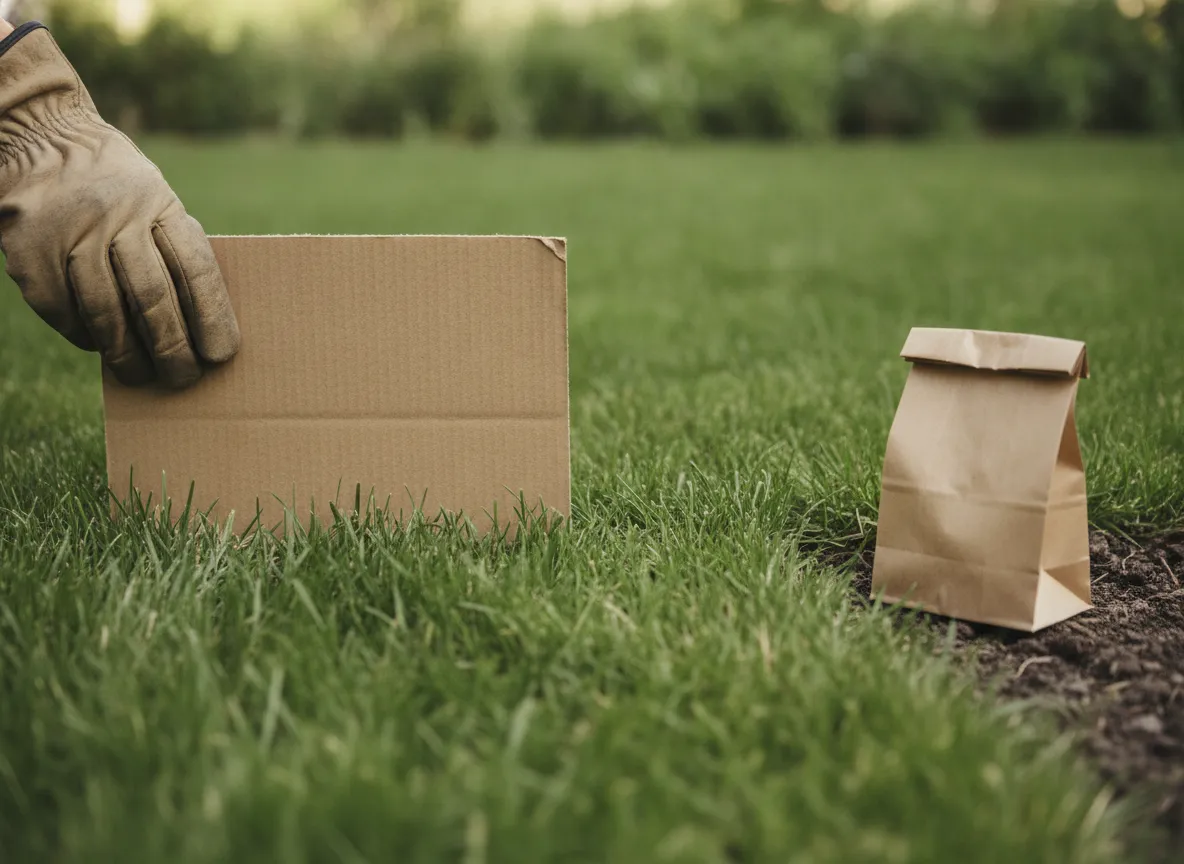
- A flat piece of cardboard, a paper plate, or a clean dustpan. Cardboard is the easiest slider.
- Disposable gloves if you do not want the bag as your only layer.
- A small outdoor bucket or lidded can for the tied bag. Do not rinse the mess toward a storm drain.
Stand so the sun is not in your eyes, since a smear is easier to see from the side than from straight above. If the grass is tall, do not mow first. Mower wheels spread a soft spot across a much wider strip.
How to pick up soft dog poop from grass
Work one spot at a time, and do not drag a scoop across the lawn hoping the pile will roll up. That is how a small mess becomes a stripe.
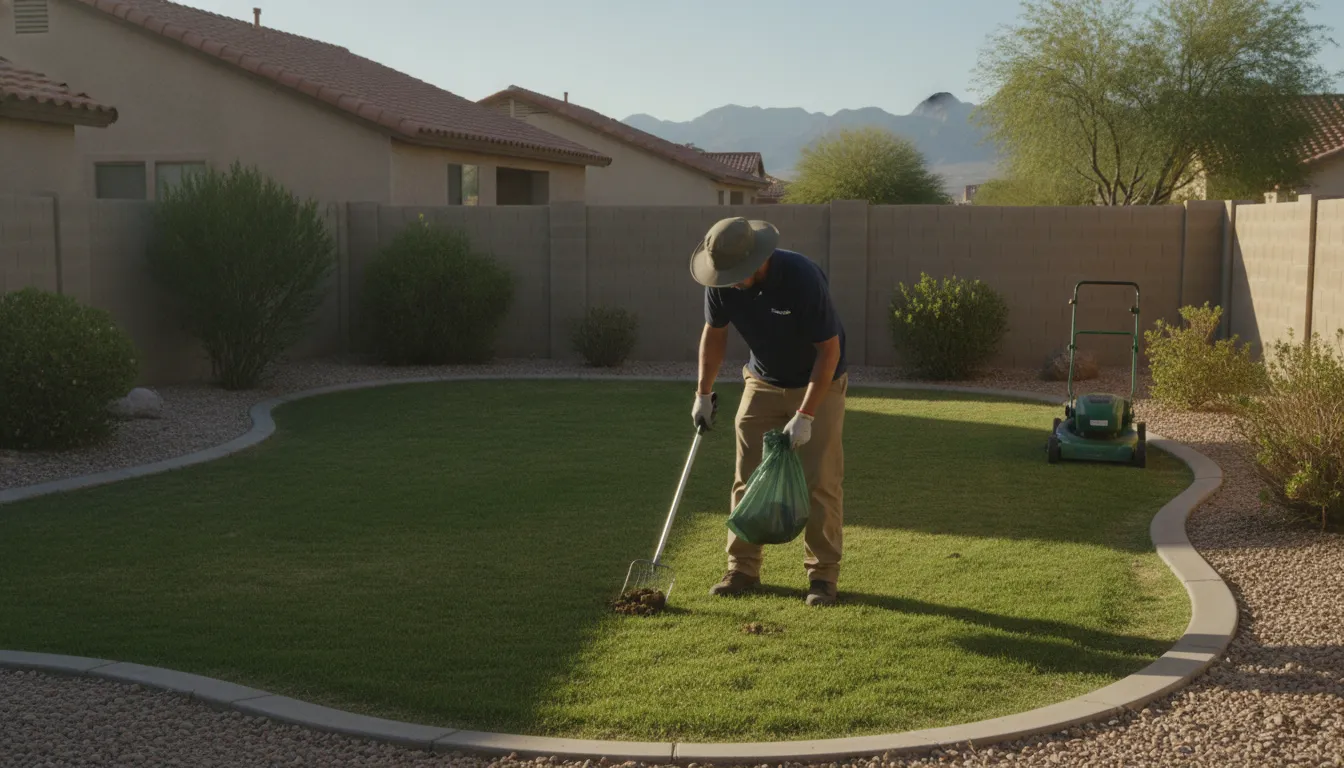
- Turn one bag inside out over your hand, or pull on a glove and hold the bag open beside you.
- Lay the cardboard flat on clean grass at the near edge of the spot.
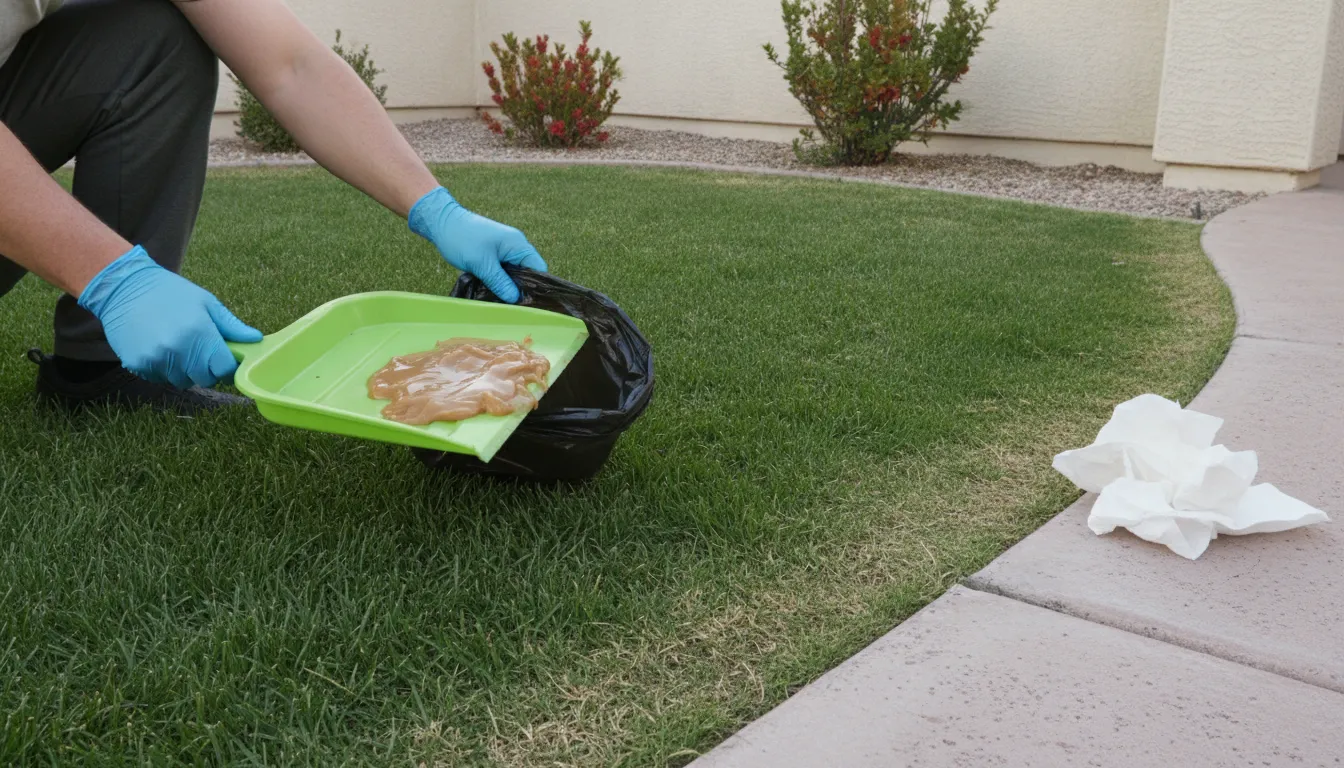
- Slide the cardboard forward under the blades, not down through them. Let the grass and the waste ride onto the card together.
- Fold the card up, tip the load into the bag, and peel any stuck blades off the card with the bag still over your fingers.
- If a film is left, press a dry paper towel or a second piece of card onto it and lift. Do not scrub in circles.
- Turn the bag right side out, drop it into the second bag, and tie both before you move to the next spot.
A rake and pan can help when the ground is uneven, but the rake tines smear soft waste if you pull toward yourself. Use the pan or the cardboard as the moving piece, and keep the rake only for lifting blades out of the way. For firm piles and tool choices on other surfaces, the dog poop picker upper guide covers scoops, claws, and pans. This page stays on the soft spot in living grass.
Skip flour, cat litter, and sawdust on the lawn, because those powders pick up moisture and then you have to pick up the powder too, while litter granules stay in the turf. A dry card does the same job without leaving a second mess.
Match the method to the kind of mess
Not every soft spot needs the same pass. Look at the shape before you choose a tool, because a pile that still has edges is not the same problem as a film that has already been walked through.
Still in a mound. The waste is soft, but it has a center you can see. Use the cardboard slider, because one lift usually clears it. A second press with a dry towel takes the film off the blades. This is the ordinary after-dinner accident, and it should take a few minutes.
Spread into a smear. Someone already stepped in it, or a sprinkler hit it. Do not try to roll it into a ball; cut the area into small sections with the edge of the card and lift each section into the bag. Change the card when it is soaked. A soaked card spreads the mess onto the next clean blade.
Almost liquid. There is no mound to lift, so lay a paper towel or a folded newspaper on the wettest part, wait a few seconds, and lift the towel into the bag. Then slide the card under the stained blades that are left. Do not pour water on it first. Water before the bag just moves the puddle.
Dried into the blades. The top is a crust and the underside is still damp. Loosen the edge with the card, but do not scrape hard enough to pull the grass out by the roots. If the crust will not release, mist that one spot with the hose, wait a minute, and lift again. Bag the loosened piece. Do not leave the misted spot for later, because it will dry into a worse film.
Hidden in long grass. Part the blades with your free hand or with the card before you slide, and work from the outside of the clump toward the center so you do not step in the middle. If you cannot see the edge, kneel and look from the side. Standing straight above a tall patch hides the color.
A flat metal scoop is fine on a patio, but on living grass it acts like a knife and mashes the soft part into the thatch. Save the scoop for hard ground. On the lawn, the card is the better edge because it bends with the blades instead of cutting through them.
Desert yards change the timing
A soft pile in a Southern Nevada summer does not stay soft for long. By midmorning the top can crust while the shade under a block wall stays damp. Walk the sunny middle of the lawn first if you are out early, then walk the wall, the tree well, and the gate path again later, because those spots stay hidden and stay wet.
Sprinklers are the other trap. If the system runs before you pick up, the spray turns one pile into a fan of spots. Pick up before the cycle, or skip that zone until the grass has drained, because wet blades make the card slip. Dry blades let the card slide under the spot in one motion.
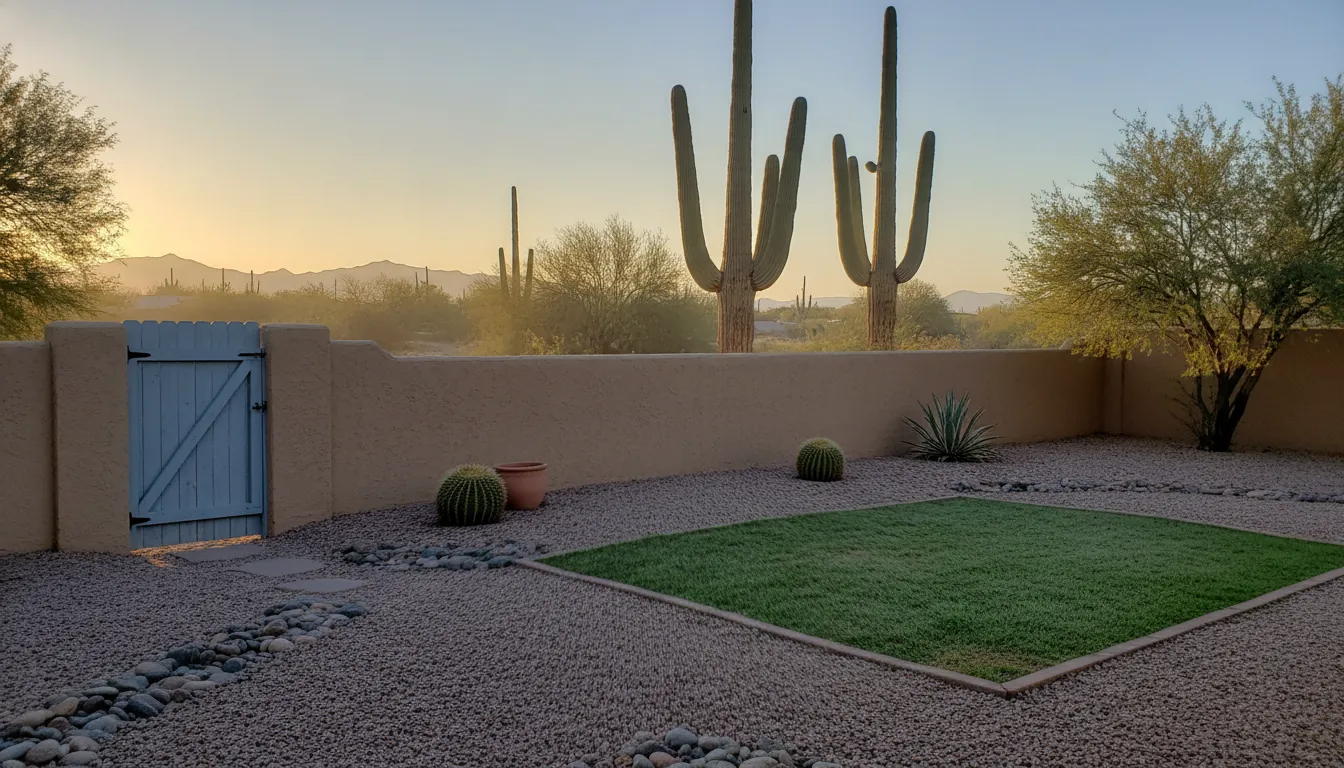
Gravel next to the grass is a second surface, not a reason to change the grass method. Lift the grass spot first so you do not track it onto the rock, then use a scoop on the gravel. Mixing the two in one drag drags gravel into the lawn and waste onto the rock.
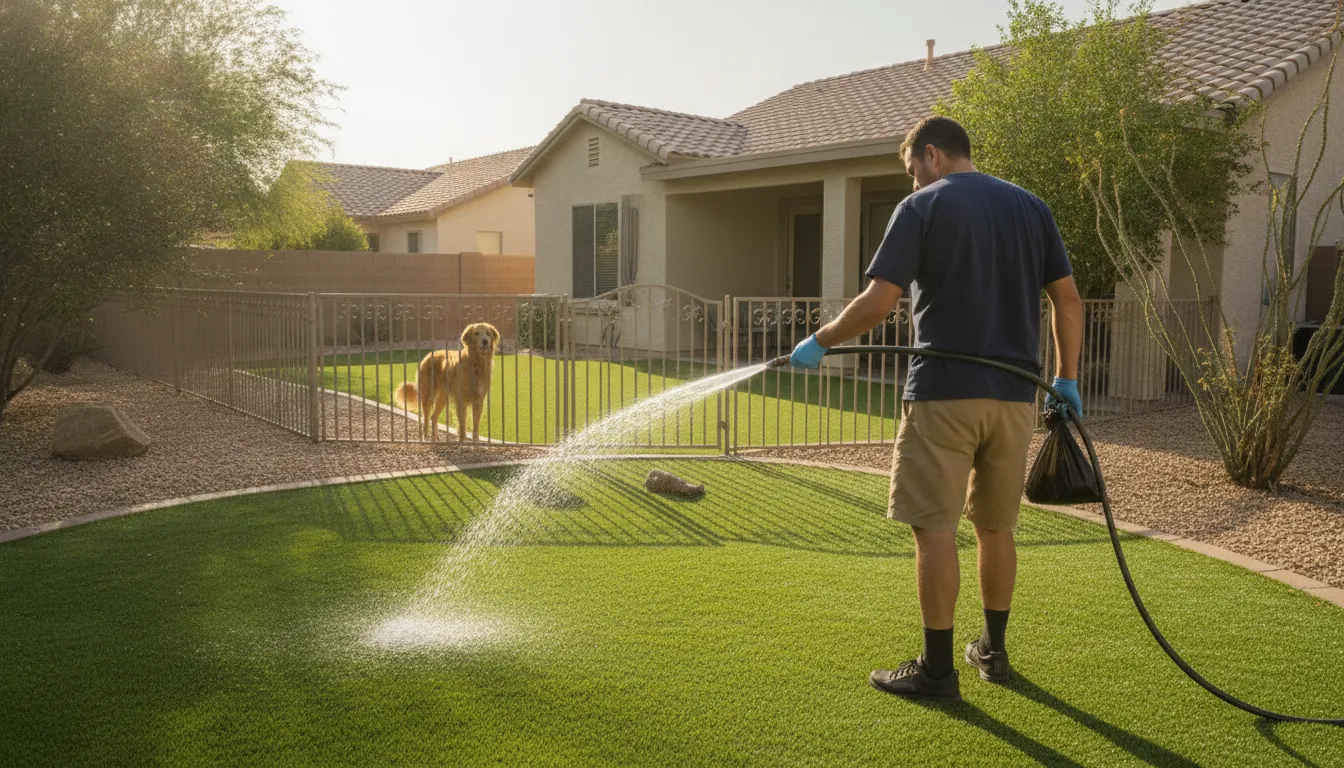
Artificial turf in the same yard needs a different stop. Living grass can take a gentle soak after the bag is tied, while turf holds the film between the blades and the infill. Do not hose a turf smear into the backing and call it done. A1's turf cleaning is a separate visit for that surface. This article is only the living-lawn method.
If the dog's stool is soft for a day after a food switch, the pickup method is enough. If it stays loose, smells sharply different, or the dog is tired or off food, call your vet. Cleaning the grass does not answer a health question. It only keeps the lawn usable while you sort that out.
A short pass you can repeat
Build a two-minute loop so the next soft spot does not become a weekend project. Keep the bags, a few pieces of cardboard, and the gloves in one bin by the gate, and replace the cardboard when it gets soft. A limp card will not slide.
Start at the gate and walk the path the dog actually uses, because most repeat spots are the same three places: the back corner, the shade tree, and the strip along the wall. Check those before you wander the middle of the lawn. You will miss less, and you will step in less.
Bag as you go, and do not stack dirty cards on the patio and plan to bag them at the end. One dropped card puts the mess back on the concrete. Tie the outer bag before you set it down. Then wash the gloves and your hands at the outdoor hose, and leave the shoes outside if the tread looks stained.
One dog with an occasional soft stool can stay on this loop. Two or more dogs, or a stool that is soft every day, fills the same corners faster than a quick loop can clear. That is the point where a scheduled visit saves the lawn from a constant smear, not because the cardboard trick failed, but because the volume never stops.
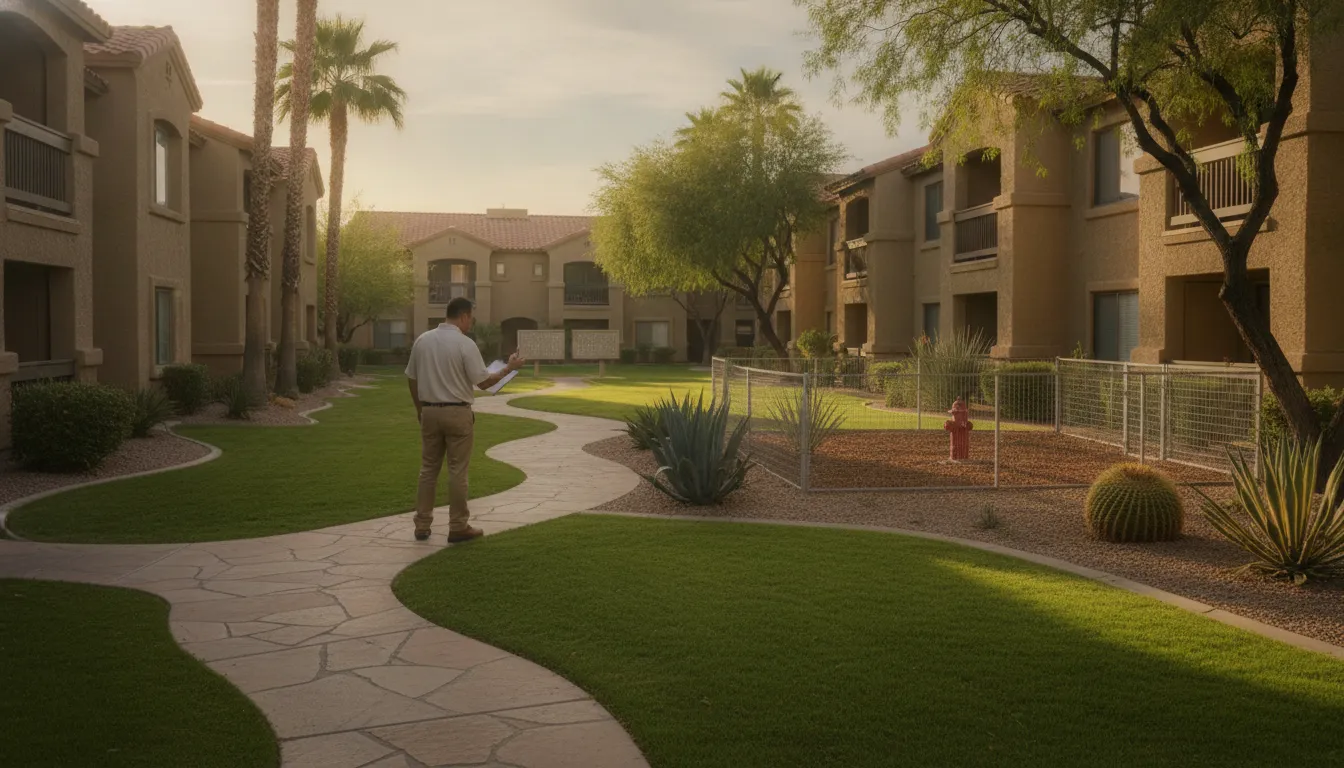
A1 technicians already do that loop on more than 400 properties a week across Southern Nevada and Tucson. They inspect the yard, bag what they find, and take it away. You can still use the slider on a surprise spot between visits. The route is there so a soft week does not turn into a stained lawn.
Rinse what the bag cannot lift
After the solid part is bagged, a thin stain can remain on the blades. Use a garden hose on a gentle shower, aimed at the spot, and let the water soak into the soil right there. A jet setting blasts residue sideways onto clean grass and onto the sidewalk.
Keep the water on the lawn. Do not wash the spot into the gutter. That same EPA page says roadside storm drains often lead to streams and lakes without treatment, and pet waste in that flow carries bacteria with it. A light soak on soil is not the same as a rinse down the driveway.
If you use a yard cleaner, read the label and keep pets off the area until it says you can. Do not mix products. Do not pour bleach on living grass, because bleach burns the lawn and is not a substitute for lifting the waste first. Artificial turf is a different surface: do not flood it with a hose and hope the film leaves. A1 cleans pet turf as its own service, separate from this grass method.
Wash your hands with soap and water when you go inside, even if you wore a bag and gloves. Wipe shoe soles before you cross the patio. Soft waste tracks indoors more easily than a firm pile because it stays on the tread.
Bag it and keep the route short
Tie the double bag and put it in your outdoor trash, not in a recycling bin and not loose beside the house. A tied bag left in the desert sun splits. Take it to the can the same day. Local waste rules decide whether pet waste goes in household trash, so follow the instructions from your city hauler rather than a general tip from another state.
The broader sequence, from a normal pile through storage and trash day, is in the guide on how to dispose of dog poop properly. Use that page once the grass is clear. Do not leave the bag on the lawn "until later." Heat and dogs both reopen a loose knot.
One soft spot is a five-minute job. A yard with several smears, especially after you have been away, takes longer because you must find every edge before you mow or let kids out. The yard cleanup dog poop planning guide is the place for a whole-yard pass and a schedule. It does not replace the slider method on a single soft pile.
When the smear is too much for a hand pass
Stop and get help when the method stops working. That is usually one of these:
- The spot is wider than a dinner plate and has already been stepped through.
- Several dogs are leaving soft stool every day and the lawn never dries between passes.
- You cannot bend, grip a card, or see the blades well enough to lift without smearing.
- You came home from a trip to a yard that needs a reset before the next mow.
- The grass is artificial and the film is sitting in the infill, not on living blades.
A1 Pet Maintenance has picked up pet waste on yards in Southern Nevada and Tucson since 1998. Technicians bag the waste and haul it off the property for city sanitation. You do not have to be home. Weekly routes cover a steady lawn. A one-time cleanup is for a yard that has fallen behind, with public rates from $50 to $150 based on yard size and how much has piled up. That visit is the reset. It is not a lesson in how to slide cardboard under one fresh pile.
If you want someone else to keep doing the messy middle of the week, read what a dog poop collection service actually does on a visit. Then decide whether a route or a single reset fits the yard. The general dog poop yard guide still covers tools, surfaces, and how often to walk a normal lawn. Come back here only when the pile will not hold a shape.
See how a dog poop collection service handles the yard when soft spots keep coming back faster than you can lift them.
Frequently asked questions
What is the cleanest way to pick up soft dog poop from grass?
Slide cardboard or a paper plate under the blades from the side, lift the grass and the waste together, and tip it into a double bag. Grabbing from the top pushes the mess deeper into the lawn.
Can I hose soft dog poop off the grass instead of bagging it?
Bag the solid part first. A gentle shower can wet a thin stain so it soaks into the soil under that spot. Do not blast it toward the sidewalk or a storm drain.
Does flour or cat litter make soft poop easier to pick up?
Powder can dry the surface, but then you have to collect the powder too. Litter stays in the grass. A dry piece of cardboard lifts the spot without adding another material to the lawn.
How soon should I pick up a soft pile?
The same day if you can. Sun in a Southern Nevada or Tucson yard dries the top into a film that sticks to the blades, and foot traffic spreads it before the next morning.
When should I stop doing this myself?
Stop when the smear is wide, stepped through, or showing up every day faster than you can clear it. A1 can do a one-time yard reset or a recurring visit and haul the bags away. Call 702-521-2624 to ask which one fits.