How to Read an Artificial Turf Cleaner Label
A bottle can promise a fresh yard and still be the wrong product for a dog turf. If you want to know how to read an artificial turf cleaner label, start with the back panel, not the scent name on the front. The useful lines name the surface, the wait time, and when pets can return. They also say if the formula breaks down urine residue or only covers the smell.
Call A1 at 702-521-2624 if the smell is already in the backing and you want a quote for professional turf cleaning.
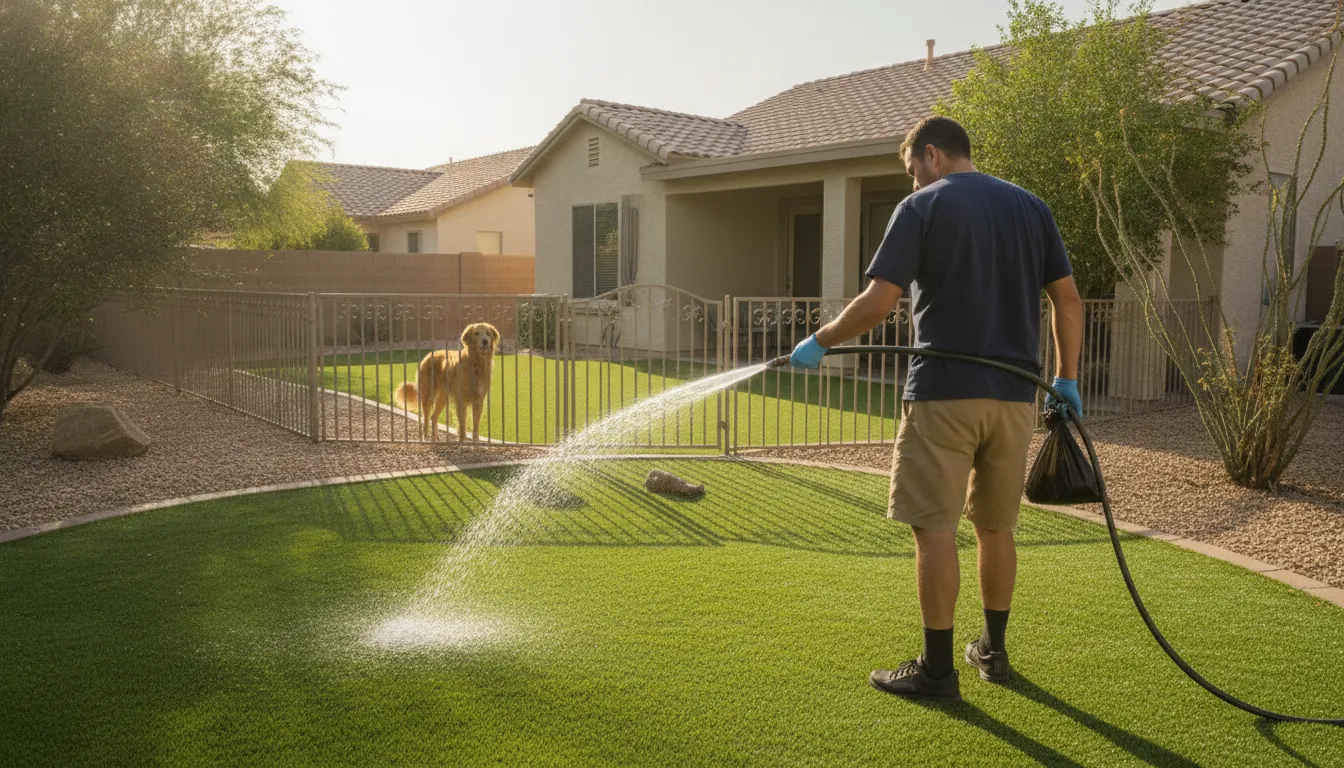
A1 Pet Maintenance cleans pet turf in Las Vegas, Henderson, and nearby Clark County. On a turf visit we remove solid waste, clear debris, use an enzyme-based deodorizing treatment, then rinse and agitate the fibers. We do not install turf and we do not replace infill. This guide stays on the label in your hand. For a side-by-side of service, concentrate, and hose-end options, use our professional turf cleaning comparison instead of treating this page as a product ranking.
What an Artificial Turf Cleaner Label Is For
The label is the use sheet for that bottle. It tells you where the maker says the product belongs, how to mix it, how long to leave it, and what to keep away from it. Marketing copy on the front can say "pet turf" while the directions still describe indoor carpet, concrete, or a kennel floor.
The U.S. Environmental Protection Agency explains that pesticide product labels are legally enforceable directions, not decoration. Many turf odor sprays are not registered pesticides. Still, the same habit helps: read the directions before you spray a yard where dogs and kids sit.
A good first pass takes about a minute. Find four things before you buy or mix:
- Surface. The directions name artificial turf, synthetic grass, or outdoor pet areas.
- Pet return. A line covers pets, children, food bowls, or when the area can be used again.
- Odor job. The product says it breaks down urine residue, or it only adds a fragrance.
- Mix and rinse. The label gives a mix rate, the tools, and a rinse step if one is required.
If any of those four lines is missing, put the bottle back. Do not guess a surface or a wait time from the front photo. Ask the maker before it goes on the yard.
How to Read an Artificial Turf Cleaner Label
Work from the top of the back panel down. Do not start with star ratings or a "works in minutes" banner. Those lines are ads. The directions and precaution block are the part that tells you how the product is supposed to be used.
Directions and surface limits
Look for the word "directions" or "how to use." A turf-ready label names synthetic grass, artificial lawn, or pet turf as a place you may apply it. A label that only lists carpet, upholstery, or laundry is an indoor product wearing an outdoor photo.
Also look for surfaces to avoid. Some formulas say not to use them on sealed stone, stained wood, or plants. Desert yards often have block walls, gravel borders, and drip lines right next to the turf. If overspray can hit those, the label should say what to do.
Pet contact and re-entry
"Pet friendly" on the front is not a direction. Find a line that says when dogs may walk back on the area, whether the product must dry first, and whether bowls, toys, and beds should be moved. If the label is silent, do not invent a wait time.
Keep dogs off the wet spot until the product has done the job the label describes. For how an enzyme treatment is supposed to sit and dry, see our artificial grass enzyme treatment safe-use guide. This page does not repeat that application routine.
Scent versus breakdown
Urine odor on turf often sits in the backing and infill, not only on the green blades. A hose can wake that smell up in Las Vegas heat. A label that leads with "fresh scent," "linen," or "citrus" and never mentions enzymes, bacteria, or urine residue is a cover-up.
A breakdown claim should say what it acts on, such as pet urine or organic odor. And where, such as fibers and infill. "Eliminates odors" with no surface and no mechanism is still vague. Match the claim to the mess you can see.
Which Label Lines Matter on Pet Turf
Use the table as a field check. It is not a ranking of brands. If a line is missing, that gap is the decision, not a reason to spray and hope.
| Label line | What to look for | If it is missing |
|---|---|---|
| Surface | Artificial turf, synthetic grass, or outdoor pet areas. | Do not assume a carpet or kennel cleaner belongs on turf. |
| Pet return | Dry time or a clear line about when pets may return. | Do not guess a minute count from the front banner. |
| Odor claim | It breaks down urine residue, not only a fragrance. | Expect the smell to return after the scent fades. |
| Dilution | Ounces per gallon, or a ready-to-use statement. | Do not invent a stronger mix. |
| Rinse | Whether to rinse, and what water volume if stated. | A sticky film can hold odor and dust. |
| Plants and hardscape | What to cover or avoid at walls, gravel, and shrubs. | Test a small edge before a full yard. |
One more line is worth a look: storage and shelf life. Enzyme products can lose punch if they sat in a hot garage all summer. If the label gives a temperature range, follow it. Southern Nevada patios and trunks get hotter than a laundry room.
Dilution, Rinse, and What Not to Add
The mix rate is a safety line, not a suggestion you can beat. "Ready to use" means do not thin it and do not strengthen it. A concentrate should give ounces per gallon or another plain ratio. If the only instruction is "use as needed," you do not have a rate.
Do not add bleach, ammonia, vinegar, or a second cleaner unless that exact mix is on the label. Those extras can cancel an enzyme formula or leave a residue dogs lick off their paws. The same rule applies to homemade kitchen sprays. A turf yard is not a countertop.
Read the rinse line the same way. Some products want a light dampening so the formula can reach the infill. Others want a full rinse so nothing sticky remains. Hosing "until it looks clean" is not the same as following the label, and extra water can push residue deeper.
- Read the mix rate and set out the measuring cup the label implies.
- Move bowls, toys, and beds off the turf before you open the bottle.
- Apply only on named surfaces. Skip carpet-only or laundry-only directions.
- Wait the pet-return time the label gives. Do not invent one.
- Rinse only if the label says to rinse.
If the yard still smells after you followed those steps, the bottle did what it could. Heat, packed infill, and old urine crystals are a different job than a light surface spray.
When the Label Means You Should Stop
Stop when the directions contradict the yard in front of you. That includes a product that forbids pet areas, a precaution block you cannot meet, or a mix you cannot measure. A stronger batch is not a shortcut. It is an off-label use.
Stop after a correct application if the ammonia smell returns the next hot afternoon. That pattern usually means residue is below the blades. Our dog urine smell on artificial grass page covers why Las Vegas heat keeps that odor active. Label reading will not pull crystals out of packed infill.
Also stop if the turf stays matted, holds puddles, or smells only in one corner after the product has dried. Those signs can mean the infill or the base needs a look from an installer. A1 cleans and deodorizes turf. We do not replace infill. Our artificial grass infill for pets guide separates cleaning from installer work.
A booked odor inspection is a different visit from reading a bottle at the store. If you want someone to trace the source on site, start with our pet waste odor inspection page. Call when you want that visit, not when you only need help comparing two labels at the shelf.
How A1 Handles Turf After the Label Stops Helping
When a homeowner in Las Vegas or Henderson has already tried a labeled turf spray and the smell remains, book a cleaning visit. Another fragrance will not fix residue under the blades. On our artificial grass service we take solid waste off the surface and clear leaves and dirt. We then apply an enzyme-based treatment aimed at the odor source. A rinse and agitation step helps the fibers stand up again.
That visit is built for pet turf: homes with dogs, pet daycares, apartments, and other high-traffic pet areas. It is not a product we ship in a bottle, and it is not an install. If the fibers themselves are worn out or the infill is gone, we say so. The installer owns that repair.
We quote turf cleaning from the size and condition of the yard. Weekly pooper scooper prices on the site are a different service, so this article does not reprint them. Tell us the city, about how much turf you have, how many dogs use it, and what you already tried.
A Short Label Pass Before You Open the Bottle
Do this pass in the store aisle or on the patio before you mix anything. It keeps a carpet soap or a heavy fragrance from landing on a yard where dogs lie down. You are not hunting for a miracle claim. You are checking whether the maker told you how to use the product on turf.
Hold the bottle so the directions face you. If the panel is a peel-back sticker, open it. A front photo of green grass is not a surface approval. Read the first direction line out loud. If you cannot say where it goes and when a dog may return, you are not ready to spray.
- Open the back panel. Peel the sticker if the directions are hidden. Ignore the scent name on the front.
- Find the surface line. It must name artificial turf, synthetic grass, or pet turf. Carpet, laundry, or kennel floors do not count.
- Find the pet-return line. It should say when dogs may walk back, or that the area must dry first. No line means you stop.
- Separate scent from breakdown. Keep a bottle that names urine residue, enzymes, or bacteria. Leave one that only says fresh, linen, or citrus.
- Read the mix rate. Ready-to-use stays as-is. A concentrate needs ounces per gallon. "Use as needed" is not a rate.
- Check the stop lines. Note plants, stone, wood, and the rinse rule. If you cannot meet a precaution, put the bottle back.
Match the yard you have
Name the surface under your feet. A small pet patch beside a pool is not the same job as a full backyard that several dogs use all day. The label should still list turf either way. What changes is how much area you will treat and whether one corner smells worse than the rest.
Note the edges. Henderson and Las Vegas yards often put turf against block walls, gravel, and drip irrigation. If the label says to keep spray off plants or painted surfaces, plan a narrower pass along those edges. Do not widen the spray to get it all if the directions draw a boundary.
Match the mess you can see
Solid piles are a scoop job, not a spray job. Bag the waste first so you are not grinding it into the infill. The cleaner label, if it is a urine product, should talk about odor or urine residue. A bottle that only says it cleans dirt is a different product.
Fresh wet spots and old baked-in smell are not the same. A light, new accident may fit a ready-to-use spray whose label names turf and gives a dry time. A corner that reeks every afternoon after you already followed the label is past a store bottle. That is when a cleaning visit makes more sense than a second fragrance.
Write down three lines
Copy three lines onto your phone before you buy: the surface list, the mix rate, and the pet-return line. If one of the three is missing, leave the bottle. You can compare two products this way without turning the trip into a brand contest.
Bring those notes when you call us. We can tell you whether what you already used was a surface spray or whether the yard needs waste removal, enzyme treatment, and a rinse. We still will not name a best retail cleaner. We clean the turf.
Ready for a person instead of another bottle? Call 702-521-2624 and ask for professional turf cleaning in Las Vegas or Henderson.
Frequently Asked Questions
Does "pet safe" on the front replace the directions?
No. Use the directions and the pet-return line on the back. A front-panel slogan does not tell you when a dog may walk on the turf again.
Can I use a carpet enzyme cleaner if the label never mentions turf?
Not unless the directions list artificial turf or synthetic grass. Indoor carpet and outdoor turf do not drain or dry the same way.
Should I add vinegar or bleach to make a turf cleaner stronger?
No. Add another chemical only when that mix is printed on the label. Extra bleach or vinegar can fight the formula and leave residue on paws.
Why does the yard smell again after the cleaner dries?
Fragrance fades, and urine residue in the backing can wake up in the heat. If you followed the label and the odor returned, a surface spray has reached its limit.
Does A1 sell the best artificial turf cleaner for pet urine?
No. We do not sell a retail cleaner, and this page does not rank bottles. We clean pet turf in Las Vegas and Henderson with waste removal, an enzyme treatment, and a rinse. Call 702-521-2624 for a quote.