Commercial Dog Waste Removal for Apartments
Commercial dog waste removal for apartments is a property service, not a stack of separate home routes. A manager needs one written scope for shared lawns, relief areas, and walkways, plus a reliable way for the crew to enter. A1 Pet Maintenance writes that scope as a custom proposal. We do not price an apartment community from the residential dog chart on our homepage.
Call A1 Pet Maintenance at 702-521-2624 to review your community and request a commercial proposal.
Bring a short property brief to that call. Name the areas you want covered, the areas you do not, the gate rules, and whether you need a reset or a repeating visit. The apartment property service page is where that commercial work lives. This guide is the prep for the conversation, not a second copy of our program, cost, or city pages.
What Should a Commercial Dog Waste Removal for Apartments Brief Cover?
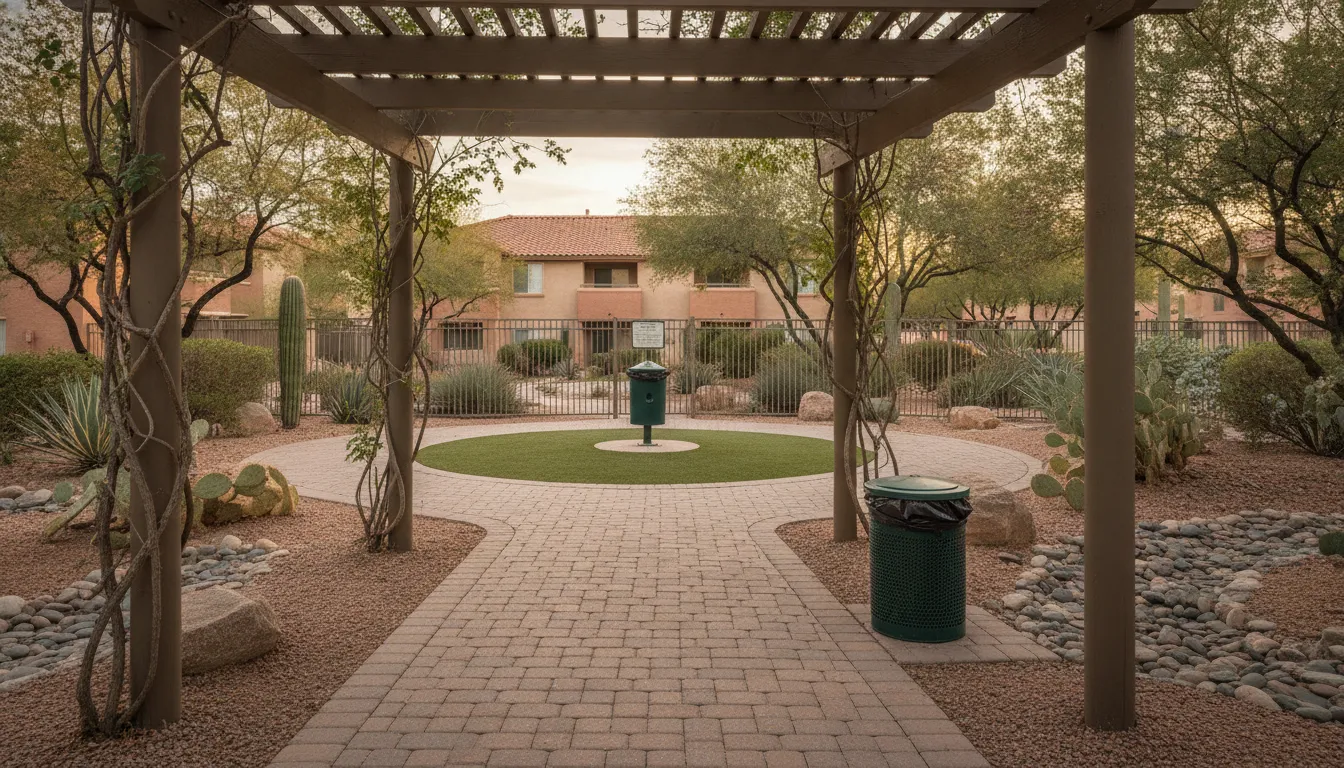
Start with the outdoor ground that residents share, because that shared ground is the commercial job. Private patios and leased yards stay with the resident unless your lease says otherwise and you place them on the map. Most communities begin with four kinds of space.
- Designated relief lawns and fenced dog runs.
- Sidewalks and the paths between doors, parking, and those relief areas.
- Landscaped edges where dogs cut corners.
- Building entries where waste shows up on the way in or out.
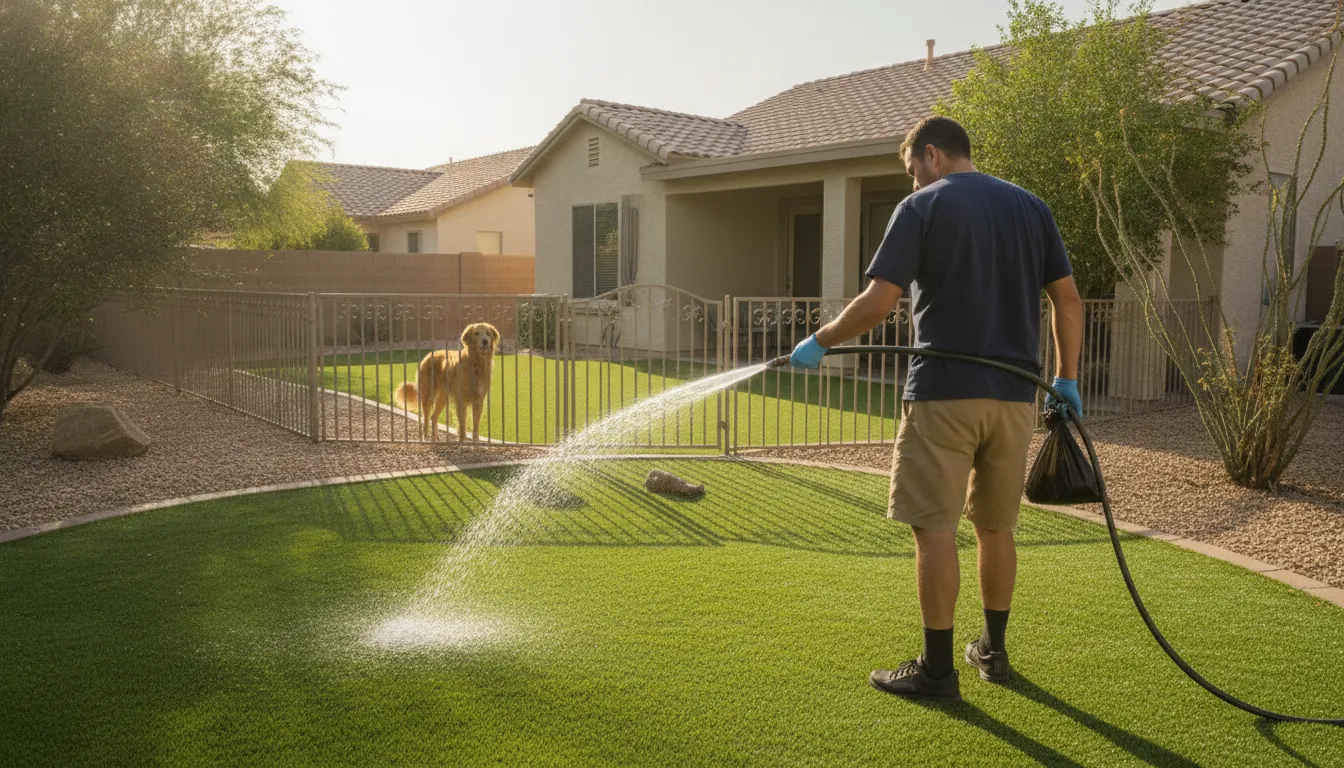
Write each area as in or out. "The whole property" sounds simple and then fails on the first visit. A crew cannot guess whether a locked courtyard, a pool deck, or a rooftop terrace is included. If turf sits inside a dog run, say so. Artificial-grass cleaning is a separate service from scooping. Our artificial grass cleaning page covers waste removal, debris, enzyme deodorizing, and a rinse. Do not fold that into a scoop line unless you want it quoted.
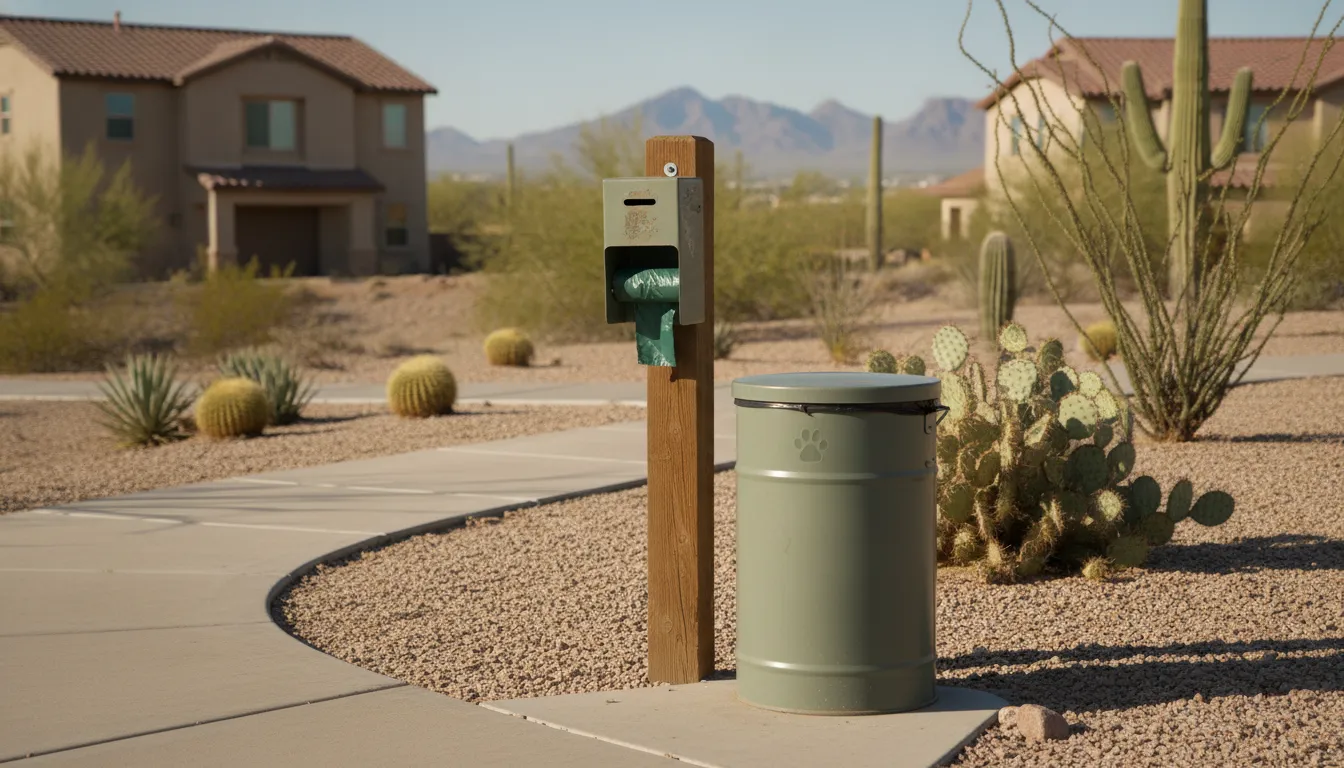
Also mark what the crew should leave alone. Interior halls, trash rooms, and private balconies are common exclusions. Station bag refills can be part of a commercial visit, but station design and counts belong on our station guide, not in this brief. Say only whether dispensers and bins on the route should be checked.

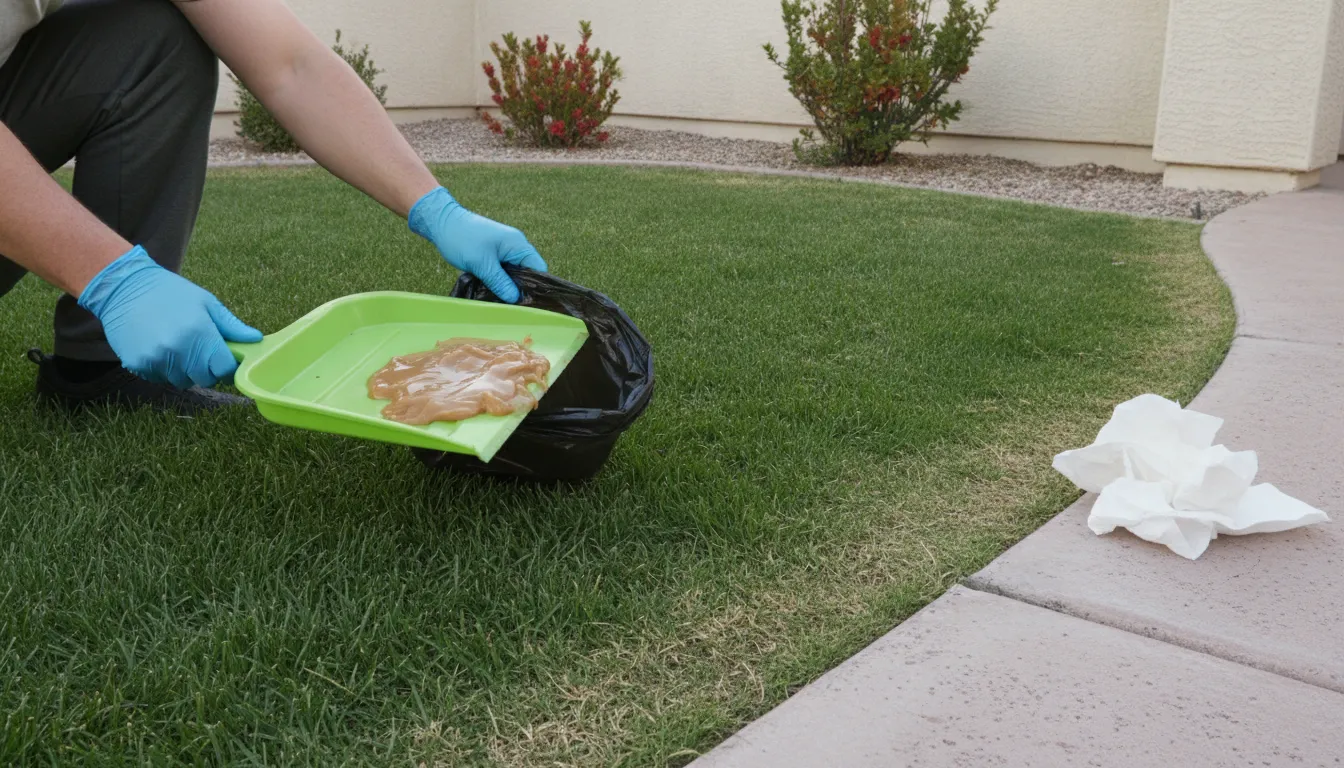
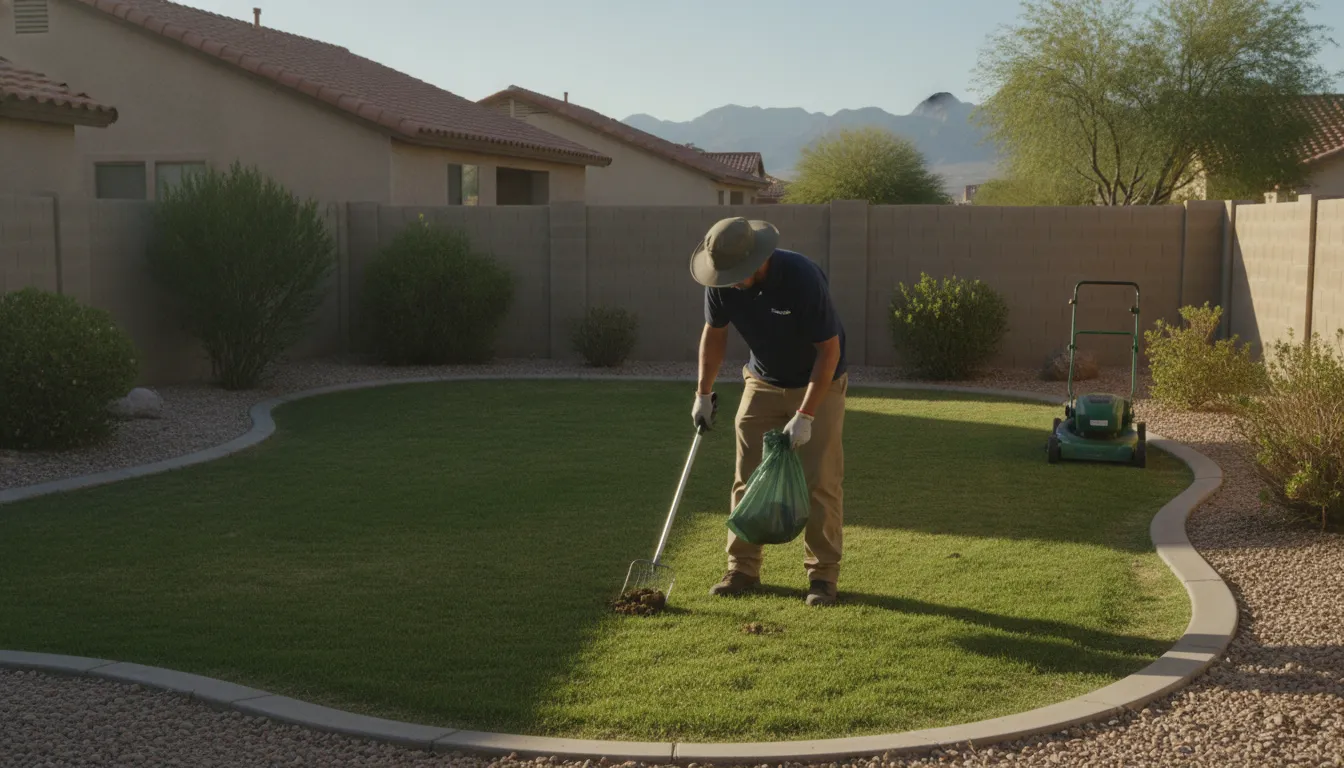
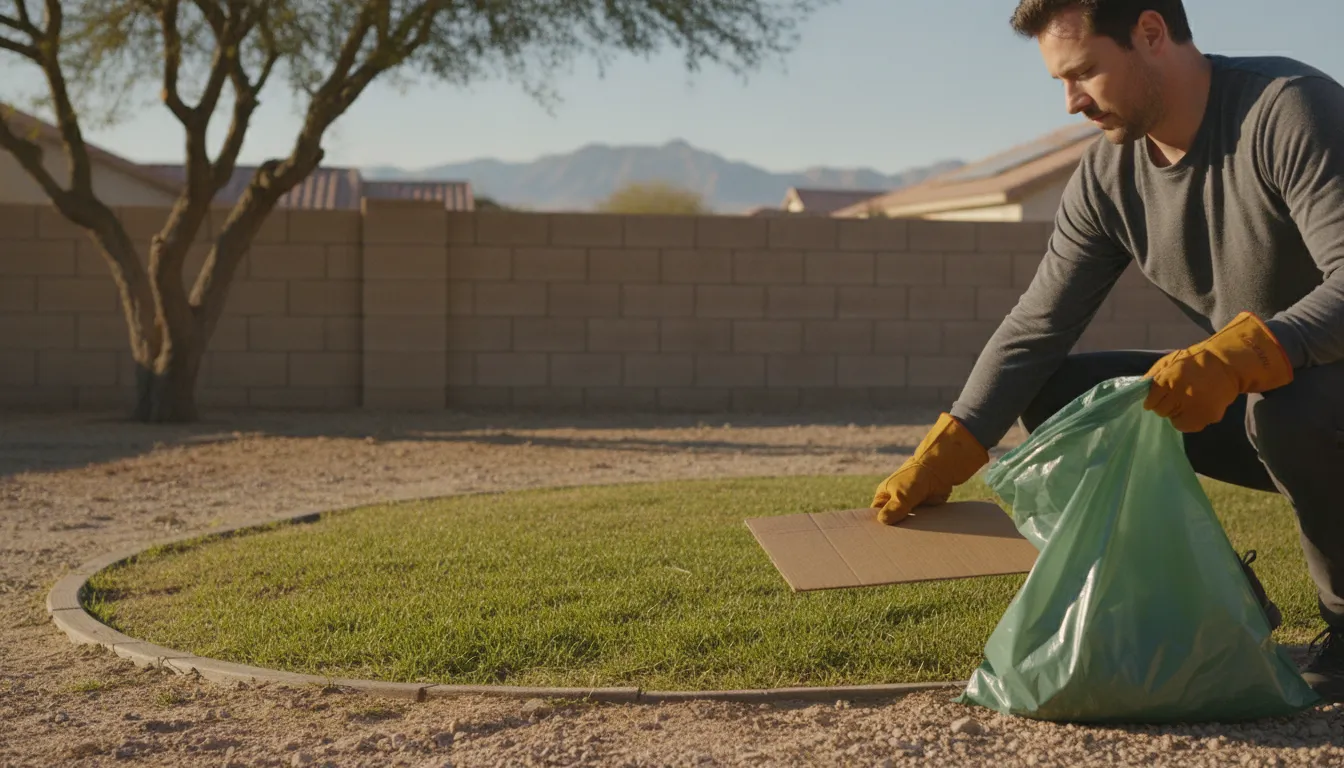
A1 bags collected waste, hauls it off the property, and leaves it for city sanitation. That is the disposal path we publish. If your site uses a different container or a hauler rule, say that before we price the work. The EPA notes that pet waste adds nitrogen, phosphorus, parasites, and bacteria to water when it is not disposed of properly, because storm drains often lead straight to local streams. A defined pickup route is how a community keeps that waste out of those drains. See the EPA page on sources of nutrient pollution around the home.
How Should Managers Separate Apartment Service From a Home Signup?
A home signup counts dogs and then picks one visit a week or two. An apartment community does not work that way. You are buying coverage of shared ground, not a separate route for each unit. A1's residential chart runs from one dog to four, with five or more arranged individually. Those published figures apply to homes. Do not multiply them by the pet count in the community and treat the result as a budget.
Commercial work is quoted from the property. We look at layout, how often you want visits, and any extra such as a station check or a turf clean. Our published one-time cleanup range of $50 to $150 is a residential yard reset. It is not an apartment price. The same is true of the 25 percent first-month offer on the signup page. That offer is for home scoop service.
Use the apartment cost planning guide when you need budget categories for ownership. Use this page when you still need the scope those categories will describe. If you want the wider operating plan, stations, resident notes, and odor response, read multifamily pet waste management. We will not rebuild that plan here.
Read the rows below as a split, not as a rate sheet. The home column is what a resident buys. The apartment column is what a manager buys. If a line on your current vendor quote mixes the two, pull it apart before you compare numbers.
| Question. | Home signup. | Apartment commercial service. |
|---|---|---|
| What is priced. | Dogs in one yard. | Shared areas on one property map. |
| Where the rate comes from. | Published monthly chart. | A proposal after a scope review. |
| Who approves it. | The resident. | The manager, owner, or board. |
| What access means. | A gate code for one yard. | Community gates, dogs, and locked zones. |
| What we haul. | Waste from that yard. | Waste from the areas you listed. |
A1 Pet Maintenance has scooped in Southern Nevada and Tucson since 1998. We are licensed and insured, and we service more than 400 single-family and multifamily properties each week. Commercial relationships are a smaller set inside that weekly work. The commercial page lists multifamily communities we already serve, including condominiums and HOAs. Tenure on that list is long. It is not a promise that your community will look the same.
Southern Nevada coverage includes Las Vegas, Henderson, North Las Vegas, Boulder City, and Summerlin. Tucson is the Arizona market we publish. If the community sits outside those areas, say so on the call before we talk scope. We would rather decline a site we do not serve than send a proposal we cannot staff.
A management company can be the caller even when the owner signs. Tell us who can approve areas, who can approve spend, and who the crew should phone from the gate. Those are often three different people. A proposal that names only the leasing office tends to stall once it reaches the owner.
Which Access Notes Decide Whether a Visit Can Happen?
A scope that the crew cannot enter is not a scope. Write access the way a technician would use it on a Tuesday morning. Name the gate, the code or fob, the hours it works, and who to call if it does not. If dogs are loose in a courtyard during the visit window, say how they will be held back. We cannot scoop a yard we cannot enter safely.
Locked inner courts, pool gates, and garage exits cause the most missed corners. Put them on the map as covered or excluded. If a leasing golf cart is the only way across a large site, say that too. Service time follows the walking path, not the marketing brochure.
Tell us where bagged waste should go. Our standard is to haul it for city sanitation. A community dumpster rule, a locked trash court, or a station that must not be used changes the visit. Note parking for the technician so the truck is not in a fire lane or a resident space.
Large garden communities need a walking order, not just a list of buildings. Start at the gate the crew will actually use. Then name the courts in the order a person would walk them. A north-to-south label on a leasing map often fights the real path around pools and one-way drives.
If a vendor already walks the site, say what they cover and what they skip. We are not asking you to criticize them. We need to know whether this proposal replaces a route, fills gaps, or only resets a backlog. Overlap is how two crews both miss the same corner.
Weather notes help, but they should stay practical. After a monsoon or a hard wind, gravel beds and turf edges hold waste that a dry week would not. Mention those beds if you want them in the walk. Do not assume a standard visit includes storm debris, leaves, or litter that is not pet waste.
- List every gate, entry code, and the hours that gate opens.
- Say where resident dogs will be held during the visit.
- Mark each locked court as included or excluded.
- Name both the disposal spot and the parking spot.
- Give one on-site contact for a failed code or a loose dog.
Las Vegas managers who want a city service story, including complaints and amenities, should use the Las Vegas apartment service guide. Managers comparing broader commercial operations can use the Las Vegas commercial manager guide. Neither page replaces the access list for your own site.
When Does an Apartment Need a Reset Instead of a Route?
Ask for a one-time cleanup when waste has piled up and you need a clean start. That fits a new management takeover, a gap after a vendor left, or the week before a tour day. Ask for a repeating visit when the same corners fill every week. A1 offers one-time, weekly, and twice-weekly commercial service. Weekly on our residential chart means one visit a week. Twice weekly means two. The apartment version is the same rhythm, priced from the map rather than from a dog count.
A reset does not lock you into a route. Many communities use it to see where waste actually collects, then choose a rhythm. A route does not include turf enzyme cleaning unless the proposal says so. Dog-park visit calendars are their own topic. If the only question is how often to clean a park, use that schedule page instead of stretching this brief.
Heat in Southern Nevada and the Tucson summer changes how fast waste and odor build on turf and gravel. It does not change the planning rule. You still choose areas, access, and a rhythm, then we price that. We do not publish a summer surcharge for apartments.
Bring pet counts only as context. They help us understand traffic. They are not the rate card. A 40-unit court with one relief lawn can need less time than a garden community with long paths, even if the garden site has fewer dogs.
A reset visit is also the right ask when you inherited a site and nobody can find the old map. We can scoop what is on the ground. We still need you to say which fences we may open. Guessing our way through a new community is how a crew ends up in a resident's private yard.
Twice-weekly service fits a small relief lawn that fills up between weekends. Weekly service fits a larger lawn where waste spreads out and complaints are slower. Bi-weekly on our home chart is two visits a week, not every other week. Use those words the same way on the apartment call so the proposal matches what you meant.
If you only need the grounds clean for a single inspection week, say that. A one-time visit can stand alone. You can add a route later without pretending the first cleanup was a contract. We would rather write a short proposal than pad a scope you have not approved.
What Should You Ask Before A1 Writes the Proposal?
You do not need a finished program to request a proposal. You need enough detail that we are not guessing. Use this list on the call. Skip anything you already settled in the brief.
- Which shared areas are in, and which are out?
- Is this a one-time reset, one visit a week, or two?
- Are dog-run turf cleaning and station checks included or separate?
- How does the crew enter, and who answers if a code fails?
- Where does bagged waste go, and is that different from our city-sanitation haul?
- Who approves the proposal: on-site staff, the owner, or a board?
We bill commercial accounts to the management company when that is how the property pays. Resident card signups on the website are for homes. Do not send tenants through that form for common-area service. There is no customer portal and no app for photos or schedule changes. Call 702-521-2624 for access updates, skipped weeks, or a change in scope.
If a corner is missed, tell us the place and the day. We would rather adjust the map than hear a general complaint that the property was dirty. A tight note keeps the next visit on the areas you actually bought.
Keep the first proposal narrow. You can add turf cleaning, a second weekly visit, or a station check after you see the route work. A wide first quote is harder for an owner to approve, and it hides which line is the scoop. Ask us to separate scooping from any turf or station line so the approval is readable.
The same rule applies when a board packet is the audience. Lead with the map, the rhythm, and the access plan. Put price in the proposal we send after this call, not in a guessed range inside the packet. Our home rates and the $50 to $150 one-time yard range will confuse a board if they land next to an apartment ask.
You should also say how you want to hear that a visit happened. We do not publish an automatic photo report or a portal login. A phone note or a simple completion call can be part of the arrangement when you ask for it. Do not assume a dashboard exists because a signup page exists.
Call 702-521-2624 and ask for a commercial apartment proposal.
Frequently Asked Questions
Is commercial dog waste removal for apartments the same as a home pooper-scooper plan?
No. A home plan follows our published dog-count chart. Apartment service is a proposal for the shared areas you list. We do not multiply the home rate by the number of pets on the property.
Do you need a site walk before you can quote?
We need a clear scope. A map, photos, and access notes are often enough to start. If the layout is unclear, we will ask for a walk or more detail before we send numbers. We do not publish a walk fee.
Can one proposal cover several communities?
Each community gets its own scope, because gates, relief areas, and visit needs differ. A management company can still be the billing contact for more than one site. We already bill commercial work to management companies when that is the arrangement.
Will the crew pick up inside apartments or on private patios?
Not unless you put those spaces in the scope and we can enter them safely. The usual commercial visit stays on shared outdoor ground. Interior trash rooms and private balconies stay out until you add them.
Who do we call to change a gate code or skip a week?
Call A1 Pet Maintenance at 702-521-2624. We do not run a portal or an automatic photo report. Phone is how schedule and access changes are handled.