Pet Waste Service Monthly Report Guide
A pet waste service monthly report shows visits, skips, and station work. See what HOA boards should ask for in Las Vegas and Tucson.

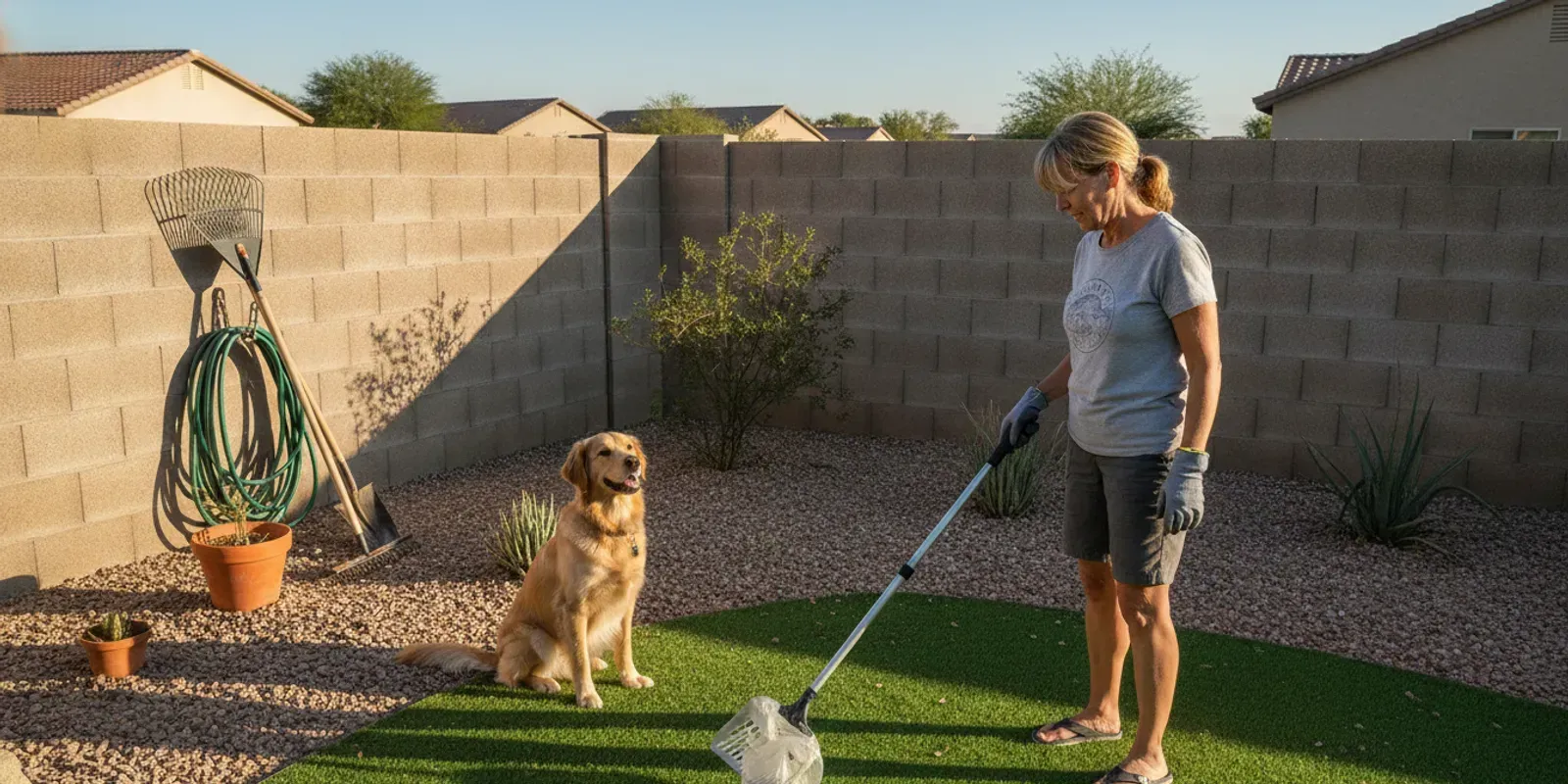
A pet waste service monthly report is the short record a board or manager can file after the month's visits. It is not the mailed invoice, and it is not a full grounds inspection. It lists the dates the crew came, the areas they covered, any day they could not enter, and station or turf work if that was part of the job. A1 Pet Waste Maintenance serves Southern Nevada and the Tucson area and does not publish a customer portal or an automatic photo report. You ask for the summary by phone at 702-521-2624, then keep it with the property file.
Ask A1 what a monthly service summary can include.
What a pet waste service monthly report is for
Boards ask for a pet waste service monthly report when residents say nobody came, or when a manager has to show the file at a meeting. The useful version is one page, or a short email, that a volunteer can read in a few minutes.
It answers four questions. Which days were scheduled? Which days were completed? Which days were skipped, and why? Did common areas or stations need extra attention?
That is a different job from planning the service in the first place. A1's property management pet waste removal guide covers how a manager sets the route, the gates, and the frequency. The monthly report starts only after those visits are underway. It also is not the bid. The Las Vegas commercial pet waste removal bid checklist is what you ask for before work starts. The report is what you ask to receive after the month closes.
A1's commercial work is a custom proposal, not a published package price. The commercial property page says proposals are written for each community, including multi-family complexes, parks, mobile home communities, and special events. Because the price is custom, the report should describe the work that was agreed, not invent a rate table. Do not expect the summary to replace the invoice or to quote a hotel, school, or jobsite price A1 does not publish.
Keep the audience tight. This page is for an HOA board, a community manager, or an on-site supervisor in Las Vegas, Henderson, the rest of Southern Nevada, or the Tucson area. A homeowner who wants a weekly yard visit should use the residential signup path, not this report. A single walk of the grounds is also a different document. Use the property manager dog waste inspection checklist when you need to look at spots yourself. Use the monthly report when you need a record of the vendor's visits.
What to ask the vendor to include each month
Ask for the same fields every month so the file is easy to compare. A1 does not hand you a login or an app. Service changes, gate notes, and billing questions go through the phone, and invoices are mailed. The practical report is therefore a phone recap or a short note you write down, not a dashboard. Tell the office which fields you want before the first full month, so the crew is not guessing at month-end.
Visit dates and the areas covered
Start with the property name, the month, and the service days that were on the route. Most A1 customers prefer service once a week, and the company will set a different number of days when the property needs more than once a week or fewer than four times a month. The report should say which of those planned days were completed.
Name the areas, not just the property. A useful line names the north dog run, the pool path, and two stations on Tuesday. A vague line such as community serviced does not help a board that heard a complaint about one courtyard. If the agreement includes only common areas, say so. If it includes a list of buildings, repeat that list. Do not turn the report into a map of every private patio unless those patios are in the scope.
Skips, access, and weather
The second block is the days the crew could not finish. A1's public FAQ says employees will not climb or jump fences. If a gate is locked, or a dog will not allow the crew in, the visit can still be billed at the regular monthly rate. A skipped common-area day should say which gate, which building, and whether the office was told.
Weather belongs in the same block. If a service day is missed for rain, A1's FAQ says the makeup is most often within two days. A holiday that falls on the service day is moved to another day that same week. The report should show the original day and the makeup day, not a blank. A blank looks like a missed visit when the work was only moved.
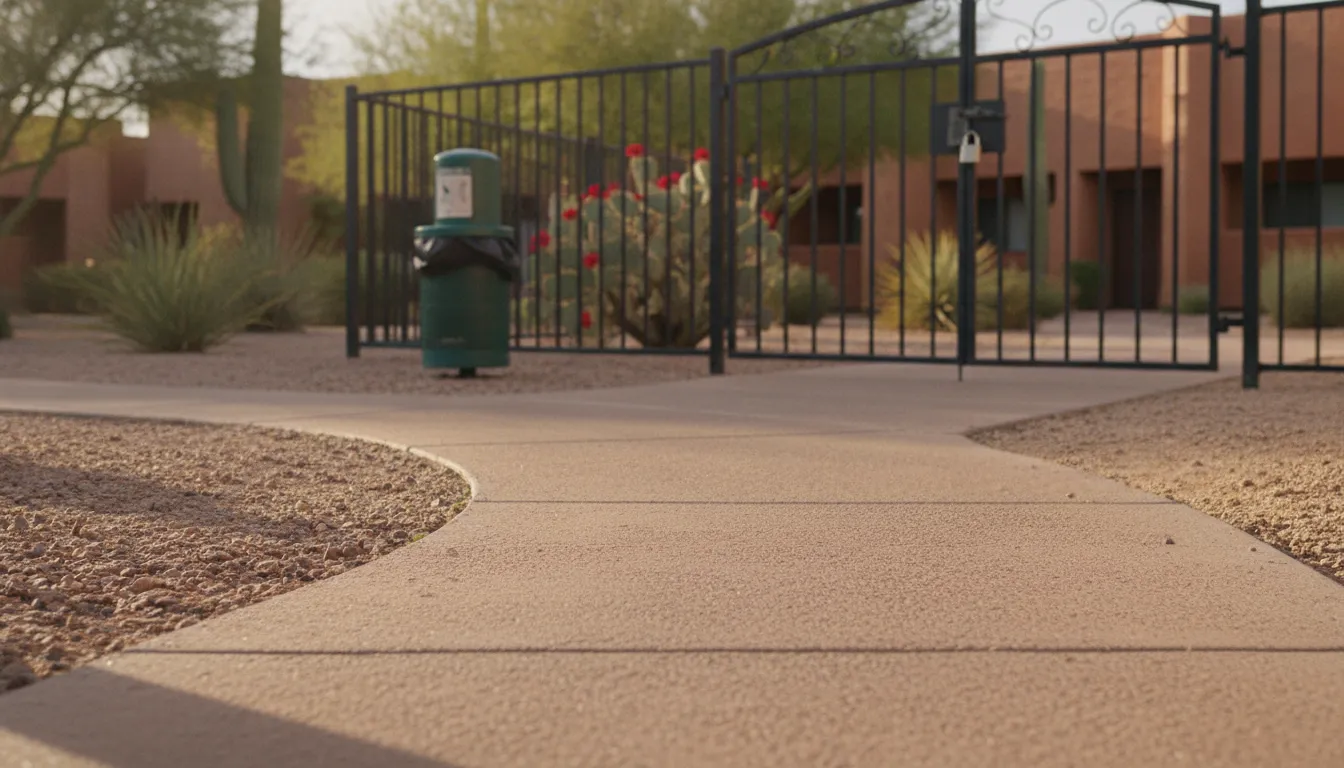
Separate a true miss from a reschedule. A miss is a planned day with no visit and no makeup. A reschedule is a planned day that moved inside the window above. Boards often argue about this at renewal. Writing it down in the month it happened is easier than rebuilding it from memory six months later.
Stations, turf, and extra work
If the property has dog waste stations, the monthly note should say whether bags were checked and whether a station was full, damaged, or skipped. That is a status line, not a station-maintenance manual. Station hardware, bag refills as a separate product, and installation are different jobs. Do not let the monthly report become a how-to for building a station.
Artificial turf gets the same treatment. A1 cleans and deodorizes pet turf. A1 does not install it. If a turf visit happened, the report can say which turf area was cleaned and whether odor was noted. It should not include install steps, a published turf price, or a claim that a dedicated route exists in a city where A1 has not said one does. Oro Valley turf visits, for example, are Tucson-area scheduling questions, not a listed local price.
Extra work needs its own line: a one-time cleanup of a buildup, a special event, or a second pass after a complaint. A1 offers one-time and short-term service as well as recurring routes. If that extra visit is billed apart from the regular month, the report should say so in plain words. The dollar amount still lives on the invoice, not in this summary.
How the monthly report differs from the invoice
The invoice and the report answer different questions. The invoice says what is due. The report says what happened on the grounds. Mixing them makes both harder to use. A board treasurer needs the bill. A landscape chair needs the visit record. They can sit in the same folder, but they should not be the same page.
RecordWhat it answersWhere it livesMonthly service report.Which days were done, skipped, or moved.Property file, from a phone recap or short email.Mailed invoice.What amount is due for the service month.Invoice mailed on the 20th, paid on the website.Commercial proposal.Which areas and days were agreed.The proposal you requested before service started.Grounds inspection.What a manager saw on one walk.Separate checklist, not this monthly note.
A1 mails customer invoices on the 20th day of the month. Those invoices show the amount due for the upcoming service month. The first payment is due when service starts. Later payments are due on the 1st, and they can be made on the website.
A late fee of $10 may be charged if the account is not paid by the 10th day of the service month. A returned check fee is $15. Accounts more than 60 days past due can be referred to a collection agency. None of that fee calendar belongs inside the service report. Link the bill, then stop.
You can pay from the pay invoice page and read the timing on the billing FAQ. If a gate was locked and the FAQ says the regular monthly rate still applies, the report should name the locked gate and the report should not re-argue the fee. The fee, if any, is an invoice question for the office.
Commercial properties are not on the residential dog-count chart. A1 writes a proposal for the community. The monthly report should point back to that proposal's scope: which areas, how many days, and whether stations or turf are included. It should not paste a homeowner rate for one dog, two dogs, or four dogs onto an HOA. Those homeowner rates are a different offer.
There is also no contract to sign for the residential FAQ path. Service can start and stop with a phone call. A commercial proposal can still spell out scope, but A1 does not publish a portal where you download a monthly PDF. If your board wants the summary, put that request in the proposal conversation and follow up by phone. Do not write the article, or the board packet, as if a login already exists.
A simple report a board can actually file
Use the same headings every month. A volunteer secretary can copy them into an email, a shared drive note, or the management software the association already pays for. A1 will not log into that software for you. You, or your manager, move the phone recap into the file.
Ask the office to cover these items, in this order:
- Property name, city, and the calendar month.
- Planned service days and the days the crew completed.
- Areas covered, in the words the proposal already uses.
- Any skip, with the gate, building, or dog issue that stopped the visit.
- Any rain or holiday move, with the original day and the makeup day.
- Station or turf notes, only if that work is in the scope.
- One-time or complaint follow-up visits, separate from the regular route.
- A line that says the dollar amount is on the mailed invoice, not in this note.
Keep each item to one or two sentences. A five-page narrative will not get read at a board meeting. A missing date will. If the crew completed every planned day and nothing was skipped, the report can say that in one line. Silence is not the same as "all clear." Write the all-clear down.
Match the note to the way A1 already works. Technicians arrive on the scheduled day. They need an unlocked gate, a key, or a lock combination. They will not climb a fence.
They can usually work with a dog in the yard. They will not take an unnecessary risk if the dog will not allow entry. The report should use those facts. It should not promise a text alert, a GPS trail, or a photo album. A1 does not run a photo documentation system or automated customer notifications.
Store the note next to the proposal and the invoice. At renewal time, the HOA dog waste vendor contract renewal checklist is the place to review the whole vendor relationship. That checklist can mention visit records as one item. It does not replace the monthly file. Build the file during the year so renewal is a review, not a reconstruction.
What the report should not try to prove
A monthly service note cannot prove that every health risk on a property is gone. It can show that the agreed areas were visited. The U.S. Environmental Protection Agency says pet waste left on the ground adds nitrogen, phosphorus, parasites, and bacteria to local water.
Storm drains can carry that waste untreated into streams and lakes. That is why the visits matter. It is not a lab result you can attach to the report. Read the EPA note on sources of nutrient pollution around the home, then keep the vendor report focused on dates and areas.
Do not use the report to claim a license number, a Better Business Bureau rating, or an insurance limit A1 has not put on the proposal. Do not add a first-visit start charge.
The public FAQ says a first service may include a start charge of $50 to $100 when waste has built up. That charge is a billing fact for the first visit. It is not a line to repeat in every monthly summary. Do not add a late-fee schedule either. Those amounts stay on the billing FAQ.
Do not describe work A1 does not sell. There is no published hotel pet-waste rate, no published construction-site rate, and no published school-campus rate. Those jobs, when they happen, are custom proposals. A monthly report for a hotel, a jobsite, or a campus should still list dates and areas, and it should not invent a price. Artificial grass installation is out of scope. If a reader asks how to install turf, send them to an installer. A1's role is waste removal and turf cleaning after the surface is already in place.
Do not copy another city's page into this one. Henderson homeowner pickup cadence, Tucson weekly pricing, and Oro Valley turf routes are already covered elsewhere or are not offered as a dedicated published route. This article stays on the monthly record a manager keeps. For a wider look at how communities handle waste, A1's community pet waste solutions page and the guide to pooper scooper service for commercial properties sit next to this topic without repeating the report fields.
How to request the first summary
Call 702-521-2624 and ask for a pet waste service monthly report for the property you manage. Give the community name, the city, the service days you believe are on the route, and the fields in the list above. Ask whether notes will come as a phone recap you write down, or as a short email. Then tell the office who on the board or management team should receive it.
If service has not started, start with scope, not with a blank report. Use the commercial property page to request a proposal, or the contact page to reach the office. Residential customers who want their own yard on a route can use sign up now. That signup is for a yard visit. It does not create a board report or an account login.
After the first month, check three things before you file the note. The completed days should match the route you agreed to. Every skip should name a reason you can verify, such as a locked gate or a moved rain day. The invoice for that month should be stored beside the note, not inside it. If a day is missing with no reason, call the office before the board meeting. A correction in the same month is simpler than a dispute at renewal.
Southern Nevada and Tucson properties can use the same headings. The crew, the gates, and the weather window still follow A1's published service rules. You do not need a separate report design for each city. You do need the property name and the areas written in the words your residents use, so a complaint about one courtyard can be matched to a line in the file.
Call 702-521-2624 to request a monthly service summary
Frequently asked questions
Does A1 email a pet waste service monthly report automatically?
No. A1 does not publish a customer portal, an app, or an automatic photo report. You request the monthly summary by phone. The office can confirm whether you will get a short email or a phone recap you write into the property file.
Is the monthly report the same as the invoice?
No. Invoices are mailed on the 20th and show the amount due for the upcoming service month. The report lists visits, areas, skips, and any station or turf notes. Keep the dollar amount on the invoice.
What if a gate was locked or a dog blocked the crew?
A1 will not climb a fence or take an unnecessary risk with a dog. If the crew cannot enter, the public FAQ says the regular monthly rate can still be charged. The report should name the gate or the dog issue so the board can fix access before the next visit.
Can the report include a published commercial price?
No. Commercial cleanup is a custom proposal. The report should describe the agreed areas and days. It should not copy residential dog-count rates or invent a hotel, school, or construction price.
Where should the board keep the note?
File it with the proposal and the mailed invoice for that month. Use the renewal checklist when the contract term is up. The monthly note is the visit record. The checklist is the yearly review.