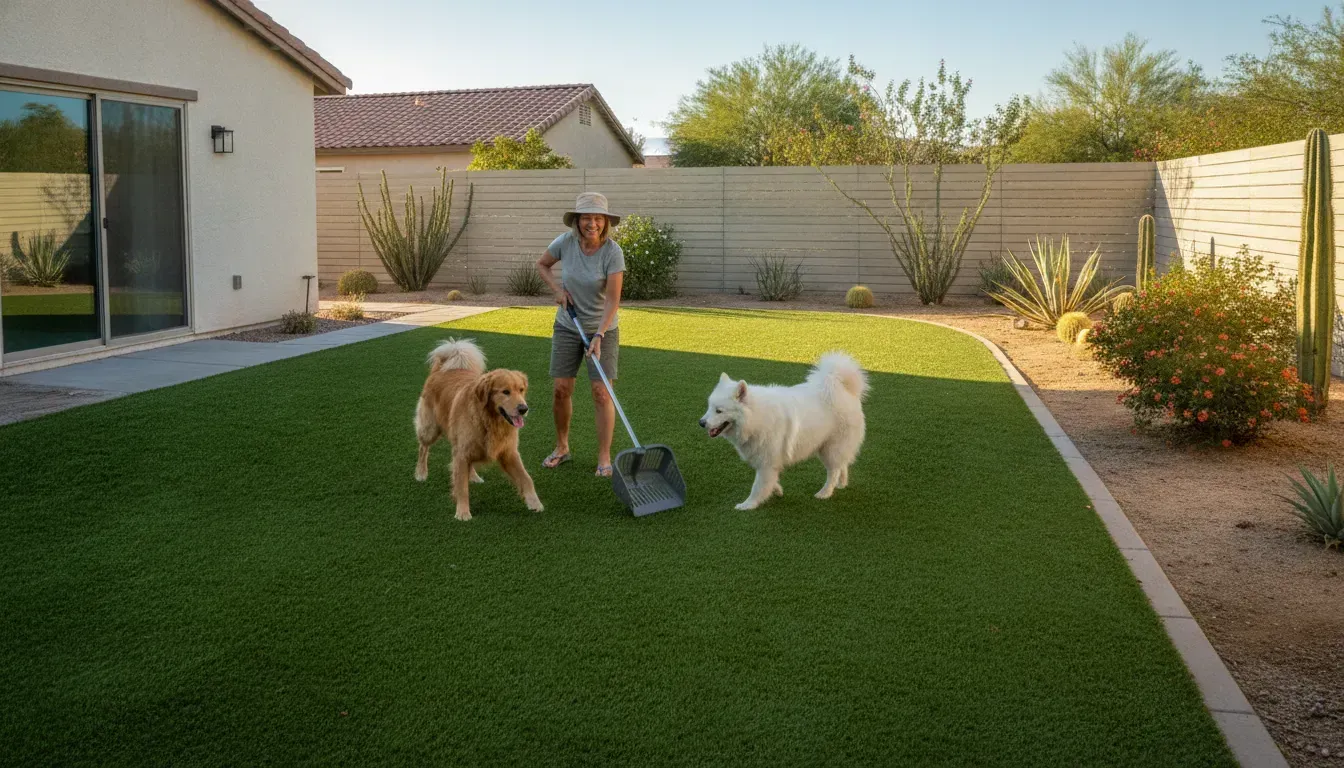
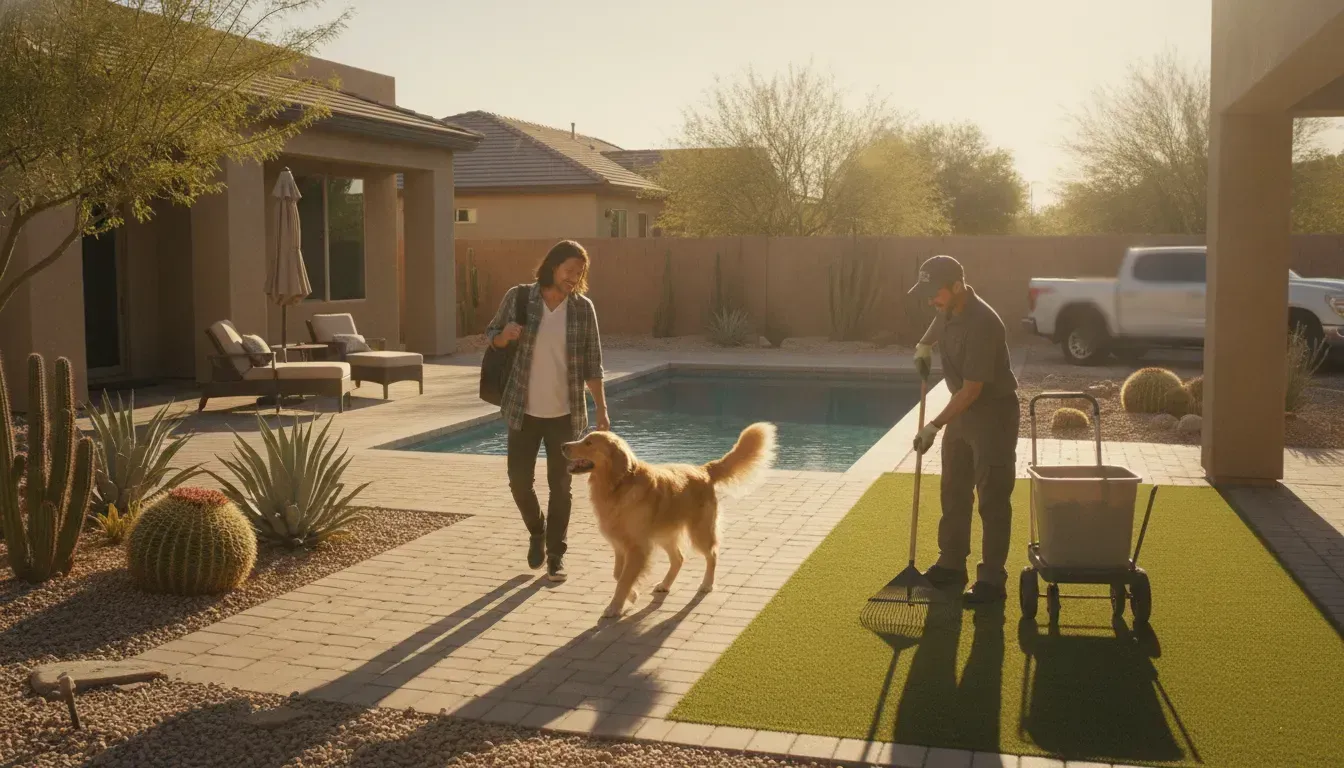
Community Pet Waste Solutions for HOAs and Properties
Community pet waste solutions help HOAs and property managers keep shared areas cleaner with clear policies, stations, recurring service, and reporting.

Community pet waste solutions give HOA boards and property managers a repeatable way to keep shared outdoor areas cleaner. The strongest programs combine clear resident expectations, convenient bags and receptacles, dependable removal, station checks, and simple reporting.
Call A1 Pet Maintenance at (702) 521-2624 Today
A community program is not just a sign beside a dog-relief area. It is an operating system for policy communication, equipment, service, oversight, and resident experience. When each part has an owner, the community can address waste before it becomes an overflowing-bin complaint or a recurring hotspot.
Why Do Community Pet Waste Solutions Matter for HOAs and Multi-Family Properties?
Shared outdoor spaces serve residents, visitors, children, pets, landscape crews, and maintenance teams. Sidewalks, courtyards, lawns, dog runs, mail areas, and building entrances can all become part of a daily dog-walking route. One missed cleanup is unpleasant. A pattern of missed cleanup creates complaints, staff follow-up, and uncertainty about who is responsible.
A coordinated program makes expectations visible and the maintenance routine easier to manage. It gives the board or property manager a way to identify station locations, confirm supplies. Schedule removal, record conditions, and respond to concerns without treating every incident as a personal dispute. For a related property-management framework, review A1 Pet Maintenance's property management dog waste service guide.
How Do These Programs Support Health and the Environment?
Dog waste is more than an appearance concern. The Centers for Disease Control and Prevention explains that dogs can carry germs that make people sick. Its guidance supports cleaning up after dogs and keeping the surrounding environment clean to reduce the risk of disease spreading to people and animals.
The environmental concern is also practical. The U.S. Environmental Protection Agency identifies pet waste as a source of nutrient and bacteria pollution in urban streams and waterways. Irrigation and stormwater can carry waste away from a property. Prompt removal and responsible disposal help communities care for shared grounds.
How Do Clean Shared Areas Improve Resident Experience?
Residents should not have to step around waste on the way to a mailbox, pool, playground, parking area, or entrance. They should also be able to expect that bag dispensers have supplies and that full receptacles will be noticed. Consistent upkeep communicates that the property is managed with care.
Communication matters as much as equipment. Use specific instructions in welcome materials, resident portals, email, signs, and community meetings. Explain where bags and bins are located, how tied bags should be disposed of, and how to report an empty dispenser or missed area. Repeating the same standard across channels makes it easier to remember.
Why Does Accountability Matter to Community Operations?
Accountability becomes useful when responsibilities are named. A board or property manager can assign policy communication, station inspections, vendor coordination, resident responses, and program reviews to specific roles. A service provider can report completed visits and field conditions. That division reduces the chance that everyone assumes someone else is checking the stations.
How Do Community Pet Waste Solutions Reduce Work for Property Teams?
Property teams already balance landscaping, repairs, access, resident communication, and vendor coordination. A pet-waste program reduces friction when it turns repeatable tasks into a documented routine. Instead of waiting for a complaint, the team can use a service map, inspection notes, and scheduled visits to identify needs earlier.
What Should a Community Baseline Review Include?
Start with a walkthrough of dog-relief areas, sidewalks, landscaped routes, courtyards, entrances, and other high-use spaces. Visit at different times when practical. Record waste accumulation, empty dispensers, overflowing bins, odor concerns, damaged equipment, and locations where residents frequently walk pets. Review complaint patterns and governing-document requirements, but keep observations separate from assumptions.
A baseline should also map the relationship between stations and walking routes. A station that exists but is hard to reach may not serve residents well. A receptacle near a path may need a different service frequency than one in a lightly used area. These observations help the community define a realistic scope rather than selecting a generic schedule.
Which Responsibilities Should Be Documented?
Document the role responsible for bag replenishment, receptacle checks, station cleaning, waste-removal visits, access coordination, resident notices, complaint intake, and program review. Include the expected response when a task is missed. A vendor report should identify what was completed, what condition was observed, and what follow-up is recommended.
- Map conditions. Mark stations, bins, dog-relief areas, walking routes, and recurring hotspots.
- Review the policy. Confirm that pickup, disposal, reporting, and restricted-area instructions are easy to find.
- Assign ownership. Name the roles responsible for communication, equipment, vendor contact, and escalation.
- Define the scope. List service areas, visit frequency, bag and receptacle duties, sanitation needs, and access requirements.
- Record visits. Track completed work, supply gaps, overflow, damaged equipment, and follow-up locations.
- Review results. Compare service records, resident feedback, and hotspot trends on a regular cadence.
How Can a Program Protect Staff Time?
The goal is not to outsource every decision. The goal is to reserve property-team time for oversight, communication, and resident experience while a defined routine handles field work. A service map and consistent report create a shared reference for the manager, board, landscape team, and service provider.
For a broader commercial perspective, boards can review A1's commercial pet waste removal information. A1 has operated since 1998 and serves more than 400 properties weekly. Its documented commercial focus includes recurring waste removal, station maintenance, and artificial grass treatments.
Call A1 Pet Maintenance at (702) 521-2624 Today
What Should a Pet Waste Station and Recurring Service Plan Include?
Stations should make cleanup convenient without creating an obstruction. Place them along common dog-walking routes, near entrances to dog-friendly areas, and close to paths leading toward shared lawns. Keep them visible and reachable. Avoid locations that narrow accessible routes, block doors, create a nuisance near gathering spaces, or interfere with landscape access.
How Should Stations and Receptacles Be Managed?
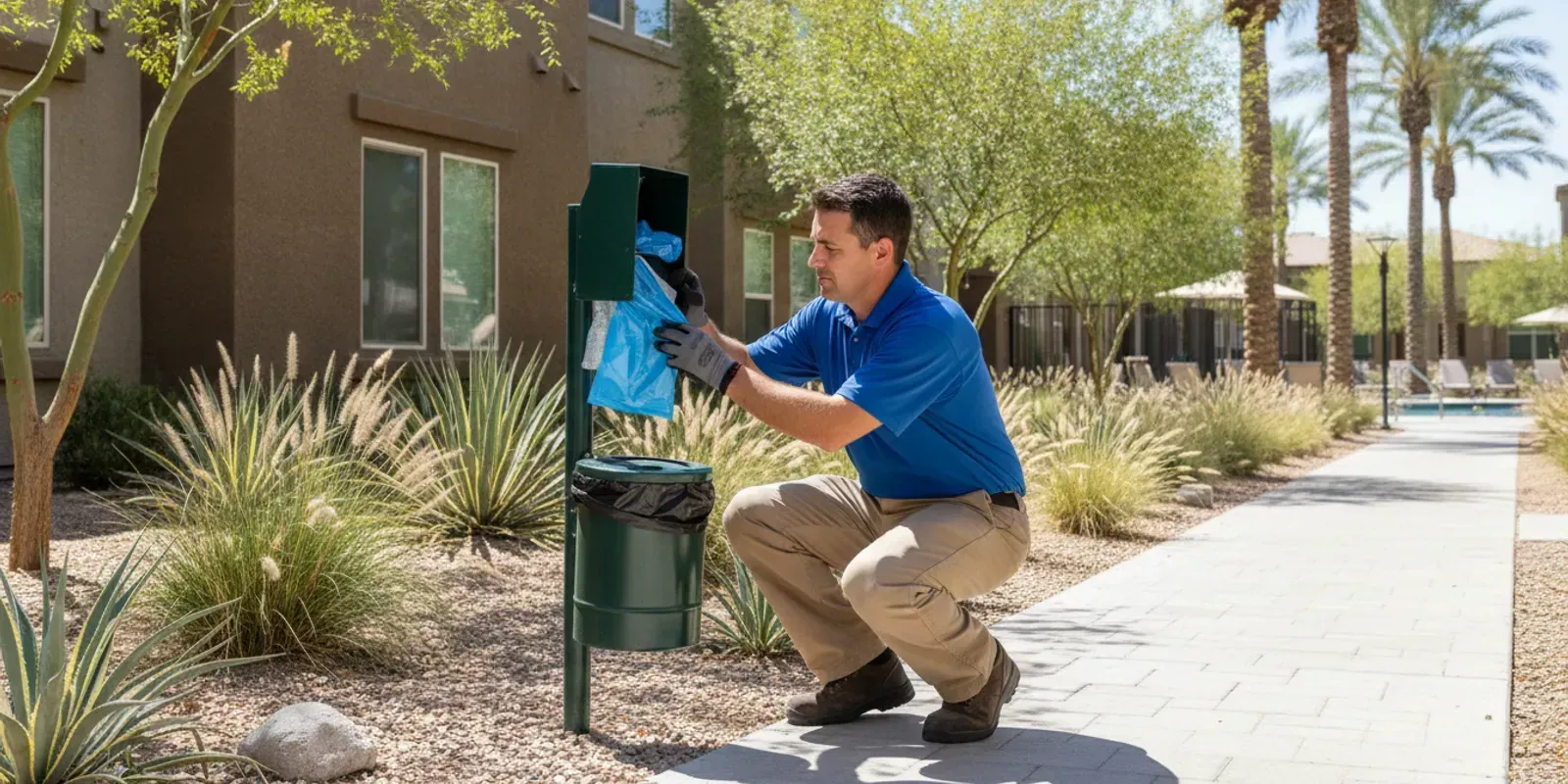
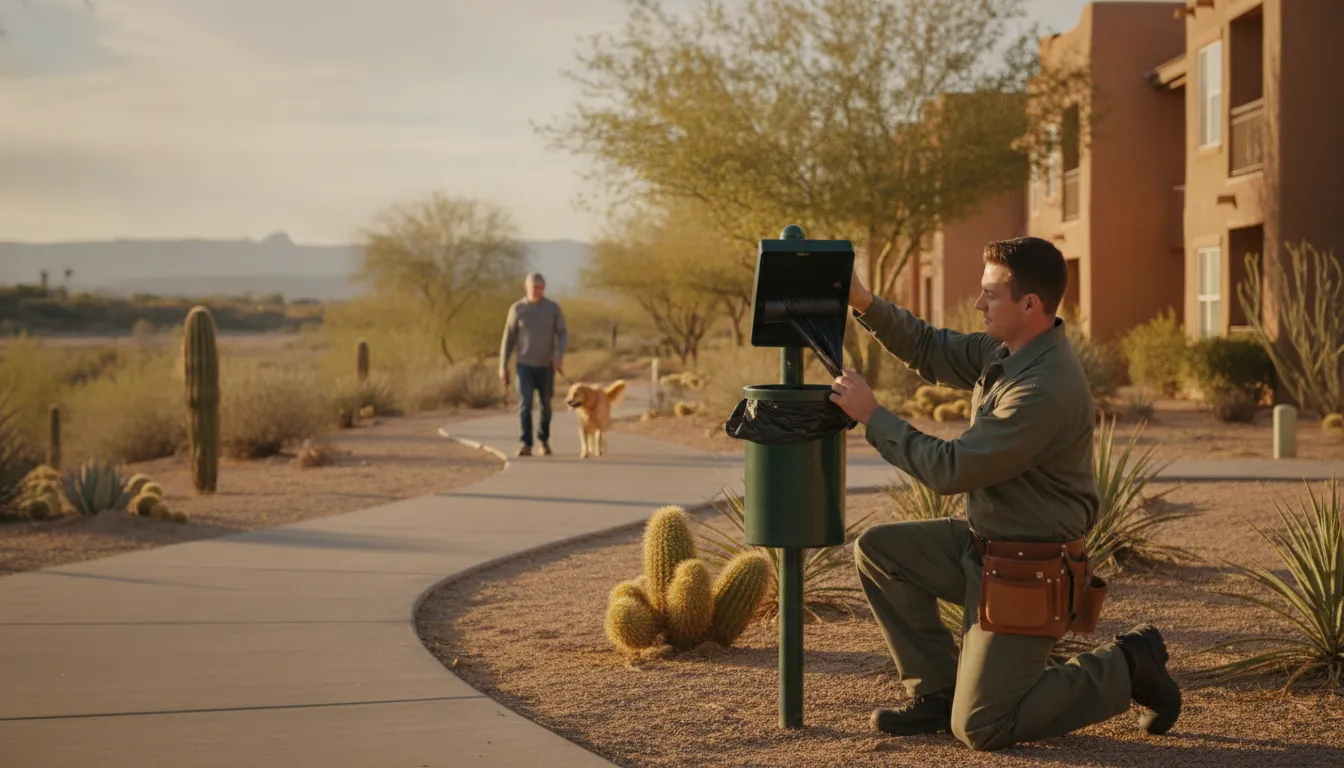
Each station should have a reliable supply of bags and a clearly identified receptacle. The property should define who checks supplies, who removes waste, and how a full bin is reported. A service map can give each station an identifier, location, inspection note, and service point. That simple record helps reveal coverage gaps.
Capacity and placement should reflect actual use. A dog-relief area serving several buildings may need more frequent checks than a station on a low-traffic edge of the property. A manager should review overflow history, occupancy, pet-friendly buildings, seasonal activity, and special events before changing the schedule.
 What Should the Service Schedule Account For?
The schedule should state what happens during holidays, community events, landscape projects, access restrictions, and unusually busy periods. It should also explain how the provider communicates a missed or changed visit. Ask whether the scope includes only waste removal or also station upkeep, reporting, and surface sanitation.
Artificial turf may need a separate maintenance conversation. A1's artificial grass cleaning and maintenance page describes a related option for pet areas. The community can ask which surfaces are included, how treatment is scheduled, and how the provider documents work.
Comparing community pet waste service modelsService modelWhat it can includePlanning considerationsResident-ledResidents carry bags, pick up waste, use designated bins, and report supply or service issues.Works best when stations are convenient, expectations are visible, and the reporting route is simple.Onsite staff-ledProperty staff inspect shared areas, restock bags, service receptacles, and coordinate follow-up.Responsibilities must be written down so checks do not disappear during absences or busy periods.Professional recurringA service partner performs scheduled removal, station upkeep, inspections, and agreed sanitation work.Define areas, frequency, reports, escalation contacts, access, and turf or common-area needs.
Boards comparing approaches can also review A1's guide to pet waste management for apartment communities. The strongest plan combines visible stations, usable supplies, adequate capacity, documented inspections, and one accountable maintenance owner.
How Can Boards Coordinate Policy Enforcement Without Creating Resident Friction?
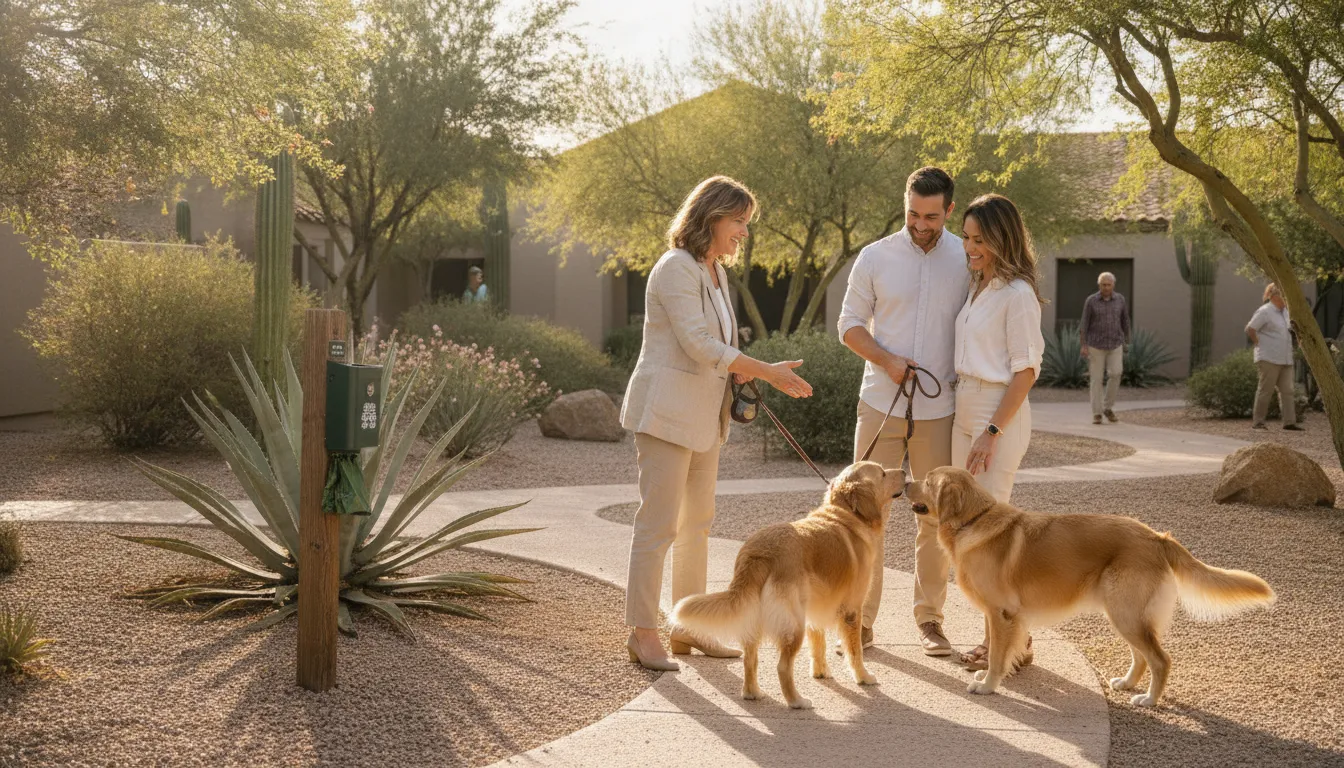
Enforcement works best when residents understand the standard, see that it applies consistently, and know how to ask questions. Treat the policy as an operating process, not a series of public callouts. The objective is cleaner shared space and a respectful path to compliance.
How Can a Community Make Expectations Clear?
Use the same short wording in governing-document summaries, welcome materials, community emails, signs, and resident portals. Explain where waste should be picked up and deposited, which areas require special care, and how to report a full station or missed cleanup. Specific instructions are more useful than broad reminders: pick up promptly, tie the bag securely, and use a designated receptacle.
Explain the reason without overstating legal or medical conclusions. CDC guidance about keeping environments clean gives boards a neutral basis for resident education. EPA guidance supports explaining that pet waste can affect waterways. Practical education can make a rule feel like a shared maintenance standard rather than a punishment.
How Should Reports and Escalation Be Handled?
Give residents a simple way to report a concern. The record can include the date, location, issue type, photo when appropriate, and action taken. Keep the information factual and limit access to details that identify residents. A consistent record helps distinguish a maintenance gap from an isolated incident.
Any notice or enforcement step should follow the community's governing documents and applicable local rules. Avoid public posting, selective enforcement, or labels directed at an individual resident. If a situation involves a disability accommodation, language access, or another protected concern, consult qualified property-management or legal professionals before acting.
 Why Do Vendor Reports Matter?
Vendor reporting closes the loop between field work and property oversight. A recurring provider should identify completed visits, station conditions, overflow observations, problem locations, and recommended adjustments. Managers can use those reports in regular meetings and compare them with resident feedback.
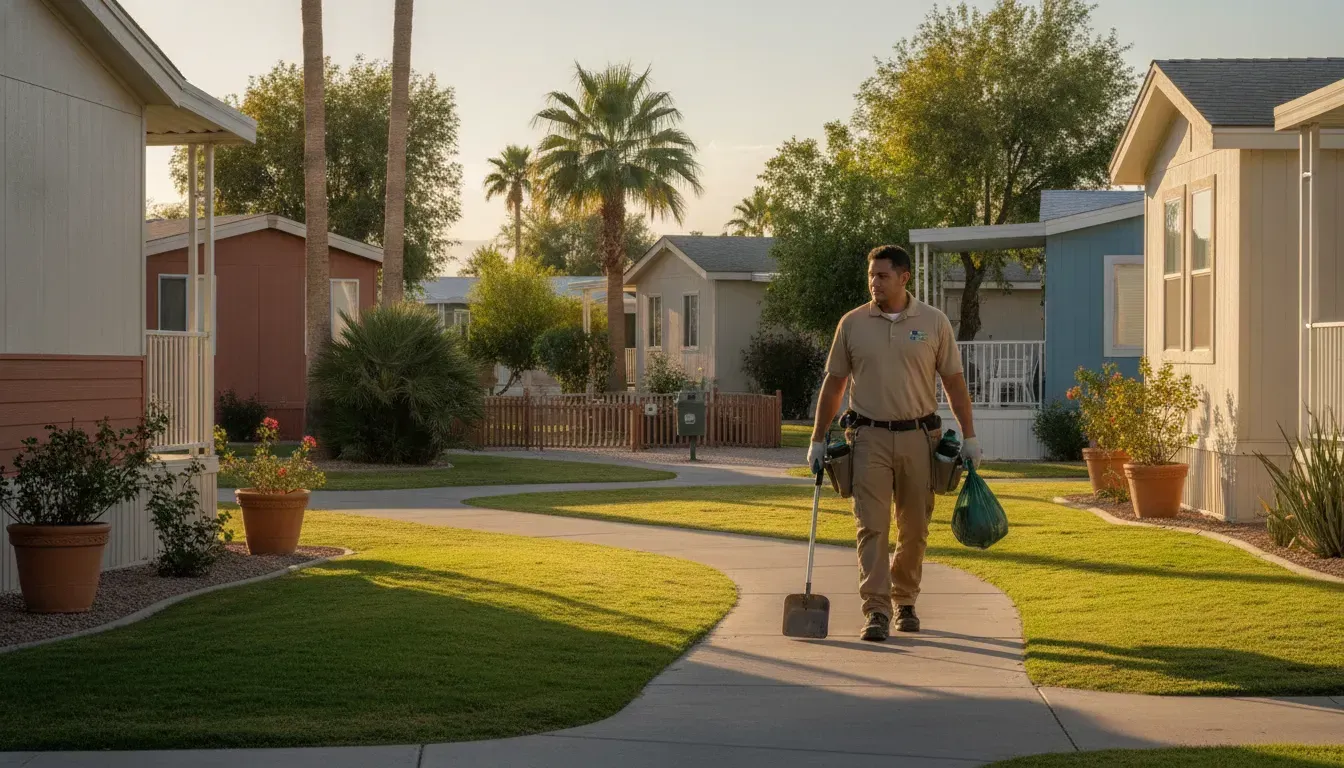
Communities with dog parks or larger relief areas can reference A1's dog park waste-removal planning guide when defining a more detailed scope. Communities with manufactured or mobile-home housing can review the mobile-home park dog-waste service page for another property-specific planning angle.
How Should Communities Measure Results and Choose a Long-Term Service Partner?
A community program should be evaluated by more than whether someone cleaned up on a particular day. Boards and managers need a practical view of cleanliness, service consistency, resident experience, and the staff time required to keep shared areas in good condition. A small set of repeatable indicators makes the discussion more objective.
Which Results Should a Community Track?
Start with the baseline walkthrough, then review the same areas on a consistent cadence. Useful measures include:
- Completion of scheduled waste-removal and station-maintenance visits.
- Occurrences of overflowing bins, empty dispensers, damaged equipment, or missed service areas.
- Repeated waste accumulation in specific shared spaces.
- Resident complaints, response times, and whether concerns are resolved consistently.
- Condition of high-use surfaces, including areas that may need artificial turf cleaning for dogs.
- Changes in staff time spent responding to routine pet-waste concerns.
The goal is not paperwork for its own sake. These measures show whether the program addresses the conditions that prompted it. They also give the board a clearer basis for adjusting station locations, communication, service frequency, or scope.
What Should You Ask a Potential Service Partner?
Define the full service scope in writing before selecting a provider. Ask whether the team will handle recurring removal, station maintenance, bag and receptacle checks, and sanitation needs for common areas or artificial turf. Clarify which locations are included, how completion is documented, who receives reports, and how a missed or changed visit is communicated.
Ask for current business and insurance documentation when those items are part of the community's vendor requirements. The provider should explain its operating process and property access expectations. Reliability matters as much as the task list. Look for an established point of contact, clear reporting, and a process for responding to manager feedback.
When comparing providers, focus on documented scope, communication, service consistency, and fit for the property rather than an unverified price comparison. A provider that understands recurring community maintenance can make the program easier to manage instead of adding another source of follow-up work.
Why Does Long-Term Experience Matter?
A1 Pet Maintenance has operated since 1998 and serves more than 400 properties weekly. The company works with HOAs, multi-family properties, government entities, and other commercial customers. Its service options include recurring waste removal, station maintenance, and artificial grass treatments.
That history matters because community service is a continuing relationship. A board or manager needs a partner that can understand the property, maintain a consistent routine, communicate when conditions change, and support adjustments as resident use evolves. A1's commercial pet waste removal contract guide provides a starting point for boards and property managers planning ongoing service.
Call A1 Pet Maintenance at (702) 521-2624 Today
Frequently Asked Questions
How do you start a community pet waste program?
Begin with a walkthrough of shared areas, current stations, complaint patterns, and policy requirements. Map walking routes and problem locations. Assign responsibility for bags, bins, inspections, communication, and vendor coordination. Then document the service schedule and reporting process. Review the program after launch and adjust it based on observed conditions.
Where should pet waste stations be placed in a multi-family community?
Place stations along common walking routes and near high-use pet areas while keeping them visible, accessible, and easy to service. Use a site map to identify coverage gaps. Avoid locations that obstruct accessible paths, create a nuisance near entrances or gathering areas, or interfere with landscape and maintenance access.
How can an HOA enforce pet waste policies fairly?
Use the same written expectations for residents, communicate them through more than one channel, and document reports consistently. Give residents a clear way to ask questions or report a missed station. Coordinate notices and enforcement steps with the community's governing documents, management procedures, and applicable local rules.
Is dog waste a health risk for community residents?
Dog waste can carry germs that make people and animals sick. The CDC says that cleaning up after dogs and keeping the environment clean reduces the risk of disease spreading. Residents should wash their hands after contact with dog waste, even when a bag was used. See the CDC guidance on healthy dog care.
What value does recurring professional service provide?
Recurring service creates a dependable routine for removal, station upkeep, inspections, and documentation instead of relying only on complaints. A provider can also help coordinate common-area sanitation and artificial turf needs. The property team retains oversight while routine field work follows an agreed scope and schedule.