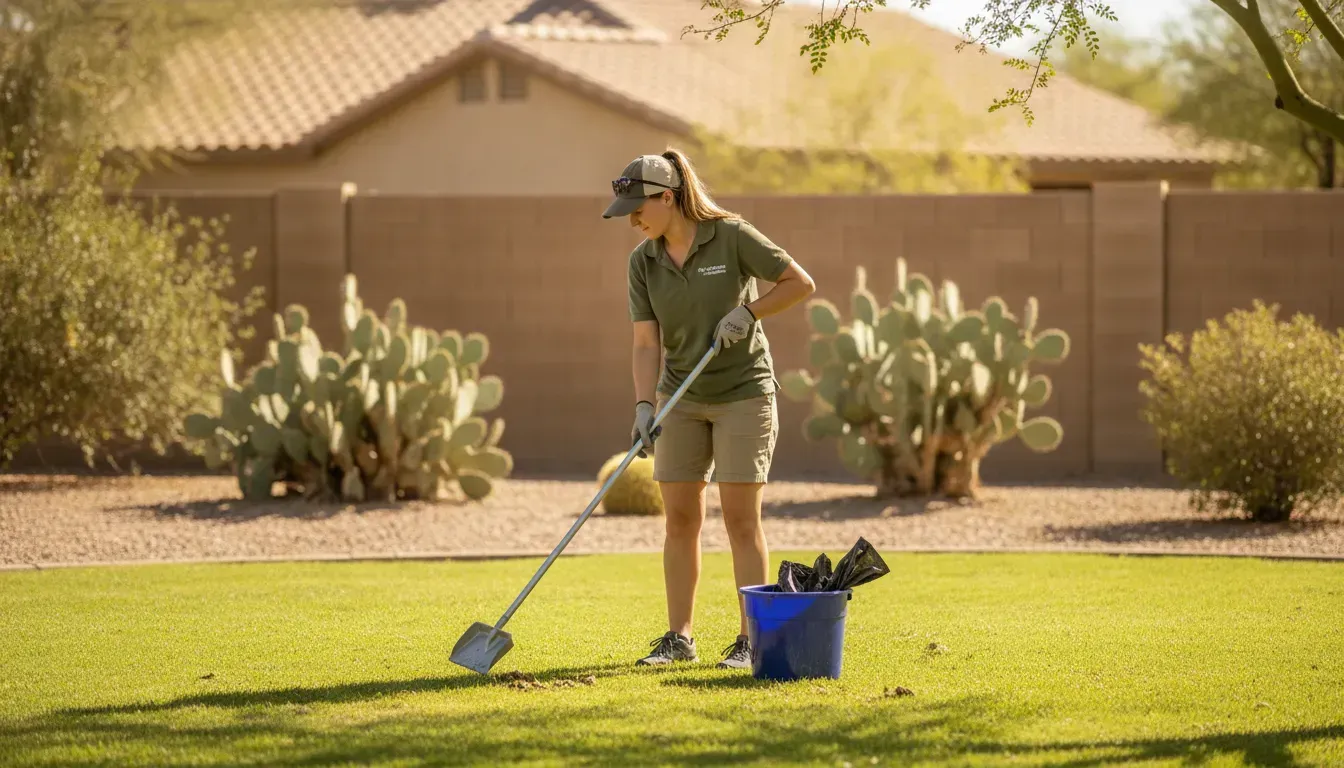
Property Management Pet Waste Removal Guide
Plan property management pet waste removal with weekly, bi-weekly, and one-time options, clear scope, access details, and a property-specific A1 request.

.
For a property manager, pet waste service is easier to evaluate when the decision starts with the property rather than a generic service description. The key questions are how much ground needs attention, how often it should be maintained, and what a provider needs to know before preparing a proposal.
Property management pet waste removal can be planned as recurring weekly or bi-weekly service for ongoing upkeep. Or as a one-time cleanup when waste has accumulated or a specific reset is needed. The right request defines service areas, access, expected scope, and any special conditions.
Call A1 at (702) 521-2624 Today
A1 offers both scheduled service and one-time cleanups for commercial properties, including multifamily communities, HOAs, condominiums, and other shared spaces. A scheduled visit can include access, inspection, collection, bagging, and removal for city sanitation disposal. Start by defining exactly what the service should include and how the work will be coordinated.
What Does Property Management Pet Waste Removal Include?
Property management pet waste removal is more than picking up visible waste from a lawn. A well-defined service scope identifies the areas to inspect, how the visit is coordinated, what happens to collected waste, and which recurring or one-time service fits the property. For apartment communities, HOAs, condominiums, master-planned communities, and other commercial properties, that clarity helps keep expectations practical for both the manager and the service team.
A typical scheduled visit includes property access through an agreed gate, key, or combination, followed by an inspection of the designated grounds. The technician collects pet waste, bags it, and removes it for city sanitation disposal. The service area may include dog parks, walking paths, shared lawns, pet relief areas, and other locations identified in the property scope. Defining those areas in advance prevents a general request from leaving important spaces ambiguous.
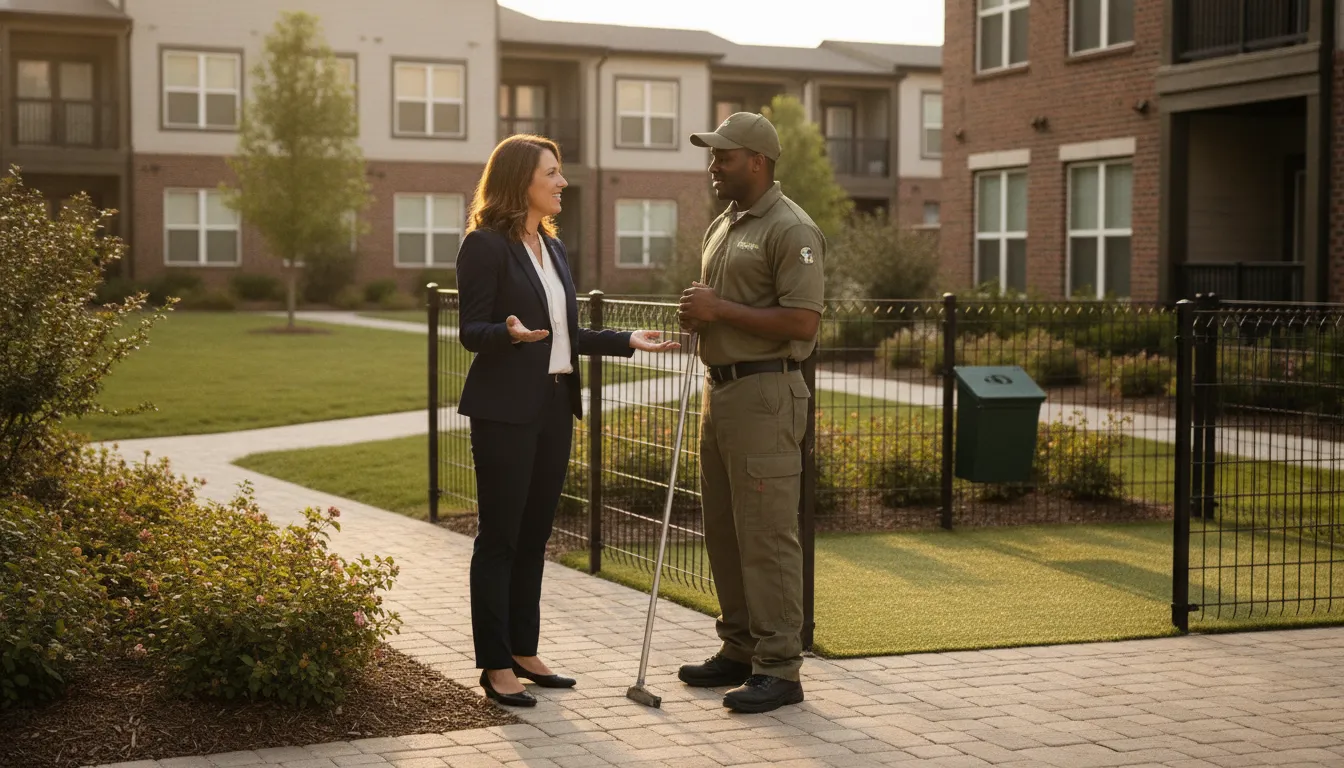 What should the scope specify?
- Service type: A1 offers scheduled weekly or bi-weekly pet waste removal as well as one-time cleanups.
- Included areas: List the lawns, paths, pet stations, and other shared spaces that should be inspected.
- Access plan: Note gates, keys, combinations, restricted areas, and any access changes the team should know about.
- Special requests: Identify unusual accumulation, a recently opened amenity, or another condition that may require clarification in the proposal.
Commercial services use customized proposals rather than a universal package or published rate. Managers planning multifamily pet waste management can provide the property type, service areas, access details, and desired cadence so the proposed scope reflects the site instead of an assumption.
Should Managers Choose Recurring or One-Time Cleanup?
The right service pattern depends on whether the property needs an ongoing control plan or a reset before a regular schedule begins. Recurring visits are designed for properties that want a consistent service day and a defined route. A one-time cleanup is better when waste has accumulated, a property is preparing for a transition. Or managers need to restore shared areas before deciding on a longer-term cadence.
Recurring and one-time pet waste cleanup comparedPlanning factorRecurring serviceOne-time cleanupBest fitProperties that need an ongoing routine for shared grounds and relief areas.Properties that need an initial reset or a focused cleanup after accumulation.CadenceScheduled weekly or bi-weekly visits, with a consistent service day when planned into a route.One scheduled visit based on the current condition and requested scope.Operational valueCreates a repeatable process for inspection, collection, bagging, and removal.Addresses the immediate condition so management can establish a cleaner starting point.Request detailsDefine service areas, access instructions, preferred cadence, and any special requests.Describe the property size and current waste accumulation so the cleanup scope can be assessed.
A practical approach is to request a one-time cleanup when conditions require an immediate reset. Then evaluate whether weekly or bi-weekly visits would make the property easier to manage. A1 states that one-time cleanup pricing varies with property size and waste accumulation, so a manager should request a property-specific assessment rather than rely on a generic rate. One-time pet waste cleanup is available for commercial properties as well as residences.
For recurring service, access is part of the operating plan. A1 describes scheduled visits that may use a gate, key, or provided combination, followed by inspection, collection, bagging, and removal for city sanitation disposal. Managers should also identify special requests before the route is established. That information helps distinguish a realistic recurring plan from a cleanup that only addresses the current backlog.
How Should Managers Define the Service Area and Access Plan?
A useful service scope should let a crew understand the property without guessing. Start with a simple site map or written list of every shared relief area, dog run, pet station, walkway, courtyard, and other outdoor space included in the request. Note which paths connect those areas and identify locations where waste commonly accumulates. If a station needs attention, specify whether the scope includes the surrounding ground, the station area, or both.
Document access before the first visit
List each gate the crew must use, including pedestrian gates, vehicle gates, and gates that are locked outside office hours. Provide the approved key, combination, or access instructions through the property's designated contact. Also note keypad restrictions, locked amenity areas, construction zones, uneven routes, or other conditions that could affect where a crew can safely work. A1's commercial process includes scheduled arrival, property access, inspection, collection, bagging, and removal for city sanitation disposal. Clear access details help keep that sequence practical.
Separate included areas from exclusions
Mark spaces that are included and identify exclusions in plain language. For example, a manager may include shared lawns and dog runs while excluding private patios. Fenced resident yards, landscaped areas that require special entry, or areas closed for renovation. If the property has multiple buildings, list the buildings or phases covered by the request. This prevents a broad property address from being mistaken for unlimited site access.
Record timing and special requests
Note preferred service days, office-hour limitations, event dates, irrigation concerns, and any location that needs extra attention. A1 reports fixed weekly routes and consistent service days, with flexibility for special requests. Managers comparing recurring service with one-time cleanup should state which need applies, along with any accumulated waste or unusual access condition. For more planning context, review this guide to multifamily pet waste management, then request a property-specific scope rather than relying on a generic address alone.
What Should a Property Manager Document Before Requesting Service?
A clear intake note helps a service provider understand the property before discussing a property-specific proposal. It also gives your team a shared record of what needs attention, how the site can be accessed, and what a successful visit should cover.
- Identify the property and service areas. Record the property type, such as an apartment community, HOA, condominium, master-planned community, or another commercial property. List the areas that need attention, including common lawns, dog runs, pet relief areas, walkways, side yards, and less visible corners. Note whether the request covers the whole property or selected zones. A1 serves these types of properties and provides commercial pet waste service for properties.
- Describe the current condition. Note whether the request is for scheduled weekly or bi-weekly maintenance, a one-time cleanup, or both. For a one-time reset, describe how long waste may have accumulated and identify areas that appear especially affected. Avoid relying on a vague phrase such as "the property needs cleaning"; a zone-by-zone description makes the scope easier to discuss.
- Document access instructions. Include gate locations, entry hours, key or combination details, locked areas, and any escort requirement. Confirm who can provide access and how that person should be reached if an entry issue occurs. A1's stated process includes property access, inspection, collection, bagging, and removal for city sanitation disposal, so access details belong in the initial request.
- State cadence and scheduling preferences. List the preferred service days, restricted hours, resident events, landscaping schedules, and any dates to avoid. A1 reports fixed weekly routes and consistent service days, with flexibility for special requests. Sharing these constraints early helps distinguish a routine route request from a time-sensitive exception.
- Clarify disposal, contacts, and special requests. Identify the primary property contact, billing contact, and emergency or after-hours contact when relevant. State disposal expectations, such as whether collected waste should be removed from the property. And mention pet stations, recurring problem areas, construction zones, resident notices, or other site-specific requests. Commercial services use customized proposals, so these details help the provider evaluate the actual scope instead of applying a one-size-fits-all assumption.
How Can a Planned Route Support Cleaner Shared Spaces?
A planned route gives property managers a repeatable way to keep shared outdoor areas from becoming a moving target. Rather than waiting for complaints or a buildup after an event, the service follows a consistent schedule and covers the agreed areas during each visit. A1 reports using fixed weekly routes and consistent service days, while allowing flexibility for special requests. That predictability can make it easier to coordinate access, communicate expectations, and notice areas that need additional attention.
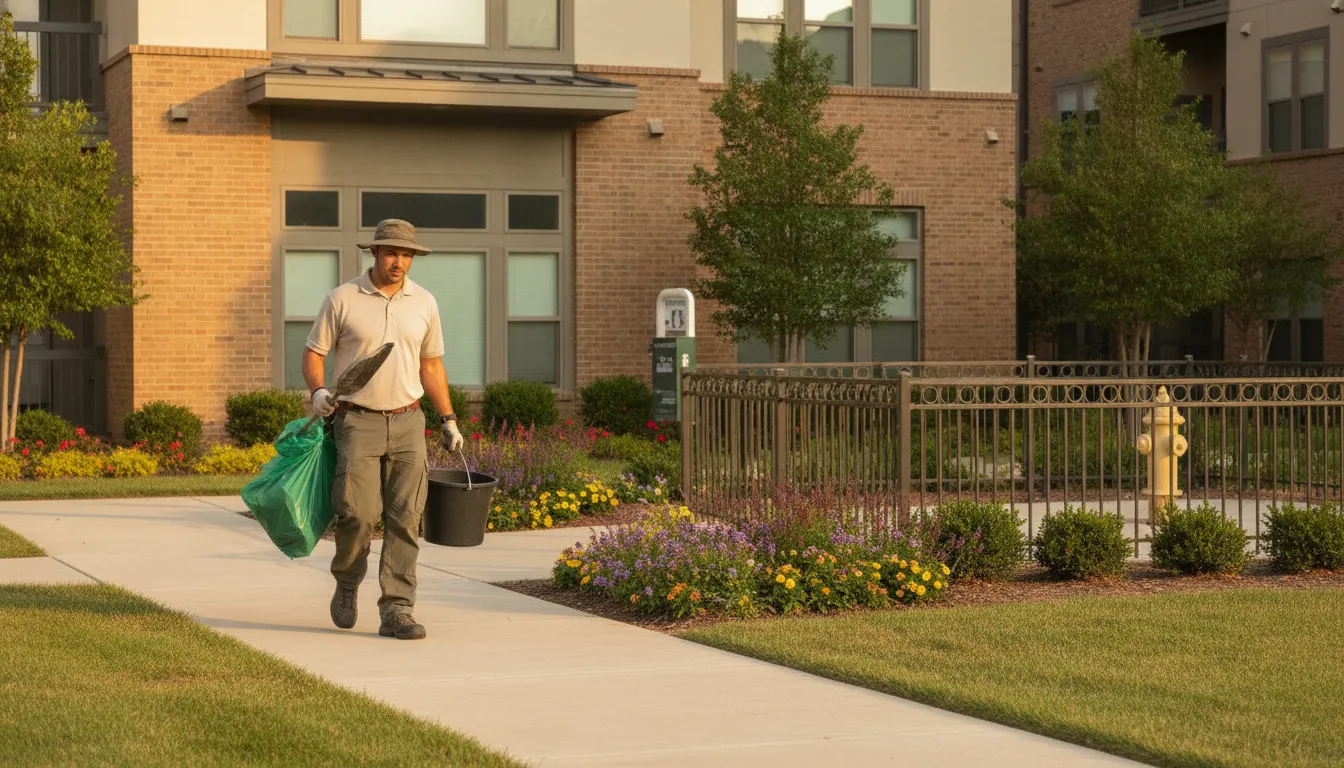 What happens during a scheduled visit?
The operational sequence should be straightforward: the technician arrives as scheduled, uses the gate access or key or combination provided by the property. Inspects the agreed spaces, collects pet waste, bags it, and removes it for city sanitation disposal. This process is described in A1's commercial property service information. For a community with several courtyards, dog areas, sidewalks, or perimeter paths. Defining those locations in advance helps keep the route consistent instead of relying on informal directions at each visit.
Route planning also has a limited environmental benefit. Waste left on the ground can be picked up by stormwater and carried directly or through a storm sewer system into nearby streams. Lakes, and rivers, according to the U.S. Environmental Protection Agency. Prompt collection and proper removal reduce the chance that unattended waste is carried away during runoff. This is a practical disposal rationale, not a promise that routine service eliminates every environmental concern.
When requesting service, list the shared spaces to be covered, access instructions, preferred weekly or bi-weekly cadence, and any special requests. A1 can use those details to prepare a property-specific plan rather than applying a one-size-fits-all route.
What Should Managers Ask for in a Property-Specific Proposal?
A useful proposal should turn a property's operating needs into a clear service plan, not just list a general cleanup service. Ask the provider to spell out the areas included, such as shared lawns, pet relief areas, walkways, dog parks, and waste-station surroundings. For multifamily properties, confirm whether the scope covers the entire community or only named buildings, courtyards, and common areas.
Questions about cadence and access
Ask whether the recommended schedule is weekly, bi-weekly, or a one-time cleanup, and why that cadence fits the property's use and accumulated waste. Confirm the expected service day or route arrangement, along with how gates, keys, combinations, locked amenities, and restricted areas will be handled. A1 reports fixed weekly routes and consistent service days while allowing flexibility for special requests, so managers should ask how access changes or unusual site conditions are communicated.
Questions about the initial reset and disposal
If waste has accumulated, ask whether the proposal includes a one-time reset before recurring visits begin, or whether that work is a separate line of scope. Clarify what collection, bagging, and removal entail. A1's stated process includes inspection, collection, bagging, and removal for city sanitation disposal. The proposal should also identify any areas that are excluded, inaccessible, or dependent on property-prepared access.
Questions about assumptions and special requests
Ask the provider to state the assumptions behind the proposal: property type, approximate service area, access conditions, expected waste volume, and requested start timing. Property managers should also list special requests in writing, such as a move-in cleanup, event-related service, a neglected relief area, or a temporary change to the route. A1 uses customized proposals for commercial property services and serves multifamily properties, HOAs, condominiums, master-planned communities, and other commercial properties. For a relevant service model, review commercial dog waste removal before requesting a site-specific scope.
Finally, ask what information the provider needs to confirm the proposal and who will coordinate access on service days. A precise request makes it easier to compare scope and expectations without relying on assumptions.
How Can A1 Help With Property Management Pet Waste Removal?
A1 gives property managers a practical way to organize pet waste removal around the needs of the property rather than forcing every community into the same plan. A1 serves multi-family properties, HOAs, condominiums, master-planned communities, and other commercial properties in Southern Nevada and Tucson, Arizona.
For an operating community, A1 offers scheduled weekly or bi-weekly pet waste removal. Along with one-time cleanups when a property needs a reset or has a specific accumulation issue. The commercial service process can include a scheduled visit, access through a gate or provided key or combination. Inspection of the designated areas, collection and bagging, and removal for city sanitation disposal. That sequence gives a manager clear items to define when coordinating access and scope.
A1 also reports fixed weekly routes and consistent service days, with flexibility for special requests. That can help a manager plan around property access, communicate an expected service day internally, and identify exceptions before the first visit. The appropriate plan depends on the areas included, the desired cadence, and whether the request is recurring or one-time.
A1 has operated in Southern Nevada and Tucson since 1998 and reports servicing more than 400 properties weekly. Commercial services use customized proposals, so a property manager can share the community type. Service areas, access details, and immediate needs rather than relying on a generic rate or scope.
Call A1 Pet Maintenance at (702) 521-2624 to discuss your property.
Frequently Asked Questions
Should a property manager choose weekly or bi-weekly service?
Choose the cadence that matches the property's pet traffic, relief areas, resident expectations, and maintenance plan. Weekly service provides a regular route for properties that need frequent attention, while bi-weekly service may fit a different level of use. Confirm the intended schedule, service areas, access plan, and special requests in the proposal.
When is one-time pet waste cleanup a better option?
One-time cleanup is useful when waste has accumulated, a property needs a reset before recurring service begins, or a specific area needs attention. It is available for commercial properties as well as residences. Property size and waste accumulation affect the request, so ask for a property-specific scope rather than assuming a standard rate.
What should be included in a property management service request?
List the property address, buildings or relief areas, paths and stations to inspect, gates or access instructions, exclusions, requested cadence, waste-removal expectations, and any special areas. Photos or a simple site map can help clarify the scope and reduce access delays.
How does a scheduled visit typically work?
A scheduled visit requires property access, followed by an inspection and waste collection. Collected waste is bagged and removed for city sanitation disposal. Consistent service days and a defined route make it easier for managers to plan access and review whether the agreed scope is being covered.
How can a manager request a commercial proposal?
Share the property's location, type, approximate service area, access details, preferred weekly or bi-weekly cadence, and whether a one-time cleanup is needed first. A1 uses customized proposals for commercial property services, so the final scope should document assumptions, special requests, and the areas included.
Ready to Plan Your Property's Pet Waste Service?
A clear service scope can help your team compare recurring weekly or bi-weekly care with a one-time cleanup and prepare a practical request. A1 can discuss the property details and help identify the next step.