Property Manager Dog Waste Inspection Checklist Las Vegas: What to Inspect
Use this property manager dog waste inspection checklist Las Vegas teams can follow to check relief areas, document recurring issues, and plan cleanup clearly.

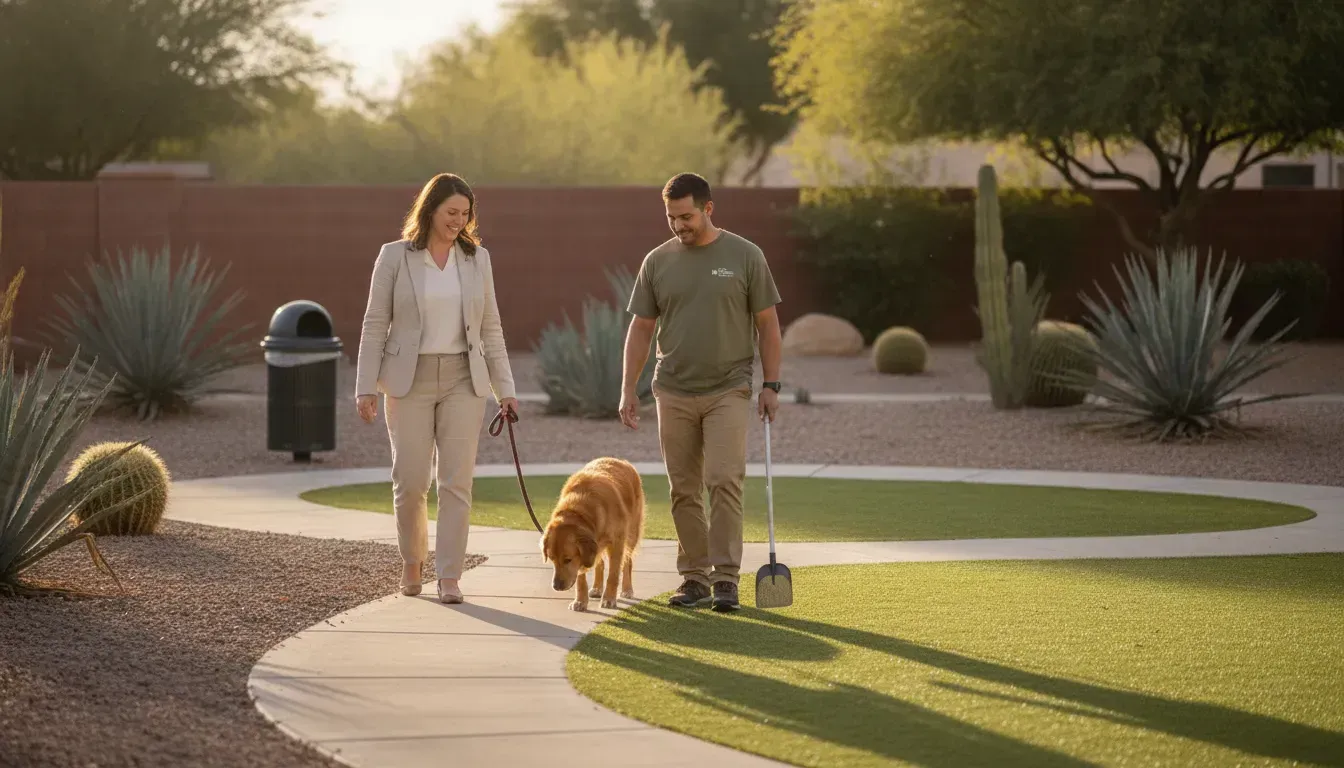
A dependable property manager dog waste inspection checklist Las Vegas teams can use should cover more than visible droppings. On each walk-through, check the ground, waste stations, odor, turf condition, access, and signs that problems are recurring; record what you find and assign a follow-up. A consistent route helps staff spot small maintenance issues before they become persistent complaints, without treating a visual check as a substitute for repairs or a full sanitation plan.
What should a Las Vegas property manager inspect in a dog-relief area?
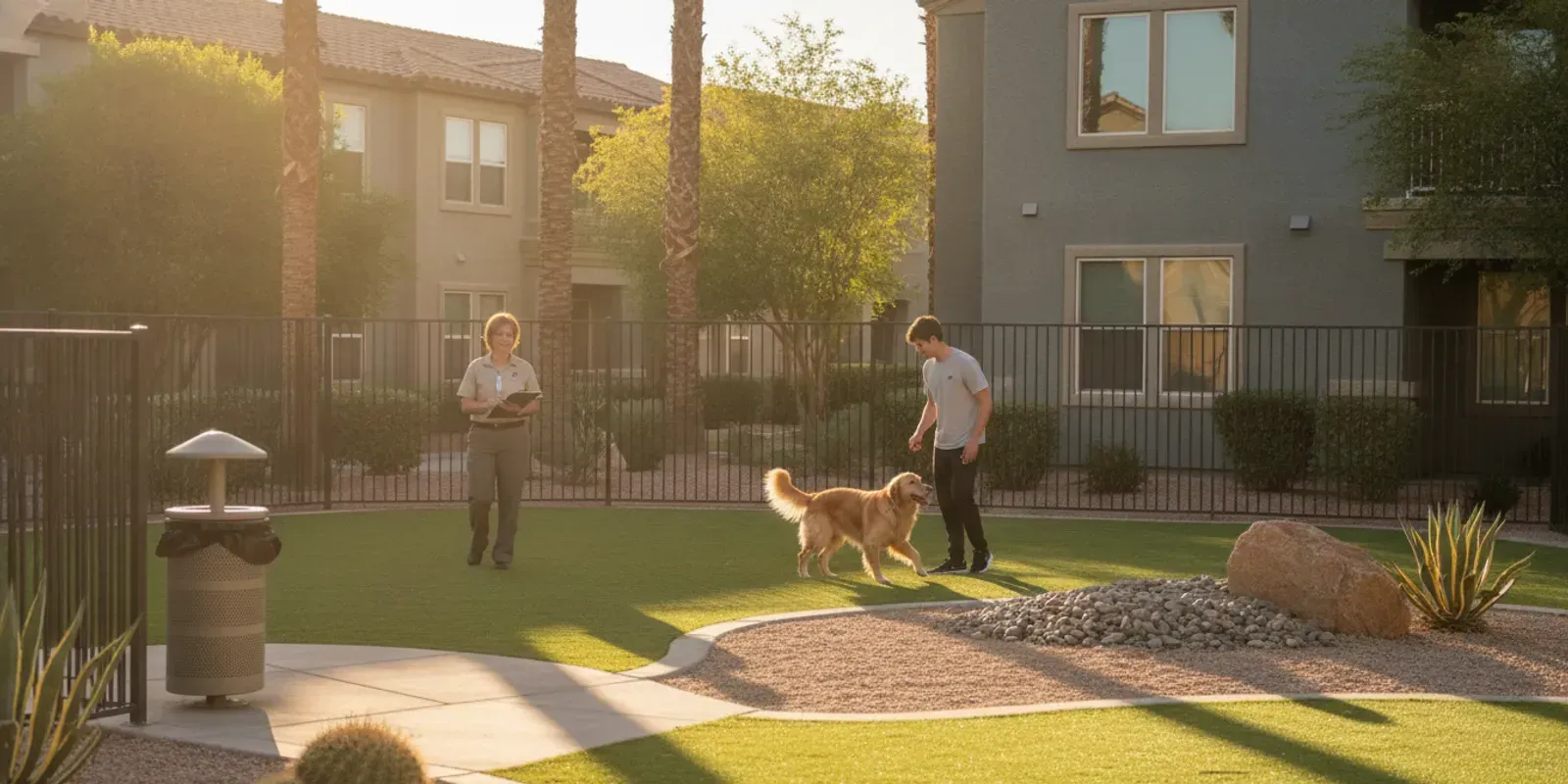
Inspect the full area in a repeatable order: scan the ground for waste, check the station and supplies, notice lingering odor or wet spots, look at turf and edges, and confirm people can reach and use the space. Then log the finding, location, date, and next action. The point is not to create a complicated audit. It is to make sure every check covers the same practical conditions and someone owns the follow-up.
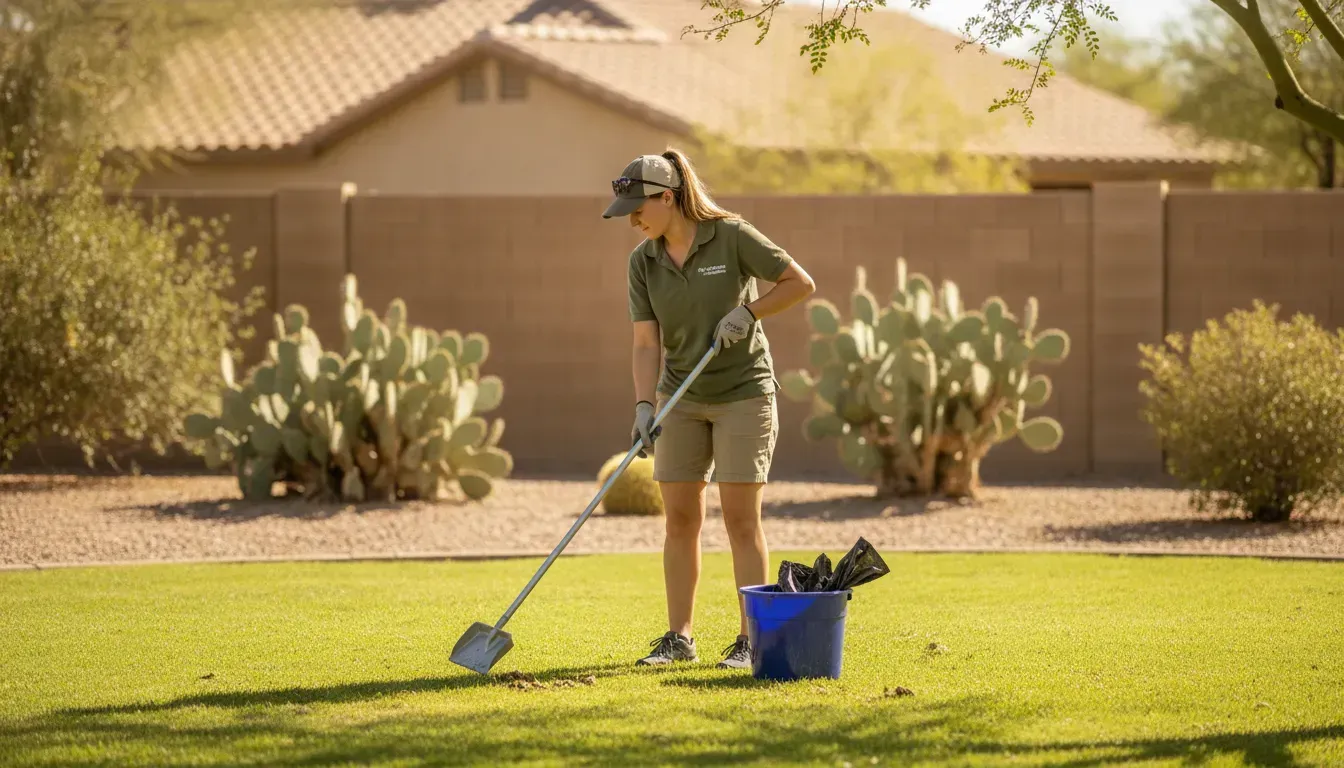
Start at the entrance and move through the area in overlapping passes rather than glancing from the path. Include the perimeter, corners, planting beds, fence lines, and less visible spots behind fixtures. Waste can be missed where dogs tend to pause or where landscaping blocks the view. If the relief area has multiple sections, identify them on a simple site map or use consistent location names in a log.
Before the first inspection, decide who is responsible for the routine, where the log will live, and how urgent maintenance observations should be routed. A written process does not need to be elaborate. A shared form with fixed location names and a short list of conditions to check can help a substitute staff member follow the same route. Make sure the person assigned can safely reach each inspection point and knows whom to notify about a blocked gate, damaged fixture, or other issue outside routine cleanup.
What Should a Property Manager Dog Waste Inspection Checklist in Las Vegas Include?
Choose an inspection route, a checklist owner, and a method for recording results. Keep the same order even when the area looks clean. A repeatable routine makes it easier for a relief staff member to cover the check and for a manager to compare notes from different days.
- Walk the boundary. Look along fence lines, gates, corners, and landscape edges for waste, damaged barriers, or places where access is difficult.
- Scan the main surface. Walk each section in overlapping passes. Check turf, hardscape, and planting areas, not only the center of the lawn.
- Check the waste station. Confirm the dispenser and bin are present, usable, and not visibly overflowing. Note whether bags are available rather than assuming the dispenser works.
- Pause for odor and moisture. Notice any concentrated or persistent smell, pooling, or unusually damp areas. Record the location and conditions; do not guess at the cause from odor alone.
- Review access and condition. Check that the gate opens, the path is usable, and there are no obvious hazards, loose parts, or damaged turf edges.
- Record and route the work. Note the observation, who will handle it, and when it should be rechecked. Close the loop after the action is taken.
Set an inspection cadence suited to the property's traffic, layout, and operating routine. A manager might check more often after a known busy period or a report, then adjust based on the documented pattern. Avoid assuming that one fixed interval fits every property. A log of actual conditions gives the team a better basis for setting a useful routine.
For example, if a check finds a clean central lawn but waste along the back fence on several dates, update the route so staff deliberately inspect that strip rather than just repeating a general scan. If a station is repeatedly empty, note the dates and compare them with the property's supply-refill routine. Those details help the manager tell whether the problem is an isolated miss, a route blind spot, or a need for a different maintenance assignment.
Which signs of dog waste should make it onto the checklist?
Record what staff can actually observe: visible waste, where it is located, whether it appears to be accumulating, and whether the same area repeatedly needs attention. Make a distinction between a single isolated finding and a recurring hotspot. A few dated notes can show whether the concern follows a particular location, time, or use pattern and can help direct a practical response.
Look beyond the obvious central walkway. Check the base of shrubs, landscape borders, corners, turf seams, and the area immediately around the station. Do not move items or enter restricted spaces just to complete a routine visual check. If an area cannot be inspected safely, note the access issue and refer it to the appropriate person.
Keep the record neutral and specific. “Waste observed near the west gate” is more actionable than “area is disgusting.” If residents report a concern, record the report separately from the staff observation, then verify the location when possible. Avoid identifying or blaming a resident without reliable information and the property's established process.
It can also help to distinguish a condition from its possible cause. “Two waste bags beside station 2” is an observation. “Residents are not using the bins” is an interpretation unless staff have verified it. The same principle applies to odor and wetness: note what was noticed, where, and under what conditions, then route it for assessment if needed. This keeps the log useful for maintenance decisions and avoids turning an inspection sheet into an unsupported conclusion.
What should you check at waste stations and along the route?
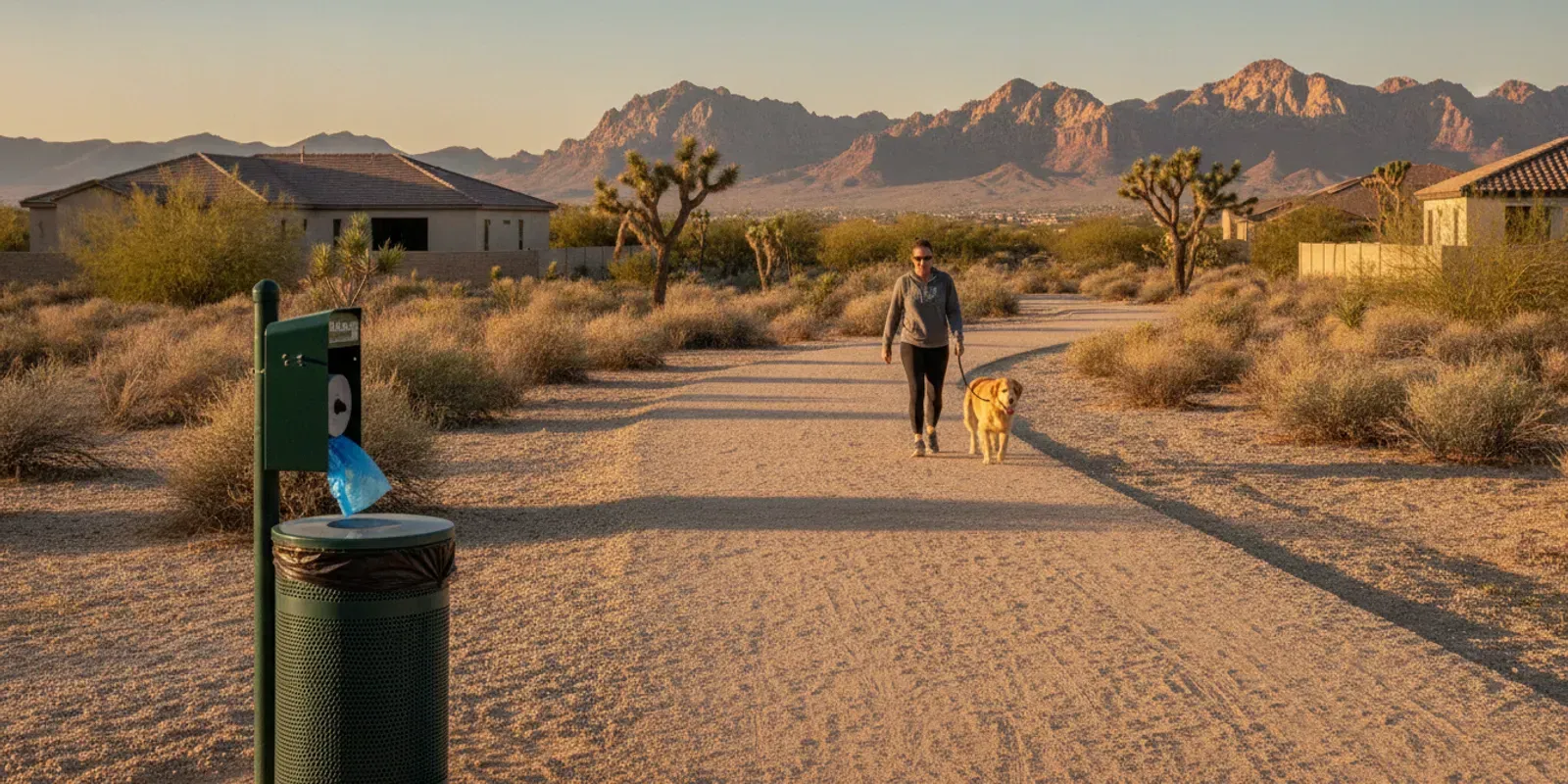
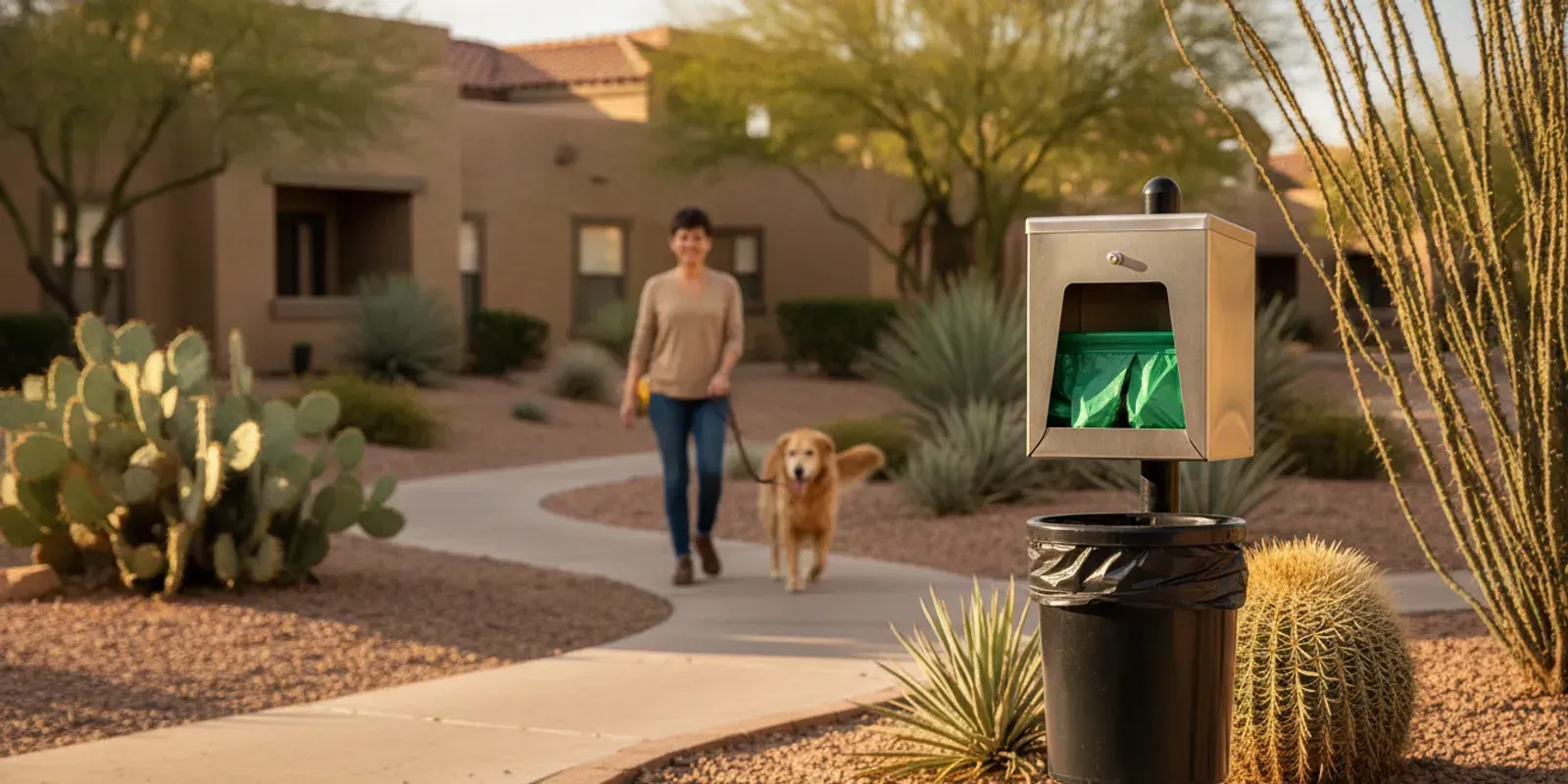
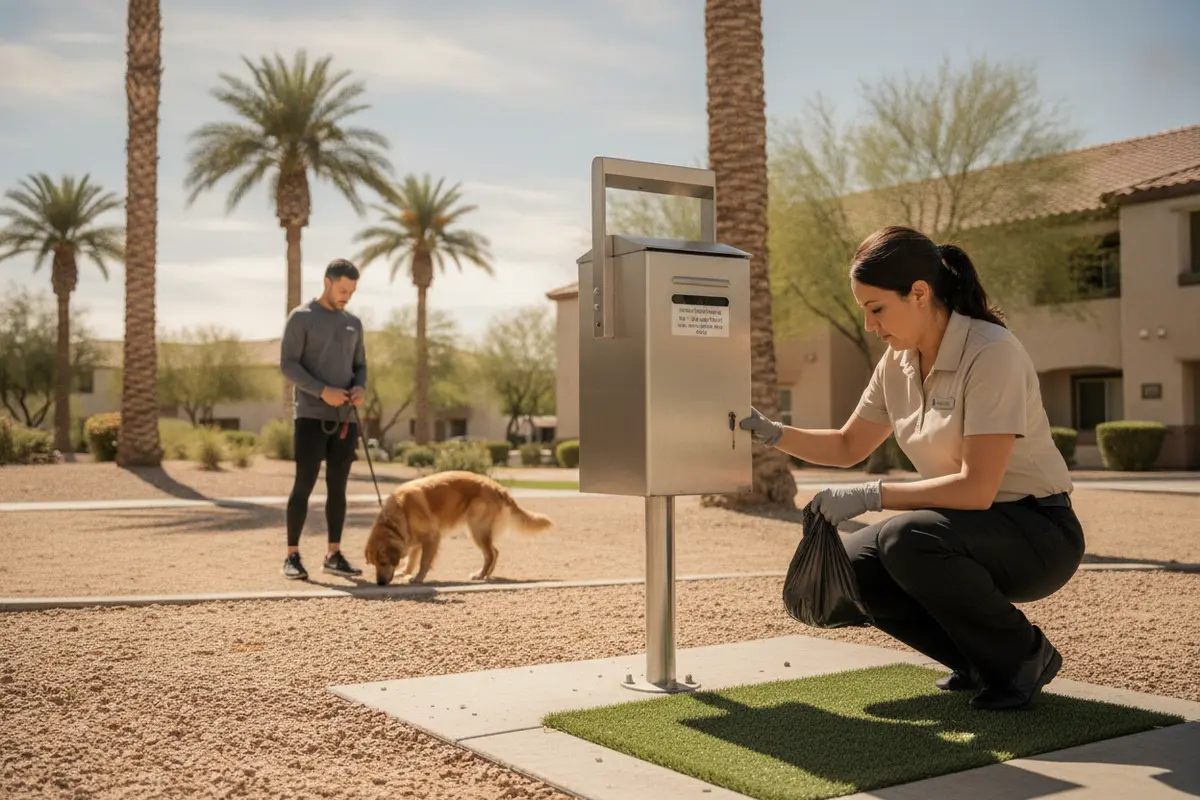
A station can look present while still being difficult to use. Check whether it is upright, accessible, and in reasonable working condition. Look for an empty or jammed bag dispenser, an overfilled or damaged receptacle, and litter or waste around the station. Note the asset location so the person assigned can find it without searching the grounds.
Check the approach to the station as well. A blocked path, poor lighting during operating hours, or a gate that does not open normally can make a relief area harder to use. Record the observed problem and send it to the responsible maintenance contact. Do not promise a repair date unless one has been confirmed.
When a property has several stations, use a simple identifier for each one, such as a building or zone name. That makes a note like “dispenser needs bags at north courtyard station” much easier to act on than “bags are low.” During the walk-through, also check the route between the station and the most-used areas. A station may be in working order but poorly placed for the way residents move through the grounds. Document the mismatch as a planning observation rather than relocating equipment without approval.
For recurring supplies, compare the inspection notes with the property's restocking routine. A simple record of which station needs attention and when can help staff see whether a refill pattern is adequate. A1 provides pet waste removal and commercial property maintenance; managers can review the commercial property service information when considering outside support for shared grounds.
How should managers inspect turf, drainage, and odors?
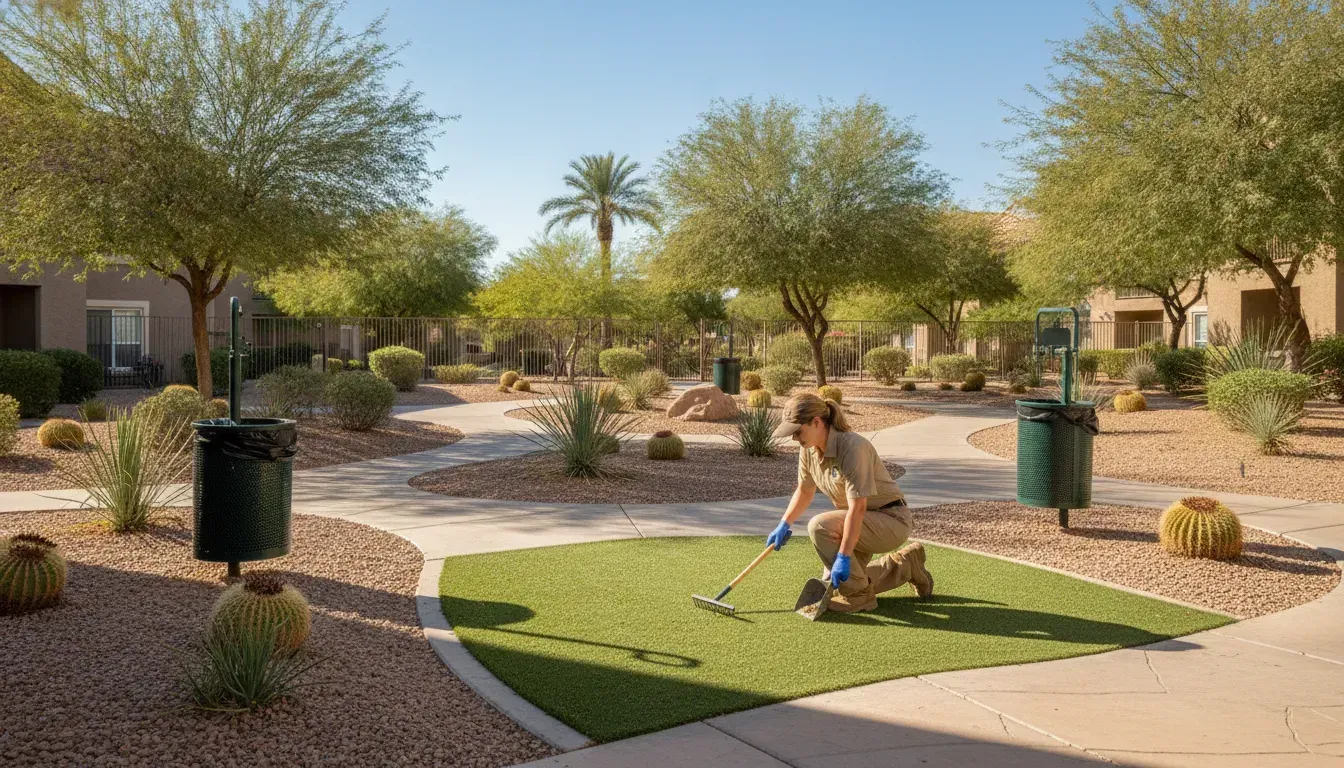
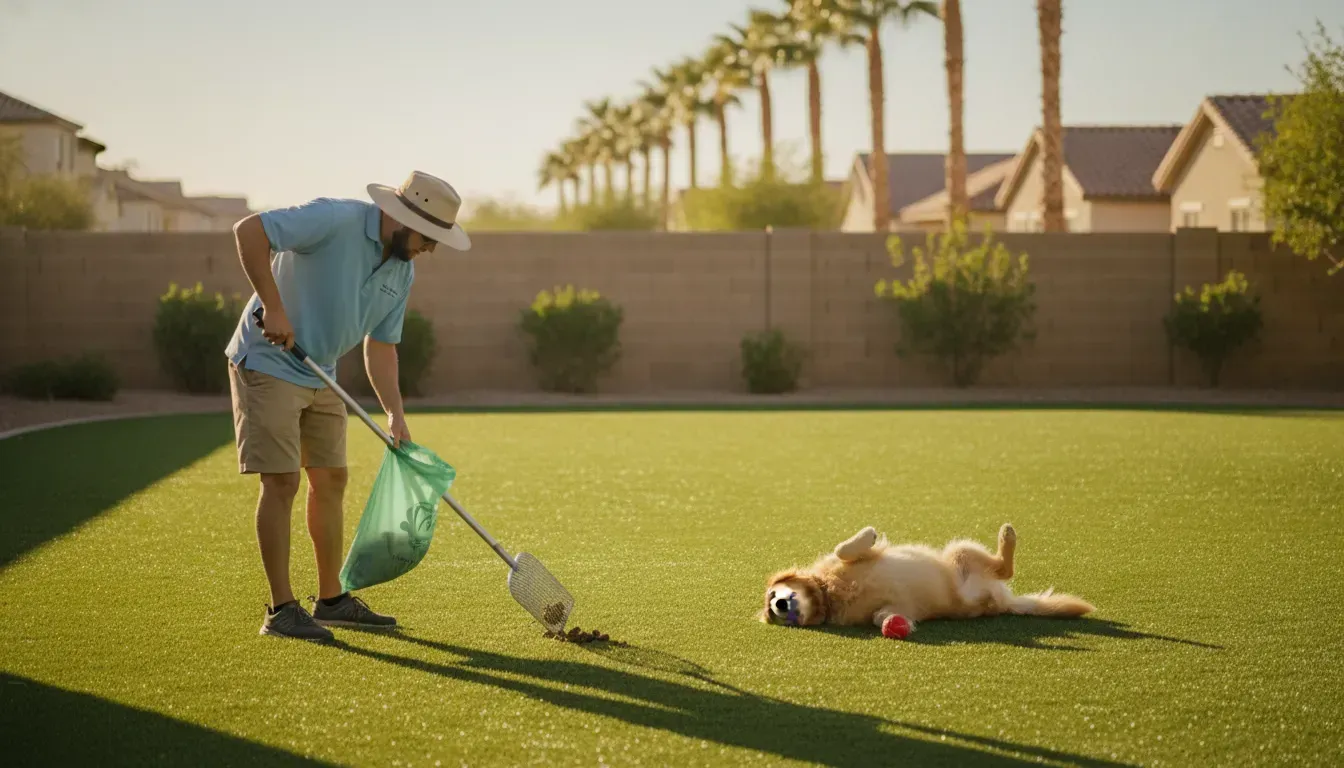
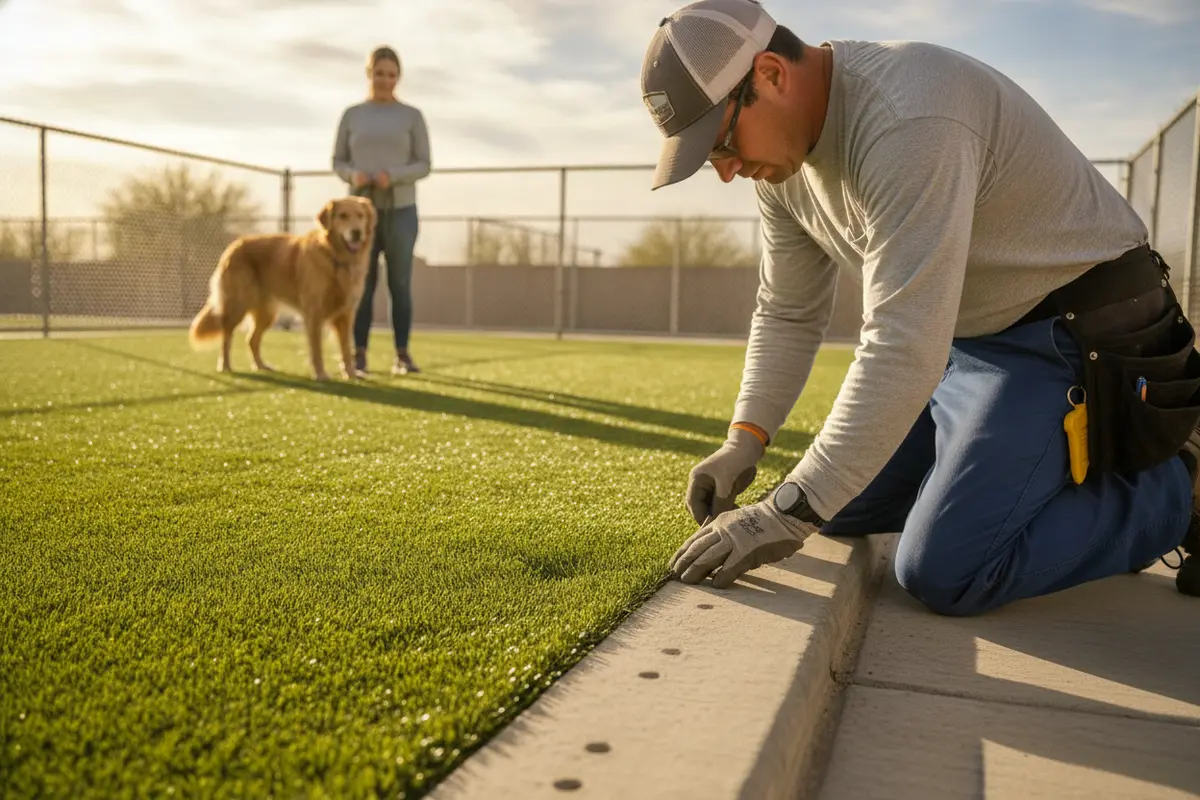
Artificial turf deserves a visual condition check as well as a waste scan. Look for lifted seams, damaged edges, loose infill, debris, and spots that remain wet or have a strong odor. Check whether water appears to drain as expected after ordinary use or cleaning, and record standing water rather than assuming why it is there. Turf condition, drainage, and odor may have different causes and may need different follow-up.
Do not try to cover a persistent odor with fragrance or assume a surface is clean because it looks tidy. Document where and when the smell occurs, whether the surface is wet, and whether the concern repeats after routine maintenance. If the issue appears related to the turf itself, A1's artificial grass cleaning and maintenance page explains the relevant service. A visual inspection alone cannot verify sanitation or identify a chemical or drainage problem.
Use a consistent observation method for turf: compare the same seams, corners, drainage points, and high-use strips on each visit. If a spot appears wet, record whether it was noticed before or after cleaning, if known, and whether the condition was present on a later check. Avoid probing or applying a product as part of a basic visual checklist unless the property has authorized that work and staff are trained to do it.
Use caution around cleaning products. Follow product-label directions and the property's safety procedures, and do not mix chemicals. When a concern involves runoff, drainage, or environmental handling beyond routine housekeeping, consult the appropriate local authority or qualified professional. The U.S. Environmental Protection Agency is a starting point for broader environmental information; it does not replace local requirements or site-specific advice.
How do you document inspection findings and follow-up?
Use a shared paper or digital log that can be reviewed by the manager and the staff responsible for action. Keep entries brief but complete enough that another person can understand the finding without being present. A consistent record also makes it easier to distinguish a resolved one-time issue from a recurring maintenance concern.
- Date and approximate inspection time.
- Inspector name or role, and the relief-area section checked.
- Specific observation and exact location, including station identifier where applicable.
- Immediate action taken, if any, and the person or team assigned to remaining work.
- Target follow-up date or the property's normal response window.
- Completion note and recheck result, especially for repeated odor, pooling, or a recurring hotspot.
Photographs can help document a condition when the property's policy allows them. Capture the area or fixture rather than residents, and store images only in an approved system. Use a consistent naming convention, such as date plus location, so staff can retrieve the record. Do not use a photo as a replacement for writing down what action is needed.
Close the loop by reviewing open items at a regular staff handoff or maintenance meeting. A simple status such as “new,” “assigned,” “completed,” or “recheck needed” can clarify what remains without requiring a long narrative. When a concern is resolved, record what changed and when it was checked again. If the condition is still present, leave it open and route it to the next responsible person instead of treating the first response as proof that the issue is fixed.
Keep resident reports distinct from inspection entries, but connect them when they concern the same location. For instance, a resident's report about odor in the east turf area can be noted with its date, followed by the staff member's separate observation on the next walk-through. That gives management a traceable record while avoiding the assumption that the report and the observed condition have the same cause.
How can you compare inspection needs with service options?
Inspection results help a manager choose the right next step. Some findings belong with on-site maintenance; others call for recurring pet waste pickup or a one-time reset after accumulation. The table below is a decision aid, not a substitute for reviewing the property's scope, access rules, and operating needs.
Recurring service may be useful when the log shows repeated accumulation and on-site coverage is difficult to maintain. A1 offers weekly or bi-weekly pet waste removal, as well as one-time cleanup; service fit depends on the property and its needs. See the one-time cleanup details if the current need is a reset rather than an ongoing schedule, or review what to know about pet waste removal when comparing service arrangements.
When reviewing options, separate the cleanup need from other maintenance work. A recurring waste pickup schedule addresses repeated waste collection; a damaged gate, irrigation issue, or drainage concern still needs the appropriate maintenance response. If an area needs both, write down each part of the scope, identify who is responsible, and clarify whether access or timing restrictions affect a visit. This makes a service discussion more concrete and reduces the chance that different parties assume someone else owns an unresolved repair.
When should you ask for outside cleanup support?
Consider outside support when the inspection record shows that waste is accumulating between staff checks, a large area needs a reset, or turf cleaning requires dedicated attention. The checklist helps clarify the scope: which sections are affected, how often the need appears, what access arrangements apply, and what result the property expects. Clear observations make it easier to discuss a suitable service plan without assuming that every property needs the same frequency.
For a recurring need, identify whether service should cover a defined relief area or broader common grounds, and how staff will report access changes. A1's service frequency is weekly or bi-weekly for recurring pet waste removal, and one-time cleanup is also available. Do not promise residents a schedule or outcome until property management has confirmed the details.
Keep your log after a service provider begins work. Compare findings over time, note whether the reported areas are being addressed, and communicate a specific missed or changed condition. For basic service questions, managers and residents can review A1's service FAQs; use the contact page to ask about property needs. A1 has served commercial properties, but the right scope and route should be discussed directly.
Before reaching out, gather the most useful information from the checklist: property area or site map, the sections needing attention, how often the issue appears, current station locations, access instructions, and any relevant timing limits. Describe whether you are looking for an initial cleanup or an ongoing service discussion. You do not need to diagnose odor or drainage concerns; share the observations and keep those items separate from waste pickup needs.
Frequently Asked Questions
How often should a manager inspect a dog-relief area?
Choose a cadence that reflects the property's traffic, layout, and observed conditions, then adjust it based on the inspection log. Check again after a reported issue or a period of heavy use. There is no single interval that fits every property.
What is the first thing to check during a walk-through?
Start with a complete visual scan of the ground, including edges, corners, planting areas, and less visible sections. Then check the waste station, surface condition, odor, access, and any previously reported hotspot.
Should a manager treat odor as proof that turf needs replacement?
No. Odor is an observation, not a diagnosis. Record where and when it occurs, note wetness or visible surface issues, and arrange an appropriate inspection or cleaning assessment before deciding what work is needed.
What should an inspection log include?
Include the date, time, person checking, location, specific finding, assigned action, and follow-up result. If a photo is allowed by property policy, store it securely and identify the matching location and date.
When is a one-time cleanup different from recurring service?
A one-time cleanup addresses accumulated waste that needs a reset. Recurring service is a schedule for ongoing needs. The manager can use inspection records to describe whether buildup is isolated or appears repeatedly before asking about options.
A consistent inspection route, clear notes, and a named follow-up owner give property teams a practical way to keep dog-relief areas easier to monitor and maintain.