Dog poop stations: Service Options and Planning Guide
Plan dog poop stations for a shared property with practical placement, supply, disposal, and cleanup guidance, plus a checklist for ongoing upkeep.
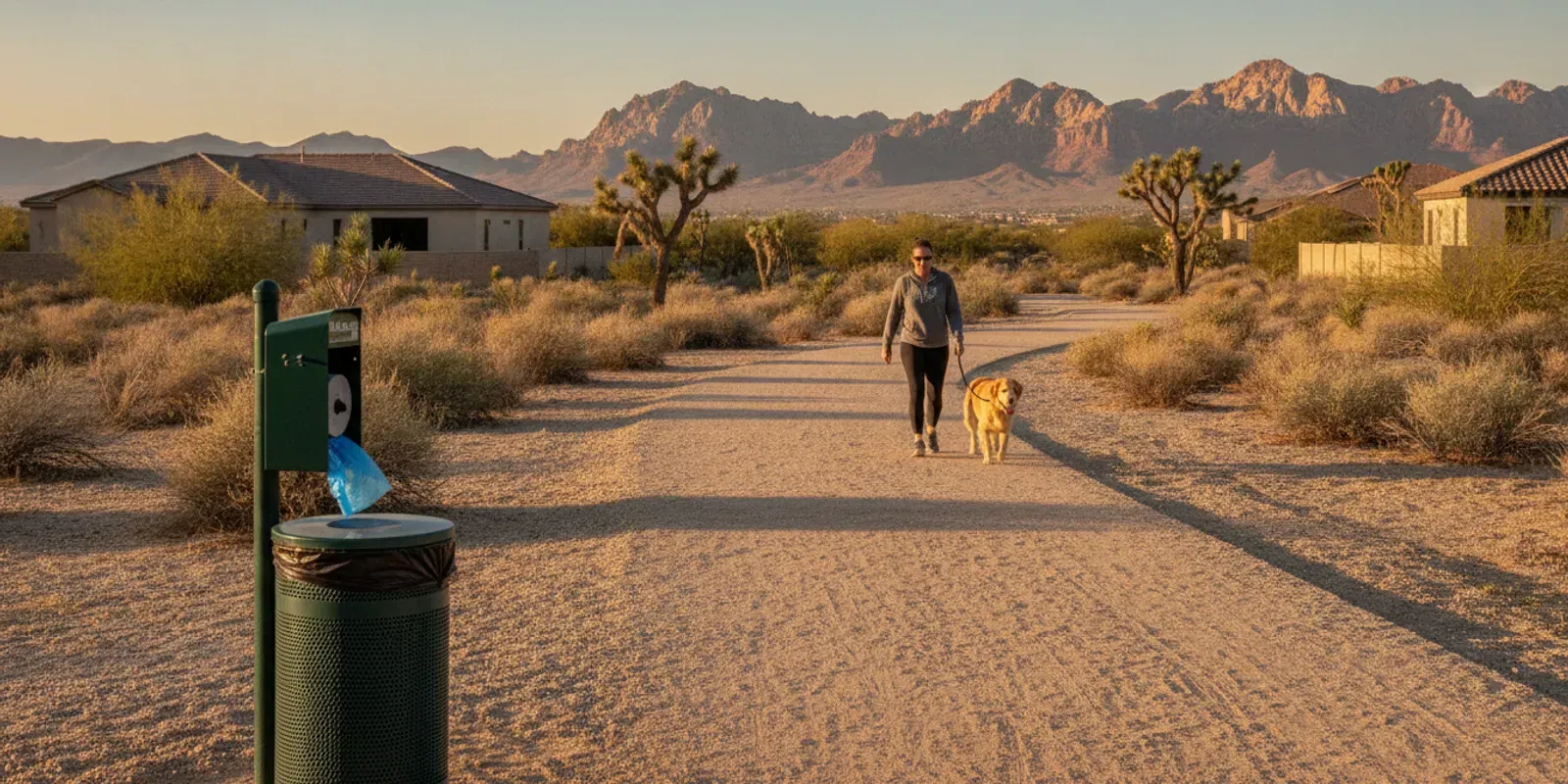
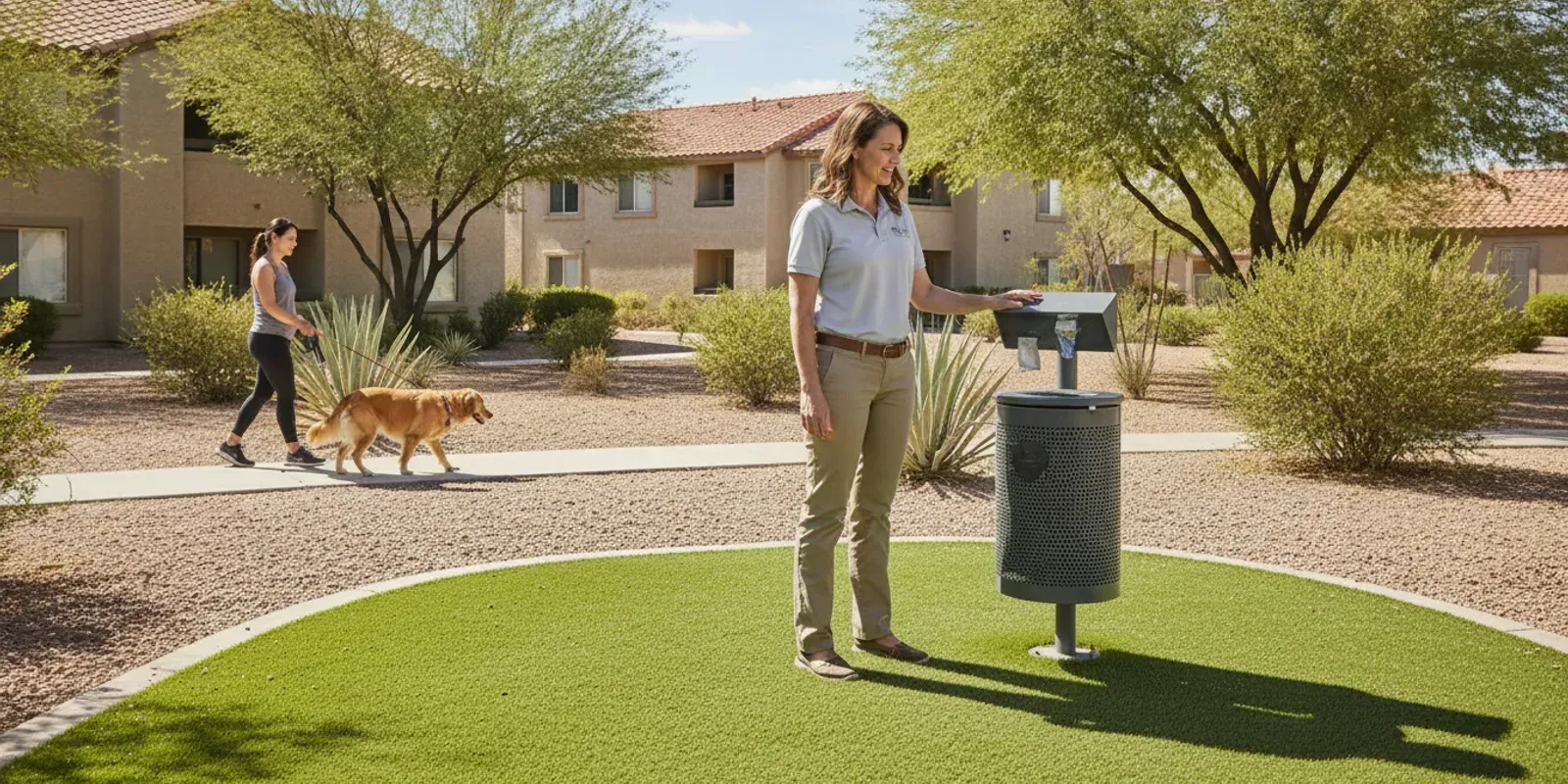
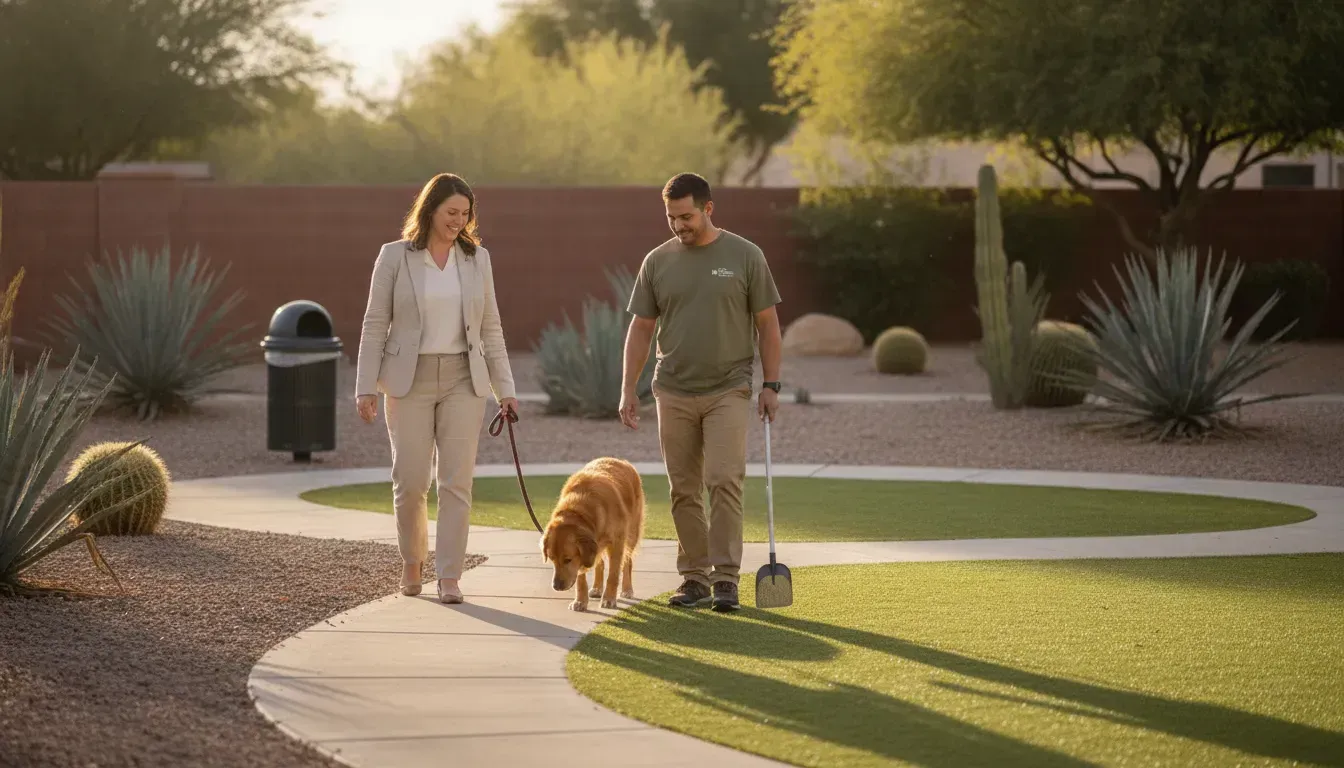
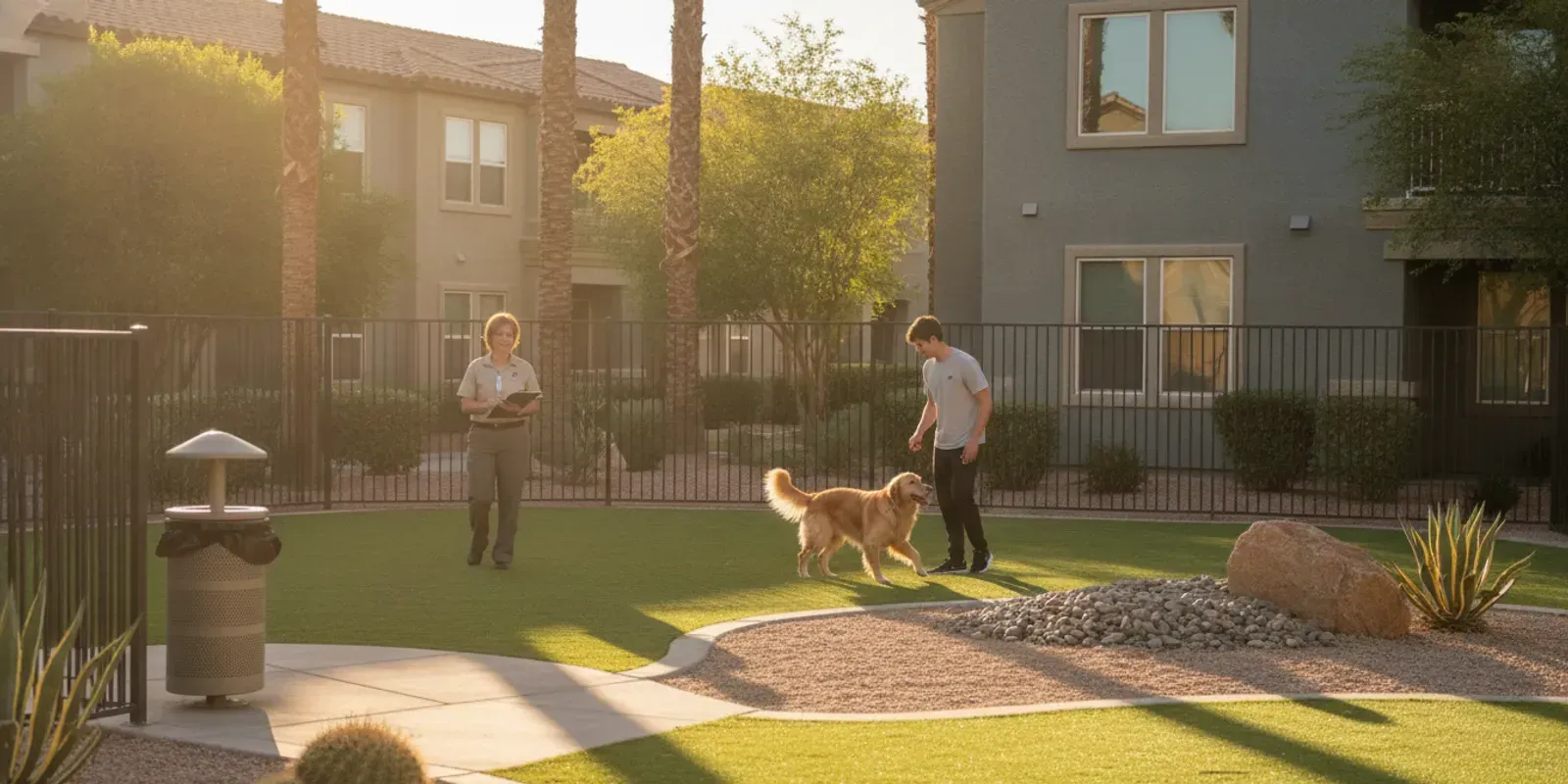
Dog poop stations work best when location, bag supply, waste capacity, and cleanup responsibilities are planned together. For an HOA, apartment community, or commercial property, walk the routes people use, choose convenient disposal points, and assign someone to inspect and maintain each station.
A dispenser can make bags easy to reach, but a station alone will not pick up waste left elsewhere, refill itself, or prevent a bin from overflowing. A complete plan connects residents’ everyday routines with reliable checks and a clear way to report problems. Here is how property teams can decide what to install, where to put it, and which duties belong in the ongoing maintenance plan.
How Should Property Teams Plan Dog Poop Stations?
Start with how the property is used, not with a target number of stations. Map common dog-walking routes and observe where waste is most often left. Then select accessible locations, confirm how disposal will work, and write down who will handle bags, bins, and surrounding grounds. A simple, assigned routine is more useful than adding equipment without a servicing plan.
Break the plan into four connected decisions:
- Placement: Put stations near natural walking routes and suitable disposal points. Keep paths, entrances, gates, and access routes clear.
- Supplies: Decide who checks and replenishes bags, where backup supplies will be kept, and how staff will report a shortage.
- Disposal: Identify which bin can receive pet waste, who empties it, and how often it should be checked.
- Grounds upkeep: Define who picks up waste outside the bin, responds to overflow, and reports a damaged or unusable station.
The Town of Bluffton’s pet waste station program is one municipal example of a program that provides stations to qualifying community groups. Its terms apply to Bluffton, not properties elsewhere, but it illustrates why station access and ongoing responsibility are separate parts of planning. A property manager should confirm local requirements and the site’s own waste rules before selecting equipment.
For a property in Southern Nevada or Tucson, translate the same decisions into a site-specific checklist. A station may be fully stocked on installation day and still become inconvenient if its bin fills quickly or no one notices when the bags run out. Treating placement, supplies, disposal, and grounds cleanup as one system makes gaps easier to spot.
Where Should You Place Dog Poop Stations on a Shared Property?
Walk the grounds as a resident walking a dog would. Note the main exits, paths between buildings, landscaped areas, pet relief areas, and routes to open space. Ask staff who work on the grounds where waste tends to collect. Those observations can reveal useful locations better than spacing stations evenly across a site map.
- Map the routes people already take. Include entrances, sidewalks, common loops, and transitions between residential buildings and shared spaces. Mark busy and quiet routes separately so the team can prioritize locations that see regular use.
- Look for a practical stopping point. A station should be noticeable and easy to approach. Check that it does not narrow a sidewalk, interfere with a gate or door, or obstruct an accessible route or emergency access.
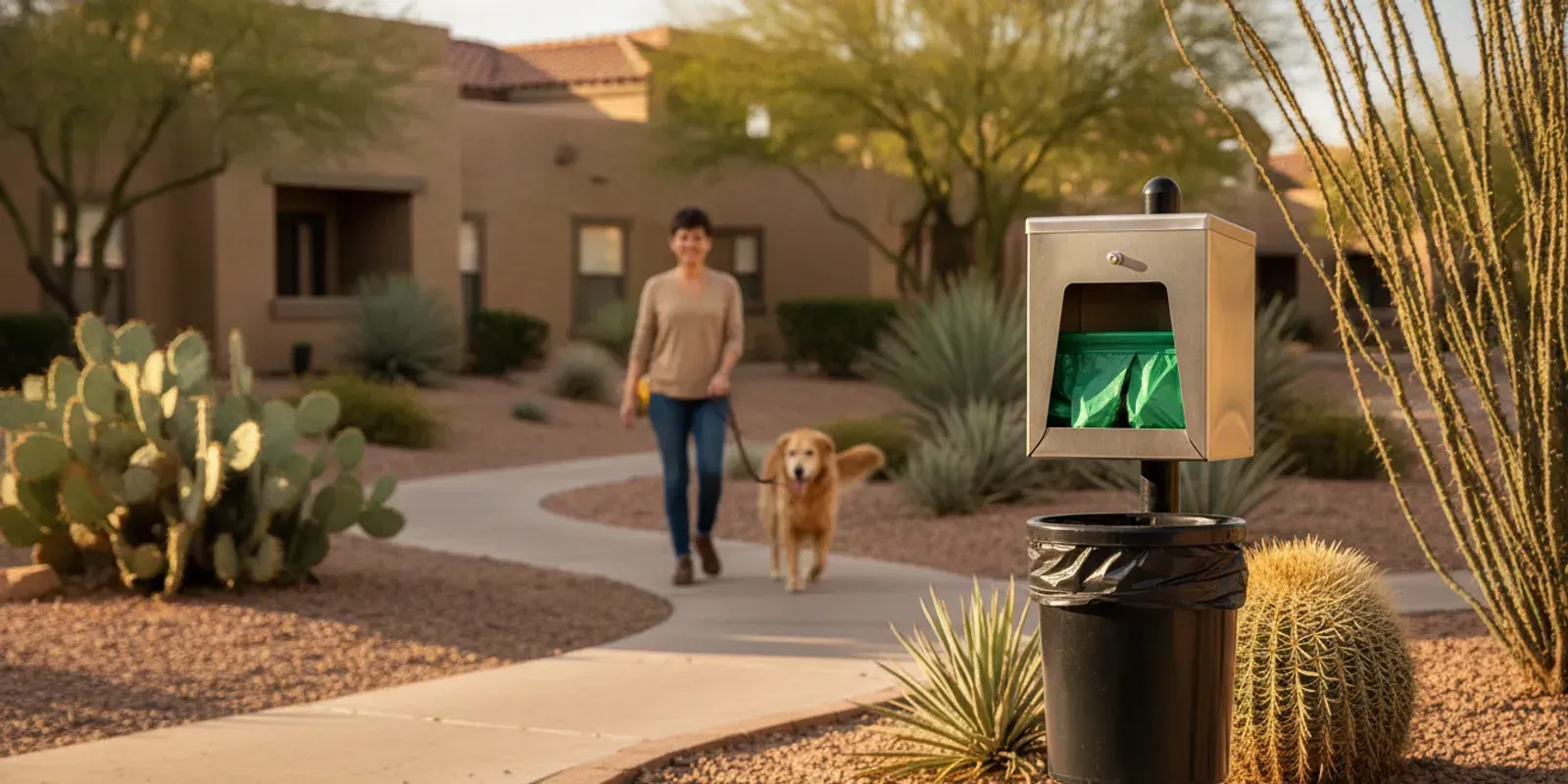
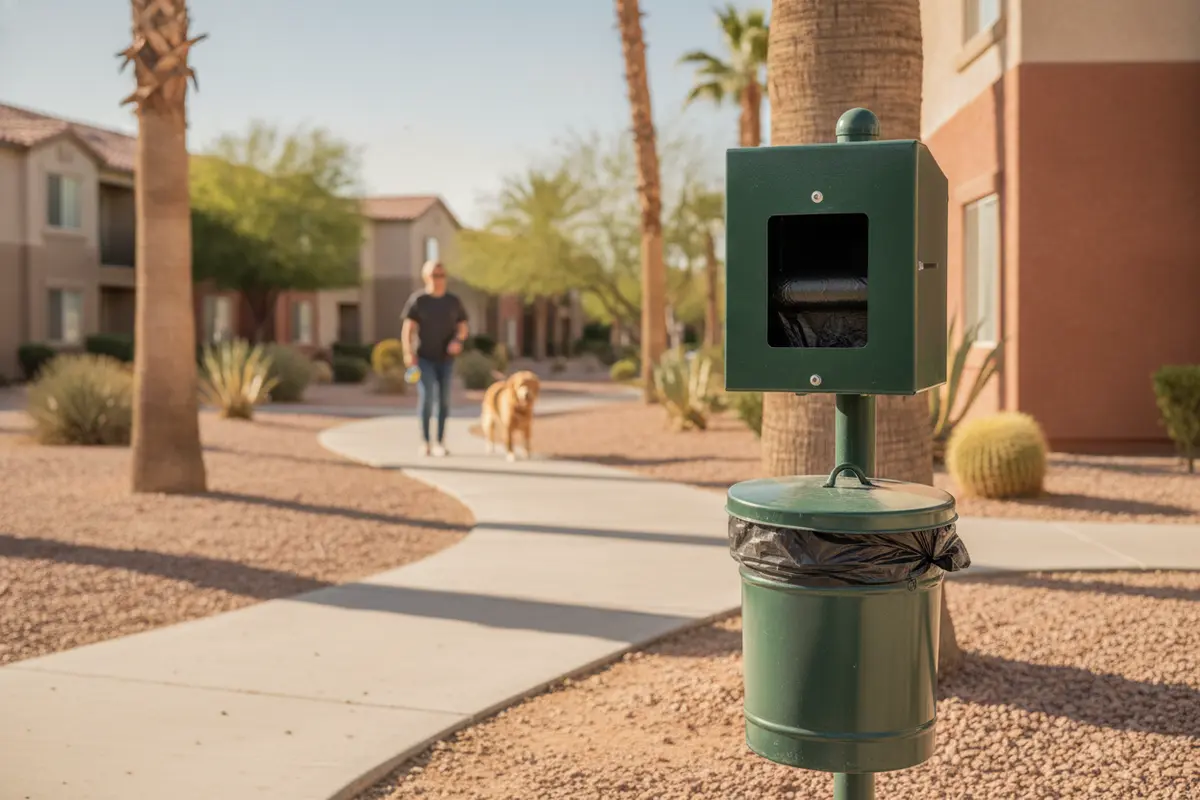
- Pair bags with a permitted disposal point. Consider how far someone would have to carry a tied bag. Confirm that the nearby bin accepts pet waste and is reachable by the person assigned to service it.
- Think about the maintenance route. A location that is convenient for residents should also be reachable for inspection and servicing. Note whether staff can approach the unit without crossing restricted areas or disrupting other site operations.
- Review the location after use. Record empty dispensers, loose bags, overflowing bins, repeated litter, and resident reports. Use those observations to decide whether to adjust the placement, supply check, or cleanup routine.
Do not assume one station belongs beside every building or that more stations automatically solve a waste problem. Too many units can spread inspections across a site and make it harder to notice which ones need attention. A smaller number of visible, consistently maintained points may be simpler to manage. The right layout depends on the property design and the routes residents actually use.
For example, imagine a community with two main walking loops and one shared pet relief area. Instead of placing units at equal distances along every path, the manager could first identify where the loops begin, where residents pass the relief area, and where approved bins are serviced. After observing usage, the team can consider whether the existing locations are convenient or whether one consistently underserved route needs another station.
 Which Dog Poop Station Setup Fits Your Property?
There is no single setup for every HOA, apartment community, park-like common area, or commercial site. Compare options against use, available space, staff capacity, and the existing waste collection routine. This table is a planning aid rather than a product specification. Confirm equipment requirements and local rules before purchasing or placing a unit.
ApproachWhat it includesMay fit whenWhat to plan forDispenser and dedicated binBags and a receptacle at one shared pointA convenient location serves a well-used routeBag refills, capacity, emptying, and litter around the stationDispenser near an existing binA bag source paired with a receptacle already on siteThe bin is accessible and accepts pet wasteConfirm bin rules, available capacity, and who handles disposalSeveral stations across the siteMultiple points along distinct walking routesResidents use separate entrances or shared areasAssign inspection coverage for every unit and track suppliesResident-supplied bags with shared binsWaste receptacles without a property-provided dispenserThe property prefers a simpler supply arrangementCommunicate expectations and check that disposal is convenient
Whichever approach you choose, write down what belongs in each receptacle, how it will be checked, and how residents can report an issue. If the community has its own waste rules, make sure station instructions match them. A property manager should also review existing janitorial, waste collection, and landscape arrangements rather than assuming that station duties are already included.
Equipment selection is only one part of the decision. A dedicated bin may be convenient but requires a clear emptying process. An existing receptacle may simplify placement, but only if it is allowed to receive pet waste and has enough capacity. Multiple stations can shorten the walk to disposal points, but they also create more locations to inspect. Compare the entire routine, not just the initial installation.
Who Should Handle Bags, Bins, and Grounds Cleanup?
Assign responsibility by task instead of writing a broad instruction such as “maintenance will handle it.” One person may order bags, another may conduct site inspections, and a contracted grounds provider may perform scheduled waste pickup. The written plan should name the role responsible for each duty and explain how an exception gets reported and resolved.
- Bag inventory: Set a minimum stock level and a reorder point. Store backup bags in a known place and identify who can access them.
- Dispenser checks: Decide who checks the supply and records a refill. Specify how a damaged or jammed dispenser is reported.
- Bin condition: Check for a full receptacle, loose waste, litter nearby, or a damaged lid. State who empties it and how disposal follows property rules.
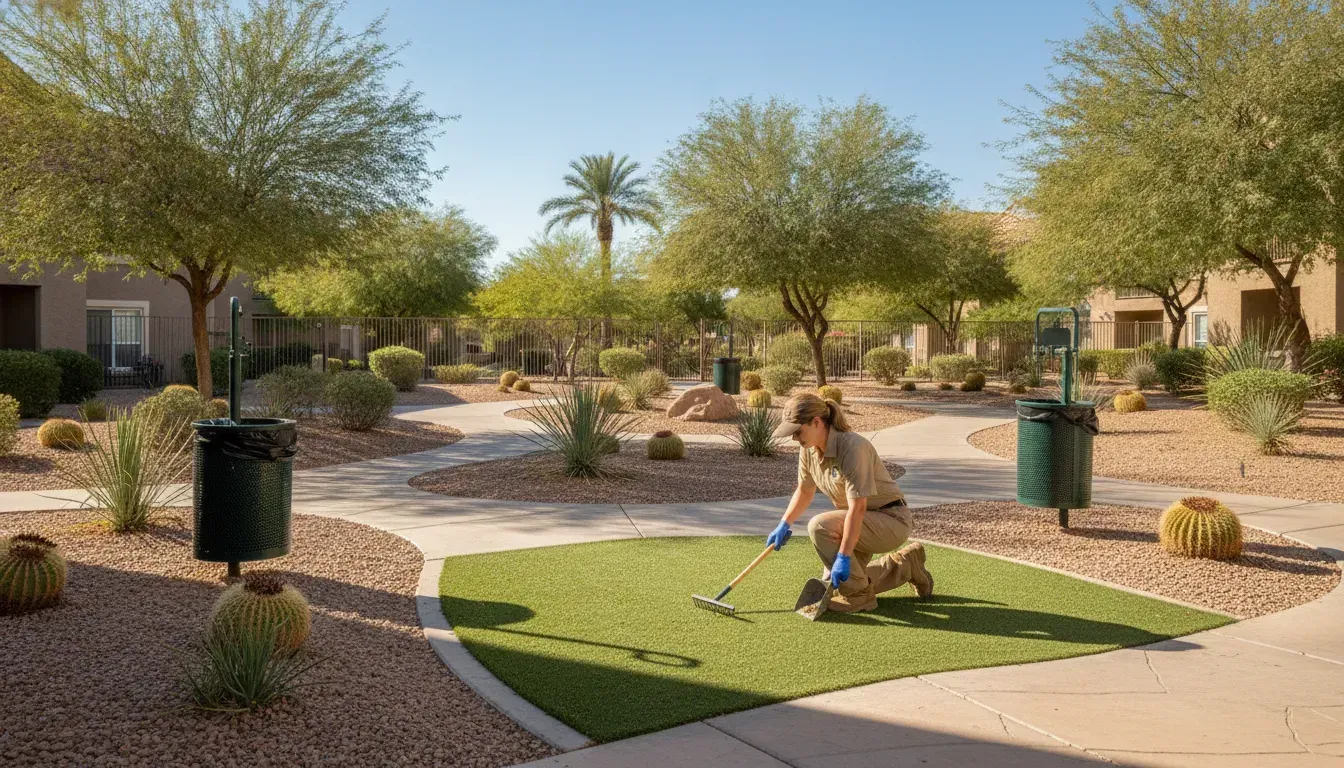
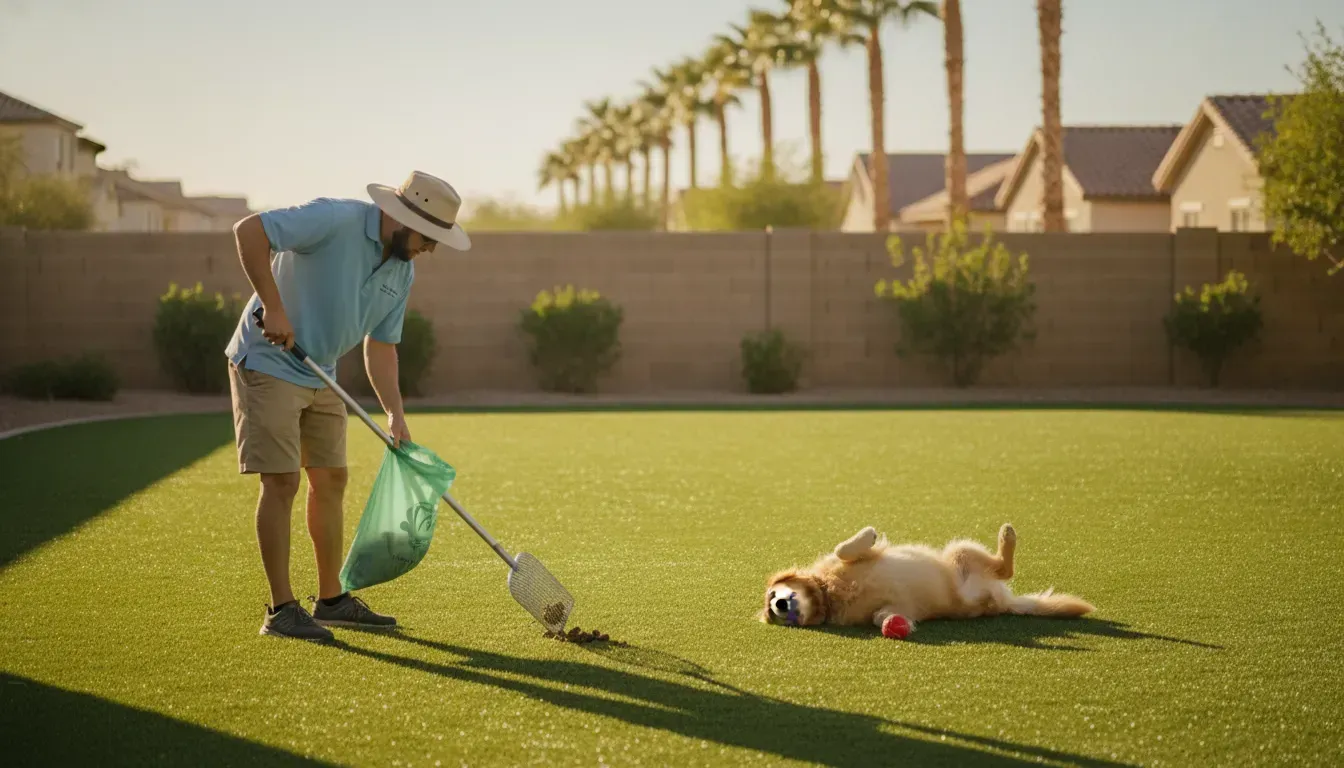
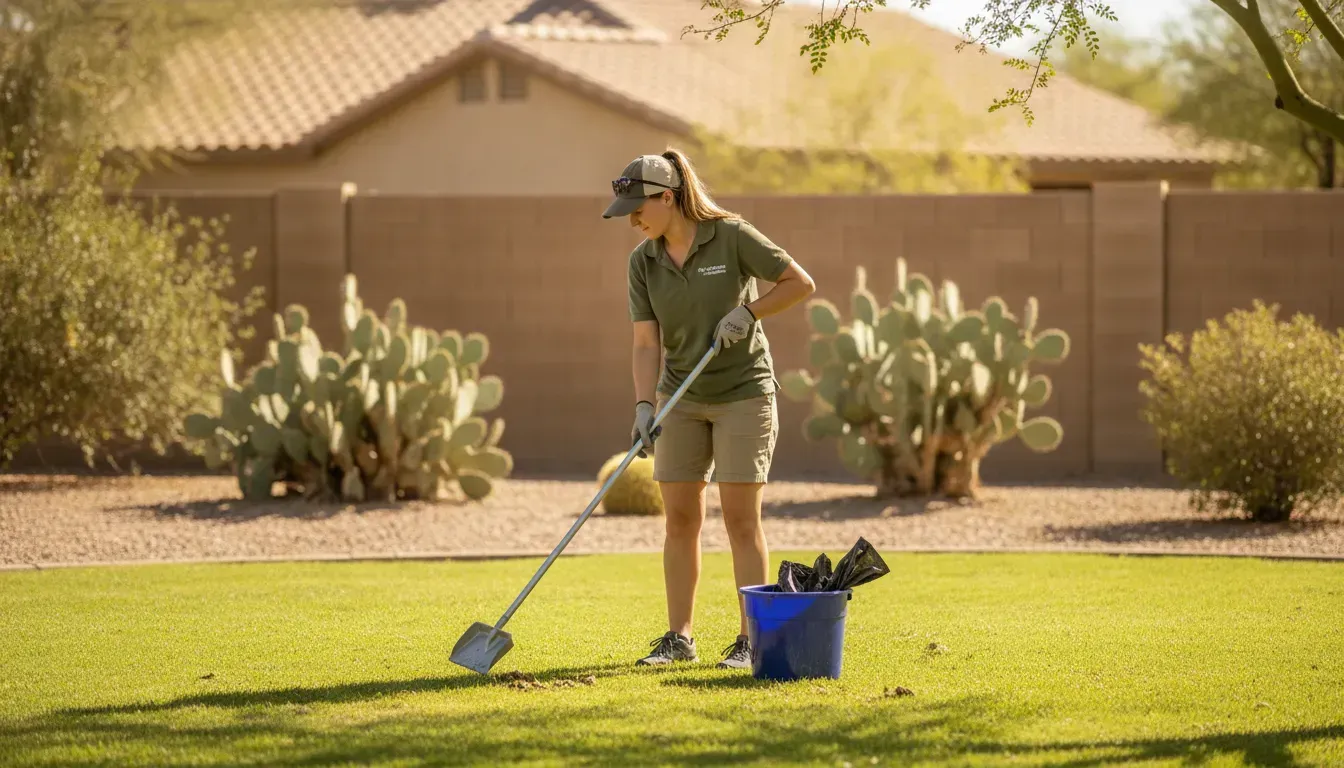
- Grounds pickup: Define which common areas are covered and how missed or accumulated waste will be addressed.
- Resident communication: Post simple instructions and give residents a way to report an empty dispenser or overflowing bin.
- Service records: Note inspections, refills, reported issues, and follow-up. A short log can reveal recurring trouble spots.
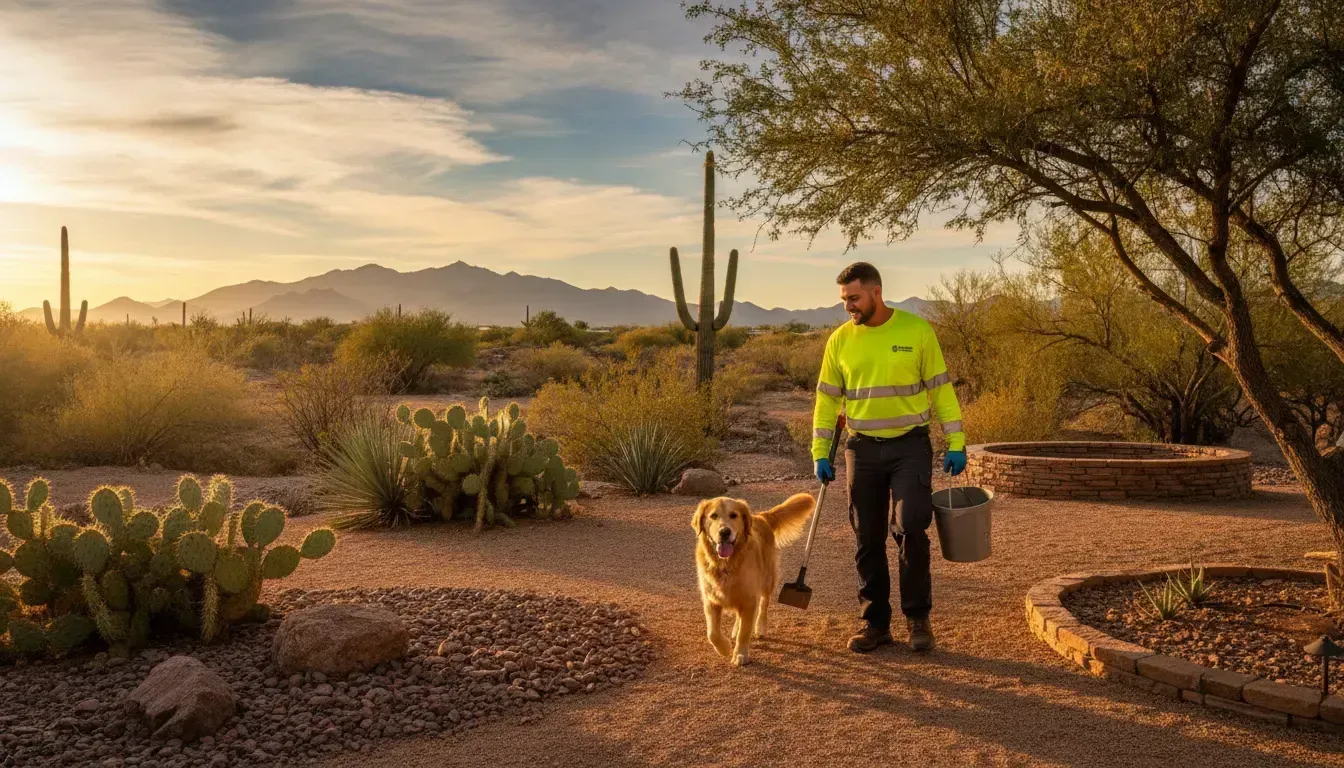
A practical responsibility chart can prevent gaps. For instance, the property manager might own ordering and resident communication, while a maintenance employee checks supplies during a scheduled walk. A vendor may be assigned grounds pickup, but the team should confirm separately whether the vendor also handles station inspections, refills, or bin emptying. If the agreement does not say a task is included, clarify it before relying on it.
A1 Pet Maintenance provides pet waste removal and commercial property service. Property teams can review the commercial property pet waste service and discuss which tasks are appropriate for their site. Confirm station-specific responsibilities directly before setting expectations for bags, bins, equipment, or grounds cleanup.
How Often Should Dog Poop Stations and Common Areas Be Checked?
Set the inspection routine according to observed use, bin capacity, and the effects of a missed check. A quiet courtyard may need a different approach from a busy dog-walking loop. Start with a regular schedule and adjust it after the team sees how quickly bags are used, whether bins approach capacity, and how often residents report waste.
Separate station inspections from the broader grounds cleanup schedule. A dispenser can run out between cleanup visits, while waste on the grounds may need attention even when a bin is not full. During an initial review period, record the date, supply level, bin condition, and visible waste. This information helps the manager identify patterns and discuss specific service needs.
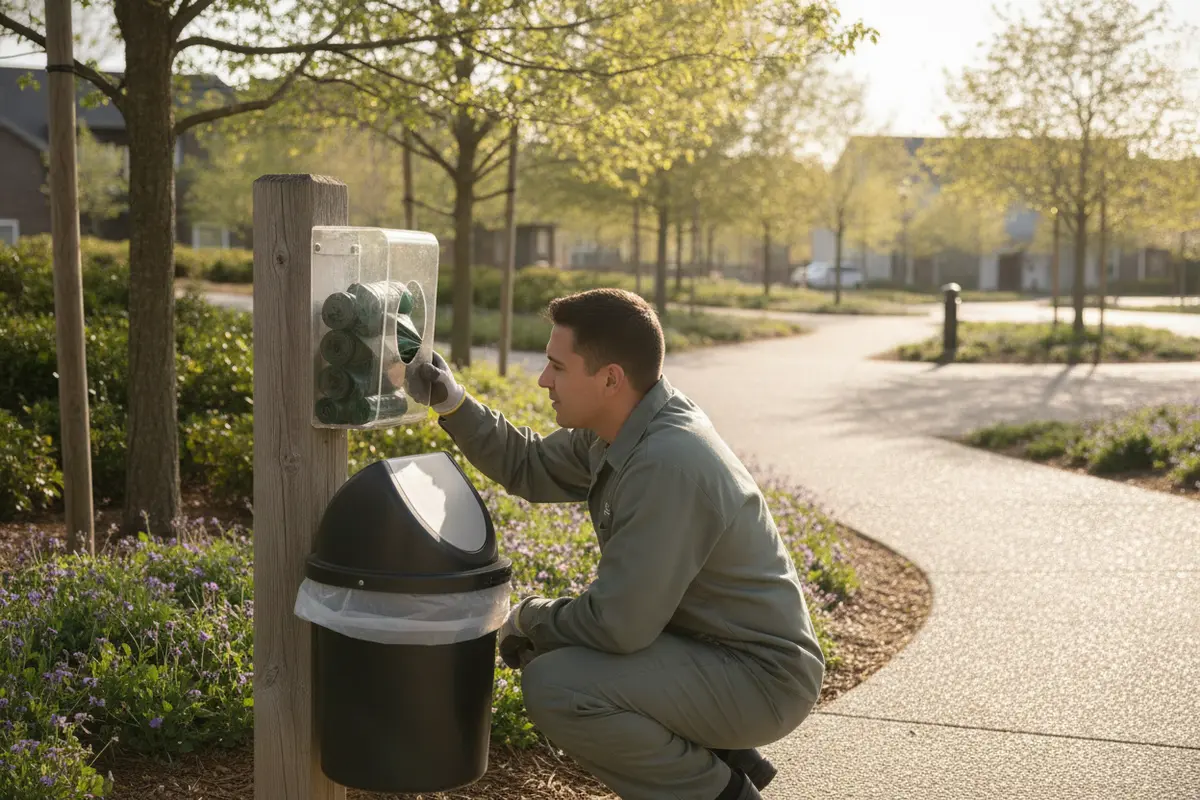
Use a consistent inspection sequence so the check is repeatable. First, look at the dispenser and note whether bags are available and easy to take. Next, assess the bin and the ground immediately around it. Then scan the nearby route for waste or litter and record any issue that needs follow-up. If the same unit repeatedly empties before the next scheduled check, consider more frequent supply checks or a revised location. If the bin fills first, revisit its capacity and collection timing.
For recurring pet waste removal, A1’s approved service wording is weekly or bi-weekly; one-time cleanup may be relevant when waste has accumulated and a reset is needed. Review information about one-time pet waste cleanup or community pet waste solutions when preparing questions about shared areas. Do not treat station checks, dispenser refills, bin emptying, and waste pickup as interchangeable unless the agreed scope explicitly includes them.
 How Can You Compare a Station Plan With a Cleanup Service?
A property may handle all tasks with its own team, arrange contracted grounds cleanup, or combine in-house station checks with scheduled service. The suitable arrangement depends on staff time, property layout, and which duties are included in the written scope. Put responsibilities in writing so there is no gap between visits or between the station and the surrounding grounds.
Planning questionProperty-managed routineContracted cleanup routineWho inspects the dispenser?Name the role and inspection cadenceConfirm whether inspection or refills are includedWho empties the bin?Match the task to capacity and waste rulesVerify whether bin servicing is in the written scopeWho picks up waste on the grounds?Define areas, schedule, and backup coverageDocument the service area and weekly or bi-weekly frequencyWhat happens after a missed service or report?Set a reporting path and response ownerAsk how concerns are submitted and followed up
When reviewing providers, consider the location and service area. A1 serves Southern Nevada and Tucson. Property teams can review information about commercial dog waste removal in Las Vegas or commercial pet waste removal in Tucson to frame questions about location and service needs, then confirm the details that apply to their property.
Ask for a clear description of the property boundary, service frequency, areas included, and any excluded duties. If a provider handles grounds pickup but not station supplies, identify who will notice a shortage and keep the dispenser stocked. If staff empty bins but a provider cleans the grounds, decide who reports overflow or waste that appears between visits. These handoffs matter as much as the scheduled work itself.
What Should You Include in a Dog Poop Station Checklist?
Before installing new units or changing an existing setup, walk the property and answer these questions:
- Which routes and common areas have the most dog-walking activity?
- Where can stations be visible and easy to reach without blocking circulation?
- Which nearby receptacles are approved for pet waste, and who empties them?
- Who orders and replenishes bags, and where will backup supplies be stored?
- Who checks for overflow, loose waste, damage, or an empty dispenser?
- Does the current maintenance agreement include any of these duties?
- How can residents report a problem, and who follows up?
- When will the team review placement and change the schedule if needed?
Turn the answers into a one-page station plan. List each station location, the adjacent route it serves, the assigned inspection role, the disposal method, and the reporting contact. Keep the plan where the people who perform checks can find it. If several teams share responsibilities, give each one the same version so a task does not disappear at a handoff.
After the plan is in use, review it against actual conditions. If one dispenser repeatedly empties first, examine its location and refill cadence. If a bin is consistently near capacity, reconsider its size or collection timing. If reports cluster along one path, investigate whether a station is missing or inconvenient. Make one change at a time when practical, then check whether the problem improves.
Use the service discussion to resolve the questions that are not covered by the property’s own staff. A property team can contact A1 Pet Maintenance about its property’s pet waste needs and ask which responsibilities can be included in a proposed arrangement. Keep station supply and bin duties explicit rather than assuming they are part of grounds cleanup.
Frequently Asked Questions
How many dog poop stations does an HOA need?
There is no universal number. Map common dog-walking routes, note high-use areas, and consider whether residents can reach a dispenser and an approved waste bin conveniently. Start with locations that address observed needs, then reassess using bag use, bin condition, and resident reports.
What should a dog poop station include?
A station plan typically accounts for a bag dispenser, a suitable disposal option, accessible placement, and an assigned maintenance routine. The equipment depends on the property. Confirm bin rules, supply responsibility, and who handles overflow or surrounding cleanup before setting up the station.
Who should refill dog poop station bags?
The property should assign the task to a named role or confirm that a vendor’s written scope includes it. Set a minimum supply level, keep replacement bags accessible, and give staff a simple way to record refills or report shortages.
Do stations replace regular pet waste cleanup?
No. Stations give people a convenient disposal point, but they do not pick up waste left elsewhere or maintain common areas. A property still needs a clear plan for grounds cleanup, bin servicing, and dispenser checks.
Can a pet waste company maintain our stations?
That depends on the provider and the agreed scope. Ask whether the service includes grounds pickup, bag refills, bin emptying, or station inspections; do not assume all are included. A1 Pet Maintenance offers commercial pet waste removal, and property teams can contact the company to discuss the work required at their site.
A well-planned station makes responsible disposal easier, but consistent upkeep is what keeps it useful. Match placement and responsibilities to how people use the property, then review the routine as conditions change.