Dog Waste in a Desert Yard: A Clear-Out Guide
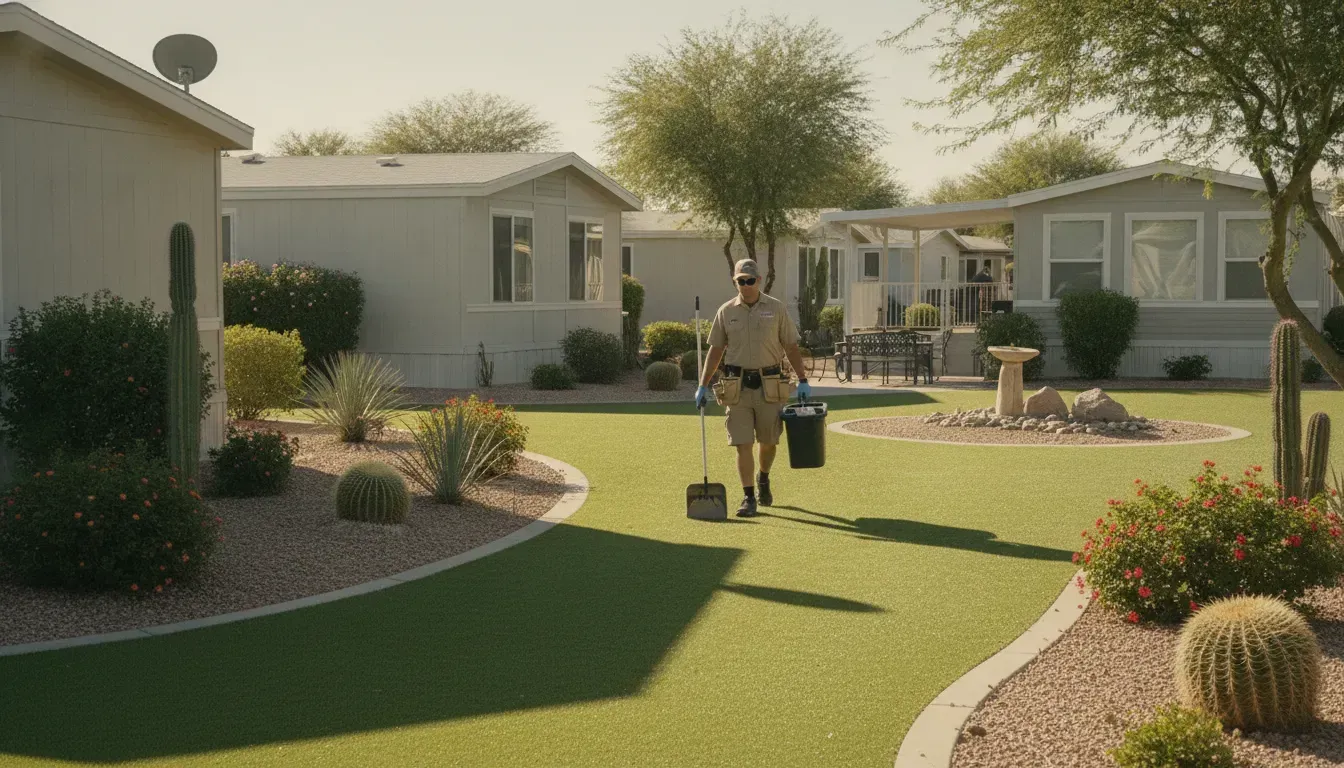
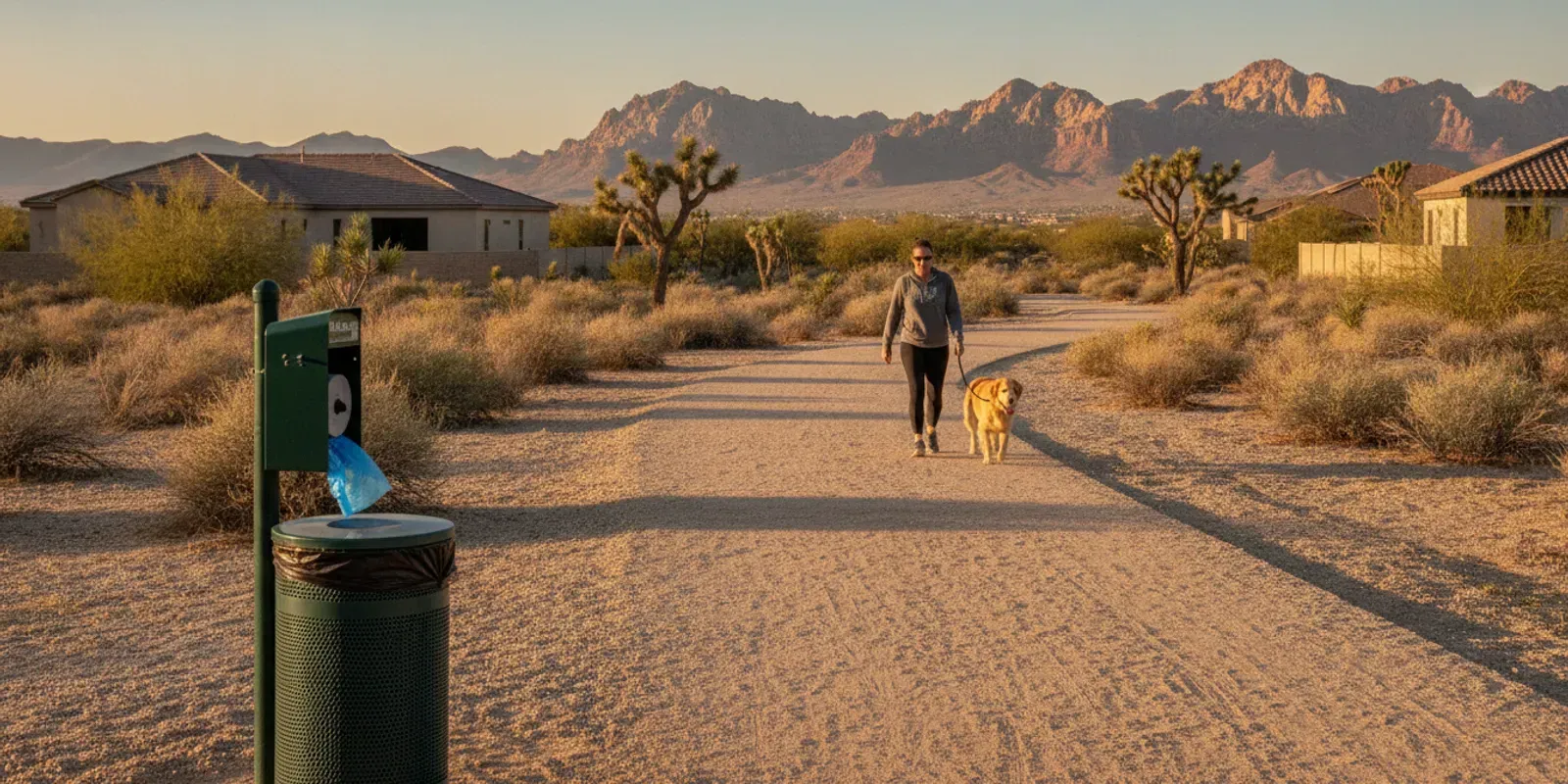
Dog waste in a desert yard hides in gravel, side yards, and turf edges. Use this same-day clear-out, then call A1 when the pile is past a quick scoop.
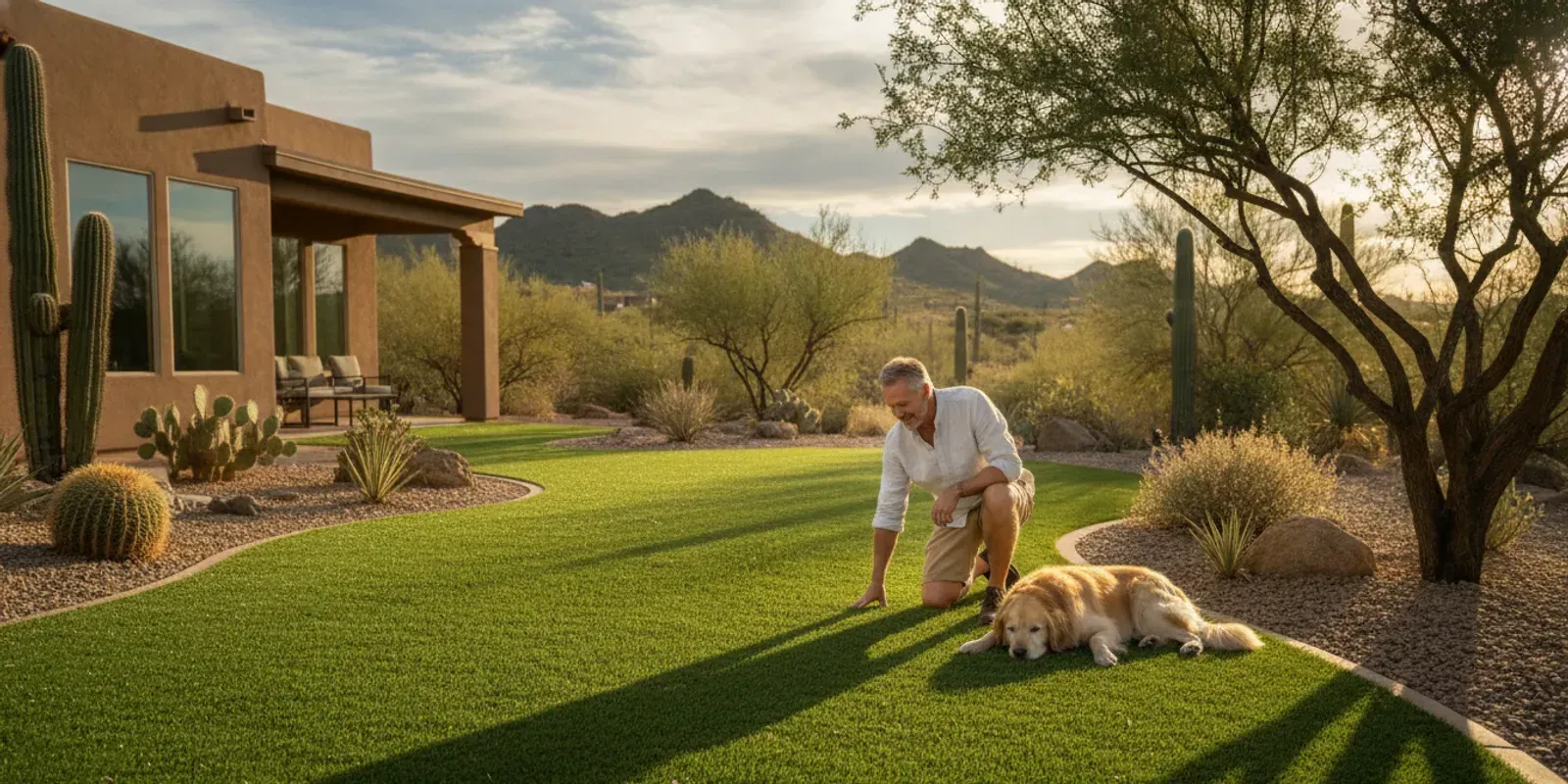
A desert yard can look clean from the patio and still hold days of dog waste in the gravel, along the block wall, and under the gate. Dry air turns fresh piles into hard clumps that blend with rock, so a quick glance is not the same as a clear yard.
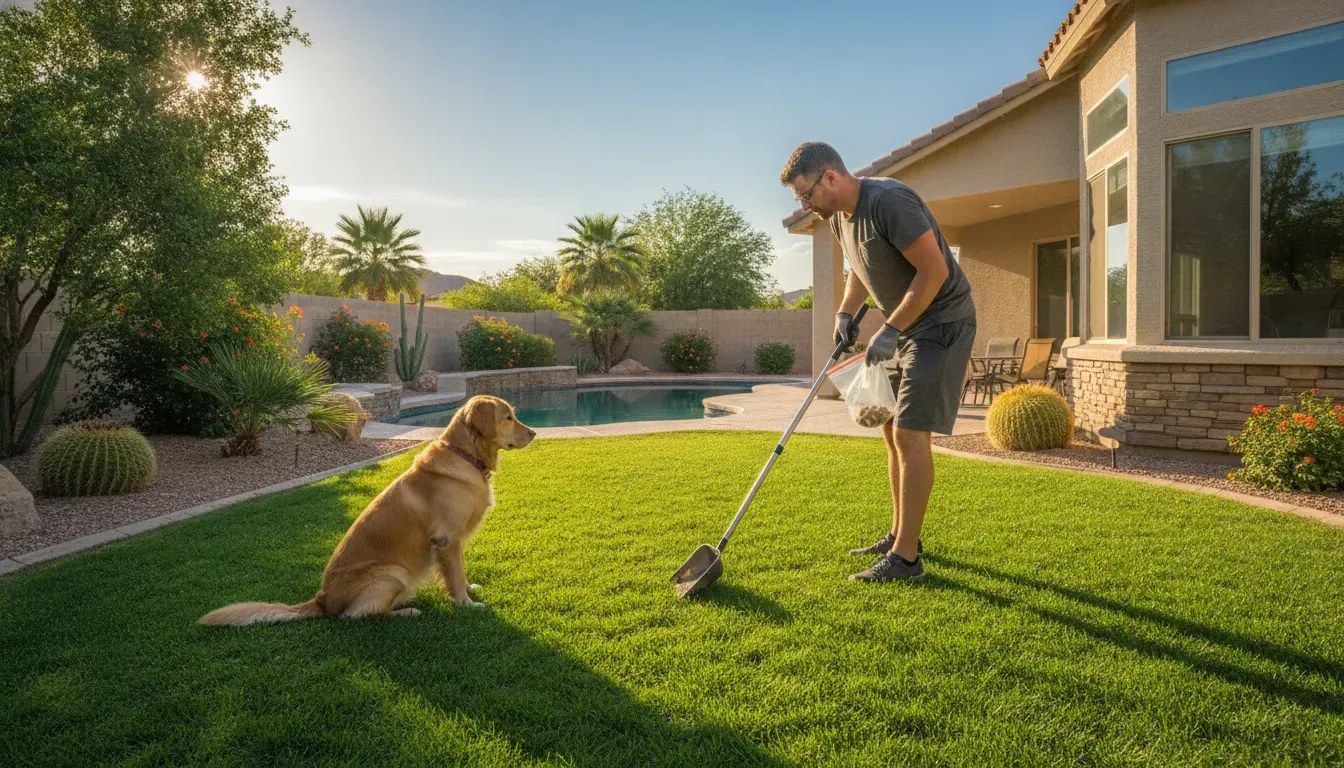
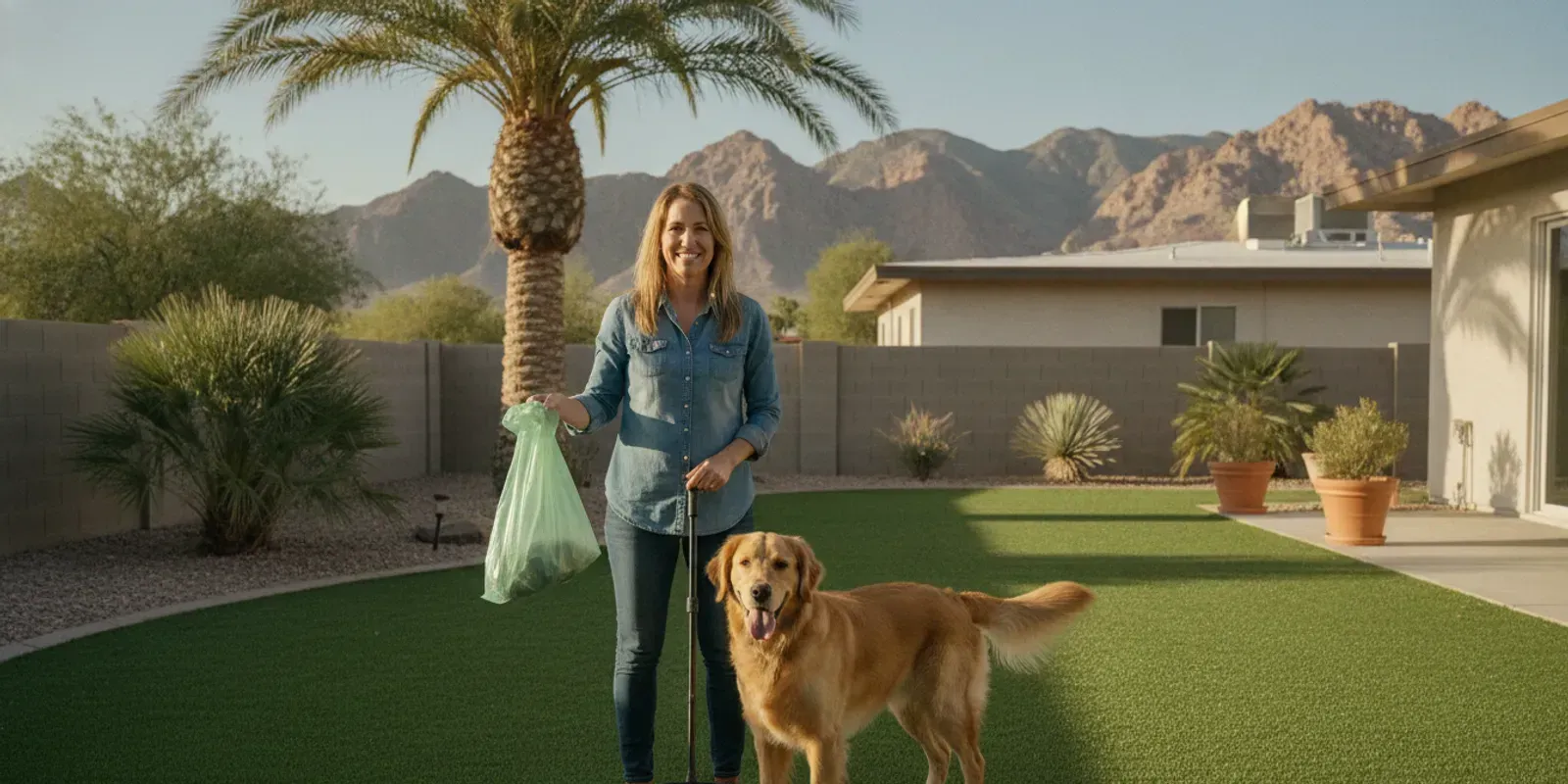
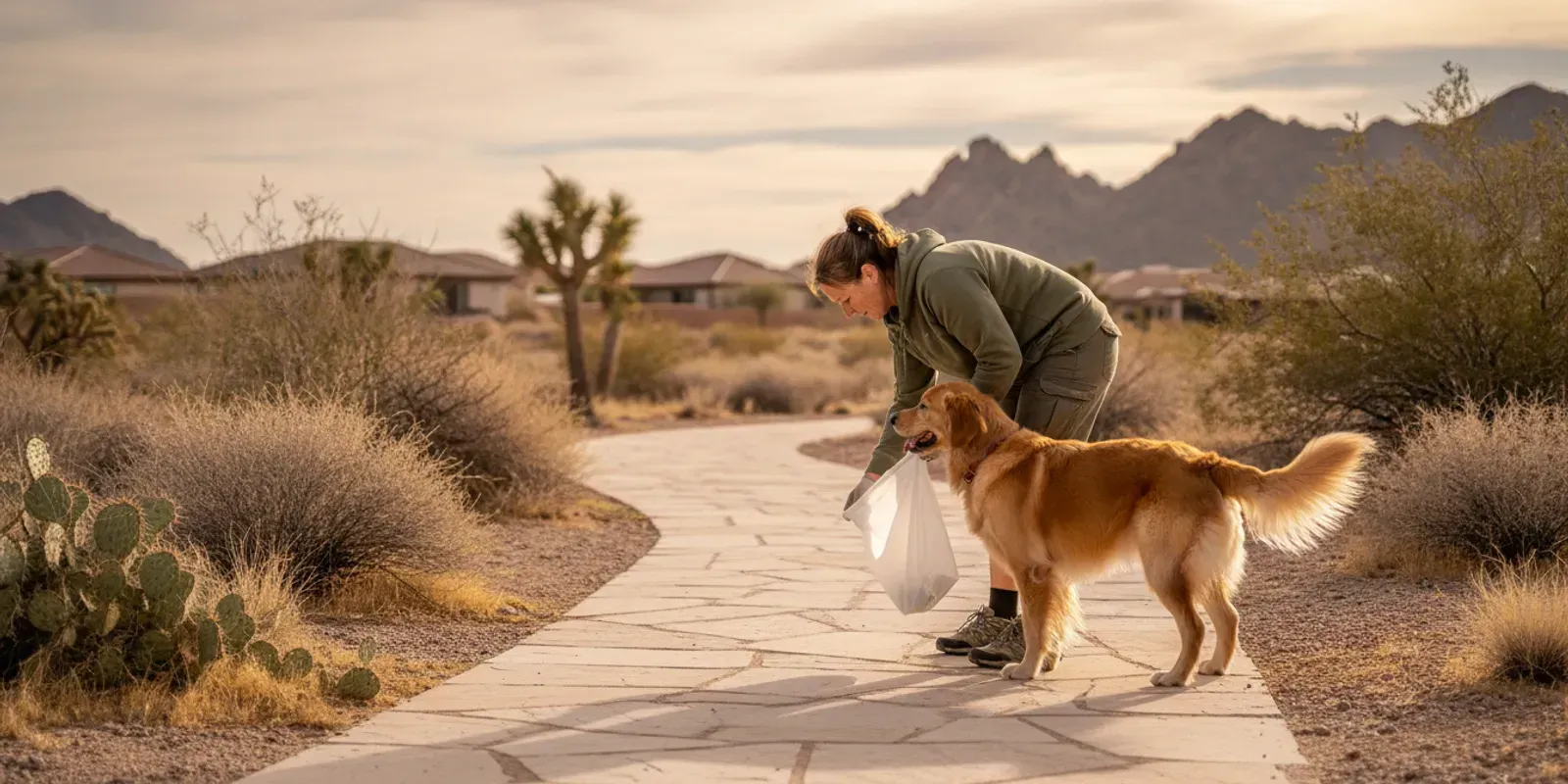
Dog waste in a desert yard should be lifted the same day, sealed in a sturdy bag, and placed in a lidded outdoor trash can. Walk the gravel, the side yard, the turf edge, and any play spot before you stop. Do not rake it into the rock, bury it, or wash it toward a drain.
Call 702-521-2624 to schedule a one-time yard cleanup
This walk-through is for homeowners in Las Vegas, Henderson, and Tucson who do the pickup themselves. It covers where waste hides and how to clear a normal day's worth. It does not replace a disposal-method guide, a weekly schedule, or a health explainer. Those answers already live on their own pages, and this one links to them when you need them.
Where Dog Waste in a Desert Yard Hides
Start at the gate and walk the whole yard once before you bag anything. Dogs repeat the same corners. In a gravel or rock yard, the usual spots are the shady strip along a block wall, the drip line under a tree, and the loose rock beside the hose bib. Waste dries fast here, then looks like another stone until you get close.
Check these spots on every pass, even when the open gravel looks empty:
- The side yard between the house and the wall, especially behind the AC unit.
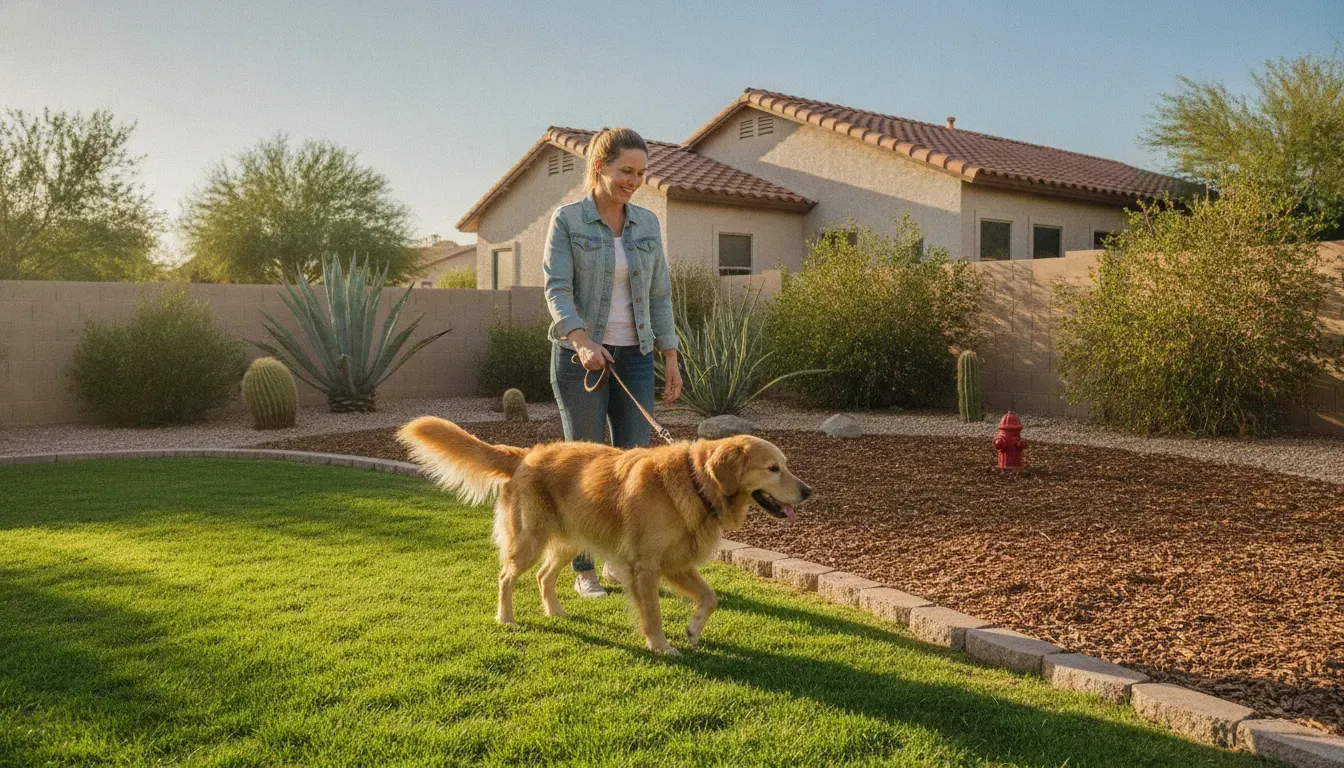
- The strip where turf or pavers meet gravel. Dogs often step off the turf to go.
- Under gates, along fence lines, and beside the trash enclosure.
- Play areas, sandboxes, and any patch where children sit on the ground.
- The far corner the sprinkler never reaches, if you still have one.
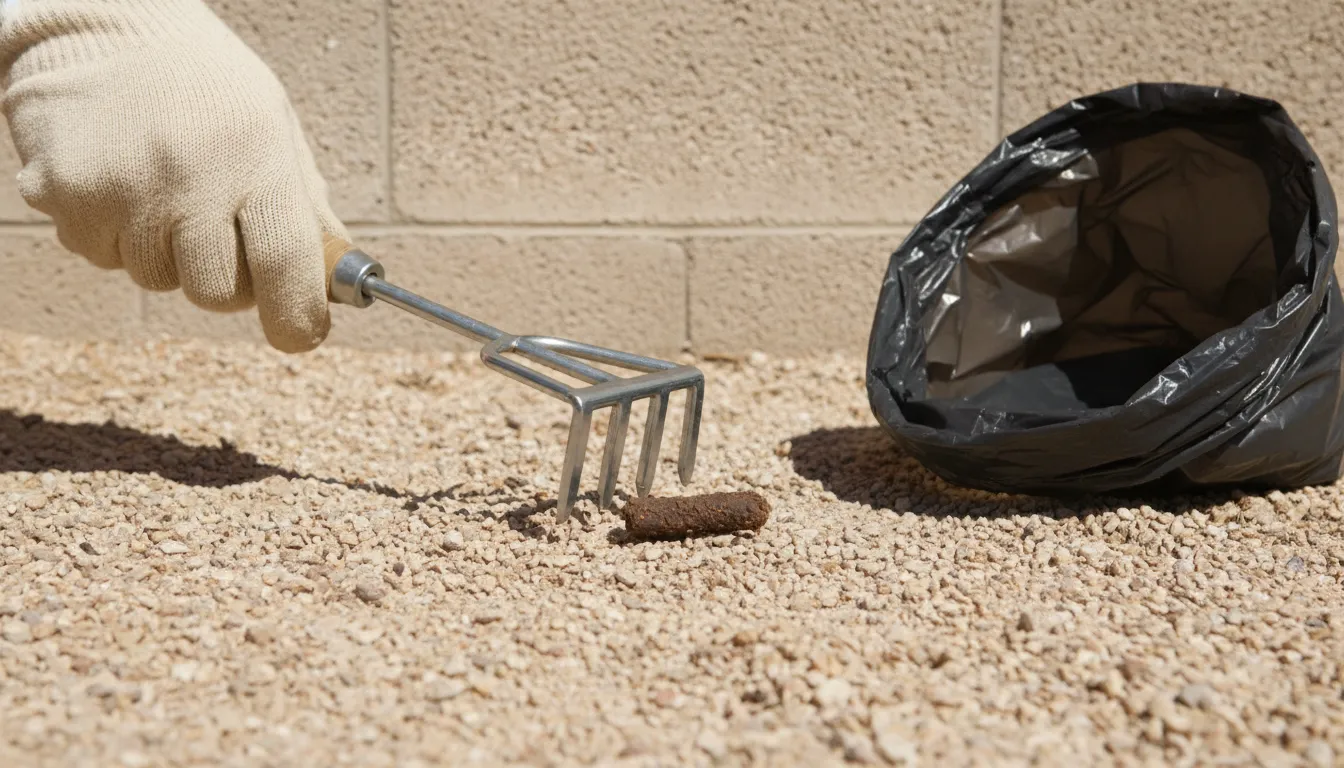 Lift the whole clump. Do not rake crumbs back into the gravel.
A rake is useful for finding clumps, not for finishing the job. If you drag waste through the rock, you spread it. Lift the whole piece with a scoop or a bag turned over your hand, then shake off loose gravel over the bag, not over the yard. Leave the rock bed in place.
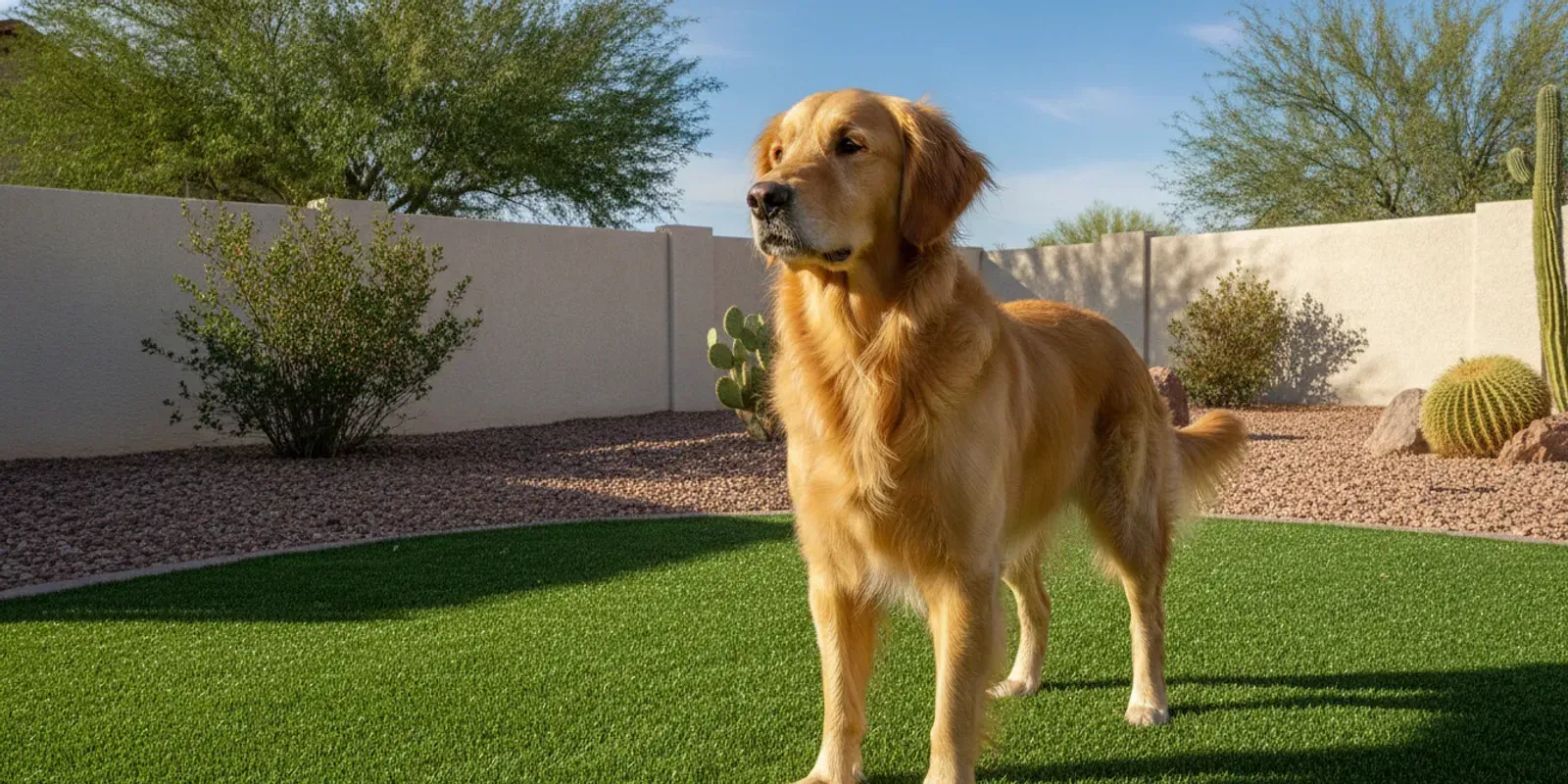
Artificial turf needs a different look. Check the edge where the turf meets the border, and any low spot that stays damp after a rinse. Surface waste on turf is part of this clear-out. Odor trapped in the infill is a cleaning job, not a scooping job. If that smell stays after the solids are gone, the artificial grass cleaning page explains the rinse and deodorizing service. Do not flood the turf to chase a smell.
If you are unsure what to do with the bag after it is tied, use the existing guide to disposing of dog poop. That page covers flush, compost, and station choices. This one stays on finding and lifting the waste.
Clear a Normal Day the Same Day
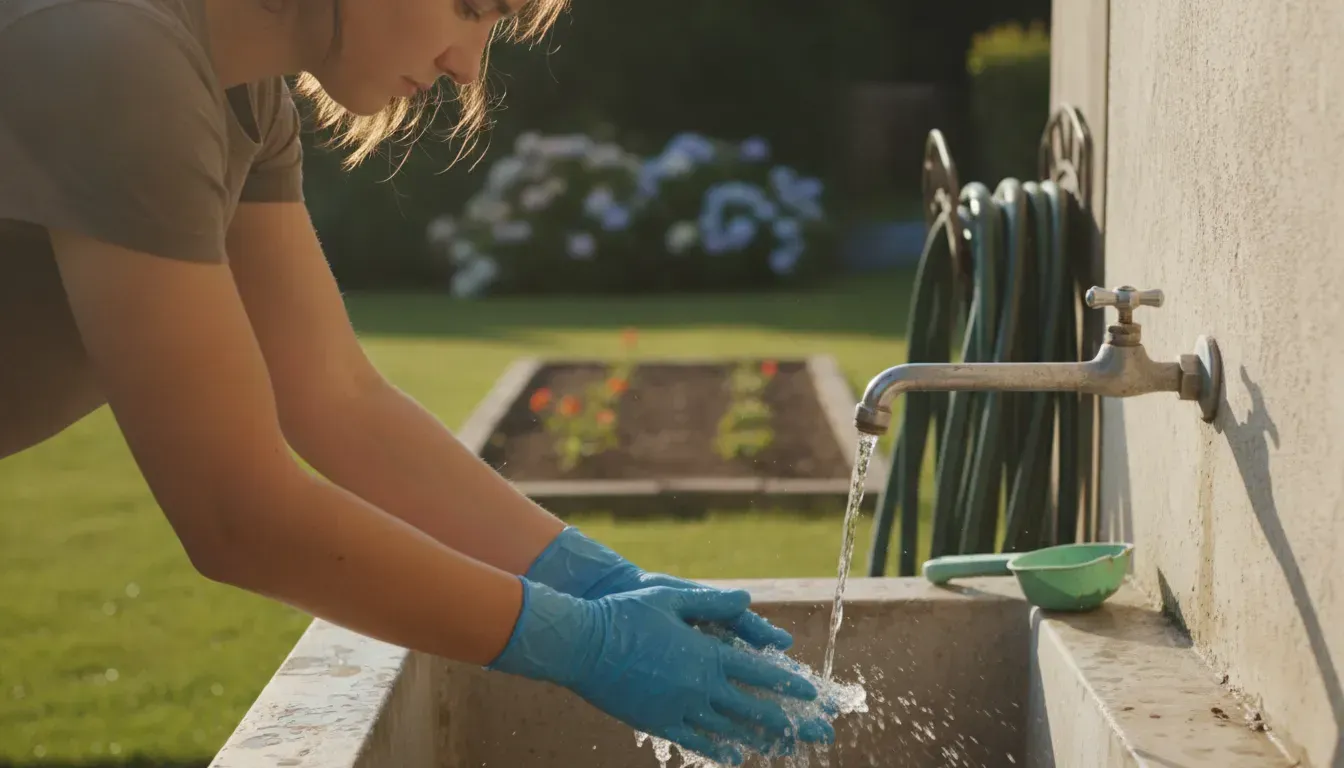
A normal day is a few fresh or dried piles you can see and lift without digging. Do that before the afternoon heat, when clumps are harder and the smell is stronger. Pick the waste up, seal it, and put it in the outdoor trash the same day. Wash your hands after the gloves come off. That is the whole routine for a yard you can still clear yourself.
Roundworm eggs in dog feces need time in the soil before they can infect a person, which is why a same-day lift beats a monthly deep clean. This page is not a medical guide. If someone has symptoms, talk with a clinician. For the longer yard-risk picture, read health risks of dog waste in a Las Vegas yard.
Same-day steps
- Put on disposable gloves before you touch gravel, turf, or a pile.
- Walk the gate line, the side yard, the turf edge, and the play spot. Mark what you see instead of stopping at the first pile.
- Turn a sturdy bag over one hand, or use a scoop, and lift the whole deposit. Do not rake crumbs into the rock.
- Tie the bag so it will not leak, then set it in a lidded outdoor trash can used for household trash.
- Wash your hands with soap and water after the gloves come off, before you go inside or handle food.
Double-bag only when the first bag is thin or the pile is wet. A second bag is not a substitute for a closed outdoor can. Do not leave a tied bag on the gravel overnight. Desert sun does not seal a leak, and animals will open it.
How often you need this pass depends on how many dogs use the yard and how hot the week is. The cadence choice, including weekly versus twice-weekly help, is covered in how often to pick up dog poop in a Las Vegas yard. Use that page for the schedule. Use this one for the walk itself.
What Not to Do With Waste on Gravel or Turf
The shortcuts that feel tidy in a rock yard are the ones that leave the problem in place. Raking, burying, and rinsing all move waste without removing it. In a monsoon week, that rinse can also carry waste toward a wash or a storm drain.
What to do with dog waste you find in a desert yard.
A few dried clumps in gravel. Do this: Lift each clump into a bag and tie it. Do not rake crumbs back into the rock.
Waste along a turf edge. Do this: Lift solids, then leave infill odor for a cleaning visit. Do not flood the turf with a hose.
A pile in a side yard or under a gate. Do this: Bag it and check that corner on the next pass. Do not bury it under more gravel.
Waste near a sandbox or play spot. Do this: Remove it the same day and cover the sandbox when it is idle. Do not let children play there first.
Waste after a rain or a hose-down. Do this: Wait until you can lift it, then bag it for the trash. Do not wash it toward a drain or a wash.
More waste than one pass can clear. Do this: Stop and book a one-time cleanup. Do not spend the afternoon spreading it thinner.
The EPA's pet-waste guidance for stormwater explains why ground waste matters. Rain and runoff can carry it into streams and lakes, along with bacteria and nutrients. The fact sheet is written for local programs, and the household version is simple: keep waste out of the drain. Read it here: EPA pet waste management fact sheet.
Do not treat dog waste as fertilizer, and do not bury it in a garden bed. If that question is the one you came in with, the fertilizer guide answers it. Leaving waste to break down on its own is also a different question. Timing is covered in how long dog poop takes to decompose. Neither page changes the same-day rule for a yard people use.
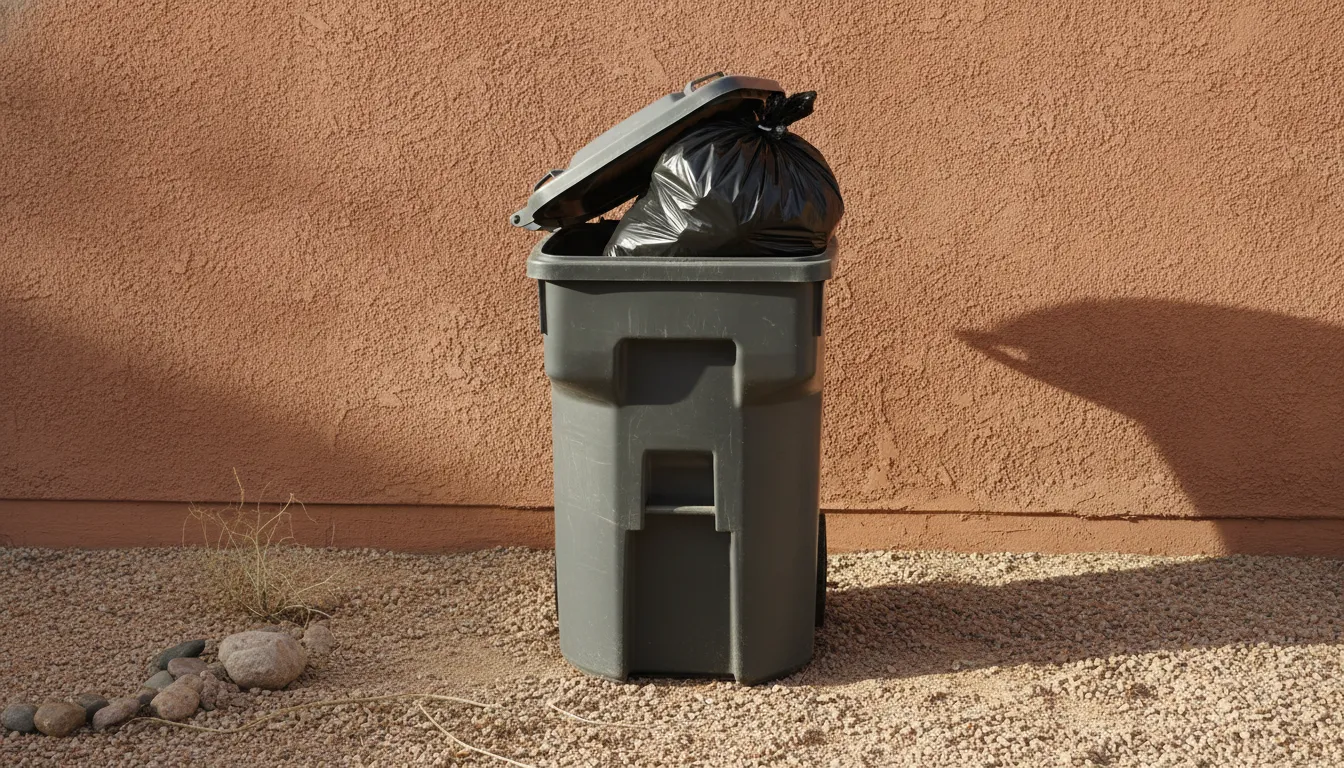 The tied bag goes in the outdoor can, not on the gravel until trash day.
When a One-Time Cleanup Is the Better Next Step
Stop the DIY pass when the yard has more waste than you can lift in one careful walk. Also stop when waste is ground into the gravel and you cannot tell rock from crumbs. That is common after a vacation, a pet-sitter gap, or a week of 100-degree days when nobody wanted to be outside. Spreading the job across three afternoons usually means some of it gets raked instead of removed.
A1 Pet Maintenance has cleaned yards in Southern Nevada and Tucson since 1998. A one-time visit is for that built-up yard, not for the daily scoop you can still do yourself. The published one-time range is $50 to $150, and the price depends on yard size and how much waste is there. Weekly and twice-weekly scoop service is a separate plan, billed by the month and the number of dogs. Those visits are not a quote for turf cleaning.
Use a one-time cleanup when:
- You cannot see the gravel pattern because piles overlap.
- A side yard or turf edge has been skipped for more than a few days.
- You are getting the yard ready for guests, a sale, or a child's party.
- You tried one pass and the crumbs are still in the rock.
Service plans, vendor comparisons, and HOA programs are a different article. This page does not rank companies or write a management plan. If you want the visit, the next step is a phone call with the yard size and how long the waste has sat.
See one-time pet waste cleanup options
Keep the Next Pass Short
The second visit is easier when the first one had a route. Pick the same loop every time: gate, block-wall shade, side yard, turf edge, then the play spot. A two-minute loop finds yesterday's pile before it dries into the gravel and looks like another stone.
Keep the tools where you will actually use them. A glove box, a few sturdy bags, and a small scoop by the back door beat a search through the garage in July. Put the tied bag in the outdoor can before you go back inside. An indoor pail is only a delay, and desert heat makes that delay smell worse by evening.
If children use the yard, cover the sandbox when it is idle and do the waste walk before play, not after. Eggs from parasites in dog waste need time in soil before they can infect someone, which is why the daily lift matters more than a deep clean once a month. Teach kids not to play in or eat dirt, and wash hands when they come in. That is household hygiene, not a treatment plan.
Two dogs, or one dog that patrols the side yard, will beat a weekend-only habit. You do not need a new system for that. You need the same loop more often. When the loop stops being a few minutes, the yard has crossed into one-time cleanup territory.
Frequently Asked Questions
Where should I look first for dog waste in a desert yard?
Start at the gate, then walk the shady strip along the block wall, the side yard, and the line where turf or pavers meet gravel. Dogs reuse the same corners. Dried clumps look like rocks until you are close, so do a full loop before you decide the yard is clear.
Can I rake dog waste into the gravel to hide it?
No. Raking breaks the pile into crumbs and leaves them in the rock. Lift the whole clump into a bag. Shake loose gravel off over the bag, then tie it and put it in a lidded outdoor trash can.
How soon should I pick up dog waste in the heat?
The same day, and earlier in the day when you can. Seal it and put it in the outdoor trash, then wash your hands. Heat dries the pile and makes it harder to lift in one piece. It does not make the yard safe to ignore.
What if the waste is on artificial turf, not gravel?
Lift the solids from the surface and from the turf edge. Do not flood the area with a hose. If a urine smell remains in the infill after the solids are gone, that is a turf-cleaning job. A1's artificial grass page describes the rinse and deodorizing visit.
When should I stop and call for a cleanup?
Call when one careful walk cannot clear the yard, or when waste is ground into the gravel. A one-time cleanup is priced from the published range based on yard size and buildup. Call 702-521-2624 and describe the yard. Do not spend the day raking it thinner.
Get the Built-Up Yard Off the Property
A same-day walk handles a normal desert yard. It does not fix a side yard that has been skipped for a week or a gravel bed you can no longer read. A1 hauls that waste off the property instead of leaving it in the rock.
Call 702-521-2624 to schedule a one-time cleanup in Southern Nevada or Tucson. You can also send the yard details through the contact page. If you only needed the daily walk, do that pass today and keep the bag in the outdoor can.