Health Risks of Dog Waste in Your Yard: Las Vegas Guide
This is a subtitle for your new post

A single pile of dog poop left on lawn grass can host millions of dangerous germs. In Las Vegas, neglecting backyard cleanup quickly turns a safe yard into a hazardous zone for your family. To keep your home safe, using a professional Residential Pooper Scooper Service is a smart choice for local homeowners.
The health risks of dog waste in yard areas are very serious because pet feces contain active, harmful bacteria and parasites. According to the Centers for Disease Control and Prevention, dogs carry hookworms, roundworms, and Giardia that infect humans through contaminated soil. When pet owners leave dog poop on the lawn, these tiny parasites and bacteria wash deep into the soil or mix with local desert dust. Since children and family pets play in these same yard areas, they run a high risk of touching or swallowing these dangerous germs. Regular yard sanitizing and pet waste removal is the only sure way to keep your family safe from these hidden soil dangers.
Many homeowners do not know which specific germs are hiding in their grass. Learning about the different health threats can help you protect your loved ones and keep your lawn clean. To understand these dangers, we must first look at What Bacteria and Parasites Live in Dog Waste?
Health Risks Of Dog Waste In Yard: What Bacteria and Parasites Live in Dog Waste?
Leaving dog poop on your grass is not just messy. It creates severe health hazards for your family and pets. Dog feces contains millions of microbes that do not just go away over time. Knowing the health risks of dog waste can help you keep your family safe.
Harmful bacteria in your yard
A single gram of dog waste can hold about 23 million fecal coliform bacteria. These tiny germs spread fast through your soil and grass. Some of the most common bacteria found in dog feces include:
- E. coli: This germ causes severe stomach pain, cramps, and diarrhea.
- Salmonella: This germ leads to fever, throwing up, and fluid loss.
- Campylobacter: This germ causes painful gut issues that can last for over a week.
If people swallow these bacteria, they can get very sick. These germs can cause severe stomach cramps, diarrhea, fever, and throwing up. To prevent these health risks of dog waste in yard areas, you need to clean up waste quickly. Do not wait for the rain or heat to wash them away.
Common worms and dirty soil
Dog poop also carries pests that you cannot see with your eyes. The Centers for Disease Control and Prevention states that dogs often carry hookworms, roundworms, and tapeworms in their feces. These are common gut worms that can cause illness in humans. These pests can cause serious issues. Roundworm larvae can travel to other organs in your body. Hookworms can burrow into your feet and cause a bad rash. When waste breaks down on your grass, the eggs of these pests enter the soil.
The real danger is how long these pests stay active. A study by the CDC shows that hookworms and roundworms can live in soil for a long time. Even after the solid waste is gone, the eggs remain alive in your dirt. If you play or garden in the yard, these pests can infect you through skin contact or by mouth.
Tiny pests and other microscopic threats
Another major threat found in dog waste is Giardia. This tiny pest infects the gut of both dogs and humans. It is easy to catch and spreads fast from pets to people. Giardia causes painful gas, diarrhea, and stomach pain that can last for weeks. It is a big reason why local parks and lawns become hot spots for pet sickness. Once a dog swallows the cysts from the ground, the cycle of illness starts again.
Like worm eggs, Giardia cysts can live in damp soil and water for a long time. People often get sick when they touch infected dirt and then touch their mouths. Keeping your lawn clean is the best way to stop these germs from building up.
How Long Does Dog Poop Stay Dangerous in Your Yard?
Many pet owners think that once dog poop breaks down, the danger is gone. But the truth is that while the waste might fade, the real health risks of dog waste in yard remain in your soil. These germs can sit in the grass for a long time. Knowing how long they last can help you keep your lawn safe for play.
Hookworms and roundworms in soil
Common pests like hookworms and roundworms are found in dog waste. When a pile of poop sits on the lawn, its eggs seep into the ground. These parasites can live in your soil for a long time. Hookworm larvae can live for some weeks, but roundworm eggs can survive in the dirt for years.
Hookworms are tiny worms that can infect dogs and people alike. Their eggs hatch in the soil into larvae, which can burrow into bare skin if you walk on the lawn without shoes. Roundworms are also very common and produce tough eggs that can survive harsh weather.
Worm infection routes in humans
Once these eggs are in your dirt, they pose a constant risk. People do not mean to eat dirt, but it can happen by mistake. According to health reports, the accidental ingestion of contaminated soil is the main way humans catch these worms. This happens when you work in the yard or when kids play in the grass and then touch their mouths.
Once these worms infect a person, they can cause real health issues. Children are most at risk because they often put dirty hands or toys in their mouths while playing. This is why keeping a clean yard is so key to keep everyone safe.
The myth of simple decay
Some lawn owners think that the hot sun will wash or melt the waste away. But even when the poop is gone, the eggs stay active. Rainfall or hose water can spread the eggs to other parts of the grass. Because of this, you must think about the frequency of pet waste removal to keep your lawn clean.
Health Risks to Children and Other Pets
Families with both kids and dogs must watch for the health risks of dog waste in yard. Children and pets face the highest risk from these lawn hazards. Knowing the dangers helps you keep your family safe. Keep your grass clean for everyone.
Risks for young children
Young children have a high risk of getting sick from pet waste. Kids often play right on the ground. According to the CDC guides on healthy pets, you should pick up dog waste to protect play spaces. Children also put their hands and toys in their mouths. This makes it simple to swallow dirt germs. Since their immune systems are still growing, a small infection can make them sick. Infected soil can harbor worms for weeks. These parasites can enter the body through the skin or by mouth. Safe play starts with a clean yard.
Dangers for other pets
Your own yard can also hold threats for other dogs. When waste stays on the grass, it spreads germs to the soil. For example, dogs can pass parvovirus through their feces. This virus is very tough and can kill young or weak dogs. Other pests include Giardia, which causes gas and stomach pain. This parasite can spread when people or pets touch dirty soil or surfaces. Keeping a clean yard is the best way to stop these pests from spreading. Routine cleanup keeps your pets safe from these daily threats. You do not want your dog to catch an illness from its own play space.
Symptoms to watch for
If you have pets and kids, you must watch for signs of illness. Learn to spot the effects of these pests. Our prior post on the health risks of dog waste in yard details how these illnesses spread. Watch for these common symptoms in your children or pets:
- Loose stools or diarrhea
- Severe stomach pain or cramps
- Eating less and losing weight
- Vomiting and high fever
If you notice these signs, contact a doctor or vet right away. Do not wait for the symptoms to get worse on their own. Weekly waste pickup can keep these risks out of your home. A clean lawn brings peace of mind to the whole family.
Does the Las Vegas Climate Make Dog Waste More or Less Hazardous?
Many homeowners think the hot desert sun kills all the germs in dog poop. But the unique weather in Southern Nevada really changes how dog waste behaves. The dry heat makes the health risks of dog waste in yard spaces a constant concern for local pet owners.
High Heat Speeds Up Bacterial Growth
The intense summer heat in Las Vegas does not clean your yard. In fact, high heat can make some bacteria grow much faster in the first few hours. When dog waste sits in the sun, it creates a breeding ground for pests and flies. These bugs then carry germs from the poop to your patio or lawn furniture.
Bacteria and Parasite Survival: Las Vegas vs. Humid Climates
FactorWet or Humid ClimateLas Vegas Desert ClimateBacteria growth rateFast growth in moisture-rich environmentHeat accelerates growth early, then dryness slows itParasite egg survivalWeeks to months in damp soilMonths to years in dry, protected soilWaste breakdownRelatively fast from rain and moistureVery slow, waste desiccates and may turn to dustPrimary transmission routeStormwater runoff into waterwaysWind-blown dust, tracked indoors on shoesRisk to childrenHighest after rain when puddles formYear-round, due to persistent eggs in dry soil
Dry Soil Keeps Parasite Eggs Alive
While wet climates rot dog waste quickly, our dry desert air does the opposite. Arid soil can preserve tough parasite eggs instead of breaking them down. According to the Centers for Disease Control and Prevention, hookworms and roundworms can persist in the dirt for long periods. The sun may bake the outside of the waste, but the eggs stay alive in the soil below for months.
Desert Yards Lack Natural Breakdown
In other states, rain and grass help wash away or rot dog waste. But in Las Vegas, the lack of water means dog waste dries out and turns into dust. This toxic dust can blow around your yard when the desert wind kicks up. Our team has serviced yards in Southern Nevada for over 26 years. We know that the only safe way to handle this threat is to scoop and remove the waste every week.
How Professional Removal Eliminates the Risk
How to Protect Your Yard in 5 Steps
A clean yard does not happen by accident. Follow these steps to keep your family safe from the health risks of dog waste in yard areas.
- Scoop daily or hire weekly service. Do not let waste sit for more than a few days. Parasites need time to spread into the soil.
- Remove waste from all surfaces. Pick up waste from grass, dirt, concrete, and artificial turf. Each surface traps germs differently.
- Disinfect affected areas. Use a pet-safe enzyme cleaner on spots where waste has soaked into the ground.
- Keep children and pets away during cleaning. Let the area dry completely before allowing anyone to play on it.
- Schedule regular professional maintenance. A weekly service removes waste before it becomes a health hazard, saving you time and worry.
Letting waste sit in your grass is a bad idea. Routine yard cleanup keeps your loved ones safe. The Centers for Disease Control and Prevention state that cleaning up after your dog helps keep yards clean. This simple step cuts the risk of germs spreading to people.
Weekly yard sweeps stop the buildup of feces. This routine task lowers the rate of germ spread. Leaving feces on the ground gives pests time to hatch and grow.
Harmful worm eggs and bacteria seep into the dirt if waste sits for weeks. Weekly cleanup stops this cycle. A professional pet waste removal crew can clear your lawn before these germs spread. This quick action protects your soil from deep harm.
Proper Cleanup Without the Contact
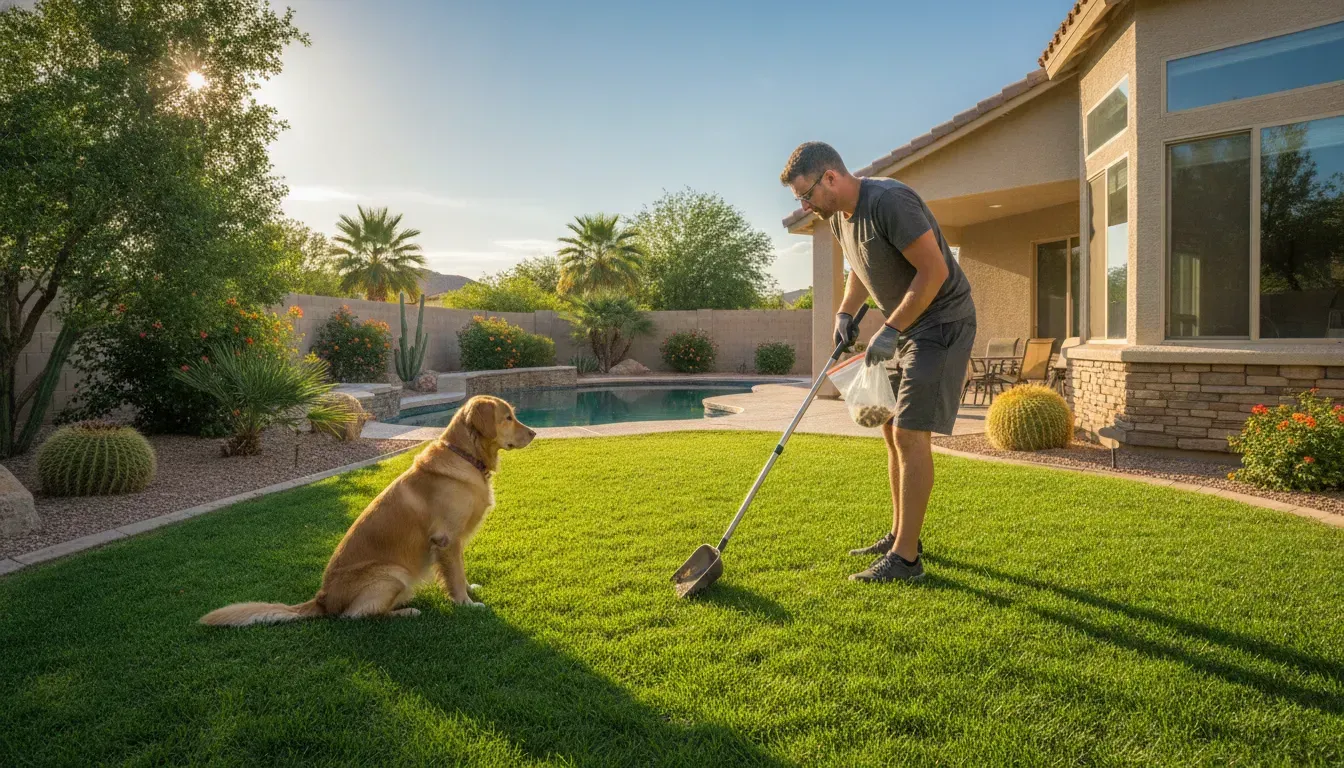
Picking up poop is a dirty job. When you hire a crew, you never have to touch a scoop or bag. Our expert service handles the whole process from start to finish. We bag the waste and haul it away so you stay clean.
Pet owners choose our team for many key reasons. Routine scooping keeps your lawn clean and safe. This means your yard stays ready for play all year long.
- Zero contact: You never have to handle dirty bags or tools.
- Safe yards: We clear out the germs before they sink into the ground.
- More free time: You get your weekends back to spend with your loved ones.
Routine scooping prevents the health risks of dog waste in yard. Booking a Residential Pooper Scooper Service is the most trusted way to maintain a clean lawn. Our trained techs spot waste that you might miss. We clear each corner of your lawn to keep your yard safe for pets and kids.
Easy Setup and Local Service
We know Southern Nevada yards. For more than 26 years, our local team has kept lawns clean and safe. We now service over 400 yards each week across the valley. Our simple plans need no contract.
You can start or stop your service at any time with no hassle. This gives you peace of mind and a clean yard. Our team is here to help you keep your loved ones safe.
Ready to Reclaim Your Safe, Clean Yard?
Protecting your family and pets from the health risks of dog waste in yard spaces starts with routine, thorough removal. Don't risk exposure to dangerous bacteria and soil parasites. Let the local professionals handle the dirty work for you.
At A1 Pet Maintenance, we have been keeping Southern Nevada properties clean and healthy for over 26 years. We offer no-contract flexibility with weekly and twice-weekly plans. We service over 400 properties weekly across the valley. We provide the ultimate convenience and peace of mind.
Get a fast, free quote today and ask about our price-match guarantee!
Contact Us for a Quote Call Us: (702) 521-2624
Frequently Asked Questions About Pet Waste Health Risks
What health risks does dog waste in my yard pose to my family and pets?
Dog waste is a major health hazard that harbors pathogenic bacteria like E. coli, Salmonella, and Campylobacter, along with zoonotic parasites such as roundworms, hookworms, and Giardia. These organisms can survive in the soil for months or years. Easily transferring to humans or other pets through contact or accidental ingestion, leading to severe gastrointestinal illness or infections.
Can I get sick from dog poop in my backyard?
Yes, you can absolutely get sick from dog poop in your backyard. Pathogens present in pet feces can be transmitted to humans through direct contact. They can also spread via contaminated soil during gardening or play. They can even be tracked indoors on shoes. This transmission can lead to infections causing diarrhea, stomach cramping, and other severe health issues.
What bacteria are found in dog waste?
Dog waste is a breeding ground for various harmful bacteria, most notably fecal coliforms like Escherichia coli (E. coli), Salmonella enterica, and Campylobacter jejuni. A single gram of dog feces can contain up to 23 million fecal coliform bacteria. These bacteria can cause severe diarrhea, vomiting, and intestinal distress in humans.
How long do parasites from dog waste live in the soil?
Parasites and their eggs can remain viable in soil for surprisingly long periods. While bacteria may degrade over weeks, roundworm eggs (Toxocara canis) and whipworm eggs can survive in yard soil for years. Remaining infectious long after the visible dog waste has broken down or washed away.
Is dog waste a good fertilizer?
No, dog waste is not a good fertilizer. Unlike manure from cows or horses, which eat grass, dog feces contain proteins and acids from their meat-based diet. This makes dog waste highly acidic, which can burn and kill lawn grass. More importantly, it contains dangerous pathogens that contaminate the soil rather than enrich it.