Commercial Pooper Scooper Service for Mobile Homes
Plan commercial pooper scooper service for mobile homes with the right scope, schedule, access plan, and proposal. Compare weekly and one-time options.
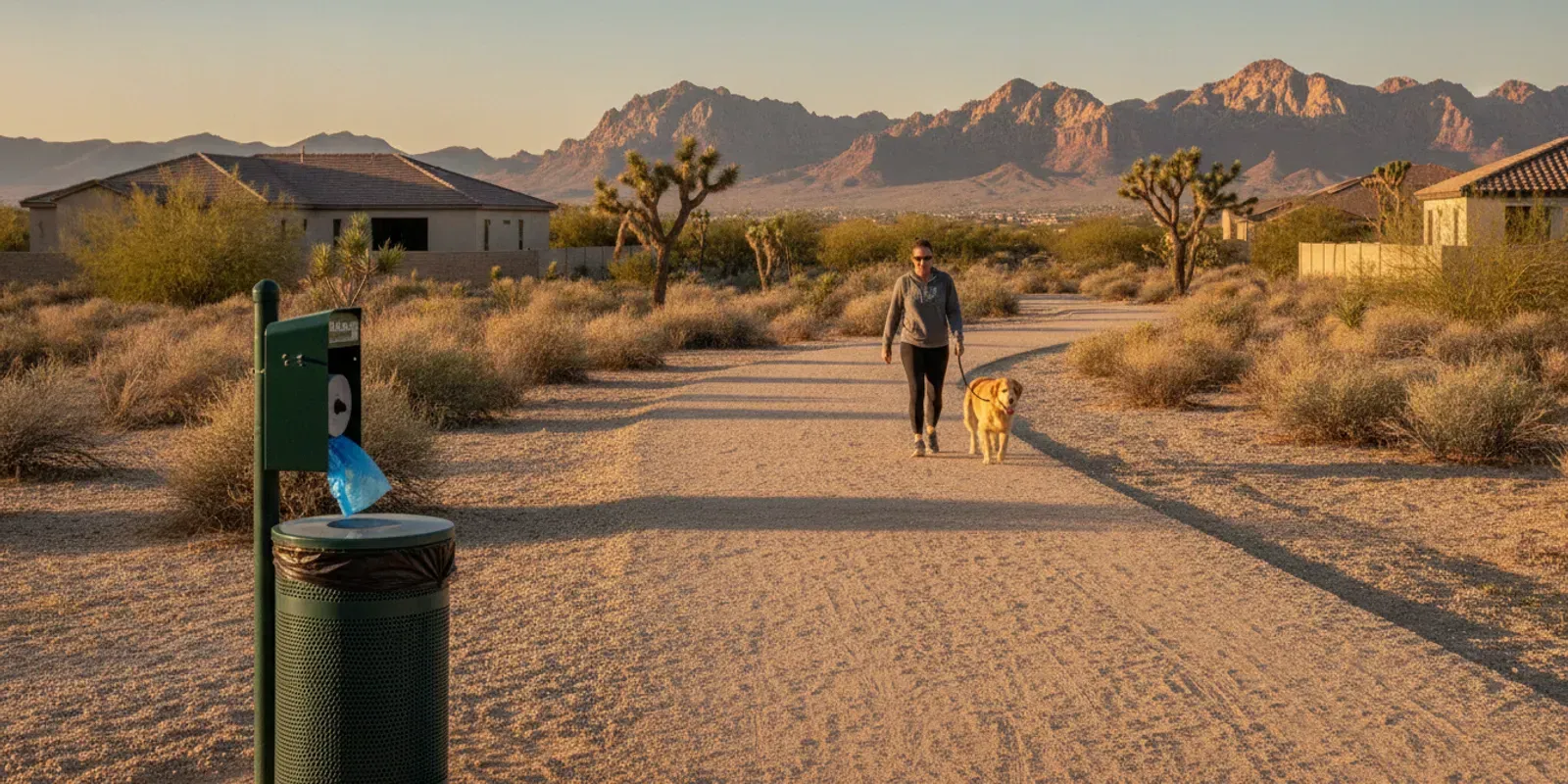
For a mobile-home community, pet-waste service works best when the property team defines the route before discussing a proposal. Common areas, dog-walking paths, access points, service-day communication, and disposal expectations can all affect how a provider serves the community.
The right commercial pooper scooper service for mobile homes starts with a property-specific plan: identify the areas to inspect and clean. Decide whether weekly, bi-weekly, or one-time service fits the community, and confirm access and responsibilities before requesting a customized proposal. This gives managers and providers the same practical picture of the work.
Call A1 Pet Maintenance at (702) 521-2624
A1 Pet Maintenance has operated since 1998 and serves more than 400 properties weekly, including commercial communities and HOAs in Southern Nevada and Tucson. The planning process below focuses on the details that help a community request a clear, workable quote rather than compare vague service descriptions.
Why Should a Mobile-Home Community Plan Pet-Waste Service Before Requesting a Quote?
Plan the service around how the community operates, not just the amount of waste visible on a property walk. Before requesting a quote, identify the areas that need attention, who can provide access, how residents will be informed, and which manager or owner will approve changes. A clear brief helps a provider build a useful proposal instead of guessing at the property.
Start by defining the outcome. Is the priority cleaner sidewalks, a more consistent standard around shared green spaces, less work for maintenance staff, or a response to resident complaints? Then mark the common areas that belong in the service scope. Include dog-walking routes, entrances, playground edges, mail areas, lawns, and any enclosed relief zones where applicable. Separating shared spaces from private resident areas prevents confusion later.
Next, record the practical conditions that affect the route. Note gates, locked areas, parking restrictions, construction, irrigation, narrow paths, and the best contact for access. Decide whether the property needs a recurring service conversation or a one-time cleanup first. The request should also identify the internal owner: the person who can answer questions, share service-day notices, review exceptions, and confirm that the work matches the community plan.
Resident context matters as well. Managers can review complaint patterns, recurring trouble spots, and existing waste-station locations before asking for proposals. That information may reveal whether the first need is route coverage, clearer communication, or a defined standard for shared areas. It also gives the provider useful context without naming or blaming individual residents.
A1 Pet Waste Maintenance has provided pet-waste removal and property maintenance since 1998, serves more than 400 properties weekly. And works with commercial property types that include HOAs, condominiums, master-planned communities, RV parks, nonprofits, and government entities. Those facts establish relevant commercial experience, but the right scope still depends on the individual community. Once these decisions are documented, the manager can request a property-specific proposal with fewer assumptions and a clearer basis for comparison.
How Does Commercial Pooper Scooper Service for Mobile Homes Fit a Community Plan?
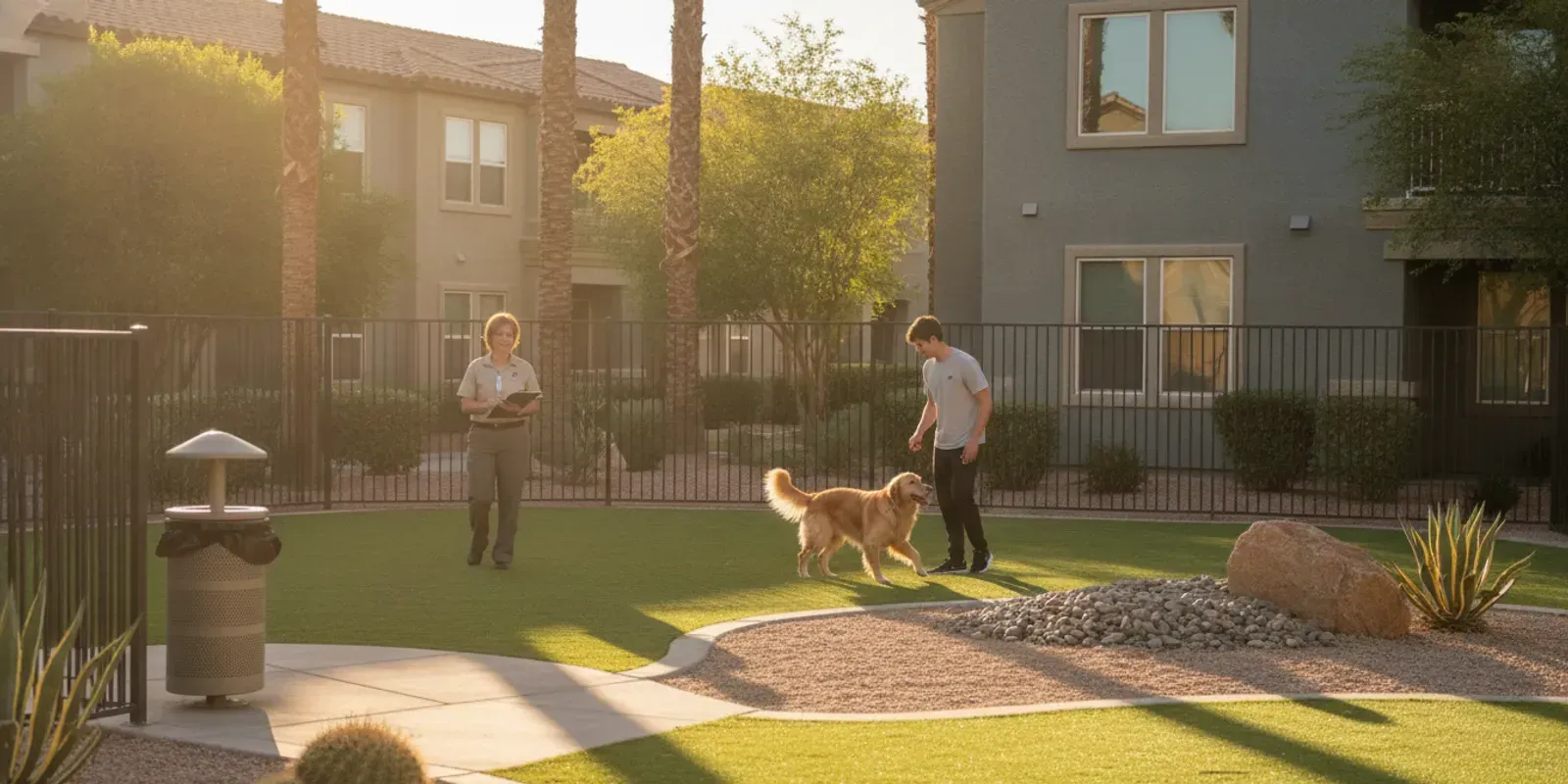
For a mobile-home community, the most workable model is a defined route through agreed common areas on a recurring schedule. The provider and property team first identify where pets are most likely to use the grounds. How staff or vendors will enter the property, and which areas are included. That turns pet-waste cleanup into a repeatable operating task rather than an informal request that residents or maintenance staff must manage alone.
 Start with a schedule and an agreed service map
Visits may be planned weekly, bi-weekly, or as a one-time cleanup, depending on the property's needs and the proposal scope. A useful service map can identify pet relief areas, sidewalks, greenbelts, playground perimeters, dog stations, and other shared spaces. It should also note gates, access codes, parking restrictions, and any areas that require an escort or advance notice.
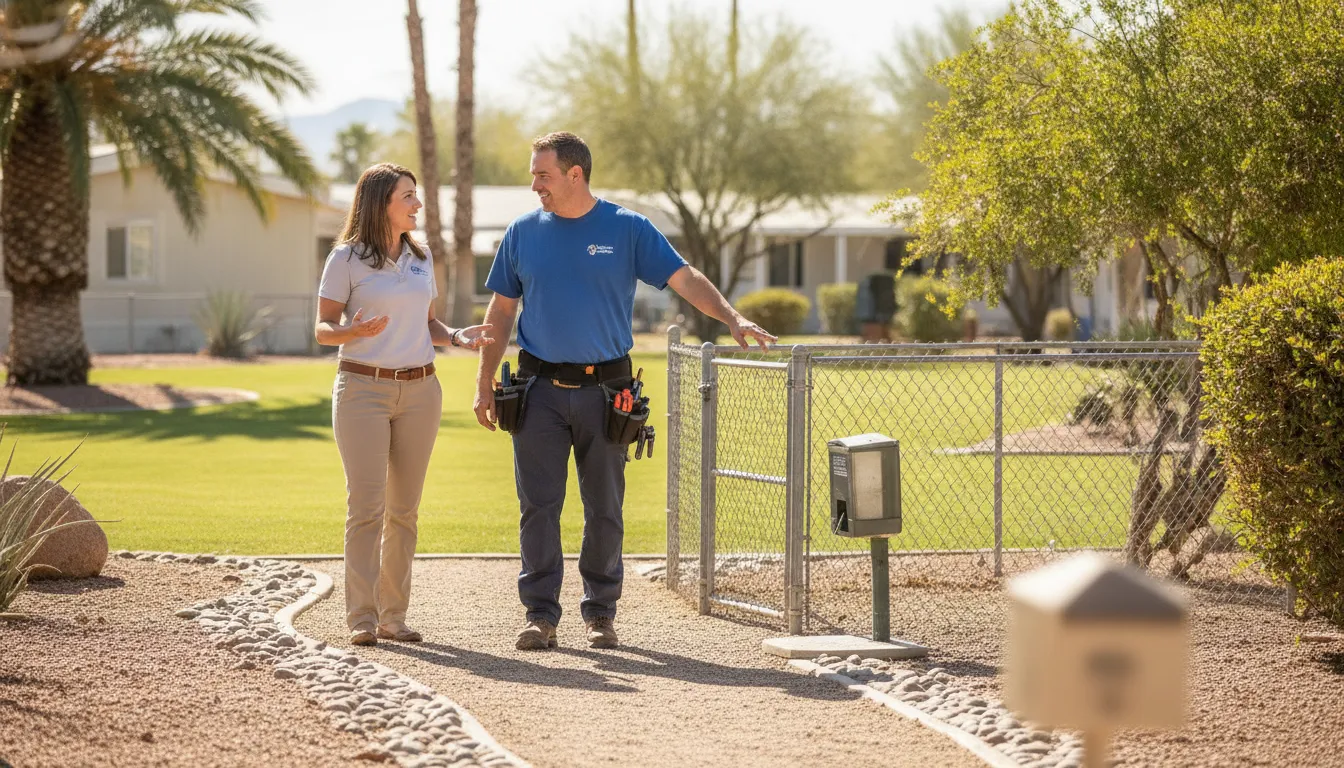
Access coordination matters because a reliable route depends on the provider being able to reach the agreed areas safely and efficiently. The community can designate a primary contact, confirm service-day access, and explain how the team should report locked gates, construction, standing water, or other route changes.
What happens during a scheduled visit?
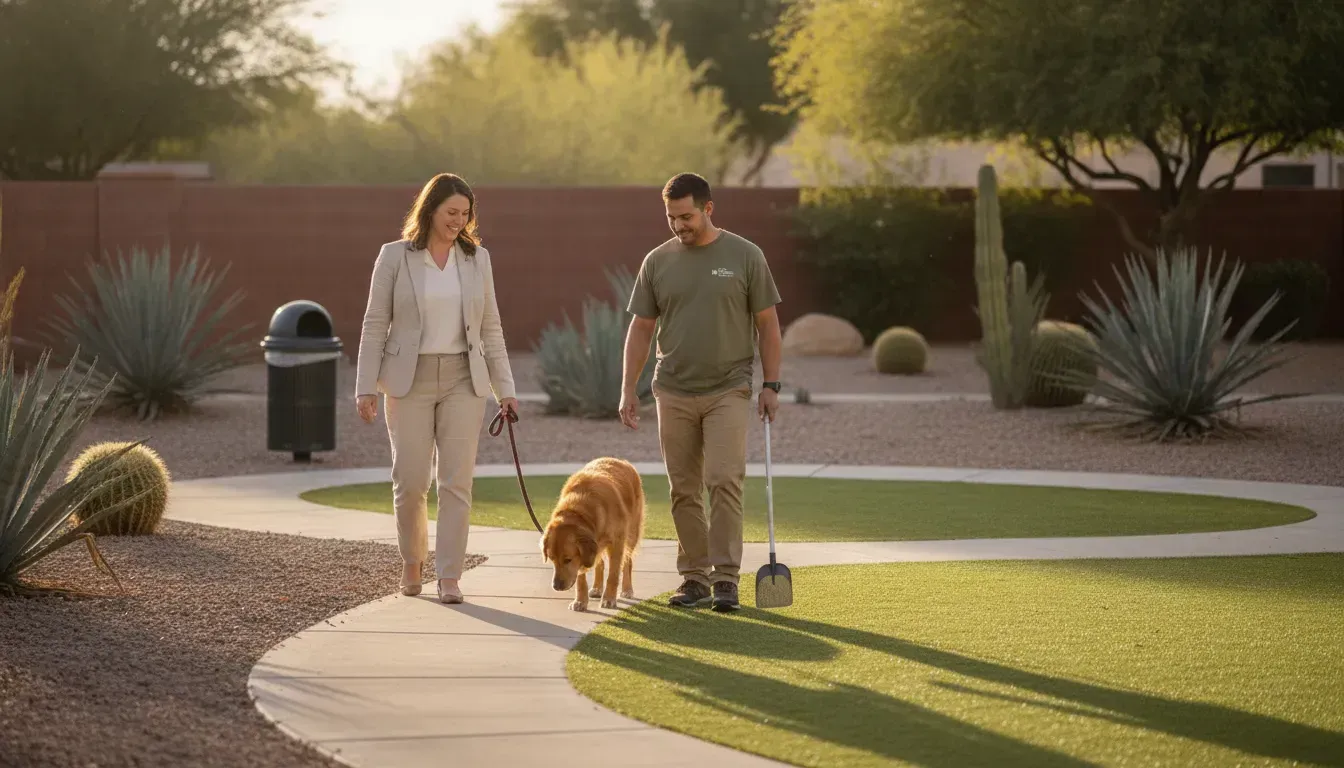
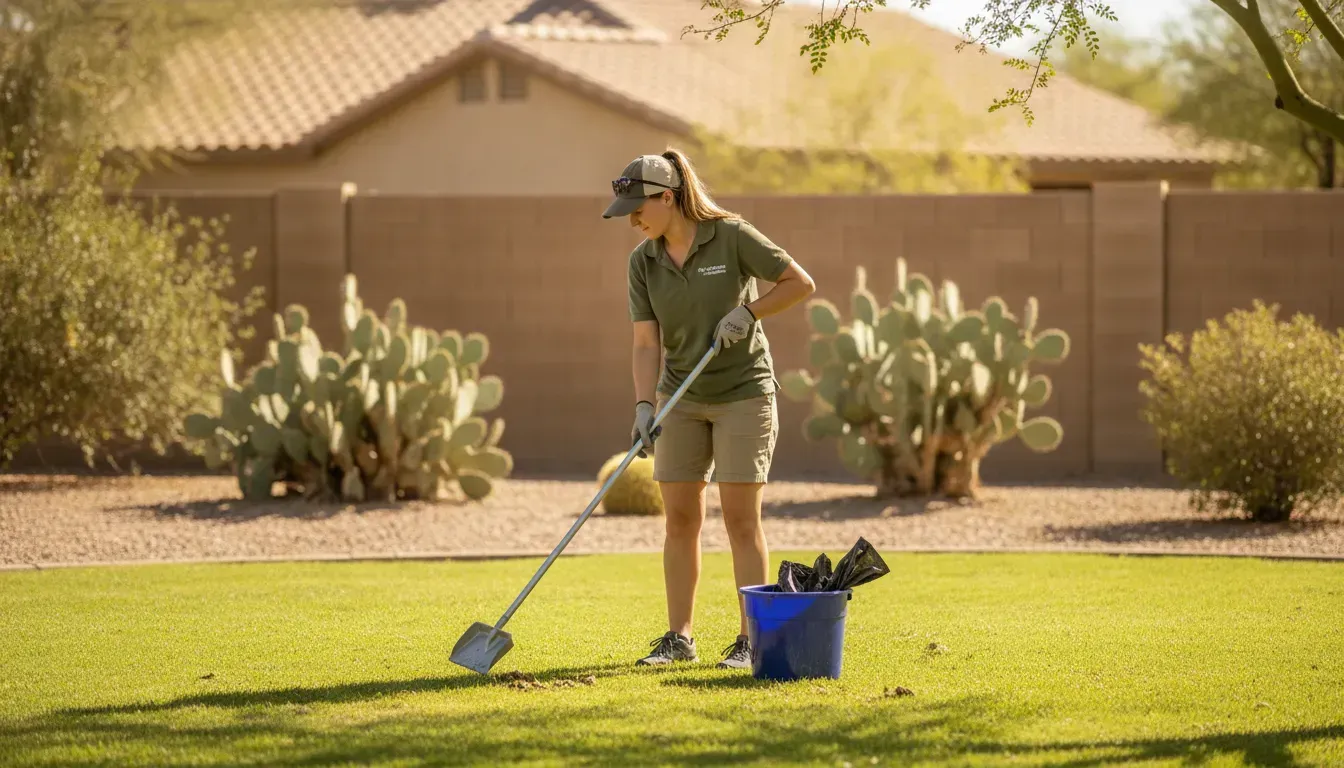
The operating sequence is straightforward. The service team inspects the agreed common areas, collects pet waste, bags it, and hauls it away for city sanitation disposal. Defining those steps in advance helps the manager understand what is included and gives the provider a clear basis for a customized commercial proposal.
For communities comparing vendors, review the service boundary as carefully as the schedule. A proposal should identify the common areas covered, the access plan, the visit frequency, and the process for changing the route as the property evolves. A1's commercial pet waste cleanup service is structured for commercial properties, with final scope confirmed for the individual site.
What Should Property Managers Map Before Choosing a Service Schedule?
Walk the property before requesting a proposal, and map the places where pet traffic, resident use, and service access overlap. A practical map gives the provider enough detail to recommend a workable route instead of guessing from the property address alone.
Mark the following areas during the walk-through:
- Common areas: Note sidewalks, greenbelts, playground edges, mail areas, dog runs, and other shared spaces where residents and pets regularly pass.
- Dog routes and relief zones: Identify the paths residents commonly take, less visible corners, landscaped strips, and drainage-adjacent areas that may be missed during a quick inspection.
- Access windows: Record gate codes, locked areas, loading points, contact procedures, and the hours when a service team can work without disrupting residents, deliveries, or maintenance.
- Route timing: Show where a route should begin and end. Include long walking distances, separate buildings, steep paths, or parking constraints that affect how a visit is completed.
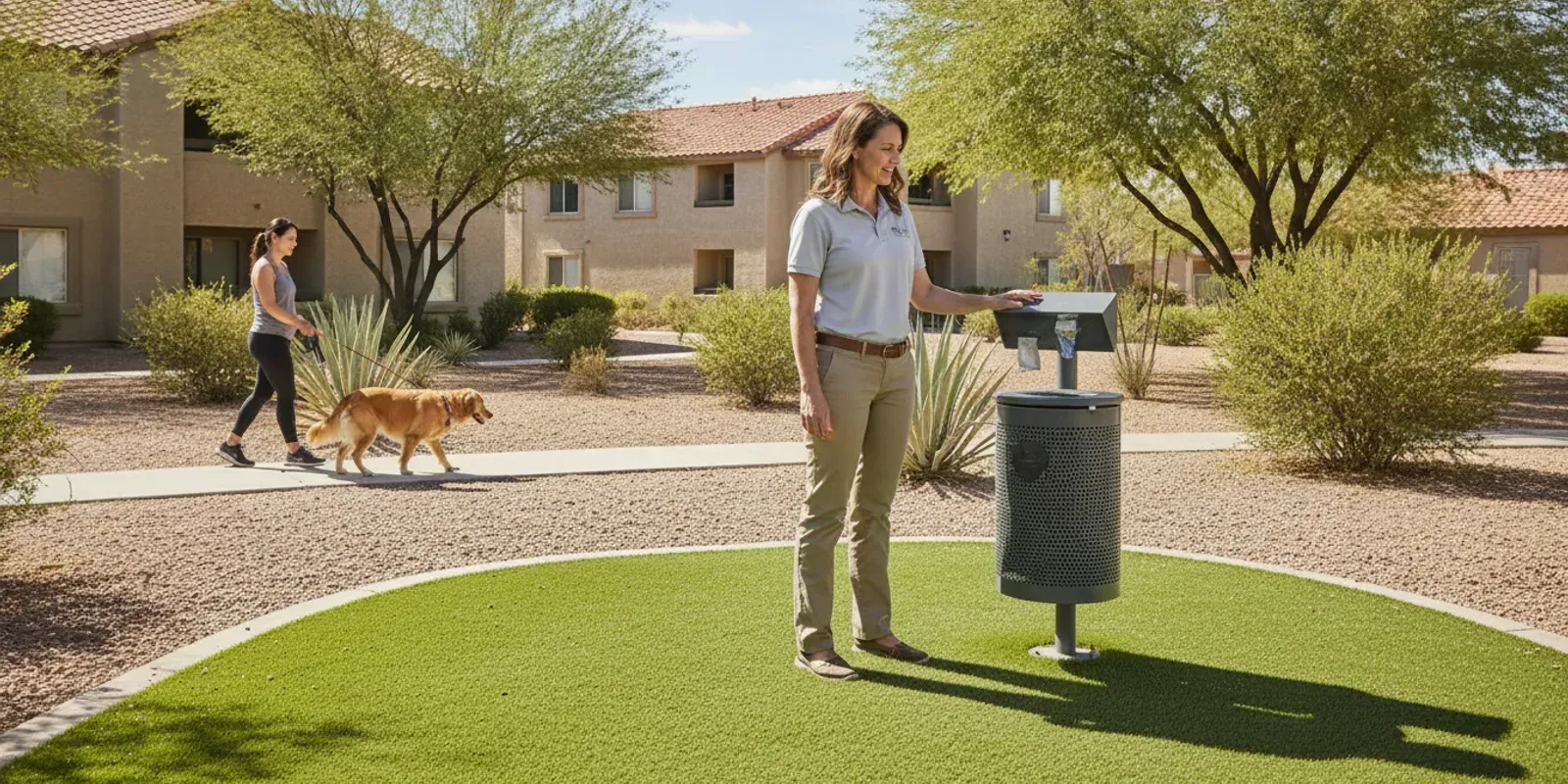
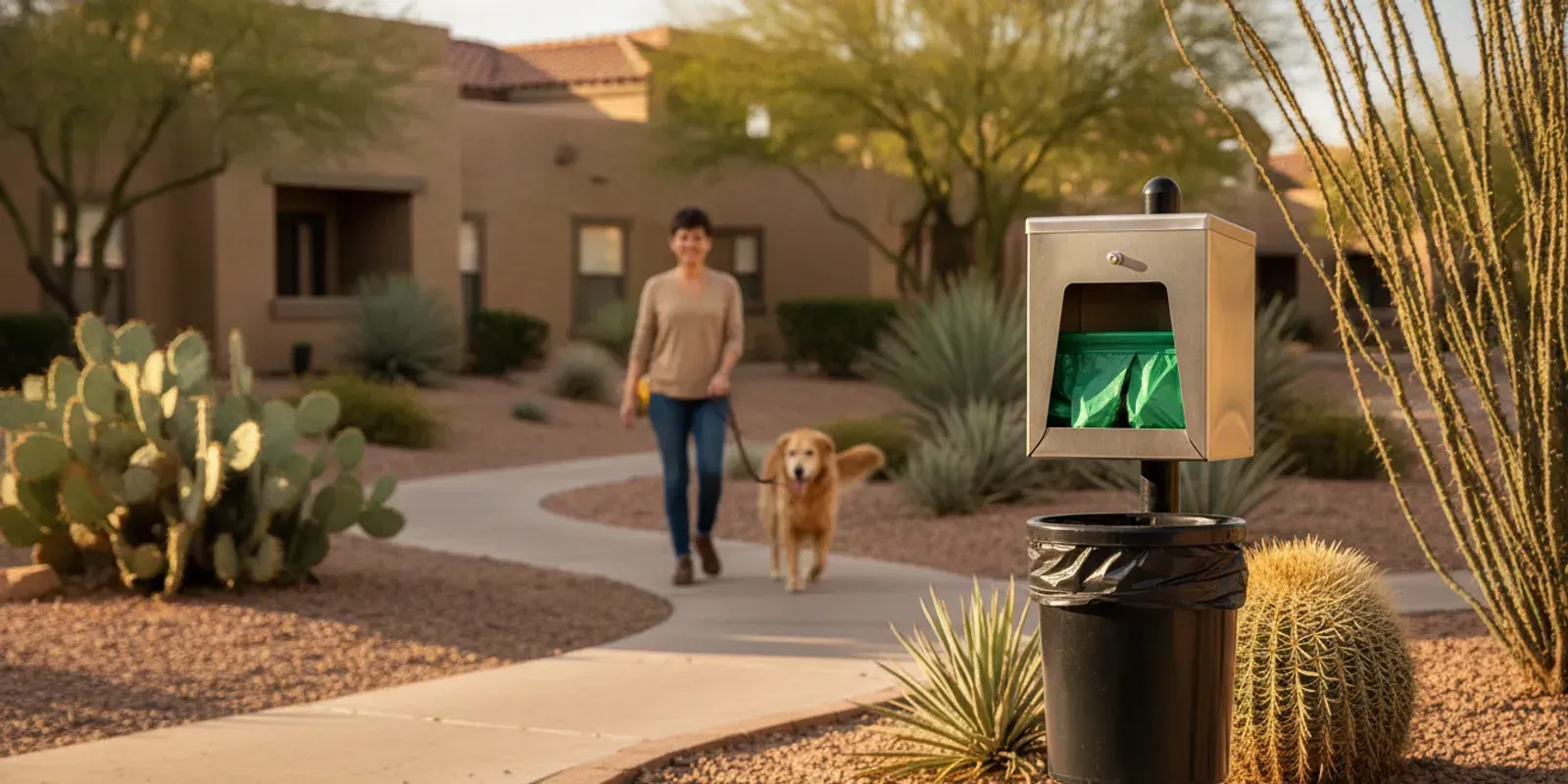
- Waste stations: List existing stations, their locations, bag supply responsibilities, and any stations that need to be relocated, added, or checked more often.
 Also mark seasonal and event conditions. Community gatherings, move-in periods, pool season, monsoon weather, landscaping work, and temporary construction can change where people walk and when crews can access an area. Ask whether the route needs a standing adjustment or simply a one-time cleanup before an event.
EPA community-planning guidance supports using surveys, focus groups, or complaint analysis to identify local knowledge gaps. It also lists education, ordinances, and permanent structures as possible program elements. That makes resident feedback and maintenance records useful inputs for the map, not just administrative extras. Read the EPA pet-waste management guidance.
Finally, assign one person to confirm the scope. The manager or board representative should verify the service boundary, access instructions, schedule preferences, station responsibilities, and process for reporting missed or newly added areas. With that information documented, the provider can prepare a property-specific proposal and the community can compare schedules against its actual operating conditions.
Should a Community Choose Weekly, Bi-Weekly, or One-Time Cleanup?
The right schedule depends on property-specific conditions, not on a one-size-fits-all rule. Before choosing, consider the number and location of dog relief areas, resident use patterns, landscaping, access windows. Recent complaints, and whether the community needs ongoing maintenance or a reset before a recurring plan begins.
Weekly service may suit a community that wants a predictable route and a shorter interval between visits. Bi-weekly service may fit a property with different use levels, available on-site support, or a schedule that can maintain common areas between visits. A one-time cleanup can address a move-in transition, special event, seasonal reset, or accumulated waste before the property evaluates recurring service. A1 supports weekly, bi-weekly, and one-time cleanup options, subject to confirming the property and its service needs.
Pet-waste cleanup schedule options for mobile-home communitiesScheduleBest-fit use casePlanning questionsLimitationsRecurring weeklyCommunities seeking a consistent service rhythm in shared areas with regular pet traffic.Which areas need service, what access window works, and who will report new problem locations?It still requires resident cooperation and clear route access between visits.Recurring bi-weeklyProperties where a longer interval aligns with use patterns, staffing, and the community maintenance plan.Can staff monitor priority areas between visits, and will seasonal or event activity change the need?Waste can remain longer between scheduled visits, especially in higher-use areas.One-time cleanupA reset after construction, turnover, an event, or a period without organized cleanup.What areas need an initial inspection, and what should happen after the cleanup is complete?It does not provide ongoing coverage unless the community schedules additional service.
For a temporary need or property reset, review the one-time cleanup option. For any schedule, define common areas, access arrangements, route timing, and a contact for changes. A property-specific review helps the provider recommend a practical frequency without promising coverage that has not been confirmed.
How Can a Community Assign Responsibilities Without Confusing Residents and Staff?
The clearest approach is to assign one owner for each part of the service plan: the manager or board coordinates the agreement. Residents follow access and waste-area guidance, maintenance identifies property conditions, and the service provider handles the agreed collection work. Put those assignments in writing before the first visit so residents know where questions belong.
What should the manager or board coordinate?
Property leadership should provide a current site map, identify common areas and restricted areas. Confirm how the provider will enter the property, and choose the primary contact for scheduling questions. The manager can also decide how residents will receive service-day notices, such as a community email, resident portal, posted notice, or another existing channel. A notice should state the planned visit day, areas being serviced, and any access request that applies to residents. It should not promise a result beyond the agreed scope.
What belongs to residents and maintenance?
Residents should follow the community's stated access instructions and report missed areas or recurring problem locations through the designated contact instead of giving conflicting directions to a crew on site. Maintenance can unlock or identify approved access points, point out changes to common areas, and report hazards or obstructions. Neither group should quietly expand the service route; additions should go back to the manager for confirmation.
How should issues be escalated and documented?
Use a simple escalation path: resident or maintenance reports the issue to the manager, the manager records the location and date, and the provider receives one consolidated request. Keep the service scope, access notes, route timing, notice method, contact names, and agreed response process in the property file. A short visit log can record areas unavailable, safety concerns, resident reports, and follow-up requests without assigning blame.
When evaluating commercial pet waste cleanup, ask the provider to confirm how scheduled visits, access arrangements, inspection, collection, bagging, and disposal fit the property's actual layout.
What Should a Commercial Pet-Waste Service Brief Include?
A clear service brief gives a provider enough context to build a useful proposal for your community. Treat it as a planning checklist, not a promise that every feature will be available at every property. The more specific your information is, the easier it is to compare scope, coordinate access, and identify questions before service begins.
- Property identity: Include the full property address, community name, management company, and the best property contact. If the site has multiple entrances or phases, list those details too.
- Mapped service areas: Attach a simple map or marked site plan showing shared lawns, dog-walking routes, pet relief areas, playground edges, breezeways, parking areas, and any locations that should be excluded. Note waste stations that need routine attention and areas with recurring complaints.
- Access instructions: Explain gate codes, locked areas, entry windows, parking restrictions, keys, escorts, and any rules for working around residents. Identify a backup contact when the primary manager is unavailable.
- Preferred schedule: State whether you are considering weekly, bi-weekly, or one-time cleanup. Include busy days, events, landscaping schedules, weather concerns, and times when crews should avoid high resident traffic. Frequency and route timing should be confirmed for the specific property.
- Waste-station expectations: Describe whether stations should be inspected, emptied, restocked, or reported when damaged. Clarify who supplies bags or other station materials if that responsibility is not part of the requested service.
- Disposal and documentation: Ask how collected waste will be bagged and removed, and what disposal process applies. If managers need visit notes, issue reports, photographs, or completion confirmations, list those requirements in advance.
Also include the questions you want answered in the proposal: Which mapped areas are included? What happens when access is unavailable? How are missed visits, resident concerns, or newly identified problem areas communicated? What is included in recurring service versus a one-time cleanup? A1 describes commercial operations such as scheduled visits, access coordination, inspection, collection, bagging, and hauling for city sanitation disposal, but the final scope should be property-specific.
For regional planning context, review this Las Vegas commercial cleanup planning guide or the information on commercial pet waste service in Tucson. Then send the completed brief with your address and priorities so the provider can confirm what is practical for your community.
How Can Managers Compare Commercial Proposals Without Guessing at Price?
The strongest comparison starts with scope, not a number. Commercial proposals are customized because a mobile-home community may have different common areas, pet-traffic patterns, access requirements, and service expectations than another property. Ask each provider to describe exactly what the proposal covers so your team can compare equivalent services.
Confirm the service area and route plan
Request a clear list or map of the areas included: shared walkways, green spaces, dog-relief areas, perimeter zones, and any waste stations. Then confirm how access will work, which gates or keys are needed, and whether route timing fits quiet hours, maintenance activity, or resident traffic. A proposal should also explain whether the planned service is weekly, bi-weekly, or a one-time cleanup, and what property conditions might require a schedule review.
Ask what happens during and after each visit
Look for specific operational details rather than broad promises. Does the service include inspection and collection, bagging, and hauling waste away for city sanitation disposal? Who reports blocked access, unusual accumulation, or areas that need attention? Clarify the communication contact, notice process, documentation, and response path before the first visit. These details help managers distinguish a workable route plan from a vague service description.
Check experience and address availability
Experience with commercial properties can matter when service involves multiple buildings, shared spaces, residents, and a property team. A1 has operated since 1998 and serves more than 400 properties weekly, with commercial work that includes HOAs, condominiums, RV parks, and other organizations. Review A1's commercial property service information, then ask the team to confirm whether your address and requested scope fit the current service area.
Finally, compare each proposal's stated responsibilities, schedule, communication plan, and exclusions side by side. That gives managers a defensible decision without relying on unsupported prices or assumptions about availability.
Call A1 Pet Maintenance at (702) 521-2624
Frequently Asked Questions
How much does commercial pet-waste service for a mobile-home community cost?
There is no reliable one-size-fits-all price. Commercial proposals are customized around the property's size, service areas, access conditions, visit schedule, waste volume, and disposal requirements. Provide a map or walkthrough so the provider can price the actual scope rather than an assumed number.
Should a mobile-home community choose weekly or bi-weekly service?
Choose weekly service when the community needs more consistent route coverage and a predictable maintenance rhythm. Bi-weekly service may fit a lower-demand property or a team that handles some intervening cleanup. Confirm the schedule against resident use, common-area traffic, complaints, and seasonal conditions.
When is a one-time cleanup the better option?
A one-time cleanup can help prepare a property for an inspection, ownership transition, event, opening, or recurring-service start. It is also useful for addressing an existing accumulation before deciding whether weekly or bi-weekly visits fit the property's ongoing needs.
What access and service boundaries should managers confirm?
Identify entrances, gates, locked areas, dog relief zones, walking routes, waste stations, restricted spaces, and the person who can resolve access problems. Define whether the provider covers only common areas or additional property zones, and agree on how route-day changes will be communicated.
What should a commercial pet-waste proposal include?
Request the service area, visit frequency, route timing, collection and bagging process, disposal expectations, access responsibilities, communication contact, documentation, and exclusions. Ask the provider to confirm the address and operational scope in writing so competing proposals can be compared consistently.
Ready to Plan Service for Your Mobile-Home Property?
A property-specific review can help your team define service areas, access details, visit timing, and the right cleanup approach before requesting a proposal. To discuss a customized commercial pet-waste service plan, call A1 Pet Maintenance at (702) 521-2624.