Dog Poop Odor Eliminator: A Practical Guide
Find the right dog poop odor eliminator for grass, artificial turf, and hard surfaces. Learn source-first cleanup, safety basics, and A1 service options.
Dog waste odor rarely disappears because a stronger scent is layered over it. In Southern Nevada and Tucson, heat, repeated use, and porous surfaces can make small amounts of buildup noticeable quickly, especially around artificial turf and high-traffic pet areas.
Answer: The best dog poop odor eliminator depends on removing the waste and residue first, then matching the cleaning or deodorizing method to the surface. Grass, artificial turf, soil, concrete, and waste containers can each require different care. Follow the product label and your turf manufacturer's instructions rather than assuming one formula is safe or effective everywhere.
That source-first approach also helps you decide whether the problem calls for routine removal, a deeper surface cleaning, or a one-time cleanup for accumulated waste. The right choice starts by identifying what is holding the odor and how much buildup is present.
Call A1 Pet Maintenance at (702) 521-2624 today.
What Is the Best Dog Poop Odor Eliminator for Your Cleanup Problem?
The best dog poop odor eliminator depends on what is causing the smell and where the waste is located. Start with source removal, then choose an odor-control method that fits the surface. Deodorizing can reduce lingering odor, but it should not be treated as a substitute for picking up waste, clearing debris, or cleaning residue.
Source removal comes before deodorizing
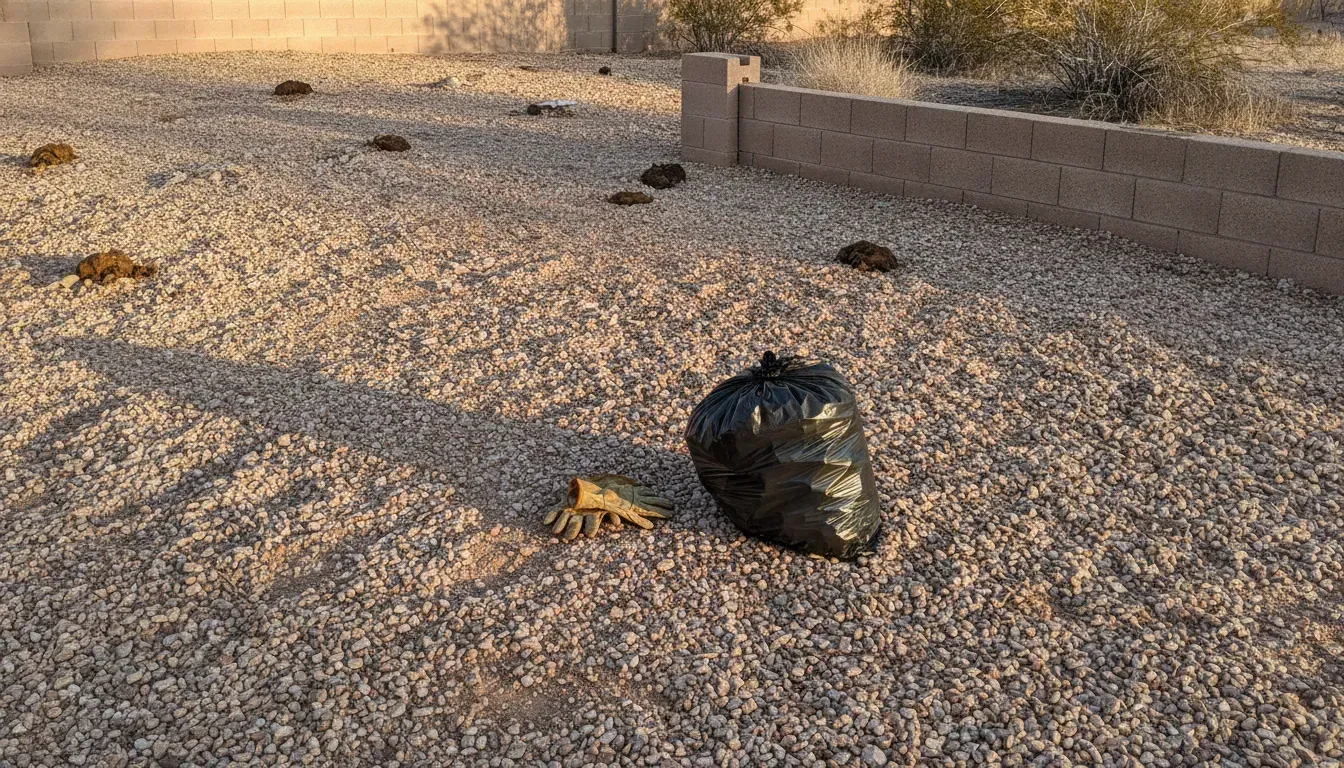
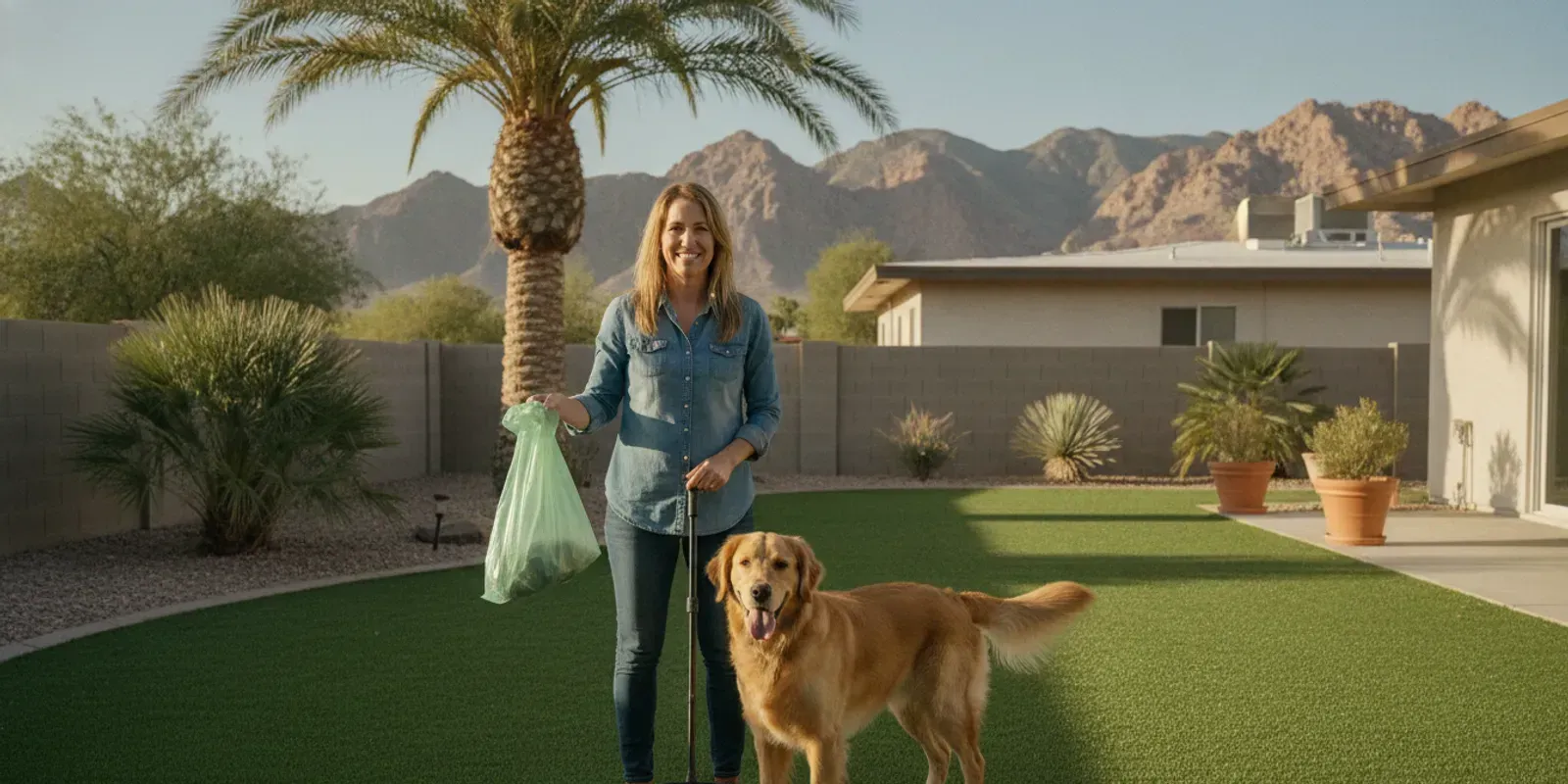
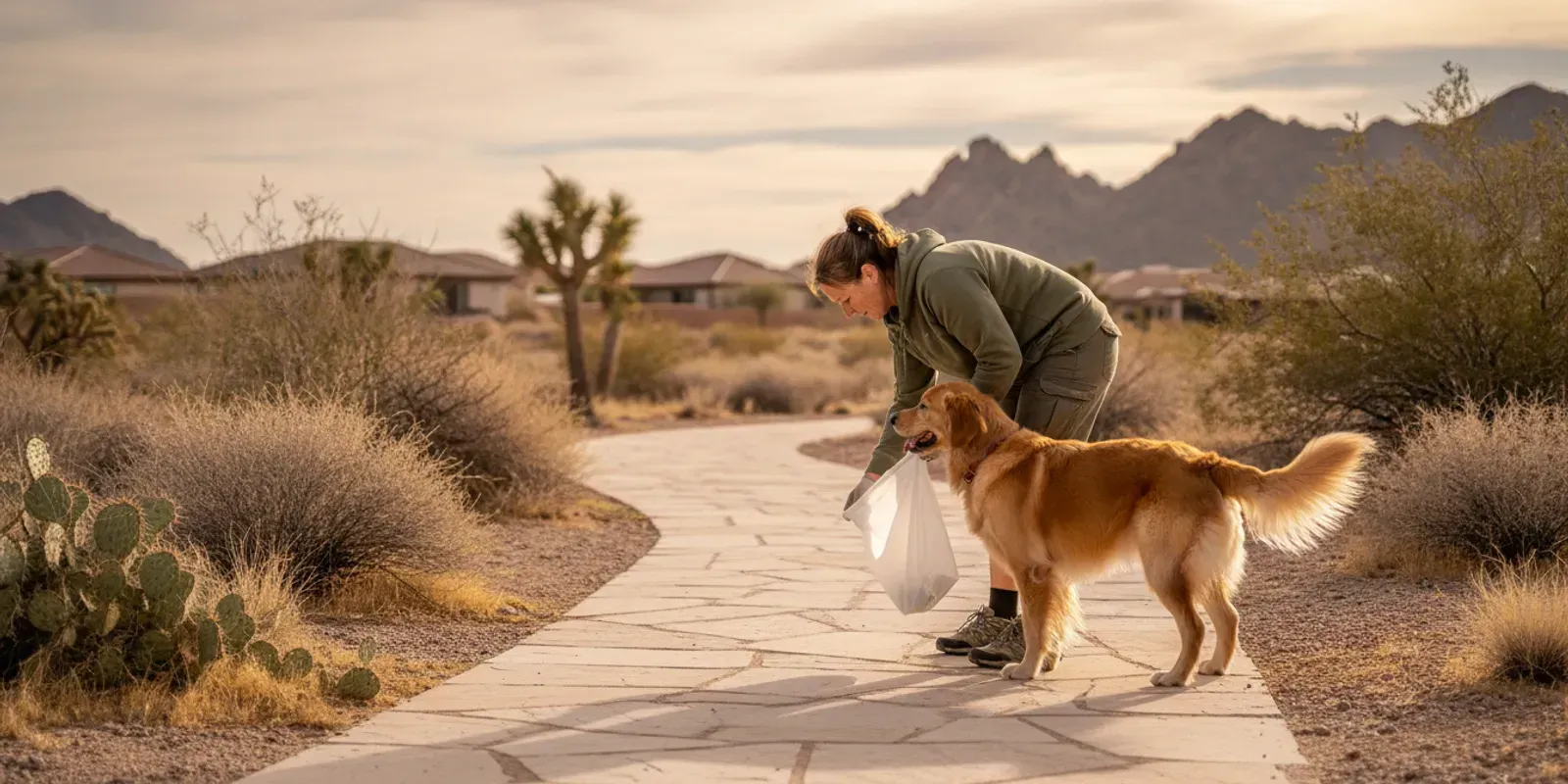
Fresh or accumulated droppings continue to release odor while they remain on grass, turf, concrete, or inside a waste container. Remove the waste and bag it properly before applying any odor-control product. The CDC notes that dog poop can carry germs and recommends picking it up. Disposing of it properly, and washing your hands afterward, even when you used a bag: CDC guidance on dog waste hygiene.
Source removal may also mean clearing organic debris or addressing residue that has collected beneath or between surface materials. If odor persists after the visible waste is gone, adding more fragrance may only mask the problem temporarily. Look for an approach that addresses the type of buildup present rather than promising that one product works everywhere.
Choose an approach that fits the surface
For natural grass or soil, timely waste removal and appropriate surface care are the starting points. Artificial turf may need a more involved process because waste, urine, dirt, and organic material can remain around the fibers and infill. A1's documented artificial-grass cleaning process includes waste removal, debris clearing, an enzyme-based deodorizing treatment, deep rinsing, and agitation. That is different from routine scooping.
On concrete, pavers, decks, or other hard surfaces, follow the surface manufacturer's care instructions and the product label. Do not assume a household cleaner is appropriate for turf, sealed surfaces, plants, pets, or people. Check directions for use, dilution, storage, and any instructions about keeping pets away. When buildup is extensive, a one-time cleanup or an ongoing weekly or bi-weekly removal plan may be more useful than repeatedly applying deodorizer.
Why Does Dog Poop Smell Worse When Waste Sits?
Fresh waste is unpleasant, but odor usually becomes more noticeable when droppings remain in place or collect across a yard. As waste sits, moisture and organic material stay on the surface longer. Additional droppings can then add to the buildup, making the smell harder to manage with a deodorizing product alone. The practical first step is removal, followed by cleaning that fits the surface.
This matters in shared yards, pet areas, and high-traffic spaces where waste may be missed between cleanups. Odor can also linger differently in soil, grass, artificial turf, and hard surfaces. A product applied over visible waste may mask the smell briefly without addressing the material causing it. Removing the source gives any later cleaning or odor-control step a better chance to work as intended.
Waste removal is also a sanitation practice, not only an odor-control choice. The CDC recommends picking up dog poop, disposing of it properly, and washing your hands after contact, even when you use a bag. That guidance does not require diagnosing a health problem or assuming every odor signals one. It supports a simple routine: pick up waste promptly, contain it, clean the affected surface appropriately, and wash your hands.
If waste has accumulated, repeated applications of a dog poop odor eliminator may not be the most efficient next step. Removing the buildup first, then evaluating the surface and any trapped residue, helps you choose between routine maintenance, a deeper cleaning, or a one-time cleanup.
How Should You Match an Odor Eliminator to the Surface?
The best dog poop odor eliminator depends on where the waste and odor are concentrated. Start by removing visible waste and other organic residue. Then choose a product only if its label and the surface instructions support that use. A formula suitable for a washable hard surface may be inappropriate for soil, turf backing, pets, or a porous container.
Surface-specific odor control decisionsSurfaceSource-removal prioritySurface-appropriate cautionWhen to escalateGrass and soilPick up every deposit, including older or hidden waste, and remove contaminated material when practical.Do not assume a household cleaner is safe for soil, plants, lawn treatments, or nearby pets. Follow the product label and avoid applying more than directed.Escalate when odor remains after careful removal, covers a large area, or returns because waste is accumulating.Artificial turfClear waste and debris first. Odor may involve residue trapped in turf fibers, not just what is visible on top.Use only a turf-compatible approach and follow the turf manufacturer's instructions. Avoid treating an enzyme or deodorizing product as a guarantee of complete odor removal.Consider professional turf cleaning when buildup or urine odor persists. A1's process includes waste removal, debris clearing, deodorizing treatment, deep rinsing, and agitation.Hard surfacesRemove solids, then clean residue from concrete, pavers, sealed flooring, or other washable areas.Check compatibility with the finish, sealant, grout, and drainage route. Never mix cleaning products, and keep pets away as the label requires.Get help when residue has entered cracks, drainage areas, or a broad shared walkway that cannot be cleaned thoroughly.Waste binsEmpty the bin, remove stuck-on residue, and clean the interior and lid before applying any odor-control product.Use a product labeled for the bin's material and rinse or ventilate as directed. Do not combine chemicals in an enclosed container.Replace a damaged or persistently contaminated bin, or seek help when repeated waste buildup makes routine cleaning impractical.
For turf-specific steps, see this guide on how to clean artificial turf after dogs. Persistent odor is often a source-removal problem rather than a product-selection problem. If accumulated waste is the underlying issue, a one-time cleanup or a weekly or bi-weekly service can address the material that deodorizing alone cannot.
What Safety Steps Should You Take Before Using a Product?
Start with source removal, not the product. Pick up visible dog waste and clear loose debris before applying any odor-control treatment. Dog poop can carry germs that make people and animals sick. And the CDC recommends disposing of it properly and washing your hands afterward, even if you used a bag. Read the CDC guidance on dog waste hygiene for the basic handling precautions.
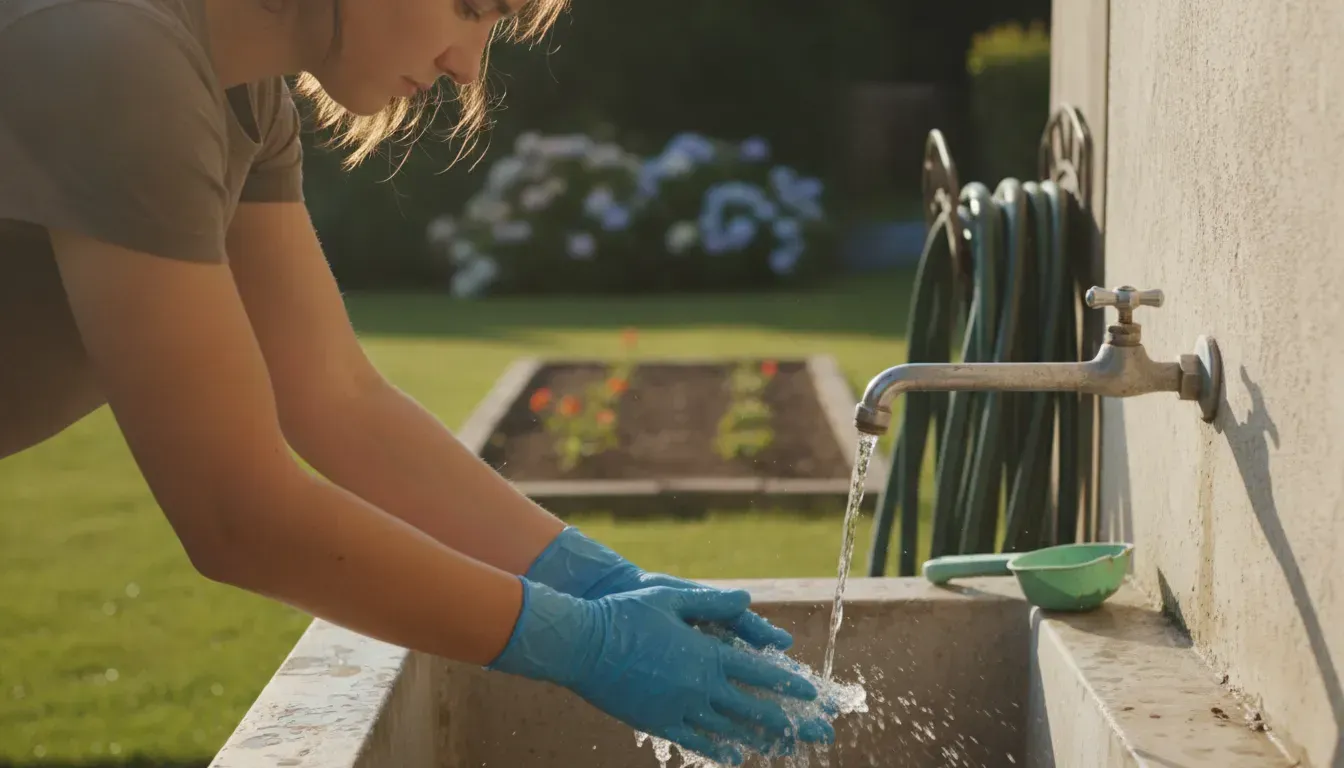
Wear gloves while removing waste or cleaning a contaminated surface. Keep the bag, tools, and treated area away from food preparation surfaces. When you finish, remove gloves carefully and wash your hands with soap and water. Gloves reduce direct contact, but they do not replace handwashing.
Follow the label before allowing pets back
Read the entire product label before use. Follow its directions for the surface, amount, ventilation, storage, and any stated precautions. Keep dogs, children, and other people away from the area exactly as the label directs. Do not guess when a space is ready for use. And do not assume that a product marketed for one surface is suitable for artificial turf, soil, concrete, or another material.
Never mix cleaners or combine an odor product with another chemical. Mixing can create unexpected fumes or damage the surface. If you have artificial turf, follow the turf manufacturer's care instructions as well as the product label. For a surface-specific overview, see how to disinfect artificial turf safely. If odor remains after careful waste removal and label-compliant cleaning, the problem may involve buildup below the surface rather than a need for more product.
How Do You Remove Dog Poop Odor From Artificial Grass?
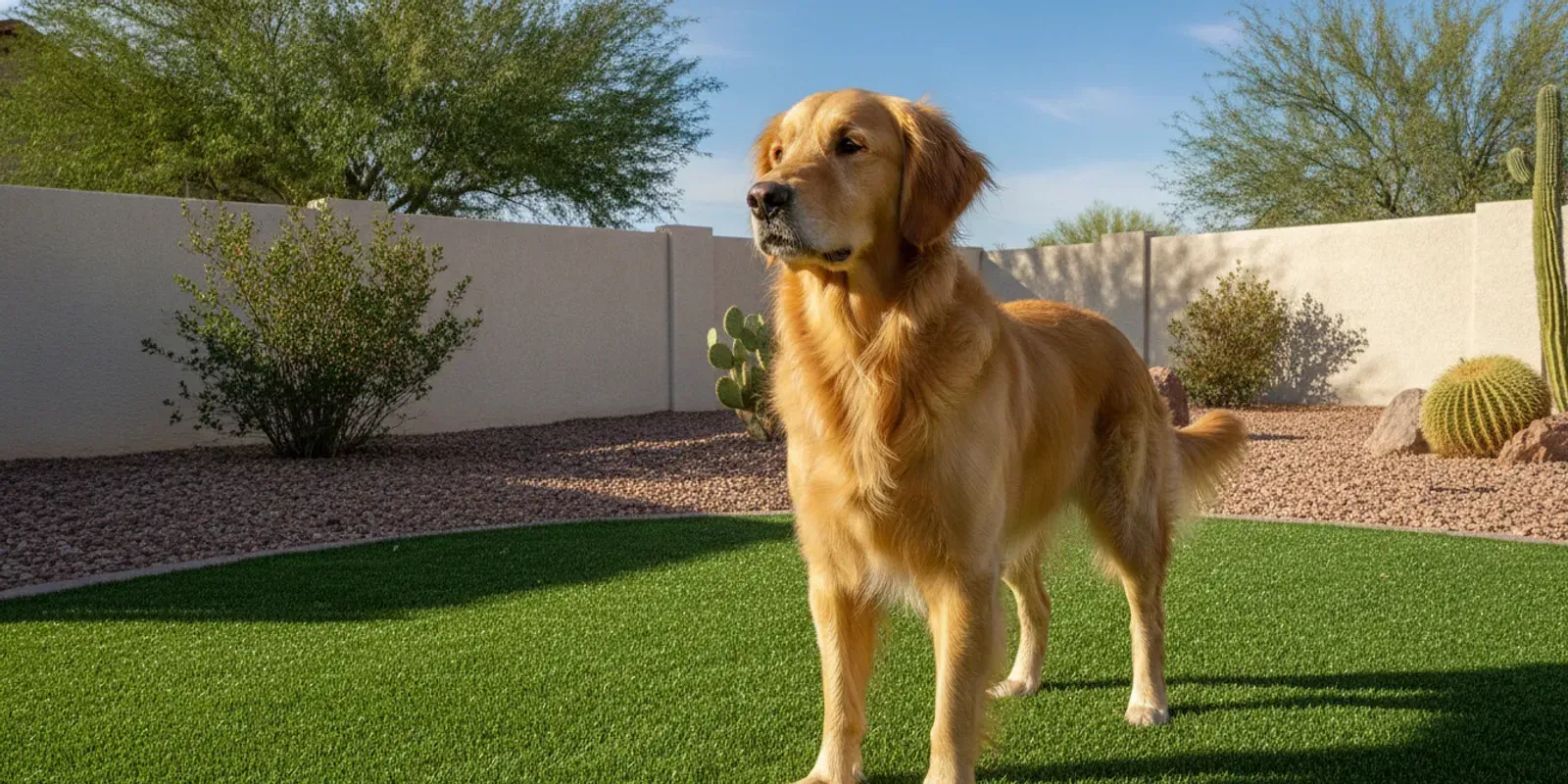
Removing dog poop odor from artificial grass takes more than spraying a dog poop odor eliminator over the surface. The lasting approach is to remove the waste and organic debris first, then treat the turf and rinse it thoroughly. Odor can persist when residue settles between turf fibers or into the infill, so masking the smell without addressing the source usually gives only temporary relief.
 Start with waste and debris removal
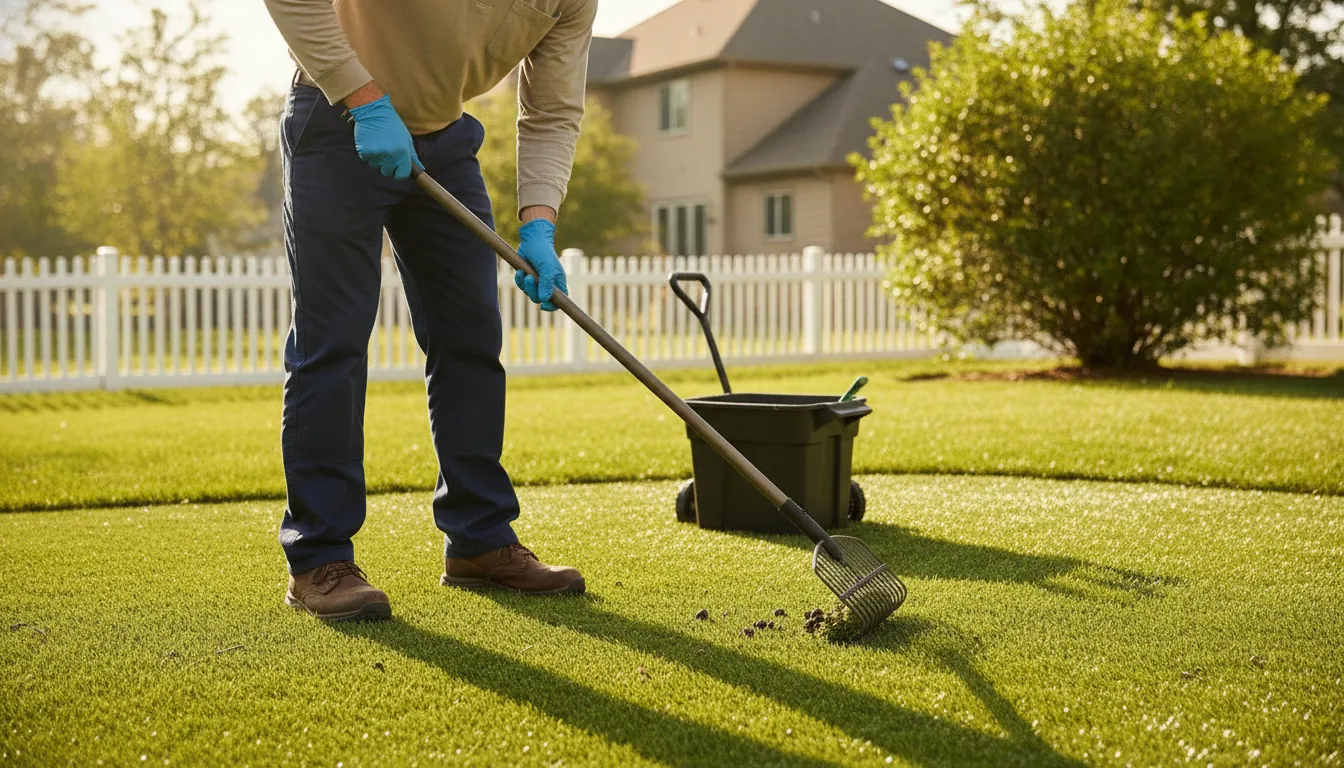
Pick up visible waste and clear leaves, dirt, and other organic material from the turf. This source-removal step matters for sanitation as well as smell. If waste has accumulated, a one-time cleanup can help restore the area before you decide whether ongoing maintenance is needed.
Use a surface-appropriate treatment
After removal, an enzyme-based deodorizing treatment can help address odor-causing organic residue. Do not assume that every household cleaner or turf product is appropriate for every artificial-grass system. Follow the product label and the turf manufacturer's care instructions, especially around dilution, application, and pet access.
A documented artificial-turf cleaning process combines deodorizing treatment with a deep rinse and agitation. Agitation helps loosen buildup among the fibers, while rinsing carries loosened residue away instead of leaving more product and debris on the surface. For a closer look at the process, see how to remove pet odor from artificial grass and how to clean artificial turf after dogs.
If odor returns quickly after visible waste is removed, the issue may involve buildup below the surface rather than a need for a stronger spray. A professional assessment can distinguish routine surface care from deeper turf cleaning without recommending a universal product or fixed cleaning interval.
When Is Source Removal Better Than More Deodorizer?
If the odor returns soon after you apply a dog poop odor eliminator, the problem may be the material still creating the smell. A deodorizer can support odor control, but it cannot replace removing accumulated waste, debris, or residue from the area. Look at the source before adding another product.
Source removal is usually the better next step when droppings have been left in a yard. When waste has collected in a low-traffic corner, or when several dogs use the same space. Odor can become more noticeable as waste remains and accumulates. Removing the waste also supports better sanitation. The CDC recommends picking up dog poop and disposing of it properly, then washing your hands after contact, even when you use a bag: CDC dog health guidance.
On artificial turf, source removal may need to include more than scooping visible waste. Organic material can collect among the turf fibers, where surface deodorizing alone may not address the buildup. A1's artificial-grass cleaning process includes waste removal, debris clearing, an enzyme-based deodorizing treatment, deep rinsing, and agitation. Follow the turf manufacturer's care instructions before using any household product. For more background, see this professional dog poop removal service guide.
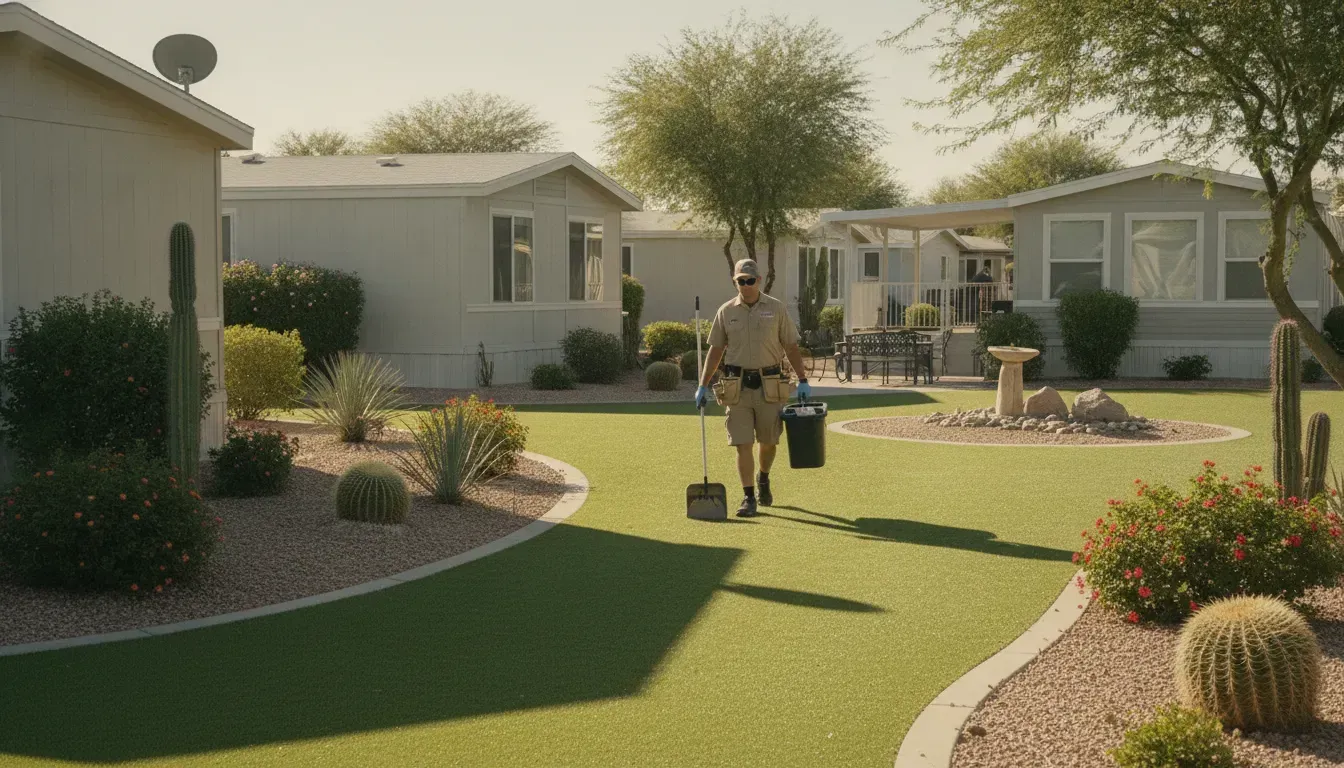
A one-time cleanup can make sense when waste has accumulated after travel, illness, a move, or a period without maintenance. Once the area is brought back under control, weekly or bi-weekly removal can help prevent the same buildup from returning. A1 also provides one-time pet waste cleanup for customers who need a reset rather than an ongoing schedule.
How Can You Prevent Odor Buildup Without Overusing Products?
Odor control works best as a routine, not as a race to apply more product. Start with the source, identify the surface, and use only a method that the surface and product instructions support. This approach helps prevent residue, protects artificial turf and hardscape, and makes it easier to recognize when a larger cleanup is needed.
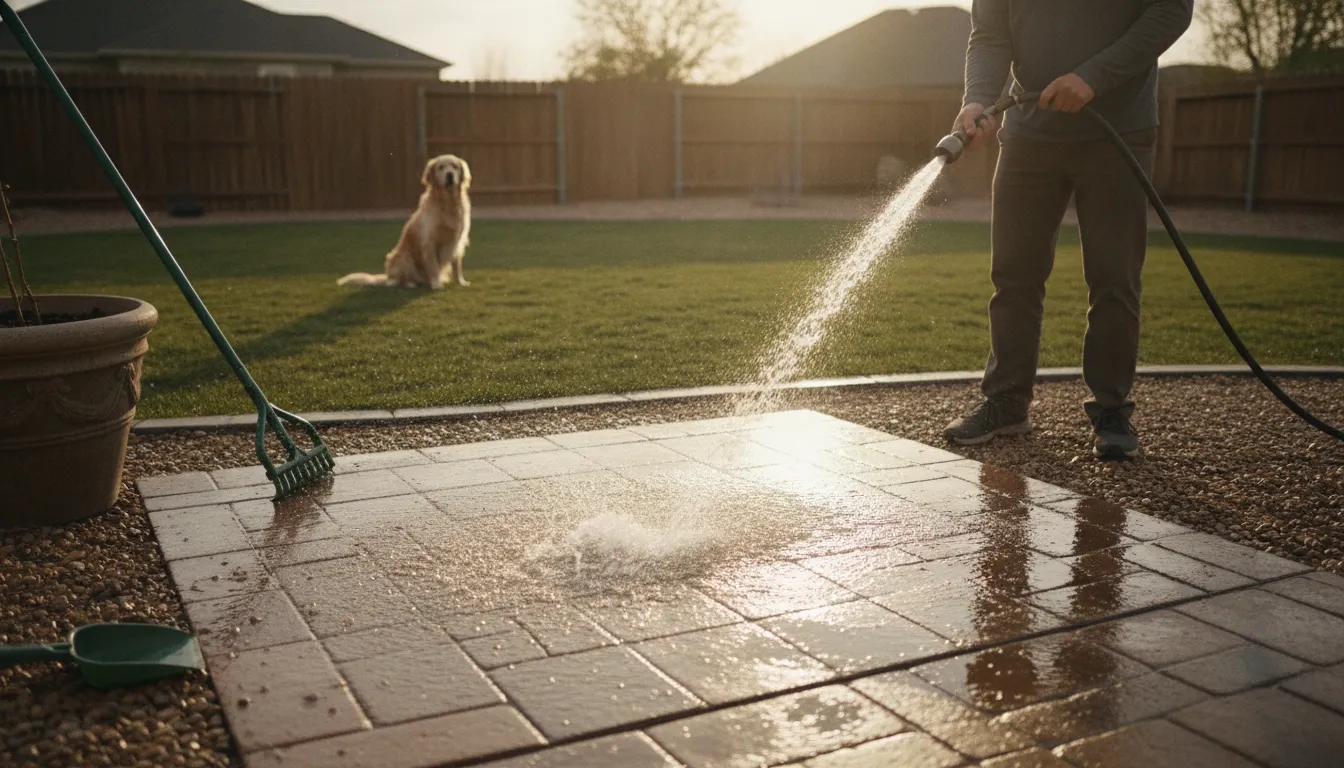 Remove waste promptly. Pick up visible waste before applying an odor-control product. Odor can become more noticeable as droppings remain and accumulate. Bag the waste securely and dispose of it properly, then wash your hands after handling it, even if you used a bag. The
CDC recommends proper dog-waste disposal and handwashing because dog poop can carry germs.
- Identify the actual odor source. Check for missed waste, urine, debris, trapped organic material, or odor concentrated in a bin or drain area. A deodorizer cannot replace removal of material that is still producing the smell. If the odor returns quickly, treat that pattern as a clue that buildup remains below or between the visible surface.
- Match the method to the surface. Grass, soil, artificial turf, concrete, pavers, and waste containers do not necessarily tolerate the same products or process. For turf, follow the manufacturer's care instructions and use a service or product intended for that material. You can review guidance on artificial grass cleaning and maintenance before rinsing or agitating the area.
- Follow product and turf instructions exactly. Do not combine cleaners, increase a concentration, or assume a product is pet-safe without clear label guidance. Follow directions for application, ventilation, rinsing, and keeping pets away. Avoid promising complete odor elimination when the source, surface condition, or underlying buildup has not been addressed.
- Plan service when the routine is no longer manageable. A one-time cleanup can help with accumulated waste, while weekly or bi-weekly removal can reduce the chance of buildup returning. A1's turf cleaning process includes waste removal, debris clearing, enzyme-based deodorizing treatment, deep rinsing, and agitation. Choose one-time pet waste cleanup when the immediate problem is accumulated waste, or ask about recurring service when regular removal is the practical long-term solution.
Need help with recurring odor? Call A1 Pet Maintenance at (702) 521-2624 today.
Frequently Asked Questions
How do I get rid of the smell of dog poop?
Start with source removal: pick up all visible waste and clear nearby organic debris before using an odor-control method. Clean the surface according to its material and follow the product label. If odor persists, buildup may need a deeper cleanup rather than more deodorizer.
How do you remove dog poop odor from artificial grass?
Artificial turf may need more than routine scooping when waste or urine odor is trapped in the fibers. A1's turf-cleaning process includes waste removal, debris clearing, enzyme-based deodorizing treatment, deep rinsing, and agitation. Follow the turf manufacturer's care instructions for any product used.
Is every dog poop odor eliminator safe for pets?
No product should be assumed safe for every pet or surface. Read the label, follow its directions, keep pets away as instructed, and follow the turf manufacturer's recommendations. Wash your hands after handling dog waste, even when you use a bag, as advised by the CDC.
When should I choose a one-time cleanup?
A one-time cleanup is a practical choice when waste has accumulated or a yard needs a reset before regular maintenance. A1 removes the collected waste, bags it, and hauls it away from the property. This addresses the source before you decide whether ongoing service is needed.
When is recurring pet waste removal a better option?
Recurring removal can fit households, facilities, and property teams that want ongoing help managing waste. A1 offers weekly or bi-weekly service. Choose the schedule that matches the property's use and waste volume, rather than relying on a fixed odor-treatment interval.
Ready to Get Started With Odor Cleanup?
If dog poop odor keeps returning, a focused cleanup can help you choose the right next step for your yard or artificial grass. A1 Pet Maintenance can discuss dog poop odor cleanup, artificial grass cleaning, one-time cleanup, or weekly or bi-weekly service.
Call A1 Pet Maintenance at (702) 521-2624 to discuss your cleanup needs.