Biodegradable pet waste bags: Service Options and Planning Guide
Biodegradable pet waste bags can simplify cleanup, but labels and disposal conditions matter. Learn what to check and when a cleanup service may help.
Biodegradable pet waste bags can be a practical option for picking up dog waste, but the label alone does not tell you how or where the bag will break down. Choose a bag that is strong, leak-resistant, easy to open and close, and suitable for the disposal route available to you; then follow local waste instructions.
Are biodegradable pet waste bags a better choice for dog waste?
They may be a useful choice if you want a bag marketed to break down under specified conditions, but "biodegradable" does not mean that it will disappear quickly in every setting. A bag in a landfill, a home compost bin, and a managed composting facility can encounter very different conditions. The right decision is therefore not just about the label: it also depends on bag performance, local disposal rules, and whether the bag is accepted by the waste or composting service you use.
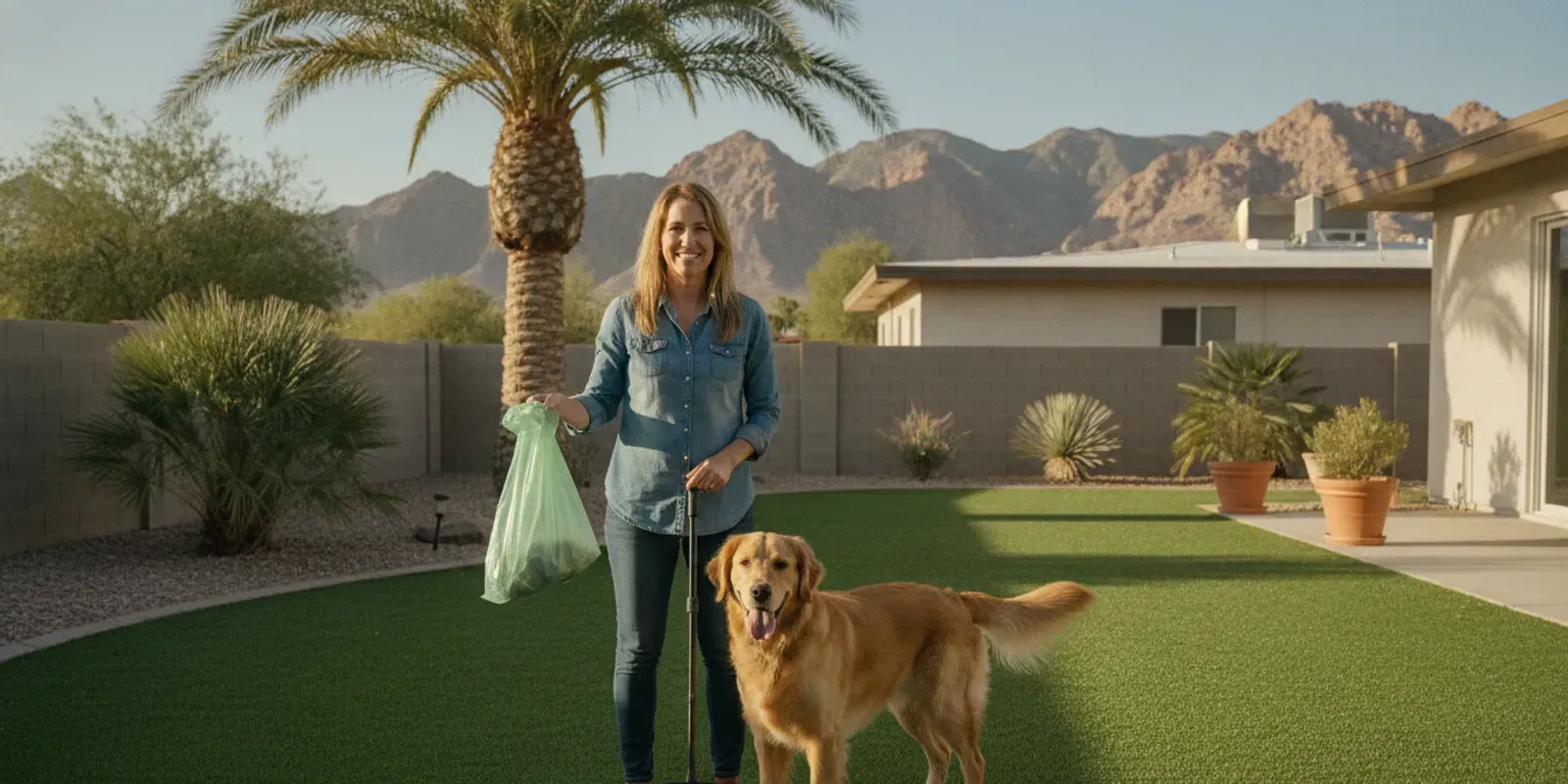
For most dog owners, the most reliable routine is straightforward: pick up promptly, seal the waste, and put it in the disposal stream your local provider allows. Do not assume that a bag is safe to put in a curbside organics cart or backyard compost just because the package says biodegradable or compostable. Check the specific instructions for your area and the bag's directions.
What does "biodegradable" mean on a pet waste bag?
Biodegradable is a broad description of a material's ability to break down through biological processes. It does not, by itself, specify a deadline, the conditions needed, or what remains after breakdown. Temperature, moisture, oxygen, microorganisms, and the material's composition can all affect what happens. A bag may need controlled conditions that are not present in a home compost pile or a landfill.
"Compostable" is also not a promise that a product belongs in every compost bin. Some products are intended for industrial composting, while others may be certified for a different setting. Pet waste brings another consideration: the facility or local program must accept both the waste and the bag. Many programs do not accept pet waste in organics collection, so check before putting it there.
Read the package for specific wording rather than relying on a green color, leaf design, or broad environmental claim. Look for the conditions the manufacturer describes, any certification details, and disposal directions. If the package gives no useful disposal guidance, treat the bag as a regular waste bag and follow your local trash rules.
How should you compare biodegradable pet waste bags?
A bag needs to work during the actual pickup. A theoretically preferable material is not helpful if the bag tears, leaks, is hard to open, or is too small for the job. Compare practical features before buying a large roll. Guidance on choosing pet waste bags likewise highlights strength, size, leak resistance, ease of use, closure, and disposal requirements as useful points to consider (pet waste bag selection and disposal considerations).
Strength and leak resistance
What to look for: A bag that feels substantial and stays intact when opened and tied. Why it matters: Reduces the chance of a tear or contact during pickup and carrying.
Size and fit
What to look for: Enough room for the waste and a secure knot, compatible with your dispenser if you use one. Why it matters: Prevents cramped handling and makes carrying a tied bag easier.
Opening and closure
What to look for: Easy-to-separate sides, accessible opening, and enough material to close securely. Why it matters: Improves handling when you are walking a dog or wearing gloves.
Material and claim
What to look for: Clear information about what the bag is made from and what "biodegradable" or "compostable" means for that product. Why it matters: Helps you avoid assuming that the bag breaks down in all environments.
Disposal direction
What to look for: Instructions that match the waste options accepted where you live. Why it matters: Stops a bag from going into a compost or recycling stream that does not accept it.
Roll and dispenser compatibility
What to look for: A roll size and core that fit your holder, or individual bags that are easy to carry. Why it matters: Makes it less likely you will leave home without a bag.
Consider testing a small quantity before you stock up. Open several bags at home, check whether they separate cleanly, and see if you can tie them without stretching the seams. If you walk in warm weather, keep a few bags away from direct heat and sunlight and follow the storage guidance on the package. A bag that has become brittle, sticky, or difficult to open is less dependable on a walk.
Think through how you will use the bag, not only how it is described on the front of the package. For a short neighborhood walk, a compact roll may be easiest to carry. For a longer outing, you may prefer a larger bag with room to tie the top and enough material to keep your hand separated from the waste. If you use a leash-mounted dispenser, confirm that the roll fits and can be pulled out without tearing. Test tying a knot while holding the leash; a closure that is easy at the kitchen counter may be awkward when you are outside with a moving dog.
Price per bag can help compare products, but the lowest cost is not automatically the best value if bags routinely split or are difficult to use. Compare the number of bags per roll, dimensions, thickness or material details when provided, and package instructions. Do not infer environmental performance from price or appearance. If the bag works well but its disposal directions conflict with your local collection rules, the responsible choice is still to follow those rules.
How do you choose a bag for walks in Southern Nevada or Tucson?
Heat and dry outdoor conditions can make a long walk less forgiving if a bag is awkward to handle or has been stored poorly. Keep a small supply in a shaded place, such as a bag dispenser or a pocket, and carry an extra. Check the roll before leaving so you do not discover an empty dispenser after your dog has gone.
Choose a size you can handle comfortably while keeping the waste contained. If you walk multiple dogs, bring enough bags for each dog and a spare. When a walk takes you away from a trash can, tie the bag securely and carry it until you find an appropriate bin. Do not leave a tied bag beside a trail or in a landscaped area.
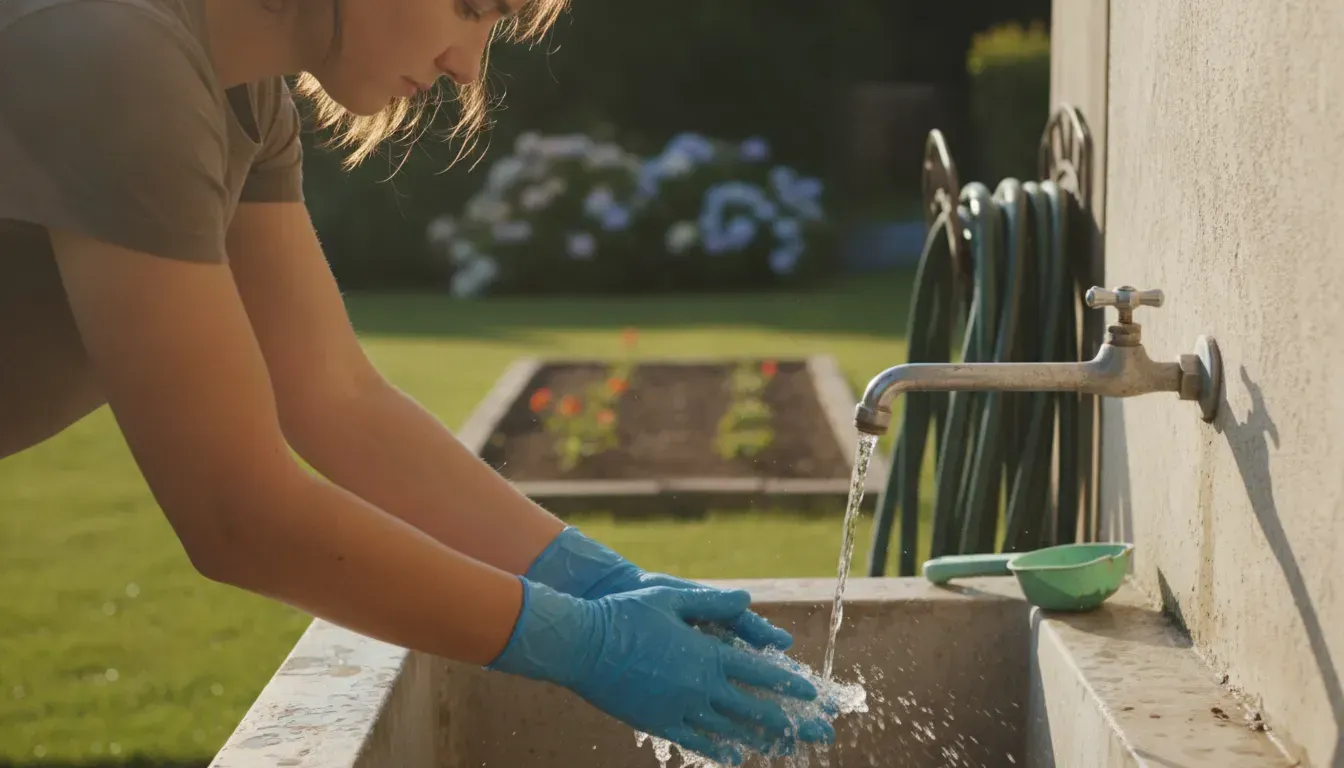
At home, place used bags in a lidded, lined container if they cannot go directly into the outdoor trash. Empty that container regularly and clean it as needed. A lid helps keep waste contained between disposal days, especially in warm weather. Follow your household waste provider's directions, and keep bags and waste away from children and pets.
 Where should you dispose of a used pet waste bag?
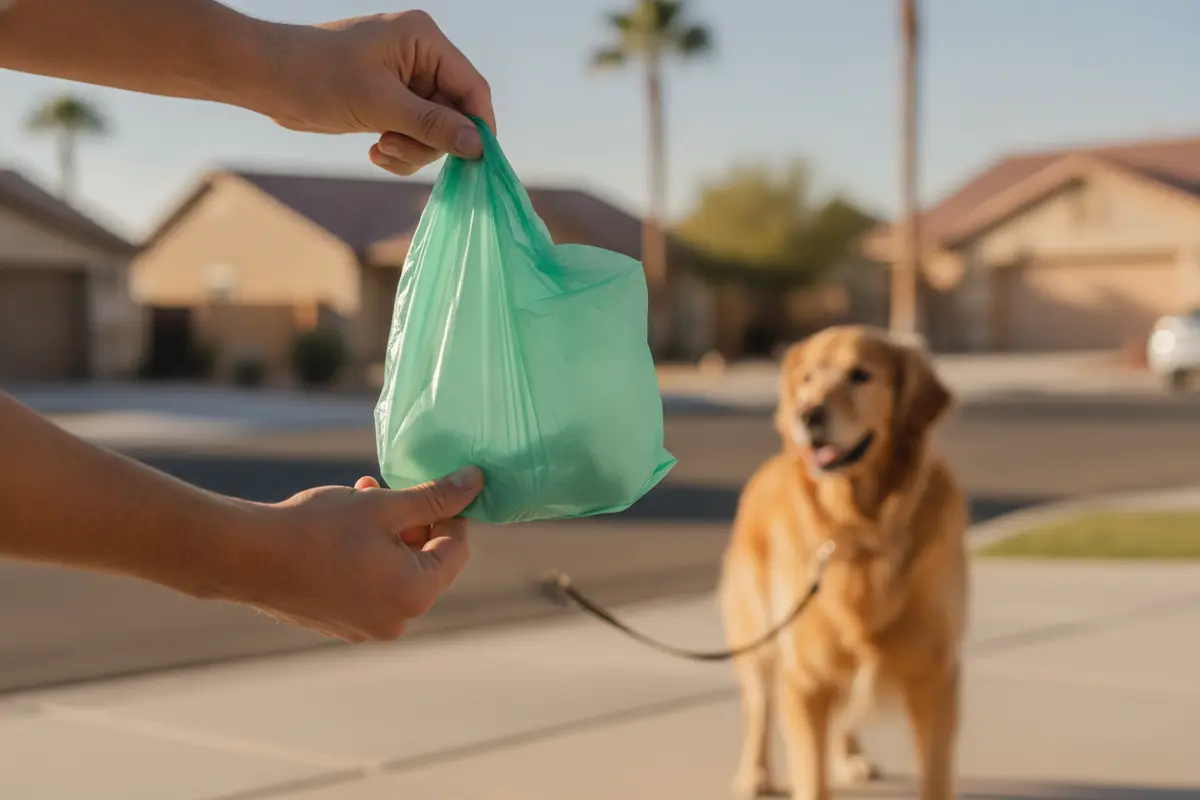
Use the disposal route accepted by your local waste provider. In many areas that means placing a tied bag in the regular trash, but residents should confirm their own rules rather than assume. A bag's material label does not change local collection requirements, and a dog-waste bag should not go into recycling unless the program specifically says it accepts that exact item.
Do not put pet waste in a storm drain, wash it into a street, or leave it on public or shared property. Do not place it in a compost cart unless the local program clearly accepts pet waste and the type of bag you use. If the program accepts food scraps but excludes pet waste, the bag belongs in the trash stream instead. When uncertain, check the waste provider's published guidance before disposal.
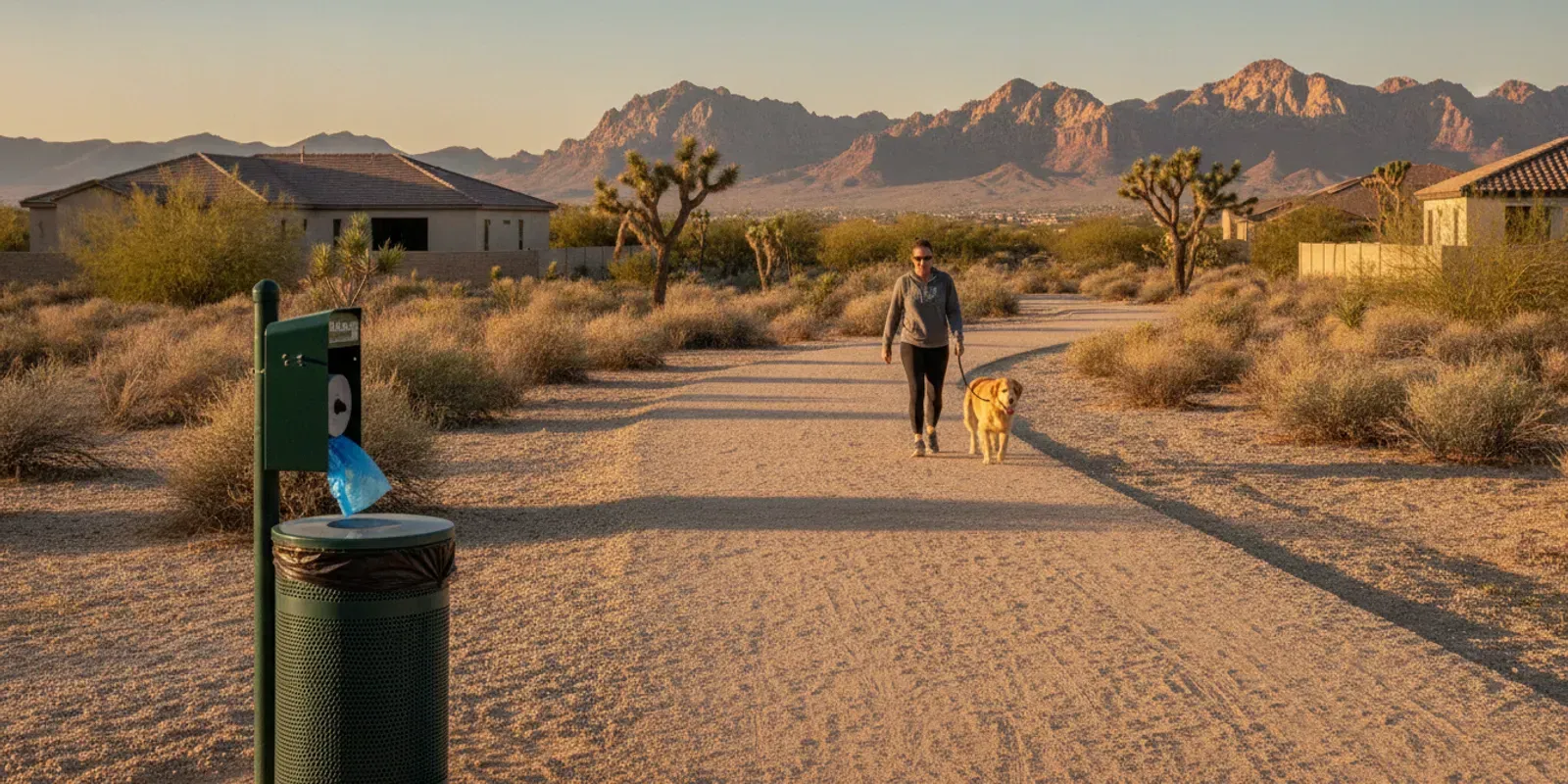
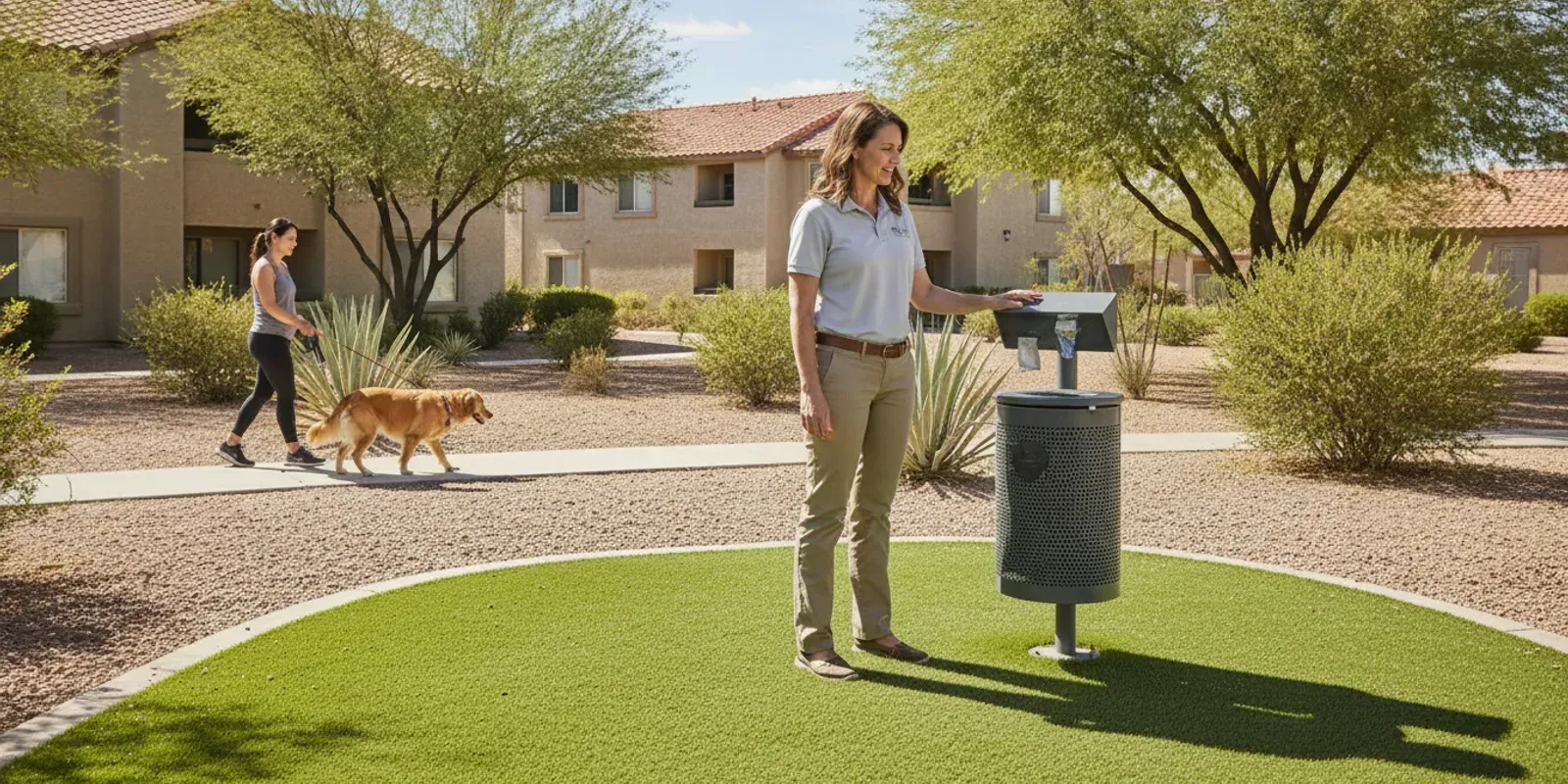
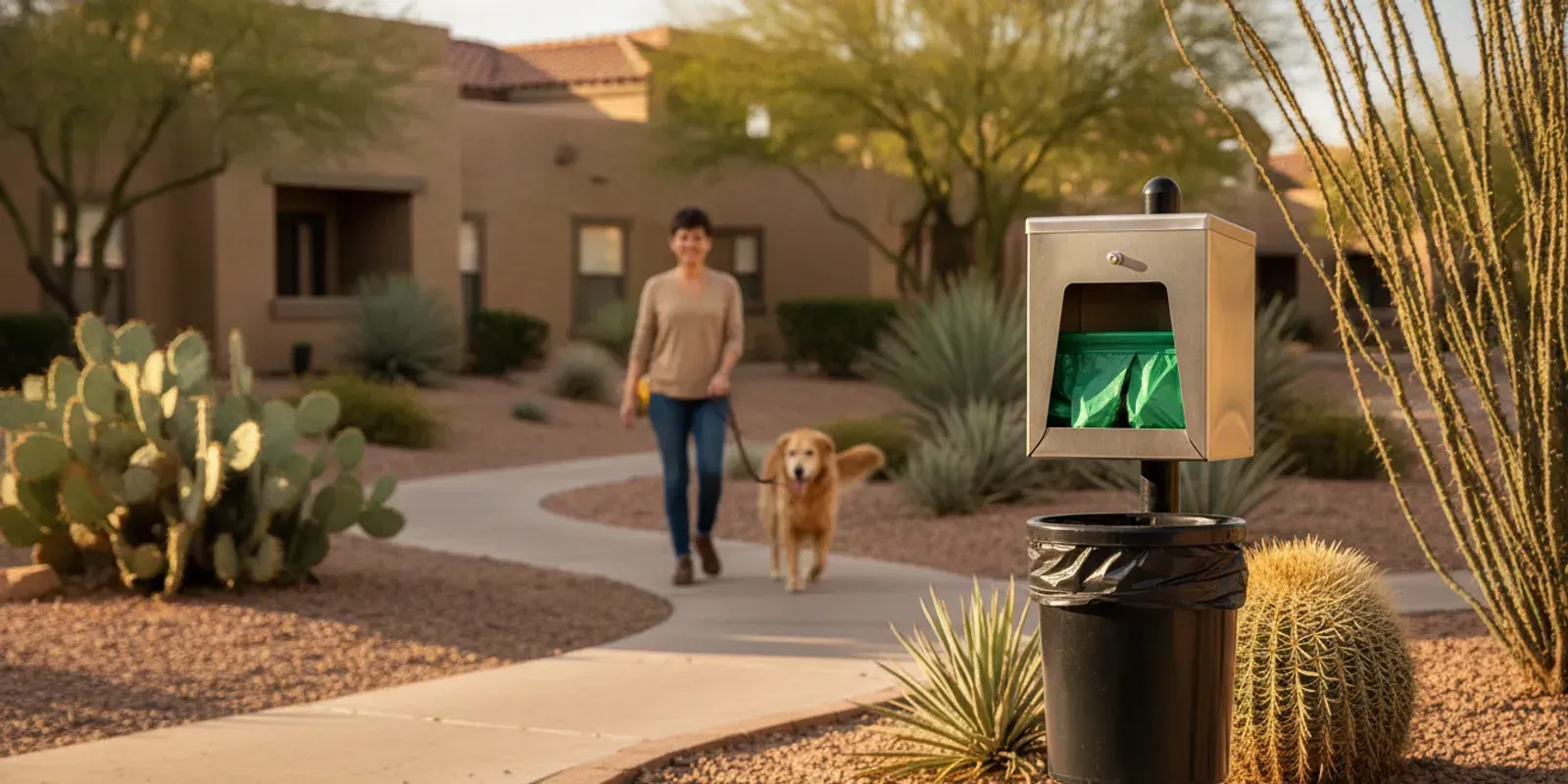
Disposal options can differ between a private home, an apartment community, a dog park, and a walking trail. A shared property may have designated pet-waste bins, while a public space may ask visitors to carry waste to a regular trash can. Use the labeled receptacle where one is provided and do not put bagged waste into a station or container for a different purpose. If you cannot find an appropriate bin, carry the sealed bag until you can dispose of it correctly.
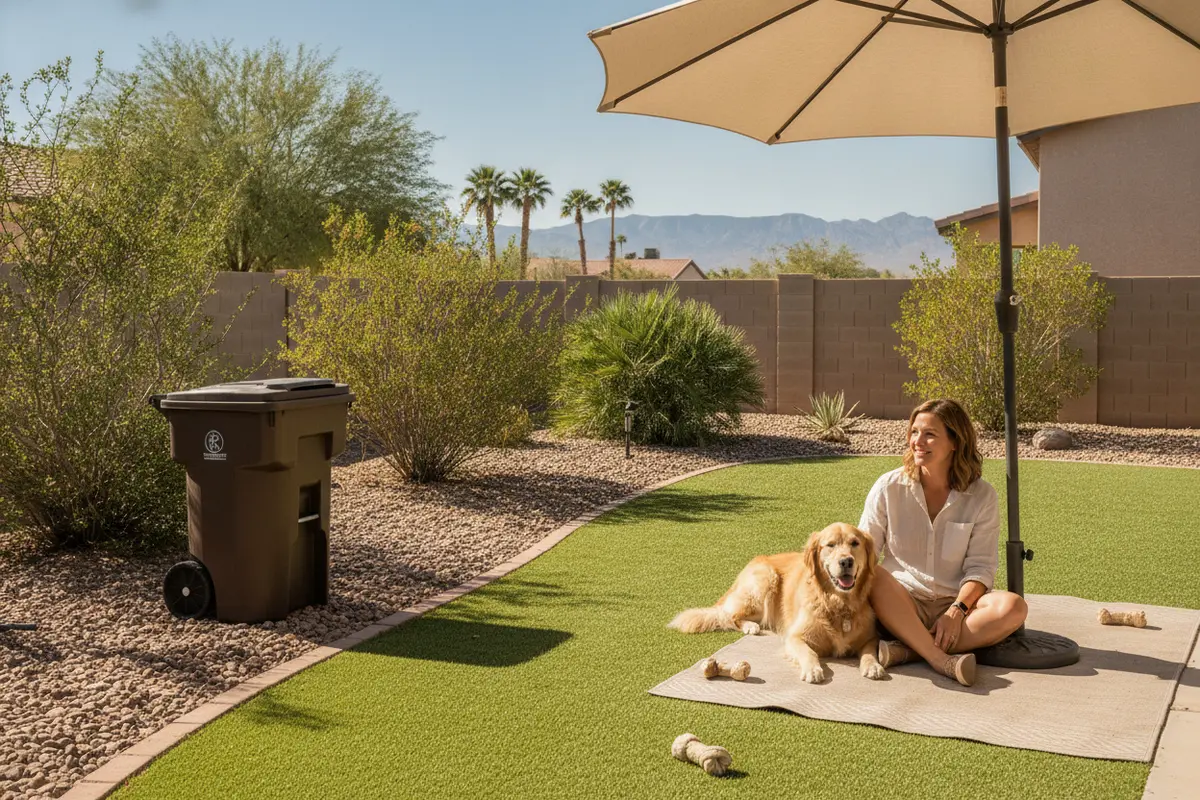
Keep unused bags separate from food and household supplies, and store filled bags so children and animals cannot reach them. A small, lined outdoor container can make daily yard pickup more manageable until trash collection. Empty it on a regular schedule and clean the container when needed. These simple habits matter whether the bag is conventional plastic, biodegradable, or compostable: contain the waste, avoid leaks, and use the appropriate disposal stream.
For more everyday handling ideas, see this guide to pet waste disposal for busy dog owners. If accumulated waste in your yard is already a concern, A1 also offers a one-time pet waste cleanup. A one-time cleanup addresses a current buildup; it is different from a recurring schedule.
What if your yard still needs regular cleanup?
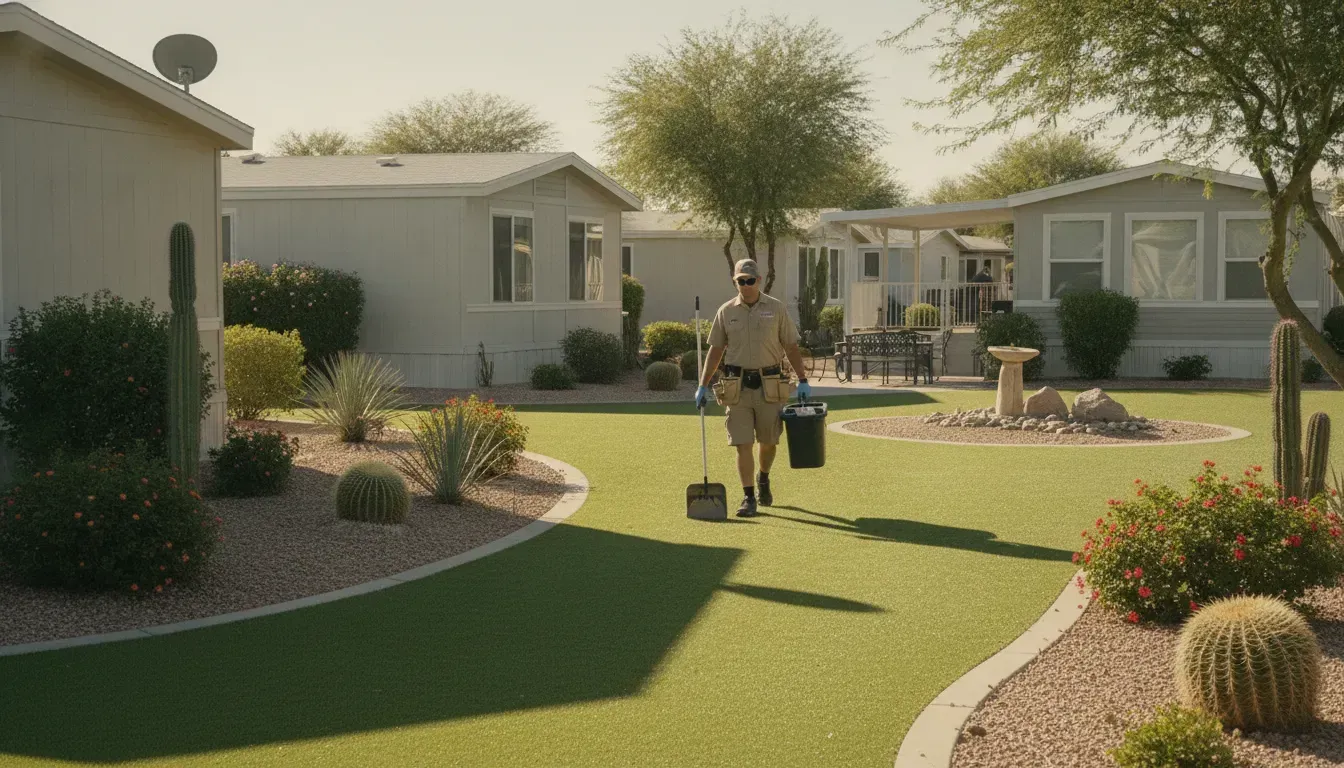
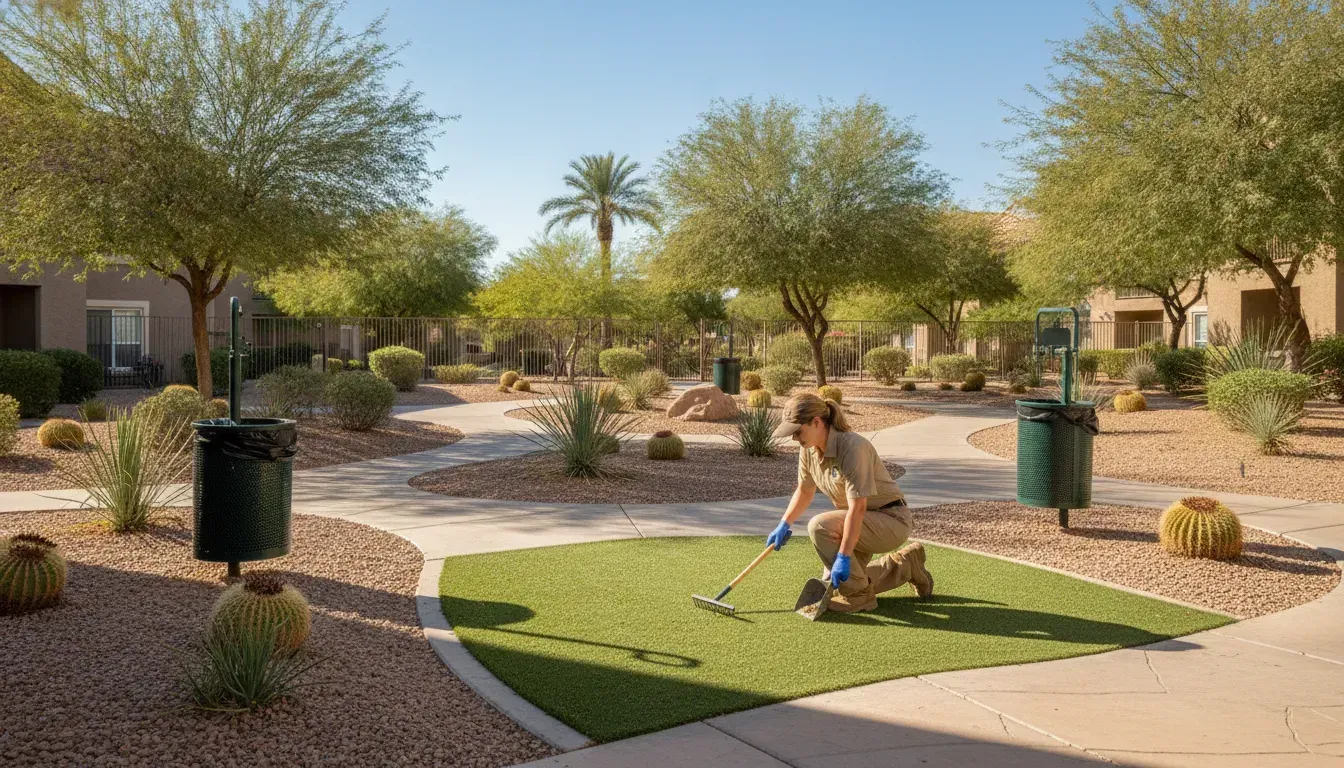
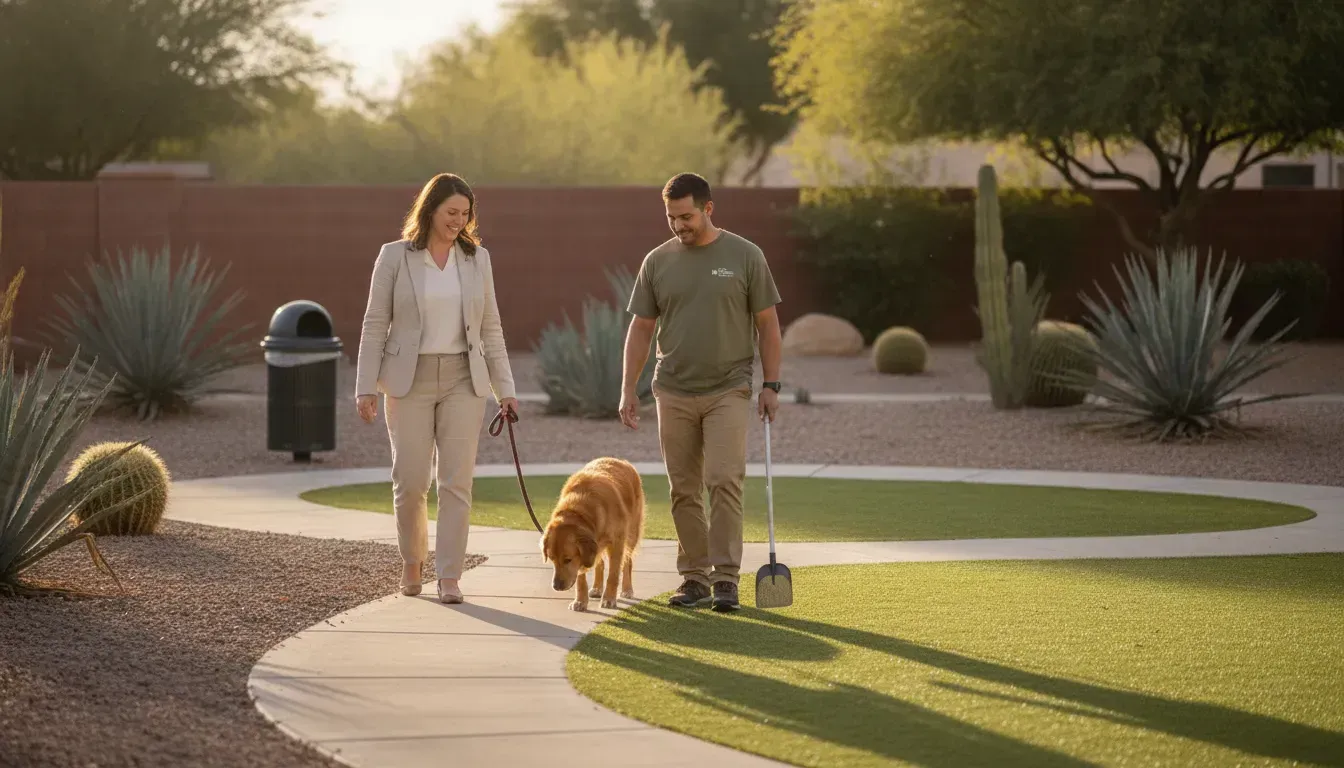
Bags are useful for walks and quick pickups, but keeping a yard clean can take repeated effort. If you have several dogs, a large yard, a busy schedule, or trouble keeping up with the routine, consider whether recurring removal would make outdoor upkeep easier. A1 Pet Maintenance provides weekly or bi-weekly pet waste removal in its service areas, as well as one-time cleanup. The right option depends on how quickly waste accumulates and how often you want the yard checked.
Before choosing a schedule, think about the number of dogs, the area they use, and how often you want waste removed. Weekly service means a regular visit each week; bi-weekly service means service every other week. Neither option replaces picking up after dogs during walks or following local rules in shared spaces. For an overview of the process, read how dog poop service works and the pet waste service FAQs.
Customers who need a reset after travel or a period without regular cleanup can explore dog poop cleanup after vacation. For ongoing help, review the pet waste service sign-up information or contact A1 with questions about your property and service area.
 How can you build a simple pet waste routine?
- Keep bags where you need them. Store a roll by the leash and keep a backup supply near the door or in your walking kit.
- Check the bag before use. Make sure it opens, has no visible damage, and is large enough to tie securely.
- Pick up promptly. Use the bag to contain the waste without touching it, then turn or gather the bag around it.
- Close and carry it securely. Tie the handles or use the package's closure method; hold the bag away from clothing and food.
- Dispose of it correctly. Use a bin or household waste stream that accepts pet waste. Do not assume composting is allowed.
- Review your yard schedule. If outdoor waste is accumulating, set a regular household routine or ask about weekly, bi-weekly, or one-time removal.
Using a bag marketed as biodegradable can fit into this routine, but it does not replace prompt pickup or correct disposal. The practical goal is to contain waste reliably and prevent it from being left where people, pets, or property users may encounter it.
Frequently Asked Questions
Can biodegradable pet waste bags go in a home compost bin?
Do not assume they can. Check the bag's instructions and your compost program's rules. Even when a bag is described as compostable, it may require controlled processing, and the program must separately accept pet waste.
Are biodegradable bags suitable for picking up dog waste on walks?
They can be, if they are strong enough, large enough, easy to open, and appropriate for your disposal plan. Test a small pack first and carry a spare so a tear or empty roll does not leave you without a usable bag.
Do biodegradable bags break down in a landfill?
There is no single answer for every product and landfill. The label alone does not establish how quickly a particular bag breaks down under landfill conditions. Follow the package directions and local waste rules rather than treating "biodegradable" as a guarantee of rapid breakdown.
Can I put a pet waste bag in a curbside organics cart?
Only if your local organics program explicitly accepts both pet waste and that type of bag. Many programs have restrictions. Check the program's current instructions and use regular trash if pet waste is not accepted.
What can I do if dog waste is accumulating in my yard?
Start with a pickup schedule you can maintain. If you need help clearing a buildup, consider a one-time cleanup; for ongoing maintenance, weekly or bi-weekly service may be an option in A1's service areas. Call to discuss your yard and the type of help you need.
Choose bags for dependable handling, verify what the label actually promises, and dispose of each tied bag according to local rules; that combination makes everyday cleanup more manageable.