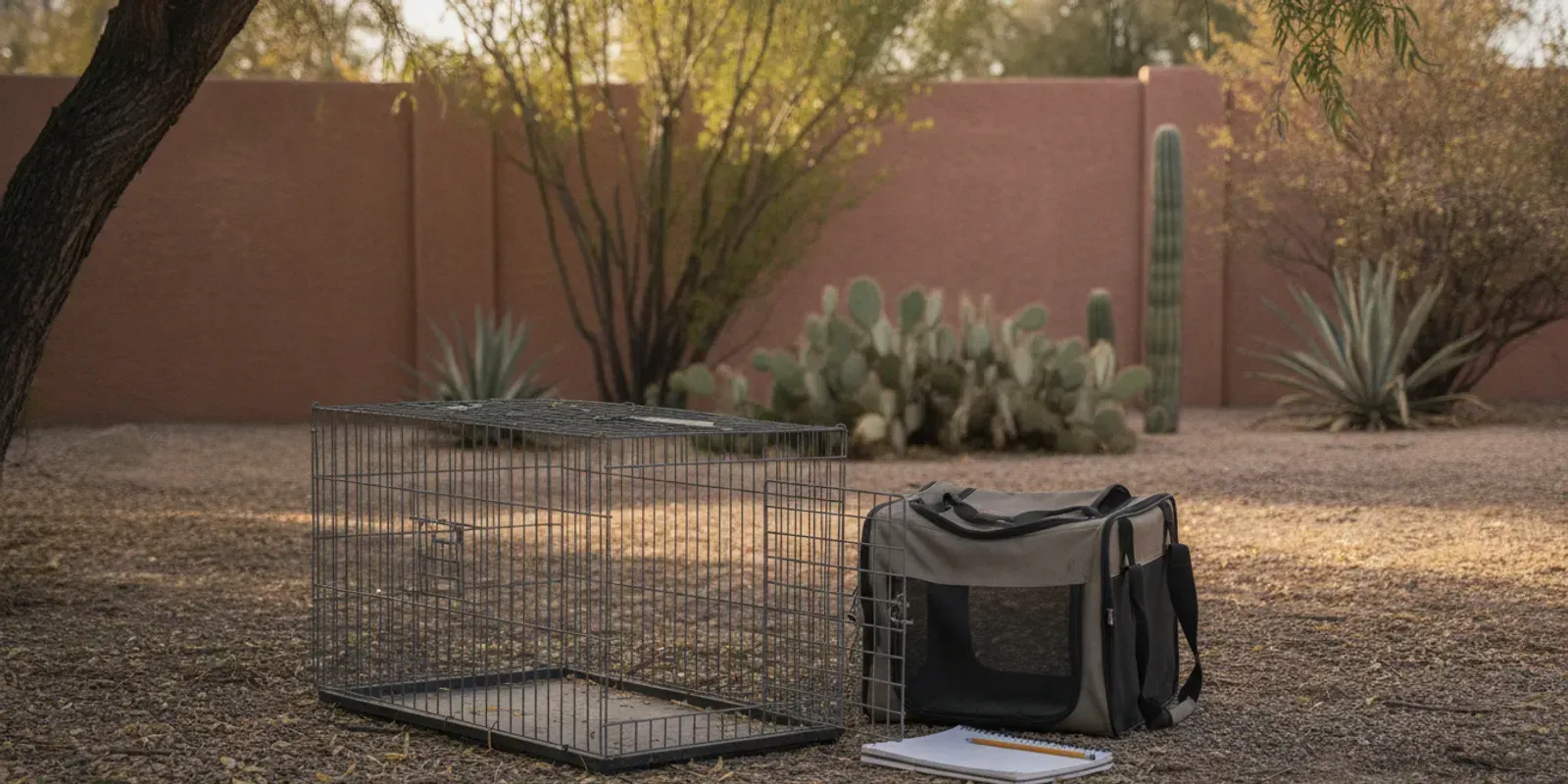
What to Have Ready Before Artificial Turf Cleaning
What to have ready before artificial turf cleaning is a short household list, not a stopwatch. A1 Pet Maintenance does not publish how many minutes a turf visit takes, so the useful question is whether the crew can start. The crew still needs a way in, water that reaches the turf, dogs off the surface, and a clear note about each section. Those four items decide whether the appointment starts when the truck arrives or sits while someone hunts for a key and a working hose.
Call (702) 521-2624 before your turf cleaning
The artificial turf cleaning guide covers what the Las Vegas service includes and how a quote is built. This page stays on the morning of the visit. If you are still choosing between a one-time cleanup and ongoing waste removal, read that guide first, then come back here when a date is on the calendar.
What to Have Ready Before Artificial Turf Cleaning
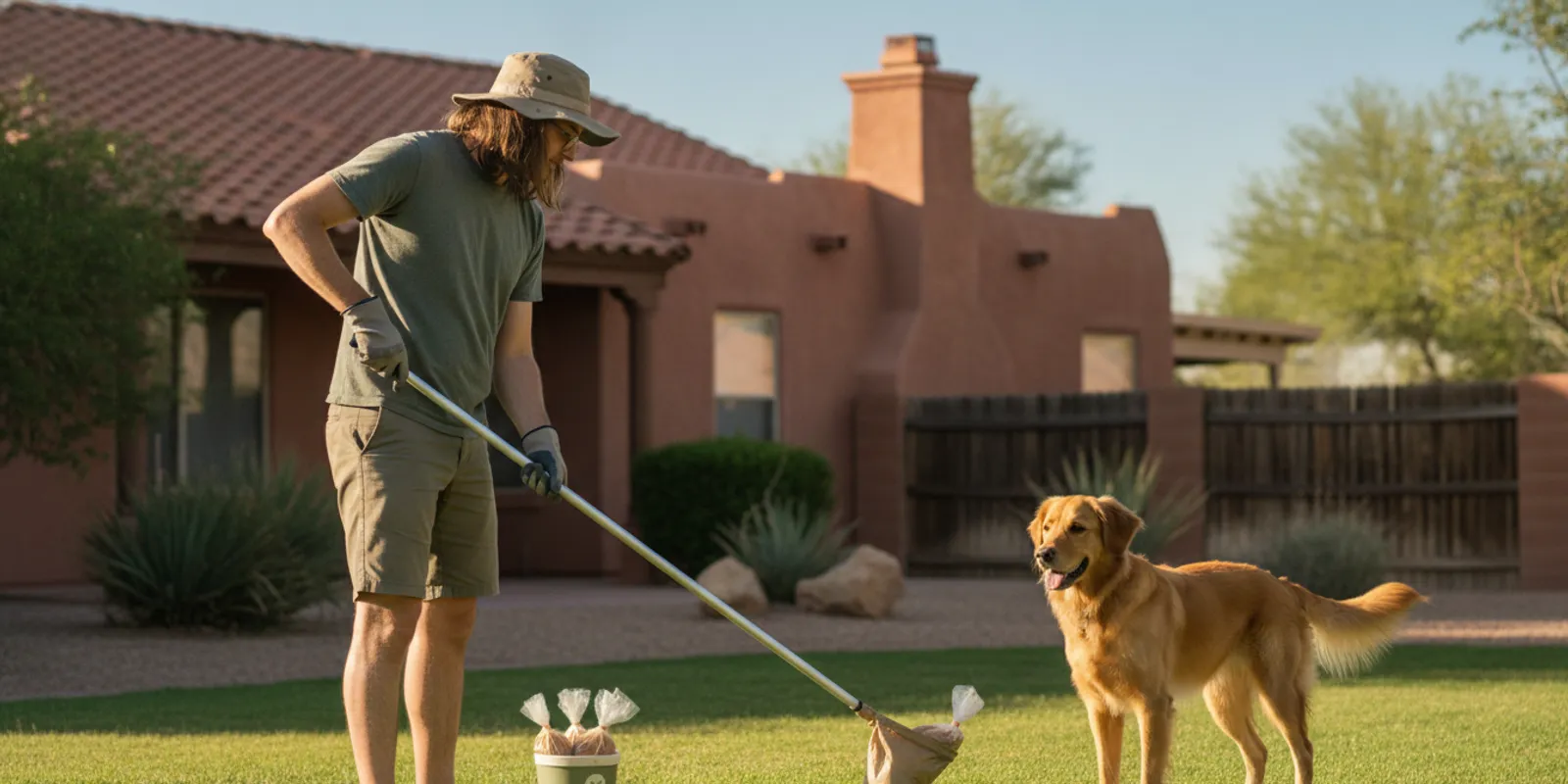
A1 cleans artificial grass for homes and shared pet areas in Las Vegas and Henderson. The listed process is the same shape on every job, whether the yard is a compact patio or a longer dog run. Waste comes off the surface first. Leaves and dirt come next. An enzyme treatment follows for odor in the fibers. A deep rinse and agitation finish the visit. None of those steps can start if the yard is locked or the hose does not reach.
Have these ready before you call, and again before the technician arrives. The list below is the difference between a visit that starts on time and one that waits in the driveway.
| Item | Confirm | If missing |
|---|---|---|
| Gate | Someone opens it. | Crew waits. |
| Hose | Water reaches turf. | Rinse pauses. |
| Dogs | Pets wait inside. | Waste returns. |
| Sections | Name each patch. | A patch is skipped. |
| Notes | Flag odor spots. | Quote misses the yard. |
Read that grid as a pass or fail before the truck arrives. Gate means someone opens it, or the crew waits. Hose means water reaches the turf, or the rinse pauses. Dogs means pets wait inside, or waste walks back onto cleared fibers. Sections means you name each patch, or one gets skipped. Notes means you flag odor spots, or the quote misses the yard the technician finds.
- A person or a plan for the gate. Say who opens it, and whether a code or a key is needed.
- A hose bib the team can use. Confirm the water is on and the hose reaches every turf section.
- Dogs off the turf. Pick a closed place they can wait so they do not walk back through a cleared area.
- Each turf section named. A side strip and a back run are two jobs, not one vague yard.
- A short note on what you see. Waste, leaves, a strong corner, or matting helps the quote match the yard.
The homepage lists artificial grass cleaning and deodorizing at $200 for up to 900 square feet of turf. That offer is the public starting point. It is not a promise that every yard finishes in the same block of time. A larger area, heavier waste, or a second section is quoted for that property. Do not treat a weekly scoop price as the price or the length of this visit.
A1 has done pet waste work in Southern Nevada since 1998 and services more than 400 properties a week. The turf visit is still its own job. Weekly pickup keeps stool off the surface. It does not replace the enzyme step or the rinse. Tell the team if you already have pickup so they do not plan the first step as a full yard reset.
Open the Gate Before the Truck Arrives
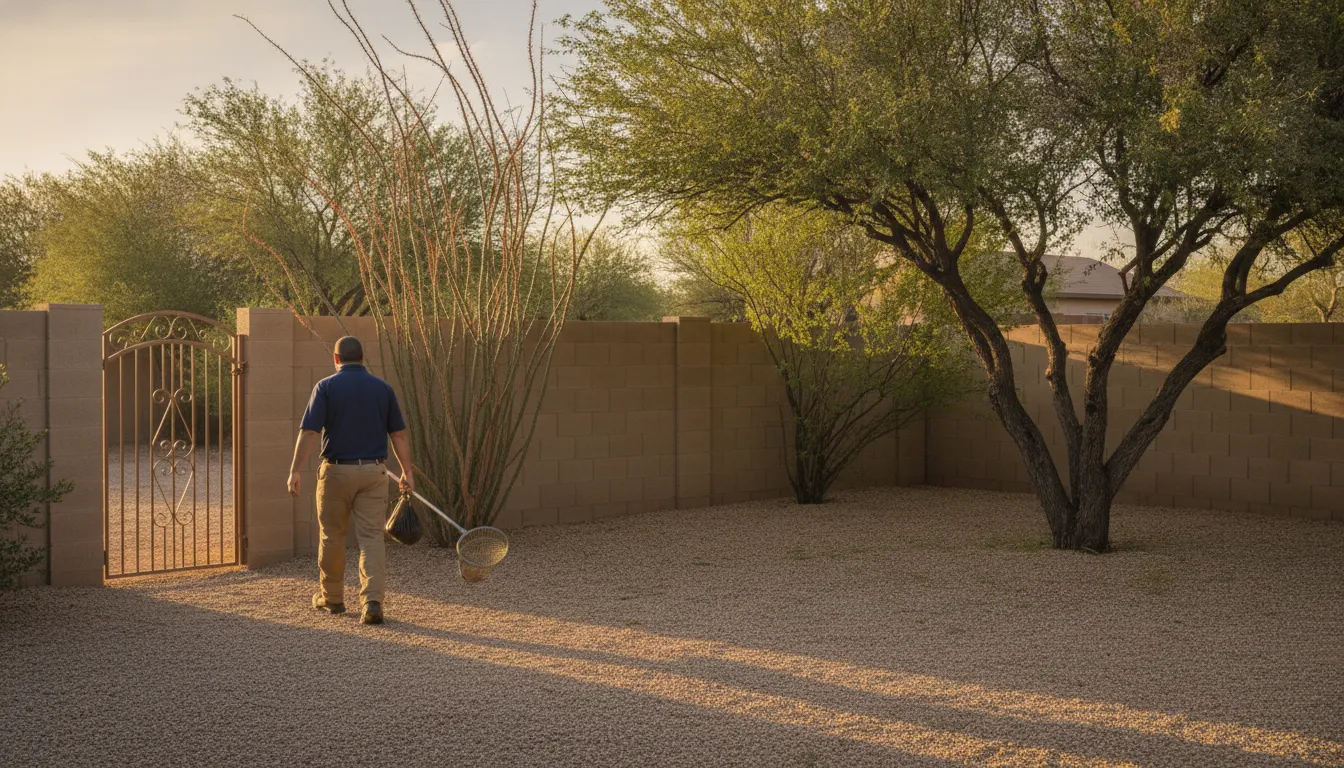
The most common pause is not the cleaning itself, but the locked gate. A1 asks where the gate is, whether the walkway is narrow, and who can open the property. Those questions are about starting the work, not about adding a fee for standing in the driveway.
Walk the path the night before. If the side gate sticks, oil it or plan to be home. If a community gate needs a code, write the code where the person on site can read it. Do not assume the technician can follow a car in. A locked community where the truck waits at the street is different from a driveway the team can use. Say which one you have when you book.
Shared properties need a name, not a hope. A daycare run, a boarding yard, or an apartment pet area often has a manager who controls access. That person should know the window when the turf can be empty. A1 already plans daycare turf around a closed yard. A house with one dog usually needs less staging. Both still need someone who can open the gate at the start.
Parking sits outside the cleaning, but it still changes how long someone is at the property. If the only legal spot is down the block, say so. Equipment has to reach the gate. A note about parking limits is not an extra service. It is how the visit avoids a second trip around the block.
If you will not be home, leave the gate unlocked only if that is safe for your block, and tell A1 that plan in advance. A surprise locked gate means the team waits or reschedules. Neither outcome is a longer cleaning. It is lost time before the first step.
Confirm the Hose Reaches Every Section
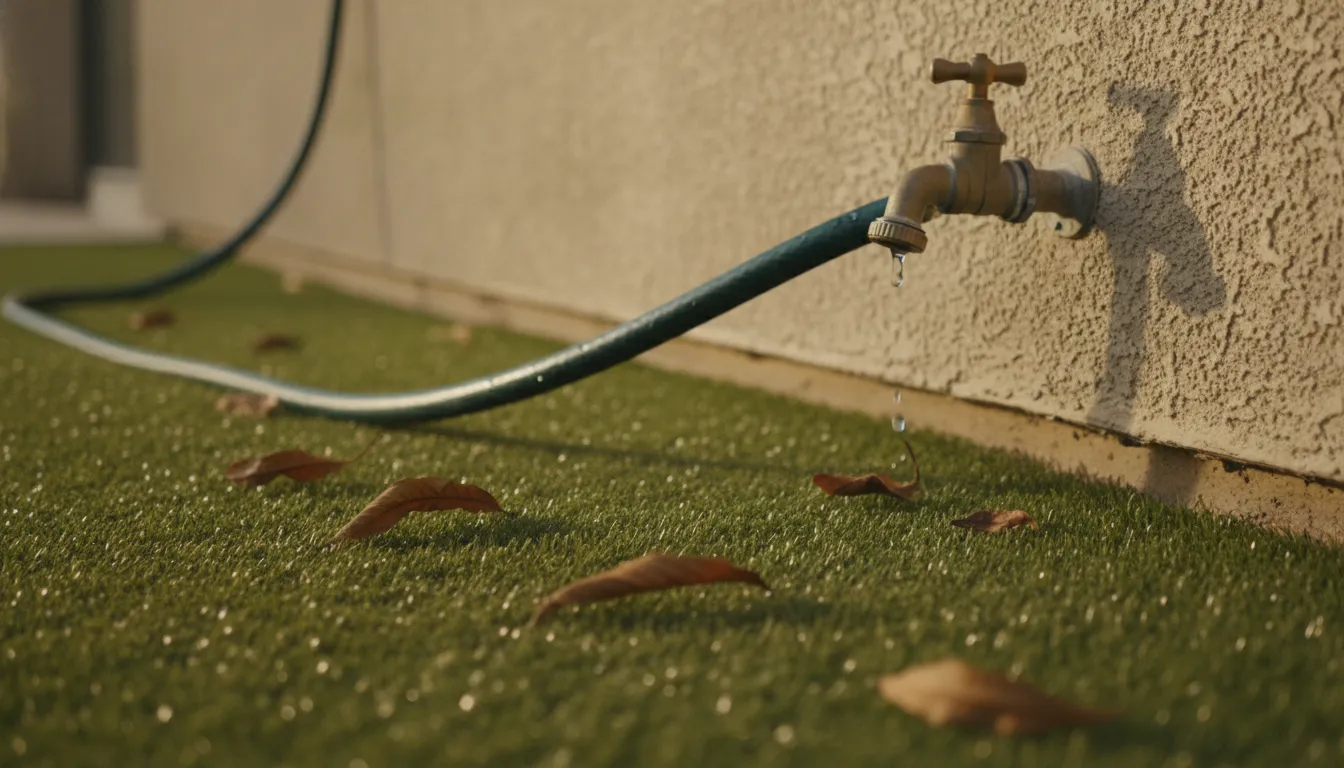
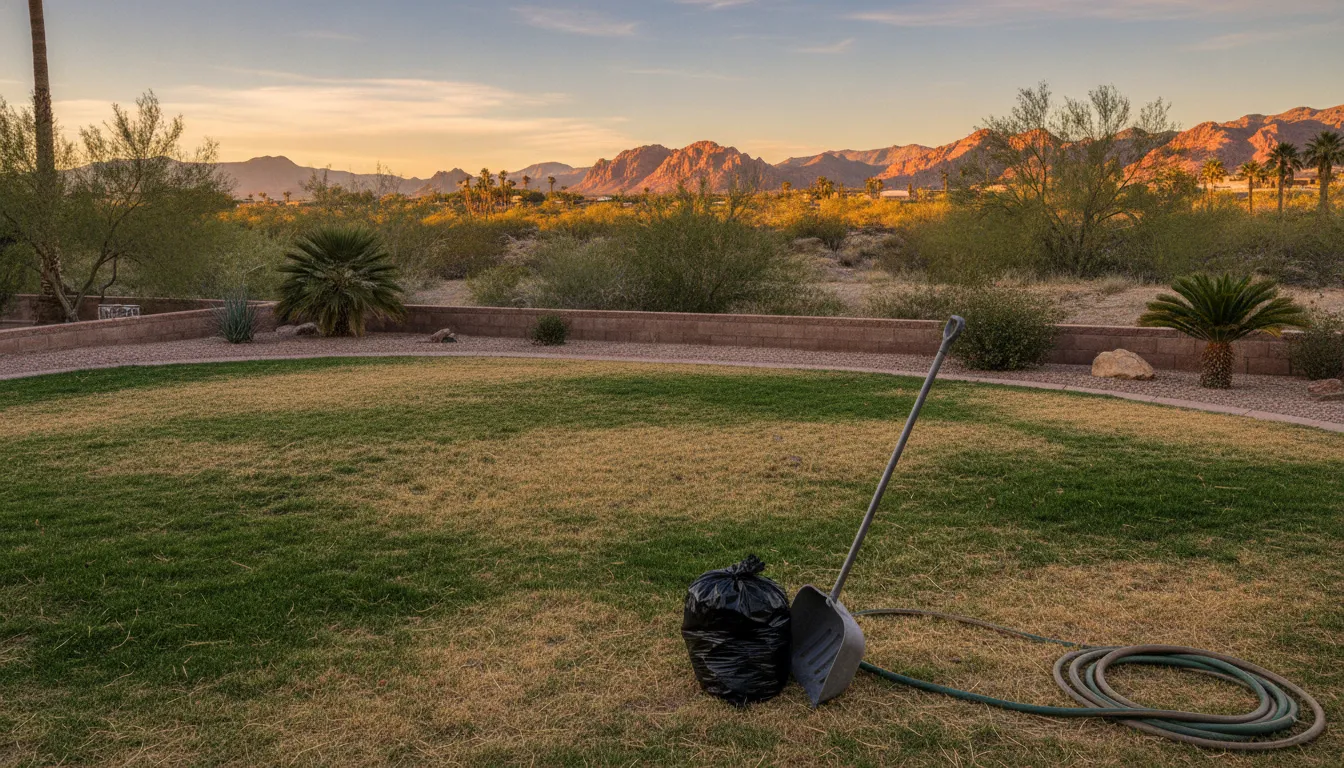
The rinse is part of the listed turf service, not a light spray you can skip when the yard looks tidy. The artificial grass cleaning page names a deep rinse and agitation after waste removal and enzyme treatment. That rinse needs water the team can reach from the turf.
Check three things the day before:
- Turn the bib on and confirm water comes out.
- Pull the hose to the farthest corner of each turf section.
- If a shared faucet is the only water, ask whether another unit will be using it during the visit.
A bib that is off, a hose that stops at the patio, or a faucet another household is using will pause the appointment. Point out the bib when you book. If the only water is far from the turf, say that too. The team can plan for the walk. They cannot invent a hose that is not there.
Las Vegas heat is why the enzyme step exists. Pet urine can leave odor in artificial grass, and the service page calls that out for Nevada yards. Heat does not add a published number of minutes. It does mean a corner that smells stronger than the rest should be named, so it is not rinsed like the rest of the yard.
Do not stack furniture, toys, or a grill on the bib the morning of the visit. A clear path from the faucet to the turf is part of being ready. If you store the hose in a locked shed, unlock the shed or move the hose out before the window starts.
Move Dogs Off the Turf for the Visit
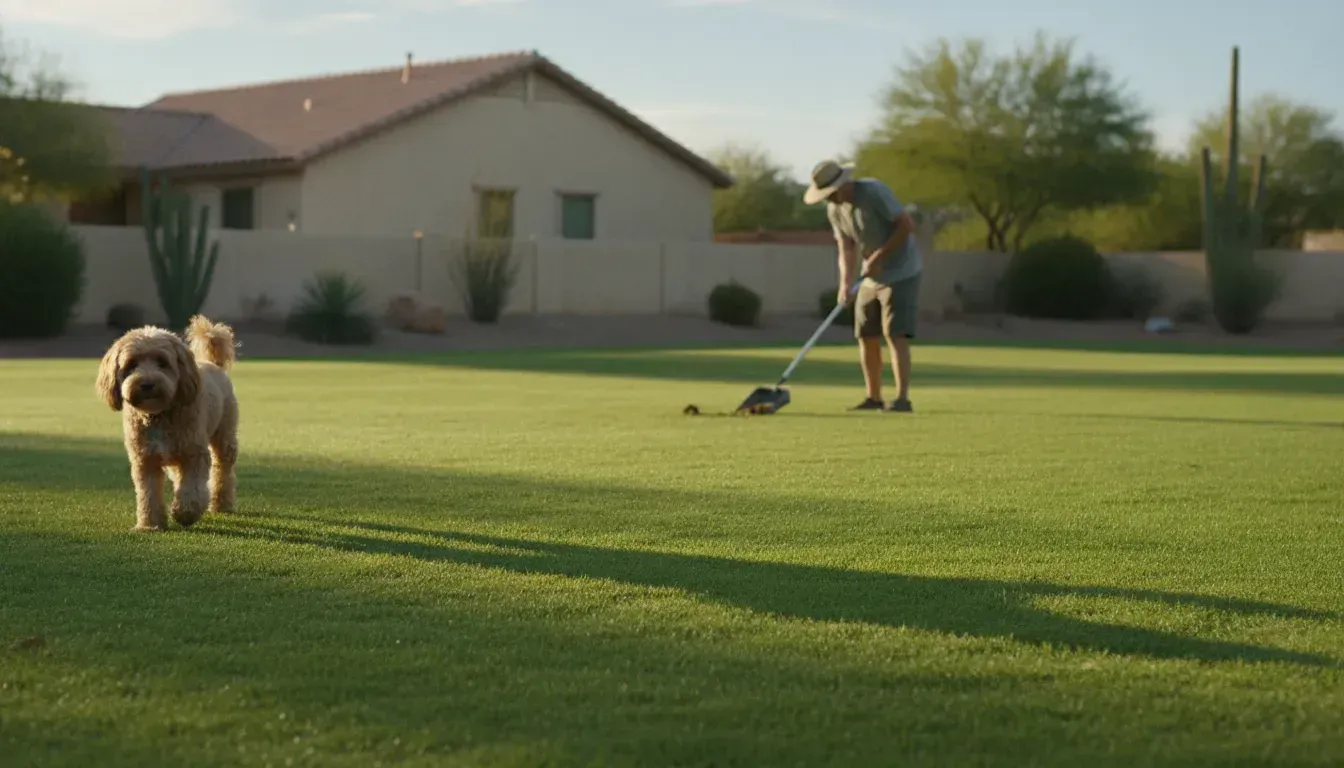
A dog that stays on the turf slows the work and can walk waste back across a section that was just cleared. Kids using the yard mid-visit do the same thing. Clearing the area is how the appointment stays as short as the yard allows. It is also safer for the pet while the rinse is running.
Pick the waiting spot before the truck is in the driveway. A closed room, a crate, or a side yard that is not turf all work if the dog cannot slip back through an open gate. Tell everyone in the house the plan. A well-meaning opener who lets the dog out halfway through undoes the first steps.
If you have more than one dog, say so when you book. Several pets can mean more waste on the surface and a harder time keeping the yard empty. That fact belongs in the request. It is not a reason to invent a minute count. A1 quotes the property from what you describe.
Weekly and bi-weekly service is recurring pet-waste removal. A1 documents those schedules and does not publish a fixed interval for specialized turf cleaning. A weekly scoop can make the cleaning visit more focused because less stool is sitting on the fibers. It does not replace debris clearing, enzyme treatment, or the rinse. If pickup is already on your account, mention it so the team knows the yard is not a first-time reset.
The guide to how often artificial turf should be cleaned for dogs owns the calendar. This page does not. Use that guide when you are deciding daily, weekly, or monthly care. Use this page when a cleaning date is already set and you need the yard ready.
Name Each Turf Section Before You Call
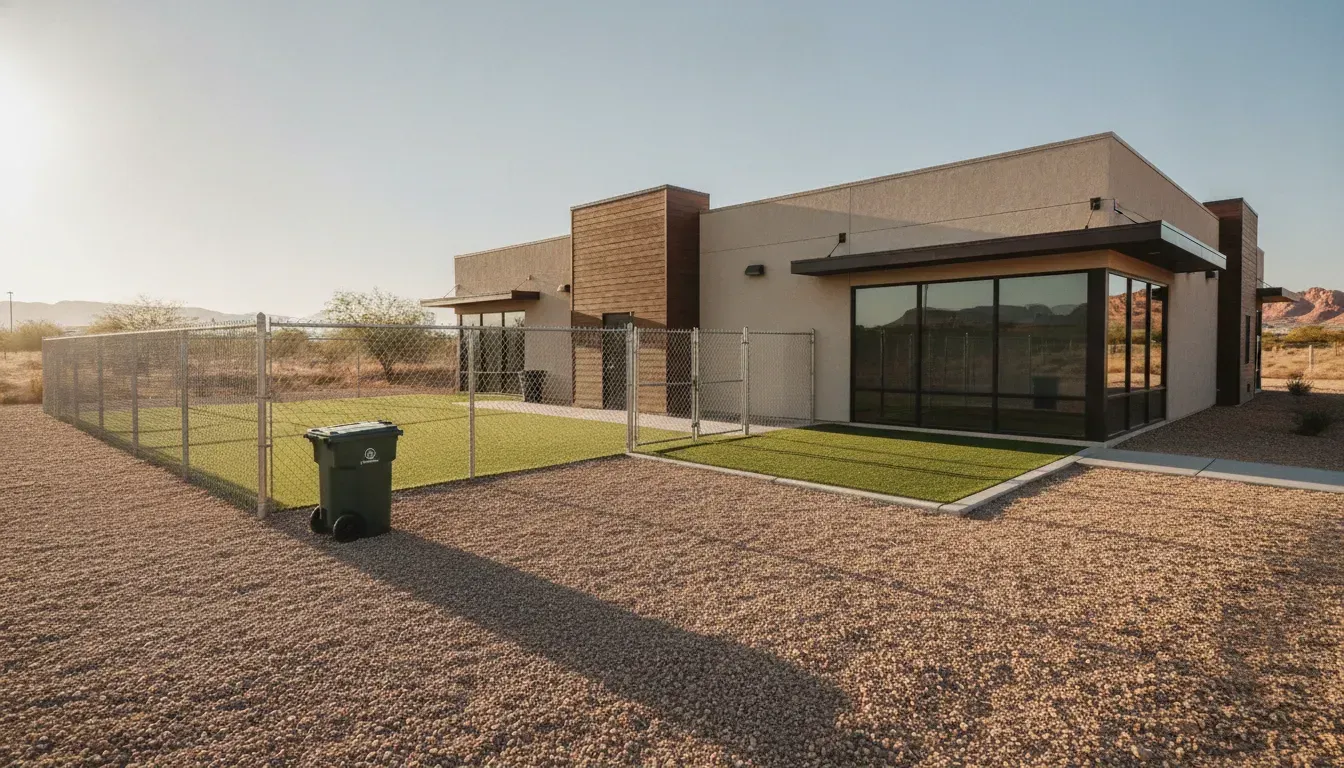
A small private yard is not the same job as a long dog run or a shared pet area. A1 quotes turf cleaning for the property. Size, traffic, waste, and access shape that quote. They also shape what you should have ready.
Match what you see with what to say:
- One compact yard. Give a rough length and width, or the square feet if you know them. The public offer covers up to 900 square feet at the homepage price. Say if you are over that.
- A side strip plus a back run. Each area is its own walk. Name both. Leaving the strip out makes the phone call look simpler than the yard.
- Heavy waste. Visible stool comes off before deodorizing or rinsing. Say whether pickup has been regular or the yard sat unused.
- Leaves and grit. Debris clearing is part of the listed service. Point out where wind piles leaves against a wall.
- A strong corner. Odor that sits in one spot should be flagged so that section is not treated like the rest.
Infill refresh is optional and only a recommendation when the turf needs it. A1 does not install artificial grass and does not replace infill as the cleaning visit. If fibers stay matted or water sits after a cleaning, that condition is a separate conversation. It is not something you stage on the morning of this appointment.
Price detail beyond the homepage offer belongs on the Las Vegas turf cleaning cost page. Do not copy a cost range from another city, or a one-time yard scoop price, onto this visit. Send the size, the dogs, and the access notes, and ask for a quote for this yard.
What to Tell A1 When You Book
The quote and the visit both start from a description of the property. The planning guide asks for the same facts before a request. You do not need a perfect measurement. You do need enough that the team is not guessing at the gate.
Send this when you call (702) 521-2624:
- Approximate size of each turf section, and whether any section is over the 900 square foot homepage offer.
- How many dogs use it, and which area gets heavier use.
- Whether you need a one-time cleaning or you already have weekly or bi-weekly waste removal.
- What you can see and smell: waste, leaves, matting, or a strong corner.
- The last time the turf was cleaned, if you know it.
- Who opens the gate, where to park, and which hose bib reaches the turf.
The U.S. Environmental Protection Agency notes that pet waste left outside can send nitrogen, phosphorus, parasites, and bacteria into water when it is not picked up and disposed of properly. That is a reason to get waste off the yard and out of storm drains. It is not a timer for the appointment. A1 bags pet waste and hauls it away for collection. That haul is separate from whether your hose was ready.
If you are comparing cleaners and tools you might buy yourself, keep that choice on the how-to pages. This article only answers what to have ready for a booked A1 visit. A product roundup will not open your gate.
After the Visit, Check the Yard, Not the Clock
When the technician leaves, look at the turf. Visible waste and loose debris should be gone from the sections you named. The treated area should have been rinsed. If a corner still smells, say so while the team is there. Odor that remains can come from drainage or older buildup. A1 does not promise that every odor disappears in one visit.
Write a short note the same day. Record which sections were cleaned, whether the rinse reached the back run, and any corner the technician flagged. That note helps the next request. It also keeps you from guessing that a shorter visit meant a skipped step, or that a longer visit meant a problem with the turf.
If odor returns a few days later, that does not rewrite the appointment you already had. Urine can sit below the surface. The next decision is whether you need another cleaning or a change in pickup frequency. The how-often guide covers that calendar. This page does not.
A waste-only stop, a full turf cleaning, and a quote visit are different jobs. Ask what was included before you compare your morning with a neighbor's. Comparing clocks will not tell you whether your yard was cleaned.
If you manage a facility, keep the same list and add who controls the empty window. A house and a daycare run are not the same staging job. Both still need the gate, the water, and the dogs off the turf before the first step.
Call (702) 521-2624 and describe your yard
Frequently Asked Questions
Does A1 publish how many minutes artificial turf cleaning takes?
No. A1 Pet Maintenance does not publish a minute count for artificial turf cleaning. The visit is quoted from the size of the turf, the waste and debris, and whether the gate and water are ready. This page covers that prep list, not a stopwatch.
What if I will not be home when the crew arrives?
Tell A1 in advance who opens the gate or that the gate will be unlocked. A locked gate with nobody on site pauses the visit before any cleaning starts. Leave a note about the hose bib and where the dogs will be.
Does the rinse still happen if the yard looks clean?
Yes, when the visit is turf cleaning and not pickup only. The listed process includes a deep rinse and agitation after waste removal and enzyme deodorizing. The hose still needs to reach the turf.
Should my dogs stay in the yard during cleaning?
Move dogs off the turf and keep a closed path so they do not walk back through a section that was just cleared. A dog on the turf slows the work and can undo the surface cleaning.
Is the $200 turf offer the same as weekly pooper-scooper service?
No. The homepage lists artificial grass cleaning and deodorizing at $200 for up to 900 square feet. Weekly and twice-weekly plans are recurring waste removal at separate monthly rates. A weekly scoop does not replace the enzyme step or the rinse.