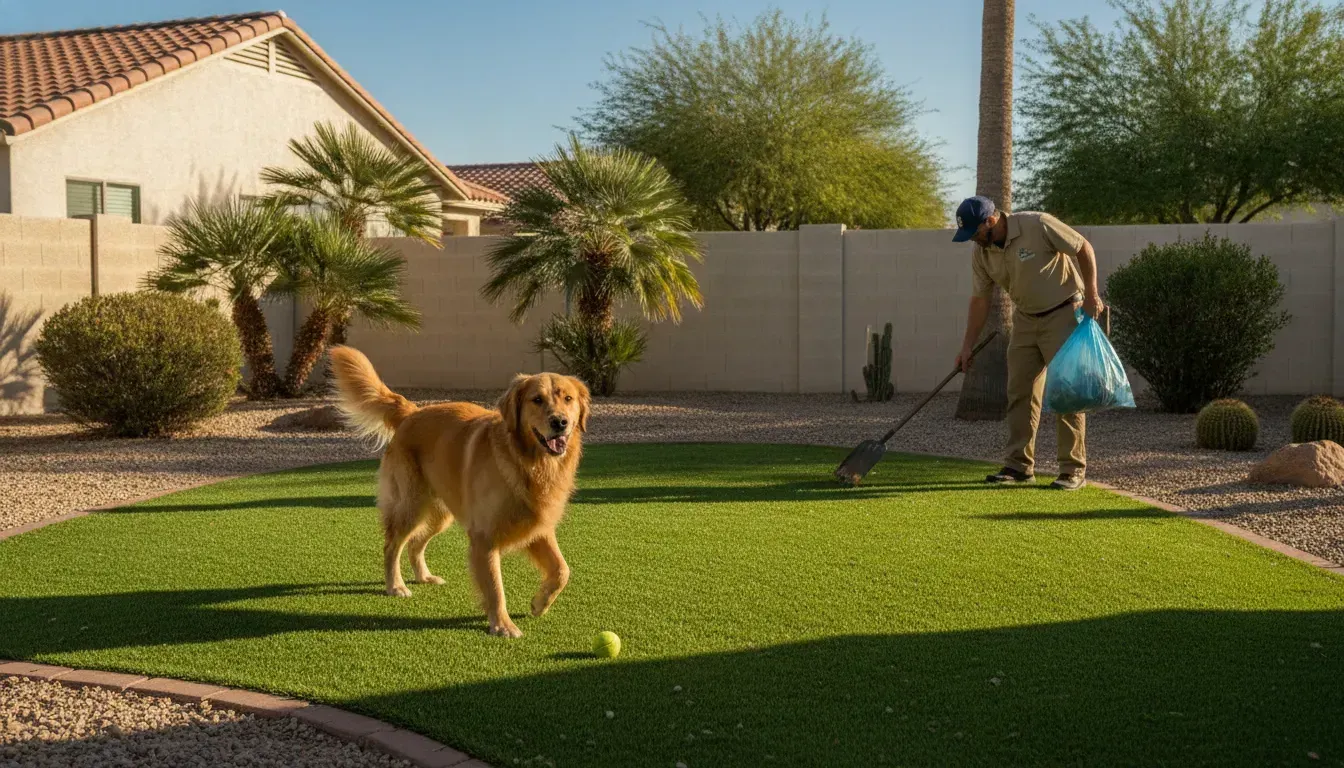
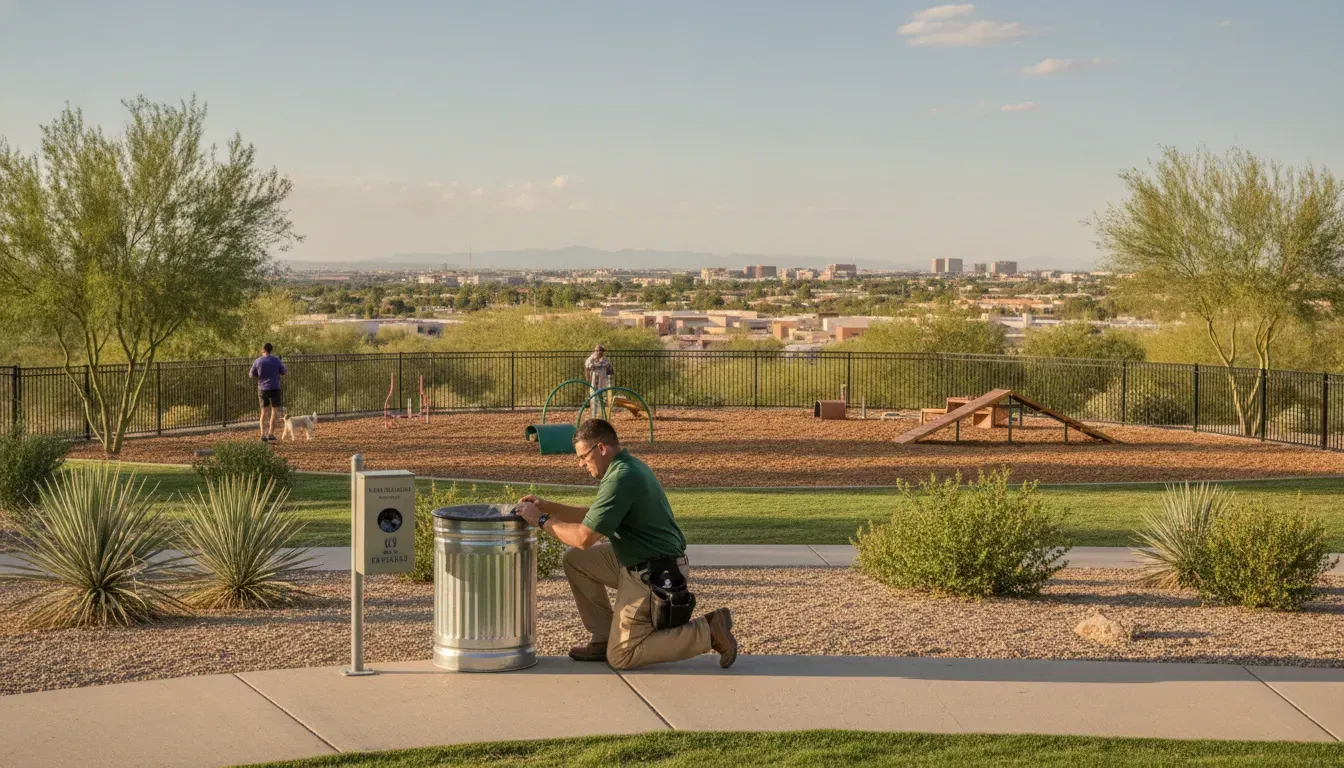
Enzyme Treatment Artificial Grass Las Vegas: Complete Guide
Enzyme treatment artificial grass Las Vegas breaks down pet-waste odor at its source, supports infill cleaning, and protects turf in dry desert heat.

Artificial turf can look clean while dog urine and organic residue settle into the infill below. In Las Vegas heat, that buildup can turn into a persistent ammonia odor that a quick rinse does not solve. A1 Pet Maintenance has kept local properties cleaner and more hygienic for over 26 years, using professional sanitation methods for dog-friendly yards.
An enzyme treatment artificial grass Las Vegas service uses targeted enzymes to break down organic compounds associated with urine and pet waste, helping address odor at its source rather than simply covering it. The treatment is part of a deeper artificial turf cleaning approach that can include waste removal, infill cleaning, deodorizing, and sanitation. Learn more in our artificial turf cleaning for dogs guide.
Call A1 Pet Maintenance at (702) 521-2624 Today
Understanding what the enzymes do, where they work, and why desert conditions matter makes it easier to choose the right maintenance plan. First, let us look at what an enzyme treatment actually is.
What Is an Enzyme Treatment for Artificial Grass?
An enzyme treatment is a biological cleaning method designed to address the organic residue behind stubborn pet odors. Instead of simply covering the smell with fragrance, an enzyme-based product works on the compounds left by dog urine and waste. Those compounds can remain in the turf system after the visible waste has been removed, giving odor-producing bacteria a continuing source of material. Enzymatic cleaners are specifically designed to break down the organic material associated with pet urine odor.1
That distinction matters on artificial grass. Synthetic turf does not grow or absorb water like soil, but it still has seams, backing, drainage openings, and infill. Urine can move through the surface and collect in that infill. Enzymes can target nitrogen-based compounds that remain there and contribute to persistent odor. The treatment is therefore aimed at the residue within the turf system, not only at the surface where a hose can reach.
Artificial grass can also harbor bacterial growth from pet waste when it is not cleaned regularly and deeply. The U.S. Environmental Protection Agency notes that pet waste is a leading source of bacteria and nutrient pollution in urban streams and waterways when runoff carries it into storm sewer systems.2 In a yard, the immediate concern is usually odor and sanitation. But the same principle applies: removing waste and treating the residue is more effective than allowing buildup to remain in place.
Why is infill cleaning part of the treatment?
Infill is one reason a basic home-spray fix may not solve a recurring odor problem. Standard surface cleaning may miss the deeper layer where urine residue and ammonia-producing bacteria collect. Specialized cleaning is needed to reach and address those areas rather than leaving the source untouched.
A1 Pet Maintenance treats enzyme-based deodorizing as a specialty service within professional artificial grass sanitation. The goal is not to sell a scented spray or promise instant, permanent odor elimination. It is to combine appropriate product application with the cleaning and waste-removal steps needed for the condition of the turf. Our approach is especially useful for Las Vegas dog yards, pet runs, and shared spaces where repeated use can create more buildup than a homeowner expects.
For the broader maintenance process, review our guide to artificial turf cleaning for dogs. An enzyme treatment can be an important part of that plan. But it works best when the underlying pet-waste residue and infill are addressed as part of the same service.
Why Enzyme Treatments Matter for Artificial Grass in Las Vegas
Las Vegas turf does not get the same natural relief that artificial grass receives in a humid climate. Extreme heat and near-zero rainfall allow urine residue to remain concentrated in the infill, where ammonia-related odors can build faster than many homeowners expect. Water rinsing may move some residue through the surface, but it cannot reliably address what has collected below it.
Dog urine can remain in the turf infill long after the visible waste is removed. Under direct desert sun, that trapped residue is repeatedly heated, making the odor more noticeable when the yard warms up. The result is often a cycle: the grass seems acceptable in the morning, then smells strongly by afternoon or after several hot days. That is why Las Vegas pet households may need more frequent turf cleaning than properties in humid or temperate areas. An enzyme treatment for artificial grass addresses this desert-specific problem at the residue level instead of simply covering the smell.
Heat turns a small problem into a daily odor problem
When urine compounds stay in the infill, every additional accident adds to the existing buildup. Near-zero rainfall means there is little natural dilution, while high temperatures intensify ammonia odors from the trapped material. This matters most in smaller dog runs, side yards, and heavily used areas where pets return to the same spots. Eventually, a yard that was installed for convenience can become a place the household avoids.
That change in behavior is an important warning sign. If homeowners stop opening the patio door, letting children play outside, or spending time with their pets in the yard, surface deodorizing is no longer enough. The goal is to reach the source of the odor and restore the space to regular use.
Enzymes target the residue rinsing leaves behind
Enzymatic cleaners are designed to break down the organic compounds associated with pet urine odors. In artificial turf applications, the treatment is directed toward nitrogen-based urine compounds that remain in the infill. It is a targeted response to the chemistry of pet waste, not a fragrance intended to mask ammonia.
For that reason, enzyme treatment works best as part of a broader sanitation service that includes removing solid waste and addressing the infill. Pet waste left on turf can also contribute to bacterial and nutrient pollution when stormwater carries it toward drains and waterways, according to the EPA's pet-waste management guidance. A planned cleaning approach helps protect the usability of the yard while supporting more responsible waste management.
How Enzyme Treatments Break Down Dog Urine and Waste Odor
Dog urine does not disappear when the visible spot dries. Liquid can move through the turf blades and settle into the infill, where uric acid and other organic nitrogen compounds remain. Those residues provide material for odor-producing bacteria to act on. As the Las Vegas sun heats the surface, the odor can become noticeable again, even after the yard looks clean.
Enzymes target the residue instead of covering the smell
Enzymes are biological catalysts. In a turf treatment, they help break complex organic residues into smaller compounds that are less likely to support the odor cycle. The goal is not to perfume the grass or briefly overpower an ammonia smell. The goal is to reduce the material that odor-producing bacteria use, so fewer odor molecules form in the first place. Industry guidance describes enzymatic cleaners as products designed to break down the organic material associated with pet urine odor. Learn more about the enzyme mechanism.
This distinction matters because a surface rinse can remove loose debris without addressing what has migrated below the turf blades. A thorough service combines physical waste removal, rinsing or extraction where appropriate, and a targeted deodorizing treatment. That sequence helps the treatment contact the areas where urine residue is concentrated. For a broader maintenance overview, see our guide to pet odor removal for artificial grass.
Why deep infill treatment matters for sanitation
Artificial grass is synthetic, but pet waste can still create a bacterial environment if it is not cleaned regularly and deeply. The U.S. Environmental Protection Agency identifies pet waste as a leading source of bacteria and nutrient pollution in urban streams and waterways. Stormwater can carry bacteria from unmanaged waste into storm sewers and nearby rivers, lakes, and streams. Proper waste removal and on-site sanitation therefore support more than a better-smelling yard. They are part of responsible pet-waste management. Read the EPA pet-waste management guidance.
Deep infill layers need specialized attention because basic rinsing may not reach the areas where persistent residues and odor-related bacteria accumulate. Professional enzyme treatment for artificial grass in Las Vegas is designed around that problem. It addresses the source within the turf system rather than treating only the visible surface. The exact approach depends on the turf, infill, drainage, pet traffic, and condition of the area. But the principle remains consistent: remove waste, reach the residue, and break down the compounds that allow odor to return.
Professional Enzyme Treatment vs. DIY Cleaning: What's the Difference?
A quick rinse can remove loose debris, and a homeowner enzyme spray may help with a small, fresh spot. Neither approach is the same as treating the entire turf system. Pet waste and urine can move below the visible blades into the infill, where surface spraying has limited reach. Professional service pairs physical waste removal with deeper application and sanitation, so the work addresses the source of odor instead of simply covering it.
That distinction matters in Las Vegas. Heat can intensify ammonia odors from urine trapped in synthetic turf, while limited rainfall provides little natural rinsing. The right process also helps protect the existing turf and infill. Managing buildup can be more practical than allowing odor and contamination issues to progress toward expensive replacement. A1's professional artificial grass cleaning service is designed around that broader maintenance goal.
DIY cleaning compared with A1 professional enzyme treatmentAttributeDIY home enzyme sprayA1 professional enzyme treatment serviceReach and applicationUsually limited to the area a homeowner can identify and spray from the surface.Applied as part of a planned treatment across affected turf, with attention to where waste and odor have accumulated.Infill penetrationMay not reach evenly through the infill layer, especially when buildup is established.Uses a deeper cleaning approach intended to address the infill, where urine compounds can remain.Waste removalDepends on the homeowner to find and remove all physical waste first.Combines physical pet waste removal with deodorizing and sanitation.Odor outcomeCan improve a localized odor, but results may be temporary if the underlying buildup remains.Targets odor as part of comprehensive maintenance rather than masking it with fragrance.Time and laborRequires repeated searching, spraying, rinsing, and monitoring by the homeowner.Handled by a trained service team with the equipment and process for a more thorough treatment.ResultUseful for routine spot attention between professional cleanings.A fuller sanitation service that supports turf longevity and ongoing yard usability.
DIY care still has a place between service visits. Remove waste promptly and follow the turf manufacturer's care guidance. When odor returns quickly, spreads across the yard, or persists despite rinsing, the issue likely needs more than another surface application. Professional enzyme treatment can restore a more manageable maintenance baseline without treating turf replacement as the first solution.
How Often Should Your Las Vegas Artificial Grass Get Enzyme Treatment?
For most Las Vegas dog owners, an annual or biannual professional enzyme treatment is a practical schedule for keeping artificial grass fresh. The right interval depends on how much pet traffic your turf receives, how quickly odors return, and whether the area is used by one household or several dogs. A scheduled treatment is more effective than waiting until the turf smells strongly, because it addresses buildup before the infill becomes heavily saturated.
Once urine reaches the infill, surface rinsing may not remove everything that contributes to odor. Professional treatment helps target the organic and nitrogen-based compounds that remain below the visible turf surface. It is intended to interrupt the odor regeneration cycle, not simply cover the smell with fragrance. For a broader maintenance routine, see this guide to pet odor removal for artificial grass.
When annual treatment is usually enough
Annual service may work well for a private yard with one dog, consistent waste pickup, and good day-to-day rinsing. It can also be a useful baseline for homeowners who do not notice recurring odor between cleanings. Scheduling treatment before the hottest part of the year gives the turf a preventive reset. Rather than making the first service an emergency response to a strong ammonia smell.
When to schedule treatment twice a year
Biannual service is often a better fit for multiple-dog homes, pet runs, and yards with high-traffic play areas. Shared turf, HOA spaces, and other locations used by many dogs may need more frequent attention because waste and urine are concentrated in the same zones. Las Vegas heat and very low rainfall can accelerate odor buildup, so a schedule that works in a milder or wetter climate may not be enough here.
Consider a shorter interval if odor returns soon after cleaning. If dogs repeatedly use one section of turf, or if the infill is beginning to hold persistent urine odor. A professional can assess the turf, identify high-use areas, and recommend a service cadence based on actual conditions. Regular enzyme treatment helps prevent long-term infill saturation while supporting a cleaner, more usable outdoor space.
Frequently Asked Questions
What is the best enzyme cleaner for dog urine on artificial grass?
The right option is an enzyme-based treatment designed for synthetic turf and applied after physical waste removal. Enzymatic cleaners work by breaking down organic compounds associated with urine odor, while a professional service can address contamination below the surface. Product selection and application should match the turf, infill, and level of buildup rather than rely on a one-size-fits-all spray.
Can you ever get urine smell out of artificial turf?
Yes, odor can often be substantially reduced when the treatment reaches the infill where urine compounds remain. Basic rinsing may leave deeper buildup behind, so persistent odor usually calls for thorough cleaning and deodorizing instead of masking the smell. Las Vegas heat can intensify ammonia odors trapped in synthetic turf, making consistent sanitation especially important.
Is enzyme treatment safe for pets?
Use a treatment formulated for artificial grass and follow its application and re-entry directions. A professional provider should explain any temporary access restrictions, drying time, and product precautions before service. Keep dogs away from the area during application and until the treated surface is ready for normal use.
How often should artificial grass be professionally treated in Las Vegas?
Annual or twice-yearly professional treatment is a useful starting point for many Las Vegas dog owners, with adjustments for the number of dogs, traffic, and odor history. More frequent service may be appropriate for shared or heavily used turf. Regular deep cleaning helps prevent urine from saturating the infill and supports the turf's long-term condition.
How long does artificial turf last in Las Vegas?
No single lifespan applies to every installation because material quality, sunlight, traffic, drainage, and maintenance all matter. Regular deep-cleaning cycles help preserve artificial turf's appearance and function in pet-active spaces. Treating buildup early can also help you avoid letting persistent sanitation problems shorten the useful life of the surface.
Book Your Enzyme Treatment Service in Las Vegas
Professional enzyme treatment can help address the organic buildup that contributes to recurring odor on artificial grass. A1 Pet Maintenance can help you choose a practical next step for your turf and your dogs.
Call A1 Pet Maintenance at (702) 521-2624 to book your enzyme treatment service today.