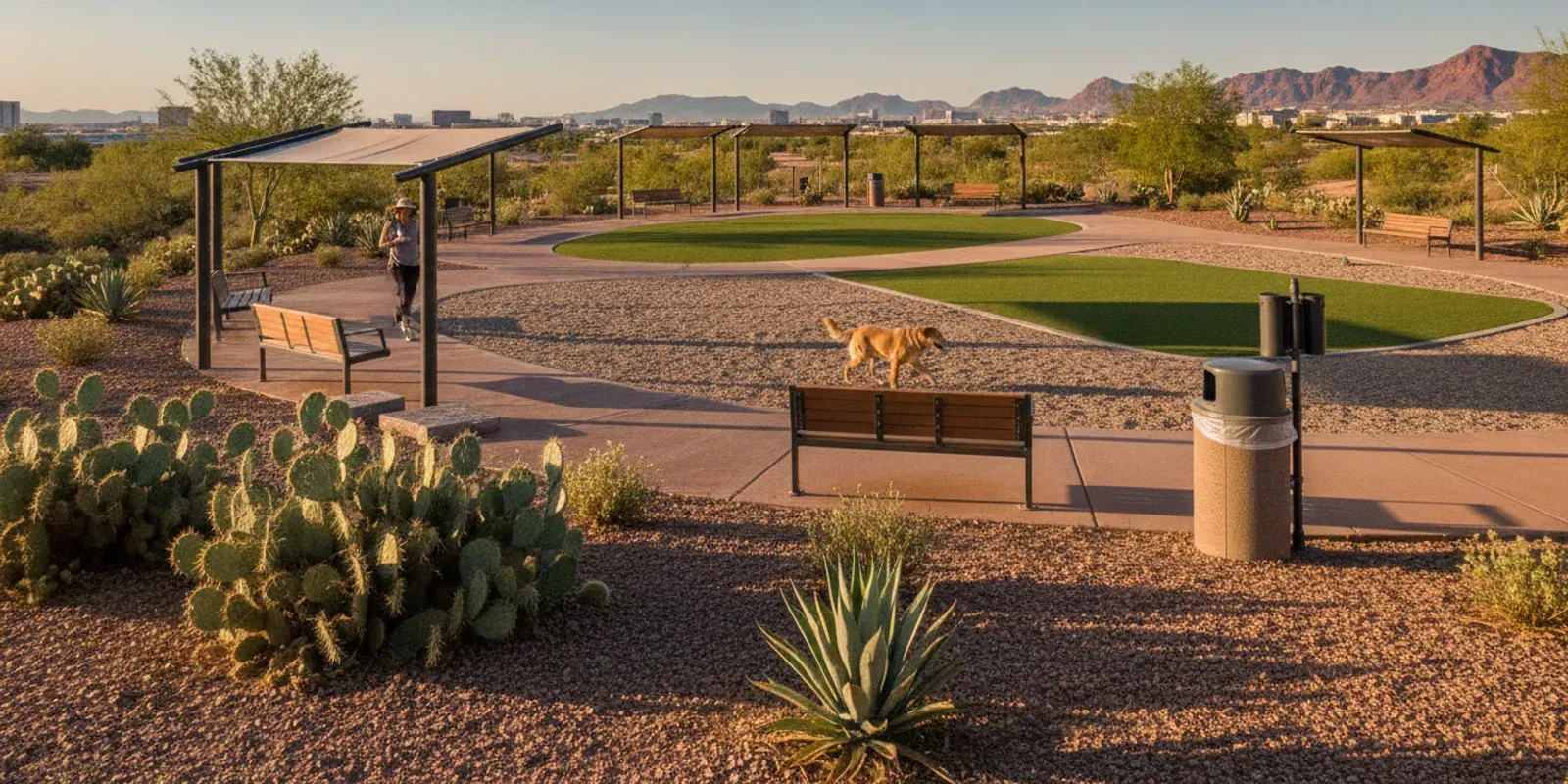
Pet waste removal Arizona: Service Options and Planning Guide
Pet waste removal Arizona residents need is best planned around the property, how often dogs use it, and who is responsible for cleanup. In the Tucson metropolitan area and Pima County, first confirm that the address is served, then decide whether a one-time cleanup or a weekly or bi-weekly routine fits. A1 Pet Waste Maintenance serves the Tucson area and Pima County, as well as Southern Nevada; availability should be confirmed for the specific address.
Ask about service for your property
What does pet waste removal include?
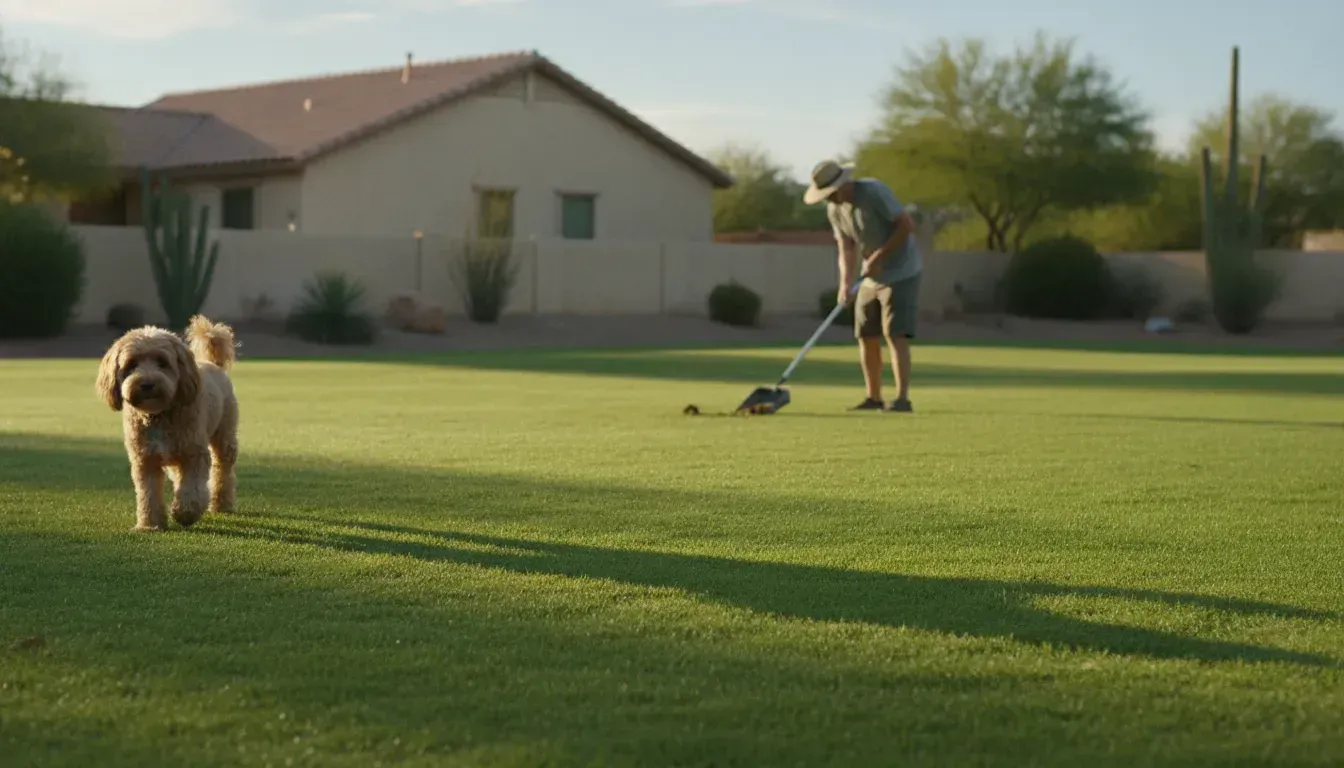
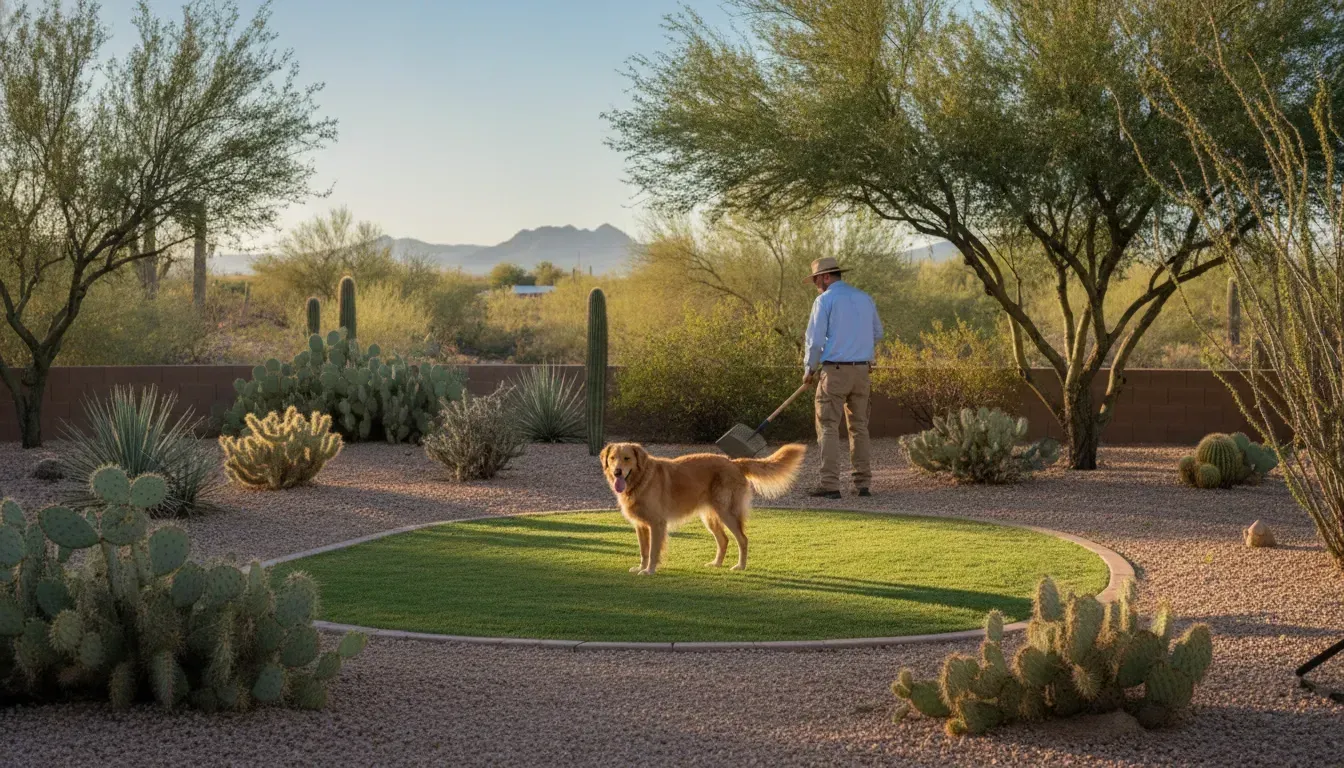
Pet waste removal means collecting solid pet waste from agreed outdoor areas. At a private home, that commonly means the lawn or yard dogs use. At an apartment community, HOA, or other shared property, the scope may include common lawns, walking routes, and areas around waste stations. The exact work should be agreed in advance. A service visit does not automatically cover every outdoor surface, every enclosed dog run, or turf cleaning.
Before scheduling, describe the property and identify the areas you want addressed. For a home, point out the yard boundaries and any side runs. For a shared property, distinguish residents’ private patios from common grounds and identify which paths or lawns see regular dog traffic. Be specific about gates, locked areas, and access restrictions. A clear description helps the provider determine whether the requested work is suitable and what details still need confirmation.
A1 offers recurring pet waste removal and one-time cleanups. Recurring residential service is available weekly or bi-weekly. A one-time cleanup can address an existing buildup or provide a reset. The choice depends on the current condition and the routine you want afterward, not simply on which option sounds easier.
How do you choose recurring service or a one-time cleanup?
Start by looking at the waste already present and the way the property is used. If waste has accumulated over a period of time, ask whether a one-time cleanup is appropriate for the current condition. If dogs use the yard regularly and you want scheduled maintenance, ask about weekly or bi-weekly visits. Some owners may begin with a cleanup and then discuss a recurring schedule; others may only need a single visit.
| Option | Useful when | Questions to resolve |
|---|---|---|
| Weekly recurring pickup | The yard or common space gets frequent use and the owner wants a regular routine. | Which areas are included, what access is needed, and which day or route timing is available? |
| Bi-weekly recurring pickup | A scheduled routine is wanted with visits spaced farther apart. | Does the interval suit the number of dogs, use of the area, and tolerance for buildup? |
| One-time cleanup | Waste has accumulated, or a yard needs a reset before a new routine. | What is the current condition, what areas are requested, and what happens after this visit? |
This comparison is a planning aid, not a guarantee that one schedule fits every property. A household with multiple dogs or a small, heavily used yard may have different needs from a home with one dog and a larger outdoor area. For shared grounds, the number of residents and the layout matter too. Describe actual use when asking about service instead of choosing an interval based only on a general rule. Read about A1’s one-time pet waste cleanup option when a reset may be needed.
A simple way to decide is to walk the area and note two things: whether the current condition calls for a reset, and whether new waste will continue to collect after that reset. For example, a household preparing for a family visit may need to ask about a one-time cleanup first, then decide later whether routine pickup is useful. A dog that uses the yard every day creates an ongoing task; a rarely used side area may not need the same attention as the main lawn. Share the whole picture with the provider so the recommendation can reflect the actual use.
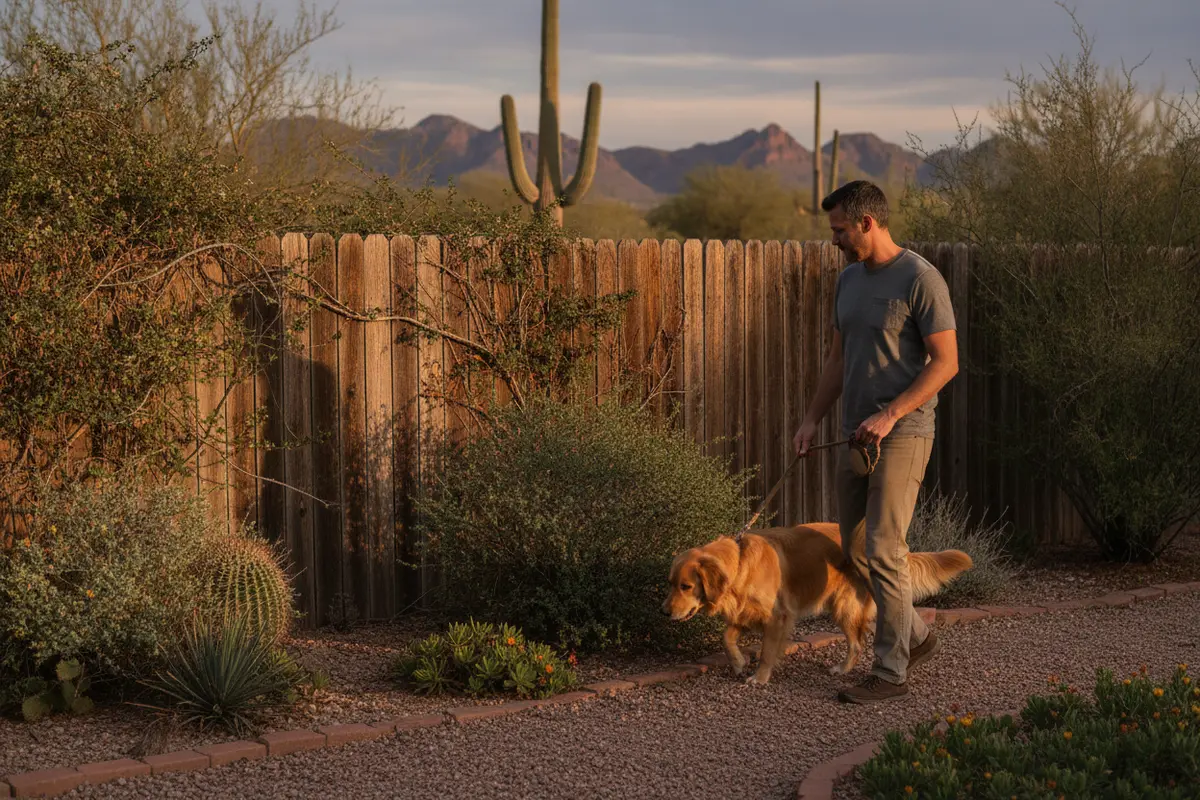
What should Arizona pet owners check before booking?
Write down the basic information before contacting a provider. A short checklist reduces back-and-forth and helps clarify whether the service matches the yard.
- Address and coverage: Give the complete address and ask whether it falls within the current Tucson-area or Pima County service area.
- Property type: Explain whether the request is for a private yard, rental, apartment community, or HOA.
- Number of dogs and use: Say how many dogs use the outdoor space and whether they have access to the whole yard.
- Current condition: Tell the provider whether the waste is maintained routinely or has built up. If the yard has not been cleaned for a while, say so plainly.
- Areas and surfaces: Name the lawn, side yard, common path, or other requested locations. Mention artificial grass separately.
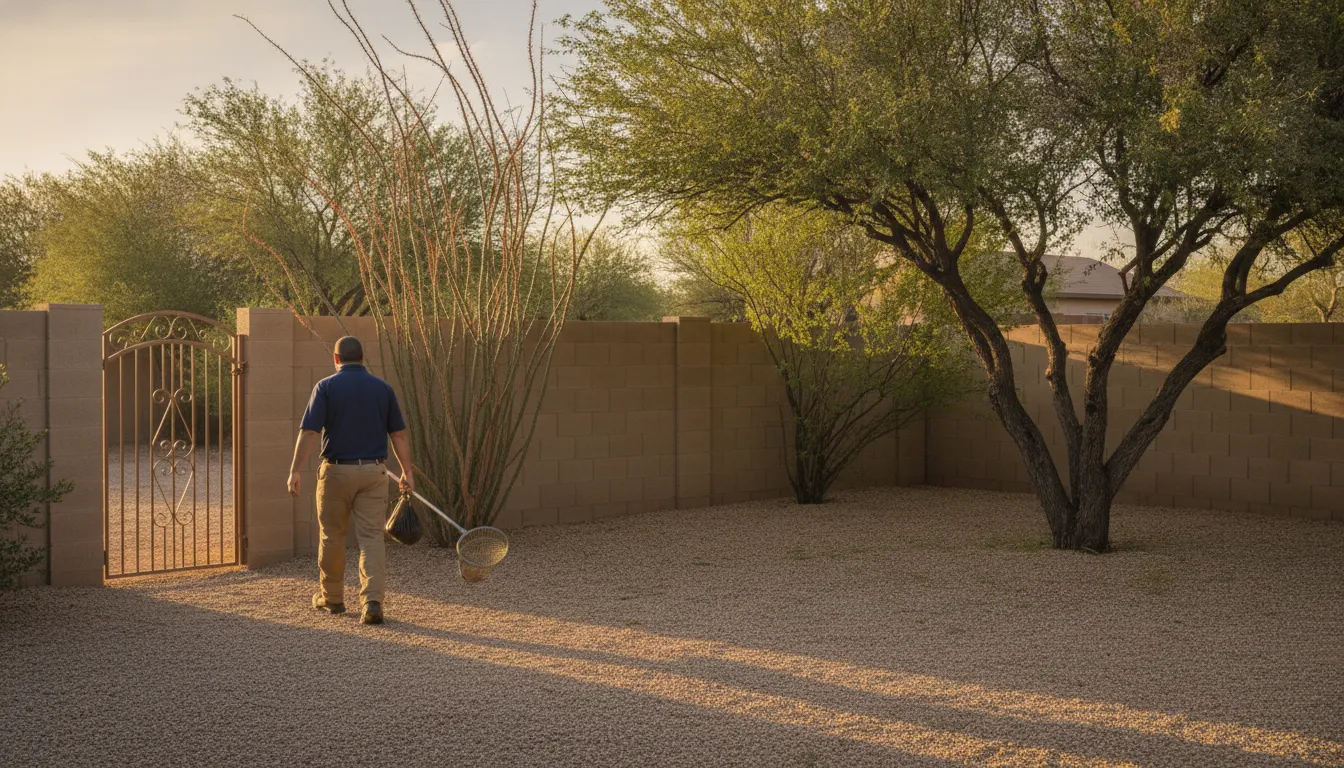
- Access details: Describe gates, latches, entry instructions, pets on site, and any time restrictions.
- Preferred routine: Ask whether weekly, bi-weekly, or one-time service is available for this property.
Before the first visit, make sure the agreed area is accessible and any gate instructions are accurate. Manage pets safely during service. Renters should check with the property manager before arranging access or work in shared areas. If a gate code changes or landscaping work blocks entry, update the provider rather than assuming the crew will be able to reach the yard.
What information makes an inquiry useful?
Include details that change the scope instead of sending only a general request for service. For a home, that might mean noting a narrow side yard that dogs also use, a separate front enclosure, or a gate that is sometimes locked. For a community, identify the number of common areas and whether a maintenance team can provide access. If you do not know the best frequency, say so; the provider can discuss available options after learning the site conditions.
A clear inquiry might say: “I’m in the Tucson area, have two dogs, and need the fenced back lawn cleaned. Waste is present from the last few weeks. The gate is on the east side, and the latch opens inward. Can you confirm service for this address and tell me whether a one-time cleanup or a recurring schedule makes sense?” This gives the provider the facts needed to discuss scope without assuming a price, visit length, or service eligibility.
How should a property manager plan shared-area cleanup?
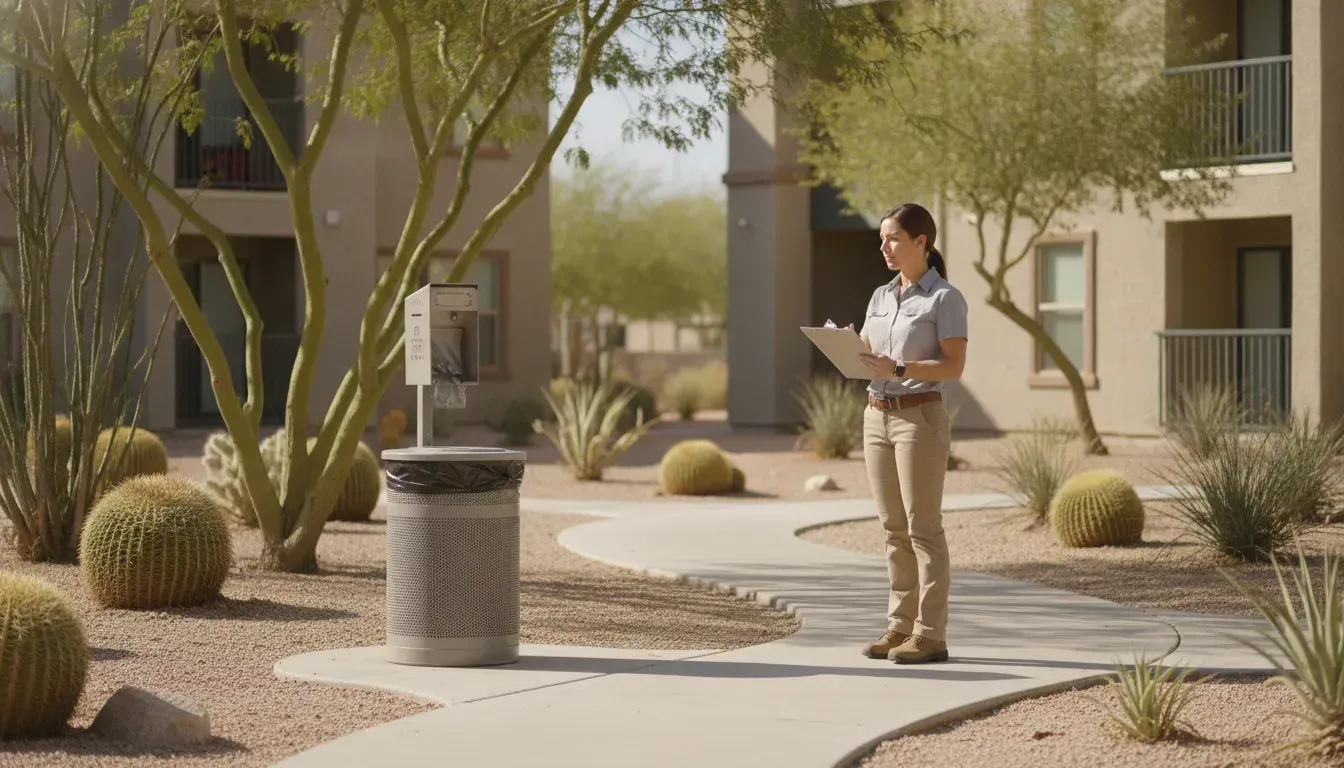
For shared properties, consistency starts with a map and a defined point of contact. Walk the grounds and mark the lawns, paths, dog-use areas, and waste stations. Think about where residents actually walk dogs, not only the most visible lawn. Separate common areas from spaces that require resident or maintenance access. Then decide who can authorize a service change and who will report a concern.
Use this sequence to build a workable plan:
- Mark the shared areas where dogs are permitted or commonly walked.
- Record gate locations, access instructions, and any safety or timing restrictions.
- Describe the current condition and identify locations where waste tends to collect.
- Ask the provider which service frequency and scope are available for the site.
- Name one manager or staff contact who can share updates and receive questions.
- After visits, review the defined areas and report a specific location if something needs attention.
For example, a manager may find that the grounds look clean near the entrance while waste remains along a rear walking route. Adding that route to the scope discussion is more useful than a general request to “clean the property.” Likewise, if residents use a designated dog area but not a distant lawn, prioritize the actual use pattern. The service plan should make clear what is included and how the manager can communicate a change.
It also helps to establish a simple feedback method. A manager can record the date, location, and nature of any concern rather than relying on a vague report that “the grounds were missed.” Check the same agreed areas after service, and distinguish a one-time access issue from a recurring gap in the defined route. If resident use changes, for example after a dog run opens or a path is rerouted, update the service discussion and the site map. This keeps the expectations tied to the current property rather than an old layout.
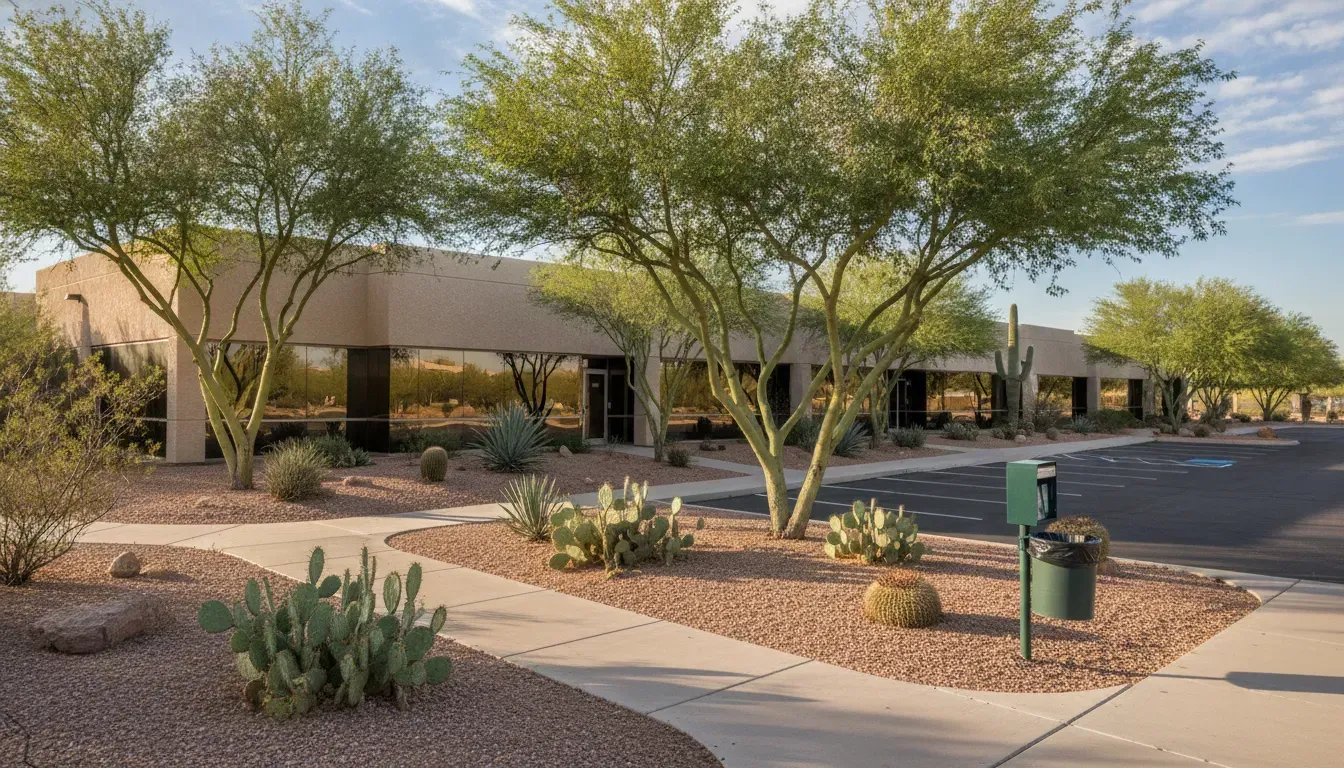
Review A1’s information about commercial property pet waste cleanup and community pet waste solutions to frame a conversation about shared grounds. Confirm the proposed scope and schedule for the specific site rather than treating a general service description as a site-specific commitment.
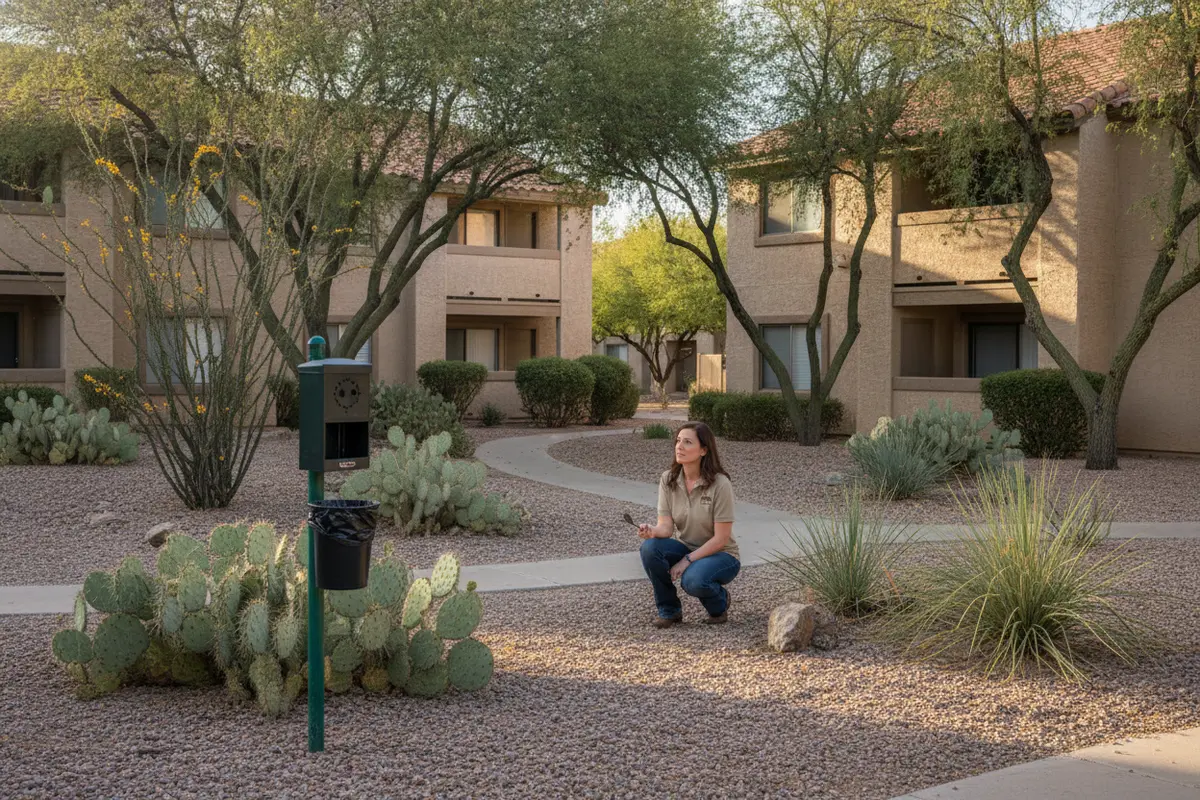
How do heat and dry conditions affect the routine?
Arizona’s hot, dry periods can make an unmaintained outdoor space unpleasant to use. A practical routine is to avoid unnecessary buildup, keep service access clear, and choose a schedule that reflects how often dogs use the property. Do not assume a waste pickup will resolve every odor. Solid waste, urine, bins, and artificial turf can each call for different attention.
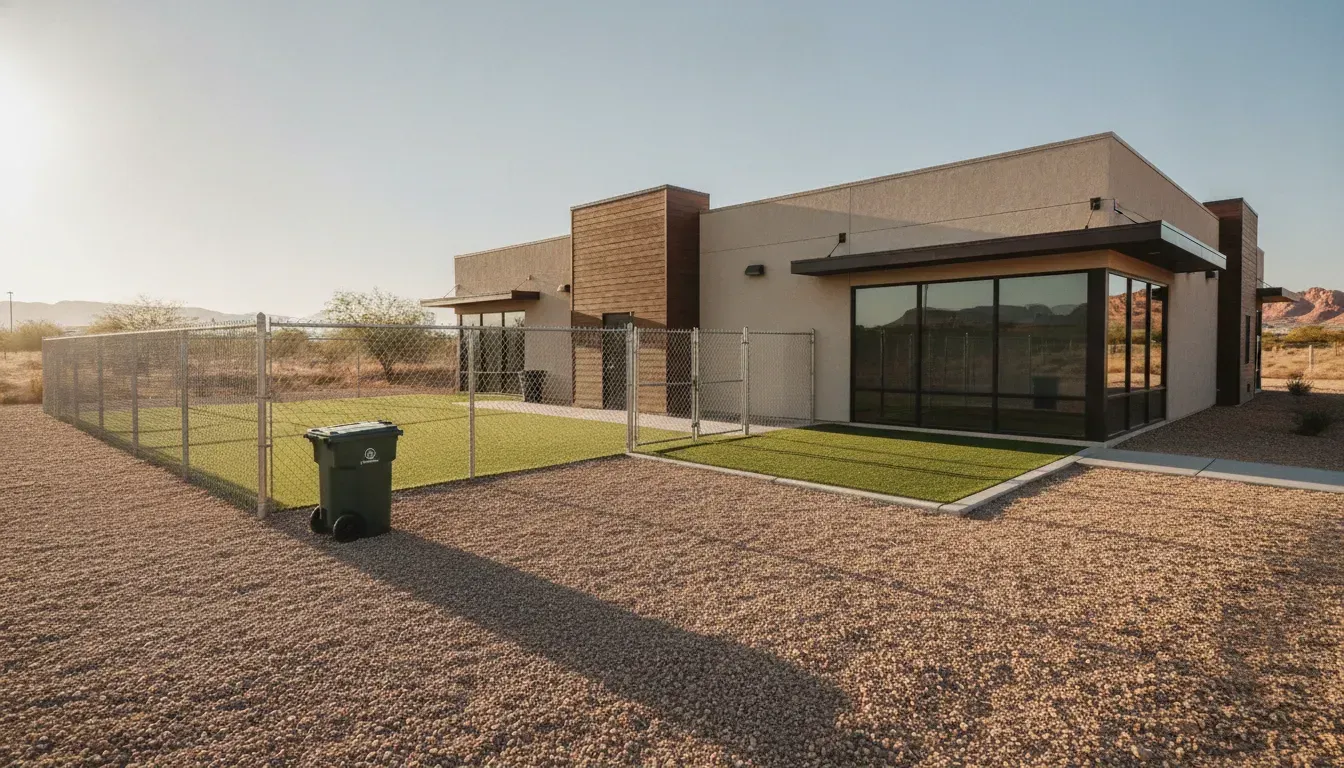
When the yard has artificial grass, mention the surface and describe the concern. Collecting solid waste is not the same task as cleaning turf or addressing urine odor. A1 provides artificial grass cleaning and maintenance; the artificial grass cleaning information can help you explain whether the issue is solid waste, turf care, or odor. Avoid applying a product without checking that it is suitable for the surface and pets.
Seasonal changes can also affect access and use. If a property has temporary construction, landscape work, or a gate that is closed at certain times, include that in the plan. For a community, communicate the service routine to residents so they know which areas are included and whom to contact about access or a specific concern. Clear expectations are especially useful when several people share responsibility.
Keep the request task-specific. If the main issue is visible solid waste, explain where it is accumulating. If the main concern is an odor that remains after solids are removed, identify whether the smell comes from turf, a collection bin, or another area if you can tell. This distinction helps avoid treating every odor problem as a pickup issue. For a shared property, note whether the complaint is isolated to one dog-use spot or present across a wider area, then ask what service scope addresses that need.
How can you compare providers without focusing only on price?
Ask every provider the same practical questions so you can compare equivalent work. A quote or description is difficult to evaluate if one provider is discussing a one-time cleanup and another is describing recurring pickup. Clarify the number and type of areas included, the visit frequency, access requirements, and what the customer needs to do before service.
- Does the provider serve the exact address?
- Is the recommendation a one-time cleanup, recurring pickup, or a combination?
- Which areas are included, and are artificial turf cleaning or other tasks separate?
- What frequency is available, and how are weather or access disruptions handled?
- What preparation is required before the first visit?
- How can the customer change or stop a recurring schedule?
Compare answers in writing if multiple people are making the decision. A short scope note can list each area, frequency, access detail, and the person who can request changes. This makes it easier to spot mismatches: one provider may be discussing only the back lawn while another is including a side run, or a one-time reset may be compared with ongoing maintenance. Resolve those differences before comparing the options. Ask about current terms directly instead of relying on an old note or an assumption.
A1’s billing FAQs state that customers can start or stop service by phone without a contract. See the pet waste removal FAQs for details and contact the company to verify current options for your property. Avoid assuming that a particular service frequency, price, or scope applies before the provider confirms it.
What does a local directory tell you?
A directory can help identify businesses listed for a particular community, but it does not prove that a business serves a different address or that a service matches your property. The Better Business Bureau directory for pet waste removal near Sierra Vista is a local reference, not confirmation of Tucson coverage, availability, or a provider’s proposed scope. Check coverage directly and ask for the details that matter to your yard or shared grounds.
Frequently asked questions
Does A1 serve all of Arizona?
No statewide coverage is stated. A1 serves the Tucson metropolitan area and Pima County in Arizona. Share your address with the company to check whether service is available there.
Can I book a single cleanup instead of recurring visits?
Yes. A1 offers one-time cleanups as well as recurring pet waste removal. A single visit may be worth discussing when waste has accumulated or a property needs a reset. Confirm the requested areas and ask whether ongoing service is also available.
How often can recurring residential service be scheduled?
A1 offers weekly and bi-weekly residential service. The right option depends on how many dogs use the space and the property’s conditions. Explain those details when you ask about availability.
Is pet waste pickup the same as artificial grass cleaning?
No. Collecting solid waste and cleaning artificial grass are different tasks. If your concern is turf maintenance or urine odor, mention that when contacting A1 and ask about the separate artificial grass cleaning service.
What should I do before the first visit?
Confirm the service scope, provide accurate gate instructions, and make sure the agreed area is accessible. If you rent or manage a shared property, obtain permission and coordinate access before scheduling.
Call to discuss service options
A clear scope, accurate access details, and a schedule suited to the property make pet waste removal easier to plan for Arizona homes and shared communities.