Does Artificial Grass Smell Like Dog Urine? Las Vegas Fix
Call about does artificial grass smell like dog urine and get turf odor removal in Las Vegas. A1 Pet Maintenance offers 26+ years of local turf sanitation.

Artificial turf can look low-maintenance, but repeated dog urination still leaves organic waste in the fibers and infill. In Las Vegas, intense heat can make a developing odor noticeable faster, especially in shaded or heavily used areas.
Yes, does artificial grass smell like dog urine depends on buildup and maintenance, not on the turf being permanently defective. Urine introduces nitrogen and salts that create odor over time, while poorly rinsed areas may harbor bacteria. Regular rinsing, turf-safe cleaning products, and deeper sanitation can restore a fresher outdoor space.
Call A1 Pet Maintenance at (702) 521-2624 today to schedule professional turf deodorizing.
The right fix starts with understanding where the odor collects and why a quick surface rinse may not reach it. A1 Pet Maintenance has more than 26 years of experience helping Las Vegas homeowners, HOAs, and property managers maintain sanitary pet areas. For a broader maintenance plan, see our Artificial Turf Pet Hygiene guide. First, consider what happens beneath the visible blades.
Does Artificial Grass Absorb Dog Urine Odor?
Artificial grass does not absorb liquid like soil, but it can hold dog urine odor when repeated urine reaches the infill and drainage layer. Each visit may seem insignificant. Over time, however, urine residue can remain below the turf blades, especially in shaded corners or high-use areas where rinsing is inconsistent.
Urine introduces nitrogen and salts into the turf system. As those materials build up, they can create the sharp, persistent smell many Las Vegas dog owners notice during warm weather. AGL Grass identifies nitrogen and salts from urine buildup as causes of odor over time, with shaded and heavily used areas particularly vulnerable. Read the source explanation of artificial grass urine odor.
Why infill matters
The infill supports the turf blades, but it also sits where urine can collect if the surface is not flushed thoroughly. A quick scoop removes solid waste, yet it does not remove dissolved urine from beneath the fibers. When residue stays in place, bacteria can thrive if the area is not properly rinsed, according to ProGreen. ProGreen explains how accumulated pet urine can harbor bacteria.
This is why artificial turf requires specialized cleaning rather than basic pet waste removal alone. Regular rinsing helps move residue through the drainage system, while turf-safe sanitation treatments address organic buildup deeper in the fibers and infill. If your Las Vegas yard still smells after scooping, the issue may be below the surface, not a failure of the turf itself.
How natural grass differs
Natural grass and soil can absorb and disperse some urine, depending on soil condition, drainage, rainfall, and lawn health. That does not make natural grass odor-proof. Repeated urination in one area can still create smell and damaged vegetation. Artificial turf simply concentrates the maintenance challenge in its infill and drainage layers, where accumulated salts and organic residue need to be rinsed and treated.
For a deeper maintenance plan, review A1's Artificial Turf Pet Hygiene guide. It covers the practical difference between picking up waste and sanitizing the turf your dog uses every day.
Why Does Artificial Grass Smell Like Dog Urine in the Las Vegas Heat?
Las Vegas heat does not create dog urine odor out of nowhere. It accelerates the buildup already trapped in the turf system, especially when urine reaches the infill and is not thoroughly rinsed or sanitized. In a hot, arid climate, moisture evaporates quickly while odor-producing residue remains behind. Each new accident can add to that concentrated layer.
Artificial turf is designed to drain, but drainage alone does not remove every contaminant. Urine can move below the visible blades and collect in the infill, backing, or other areas that receive frequent use. As residue accumulates, nitrogen and salts from urine can contribute to a stronger smell over time. Shaded sections and favorite bathroom spots may be particularly noticeable because they receive repeated exposure without enough cleaning.
Why does heat make the odor seem stronger?
Warm surfaces and warm air can make volatile odor compounds easier to notice. During the hottest part of the day, a yard that seemed manageable in the morning may smell sharply of ammonia by afternoon. Dry conditions can also reduce the natural dilution that comes with frequent rain. So a small amount of water used for occasional rinsing may not be enough to flush the deeper infill.
This is why basic scooping solves only part of the problem. Removing solid waste is important, but it does not sanitize the areas where urine residue and organic material have settled. A turf-safe sanitation treatment can reach deeper into the turf system and break down buildup rather than simply covering the smell with fragrance.
Can turf odor affect how people feel?
Strong environmental odors are usually a nuisance rather than proof of immediate poisoning, but they can still make people feel unwell. The Agency for Toxic Substances and Disease Registry notes that odor-sensitive people may experience symptoms even at low concentrations, and temporary symptoms can include headache and nausea. See the ATSDR guidance on environmental odors for additional health information.
If the smell is strong, limit time in the area, keep children and pets away while cleaning, and improve ventilation where possible. Persistent odor is a maintenance signal, not something Las Vegas homeowners have to accept. Rinsing high-use areas consistently and scheduling professional turf sanitation when buildup has penetrated the infill can restore a cleaner, more usable yard.
How to Eliminate Artificial Grass Dog Urine Odor
When turf begins to smell, work from the surface down. A quick rinse removes fresh urine before it concentrates, while a turf-safe enzyme cleaner helps address the organic residue that ordinary water may leave behind. The most reliable routine is simple, but each step matters.
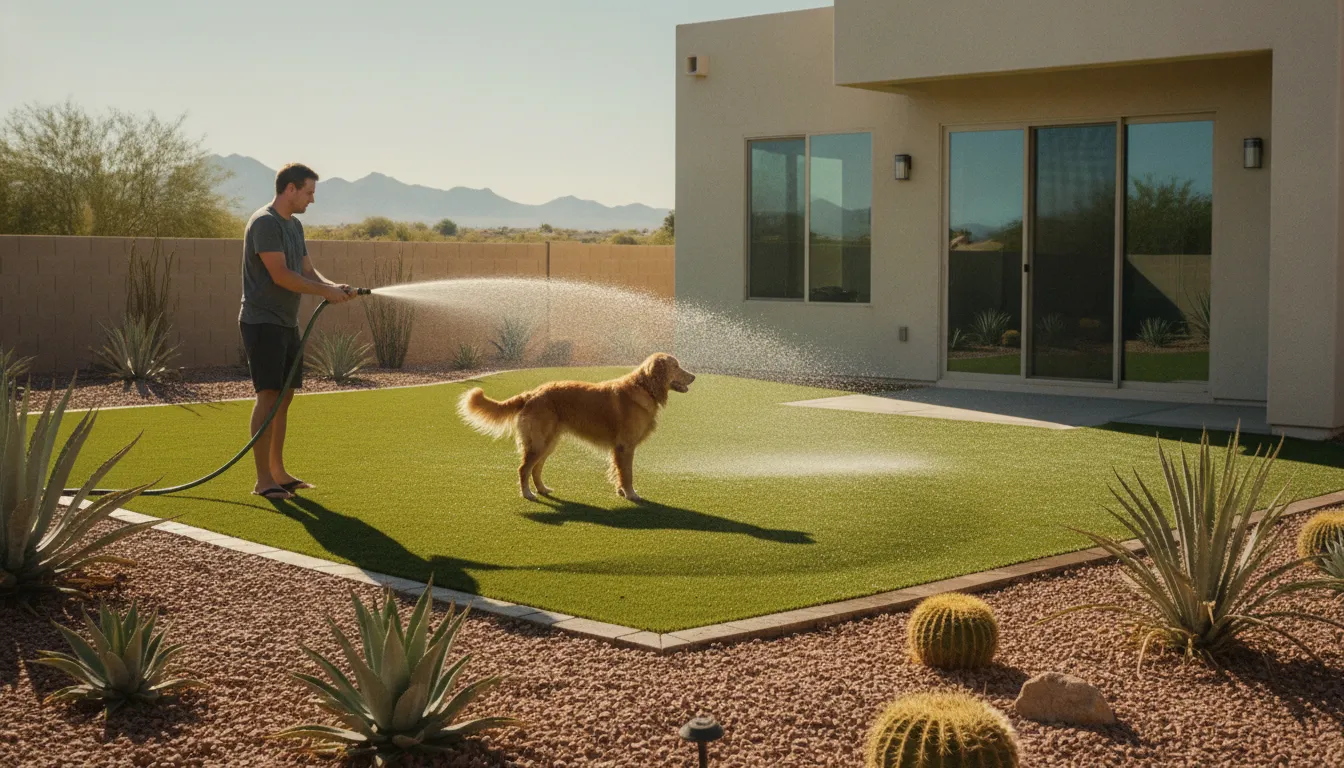 Follow this turf-safe cleaning routine
- Rinse the area promptly. Use clean water to flush the spot as soon as possible after your dog urinates. Pay particular attention to shaded or high-use areas, where repeated urine exposure can contribute to odor over time.
- Apply an enzyme cleaner made for artificial turf. Choose a product labeled turf-safe and apply enough to reach the affected fibers and infill. Enzyme cleaners are designed for pet urine cleanup, rather than simply masking the smell.
- Allow 10 to 15 minutes of dwell time. Leave the cleaner in place so it can work before rinsing. Follow the product label if it specifies a different application time.
- Rinse thoroughly. Flush the treated area with clean water, taking care not to leave excess product behind. Incomplete rinsing can leave residue and make it harder to judge whether the odor has actually improved.
For a stubborn spot, use a scrub brush to work the cleaner into the affected area, then allow it to penetrate for about 10 minutes before rinsing. This approach is supported by Simple Green's artificial grass cleaning guidance. Avoid mixing cleaning chemicals, and test any new product on a small, inconspicuous section first.
ApproachCostEffortThoroughnessLong-term resultDIY spot cleaningLower upfront cost for water and cleanerBest for small or fresh areasSurface-focused unless repeated carefullyCan control isolated odor when performed promptlyProfessional turf deodorizingService cost, based on area and conditionMinimal homeowner laborDesigned to address buildup throughout turf and infillMore consistent for recurring or widespread odor
DIY cleaning is a practical first response, especially when the odor is localized. If the smell returns quickly after rinsing and enzyme treatment, the issue may extend into the infill or involve repeated buildup across a high-use area. In that situation, professional turf sanitation can provide a more thorough reset than treating only the visible surface.
What Professional Turf Deodorizing Actually Does
Professional turf deodorizing goes beyond removing visible waste or spraying a fragrance over the surface. Artificial turf requires specialized sanitation because dog urine can move through the blades and collect in the infill below. If that organic waste is left untreated, odor can return quickly, especially in a hot Las Vegas yard.
A professional treatment is designed to reach the areas where the odor source is actually concentrated. Turf-safe cleaning solutions help break down organic waste deep within the turf fibers and infill rather than simply masking the smell. Thorough treatment also helps reduce the buildup that makes a yard feel less sanitary over time.
Why surface scooping is not enough
Routine scooping is essential for removing solid pet waste, but it does not address urine residue. Urine can soak past the visible blades and remain in high-use areas, along edges, or in shaded sections that dry more slowly. This is why homeowners may continue asking, "Does artificial grass smell like dog urine?" even after they have picked up every visible pile.
Professional turf sanitation focuses on the full system: the turf blades, the spaces between them, and the infill beneath. Depending on the condition of the lawn, treatment may include targeted application, agitation, and rinsing to help lift residue from those deeper areas. The goal is a cleaner surface with less recurring odor, not a temporary cover-up.
What A1 Pet Maintenance brings to the process
A1 Pet Maintenance has more than 26 years of experience helping Las Vegas-area homeowners, HOAs, and property managers maintain cleaner outdoor spaces. The company offers specialized turf sanitation treatments for properties dealing with persistent pet urine odor, alongside regular pet waste removal when ongoing service is needed.
For a broader look at keeping synthetic grass sanitary around pets, see A1's Artificial Turf Pet Hygiene guide. Homeowners who want a practical maintenance reference can also review how to clean pet urine from turf. These resources can help with routine upkeep, while professional deodorizing is the better fit when odor persists or has settled deep into the turf.
How Often Should Las Vegas Turf Be Treated to Prevent Odor?
There is no single schedule that fits every yard. A small turf area used by one dog may stay fresh with light weekly upkeep. While a busy Las Vegas yard with multiple dogs, shaded sections, or heavy summer use needs more frequent attention. The practical goal is to rinse away fresh urine before it concentrates and to use a turf-safe sanitation treatment before odor becomes noticeable.
Use this cadence as a starting point, then adjust it based on traffic, shade, drainage, and the first sign of odor:
- Rinse high-use areas several times each week. Pay special attention to the spots your dog uses most. A thorough water rinse helps move urine residue through the turf and keeps nitrogen and salts from accumulating in the infill. Rinse promptly after accidents when possible, rather than waiting for the next yard-care day.
- Perform a quick maintenance treatment weekly. Apply a turf-safe enzyme or deodorizing product according to its label, allow the recommended dwell time, and rinse thoroughly. A routine like this can take less than 10 minutes and can significantly extend the life and freshness of artificial turf, according to artificial turf maintenance guidance.
- Increase the cadence during hot weather. Las Vegas heat can make a developing urine odor more obvious, especially in shaded areas where moisture and residue remain concentrated. During the hottest months, or after hosting pets, consider adding another rinse or treatment instead of waiting for a smell to return.
- Inspect the turf monthly for persistent areas. Walk the yard and check corners, gates, dog paths, and shaded sections. If one area still smells after routine rinsing, the residue may be deeper in the infill or the drainage may need attention. Do not simply cover the odor with fragrance.
- Schedule professional sanitation when odor keeps returning. Recurring odor, several dogs, or a large property can justify a deeper treatment rather than increasingly frequent DIY applications. A professional can assess the affected zones and focus treatment where buildup is concentrated. For more service-specific guidance, see artificial grass cleaning for dogs.
Consistent prevention is easier than waiting until the question "does artificial grass smell like dog urine?" has an obvious answer. A short, repeatable routine keeps the surface more comfortable for people and pets while protecting the turf investment.
Ready to get reliable turf odor treatment for your Las Vegas yard? Call (702) 521-2624 today.
Frequently Asked Questions
Does artificial grass smell like dog urine?
Yes. Artificial grass itself does not create urine odor. But urine can collect in the turf fibers and infill when an area receives frequent use or is not rinsed thoroughly. Over time, organic residue, nitrogen, salts, and bacteria can produce a persistent ammonia-like smell.
How do you clean fake grass from dog urine?
Start by rinsing the affected area thoroughly with clean water. Apply a turf-safe, pet-friendly enzyme cleaner, allow it to penetrate for about 10 to 15 minutes, then rinse again. Stubborn spots may need gentle scrubbing and a second treatment. Avoid harsh chemicals that can damage turf or affect pets.
Why does artificial grass still smell like urine after cleaning?
A surface rinse may not reach residue trapped in the infill or beneath heavily used sections. Odor can also return when drainage is limited or the same area receives repeated use. Deep cleaning, thorough rinsing, and professional turf sanitation may be needed when a smell persists.
How often should artificial turf be cleaned to prevent urine smells?
Rinse high-use pet areas regularly, especially during hot Las Vegas weather, and remove solid waste promptly. The right professional treatment schedule depends on the number of dogs, turf size, drainage, shade, and odor severity. Consistent maintenance is more effective than waiting for a strong smell to develop.
Can vinegar and baking soda remove pet urine odor from artificial grass?
They may help with light surface odors, but household remedies are not a reliable substitute for a turf-safe enzyme cleaner or deep sanitation. Do not mix cleaning products. If odor returns quickly after home cleaning, have the turf and infill evaluated rather than repeatedly masking the smell.
Ready to Schedule Turf Odor Treatment?
Persistent artificial grass odor can be difficult to resolve when urine has reached the turf infill. A professional treatment can help address buildup below the surface and keep your Las Vegas yard more comfortable for people and pets. A1 Pet Maintenance brings more than 26 years of local experience to pet waste removal and turf sanitation.
Call A1 Pet Maintenance at (702) 521-2624 to schedule your professional turf odor treatment today.