How to Remove Dog Poop Smell From Yard Grass
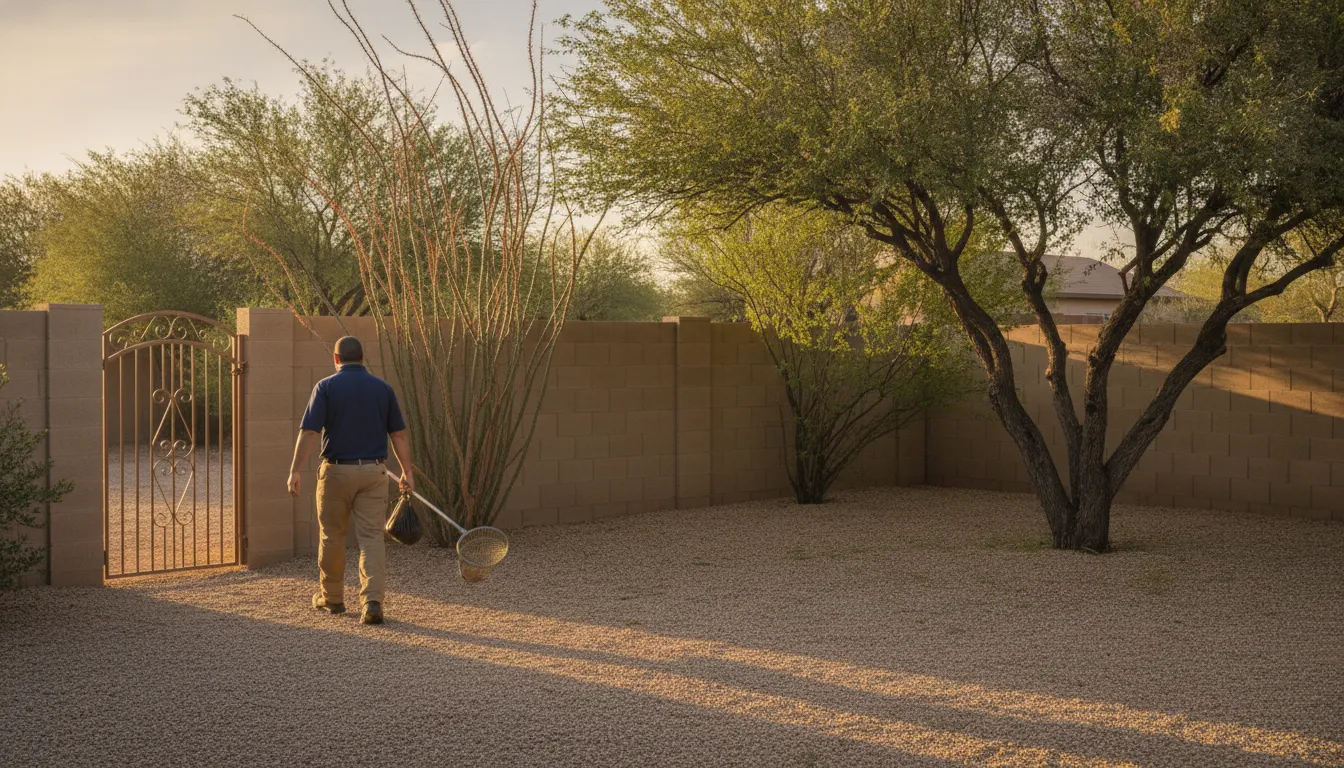
Removing dog poop smell from yard grass starts by taking the solid waste out, not by spraying over it. The smell stays because pieces are still in the blades, smeared into the soil, or sitting in a hot corner. Pick those pieces up, bag them, rinse the spot, and let the sun dry it. In Southern Nevada and Tucson, heat makes a small miss smell larger by afternoon.
Call 702-521-2624 for yard waste removal help
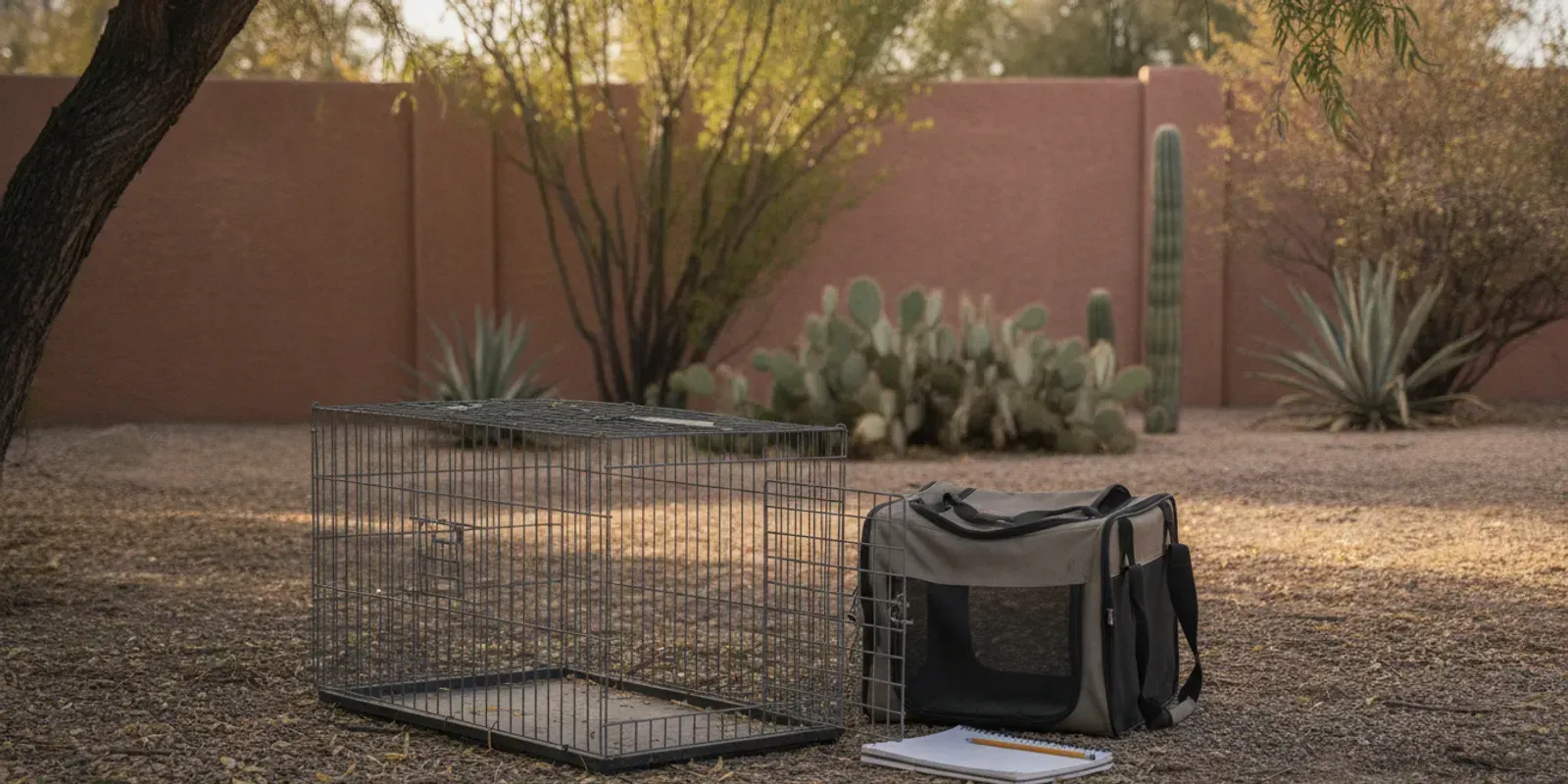
A1 Pet Maintenance scoops pet waste from yards in Southern Nevada and Tucson, then bags it and hauls it off the property for city sanitation collection. We also clean and deodorize pet artificial turf, and we rent cat traps. This guide is the safe homeowner sequence for natural grass, gravel, and bare dirt. If the smell is coming from a bin, a crate, or a carpet, find that source first instead of treating the lawn.
How to Remove Dog Poop Smell From Yard Grass
Work the smelly patch in this order. Skipping a step is why the odor comes back the same evening.
- Walk the yard and mark every spot you can smell or see. Check under bushes, along the fence, and beside the gate.
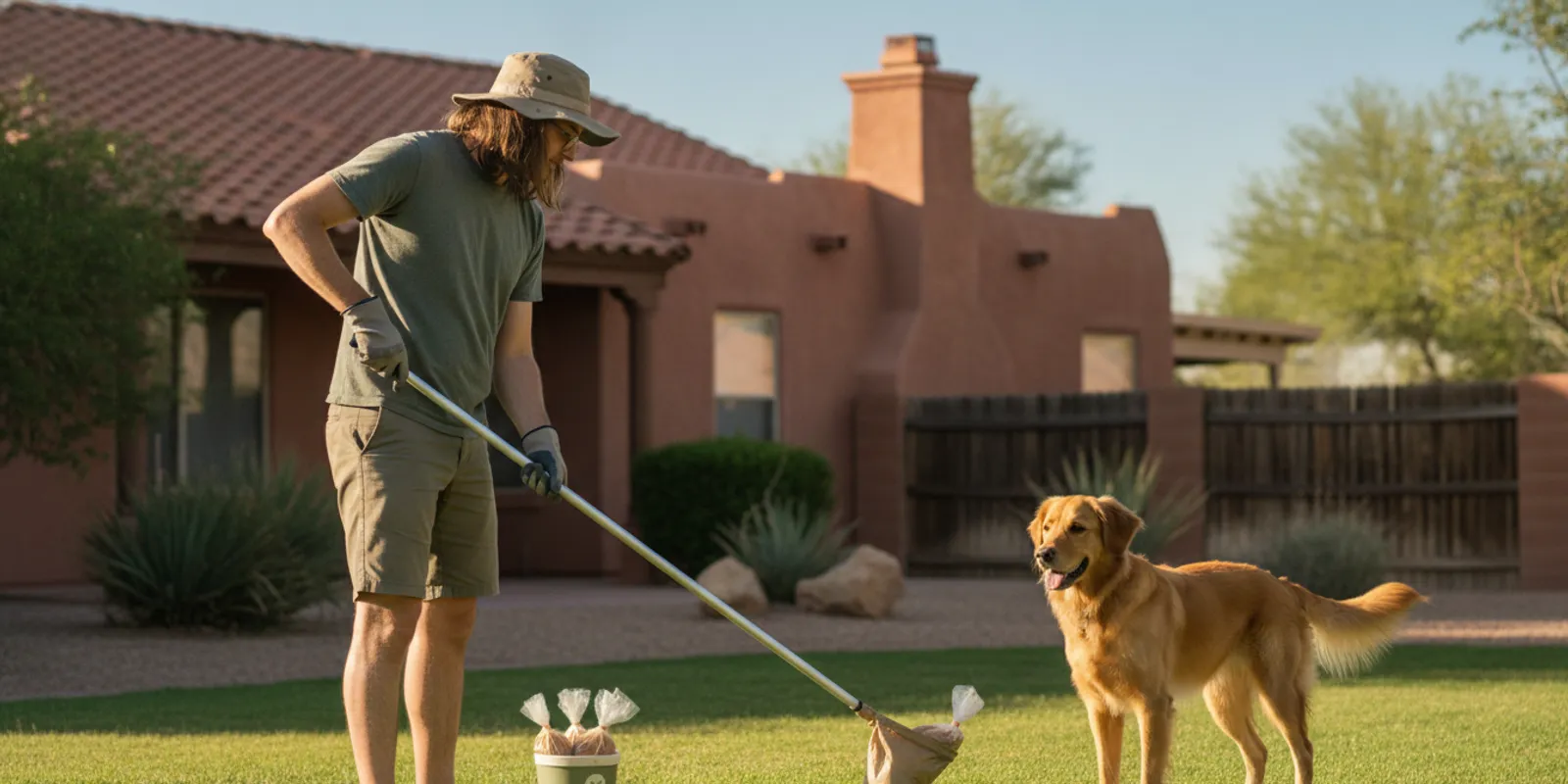
- Pick up every solid piece with a bag, a scoop, or a long-handled rake. Do not leave crumbs in the blades.
- Bag the waste and tie the bag. Set it in a closed outdoor trash can, not on the grass.
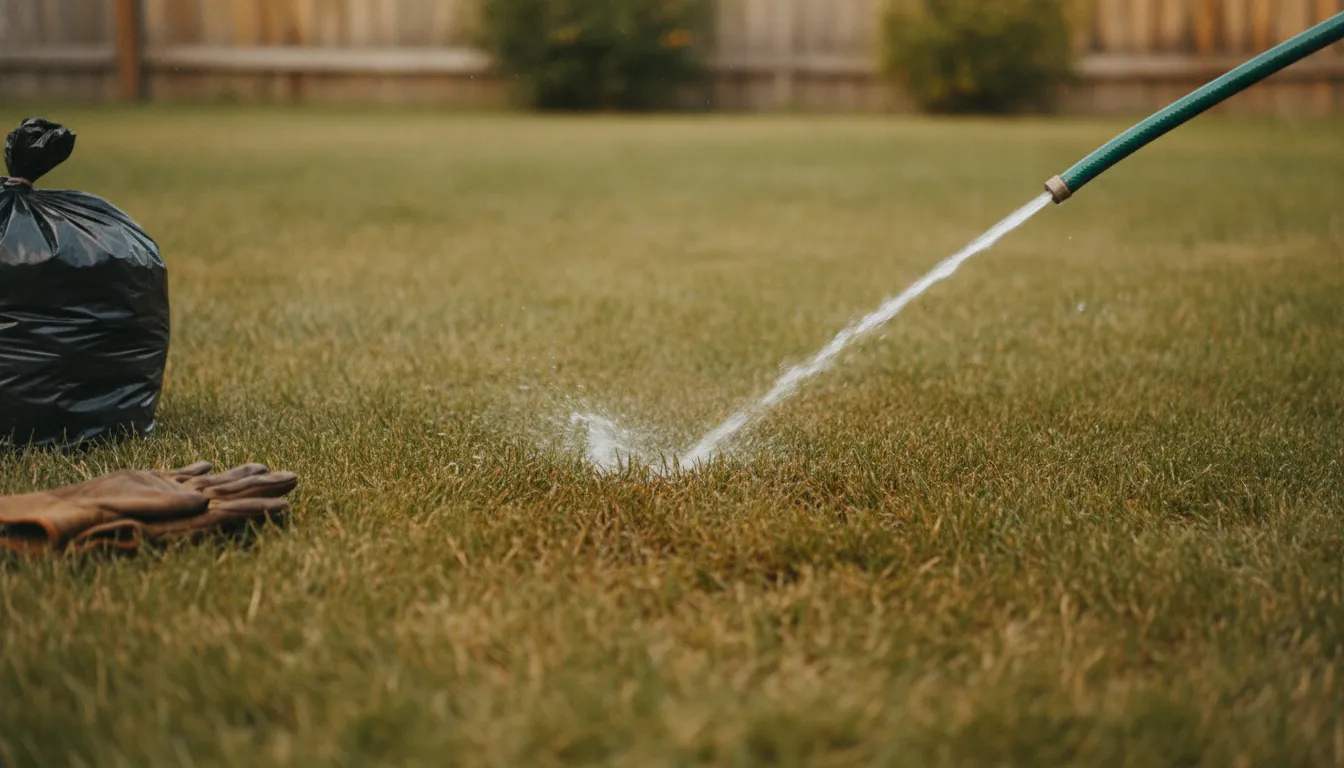
- Rinse the spot with a hose until the smear is gone. Use enough water to reach the soil, not a mist.
- Keep dogs, kids, and bare feet off the wet patch until it dries.
- Let the sun dry the area. Check it the next morning before you add any product.
- If the smell is still there after the solids are gone, treat that one dry spot. Then decide whether the yard needs a full reset.
That order matters in desert heat. A product poured over fresh waste only perfumes the pile. The pile is still there, and the next warm afternoon brings the smell back. Our crews see this on weekly routes across Las Vegas, Henderson, North Las Vegas, and Tucson. The yards that stay pleasant are the ones where the solids leave before anything else happens.
Why the Smell Lingers After You Think You Cleaned
Dog waste does not vanish because it looks dry. In a Las Vegas or Tucson afternoon, the outside crusts over while the inside stays wet. That crust breaks when a shoe, a paw, or a hose hits it. The odor you notice at the patio is often a smear you walked through an hour earlier.
Grass blades hide more than people expect. A piece the size of a bottle cap can sit under a clump and smell like the whole side yard. Gravel does the same thing between stones. Bare dirt holds the odor in the top inch after the solid is gone. Artificial turf is a different surface: urine and crumbs sink into the fibers and the infill, and a hose rinse on natural grass will not fix that.
Rain and irrigation can make a clean-looking yard smell worse. Water wakes dried residue and moves it toward the low spot by the wall. The U.S. Environmental Protection Agency notes that stormwater can pick up pet waste left on the ground and carry it into streams, and that the waste adds nutrients and bacteria to those waters. That is one more reason to bag the waste instead of hosing a pile toward the street. Read the agency's pet waste management fact sheet if you want the stormwater detail.
Heat is the other driver. A corner that was fine at 7 a.m. can smell by 3 p.m. because the air is hotter, not because a new pile appeared. If you only check the yard in the cool morning, you will miss the spot that bothers you at dinner.
Pick Up the Solids Before You Treat Anything
Nothing you pour on the lawn removes a solid piece of waste. The first job is to get every piece into a bag. Use a bag over your hand, a jaw scoop, or a rake with a pan. Gloves help if the waste is soft. A soft pile smears, so lift it in one motion instead of scraping it across the blades.
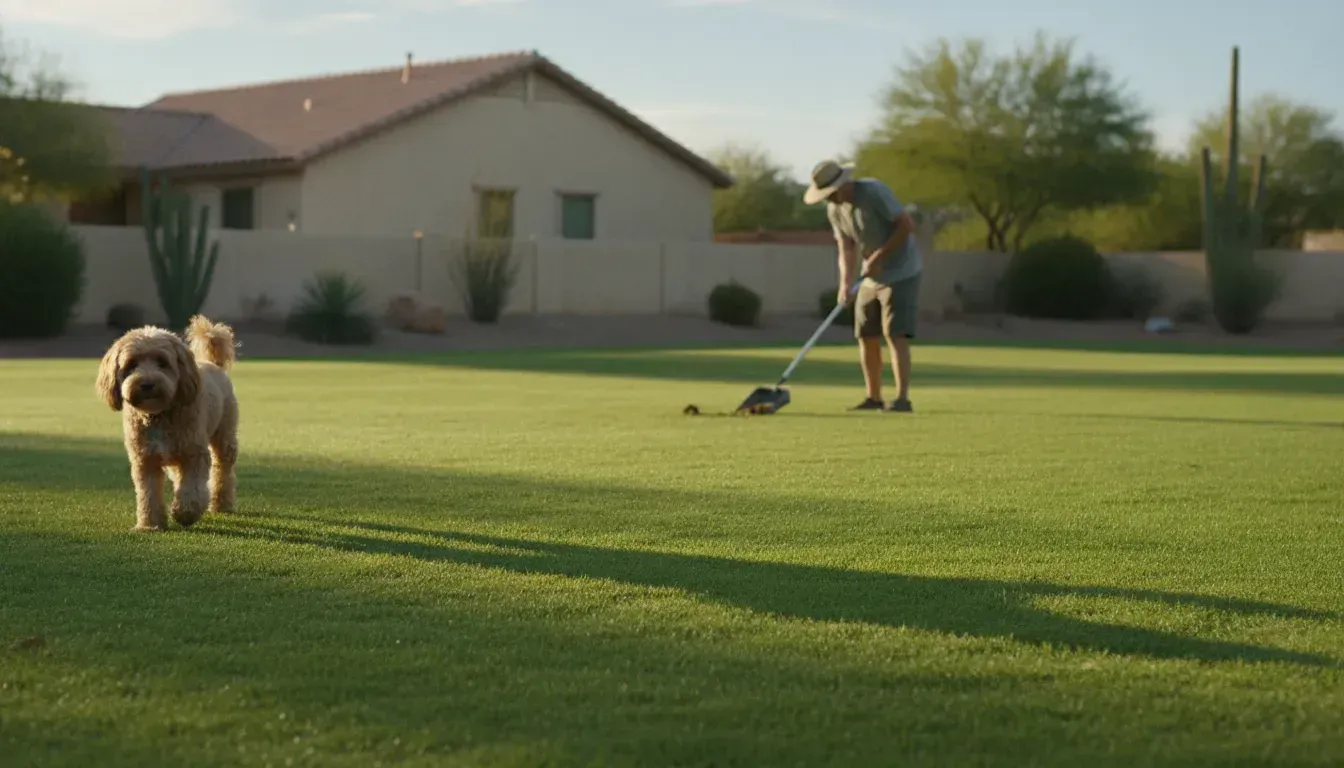
Search the places dogs actually use. Most dogs return to the same corner, the drip line under a tree, and the strip beside a block wall. In rock yards, look between stones and under the gravel skirt along the fence. In grass, part the blades with the scoop. If you smell it and cannot see it, you are usually standing on a thin smear.
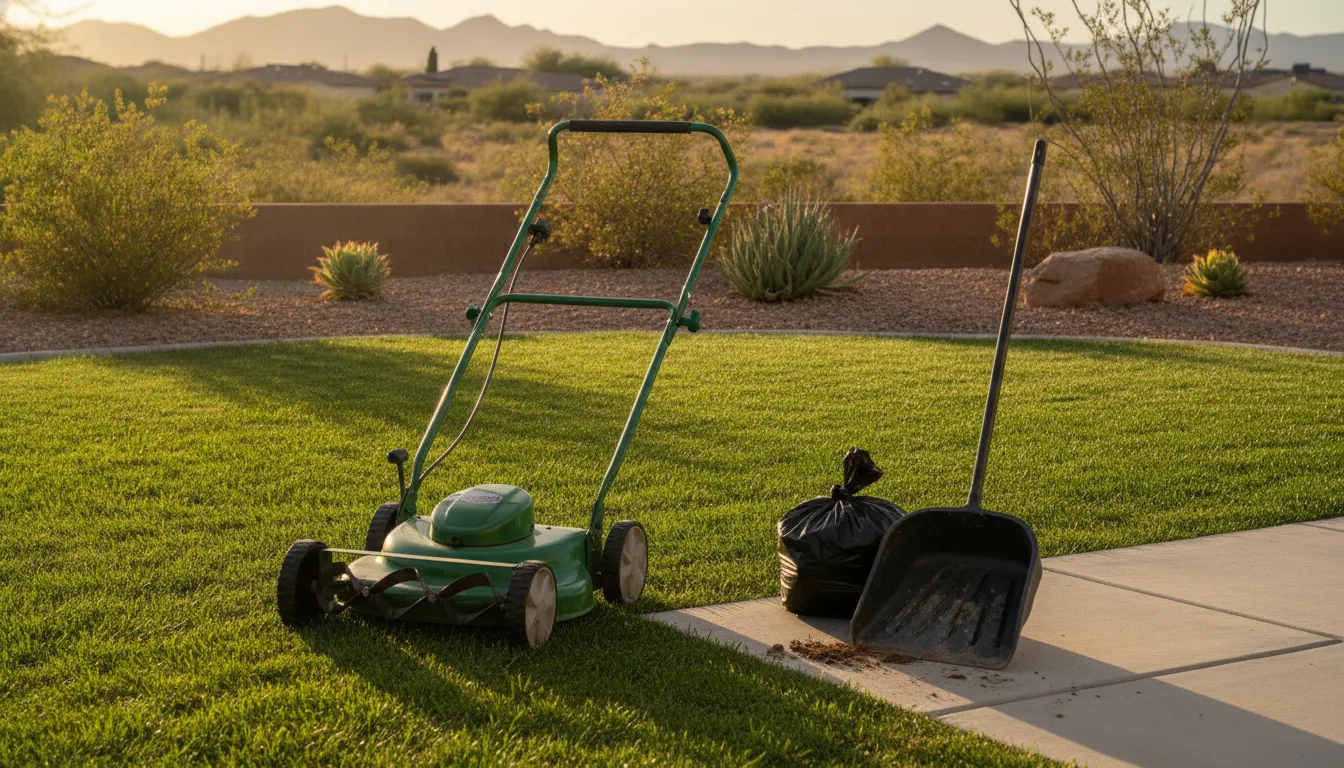
Double-bag anything that is already leaking. Tie the bag before you set it down. A tied bag left in the sun on the lawn will smell by itself, so move it to the trash can as you go. Our service does this haul-away on every visit: we find the waste, bag it, and take it off the property. A homeowner doing one corner can use the same habit on a smaller scale.
Do not rake a whole yard of waste into a single pile and leave it for later. Later, in this climate, is a hotter, smellier pile. Work one zone, bag it, then move to the next zone. The yard cleanup and disposal guide covers tools and surface-by-surface pickup if you want the longer version of this step.
Rinse, Dry, and Keep Paws Off the Spot
Once the solids are gone, rinse the smear. A steady stream from the hose is enough. You are diluting what is left in the thatch and the top of the soil, not flooding the neighbor's wall. Stop when the water running off the spot looks clear and you no longer see flecks in the blades.
Keep the dog off that patch until it dries. A wet spot is an invitation. Dogs often return to a damp circle and add a new mark on top of the one you just cleaned. A baby gate, a patio chair, or a short walk until the grass lightens is enough for one corner. Kids and guests should stay off it too, because residue can stick to shoes and come inside.
Sun is part of the cleanup in Southern Nevada and Tucson. A rinsed spot that bakes dry often smells far weaker the next morning. Check it then, with your nose close to the grass, before you buy anything. If the morning check is clean, you do not need a product on that spot.
Skip these shortcuts:
- Do not hose a fresh pile toward the sidewalk or a storm drain. Bag it first.
- Do not pour bleach on the lawn. It can burn grass and it is not a yard routine.
- Do not cover the smell with a heavy fragrance while pieces are still in the grass.
- Do not leave an open bag next to the patio. Tie it and put it in the can.
Match the Cleanup to Grass, Rock, Dirt, or Turf
The same smell needs a different touch on each surface. Use this as a field check, not a product list.
Natural grass
Lift solids, rinse the smear, and let the sun dry it. If one corner still smells the next day, that is the only place to consider an enzyme cleaner labeled for lawns. Follow the label, keep pets off until it dries, and do not treat the whole yard just in case.
Gravel and decomposed granite
Solids fall between stones. A scoop misses them. Rake the top layer into a pan, bag what you lift, then rinse. If the smell is under a thick gravel skirt, you may need to pull the stones back, remove the pad of waste, and replace the gravel. A spray on top will not reach it.
Concrete and pavers
Scrape the smear into a bag, then rinse the hard surface toward a planted area you control, not the street. These spots dry fast and usually stop smelling once the film is gone. A stiff brush helps on a textured patio.
Artificial turf
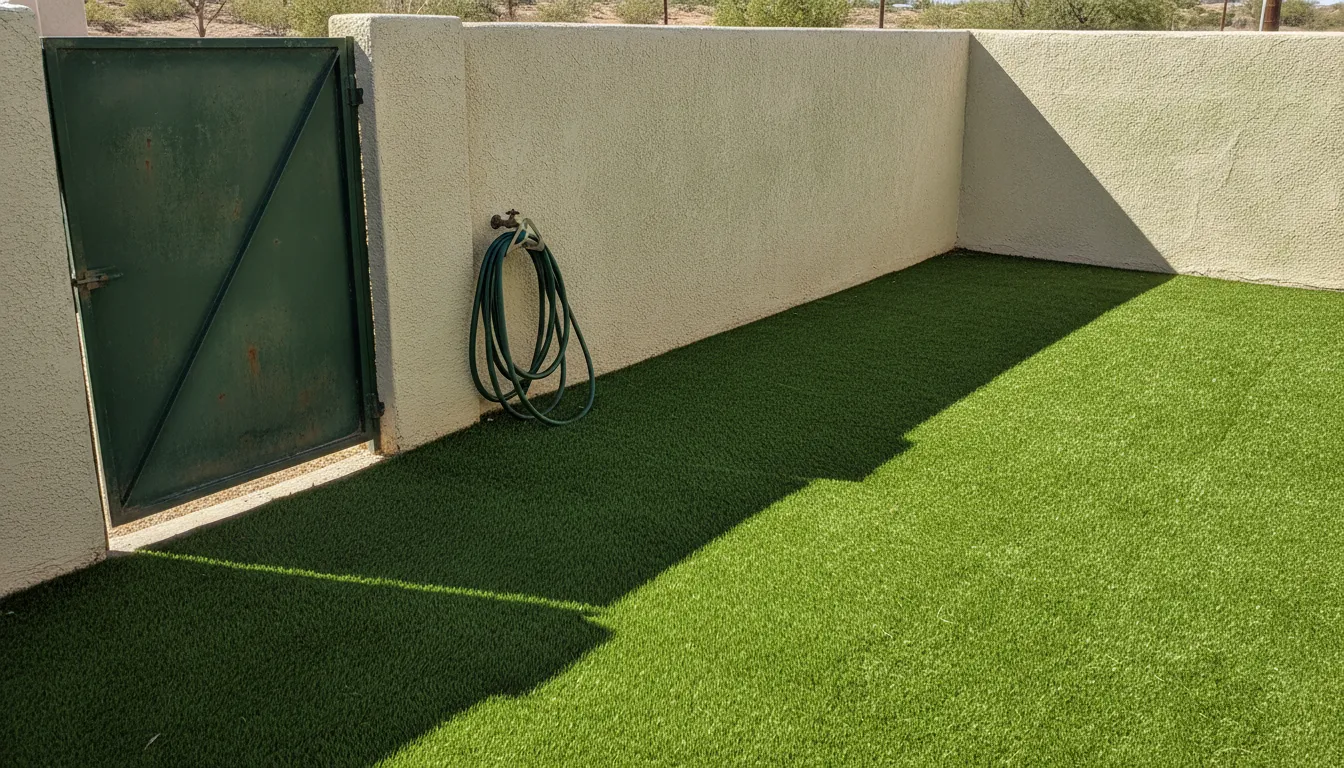
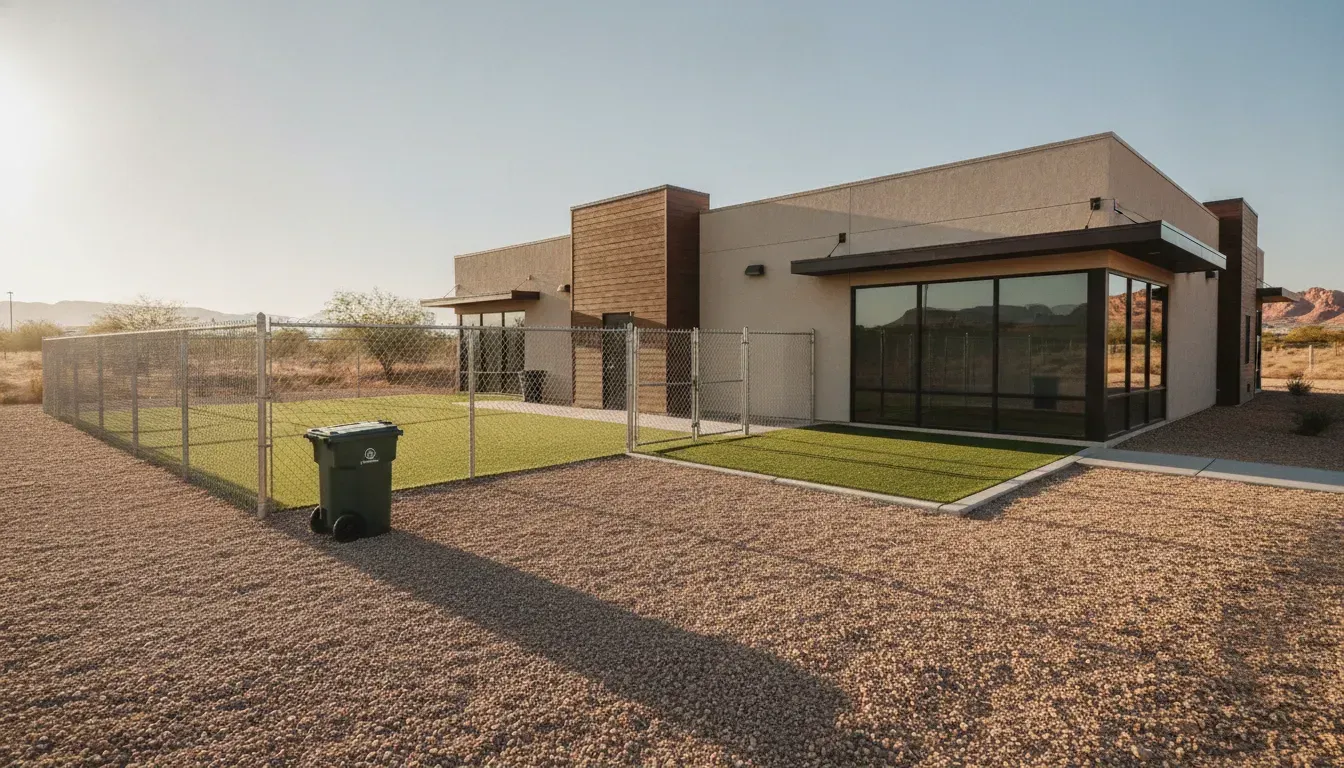
Do not treat turf like grass. Waste and urine sit in the fibers and the infill, and a surface rinse leaves the odor underneath. A1 cleans and deodorizes pet turf. If your smell is a turf yard, use the artificial grass cleaning page and book a turf visit instead of following the grass steps above.
If you cannot tell whether you are smelling solid waste, urine, a bin, or turf, stop and sort that out before you buy a cleaner. The source-finding odor guide is the short version of that check. This article stays on the yard sequence once you know the smell is waste in the yard.
What to Do With the Waste After You Bag It
Bagged waste belongs in the trash, with the lid closed. City sanitation collects household trash. That is the disposal path we use: bag it, haul it off the yard, and leave it for collection. Do not bury it in a planting bed. Do not toss it over the block wall. Do not rinse the contents of the bag into a gutter.
A closed lid matters in this heat. An open can bakes, and then the can smells like the yard did. If your can has no lid, bag the waste tighter and take it out on collection day instead of storing several days of bags in the sun. Wash your hands after you handle the bags, even if you wore gloves. The smell on skin is a different problem from the smell in the grass.
Leaving waste on the lawn because it seems like fertilizer does not hold up. The EPA fact sheet above is written for cities trying to stop that habit, because rain carries the waste into storm drains and then into streams. A clean yard and a tied bag solve the smell at your patio and keep that material out of the wash.
When a Reset or a Weekly Visit Fits Better
The steps above are for a yard you can still clear in one session. Some yards are past that. A one-time reset is the practical move when you cannot see the grass in a corner. It also fits when guests are coming and the smell hits you at the gate, or when the pile has been growing for weeks. A reset is a full pickup of the accumulated waste, bagged and hauled away, so the yard is usable again.
| Yard situation | What to do | What A1 does |
|---|---|---|
| One corner, solids still visible. | Pick up, bag, rinse, and dry. | Not needed yet. |
| Waste across the yard. | Stop and book a reset. | One-time haul-away. |
| Smell returns every few days. | Start a route. | Weekly or twice-weekly pickup. |
| Odor sits in turf fibers. | Do not hose it like grass. | Turf cleaning and deodorizing. |
One corner, solids still visible
Pick the waste up, bag it, rinse the spot, and let it dry. You do not need a crew yet. Recheck the corner the next morning before you add a product.
Waste across the yard
Stop the DIY pass and book a one-time reset. A1 hauls the accumulated waste away so the yard is usable again. The Las Vegas yard reset guide explains when that visit fits.
Smell returns every few days
Start a route. A weekly or twice-weekly pickup keeps the source from rebuilding when the dog uses the yard every day. New customers can start from the poop scoop sign-up page.
Odor sits in turf fibers
Do not hose artificial turf the way you hose grass. Book turf cleaning and deodorizing. A surface rinse leaves the odor in the fibers and the infill.
A1 does that reset as a one-time cleanup, and we also run recurring routes. On the public rate chart, one visit a week is $65 a month for one dog, $75 for two, $85 for three, and $95 for four. Two visits a week are $110, $130, $150, and $175 for those same dog counts. Five or more dogs are arranged individually. We will beat a quoted price if you ask. Homes that smell again two days after a careful cleanup usually need the route, not another bottle.
If you are unsure the yard is even the source, read the odor guide or ask for a look before you treat the lawn. We service single-family yards and multi-family properties on those routes, more than 400 of them each week. The same phone call covers a one-time cleanup or a recurring plan. Tell us the city, the dog count, whether the surface is grass, rock, or turf, and whether the waste is a corner or the whole yard.
Call 702-521-2624 to book a cleanup
Frequently Asked Questions
How can I remove dog poop smell from my grass?
Pick up every solid piece, bag it, and rinse the smear until the blades look clear. Keep the dog off the wet spot and let the sun dry it. Check again the next morning. Treat only a spot that still smells after the waste is gone.
Does baking soda remove dog poop smell from a yard?
Baking soda does not remove solid waste. Pick up and rinse first. If a dry spot still smells, a light sprinkle of baking soda on that spot is a common home step, but it is not a substitute for removing the source. Do not coat the whole lawn.
Why does the yard smell worse after I hose it?
Water wakes dried residue and can spread a smear you did not pick up. Hose only after the solids are in a bag. If the whole yard smells worse after watering, there is still waste in the grass, the gravel, or a low corner.
Can I leave dog waste on the lawn so it breaks down?
No. It keeps smelling, and rain can carry it into storm drains. The EPA describes pet waste as a source of nutrients and bacteria in urban waterways. Bag it and put it in a closed trash can for city collection.
When should I stop DIY and call for a cleanup?
Call when the accumulation is more than one session, when the smell returns within a couple of days, or when the surface is artificial turf. A1 picks up, bags, and hauls the waste. Weekly and twice-weekly routes are listed on the homepage rate chart. Call 702-521-2624 and say whether you need a reset or a route.