How to Disinfect Artificial Turf With Dogs
Learn how to disinfect artificial turf with dogs using safe steps, odor limits, routine care, and when professional turf cleaning may help.

Artificial turf can look clean while holding pet waste residue, organic debris, and urine odor below the surface.
A safe routine starts with removing the source of the mess, then choosing any cleaning or disinfecting product carefully around your dogs.
To understand how to disinfect artificial turf with dogs, first collect waste and loose debris, then follow the product label exactly if disinfection is appropriate. Never mix cleaners, keep dogs off treated turf, and allow re-entry only when the label says it is safe. Cleaning can reduce dirt and germs, but it does not make turf permanently sterile or odor-proof.
Call A1 Pet Maintenance at (702) 521-2624 today.
The right approach depends on what you are trying to solve. A light surface mess may need routine cleaning, while trapped organic buildup or persistent odor can call for deeper treatment. Start by separating these two goals so each step is safe and useful.
What Is the Difference Between Cleaning and Disinfecting Artificial Turf?
Cleaning and disinfecting are related, but they are not interchangeable. Cleaning uses physical action, water, and a suitable cleaner to remove visible dirt, waste, organic residue, and some germs from the turf surface. Disinfecting is a separate chemical step intended to kill or irreversibly inactivate specified microorganisms on an inanimate surface. The CDC explains the distinction clearly: cleaning removes dirt and germs, while disinfection uses chemicals to kill germs.
For most dog yards, thorough cleaning is the practical starting point. Pick up waste, remove leaves and debris, and address residue before considering a disinfectant. A product cannot work as intended if organic material is covering the surface or if the treatment cannot reach the area described on its label. Cleaning also supports odor control, but it does not make artificial turf permanently sterile.
What does a disinfectant label actually prove?
A disinfectant label is specific, not a blanket guarantee. The EPA states that registered disinfectants are verified according to their label directions, and each product lists the microorganisms against which it has been tested. If a particular pathogen is not included in the product's disinfection directions, EPA has not reviewed data showing that the product is safe and effective for that use.
That means a label can establish a product's approved use under its stated conditions. It cannot establish that the entire yard is germ-free, that every organism has been removed, or that the treatment will solve embedded urine, drainage, or infill problems. It also cannot replace the manufacturer's instructions. EPA notes that disinfectants are pesticides and can be harmful when misused, so read the precautionary language before applying one around pets.
GoalWhat to do firstWhat it cannot promiseRoutine cleaningRemove waste, debris, and loose residue, then rinse where drainage allows.A permanently germ-free or odor-free yard.Odor controlFind the source in the fibers, infill, or drainage and use an appropriate labeled treatment.That one application will remove every persistent odor.DisinfectionUse a product labeled for the intended surface and microorganisms, exactly as directed.Protection beyond the label or a permanently sterile outdoor surface.
Why is sterile turf an unrealistic promise?
Artificial turf is an outdoor surface exposed to animals, soil, dust, moisture, and new contamination. Dogs can carry germs even when they look healthy, and routine use quickly changes the condition of a pet area. A responsible sanitation plan therefore aims for manageable cleanliness and reduced buildup, not a permanent sterile environment.
Use the label as the authority for application, contact requirements, ventilation, and pet re-entry. Keep dogs away during treatment and until the label permits them to return. For persistent urine odor or residue, remove dog urine smell with a broader cleaning approach rather than assuming more disinfectant is the answer.
How Should You Prepare Artificial Turf Before Disinfecting It?
Preparation makes treatment safer and more useful. Disinfectant cannot work as intended when solid waste, leaves, loose dirt, or heavy organic buildup are covering the turf. Before applying any product, clear the surface, check where water can go, and keep dogs away from the work area. The goal is to create a clean, accessible surface without guessing at chemical formulas or treatment times.
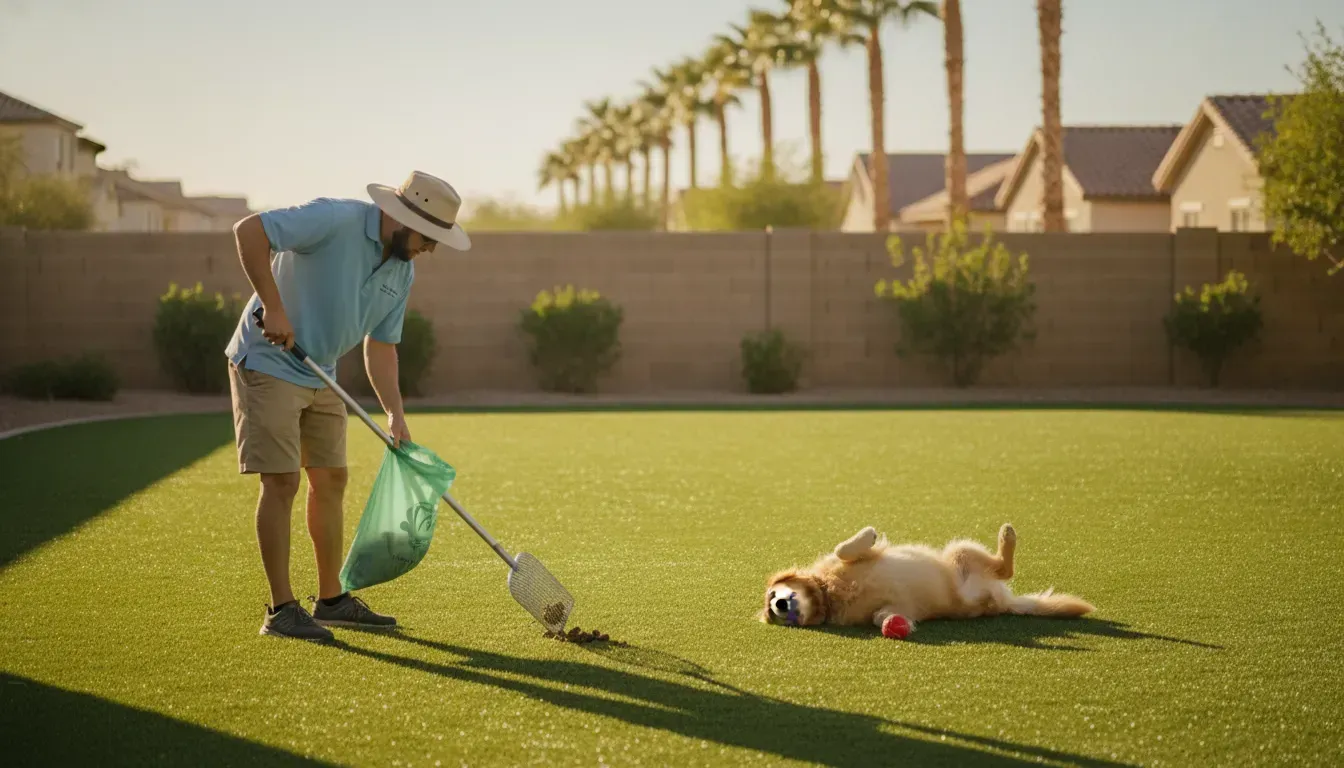
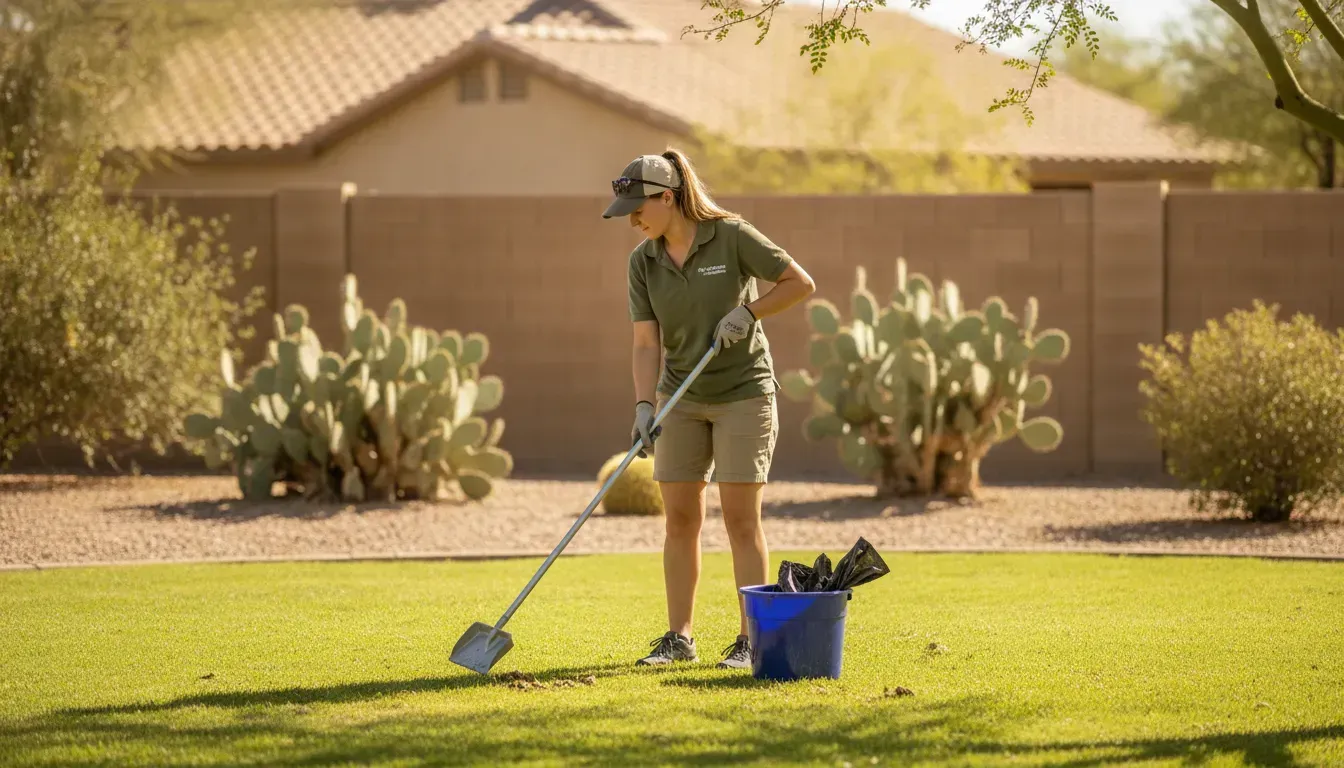
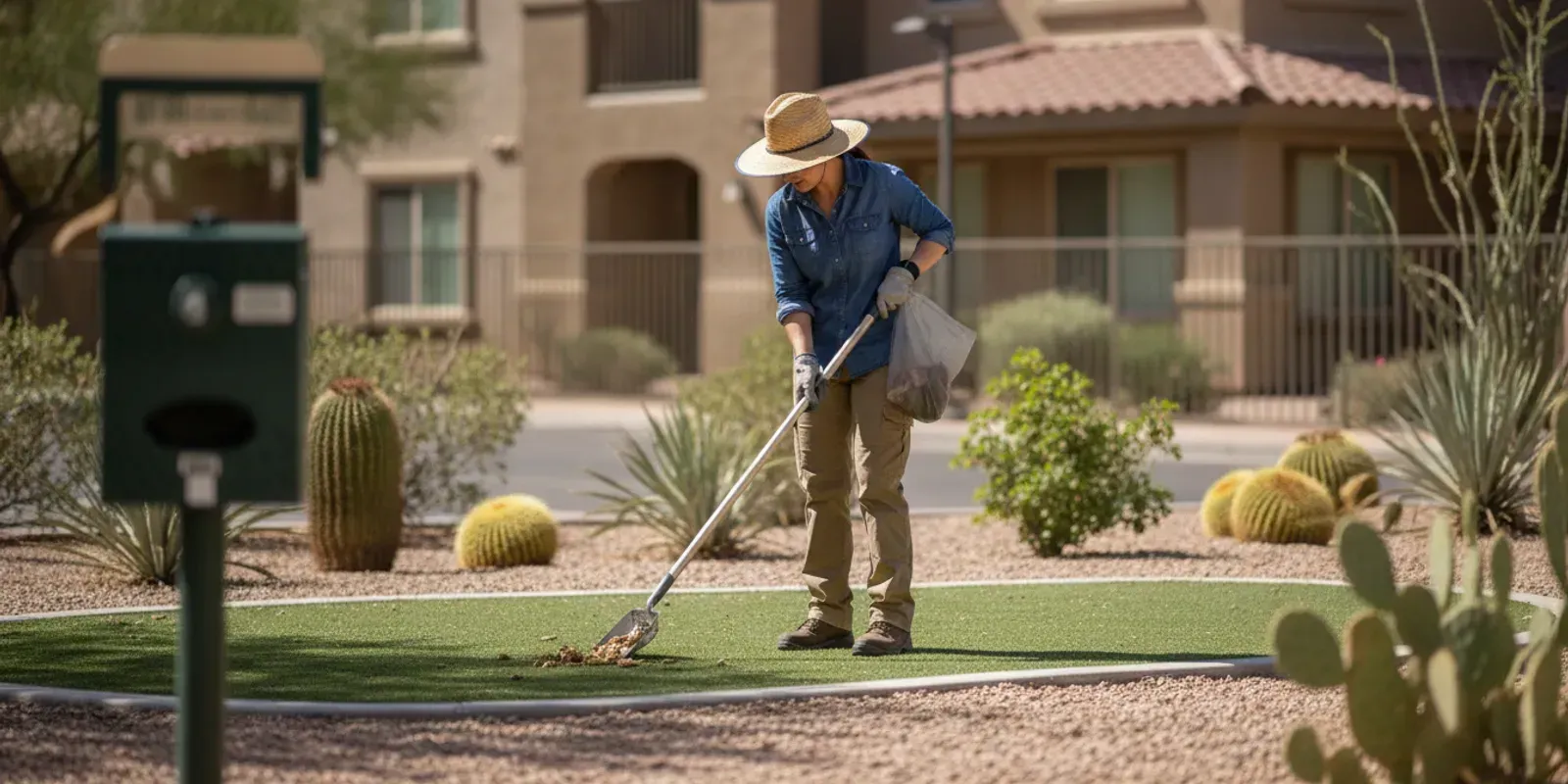
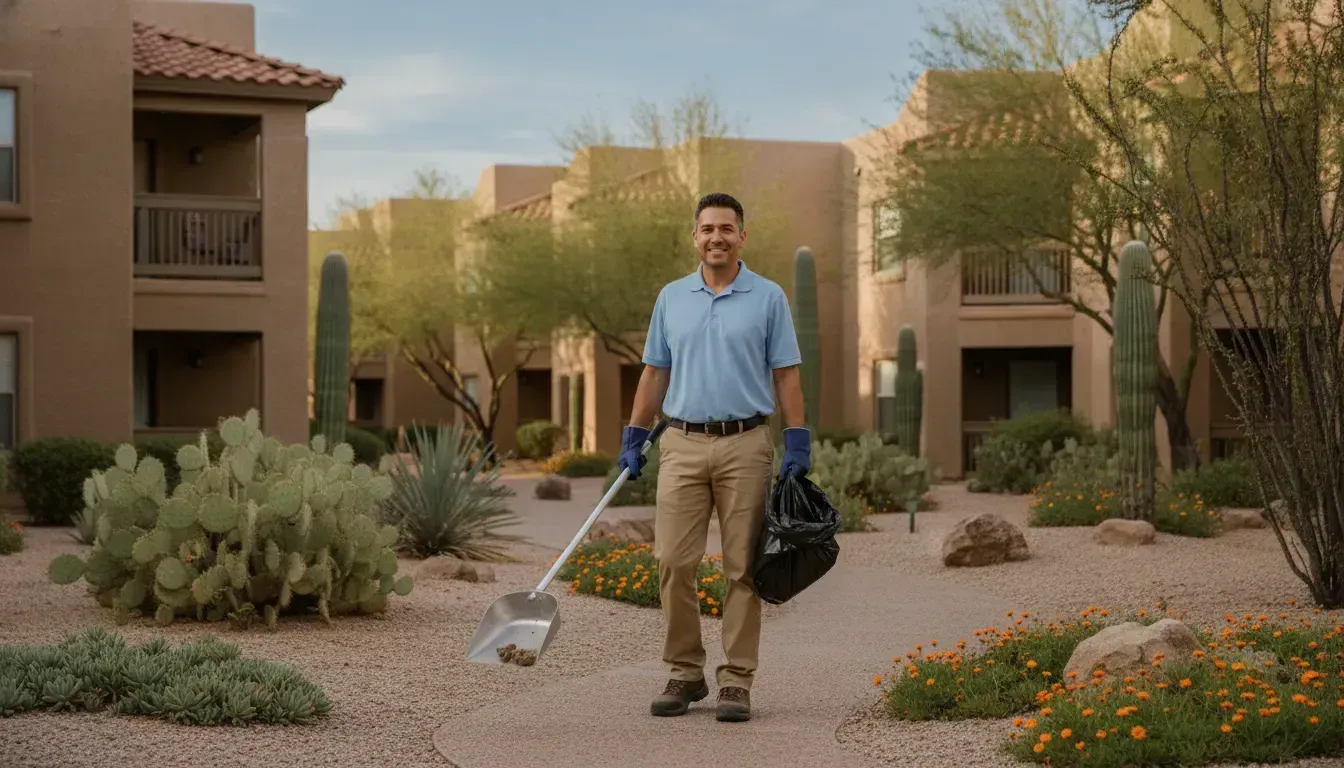
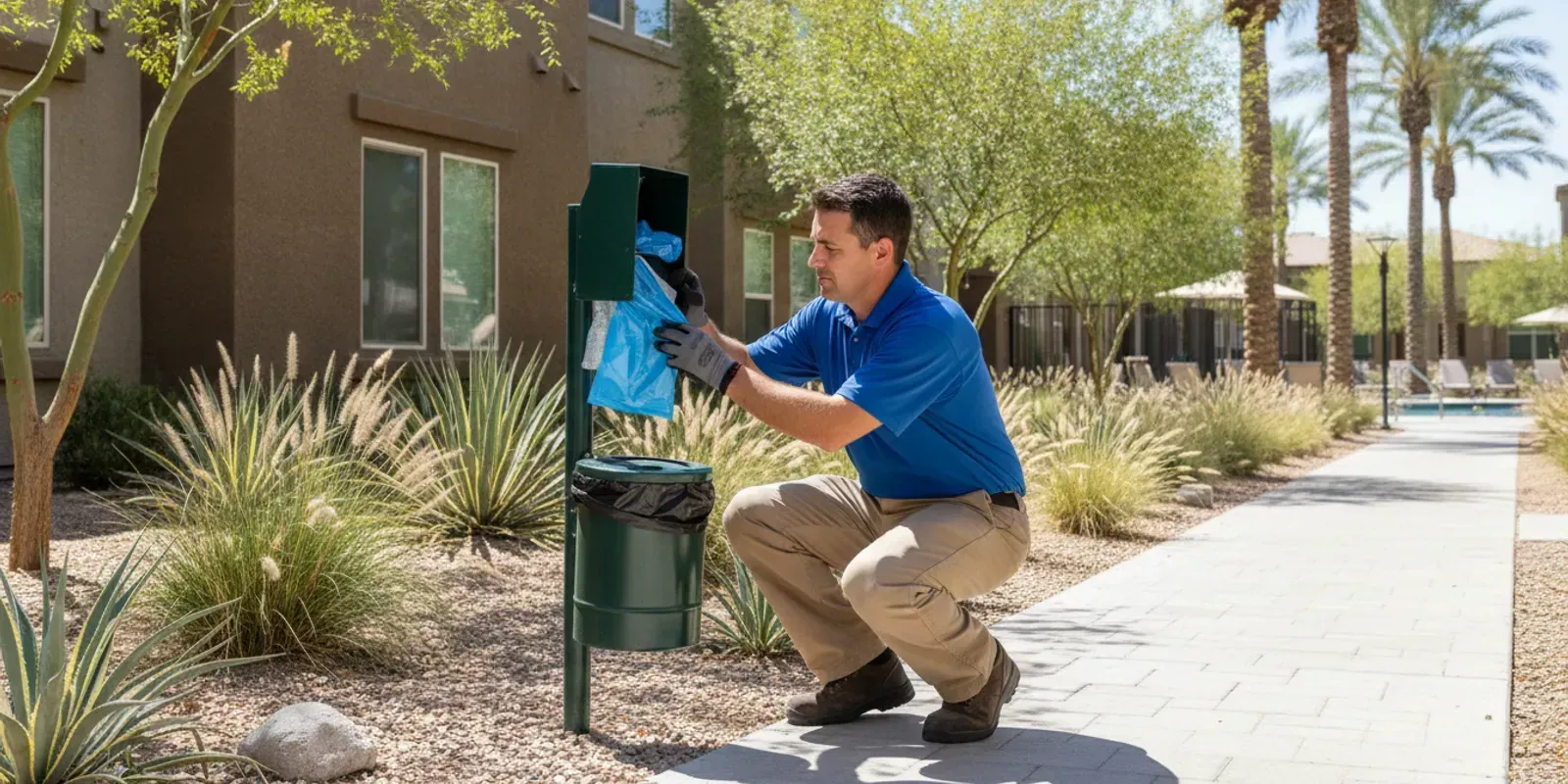
- Remove every piece of solid waste. Use a dedicated bag and scoop to collect feces from the turf, edges, and nearby hardscape. Look closely around landscaping, furniture, gates, and other places where waste may be hidden. Bag the waste securely. A1's documented process includes complete collection, double-bagging, removal from the property, and disposal through city sanitation.
- Clear leaves and loose debris. Pick up toys, sticks, fallen leaves, hair, and other material that could block the turf surface. Brush or sweep gently if needed, following the artificial-grass manufacturer's care guidance. Removing debris exposes the fibers and helps you see whether dirt or organic material has collected below the surface.
- Inspect drainage and problem areas. Check low spots, seams, edges, drains, and areas where dogs regularly urinate. Notice standing water, slow drainage, compacted infill, flattened fibers, discoloration, or persistent odor. Do not flood the area. Only rinse where the turf and drainage system can handle the water without sending contaminated runoff toward doors, walkways, neighboring property, or storm drains.
- Separate dogs and other people from the treatment area. Move pets indoors or to a separate yard before cleaning or applying any product. Keep gates closed and use a visible barrier if other household members, guests, or service workers could enter unexpectedly. Dogs should stay off the turf during treatment and until the product label specifically permits re-entry.
- Use sensible protective measures. Read the product label before opening the container. Wear the protective equipment listed there, such as gloves or eye protection, and avoid splashing. Never mix cleaners or combine products unless the label explicitly directs you to do so. EPA notes that disinfectants are pesticides and can be harmful when misused. The label is the authority for approved surfaces, microorganisms, precautions, and directions.
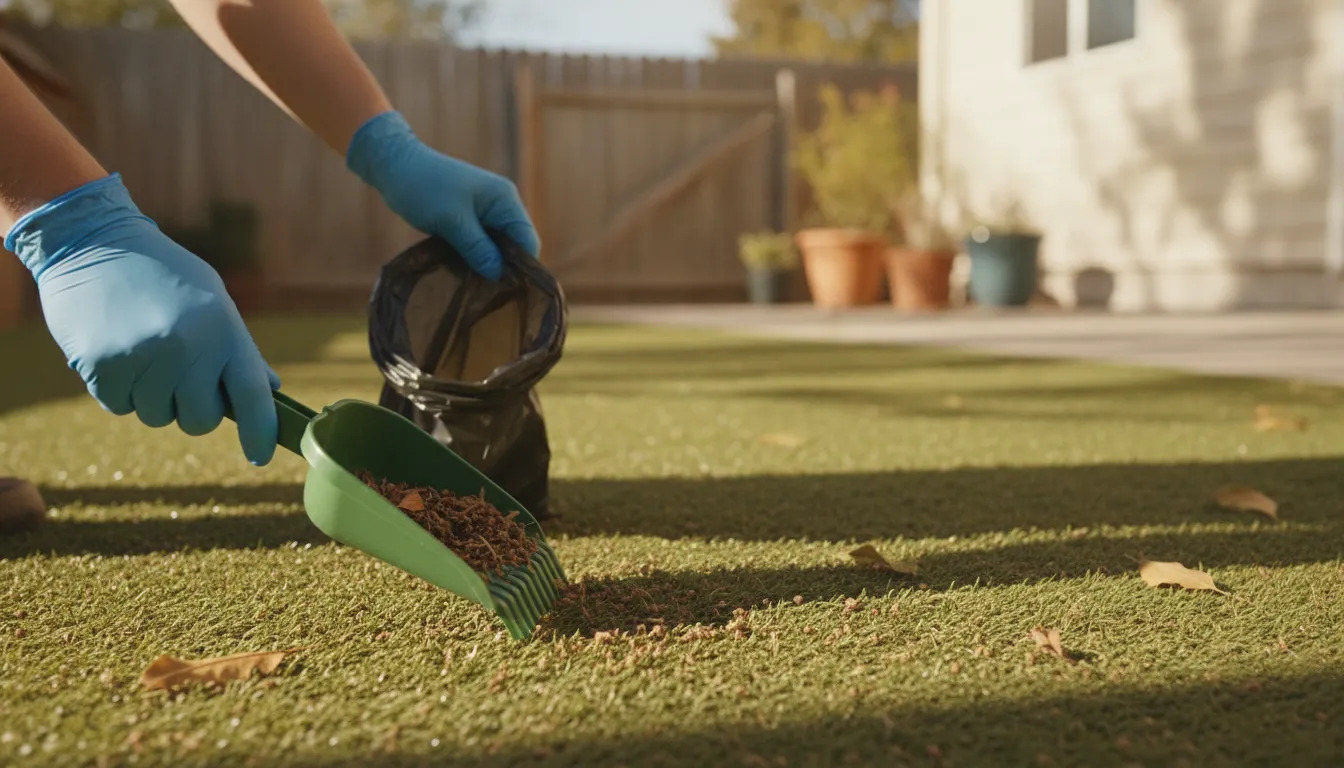
Finish with careful hand hygiene. Remove gloves without touching their contaminated outer surfaces, dispose of waste and used materials properly, and wash your hands thoroughly with soap and running water. The CDC recommends washing hands after handling animals and items that contact them, including after cleaning up pet waste: CDC handwashing guidance. If soap and running water are not available, the CDC says hand sanitizer with at least 60% alcohol can be used until they are available.
If inspection reveals trapped odor, heavy buildup, or drainage problems, pause before applying a disinfectant. Those conditions may require deeper turf cleaning rather than another surface product.
How Do You Disinfect Artificial Turf With Dogs Safely?
When you are learning how to disinfect artificial turf with dogs, start with the product label rather than a homemade formula. Choose a product whose label is intended for the surface and use around pets, then follow every direction exactly. A product described as pet-safe still requires proper handling, application, and re-entry precautions. The goal is a cleaner, safer-use area, not a permanently sterile or completely germ-free lawn.
1. Clean the surface before applying a product
Pick up all dog waste and remove leaves, dirt, loose debris, and other organic material first. Disinfection products work on a surface that has been cleaned, so applying them over visible waste or heavy buildup is not a substitute for removal. Bag waste securely, wash your hands after handling it, and keep dogs away from the area while you work.
If the turf has a noticeable amount of buildup, avoid trying to cover the problem with repeated product applications. Physical removal and thorough cleaning should come first. For odor concerns or a targeted enzyme approach, review this safe enzyme treatment guide and follow its surface and pet-safety guidance.
2. Apply only as the label directs
Read the complete label before use. Check that the product is appropriate for artificial turf and understand any instructions about preparation, protective equipment, application, rinsing, ventilation, and storage. Do not assume that a stronger mixture works better. Never mix disinfectants with other cleaners, including products used for odor control. Mixing chemicals can create hazardous reactions and may damage turf or surrounding landscaping.
Use only the amount and method stated on the product label. This article does not provide a universal dilution ratio or dwell time because those requirements vary by product. If the label does not clearly address your turf surface or the intended use, contact the manufacturer before applying it, or choose a product with clearer directions.
3. Rinse with drainage in mind
Only rinse when the product label calls for it and the area can drain appropriately. Before applying liquid, consider where runoff will travel and protect nearby plants, hardscape, and drains as directed by the label. Do not flood the turf or send treated water toward a location where dogs, children, wildlife, or sensitive plants could contact it. If drainage is poor, pause and get product-specific guidance instead of improvising.
4. Wait before allowing dogs back
Keep dogs off the turf during the entire treatment. Do not rely on a surface appearing dry as the only safety test. Allow re-entry only when the product label permits it and all stated conditions have been met. Store the product securely after use, and wash your hands and clean equipment according to the label.
Regular waste pickup and appropriate rinsing can support day-to-day cleanliness, but they do not remove every source of odor or organic accumulation. If urine odor remains trapped in the turf or infill, a deeper cleaning plan may be more useful than additional chemical applications.
Why Does Dog Urine Odor Persist After Turf Cleaning?
Surface cleaning can improve the appearance of artificial turf without reaching every source of odor. Dog urine is deposited repeatedly in the same activity areas, so organic residue can build up over time. A quick rinse may remove some residue from the surface, but it may not address material held between turf fibers or deeper in the infill.
What can hold odor below the surface?
Turf fibers can catch fine dirt, hair, and organic debris. Infill can also retain moisture and odor-producing residue, especially when a heavily used area receives more urine than its drainage system can move away. If the base or drainage path is restricted by debris, rinsing may spread residue without fully carrying it out. These conditions can make the odor seem to return soon after cleaning.
Heat can make the problem more noticeable. In hot weather, warmth can intensify smells that are already present in the turf system. That does not mean the turf is permanently contaminated, but it does mean odor control may require more than one treatment. The sources of persistent odor can include organic buildup, drainage limitations, turf fibers, and infill, so the right response depends on what an inspection finds. This overview of artificial turf odor also discusses how infill and repeated use can affect the problem.
Why can odor control take several steps?
Effective maintenance usually starts with complete waste pickup and removal of leaves and loose debris. Depending on the condition of the area, deeper cleaning may then involve agitation. Thorough rinsing where drainage permits, and a suitable deodorizing treatment used according to its product label. A1's artificial grass cleaning process is designed to address waste, dirt, organic buildup, trapped urine odors, and bacteria accumulation through enzyme-based deodorizing, deep rinsing, and agitation.
If you are trying to remove dog urine smell, repeated odor after a basic cleaning is a reason to assess the fibers, infill, and drainage rather than simply applying more product. A hot-weather problem may also call for professional turf deodorizing.
Remember that odor control and disinfection are different goals. Deodorizing addresses smells and their residue, while disinfection requires a product registered and labeled for that use, applied exactly as directed. Neither process should be described as making turf permanently sterile or completely germ-free. Keep dogs away from treated areas until the product label permits re-entry.
When Should You Hire a Professional Turf Cleaning Service?
Professional turf cleaning becomes worthwhile when routine pickup and rinsing no longer solve the problem. Persistent urine odor, repeated organic buildup. Or a surface that stays dirty after cleaning can signal that waste and moisture are reaching the turf fibers, infill, or drainage layer. If you are unsure which product is appropriate. Professional guidance can also help you avoid using a cleaner that conflicts with the turf system or creates a safety concern for your dogs.
What signs indicate that routine maintenance is not enough?
- Odor returns soon after the area has been cleaned.
- Waste, leaves, dirt, or other organic material keeps collecting in the turf.
- Water does not drain as expected, or the surface remains damp after rinsing.
- The area receives heavy use from multiple dogs or frequent visitors.
- The turf covers a large yard, shared pet area, or several properties.
- You manage a daycare, boarding facility, apartment community, rental, or HOA and need a consistent maintenance standard.
These conditions do not necessarily mean the turf is unsafe, and cleaning cannot make an outdoor surface permanently sterile. They do indicate that a deeper, more systematic approach may be more practical than repeating the same home treatment. Keep dogs away from any treated area and follow all product-label re-entry directions.
What does a professional turf cleaning service include?
A1 Pet Maintenance begins with an inspection and complete waste collection. The documented service scope includes clearing leaves, dirt, debris, and organic buildup, followed by enzyme-based deodorizing. Deep rinsing, and agitation to help clean the turf fibers and address trapped urine odors. When appropriate, A1 can also provide recommendations about refreshing or addressing infill. The goal is to remove the material contributing to the problem rather than simply cover the odor with fragrance.
A1 provides specialized artificial grass cleaning and maintenance for homes, high-traffic pet areas, daycares, boarding facilities, apartments, rentals, and commercial pet-friendly landscapes in Las Vegas, Henderson, and surrounding areas. For a practical overview of upkeep before scheduling service, see this guide to cleaning turf for dogs.
Artificial grass cleaning is custom-quoted because the appropriate scope depends on the area, condition, drainage, traffic, and buildup. Contact A1 to discuss the space and request a quote rather than relying on a generic price.
How Can You Maintain Cleaner Artificial Turf Between Deep Treatments?
A simple routine helps keep artificial turf cleaner between deeper treatments. Start with prompt waste pickup. Removing solid waste as soon as practical limits the time organic material sits on the surface and reduces the chance of buildup being tracked through the yard. Bag waste securely, wash your hands afterward, and pay extra attention to corners, edges, and spots your dog uses repeatedly.
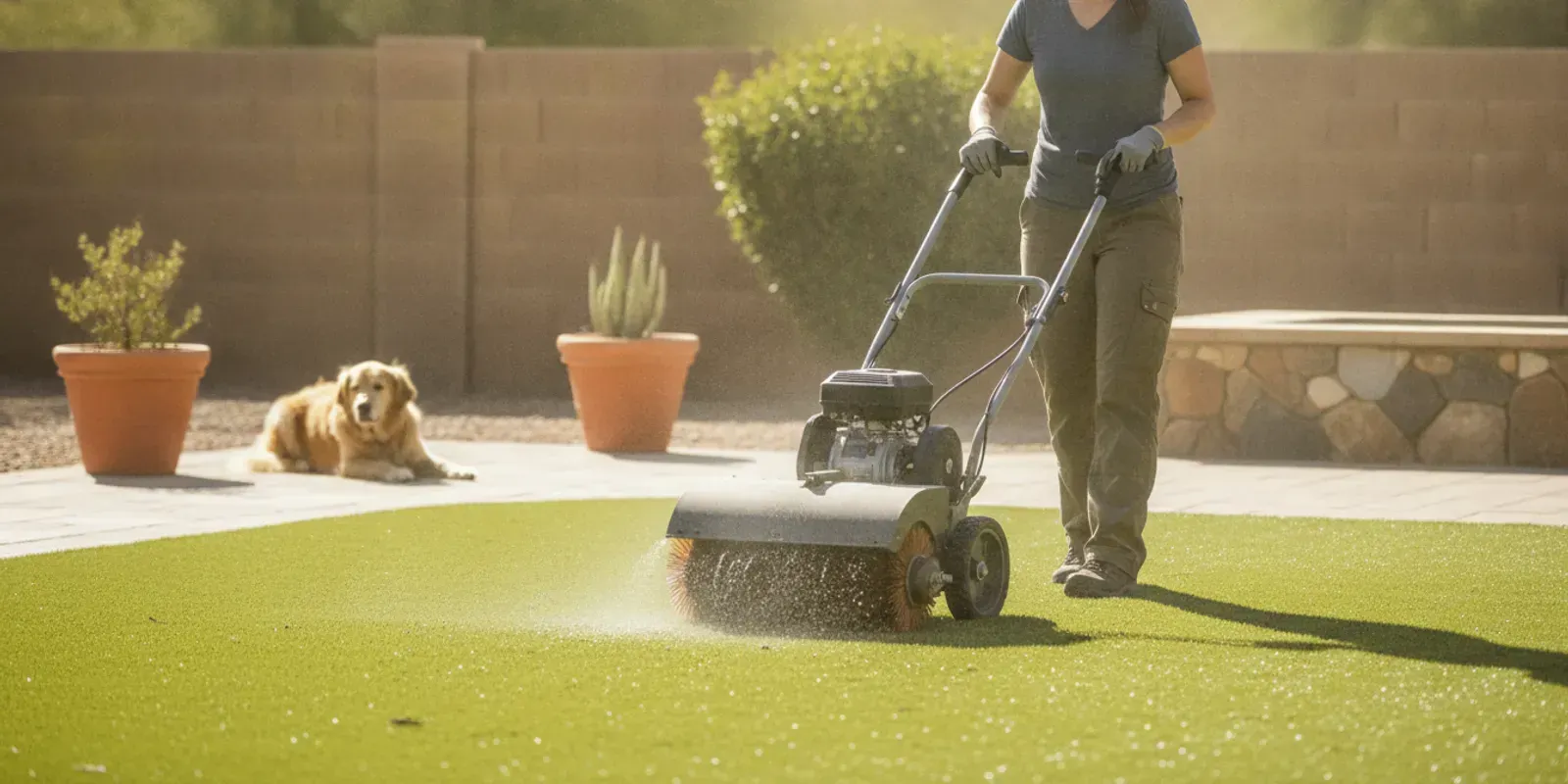
Clear leaves, grass clippings, dirt, and other debris regularly. Debris can collect around turf fibers and interfere with the surface looking clean. A soft brush or turf rake can help lift matted areas, but use equipment and pressure appropriate for your turf system. Avoid aggressive scraping that could disturb the fibers or infill.
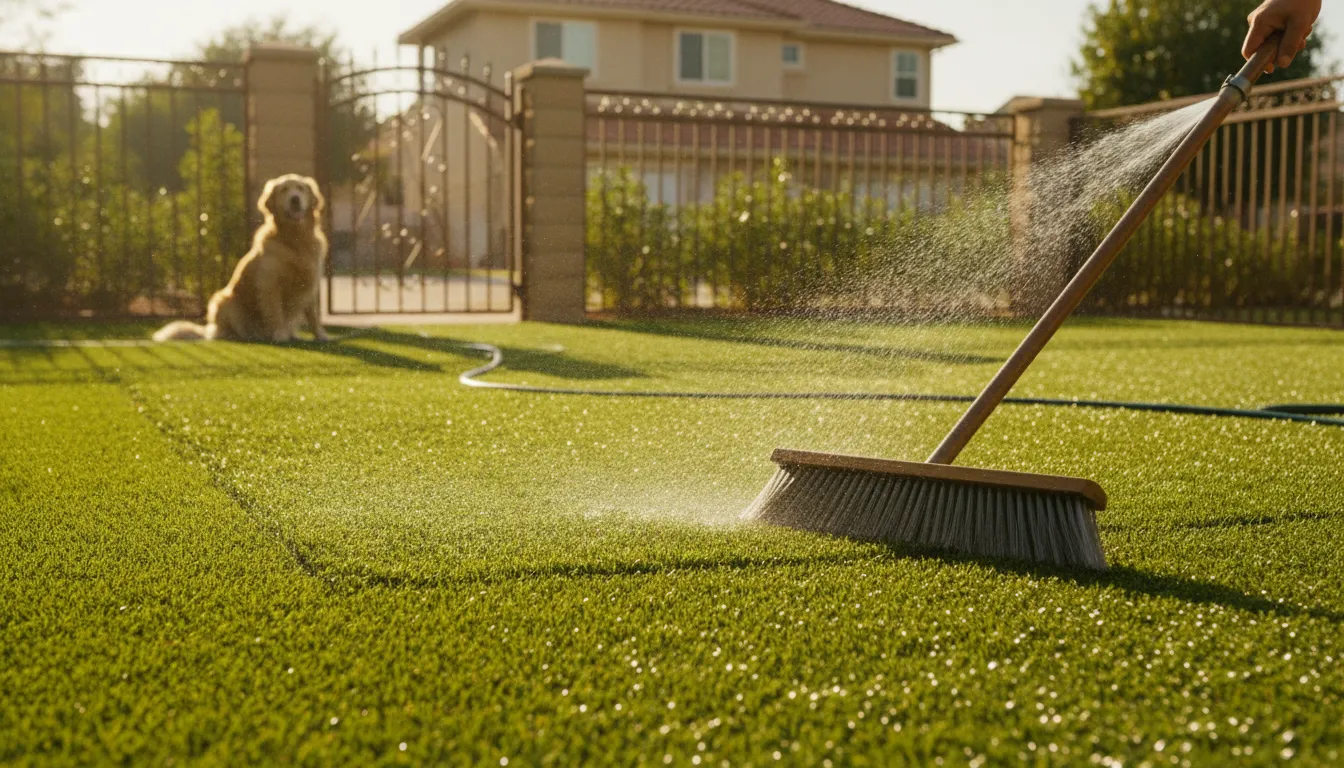
Watch how water moves through the area. If the turf drains well, an occasional rinse may help carry away loose residue. Rinse only when the surface has suitable drainage and local water-use rules allow it. Do not use a hose to push waste, sediment, or cleaning products toward a doorway, drain, neighboring property, or area where pets may come into contact with runoff. If water pools, drains slowly, or leaves a recurring damp area, the problem may need inspection rather than more rinsing.
Be cautious with household cleaners and turf products. Read the full label before use, follow its directions exactly, never mix products, and keep dogs away from wet or treated turf until the label permits re-entry. A product can be appropriate for one surface or purpose and unsuitable for another. Do not assume that a strong smell or heavy application means better sanitation.
Every few weeks, inspect high-use areas for lingering odor, compacted infill, trapped debris, damaged fibers, or drainage changes. Routine care reduces buildup, but it does not make artificial turf sterile or permanently free of germs and odor. For a more detailed plan, review A1's artificial grass maintenance guidance. Persistent odor or buildup may require a deeper cleaning that combines removal, rinsing, agitation, and appropriate deodorizing.
Call A1 Pet Maintenance at (702) 521-2624 today.
Frequently Asked Questions
How do you sanitize artificial turf?
Start by removing feces, leaves, and other debris, then rinse where drainage allows. If disinfection is appropriate, use only a product whose label covers the intended surface and follow every application, safety, and re-entry instruction. Cleaning removes dirt and germs, while disinfection uses chemicals to kill germs on surfaces, so neither step should be described as making turf permanently sterile (CDC guidance).
What is the best disinfectant for artificial turf?
There is no single best product for every turf system. Choose based on the turf manufacturer's guidance and the product label, and never mix cleaners. EPA explains that registered disinfectants list the microorganisms they have been tested against and work according to their label directions (EPA guidance). Keep dogs away during treatment and until the label permits re-entry.
How can I remove the odor of dog urine from artificial grass?
Remove solid waste first, rinse as drainage permits, and address buildup rather than masking the smell. Persistent odor can involve trapped organic material, turf fibers, infill, or drainage, so one quick spray may not solve the source. If odor continues, a professional cleaning may combine waste removal, agitation, deep rinsing, and enzyme-based deodorizing.
Is it okay for dogs to pee and poop on fake grass?
Yes, artificial grass can be used as a dog relief area when waste is picked up promptly and the surface is maintained. Urine should be rinsed where appropriate, while feces should be removed completely and disposed of hygienically. Wash your hands after handling pet waste or items that contact animals, even when your dog looks healthy (CDC hygiene guidance).
When should I call a professional turf cleaner?
Call for professional help when odor returns quickly, buildup is persistent, drainage is slow. The area receives heavy dog traffic, or the turf covers a shared or commercial pet space. A professional can inspect the condition and match the cleaning approach to the turf, infill, and drainage instead of relying on repeated household applications.
Ready to Get Started With Cleaner Artificial Turf?
Regular care can help keep pet areas more comfortable, but persistent odor, organic buildup, or high traffic may call for a deeper cleaning approach. A1 Pet Maintenance can assess your artificial grass and recommend practical maintenance for your property.