How to Clean Artificial Turf After Dogs Las Vegas: DIY
Schedule professional turf cleaning in Las Vegas. Learn how to clean artificial turf after dogs Las Vegas the right way with A1's pet waste and turf...

Cleaning artificial turf after dogs means removing solid waste, rinsing away residue, and treating the surface so odor and organic buildup do not linger in Southern Nevada's heat.
How to clean artificial turf after dogs Las Vegas homeowners should start with prompt waste removal, a thorough water rinse, and a pet-safe enzyme cleaner used according to its label. Regular maintenance helps preserve the turf and supports a cleaner environment for pets, while deeper sanitation may be needed when odor persists.
DIY upkeep can handle routine messes, but the right method depends on how often the turf is used. How quickly waste is removed, and whether urine odor has reached the infill. For broader guidance, see our artificial turf pet hygiene resource, then follow the practical cleaning sequence below.
How to Clean Artificial Turf After Dogs in Las Vegas: A Step-by-Step Guide
Learning how to clean artificial turf after dogs in Las Vegas starts with removing the waste you can see, then treating the residue and odor you cannot. A consistent routine helps preserve the life of the turf and supports a cleaner environment for pets. A1 Pet Waste Maintenance has served Las Vegas homeowners for more than 26 years, but these practical steps are a useful starting point between professional cleanings.
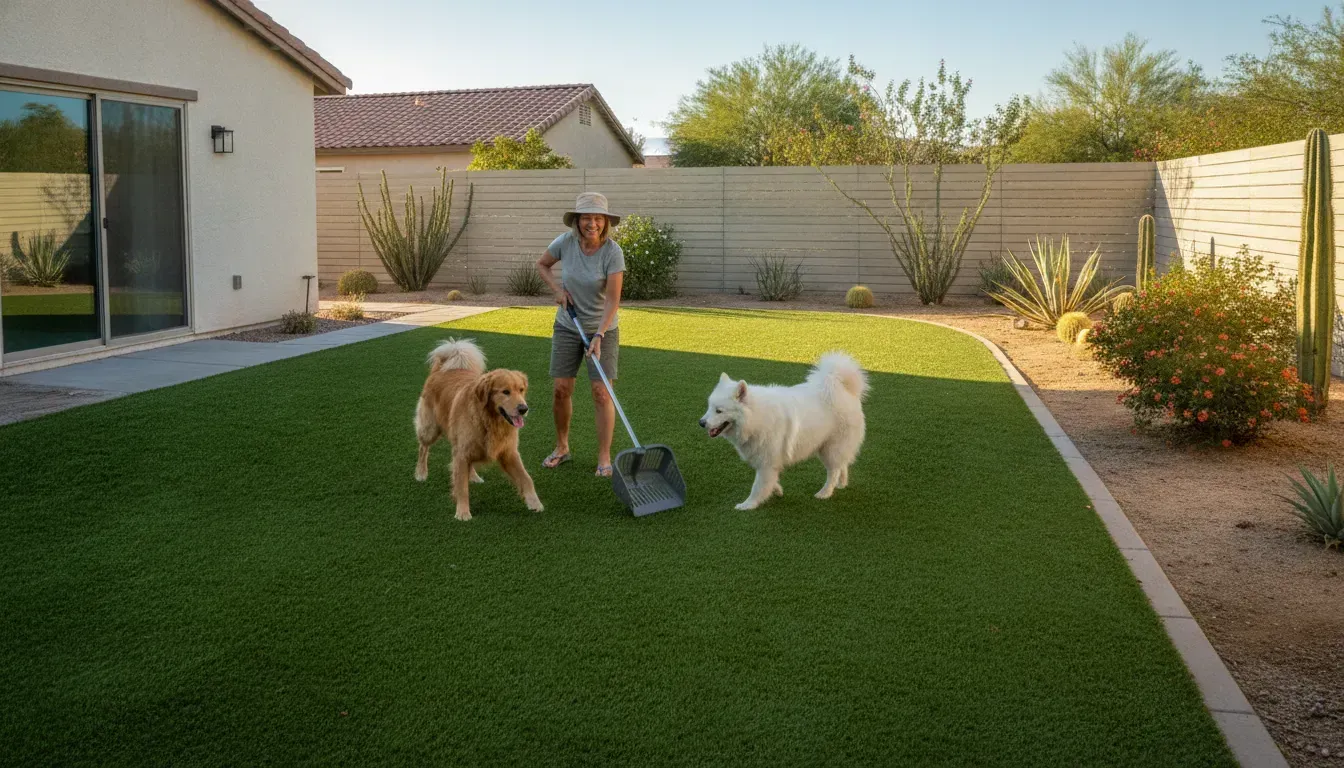
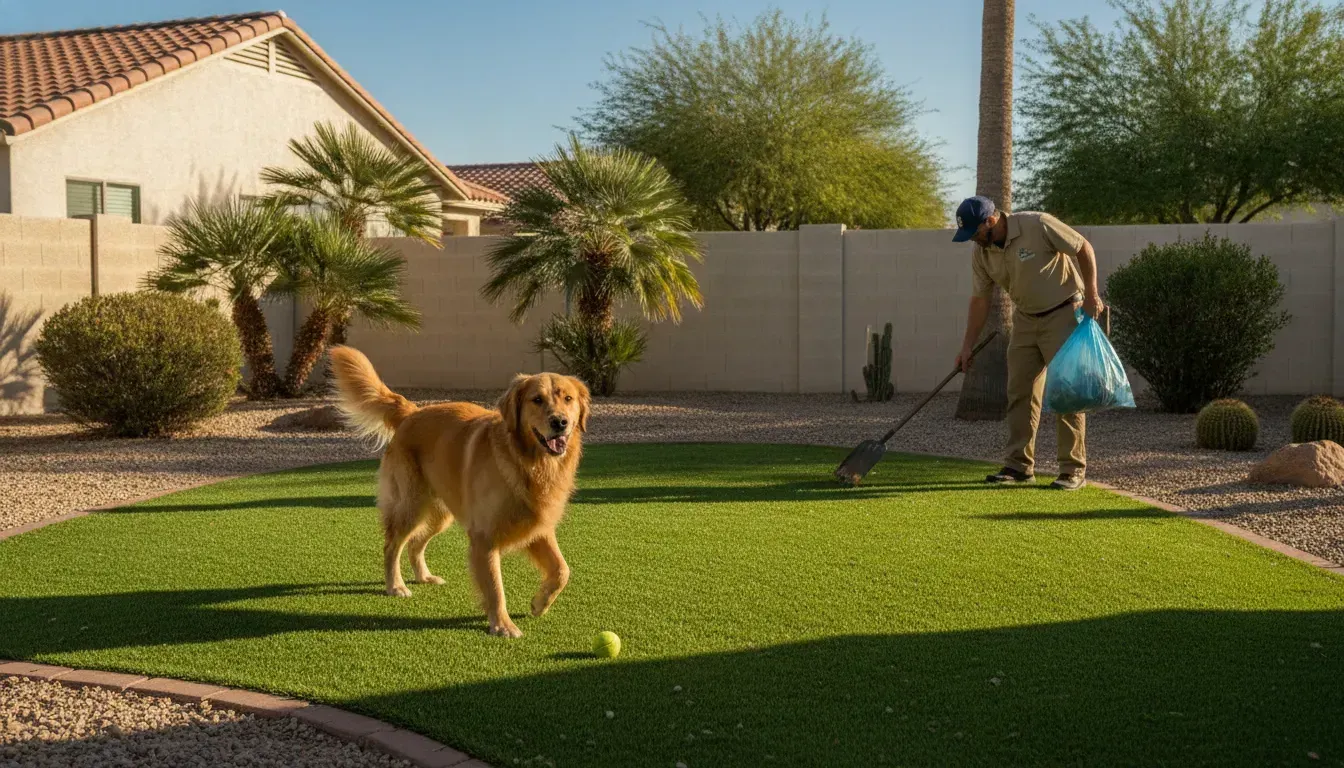
- Pick up solid waste first. Use a bag and scoop to remove all visible feces, including pieces caught between the turf blades. Do not begin rinsing until the surface is clear, because water can spread residue into nearby fibers and low spots.
- Rinse the area with plain water. Use a hose with moderate pressure and work across the affected section. Focus on common potty areas, seams, and places where urine may collect. In Las Vegas, prompt rinsing is especially useful during hot weather, when odors can become more noticeable.
- Apply an enzyme cleaner or a simple DIY solution. A pet-safe enzyme product can target odor compounds at their source. For a basic spot treatment, mix equal parts white vinegar and water in a spray bottle, then apply it evenly to the affected turf. Test any solution on a small, inconspicuous area first, and avoid bleach or harsh chemicals.
- Let the treatment dwell for 10 to 15 minutes. Keep pets and children away from the area while the solution works. Do not let the product dry immediately, since adequate dwell time gives it a better opportunity to loosen urine residue and odor.
- Brush and lift the turf fibers. Use a stiff, non-metal brush to work through the blades and release trapped debris. Brush in several directions with controlled strokes, taking care not to pull or damage the backing.
- Rinse thoroughly. Flush the treated area until the solution and loosened residue have washed away. Let the turf drain and dry before allowing pets back onto it. Plan to clean artificial turf at least monthly for pet use, or more often when several dogs share the yard.
For the broader routine, see our guide to artificial turf pet hygiene. Home rinsing handles regular surface care, while professional artificial grass cleaning can address deeper buildup and recurring odors.
What Cleaning Products Are Safe for Artificial Grass?
For artificial grass used by dogs, choose a cleaner that removes odor without leaving behind harsh residue or weakening the turf fibers. Non-toxic, pet-safe cleaners are appropriate when they are used properly and the area is allowed to dry before pets return. Always follow the product label, test an unfamiliar solution on a small inconspicuous area, and rinse thoroughly when the instructions call for it.
Use diluted white vinegar for routine odor control
A simple half-and-half mixture of white vinegar and water can help freshen areas where a dog urinates. Apply it lightly rather than flooding the turf, allow it time to work, then rinse with clean water. Vinegar is acidic, so do not mix it with other cleaners, especially bleach. It is also not a substitute for removing solid waste or addressing deeply embedded urine in the infill.
Try baking soda for surface odors
Baking soda can serve as a mild deodorizer between more thorough cleanings. Sprinkle a small amount over a dry, affected area, let it sit briefly, and remove it completely before dogs use the turf again. Avoid leaving visible powder in the grass or allowing pets to ingest it. Used sparingly, it is a practical option for a spot that needs freshening, not a complete sanitation treatment.
Choose enzyme-based cleaners for urine at the source
Enzyme-based cleaners are useful when urine odor keeps returning because they are designed to break down the organic compounds causing the smell. Use a product labeled for artificial turf and pet areas, apply it according to the directions, and respect its recommended dwell time. In Las Vegas, heat can make recurring odors more noticeable, so persistent smells may require deeper rinsing and agitation rather than repeated surface spraying.
Skip bleach, ammonia, solvents, abrasive powders, and other harsh household chemicals. They can discolor or damage turf fibers, affect backing or infill, and create residue that is unsuitable for a pet-use area. For recurring odor or heavy buildup, A1 Pet Waste Maintenance is the Las Vegas veteran whose professional artificial grass cleaning uses pet-safe, non-toxic formulas and a more complete sanitation process.
How Often Should You Rinse or Hose Down Artificial Turf?
For a yard used by dogs, rinse artificial turf with plain water at least once a month. Monthly rinsing helps move diluted urine and loose residue through the turf and keeps waste from accumulating in the surface fibers. A1 Pet Maintenance recommends at least monthly cleaning for pet owners. While regular maintenance also helps preserve the life of the turf and maintain a healthy environment for pets. Learn more about the recommended cleaning frequency.
Monthly is a baseline, not a hard limit. In Southern Nevada, intense heat can make urine odor more noticeable, especially when a yard receives heavy use or has limited airflow. During the Las Vegas summer, consider rinsing more often, such as every one to two weeks, if odor returns between cleanings. A quick rinse after an unusually busy week can also help keep residue from drying into the turf.
When should you schedule a deeper cleaning?
Plain water is useful for routine maintenance, but it does not replace periodic specialty cleaning. Add a deeper cleaning when the turf has a persistent urine smell, visible buildup, or a sticky feel that remains after hosing. An enzyme-based product made for artificial grass can help address pet odors at their source when used according to its label directions. Follow the application instructions, allow the recommended dwell time, and rinse thoroughly.
Pay extra attention to dog paths, favorite bathroom areas, shaded corners, and spots beneath outdoor furniture. Those areas may need more frequent attention than the rest of the yard. For a practical walkthrough, see this guide to cleaning artificial turf after dogs. If rinsing and odor control no longer keep up with the yard's use, professional agitation, deodorizing, and deep rinsing can provide a more thorough reset.
What DIY Cleaning Misses That Professional Service Catches
Hosing and scrubbing can handle visible debris, but they do not always reach the organic buildup and odor sources beneath the surface. That distinction matters in a Las Vegas yard, where heat can make lingering pet waste odors more noticeable. Professional turf sanitation adds deeper rinsing, agitation, and targeted enzyme treatment to address what routine household cleaning leaves behind.
Pet waste is also more than an eyesore. The EPA explains that pet waste can contribute nitrogen and phosphorus pollution, while the CDC notes that it may contain harmful bacteria such as E. coli and Salmonella. Regular sanitization helps prevent organic material from accumulating in ways that can harbor pathogens, as described by UNLV turf-maintenance guidance.
DIY cleaning compared with professional artificial turf sanitationCleaning needDIY approachProfessional serviceDepth of sanitationUsually reaches the visible surface through pickup, rinsing, and hand scrubbing.Uses a deeper rinse and sanitation process to address buildup below the surface.Odor removal at the sourceMay temporarily dilute odor, especially when urine has reached the backing or infill.Applies enzyme-based odor treatment designed to break down odor-causing organic residue at its source.Compacted fibersLight brushing may not loosen matted or compacted turf fibers.Power brushing or agitation helps lift compacted fibers and distribute cleaning action more evenly.Bacteria and organic residueCan remove waste you can see, but coverage and consistency depend on the homeowner.Combines waste removal and deep sanitization to reduce accumulated organic material where bacteria may persist.Time and effortRequires recurring bending, scrubbing, rinsing, and odor troubleshooting.Handles the labor-intensive cleaning in one organized service, with treatment selected for the turf condition.
DIY maintenance still has an important role between services. Pick up waste promptly, rinse problem areas, and follow product directions. When odor returns quickly or the turf feels matted despite cleaning, DIY vs professional pet waste removal becomes a practical question. A1 Pet Waste Maintenance has served Las Vegas for more than 26 years, providing deep sanitization, power agitation, and enzyme odor removal for artificial turf.
When to Call a Professional Turf Cleaning Service in Las Vegas
DIY rinsing can handle light, recent messes, but it is not always enough for artificial turf after dogs. Consider professional cleaning when urine odor returns quickly after hosing, turf fibers feel heavily compacted, or waste and debris collect across a large yard. Homes with multiple or large dogs often need more time and equipment than a typical weekend cleanup allows.
Las Vegas summer heat is another warning sign. Warm temperatures can make lingering odor more noticeable and increase the need for consistent sanitation. If you are postponing the work because of a busy schedule, that is a practical reason to call, too. Regular service helps keep waste from building up and makes the yard easier to maintain between visits.
What professional turf cleaning includes
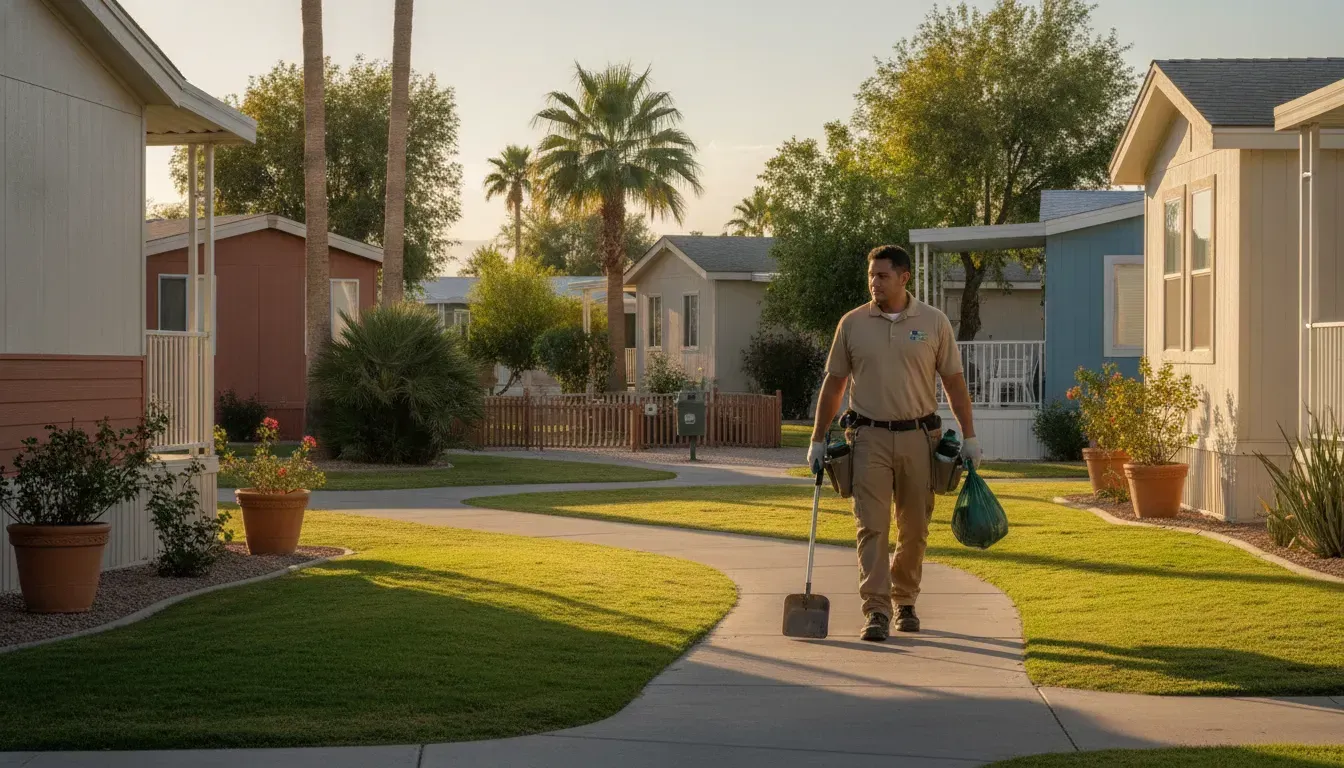
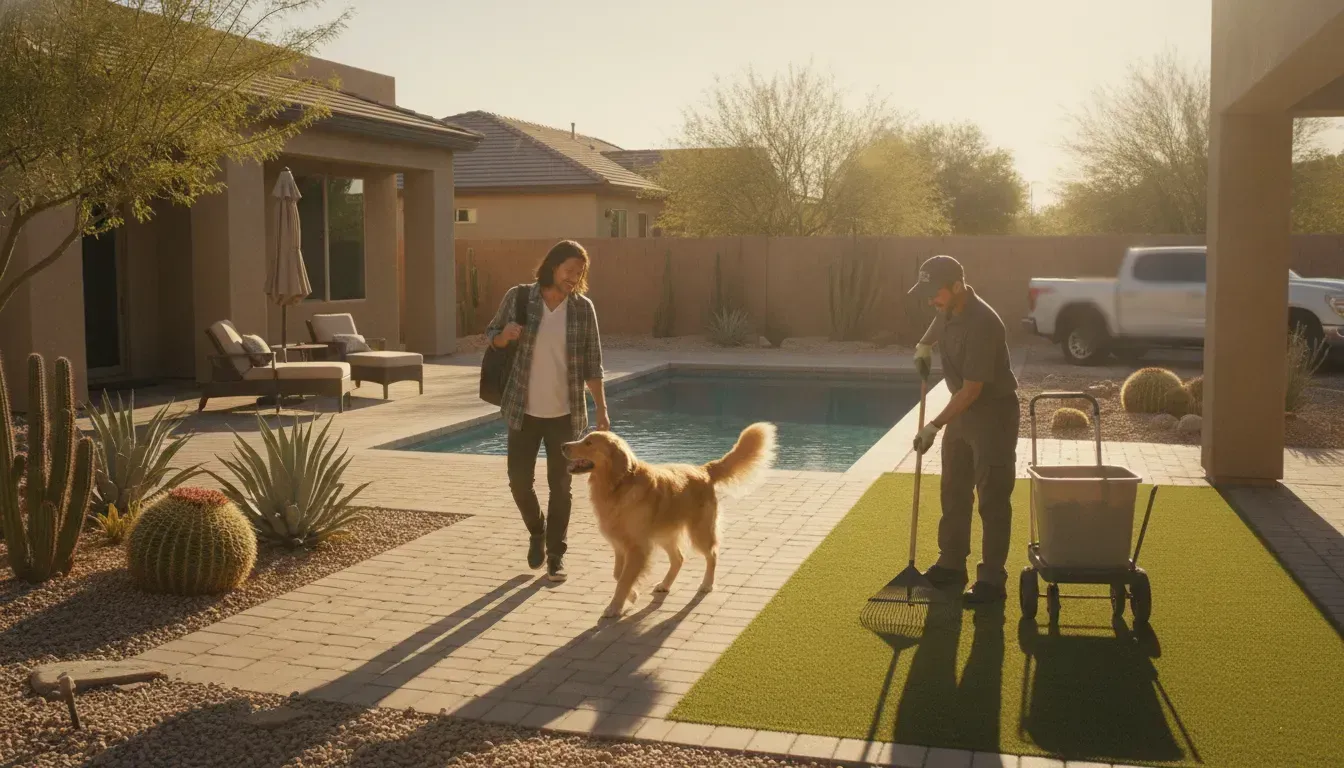
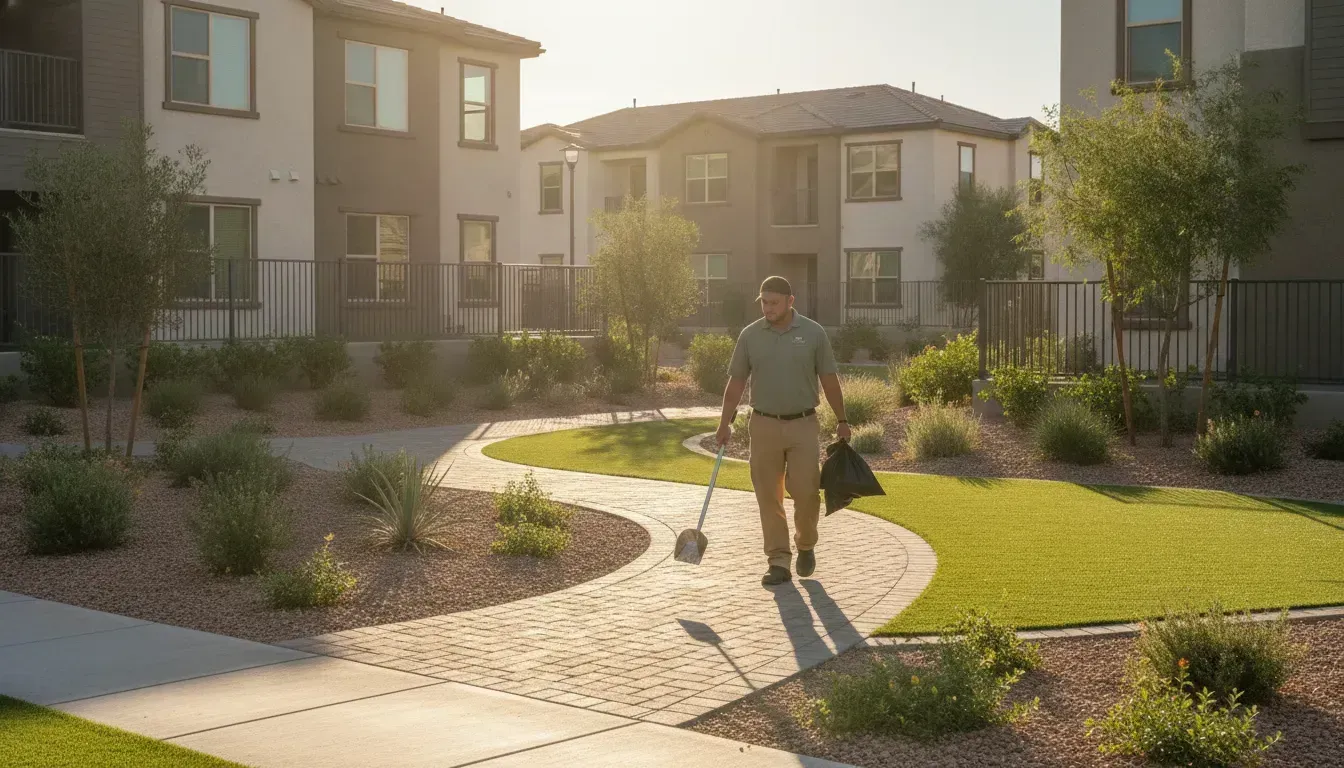
A1 Pet Waste Maintenance provides complete service for Southern Nevada properties. The team removes pet waste, clears leaves and other debris, applies enzyme deodorizing, and uses deep rinsing and agitation to reach material that surface hosing leaves behind. This approach is designed for artificial turf sanitation, not just a quick rinse.
A1 is family-owned and has served local pet owners since 1998, with more than 26 years of experience. The company services more than 400 Southern Nevada properties each week and offers no-contract service. So you can choose a recurring schedule or request help when your yard needs a reset.
Residential service for one dog starts at about $65 per month, while larger yards, multiple dogs, and specialized cleanups receive custom quotes. If persistent odor or compacted turf is taking over your routine, schedule pet turf cleaning and get a practical recommendation for your yard.
Call (702) 521-2624 Today to schedule your turf sanitation visit.
Frequently Asked Questions
How often should I clean artificial turf after dogs in Las Vegas?
Clean it at least monthly, then rinse more often during hot Las Vegas periods or whenever odor and waste buildup return. Regular cleaning helps preserve the turf and keeps the yard more comfortable for pets.
Is artificial turf cleaner safe for dogs?
Yes, when you choose a non-toxic, pet-safe product and follow its directions. Keep dogs off the turf during application and until the product has dried as directed. Enzyme-based cleaners are useful for breaking down pet odors.
What should I do when artificial turf still smells after rinsing?
Rinsing removes surface residue, but persistent odor may require an enzyme-based treatment and deeper agitation to address urine and organic buildup below the surface. If the smell keeps returning, a professional sanitation service can assess the turf more thoroughly.
Can I use bleach to clean artificial grass after dogs?
Bleach and other harsh chemicals are not the best default for pet areas. Use a product specifically labeled pet-safe instead, and follow the product instructions. Never mix cleaning products, because combinations can create dangerous fumes or damage the turf system.
When should I hire a professional turf cleaning service?
Consider professional service when odor persists, waste has accumulated, rinsing no longer restores the yard, or you need a deeper sanitation than routine home maintenance provides. A professional can combine waste removal, debris clearing, deodorizing, rinsing, and agitation for a more complete clean.
Ready to Keep Your Artificial Turf Clean?
Regular turf cleaning can make it easier to maintain a fresh, comfortable yard after dogs use it. A1 Pet Waste Maintenance has served Las Vegas pet owners since 1998 with practical pet waste removal and artificial turf sanitation, including no-contract service. Call A1 Pet Waste Maintenance at (702) 521-2624 to schedule professional turf cleaning and pet waste removal today.
The body content of your post goes here. To edit this text, click on it and delete this default text and start typing your own or paste your own from a different source.