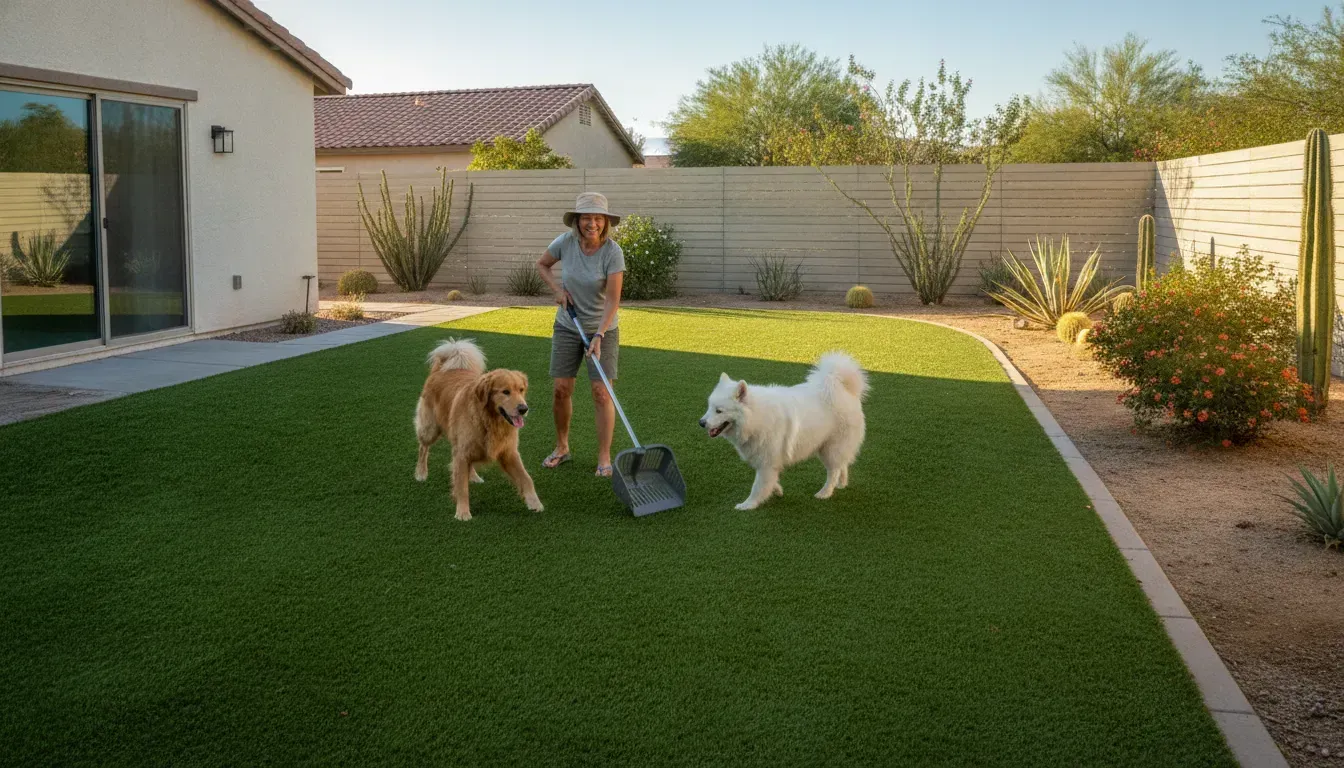
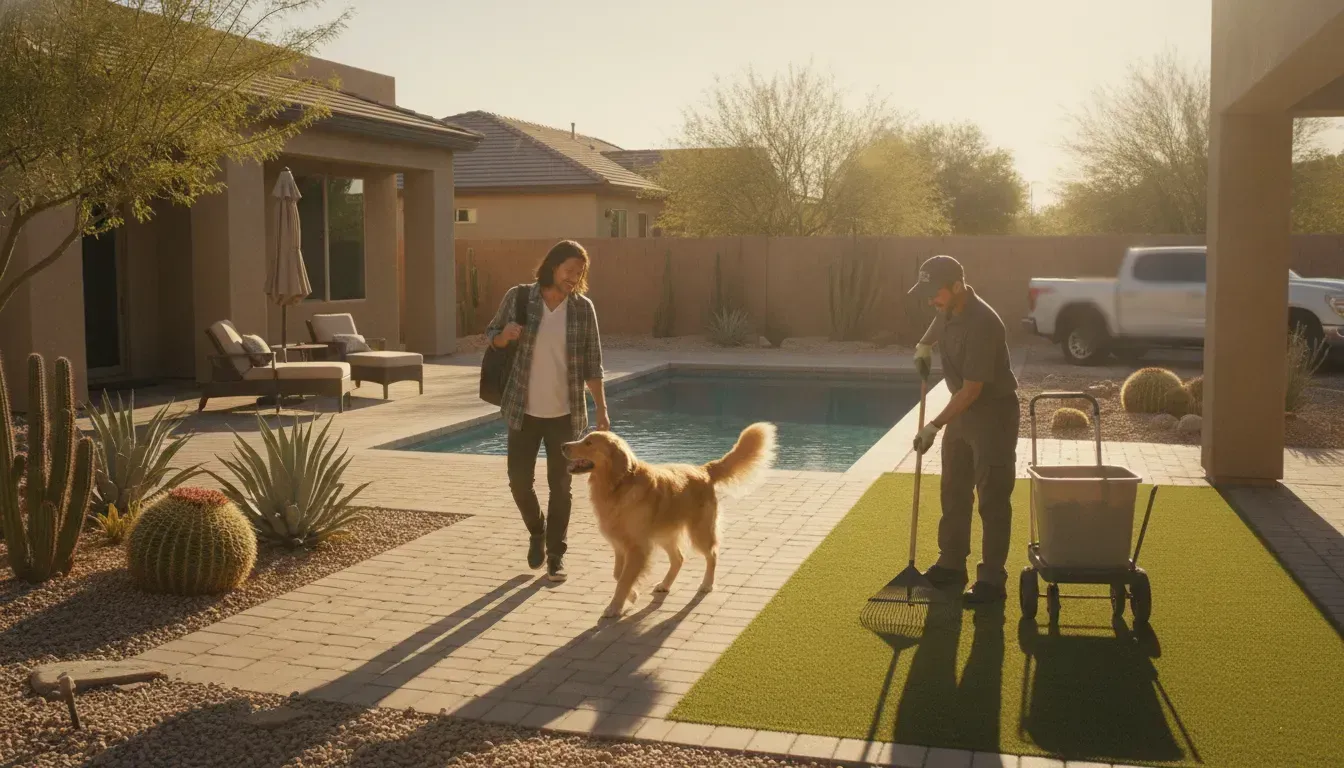
Property Management Dog Waste Service: A Practical Guide
Choose the Right Property Management Dog Waste Service

Pet waste cleanup rarely stays a small task once a community has multiple buildings, pet stations, landscaped areas, and a busy maintenance calendar. A missed round can mean overflowing bins, resident complaints, and a common-area standard that is difficult to verify.
A property management dog waste service is a recurring maintenance solution that helps keep pet stations, shared grounds, and other designated areas consistently addressed. It allows property staff to focus on core repairs and resident needs. The right choice depends on the property's traffic, current staffing, required scope, and how the work will be scheduled and documented.
Call A1 Pet Maintenance at (702) 521-2624 Today
In-house cleanup may appear straightforward, but the real comparison includes labor time, equipment, protective supplies, disposal, coverage, and accountability. A recurring provider may also support station maintenance and sanitation planning. Start by clarifying what the service should cover, then compare that scope against the time and oversight your team can reliably provide.
What Is a Property Management Dog Waste Service?
A property management dog waste service gives managers a recurring way to keep pet stations, shared lawns, walkways, and dog areas maintained. The service scope should match the property's layout, traffic, and resident expectations.
- Define every area included in the route.
- Match visit frequency to pet traffic and station capacity.
- Separate vendor duties from resident policy enforcement.
- Set a simple process for reporting missed service or overflow.
- Review results against visible cleanliness standards.
A property management dog waste service is a recurring maintenance program for shared spaces where residents and their pets live, walk, and gather. For a broader look at multi-family operations, review A1's multi-family pet waste management guide. Instead of treating cleanup as an occasional response, the property schedules a service to help keep pet-active common areas orderly throughout the year. That regularity matters because pet waste removal is an ongoing maintenance responsibility, not a one-time project.
What Does the Routine Service Include?
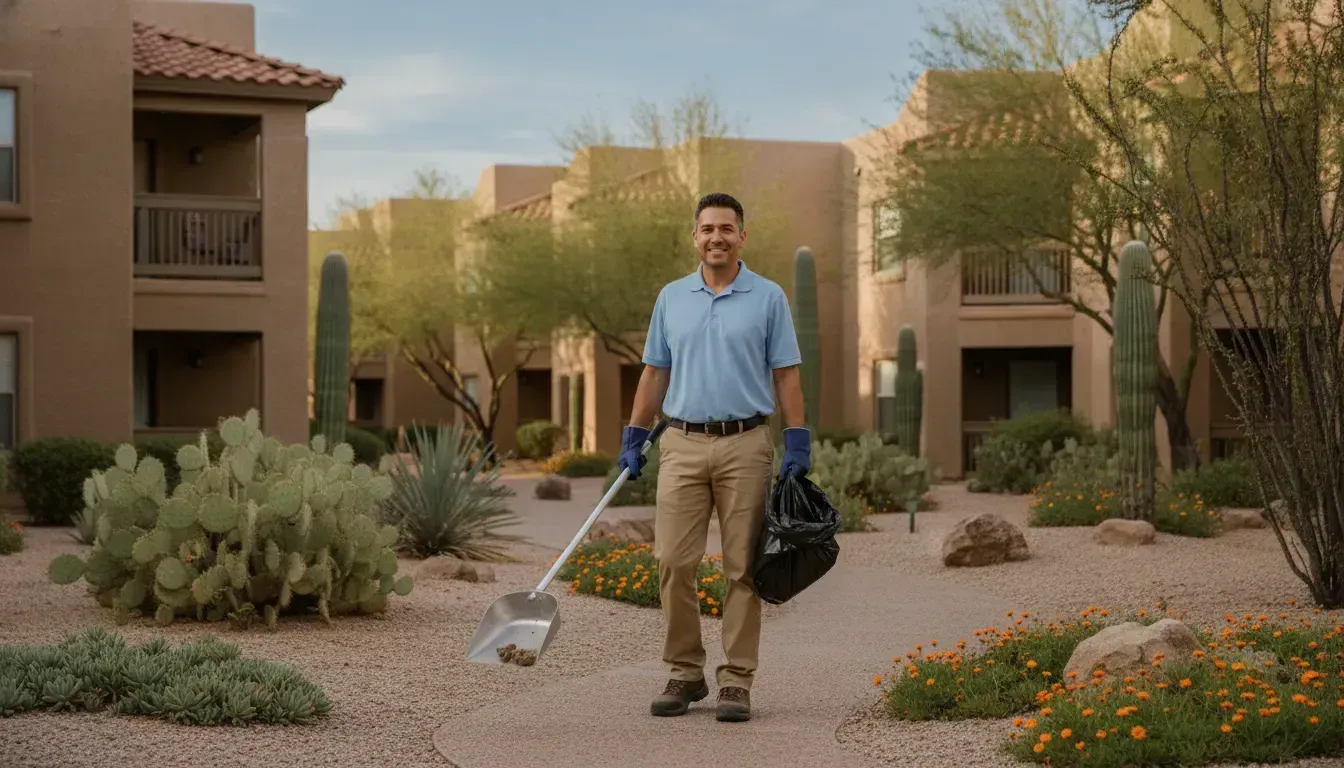
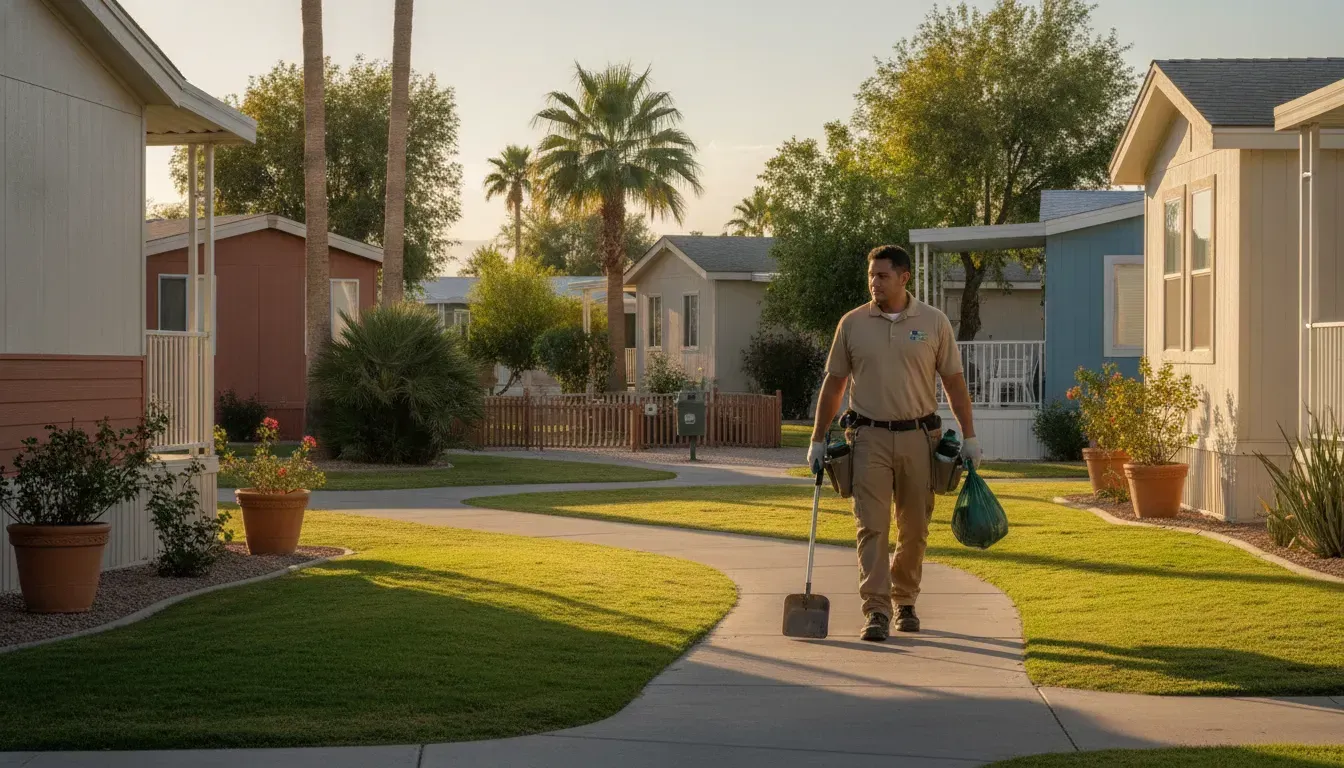
The exact scope should be confirmed for each property, but routine service commonly centers on the pet-waste stations and the waste those stations collect. A provider may check stations across the site, replenish bag supplies, and remove collected waste in accordance with applicable local requirements. The work can be organized around the community's layout, the locations residents use most, and the standards the property wants its maintenance team to monitor.
For a property manager, the benefit is an assigned operational function with a repeatable process. The goal is not simply to make one cleanup pass. It is to support a consistently maintained appearance in the places residents notice every day, including walkways, shared lawns, dog runs, and areas near pet stations. Clean common areas are highly visible and can shape residents' first impressions of the property and their broader experience of living there.
How Is Service Different From Resident Policy Enforcement?
The vendor's role is operational: inspect the agreed service areas, manage the waste stations, replenish supplies, and remove waste. The property manager, owner, or association remains responsible for communicating the community's pet-waste rules and deciding how to address violations under its own policies. A cleanup provider does not replace signage, resident notices, or the property's enforcement process.
Keeping those responsibilities separate makes the program easier to manage. Residents should understand what they are expected to do, while the service team handles the recurring maintenance work that supports those expectations. From there, the practical decision is whether that work belongs with existing staff or an outside provider. That is the central difference between an in-house approach and outsourced service.
How Does a Property Management Dog Waste Service Compare With In-House Cleanup?
For a small property with limited pet traffic, assigning cleanup to an existing team member may seem straightforward. Managers comparing broader commercial options can also review A1's commercial pet waste removal cost guide. The decision becomes more complex when a community has multiple stations, high resident use, shared lawns, and competing maintenance priorities. The right comparison is not simply an hourly vendor rate versus a staff wage. It is the full operational cost of keeping the work reliable.
In-house cleanup versus recurring property management dog waste serviceConsiderationIn-house cleanupRecurring outsourced serviceLaborUses maintenance hours that may be needed for repairs, inspections, or resident requests. Staff also need clear task ownership and training.Assigns the recurring route to a dedicated service provider, reducing the need to fit it around unrelated property work.Equipment and PPERequires the property to supply appropriate tools, bags, containers, and personal protective equipment, then maintain those supplies.Moves routine equipment and PPE management to the provider, subject to confirming scope and safety practices before hiring.DisposalStaff must handle collected waste and follow the property's disposal process consistently.The vendor can manage collection and disposal as part of the agreed service scope. Ask exactly how waste is handled.ConsistencyStation servicing can be pushed behind emergency repairs or other urgent work, increasing the risk of missed visits and overflowing bins.A recurring schedule creates a defined maintenance responsibility. The schedule should still be matched to traffic and property needs.AccountabilityManagers oversee internal completion through walkthroughs, checklists, and staff follow-up.Managers can set practical KPIs, such as service completion and station cleanliness, and review reports or address missed visits with the vendor.Total costIncludes wages, staff time, equipment, PPE, supplies, disposal fees, training, and the opportunity cost of delayed maintenance work.Includes the recurring service fee and any defined add-ons. Compare that amount with the complete internal cost, not labor alone.
Outsourcing is not automatically cheaper, and in-house work is not automatically more efficient. Build a property-specific comparison using the time spent per visit, supply and disposal costs, coverage during staff absences, and the consequences of missed service. Then decide whether your team can deliver the same consistency without displacing higher-priority work.
Whichever model you choose, assign one person to review completion and station condition. A simple weekly record can reveal overflow patterns, recurring gaps, and whether the selected approach is meeting the community's cleanliness standard.
How Should a Recurring Service Cover Common Areas?
A recurring plan should begin with a site map, not a generic route. Mark building entrances, sidewalks, dog runs, grassy areas, artificial turf, pet stations, waste receptacles, and less visible corners where residents may walk their dogs. The map gives the service team a practical checklist and gives the property manager a clear way to discuss coverage without assuming that every area has the same needs.
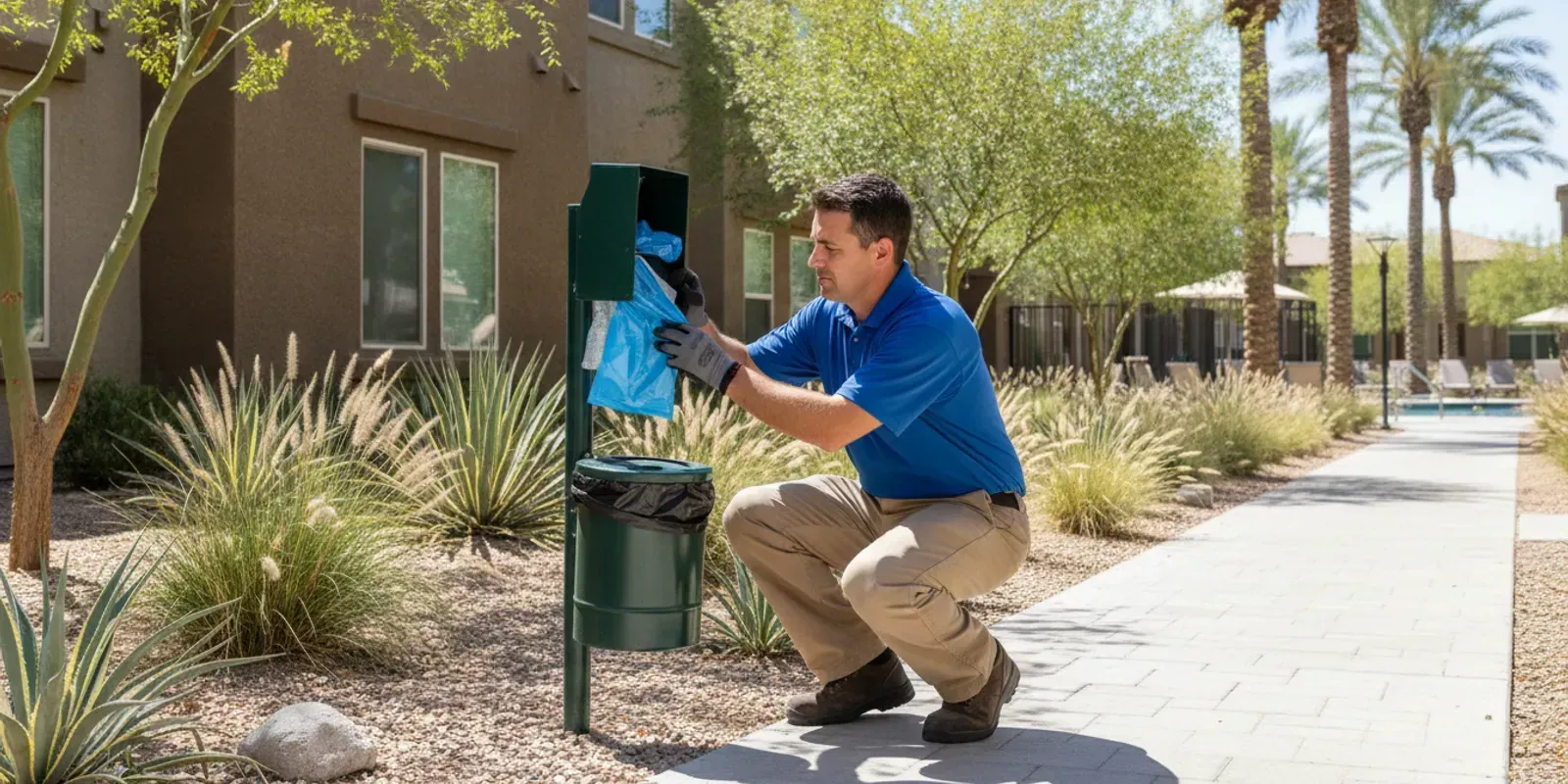
Pet stations deserve their own inspection routine. A complete visit may include checking each station, replenishing bag supplies, removing collected waste, and disposing of it according to applicable local requirements. Confirm those elements when comparing providers, because a service that only removes waste from the ground may leave the station itself overflowing or unusable. The intended scope should be documented and adjusted when the property's layout or resident use changes.
Traffic levels should guide priorities. Entrances, dog parks, walking loops, and routes leading to shared amenities typically receive more use than a remote perimeter. High-traffic areas may need more frequent attention than low-traffic areas, while every mapped area should remain part of the inspection plan. This approach helps a property manager focus resources where residents notice cleanliness most, without treating a single visit pattern as appropriate for every community.
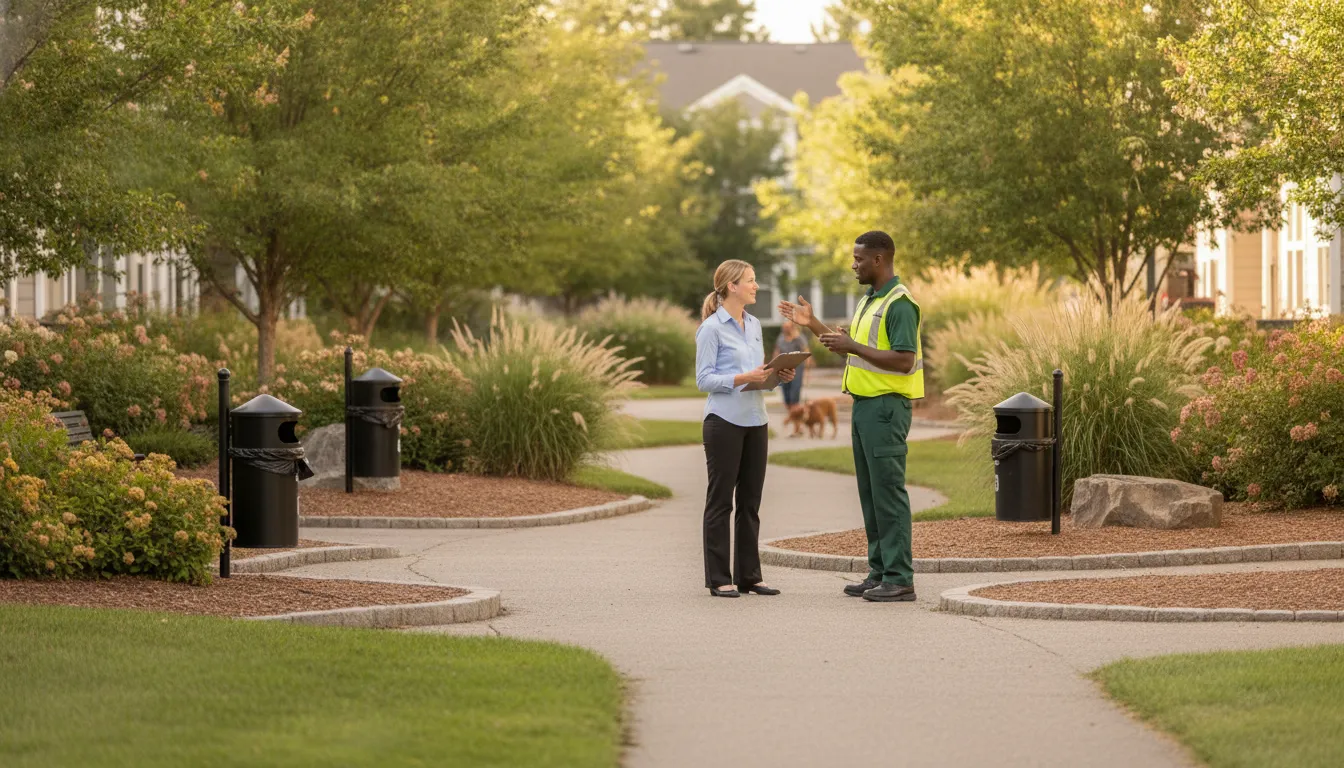
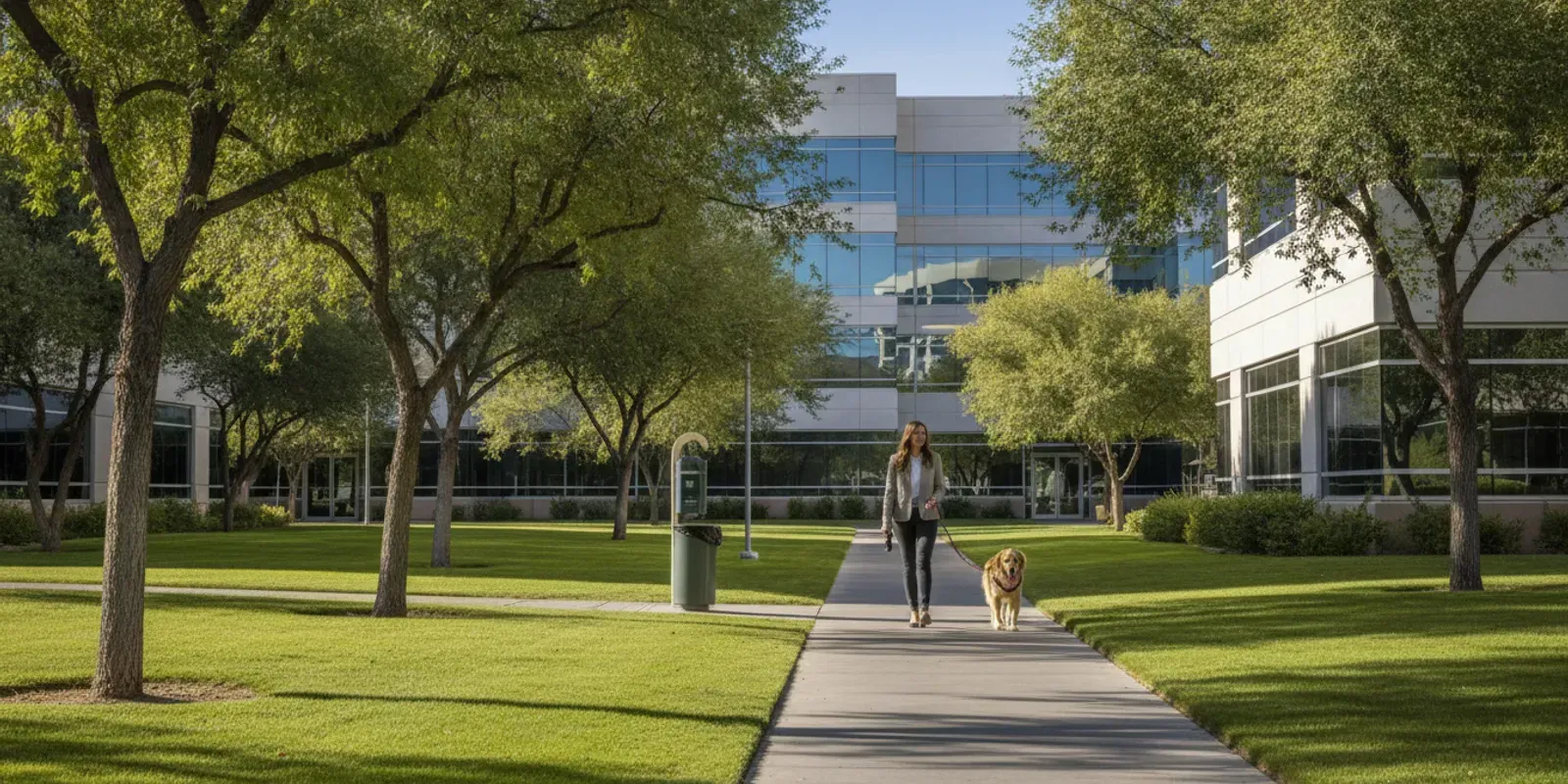
Placement also affects whether residents use the system successfully. Stations should be visible and convenient along common walking paths, but not directly beside building entrances. Distance from doors can help limit odor complaints while preserving access for residents. If a station is repeatedly missed, poorly positioned, or short on bags, the map and service instructions should be revised rather than leaving the problem to resident frustration.
Artificial turf and other pet-use surfaces may need attention beyond routine waste removal. Ask whether the provider can assess turf areas and address sanitation or odor concerns as part of a broader maintenance plan. A1's commercial capabilities include site assessments, artificial grass sanitation, and waste-station maintenance. Commercial property dog waste management can be evaluated around the property's actual layout and operating priorities. For a broader overview of recurring commercial arrangements, review A1's commercial pet waste removal service options.
How Often Should Common-Area Pet Waste Be Removed?
There is no single schedule that fits every community. A better approach is to set a planning baseline, then adjust it to pet traffic, station capacity, weather, and documented conditions. The customer planning benchmark is to have pet stations serviced at least twice weekly. But treat that as a starting point rather than a universal legal requirement or promise. Use the following method to build a schedule your team can manage and verify.
- Map traffic before assigning frequency. Divide the property into high-, medium-, and low-traffic pet areas. Review dog-walking routes, building density, station use, and recurring overflow. High-traffic areas generally need more frequent service than quieter parts of the property. A schedule that treats every station identically can leave the busiest locations under-served while sending unnecessary visits to lightly used areas.
- Set the initial service baseline. Start with the twice-weekly station-servicing benchmark from the customer planning guidance. Then ask whether high-use stations, larger communities, or seasonal activity require additional visits. Confirm the proposed frequency with the service provider, including what each visit covers, rather than assuming that "serviced" means the same thing across vendors.
- Verify conditions during walkthroughs. Add every pet station to daily or weekly property walkthrough checklists, depending on site size and activity. Check container fullness, bag availability, visible waste around the station, odors, and access issues. Walkthroughs provide an early warning when the planned frequency no longer matches actual use.
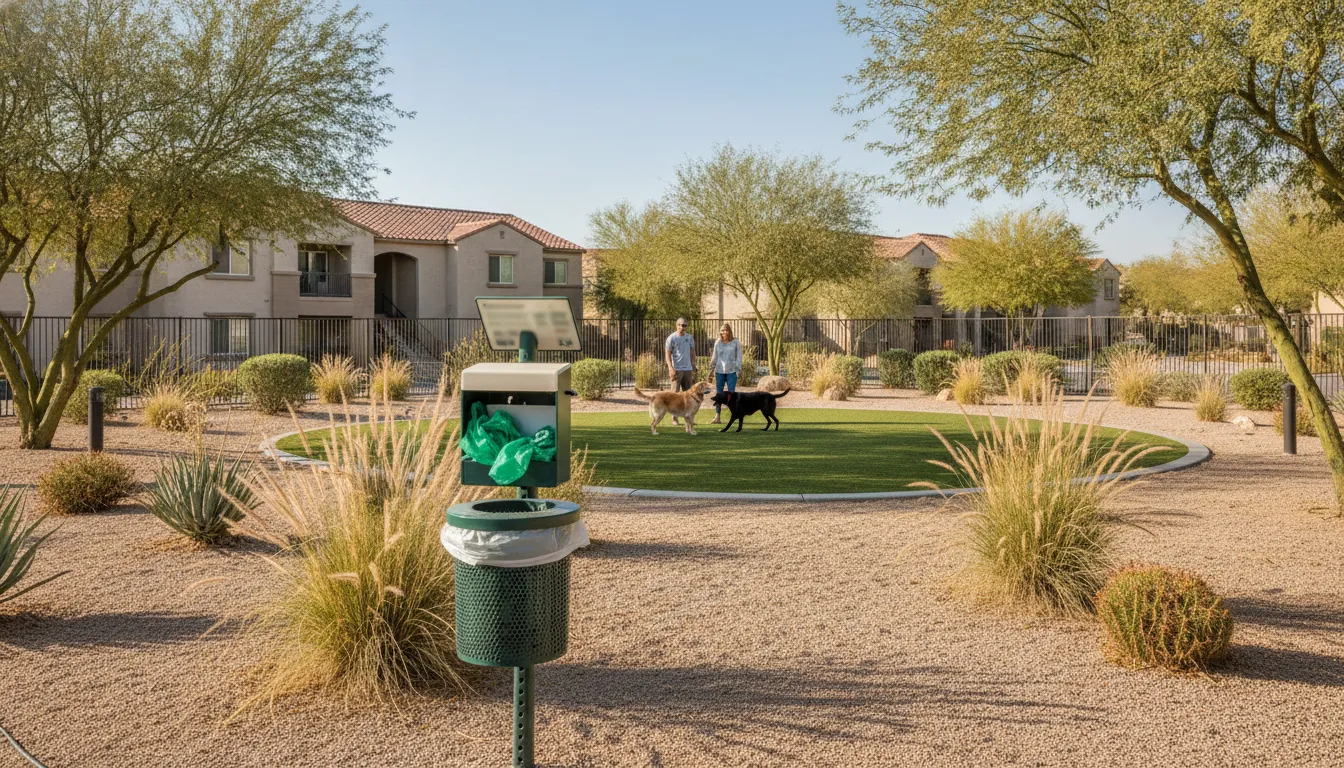
- Measure the service, not just the calendar. Track practical KPIs such as service completion rate, station cleanliness, bag replenishment, and recurring overflow. A completed visit should be evaluated against the agreed standard, not recorded as successful solely because someone arrived on site.
- Log misses and incidents. Record missed visits, overflowing containers, resident complaints, access problems, and unusual cleanup needs with dates and locations. Incident logs reveal patterns, support schedule adjustments, and give property managers clear documentation when a vendor repeatedly fails to meet requirements.
How Can Property Managers Communicate the Pet Waste Policy?
A clear pet waste policy works best when residents see the same message in the places they already use: near pet stations. In community newsletters, on resident portals, and during move-in communication. Explain the expected action in plain language, such as picking up waste immediately, tying the bag securely, and placing it in the designated receptacle. High-visibility signage at stations helps define responsibilities where the behavior occurs, rather than relying on a policy document residents may never revisit.
Make reminders visible and specific
Use concise signs with a friendly instruction and a clear reference to the community's rules. Pair station signage with periodic newsletter or portal reminders, especially after move-in periods, landscaping changes, or recurring overflow concerns. The goal is not to overwhelm residents. It is to make the right behavior easy to remember. Communication should also identify where bags and receptacles are located, so residents are not left guessing.
Balance encouragement with enforcement
Positive reinforcement can complement enforcement. A community pet event, recognition for responsible pet owners, or a simple thank-you message can make compliance feel like a shared standard rather than a constant reprimand. At the same time, state the consequences for violations accurately and consistently. If the lease, community rules, or local policy allows warnings or fines, explain the process without threatening consequences the property cannot enforce. Balanced communication encourages cooperation while preserving accountability.
Give residents a practical way to report overflowing stations, missing bags, or repeated problem areas. A resident portal form, management email, or office contact creates a feedback loop that turns complaints into trackable maintenance information. Managers can review those reports alongside station checks and service records, then adjust signage, station placement, or vendor instructions as needed.
Clean common areas shape the day-to-day resident experience and the first impression visitors form of the property. A consistent communication plan supports that standard, while recurring professional service helps keep the physical conditions aligned with the policy.
What Should You Ask Before Choosing a Dog Waste Vendor?
A vendor should be evaluated as an operational partner, not just as someone who removes waste. Before choosing a provider, ask questions that reveal how the service will protect your community's standards, support your staff, and remain dependable when conditions change. A1's commercial vendor selection guide offers another checklist for comparing service providers.
What does the standard service include?
Ask the vendor to describe the complete scope in plain language. Does the service cover all pet waste stations, common-area walks, bag replenishment, waste removal, and cleanup around stations? Which areas are included on the site map, and how are high-use areas handled? If your community has artificial turf or recurring odor concerns, ask whether sanitation or turf treatment is available as a separate service. A written scope helps prevent assumptions and makes performance easier to review.
Who will be working on the property?
Ask whether field employees and subcontractors undergo background checks, and who is responsible for supervision. Confirm that the vendor carries insurance appropriate to its operations and can provide current documentation when requested. These questions do not replace your own legal or risk-management review, but they help you compare providers consistently and identify gaps before service begins.
How is collected waste handled?
Ask where waste goes after collection and whether disposal practices follow applicable local requirements. The vendor should be able to explain its process without vague assurances. Also ask how spills, damaged stations, full containers, or other sanitation issues are reported and corrected. Clear answers demonstrate that the provider has considered more than the visible part of the job.
What proof of service will we receive?
Ask how visits are documented. Depending on the provider, proof may include completion reports, service notes, photographs, or GPS-tagged verification. Confirm what information property managers can access, when it is delivered, and how missed or incomplete visits are identified. Establish a few practical measures, such as completion records and station condition, so your team can monitor results rather than rely on informal updates.
How are schedule changes and cancellations handled?
Ask how the service schedule can be adjusted during seasonal increases in pet activity, property events, construction, or occupancy changes. Review the cancellation and service-adjustment terms carefully. Do not assume that every vendor offers the same flexibility, notice period, or process. Ask who your point of contact will be, how quickly concerns are acknowledged, and what escalation path applies when a visit is missed.
Finally, ask for examples of how the vendor communicates during routine service and unexpected problems. Reliable scheduling and responsive communication are essential to a long-term property-management relationship. The best choice is the provider whose scope, documentation, disposal process, and communication standards you can understand, verify, and manage.
When Does Outsourcing Make Sense for a Pet-Friendly Community?
Outsourcing usually deserves serious consideration when pet traffic is high, common areas are spread across the property, or maintenance staff cannot reliably add another recurring responsibility. A small community with limited dog traffic may be able to manage cleanup internally. Larger apartment communities, HOA neighborhoods, and mixed-use properties often need a defined process that does not disappear when an emergency repair or resident issue takes priority.
Start with the full cost, not just the hourly wage. Add staff time for collection, station checks, bag replenishment, travel between areas, equipment, protective supplies, and waste disposal. Then consider the cost of overflow, resident complaints, missed walkthrough findings, and inconsistent presentation. This calculation will not produce the same answer for every property, but it gives the manager a more useful comparison than a vendor line item alone.
Look at capacity and resident experience
Outsourcing can make sense when the team lacks the capacity to visit stations on a dependable schedule. Pet waste removal is a recurring maintenance item, so occasional catch-up work does not create the same resident experience as consistent attention throughout the year. Clean paths, lawns, pet areas, and stations help residents feel that shared spaces are being maintained thoughtfully. A practical review should examine complaint volume, station condition, missed tasks, and the time supervisors spend checking whether cleanup happened.
It is also a fit when the property needs more than ground pickup. A vendor may be able to coordinate station maintenance, site assessments, and artificial grass sanitation within a broader plan. Review A1's commercial property dog waste management services to see how those needs can be evaluated together. Properties with synthetic turf can also review A1's artificial turf cleaning guide for dogs. If a community needs a single cleanup before recurring service begins, discuss that transition with the provider and compare it with the property's longer-term needs.
Choose reliability that matches the property
A1 Pet Maintenance has served the industry since 1998 and provides sanitation services to more than 400 properties weekly. That experience can be relevant for managers seeking an established commercial partner, but the right decision still depends on the property's traffic, layout, staffing, and service expectations. Compare those factors, define how completion will be reviewed, and choose the approach that keeps common areas consistently cared for without overloading the onsite team.
Call A1 Pet Maintenance at (702) 521-2624 Today.
Frequently Asked Questions
How do I choose the right dog waste service for my property?
Compare providers by service scope, route coverage, scheduling flexibility, communication process, and experience with shared properties. Ask whether visits cover pet stations, sidewalks, lawns, turf, and other common areas. Request clear visit documentation, escalation procedures, and references from properties with similar resident and pet-use patterns.
What are the benefits of outsourcing dog waste management?
Outsourcing gives your maintenance team a defined routine for removing waste, checking common-area hotspots, and keeping service responsibilities clear. It can also support more consistent resident communication and sanitation standards when internal staff have competing priorities. A recurring vendor helps turn cleanup into an accountable maintenance process rather than an occasional reaction.
How often should pet waste be removed from common areas?
Set the schedule around property size, pet traffic, weather, resident complaints, and the locations where waste accumulates. High-use dog areas may need more frequent attention than lightly used spaces. Review conditions after launch and adjust the route when inspections show missed hotspots, odors, or rising resident concerns.
What should a vendor include in a recurring service plan?
A recurring plan should define the service areas, visit frequency, cleanup method, pet-station responsibilities, disposal process, communication standards, and handling of missed or inaccessible areas. It should also identify the property contact, reporting method, and process for requesting extra cleanup. Written scope prevents assumptions between management, residents, and the vendor.
Does my property need a professional pet waste service?
Consider professional service when staff cannot maintain a reliable cleanup schedule, residents share responsibility inconsistently, or common-area waste creates repeated complaints and sanitation concerns. A vendor can also help when the property has multiple buildings, pet stations, or artificial grass areas. Smaller properties may manage internally if ownership and inspections are dependable.
Ready to Discuss Service Options for Your Property?
A recurring dog-waste service can give your property a consistent plan for common areas, scheduled visits, resident communication, and clear service expectations. Call A1 Pet Maintenance at (702) 521-2624 to discuss recurring dog-waste service options for your property and identify an approach that fits your community's needs.