Artificial Grass Enzyme Treatment: Safe Use Guide
This is a subtitle for your new post

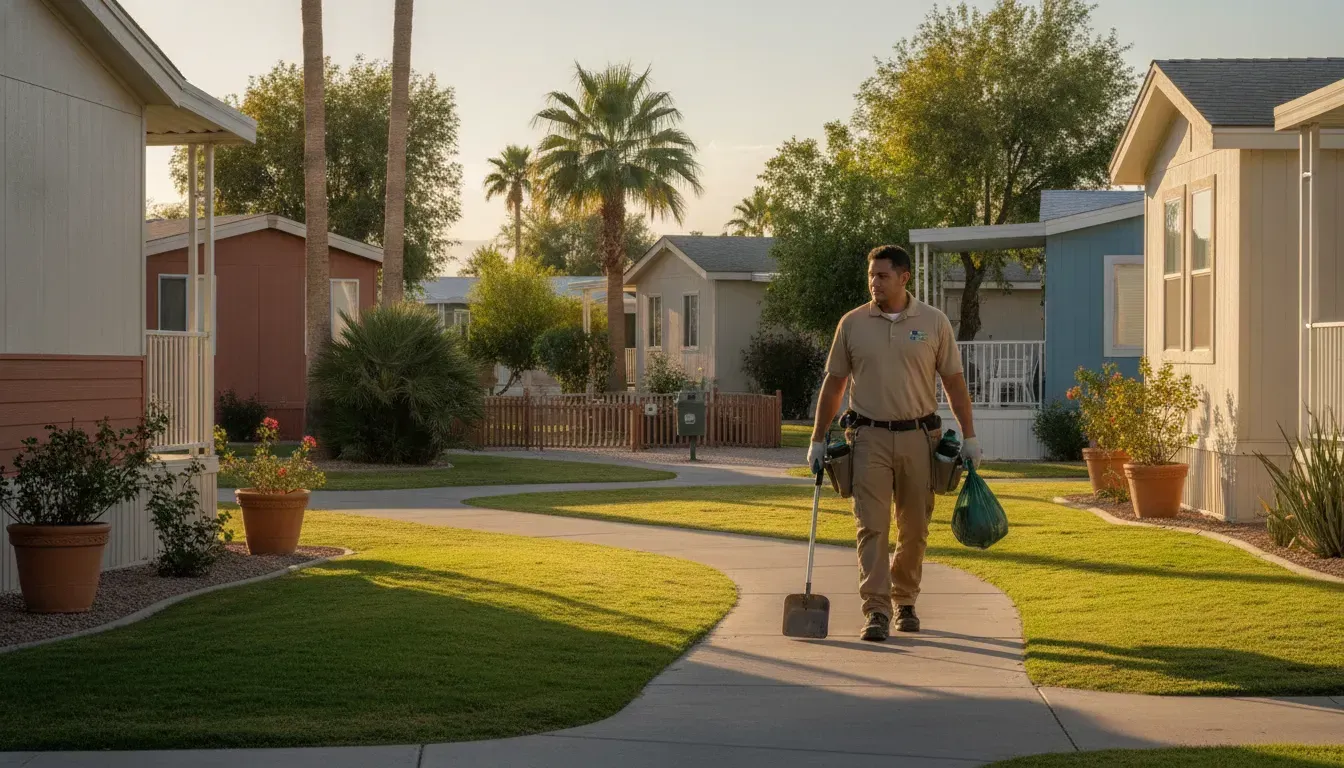
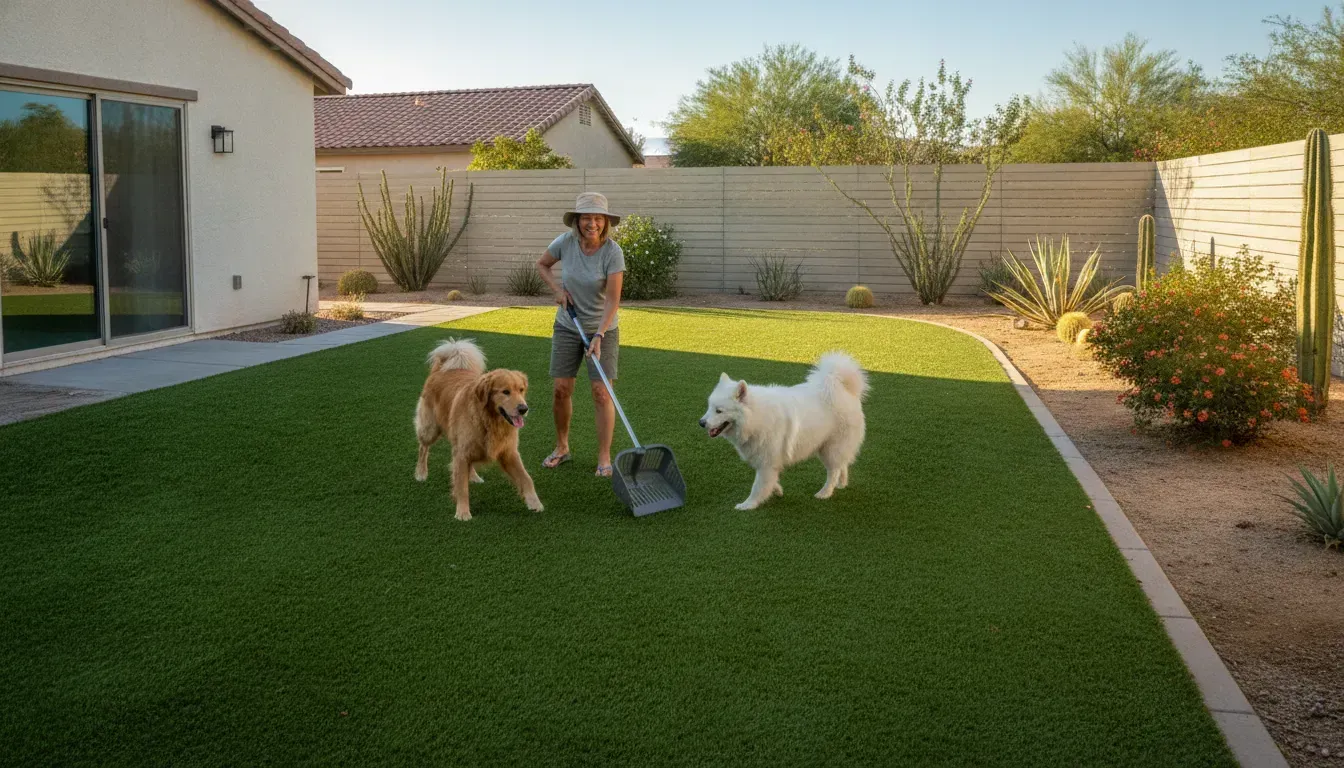
Artificial turf looks clean while pet waste residue builds below the blades. In Las Vegas, Henderson, and Tucson, heat can make hidden buildup especially noticeable. A quick surface spray is not always the complete answer.
An artificial grass enzyme treatment can help break down organic residue that contributes to pet urine and waste odors. But it is not a substitute for removing solids, rinsing thoroughly, and addressing contamination in the infill or backing. Use only a product labeled for the surface, follow its dilution and contact-time directions, and keep pets and children off the area as directed.
Call A1 Pet Maintenance at (702) 521-2624 Today
The right choice depends on where the odor is coming from. Consider how large or heavily used the turf area is. Also consider whether routine cleaning has kept pace with the buildup. Understanding what the treatment can reach, and what it cannot, makes the next cleaning decision much clearer.
What Does an Artificial Grass Enzyme Treatment Actually Do?
An enzyme treatment is designed to work on the organic residue left behind by pet urine, feces, and related debris. Specialized biological ingredients target components of that residue, helping break them down instead of simply covering the smell with a stronger fragrance. The practical goal is source-focused cleaning, although results depend on the amount of buildup, where it has collected, and whether the surrounding turf system is cleaned thoroughly.
That distinction matters on artificial grass. A fragrance-based deodorizer may make an area smell fresher for a short time. It does not necessarily address the material creating the odor. Enzyme cleaners are intended to break organic matter into less odorous components. The CDC explains that enzyme cleaners can help digest organic matter such as pet urine and feces. This should not be interpreted as a universal promise of complete odor removal from every turf installation.
How does it target pet residue?
When pets use the same area repeatedly, urine and other organic material can accumulate around the turf blades and move into the infill. An appropriate treatment is applied to the affected surface so its active ingredients can work on the residue during the product's stated contact time. This is why spraying and immediately rinsing may not provide the same result as following the label directions. The treatment needs an opportunity to interact with the material it is meant to break down.
It also explains why a light surface application may be limited. If odor-producing residue has collected below the visible blades, treating only the top may leave part of the problem untouched. Deep cleaning commonly pairs enzyme-based deodorizing with agitation and a thorough rinse. Those additional steps help address buildup and remove loosened residue rather than leaving it in place.
What can enzyme treatment not do by itself?
Enzymes are one component of artificial grass care, not a substitute for regular waste removal, debris clearing, rinsing, and inspection. They cannot correct every cause of odor, and they should not be treated as a disinfectant. A repair for damaged backing, or a guaranteed solution for deeply saturated infill. Product suitability also varies by formula and turf construction, so follow the label and any available safety information before application.
For ongoing odor control, pair source-focused treatment with regular artificial grass maintenance. That approach helps keep new waste from accumulating while making it easier to identify when a yard needs more than routine surface care.
Why Can Pet Odor Return After Treatment?
Odor can return when a treatment reaches the turf blades but not the material beneath them. Pet urine can move through the surface and collect in the infill, while repeated waste deposits can contribute to buildup around the backing. In that situation, the visible grass may smell cleaner for a short time, yet moisture or movement can bring the odor back up. Persistent odor is often a sign that the infill needs attention, not proof that an enzyme product was useless.
What happens below the turf surface?
Artificial grass is a layered system. The blades are only the part you see. Infill supports the blades and helps the surface function, while the backing holds the turf structure together. If urine and organic residue penetrate below the blades, a surface spray may not contact all of the affected material. This is one reason effective cleaning may need to address both the turf surface and the infill.
Uric acid in pet urine can crystallize and become difficult to remove with water alone, according to the CDC's guidance on cleaning pet supplies. An artificial grass enzyme treatment may help break down organic components when it is used on the right surface and allowed to remain in contact as directed. It cannot guarantee that every residue has been removed from a deep or heavily affected layer.
Why does heat make the problem more noticeable?
Hot weather can make trapped pet odors more pronounced. Heat may cause odor-producing residue in the turf system to release a stronger smell. So an area that seemed acceptable in cooler weather can become noticeable again during a Las Vegas summer. The change does not necessarily mean that new waste was deposited that day. It can reveal residue that remained below the surface.
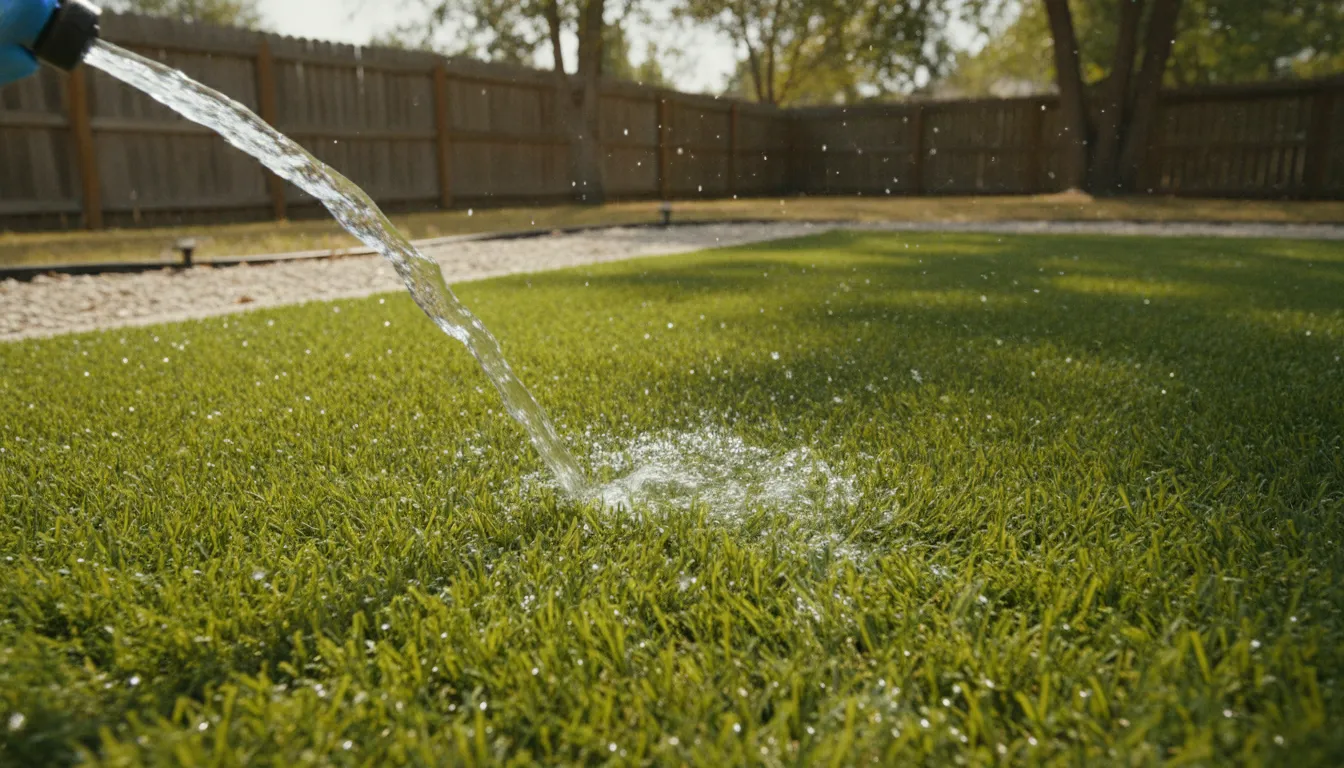
Rinsing and physical agitation matter because treatment is not the entire cleaning process. A thorough rinse can help carry away loosened residue, while agitation can help reach material around the infill. Rinsing too lightly, applying unevenly, or allowing additional waste to accumulate can all limit the result. Prompt waste removal also reduces the time residue has to absorb into the grass system.
For practical steps to keep artificial grass odor-free, consider the full maintenance routine rather than relying on repeated surface deodorizing. If odor returns quickly, covers a large area, or is strongest after heat or moisture, a deeper cleaning assessment may be more useful than simply applying more product.
How Can You Use Enzyme Treatment Safely Around Pets?
Safe use starts with the product label, not a general assumption that every enzyme cleaner is harmless. Choose a product whose label specifically identifies synthetic turf or the type of outdoor surface you need to clean. Products can differ in ingredients, concentration, application method, ventilation needs, and re-entry instructions. Enzyme-based does not mean non-toxic, universally pet-safe, or appropriate for every turf system.
Check the product before applying it
Read the full label and the safety data sheet (SDS) before mixing or spraying. The label should tell you whether dilution is required, how much product to apply. How long it must remain on the surface, whether rinsing is required, and when people and pets may return. The U.S. Environmental Protection Agency's Safer Choice product directory can help you identify products that meet that program's standard. But a listing is not a substitute for reading the individual product label or confirming that the product is suitable for your turf.
If you are comparing products, avoid relying on broad claims such as "natural," "green," or "pet-friendly." Look for specific directions and warnings. If the label does not clearly address synthetic grass, contact the manufacturer before using it. Never combine an enzyme product with bleach, disinfectants, acids, or another cleaner unless the manufacturer explicitly says the combination is compatible.
Test a small area first
Artificial turf can include blades, backing, infill, seams, drainage layers, and adhesives. Apply the prepared solution to a small, inconspicuous area and follow the stated contact time. Check the area after rinsing and drying for changes in color, texture, sheen, backing, or infill behavior. Appropriate cleaning agents help protect turf integrity, while an untested harsh cleaner may cause damage that is difficult to reverse.
Control exposure during treatment
Keep pets, children, toys, food bowls, and other personal items away from the treatment area. Wear any protective equipment listed on the label, and ventilate the area as directed, especially when working in a confined or poorly ventilated space. Apply only the stated dilution. A stronger mixture is not automatically more effective and can increase the risk of surface damage or unwanted exposure.
Allow the product to remain wet for the label's required contact time so it can work on organic residue. Do not let pets or children back onto the turf until the label permits re-entry and the surface has been handled as directed. If the product calls for a rinse or flush, complete that step rather than leaving residue behind. For heavily affected turf, a surface application may not reach buildup below the blades. A deep cleaning approach that combines enzyme deodorizing treatment with agitation and rinsing may be more appropriate than repeated spraying.
How Do You Apply Enzyme Treatment to Artificial Grass?
Use a label-led process rather than guessing at a universal recipe. Product formulas differ, and the correct dilution, contact time, rinsing method, and pet re-entry instructions belong to the product label and safety data sheet. The goal is to expose the affected turf, apply the treatment evenly, give it the required working time, and remove loosened residue without damaging the grass system.
- Remove solid waste first. Pick up all visible feces and other solid material before applying any liquid cleaner. Enzyme treatment is not a substitute for routine waste removal. Clearing the surface lets the product reach the areas affected by urine and organic buildup, while reducing the amount of material that can be spread during rinsing.
- Clear leaves, hair, and loose debris. Brush or sweep away debris that could block the turf blades or prevent even coverage. Pay attention to corners, seams, pet paths, and areas beneath outdoor furniture. Do not rake aggressively if the turf manufacturer's care instructions prohibit it.
- Check the product directions. Confirm that the cleaner is intended for artificial grass or the specific surface you are treating. Read the label and SDS before mixing or applying it. Follow every instruction for dilution, protective equipment, ventilation, storage, and keeping pets or children away. Proper dilution matters because an overly concentrated product can affect the surface, while an incorrectly diluted product may not perform as intended.
- Pre-rinse only if the label directs you to. Some products may call for a light rinse before application, while others may require a dry or differently prepared surface. Do not assume that more water improves the result. A pre-rinse can also move residue into the infill if used at the wrong stage.
- Apply the solution evenly. Use the application method and coverage instructions supplied with the product. Work across the affected area instead of treating only the most obvious odor spots. Cover the turf blades and, where the directions permit, allow the solution to reach the affected area below the surface. Avoid runoff onto plants, drains, neighboring property, or surfaces not approved on the label.
- Respect the stated contact time. Enzyme products need time on the surface to digest organic waste components. The CDC describes enzyme cleaners as working biologically on organic matter, but there is no universal dwell time for every formula. Keep pets and children away for the full period stated on the label, and do not rinse early unless the directions require it.
- Rinse or flush as directed. Follow the product's instructions for the final rinse. Thorough rinsing helps carry away loosened residue. A1's artificial grass cleaning process combines enzyme-based deodorizing with deep rinse and agitation, rather than relying on surface spraying alone. See A1's artificial grass cleaning process for that broader approach.
- Allow the area to dry and inspect it. Keep the area restricted until the label permits normal use. Once dry, inspect the blades, seams, edges, and infill area for remaining residue, pooling, surface changes, or odor. If the turf looks damaged or the odor becomes stronger, stop and consult the product manufacturer or a turf-cleaning professional.
- Repeat only according to the label. Do not increase concentration, shorten the interval, or apply extra treatments because an odor remains. Persistent odor can indicate buildup below the blades, where a deeper cleaning process may be needed. Repeat only when the label allows it and the surface remains suitable for treatment.
Should You Choose DIY Treatment or Professional Turf Cleaning?
DIY enzyme treatment can be a sensible first step when the problem is small, recent, and clearly limited to one spot. After removing waste, following the product label, and allowing the stated contact time, a careful application may help with a localized odor. It is not the same as a complete turf cleaning, however. Enzyme treatment is one part of a broader process that may also require agitation, deep rinsing, and attention to the infill beneath the grass blades.
The deciding question is not simply whether you own a bottle of cleaner. It is whether you can identify the affected area and use a product suited to artificial turf. You also need to apply the correct dilution and rinse or flush as directed. A1's artificial grass cleaning process combines enzyme-based deodorizing with deep rinse and agitation because surface spraying alone may miss buildup below the blades.
DIY treatment compared with professional turf cleaningSituationDIY enzyme treatmentProfessional turf cleaningBest next stepOne small, recent accident in a known spotConvenient and reasonable if the label permits use on artificial grass and the area can be treated evenly.Usually more service than the immediate problem requires.Remove solids, follow the label, spot-test first, and inspect after drying.Odor keeps returning after treatmentRepeated surface applications may not reach the infill or backing where waste has accumulated.Deep cleaning can address turf blades and underlying infill with rinsing and agitation.Stop adding products and request an assessment rather than guessing at stronger chemicals.Large area or repeated pet accidentsCoverage, dilution, contact time, and rinsing become harder to manage consistently.Professional tools and a planned process are better suited to broad or recurring buildup.Choose professional cleaning, then establish a maintenance routine.Commercial, multifamily, or HOA spaceInconsistent treatment can create access, sanitation, and scheduling problems.Recurring service supports property-wide standards and documented maintenance expectations.Discuss a recurring plan with a provider familiar with commercial property sanitation.You are unsure what caused the odor or which product is safeGuessing can waste time and may put turf integrity or pet access at risk.An experienced technician can evaluate the condition and recommend an appropriate cleaning approach.Seek professional guidance before applying another product.
Professional help becomes especially practical when heat makes trapped urine odor more noticeable. When the affected area is extensive, or when several rounds of DIY treatment have produced little improvement. Persistent odor can indicate penetration into the infill, and effective removal may require treating more than the visible blades. Professional maintenance can also help reduce long-term odor saturation and support the useful life of artificial turf.
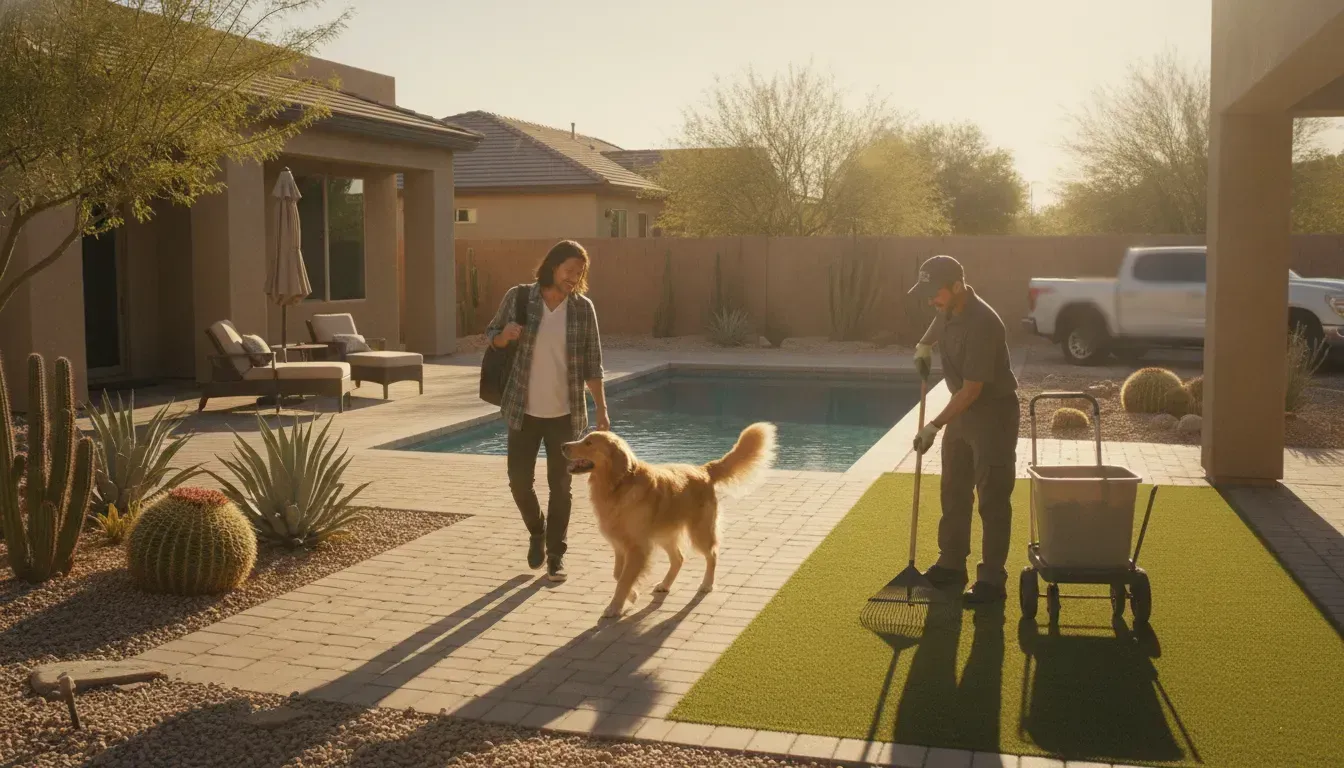
A1 uses professional tools and sanitized collection bags while following proper city-sanitation disposal methods. That matters in shared spaces and anywhere repeated pet waste creates a broader sanitation responsibility. For a single isolated issue, see A1's one-time turf cleanup option. For ongoing care, review regular artificial grass maintenance.
A1 quotes are custom, with no posted prices for this service. The right next step is a site-specific assessment based on the turf condition, affected area, access, and cleaning frequency. Do not mix products or exceed label directions while deciding. If the odor is persistent, the area is shared or commercial, or you are uncertain about the cause, professional sanitation is the more reliable path.
Call A1 Pet Maintenance at (702) 521-2624 Today
Frequently Asked Questions
Does enzyme treatment actually remove dog urine smells from artificial grass?
It can reduce odor by breaking down organic waste rather than covering it with fragrance. Results depend on where the waste has collected. If urine has reached the infill or backing, surface treatment alone may not fully resolve the smell. A deeper rinse and agitation may be needed. The CDC explains that cleaning methods should be selected for the material and contamination involved.
How often should you apply enzyme cleaner to artificial turf?
There is no universal schedule. Follow the product label and adjust for pet traffic, visible buildup, weather, and how quickly odor returns. Regular removal of solid waste and routine rinsing can reduce the need for repeated spot treatments. If frequent applications are not controlling the odor, the issue may be below the turf surface rather than a need for more product.
Is enzyme treatment safe for pets and children?
Safety depends on the specific product and how it is applied. Read the label and SDS, use the stated dilution, test an inconspicuous area, and keep pets and children away until the label permits re-entry. Do not assume that a product is safe simply because it is marketed as natural or enzymatic. For product-selection context, review the EPA Safer Choice directory.
Can I use a household enzyme cleaner for artificial grass?
Only if the manufacturer says it is suitable for synthetic turf and the product directions fit the surface. Household formulas may not be intended for turf blades, infill, or backing. Confirm compatibility, dilution, contact time, rinsing instructions, and re-entry requirements before use. When those directions are unclear, choose a turf-specific product or ask a professional to assess the surface.
What are the limitations of enzyme treatments on synthetic turf?
Enzymes are not a substitute for waste removal, rinsing, agitation, or maintenance. They may not resolve long-standing odor that has saturated the infill or backing, and hot weather can make trapped odor more noticeable. If odor persists after label-directed treatment, a professional cleaning assessment can determine whether deeper sanitation is needed.
Ready to Talk Through Your Turf Cleaning Options?
When enzyme treatment is not enough to address buildup, recurring odor, or a larger pet-affected area, a professional assessment can help you choose a practical next step. A1 Pet Maintenance has more than 26 years of experience serving pet owners, property managers, and HOAs in Las Vegas, Henderson, and Tucson. Call for artificial grass cleaning information or a custom quote.