Pet Waste Station Services for HOAs: Cost Questions Answered
For pet waste station services for HOAs, cost depends on what the proposal covers, how often the provider visits, and how easy the property is to service. A useful comparison starts with a defined list of stations, tasks, supplies, access conditions, and reporting expectations—not a price alone. With a shared scope, the board can tell whether two proposals cover the same work.
Request a station service consultation
What does a station service plan cover?
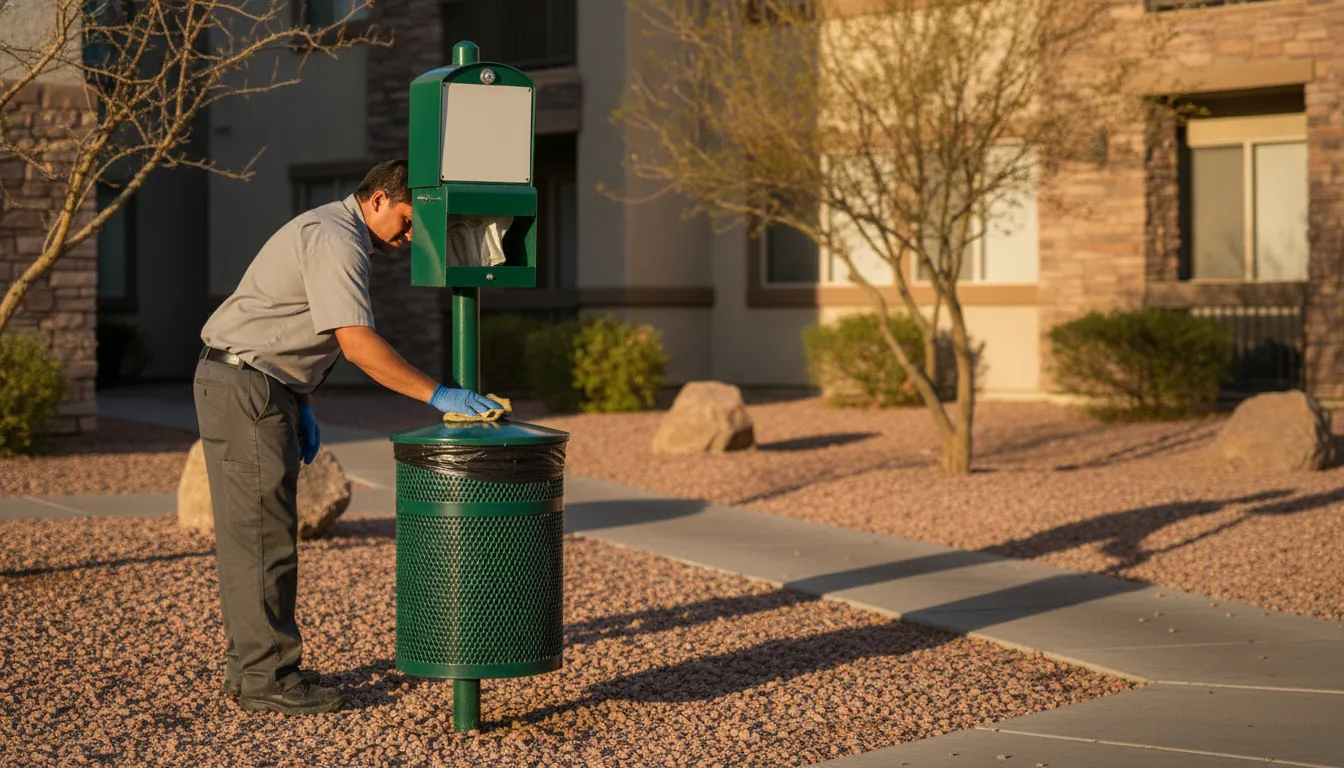
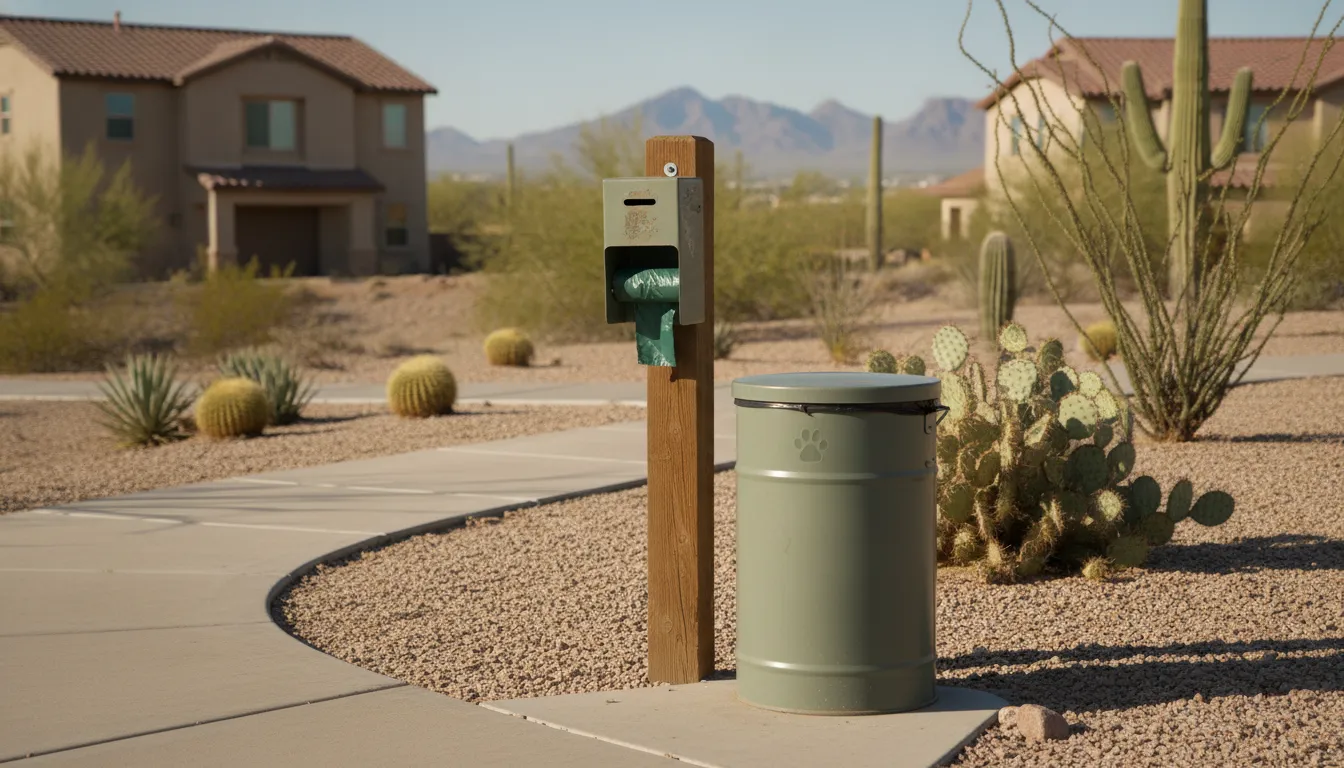
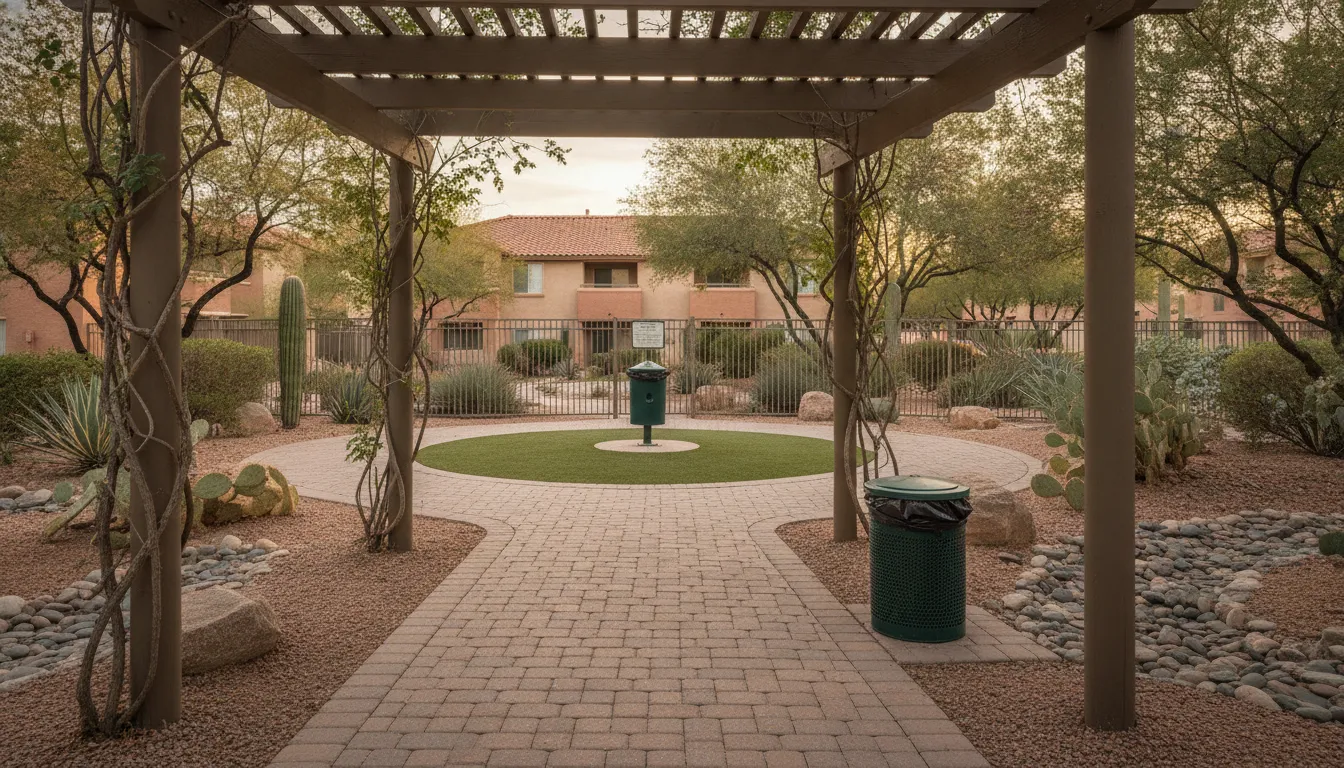
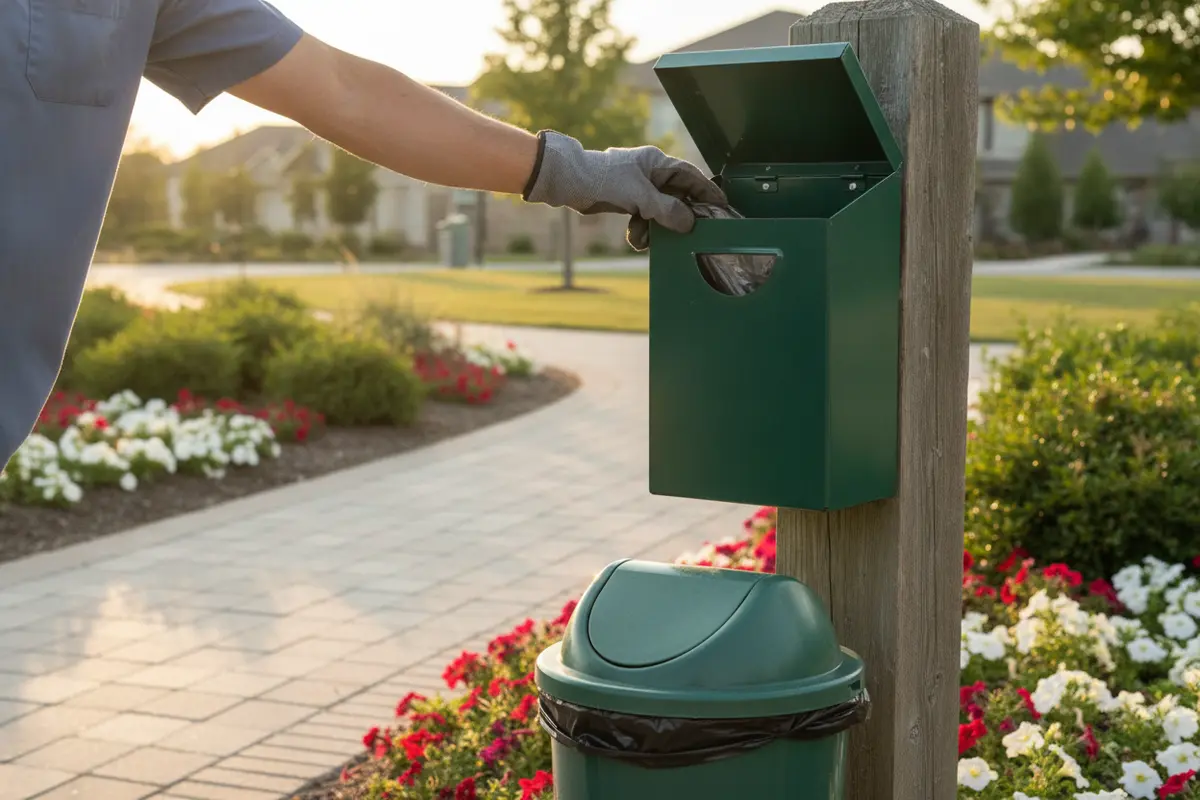
A station is usually a bag dispenser, a waste receptacle, or both. Ongoing service can include checking each dispenser, replenishing bags, emptying receptacles, tidying waste immediately around a station, and notifying the property contact about damage or low supplies. A proposal may include some of these tasks but not all of them, so ask for an explicit description.
Keep station maintenance separate from broader common-area cleanup. Emptying a station bin does not necessarily mean a worker will patrol lawns, walkways, pet relief areas, or the full property to pick up waste. Likewise, a pickup service may not include restocking dispensers. If the community wants both, describe each scope and its boundary separately. A board can review A1's HOA station maintenance information while preparing those questions.
For a wider property service context, review commercial property pet waste cleanup. The service pages for dog poop stations and dog waste stations can also help a board name the station setup under discussion.
Which details can influence service costs?
Station count and route layout
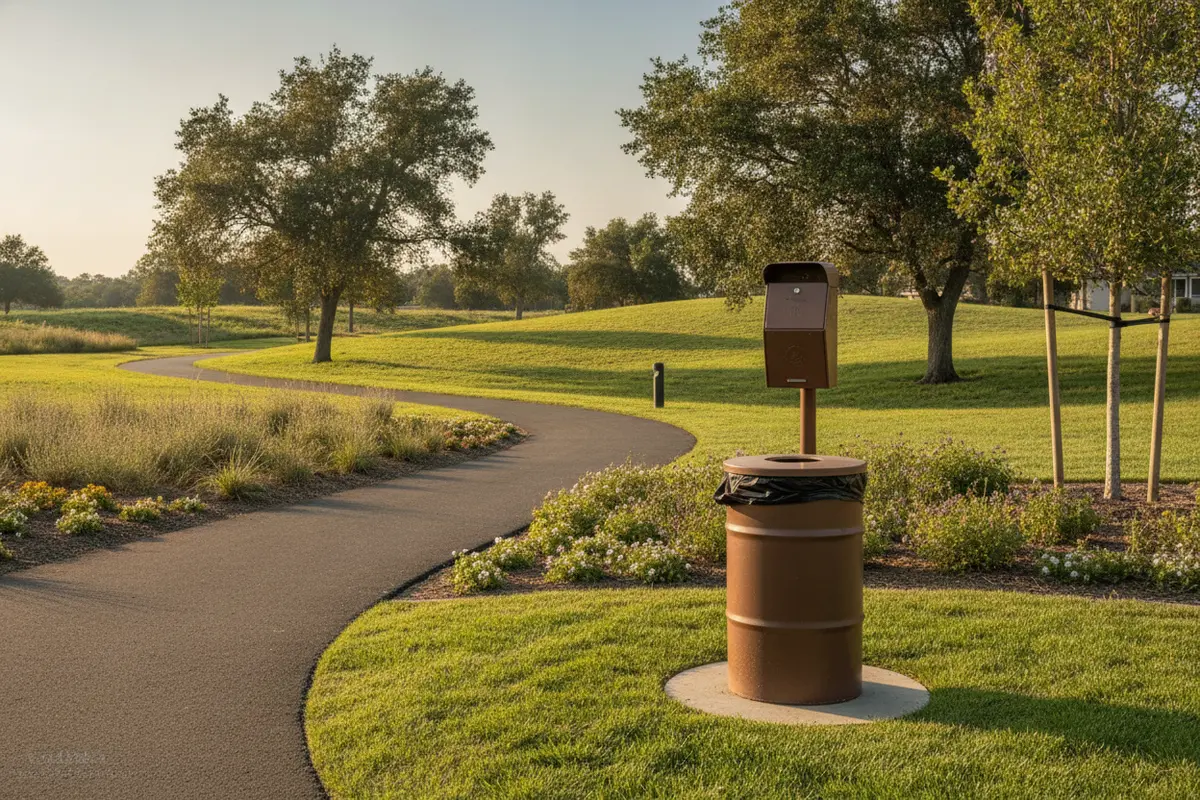
Every station adds a point to inspect and potentially a receptacle to empty or a dispenser to refill. The total count is only part of the route, however. Six stations grouped near one parking area may take less time to reach than six spread across multiple buildings, paths, or separated common spaces. Share a site map and label each station so a provider can understand the route.
Note features that change access or the time on site: locked gates, long walks from parking, stairs, restricted areas, and locations that require a particular entry procedure. Avoid assuming the contractor will know the easiest route from a street address or a station count alone.
Visit frequency and schedule
More frequent visits mean more route stops over the service period. Frequency should reflect observed use and the problems the HOA is trying to solve. Look at whether bins fill before the next service, whether dispensers are often empty, and whether use changes between busy and quiet parts of the property. A consistent pattern is more useful than one unusually busy day.
Ask each bidder to state the planned frequency and service window. Also clarify how holidays, property events, weather disruptions, or a missed visit are handled. Do not treat an offer of more frequent visits as automatically better if the stations are lightly used; instead, match the schedule to the locations and outcomes the board needs.
Bag supplies and receptacle handling
Bag costs and refilling responsibilities are common sources of mismatched assumptions. Ask whether bags are included in the recurring price, whether the provider checks every dispenser on each visit, and what happens when a station is empty between scheduled visits. If the HOA supplies bags, clarify how they will be stored and made available to the service team.
For bins, specify whether the provider empties station receptacles and manages the collected waste as part of service. If disposal depends on a property dumpster or another arrangement, state that in the request. Compare proposals only after confirming that each one includes the same refill and waste-handling tasks.
Pickup around the station
Loose waste beside a station may be included, excluded, or covered only within a small defined area. Set a practical boundary, such as the station footprint and the nearby path edge, rather than writing “clean the area” without explanation. If the HOA expects a wider walk, identify the paths, lawns, dog areas, or other shared spaces to be covered and ask whether those are a separate service scope.
It can help to distinguish a station check from a property patrol. During a station check, the worker visits the listed equipment and handles the agreed tasks at those points. A patrol has a broader route and may involve looking for waste across specified common areas. This distinction lets the board choose the coverage it actually needs instead of treating two different services as interchangeable.
Equipment ownership, repairs, and reporting
Confirm who owns the dispensers and bins. Some maintenance arrangements include inspection and reporting but not parts, repairs, or replacement. Ask what the provider does if a door is broken, a lid is missing, a dispenser is damaged, or a station needs relocation. If repair work is outside the routine service, ask how the board will be notified and how additional work is approved and priced.
Decide what a useful service report looks like. It might simply identify an inaccessible station, damage, or an empty supply, and tell the property contact where the issue occurred. The board should name the person or role that receives these notices so that reports do not disappear into an unmonitored inbox.
Property access and unusual conditions
Access instructions can affect whether a route is straightforward. Give the provider approved gate procedures, entry hours, parking rules, and any areas that must not be entered. Mention construction, seasonal closures, or times when a particular path is unavailable. If access changes, update the instructions rather than expecting the service team to discover a new procedure on arrival.
Some properties also have stations with different equipment or service needs. Mark those on the station list and describe the difference. A short note such as “bin is beside the south gate; gate access is restricted before 8 a.m.” is more actionable than a general instruction to service all stations.
How can a board compare proposals on the same basis?
Send each provider the same inventory and scope. Request itemized or clearly separated pricing where possible, and ask each bidder to state what is included, what is excluded, and what would trigger an additional charge. The table below can serve as a starting template for the request.
| Proposal item | Details to provide or confirm | Why it affects comparison |
|---|---|---|
| Station inventory | Numbered station list, map, equipment type, and ownership | Defines the stops and identifies special equipment |
| Visit schedule | Frequency, service window, holiday or missed-visit process | Clarifies how often work is performed |
| Supplies | Who provides bags, refill method, and between-visit expectations | Prevents hidden differences in material responsibilities |
| Receptacles | Emptying frequency and waste disposal arrangement | Separates bin service from dispenser-only checks |
| Cleanup boundary | Station-only pickup or named paths, lawns, and pet areas | Shows whether the proposals cover the same area |
| Equipment issues | Inspection, reporting, repair authority, parts, and replacement | Distinguishes included routine work from extra work |
| Access and reporting | Gate instructions, contact person, and issue-notification method | Helps confirm a workable visit and follow-up process |
When the quotes arrive, compare the same time period and service level. Check whether the price is recurring or one-time, whether supplies are included, and whether there are minimum visit requirements or separate charges for repairs. If one quote is notably lower, look first for differences in visit frequency, station coverage, cleanup boundary, bag supply, or waste disposal. A narrower scope may be appropriate, but the board should recognize that it is narrower before selecting it.
Ask for clarification in writing when a phrase could mean different things. “Restock as needed,” for example, might mean the provider checks the dispenser on every service visit, or it might mean only that bags are supplied during a scheduled refill. “Clean around stations” could mean a few steps around each unit or a larger section of lawn. Defined terms make the contract easier to manage later.
Before selecting a plan, the board can test each proposal against a few ordinary scenarios. What happens if a gate cannot be opened, a dispenser is empty, a bin is full, or a station is damaged? Which of those issues are handled on the routine visit, which are reported for the manager to address, and which require approval for extra work? Ask bidders to answer using the same scenarios. Also confirm how a change is recorded: for example, who approves adding a station, how quickly the schedule can be adjusted, and whether the provider needs a revised map. These questions do not require the board to predict every exception. They reveal whether the proposed service process is clear enough to use when everyday conditions differ from the route plan.
What should an HOA prepare before requesting a quote?
- Build a station inventory. Assign each station a number and record its location, dispenser and bin condition, and any unusual access note. Use a simple map or annotated property plan so bidders can visualize the route.
- Describe the requested tasks. List whether the service should include dispenser checks, bag replenishment, bin emptying, immediate litter pickup, broader patrol, or issue reporting. Mark tasks that are optional or need separate pricing.
- Record recurring problems. Note which stations run out of bags, which bins fill quickly, and where waste tends to collect. Include approximate timing and frequency when known. This gives the provider a reasoned basis for discussing schedule choices.
- Set access and communication rules. Provide gate procedures and service-hour limits. Identify the manager or board representative who should receive service questions and reports. Do not include access details in a public document if the HOA treats them as confidential.
- State the service boundary. Mark included common areas and exclusions. If the board only wants equipment serviced, say so. If it wants a defined route beyond the stations, map that route and identify how the expected pickup differs from station maintenance.
- Ask for clear pricing terms. Request the recurring amount and billing period, included supplies, potential additional charges, and the process for changing frequency or station count. Ask bidders to quote the same initial scope before considering optional additions.
A simple worked example shows why these details matter. Suppose two proposals cover eight stations. One includes weekly dispenser checks and bin emptying, with bags included, but no pickup outside the immediate station area. The other visits less often, excludes bags, and includes a defined common-area walk. The totals alone cannot identify which is the better fit. The board first needs to decide whether dependable station supplies or wider pickup is the priority, then compare the cost for equivalent versions of the chosen scope.
If a community is reviewing broader pet waste coverage as well as stations, a general community pet waste solutions overview can help frame the options. For managers documenting why a consistent cleanup plan matters, see the practical discussion of pet waste concerns in shared properties. For questions about receptacle placement and use, the dog poop bin guide offers related planning context.
How should the HOA assess a plan after service begins?
Use the first several visits to check whether the written scope works in practice. Confirm that the listed stations are accessible, bags are available as agreed, receptacles are handled, and the defined cleanup boundary is being followed. Keep a brief dated record of recurring issues, including which station is involved. This makes a review more useful than relying on a general impression or one isolated complaint.
If a dispenser repeatedly empties between scheduled visits, the board can ask whether the refill process or visit frequency should change. If one bin is consistently full while others are not, review whether the route and service expectations should treat that location differently. If the property changes the station count or restricts access, share the change and request an updated scope rather than assuming the original price and route still apply.
For environmental planning, the U.S. Environmental Protection Agency is a starting point for information about pollution and water quality. Boards can use local environmental guidance when considering how to manage waste around outdoor areas and drainage paths; service providers should still follow the applicable property rules and disposal arrangements.
Frequently Asked Questions
Does every station require a separate visit?
Not necessarily. A provider may service several stations during one property route. The written plan should identify all covered locations and state the overall visit frequency so the HOA knows what is included.
Are bag refills automatically part of station maintenance?
No. The agreement should say who supplies the bags, how the dispensers are checked, and what happens if supplies run out between visits. Do not assume “station service” includes bags unless the proposal says so.
Is emptying a station bin the same as picking up waste across the property?
No. Emptying the receptacle handles waste deposited in that bin. A lawn, path, or pet-area patrol is a separate scope unless the proposal explicitly includes it. Define the areas and tasks if the HOA needs both.
Can the service price change if the HOA adds or moves stations?
It may, because a changed station count or route can affect the work required. Ask the provider to explain how additions, relocations, access changes, and optional cleanup are handled before making a change.
Discuss your HOA station service needs
A clear inventory, route, service boundary, and supply plan give the board a sound basis for comparing pet waste station proposals. With those details in writing, the HOA can choose a service level that matches its property and review it against actual results.