How to Clean a Pet Waste Station
A pet waste station only stays useful if someone cleans it. Residents will walk past a sticky dispenser, a lid that will not close, or a can that smells before they reach for a bag. If you already have stations on a shared property, the job is not another hardware order. It is a short, repeatable clean. This guide shows how to clean a pet waste station that is already in the ground: close it, remove the liner, wash the can, wipe the dispenser and sign, then write down what you found.
Call A1 Pet Maintenance at (702) 521-2624
How to clean a pet waste station in one visit
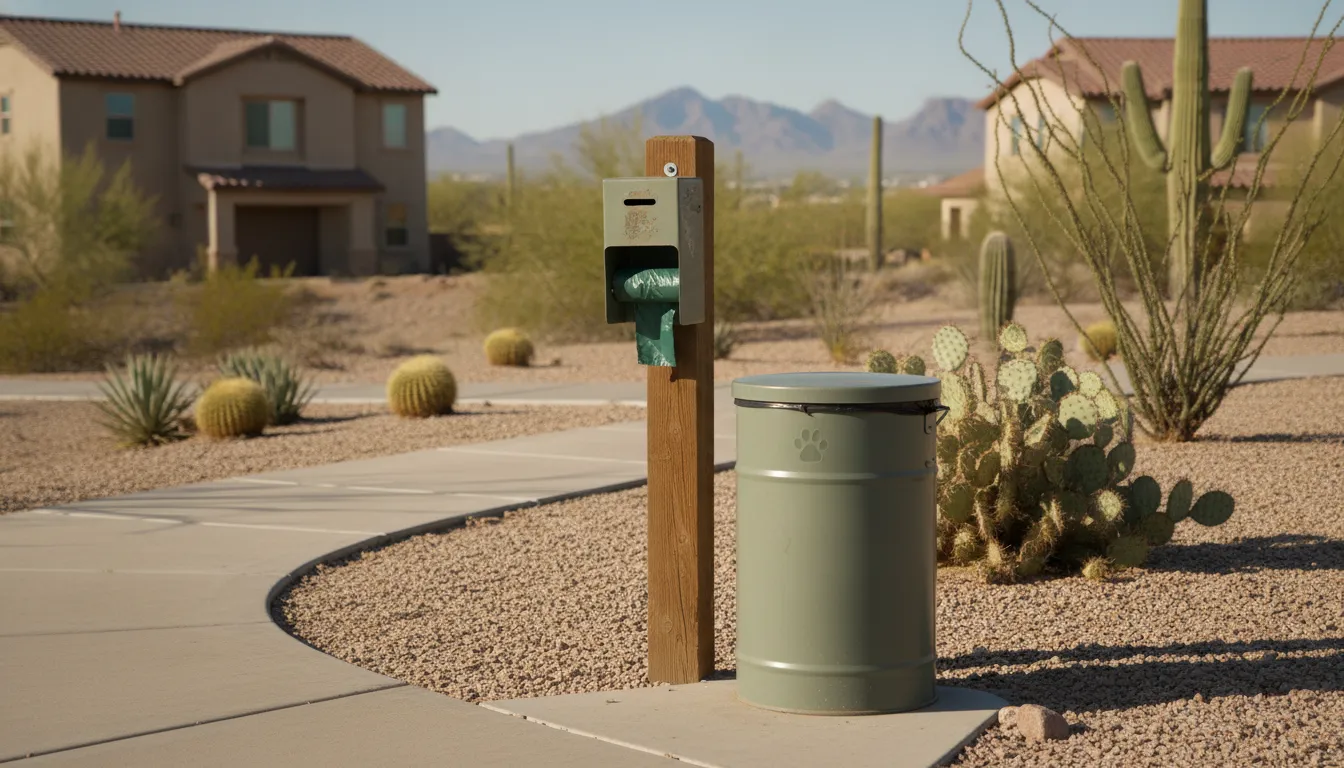
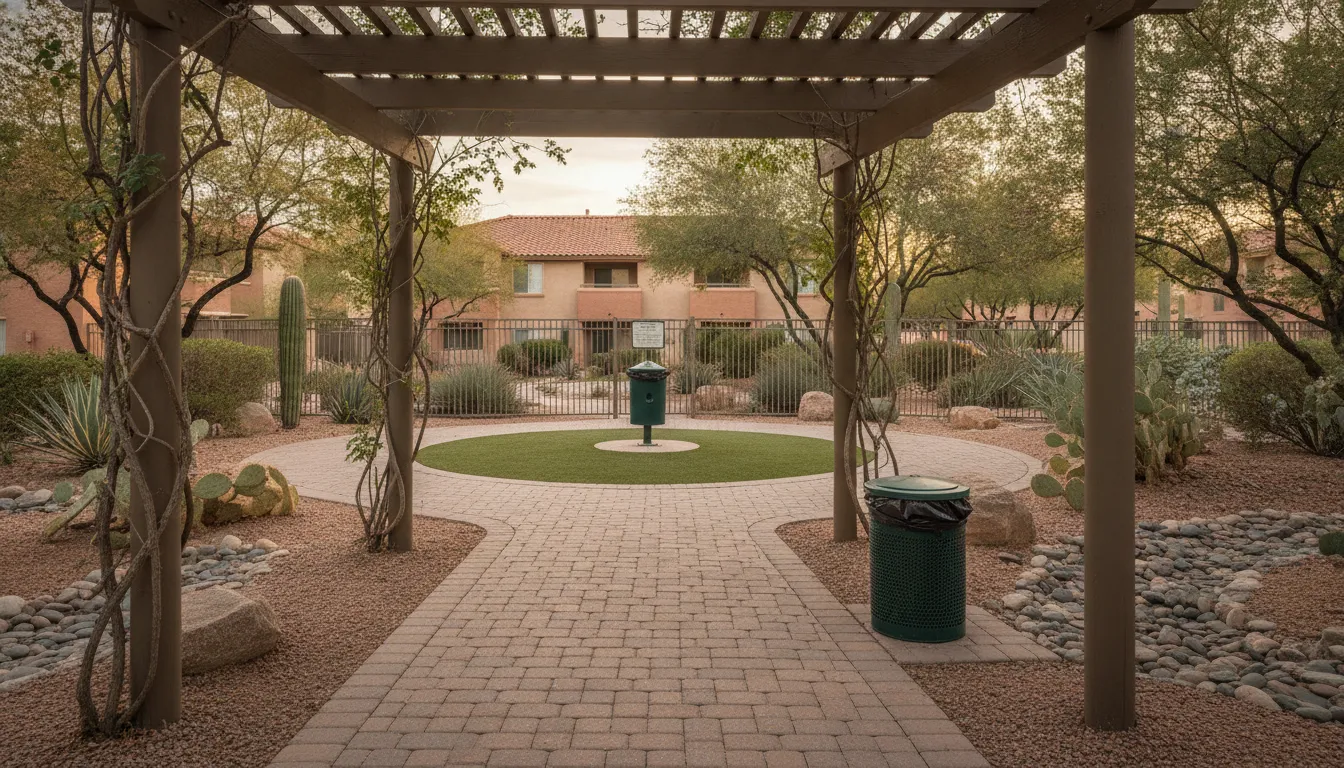
Think of the station as four parts, not one product. The dispenser holds pickup bags. The can holds used bags. The sign tells people what the station is for. The ground under it shows whether the station is actually being used. A clean visit touches all four.
The University of Maryland Extension describes a pet waste station as bags for pickup plus a trash can for the waste, and it says long-term maintenance is what makes the station work. Bags have to be replaced as needed, and the waste in the can has to be removed on a regular schedule and disposed of properly. Cleaning is the visit that keeps those two jobs from slipping.
On a shared property, write the visit down so the next person does not guess. A useful log has the date, the station location, whether the dispenser had bags, whether the can was emptied, and anything broken. A1 Pet Maintenance uses the same idea on commercial routes in Las Vegas, Henderson, and Tucson: a scheduled visit, the waste hauled away, and the station left usable. When the route is bigger than staff can cover, the station maintenance service page is the place to start a proposal. Residential yards are priced by the dog. A station route is a custom proposal, because the price depends on how many stations you have and how often they fill.
Close the station before you open the can
Do the safe setup before you touch the liner. Residents and dogs should not reach into an open can while you are working.
- Park service gear off the walkway. Bring a fresh liner, spare bags, gloves, and a trash bag for the full liner.
- Also bring soapy water in a spray bottle, a rinse bottle or a small bucket, and a rag you can throw away.
- Look at the ground first. If loose waste is sitting under the station, pick that up and bag it before you kneel or set a bucket down.
- Close the lid if it was left open, then open it only when you are ready to lift the liner. If the lid is jammed, do not force a hinge that is already bent. Note it and finish the empty if you can do that safely.
- Put gloves on before the dispenser or the rim. Wash your hands with soap and water when the visit is done, before you touch a door, a clipboard, or the next station.
Skip bleach on the station. It is a poor fit next to grass, dogs, and storm drains, and you do not need it for a routine wipe. Soap, water, and a liner change handle the ordinary visit.
Keep the kit in one bin on the cart so the visit does not turn into a supply run. A workable kit is small: liners, a spare bag roll, gloves, a spray bottle, a rag, and a pen. If the roll and the liners live in different closets, the station gets emptied and the dispenser stays empty. That is the most common half-finished clean.
Label the kit with the property name, not a generic "dog bags" sticker. Communities with more than one station style will burn through different liner sizes. A liner that is too small slips under the rim. A liner that is too large bunches in the lid and keeps it from closing. Match the liner to the can before you leave the shop.
Empty the liner, then wash the can
The can is the part that makes people avoid the station. Emptying it without washing it leaves the smell in the rim.
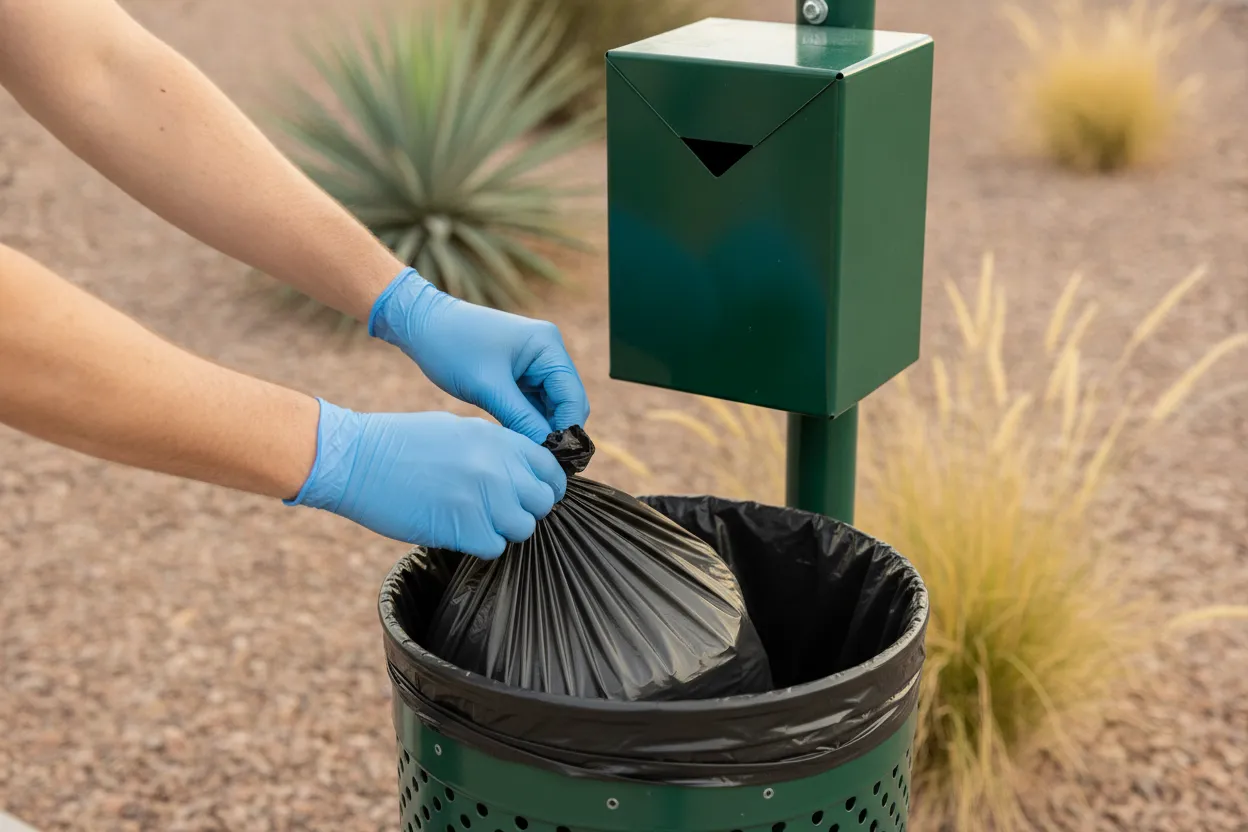
- Tie the full liner closed while it is still in the can. Lift it out. If it is too heavy to lift in one motion, set a second bag around it before you pull, so a tear does not dump waste on the pad.
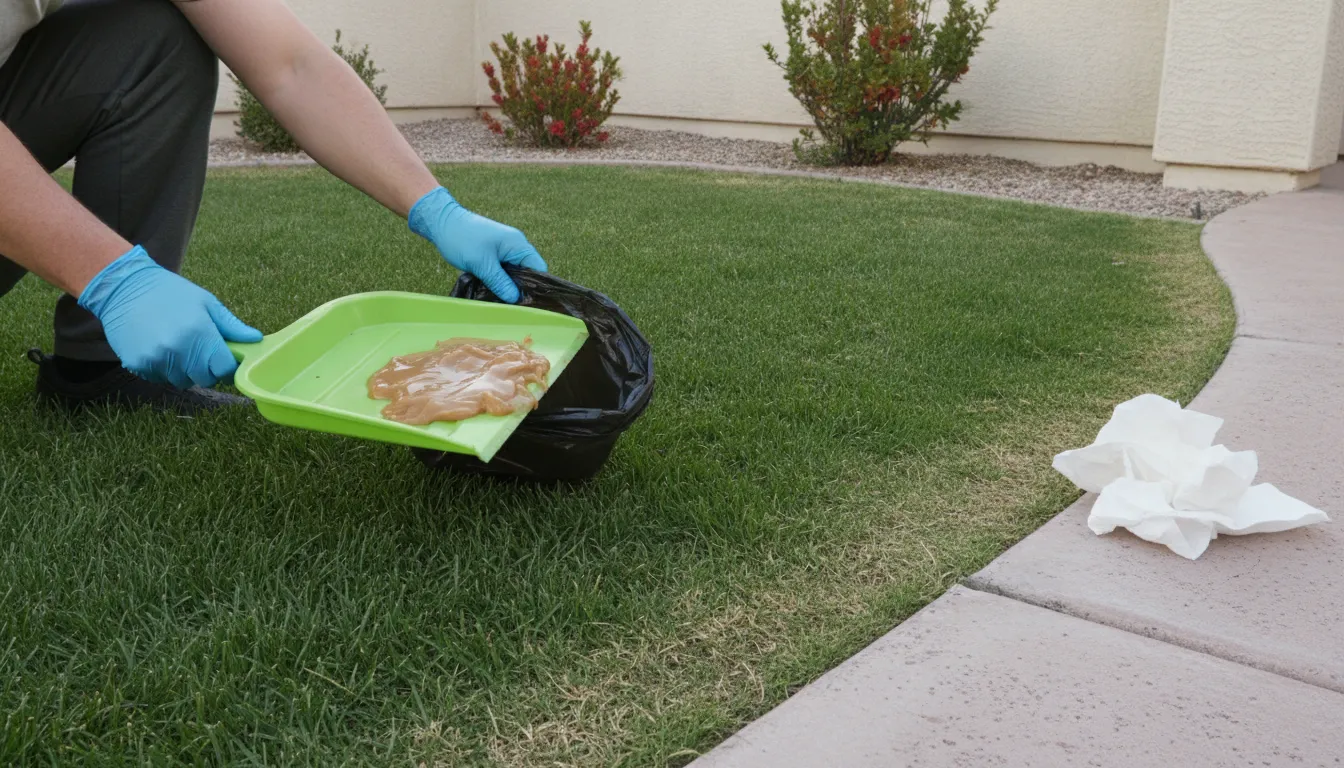
- Look inside the empty can. Scrape anything stuck to the bottom into a trash bag. A thin film on the wall is a wash job, not something to leave for next week.
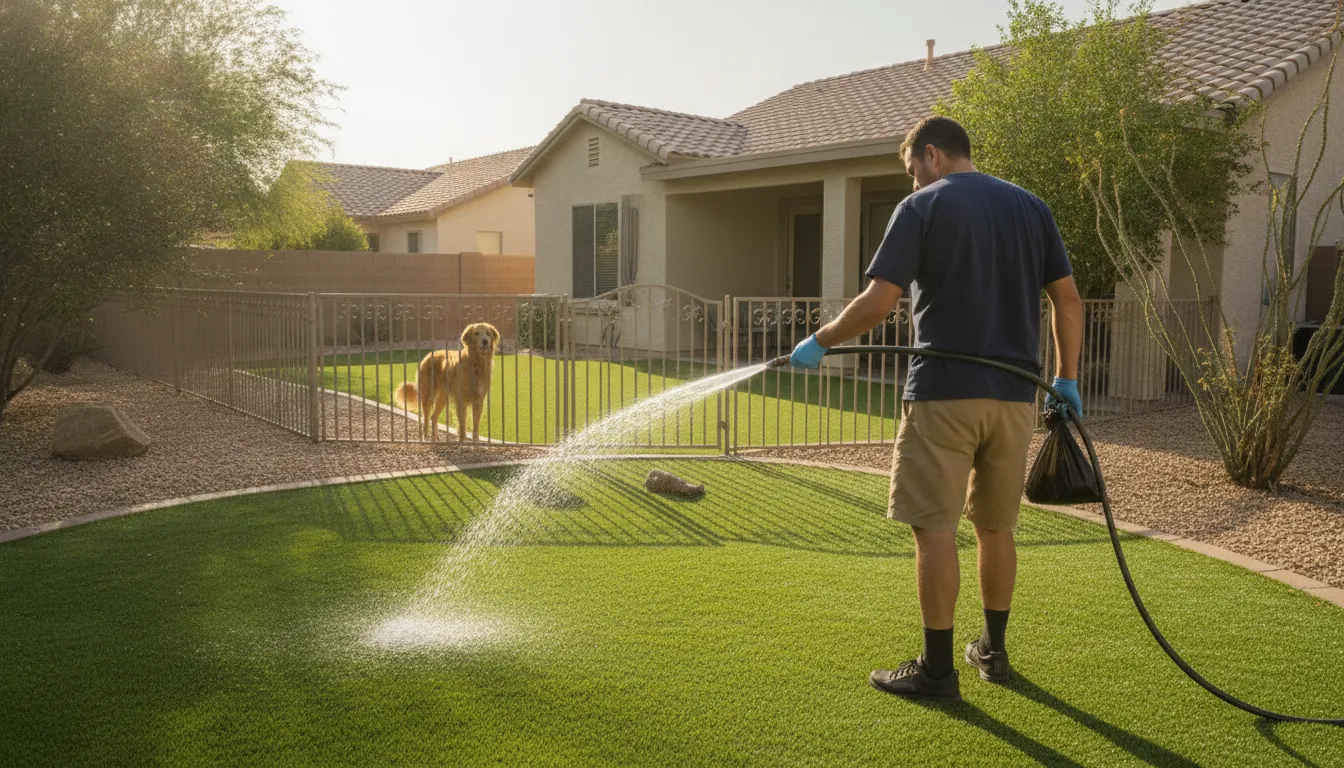
- Spray the inside with soapy water, including under the rim and on the lid. Wipe, then rinse. Tip rinse water onto a landscaped area that does not drain straight into a storm inlet. Do not hose the can out over the sidewalk.
- Let the can drip, then drop in a new liner and seat it so the rim is covered. A liner that slips down is why the can wall gets coated in the first place.
- Close the lid and tug it once. If it bounces open, the hinge or the latch needs a repair note, not another liner.
Bagged pet waste goes in the trash. The EPA pet waste management fact sheet explains why that matters. Stormwater can carry waste left on the ground into streams, where it adds bacteria and nutrients. A clean can only helps if the full liner leaves the property. A1 hauls bagged waste off the site and sends it out with city sanitation. Do not leave tied bags beside the station for a later pickup that nobody owns.
Heat changes the wash. In Las Vegas, Henderson, and Tucson, a closed can in full sun will smell again by the next afternoon even after a decent wipe. Wash the lid and the underside of the rim, not just the barrel. If rinse water sits in the bottom, it cooks into the next liner. Tip the can until it drips, then give it a minute before the new liner goes in.
Do not store the full liner in a second bin on the property "until trash day" unless that bin is on the same pickup and someone is assigned to it. A bag parked behind a station is how pests find the post. Take it to the property trash enclosure on this visit, or onto the service vehicle if that is the arrangement.
Wipe the dispenser, the sign, and the pad
People decide whether to use the station at the dispenser, not at the can. If the handle is grimy, the roll is empty.
- Open the dispenser, check the roll, and refill it if you are under a comfortable reserve. Close it so the next bag pulls cleanly. A jammed roll is a cleaning failure even when the can is empty.
- Wipe the outside of the dispenser, the bag slot, and the sign. Pollen, drink spills, and leaked waste are what make the station look abandoned.
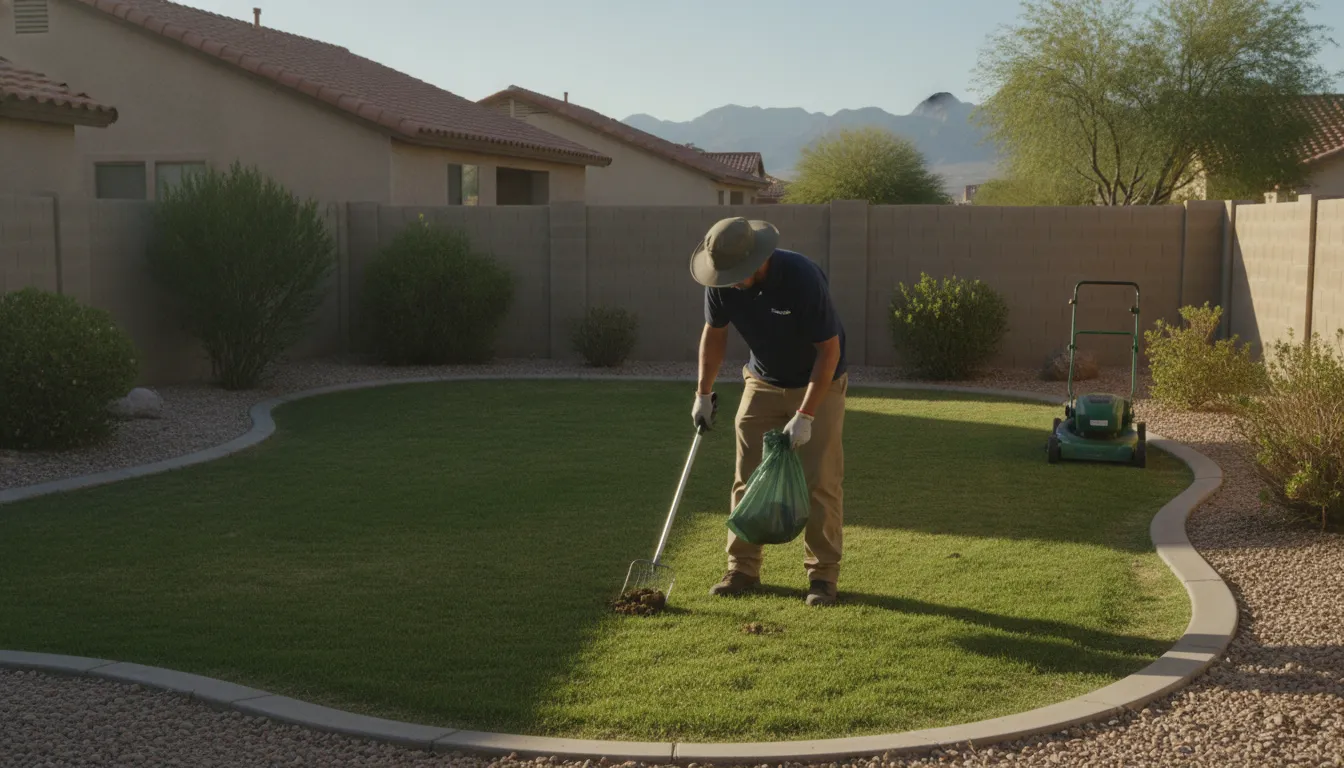
- Pick up waste on the pad and a short radius around the post. Waste on the ground next to a full dispenser means the can or the sign is the problem, not the bag supply.
- Check the post and the hardware. Desert sun in Southern Nevada and Tucson loosens caps and fades signs. Tighten what you can by hand. Write down rust, a cracked lid, or a dispenser that will not latch.
Keep this visit separate from a grounds scoop. The dog waste stations guide already covers where stations belong and how to tell a station problem from waste left on the lawn. If the station is stocked and the lawn is still dirty, you need a yard or common-area pickup, not a second wipe of the same can. A1's commercial property service is the route for that broader cleanup. Station cleaning is the narrower job.
How often to clean, and what to write down
There is no single calendar that fits every property. A station by a busy dog run fills faster than a station on a quiet side path. Start with a weekly clean and shorten the gap when the log says the can is full at arrival.
| What you find | What to do this visit | What to change |
|---|---|---|
| Can under half full. Bags present. Lid closes. | Empty if it smells. Wipe the dispenser. Log it. | Keep the current day. |
| Can full, or the lid was left open. | Empty it. Wash it. Add a liner. Wipe the sign. | Add a midweek check. |
| Dispenser empty. Can is fine. | Refill the roll. Wipe the slot. | Bring a spare roll every visit. |
| Waste on the ground. Station is stocked. | Pick up the pad only. | Split grounds pickup from this clean. |
| Cracked lid, bent hinge, or rusted latch. | Make it safe if you can. Then stop. | Repair it before the next clean. |
Read the log once a month. Three full cans in a row at the same post means that station needs a shorter gap or a larger can, not a harsher cleaner. Three empty dispensers means the bag box is in the wrong closet. The clean itself should stay short.
What to do when a clean gets skipped
A missed day is normal. A missed day with no note is how a station fails. If you arrive and the can is over the rim, do not try to make up two weeks of washing in one angry scrub.
- Bag what you can lift safely. If the liner has torn and waste is loose in the can, double-bag it and wash the can on this visit. Do not stack a new liner on top of the old mess.
- If the lid will not close because the can is overfilled, empty first and skip the polish. A closed lid matters more than a shiny post.
- Write the miss in the log with the date you noticed it, not only the date you fixed it. That is the line that tells you the route is too thin.
- Tell the property contact the same day if you could not finish. A1 takes schedule changes by phone, including a skip with notice. Silence is what turns one full can into a complaint.
After a skip, go back to the short visit. The next clean should look like the normal one: liner, wash, dispenser, pad, log. Adding extra steps only on the makeup day is how the routine gets abandoned again.
When the clean should move to a service visit
A property team can own this routine when one or two stations sit on a route the staff already walks. It stops being a side task when the can is full every time you arrive, the same odor returns the day after a wash, or nobody on the payroll will open the liner.
That is the point where a commercial pet waste visit is the better tool. A1 Pet Maintenance services more than 400 single-family and multifamily properties a week across Southern Nevada and Tucson. There is no contract. The proposal is built to the property. On a station stop, the useful scope is the one in this article. The liner comes out, the can is washed, the dispenser is stocked, and the waste is hauled away. It is not a kennel sales pitch and it is not a new install.
Ask for the visit in plain terms. Say how many stations you have, which days they are usually full, and whether staff can still unlock gates. A1 works from the gate, the dogs, and the areas you name. A station clean fails when the tech cannot reach the post or the can is behind a locked dog run. Put access in the first call, not in a note after the first missed stop.
If you are pricing that handoff, use the station count and the visit frequency, then ask for a proposal. Do not copy a homeowner yard rate onto a station route. Home weekly service is priced by the number of dogs. Shared stations are not.
New posts, cracked mounts, and stations that were never installed are a different job. Use the pet waste station installation service guide for that decision. Cleaning assumes the station is already standing and safe to open.
Call (702) 521-2624 to schedule station cleaning
Frequently asked questions
How do you clean a pet waste station without spreading the mess?
Close the lid, tie the liner before you lift it, and bag any tear before it leaves the can. Wash the empty can with soapy water, rinse away from the storm drain, and put a new liner in only after the can has drained. Wipe the dispenser last so you are not touching the roll with gloves that just handled the liner.
Can I use bleach on the can?
Skip bleach for the routine clean. Soap and water plus a fresh liner are enough for an ordinary visit, and bleach is a bad match for pets, plants, and rinse water near a walkway. If a lid is cracked or the can is holding liquid you cannot identify, stop and repair it instead of soaking it.
How often should a station be cleaned?
Start weekly, then shorten the gap when the log shows a full can or an open lid at arrival. A quiet side path may stay weekly. A station next to a busy dog walk may need a midweek empty. The dispenser can need bags on a different rhythm than the can needs a wash, so log those two lines separately.
What if the lawn is dirty but the station is stocked?
Clean the pad under the station and leave the rest of the grounds to a pickup route. A stocked dispenser and a dirty lawn are not the same failure. A1's commercial property service covers common-area waste. The station clean covers the can, the dispenser, the sign, and the immediate pad.
Does A1 publish a price to clean stations?
No. Home yard service is listed by the number of dogs. Station cleaning on a shared property is quoted from the station count and how often the cans fill. Call (702) 521-2624 and ask for a proposal. You can start or stop without a contract.