Cat trap rental Tucson: Service Options and Planning Guide
Considering a cat trap rental in Tucson? Compare humane options, prepare a safe site, plan monitoring and care, and learn what to confirm before reserving.
A cat trap rental Tucson residents are considering is only one part of a humane plan. First identify the cat’s likely situation, get permission for the site, assign someone to monitor equipment, and confirm who will receive the cat. A1 Pet Maintenance lists humane cat trap rentals; contact the team to confirm availability for your Tucson location and discuss your circumstances.
Ask A1 about a Tucson cat trap rental
What does a live animal trap rental actually cover?
A rental provides equipment for a planned, supervised capture. It does not identify a cat, establish who owns it, provide veterinary care, or determine whether trapping is suitable at a particular site. A cat outdoors may be lost, owned, cared for by a neighbor, or part of a community-cat effort. Work out the next step before setting equipment, not after a cat is inside.
A1’s listed rate is $70 per week, but confirm the current charge, rental dates, availability, and pickup or return details directly. Do not assume delivery, transport, training, or hands-on help is included unless A1 confirms it. Review A1’s cat trap rental information and humane trapping planning guide as you prepare.
It also helps to separate an equipment rental from other services. A trap does not replace a rescue organization’s intake process or a veterinarian’s advice. It is not a promise that an animal will be caught, nor does it guarantee that a particular site is appropriate. Treat the rental as one logistical piece: you still need permission, a responsible monitor, a safe response plan, and a confirmed destination.
Confirm the animal before you rent
Start with observation from a distance. Note when and where the cat appears, how it moves, and whether visible identification is present. A photo and a simple sighting log may help a nearby caregiver or local animal-care group recognize the cat. Avoid approaching, cornering, or handling an animal that appears frightened or unwell.
Ask neighbors whether they know the cat. In an apartment complex or HOA, contact the property manager before putting equipment in a shared area. A friendly cat may have a home nearby, and someone may already be caring for it. A few conversations can prevent an unnecessary capture and may identify a person who can advise you.
Make the observation useful by recording the date, time, location, direction of travel, and any distinguishing features. Keep descriptions factual: coat color, markings, approximate size, and visible collar or tag. Do not infer ownership or health from a brief sighting. If several people are involved, use one shared record so that a property manager, caregiver, and local group are not working from conflicting accounts.
Be specific about the purpose. Are you trying to reunite a likely lost pet, help a community cat reach a planned service, or respond to a safety concern? Each situation may call for different local guidance. If the animal is injured, kittens are present, a mother may be nursing, or you are unsure what should happen after capture, consult an appropriate local animal-care organization before trapping. A1’s rental information is not veterinary or animal-control advice.
Which option fits the situation?
The appropriate choice depends on the cat, location, urgency, and whether there is a confirmed receiving person. This table is a planning aid, not a substitute for local advice.
As a general humane-care principle, the ASPCA advises that traps should not be left unattended and that trapped animals need prompt attention. See the ASPCA guidance on feral cats. Apply that guidance alongside instructions from the equipment provider and a local organization familiar with your situation.
For related planning, A1 also explains cat trap rental for stray cats and steps for safely catching a stray cat. These resources can help you organize questions, but do not replace local permission or a confirmed care plan.
When is a rental the right choice?
A rental may be worth discussing when you have a clear, limited purpose and the people needed to carry it out. For example, a resident may see one cat returning to a particular part of a private yard, speak with nearby neighbors, obtain the owner’s permission, and confirm that a caregiver is prepared to receive the cat. That is a more complete starting point than simply seeing an unfamiliar cat and setting equipment immediately.
It may not be the right next step when the target is uncertain, the site is not approved, or nobody can monitor the equipment. A different animal might enter, or the cat may stop visiting once the area changes. If the cat’s situation is unclear and there is no urgent safety concern, continued observation and local advice can be more useful than rushing to rent.
Consider a second example: a property team sees several cats at different times around a shared courtyard. Before deciding that one trap will solve the issue, the team can document sightings, ask residents whether they know the cats, identify a single staff contact, and consult a local organization about the proper approach. This prevents a broad, informal effort from becoming a series of uncoordinated captures without an agreed destination.
Prepare the site and people before setting equipment
Write a short plan with the exact location, the person responsible for checking the trap, a backup contact, the observation schedule, and the destination if a cat is caught. Share it with everyone who needs to know. If you cannot name someone who will respond, pause and make that connection first.
- Get permission. Ask the property owner or manager before using a shared, rented, or public area. Check site rules and ask the relevant authority what is allowed in public space.
- Choose a suitable location. Select a quiet, sheltered place that the monitor can reach. Avoid walkways, driveways, direct exposure, and spots where children or other animals could interfere.
- Keep pets and bystanders away. Tell household members where equipment may be and prevent dogs and curious visitors from disturbing it.
- Assign coverage. Name a primary monitor and a backup. If both are unavailable, postpone the plan rather than leaving equipment without oversight.
- Confirm the next step. Check that the caregiver or organization is prepared to receive the cat and has explained what to do.
Use the trap only as directed by the rental provider. Do not modify it or improvise a mechanism. If you do not understand its operation, ask for instructions before taking it to the site. Think through access, gates, vehicles, weather exposure, and the chance that a dog or another animal could reach the location. If any answer raises a concern, choose another permitted site or ask for advice.
Shared properties need extra coordination. A manager might give written permission, designate one person to answer resident questions, and send a brief notice explaining that equipment must not be moved or handled. In a private yard, tell household members when the plan is active and make sure pets are kept out of the area. A short log of sightings can also show whether anyone is available during the times the cat visits.
Walk the site at the same time of day you expect to monitor it. Check whether the route is accessible after dark, whether a gate could lock, and whether the monitor can reach the location promptly. Identify a safe place to stand while checking equipment and a way to keep curious residents from gathering around it. If there is no practical way to control access, the proposed spot may not be suitable.
 How should monitoring and response work?
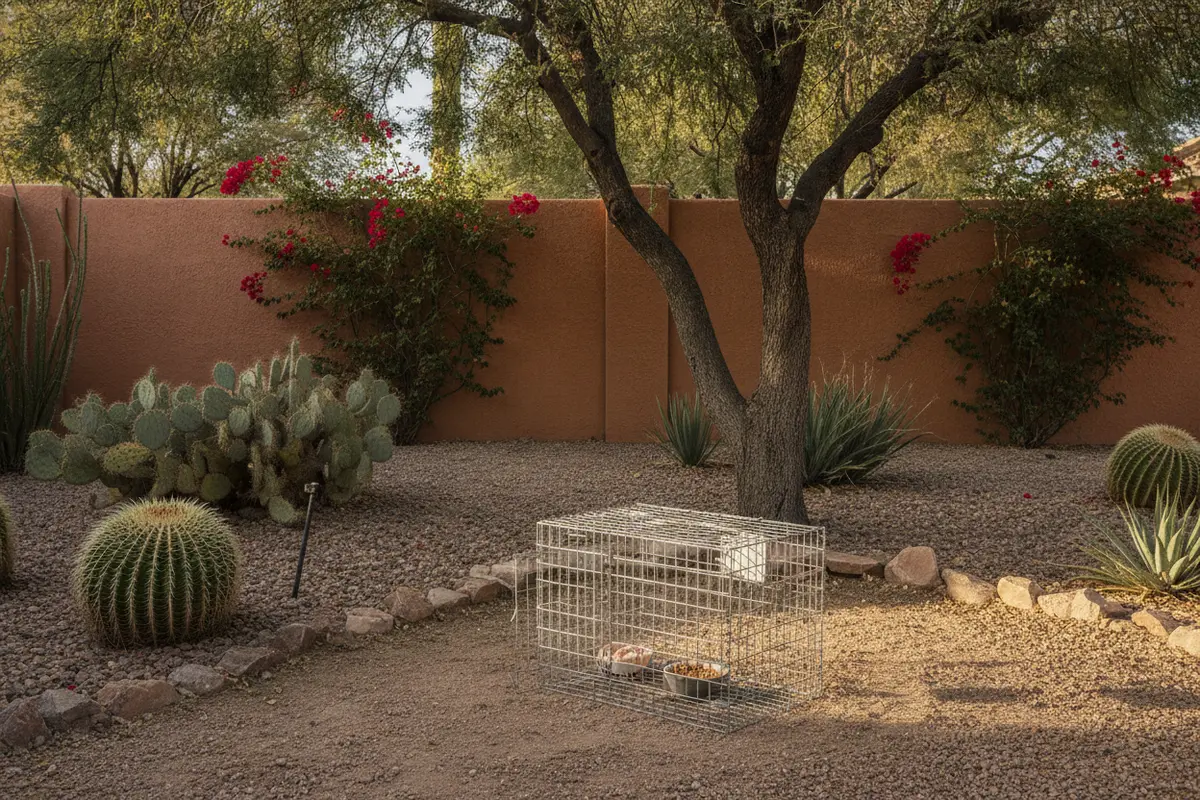
Monitoring is a core part of the plan. Set a clear schedule with the responsible person and do not leave equipment unattended for a prolonged period. Direct sun, heat, cold, and other conditions can put a confined animal at risk. If reliable observation and response are not possible, do not set the trap; ask a local animal-care group about alternatives.
Plan coverage as a sequence, not a vague promise. For instance, the primary monitor can be responsible during an agreed window, while a named backup takes over if a work shift changes. Both should know where the equipment is, whom to call, and what the receiving person has already agreed to do. A plan that depends on someone “checking when they can” leaves gaps exactly when a quick response may matter.
The monitor should have a charged phone and contact details for the receiving person, rental provider, and any local organization involved. Before the start, agree what to do if the wrong animal enters, the trap is damaged, or the cat seems ill or injured. Avoid crowding or handling a frightened animal, and do not attempt a transfer or release in an unsafe place. Follow the equipment instructions and the receiving organization’s directions.
If a cat is caught, keep the area calm and contact the person identified in the plan promptly. Do not leave the animal in a hot, exposed, or busy place while people debate next steps. If the assigned monitor becomes unavailable, the backup should take over or the trapping plan should stop. These arrangements matter just as much in a courtyard as in a private yard.
After any capture or attempt, write down what happened: time checked, whether an animal entered, whom you contacted, and what action followed. That simple record helps the team hand off responsibility clearly and prevents someone else from assuming the trap is inactive when it is not. If the plan ends without a capture, confirm how and when equipment will be removed and returned.
 If you rent, plan the return on day one
A rental has a start and an end, so record both when you arrange it. Ask how the rental period is counted, when it is due back, and whether the equipment must be cleaned or returned in a particular condition. Do not wait until the last day to clarify a return detail, especially if your schedule or transportation is uncertain.
Make a small checklist with the pickup or collection arrangement, contact details, return date, and instructions from the provider. If a cat has not appeared by the time your plan is scheduled to end, ask what to do rather than extending use or changing the setup on your own. Equipment should be handled and returned according to the rental provider’s directions.
A1 lists a weekly rate of $70, but confirm the current amount, dates, and terms directly. The listed price does not establish availability for every Tucson address or include other arrangements. You can review the rental information and ask A1 what applies to your request.
What should you confirm before renting?
Ask questions that connect the rental to your dates, location, and care plan. A1 lists a weekly rate of $70; confirm the current price and terms directly. The listed rate alone does not establish availability for every Tucson address or include other arrangements.
- Is a trap available for the specific Tucson address or community and the dates you need?
- How is the rental period counted, what is the current charge, and when and how must equipment be returned?
- What instructions are provided for setup, monitoring, cleaning, and return?
- What should you do if the trap is damaged or the wrong animal enters?
- Who will check it, at what times, and who is the backup?
- Which caregiver or organization has agreed to receive the cat, and what instructions have they given?
Keep the answers in one note with the contact name, response number, equipment directions, and rental end date. If any critical question remains open, postpone setting the equipment. Confirming logistics in advance is easier than trying to arrange transport or assistance after a capture.
To make the inquiry efficient, send a concise description rather than a guess about what service is needed. Include the Tucson-area location, dates, whether the site is private or shared, whether permission is in place, and whether you already have a receiving caregiver. Ask the provider to clarify anything that is not included. This creates a written reference for whoever will monitor the plan.
What should you tell A1?
When you contact A1, share your Tucson-area location, planned dates, and whether the site is private or shared. Explain whether permission is in place, who will monitor the trap, and what you intend to do if a cat is caught. You do not need to approach or handle the animal to describe the situation.
Ask about current rental terms, availability, instructions, and return logistics. If a rescue, caregiver, or local group is involved, explain whether it has agreed to receive the cat. A1 lists cat trap rentals, but confirm directly whether it can arrange a rental for your address. Use the A1 contact page for the inquiry. You can also review the rental service details and the humane trap planning resource beforehand.
For a property team, have one person gather the information before contacting A1. That person can confirm who has approved the site, who is on monitoring duty, and which organization will receive the cat. For an individual resident, a note with the address area, rental dates, and questions about return logistics is enough to begin a practical conversation. In either case, request confirmation of the current details rather than relying on an old price or an assumption about what the rental includes.
Frequently asked questions
Is a cat trap rental available in Tucson?
A1 lists cat trap rentals, but the available information does not confirm every Tucson address. Contact the company with your location and dates to ask about your specific request.
How much does a rental cost?
A1’s published information lists $70 per week. Confirm the current price, rental period, availability, and return arrangements directly before making plans.
Can I trap first and look for help afterward?
It is better to identify a receiving person or organization before setting equipment. That way, you know whom to call and what instructions to follow if a cat is caught. If no one has agreed to help, pause and contact an appropriate local animal-care organization.
What if I do not know whether the cat has a caregiver?
Observe from a distance, ask nearby residents if they recognize the cat, and note visible identification without handling it. A photo and sighting log can help a caregiver or local group advise you. Do not assume an outdoor cat has no caregiver.
What if nobody can monitor the trap?
Do not set it until a responsible person can check it and respond according to a clear plan. Ask a local rescue or community-cat organization about other options if reliable monitoring is not possible.
Call A1 to ask about a Tucson rental
A calm plan protects the cat and clarifies everyone’s role. Confirm permission, monitoring, current rental details, and the next step before setting a trap.
| Option | May fit when | What to arrange first |
|---|---|---|
| Humane trap rental | A specific cat needs safe containment and a responsible monitor is available. | Confirm location availability, rental terms, monitoring coverage, and who will receive the cat. |
| Contact a rescue or community-cat group | You need help deciding whether to trap or what to do next. | Ask whether advice or assistance is available and agree on roles before setting equipment. |
| Ask neighbors or property management | The cat may be cared for nearby or the site is shared. | Check for an owner or caregiver and obtain permission for the location. |
| Observe and wait | The cat is not in immediate danger and its routine or caregiver is unclear. | Keep notes from a distance and seek local guidance; do not leave a trap unattended. |