Commercial Dog Waste Removal Las Vegas Guide
This is a subtitle for your new post

Dog waste in a shared community is more than an unpleasant cleanup detail. For a property manager, it can affect walkways, pet areas, landscaping, resident expectations, and the workload carried by on-site staff. The right service plan turns a recurring problem into a defined sanitation responsibility with clear expectations.
Call A1 Pet Maintenance Today: (702) 521-2624
Commercial dog waste removal Las Vegas should match the property's layout, pet traffic, service cadence, stations, access rules, and reporting needs. A1 Pet Maintenance has served commercial properties since 1998.
This guide explains how to identify the work your property needs, compare providers without relying on unsupported pricing, and launch a practical recurring program. The goal is a cleaner, more usable property and a service relationship that is straightforward for managers, maintenance teams, and residents to oversee.
Why Does Commercial Dog Waste Removal in Las Vegas Matter for Property Managers?
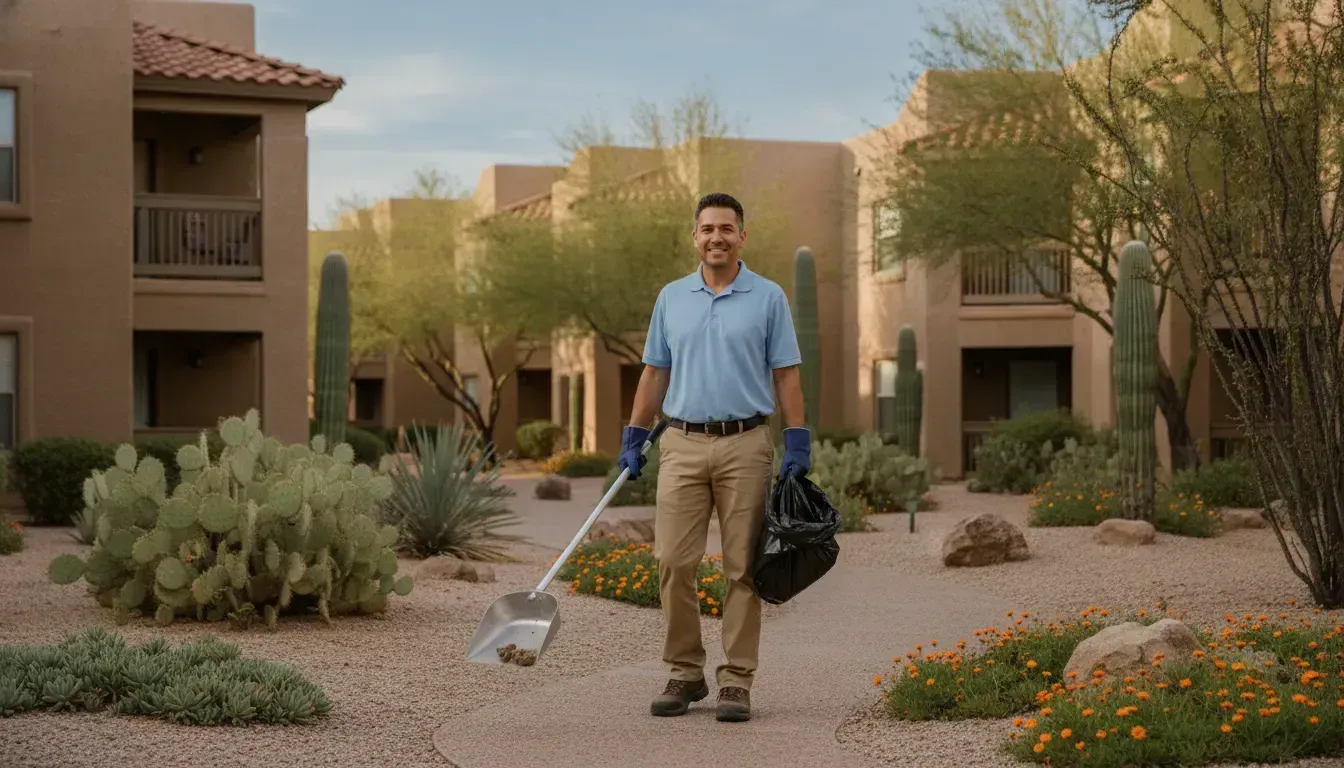
A1 Pet Maintenance helps Las Vegas property managers turn dog-waste pickup into a defined maintenance process. A written scope, dependable route, station plan, and communication path can support cleaner common areas while reducing the need for on-site staff to handle an unpleasant recurring chore.
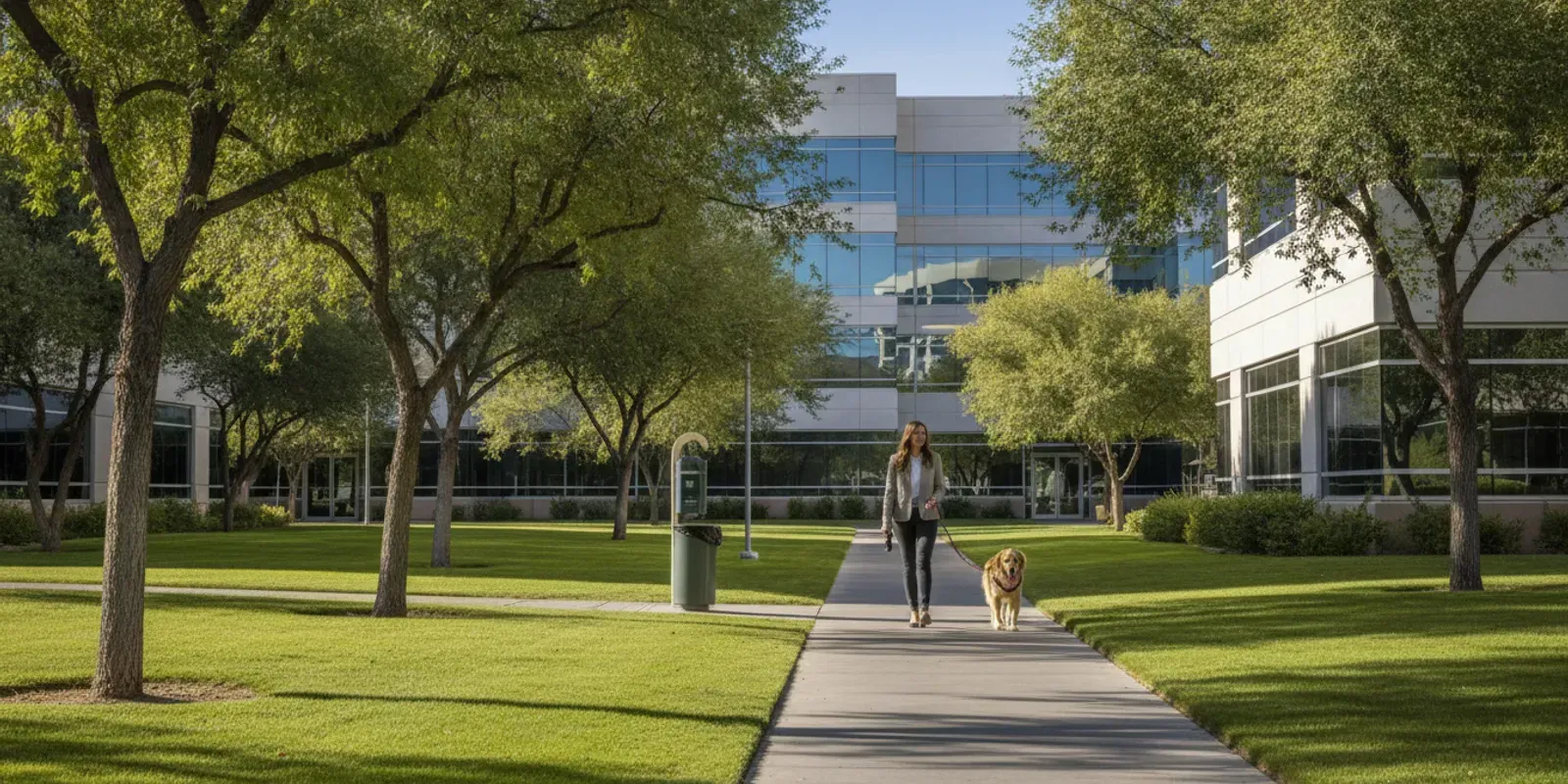
Dog waste affects the parts of a community that residents and visitors use every day. Deposits along sidewalks, near building entrances, around parks, or beside pet stations can make a well-maintained property feel neglected. They can also create repeated resident complaints when no one knows who owns the cleanup responsibility.
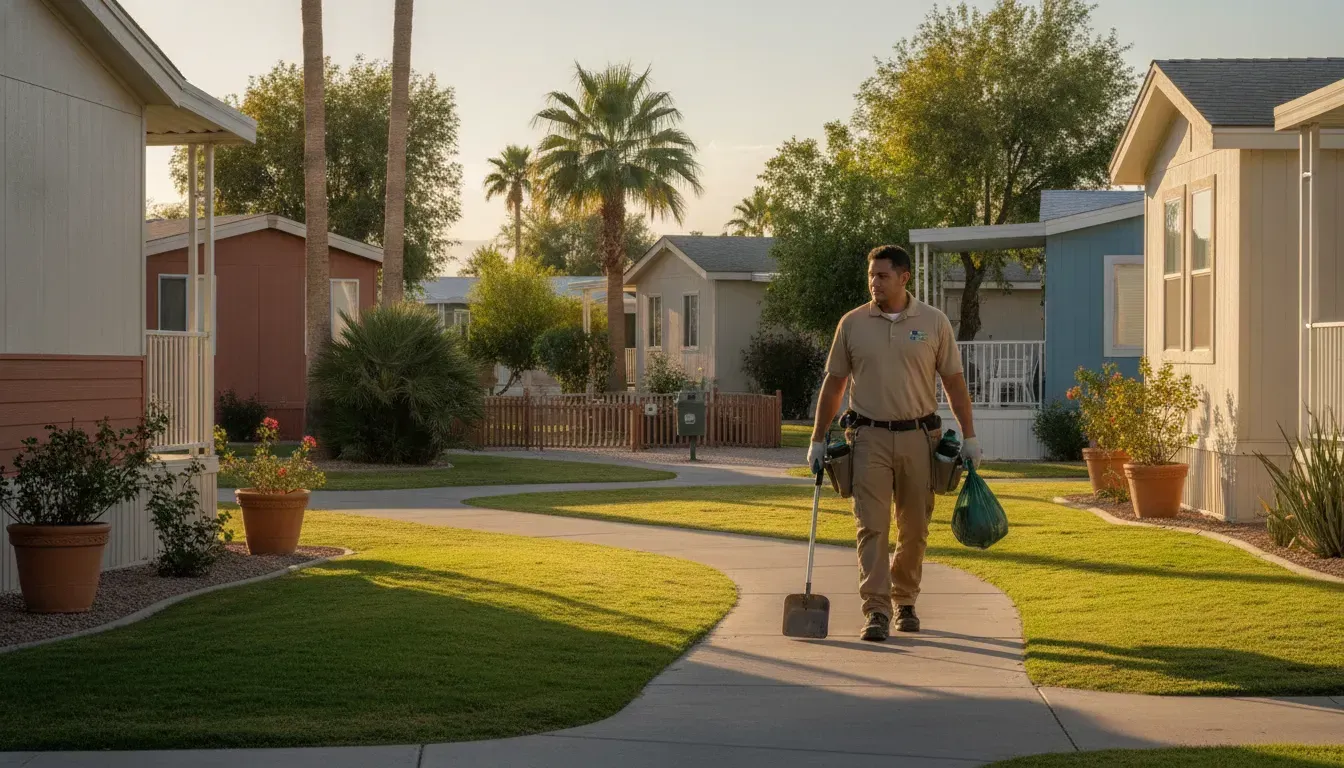
Professional service gives the property a consistent operating owner for routine removal. That does not replace responsible pet ownership or the manager's broader maintenance program. It does give the team a defined way to address shared dog-relief areas, walking routes, landscaped spaces, and other locations where deposits accumulate.
Cleaner shared spaces support resident satisfaction
Residents notice the condition of places they use every day. A clean path to the mailbox, a maintained dog run, and an emptied pet station all contribute to the sense that a community is being cared for. Consistency matters because an occasional cleanup may solve a visible problem without preventing the next one.
For a community association, apartment property, condominium, or master-planned development, routine pickup can also make staff coordination easier. The property manager can separate dog-waste service from inspections, repairs, landscaping coordination, and resident requests. A defined vendor scope gives the team a clearer basis for reviewing performance.
Outsourcing creates accountability
Before choosing a vendor, identify who currently handles pickup, how missed areas are reported, and which conditions generate the most complaints. Then compare providers on scope clarity, route reliability, communication, licensing and insurance, station handling, and the ability to adjust as the property changes.
A1 Pet Maintenance provides commercial property service for communities and shared spaces. Review the commercial property pet waste service page for service context, then use the questions in this guide to prepare a more useful vendor conversation. Managers can also compare this implementation guide with the property management dog waste service guide when building an internal maintenance plan.
What Should a Las Vegas Property Manager Include in the Service Scope?
A complete scope for commercial dog waste removal in Las Vegas should name the service areas, expected demand, route frequency, station responsibilities, access rules, reporting process, and exceptions. A1 Pet Maintenance can use those details to shape a volume-based commercial plan instead of applying a generic schedule to every property.
Start with a site map and a list of areas that residents and pets use. The more specific the scope. The easier it is for multiple vendors to respond on the same basis and for the manager to evaluate whether the work was completed.
- Map common areas and dog-relief zones. Mark sidewalks, parks, courtyards, grassy strips, playground edges, entrances, pet runs, and paths between buildings. Identify dog-relief areas separately from general pedestrian routes. If the property has artificial turf, identify those surfaces for possible artificial grass cleaning and maintenance.
- Describe expected pet traffic. Note the number of buildings or homes, observed dog activity, concentrated relief areas, recurring complaint locations, and any seasonal changes. A busy apartment entrance may need a different service approach from a low-traffic community edge. Ask how the vendor reviews the plan when occupancy or pet use changes.
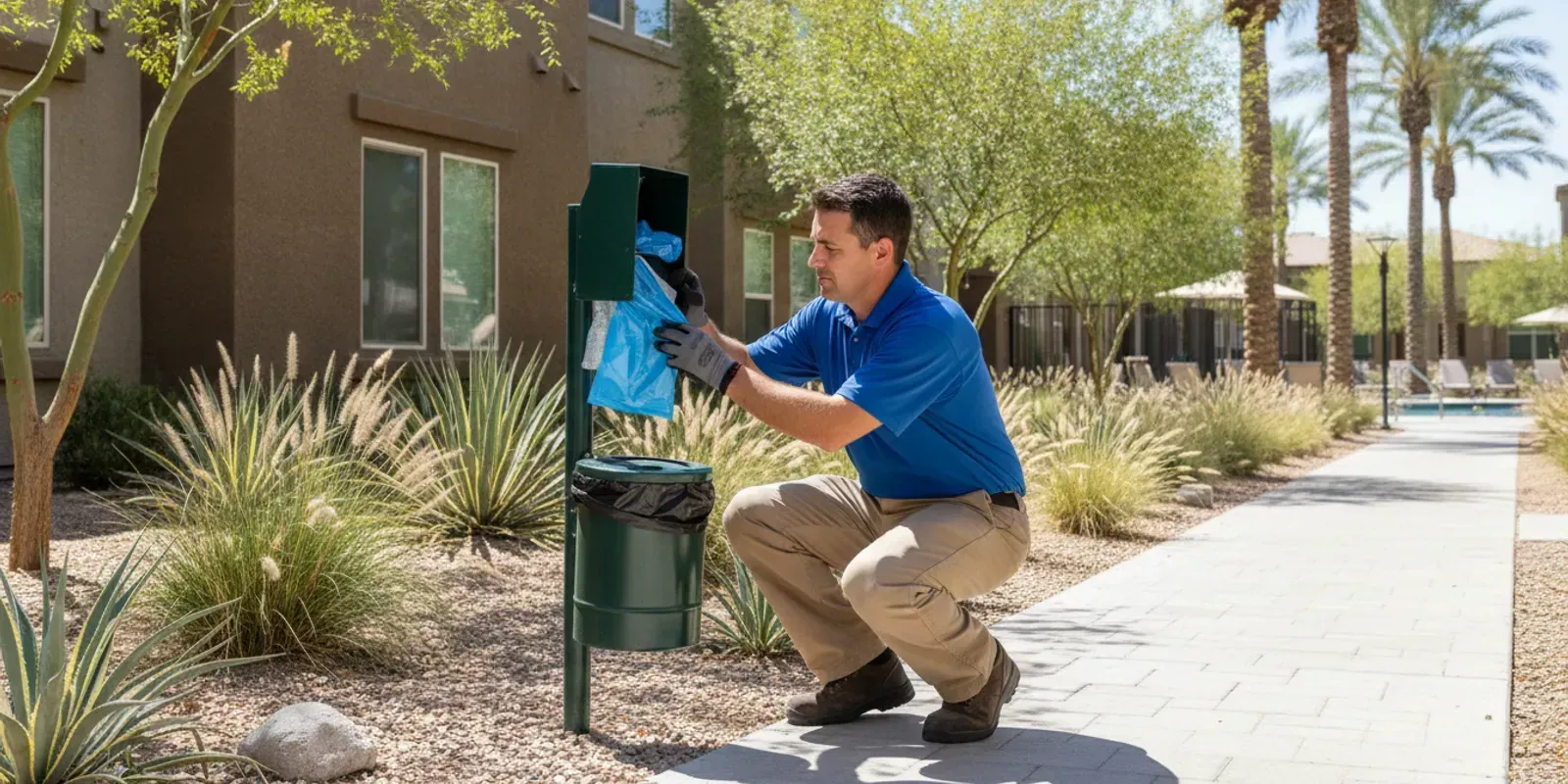
- Inventory pet stations and receptacles. List every dispenser and waste container. State whether the service includes emptying receptacles, replacing liners, replenishing bags, cleaning around stations, reporting damage, or identifying locations that need attention. These details should not be left to assumption.
- Define access and boundaries. Provide gate codes, access windows, parking instructions, restricted areas, and a property contact. Clarify whether the scope covers only common areas or also dog runs, alleys, private patios, and areas affected by construction. Include the procedure for documenting an inaccessible location.
- Set the service cadence by site conditions. Consider pet traffic, accumulation, resident expectations, climate, landscaping, and the sanitation standard the property wants to maintain. Put route days, holiday handling, weather exceptions, and extra-visit requests in writing. A schedule should be based on the property, not a vague standard promise.
- Set communication and reporting expectations. Identify who receives completion notices, exception reports, supply alerts, and service questions. Ask whether each visit can be documented with the date, areas serviced, station issues, and conditions requiring property action.
For a proposal, share the site map, station inventory, access details, and recent observations with each vendor. A1 Pet Maintenance uses property size, service frequency, and the number of pet stations to shape commercial plans. Complete site information produces a more useful scope and reduces avoidable misunderstandings after service begins.
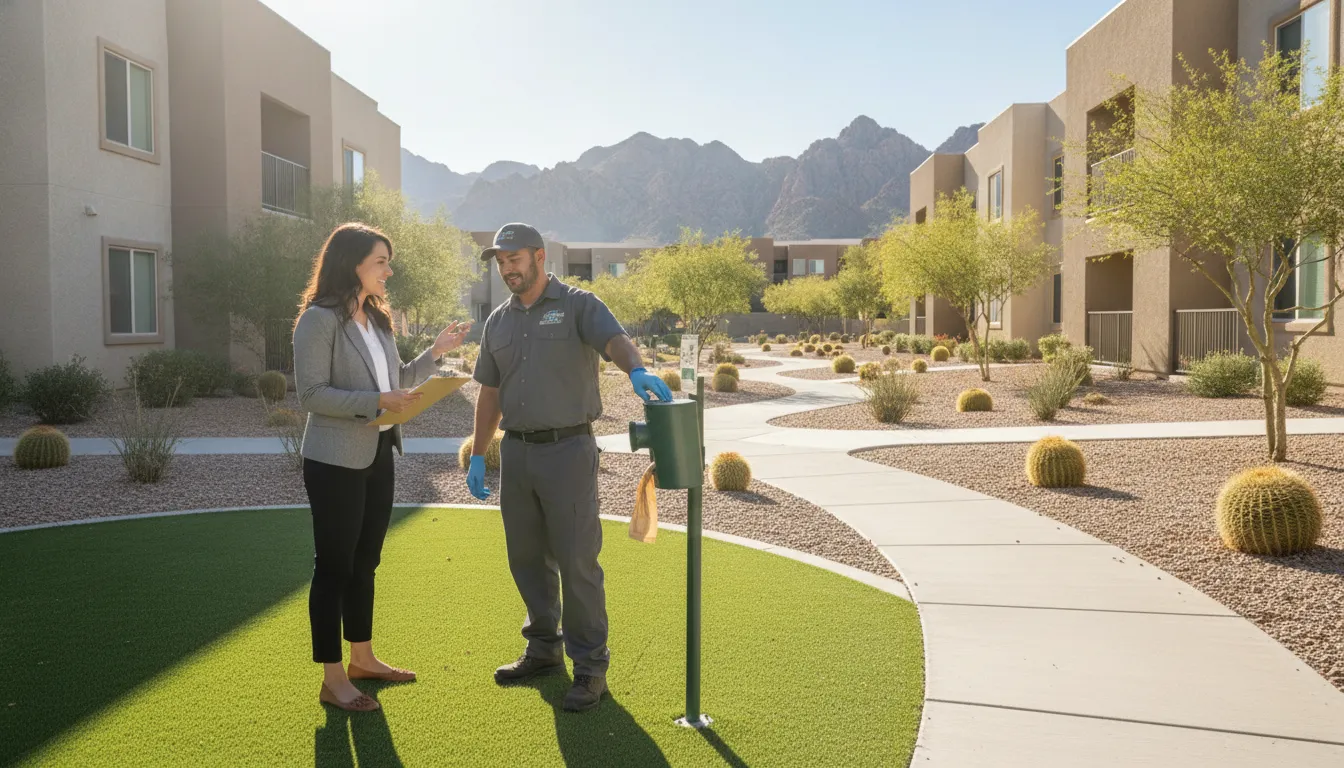 Site conditions and clear expectations give vendors the same basis for a fair comparison.
How Can You Compare Commercial Dog Waste Removal Vendors?
The right vendor should fit the property's operating needs, not simply offer the shortest proposal. A1 Pet Maintenance recommends comparing the same written scope across providers, then reviewing commercial experience, coverage, station service, reporting, communication, and follow-through before making a decision.
Give every vendor the same information: service areas, approximate property size, pet stations, access instructions, problem locations, preferred cadence, and reporting requirements. This makes it easier to compare service models without treating an unexplained low quote as the best value.
Commercial dog waste removal vendor comparison criteria:
- Relevant commercial experience: Ask whether the provider regularly serves HOAs, condominiums, apartment communities, parks, or other multi-area properties. Why it matters: Commercial routes require consistent coverage across shared spaces, not just individual yards.
- Licensing and insurance: Request current documentation appropriate for commercial work. Why it matters: Clear records support procurement and reduce avoidable contract risk.
- Scope clarity: Confirm which paths, parks, dog-relief areas, stations, receptacles, and exception areas are included. Why it matters: A written scope prevents missed locations and makes performance easier to review.
- Schedule reliability: Ask how visits are routed and what happens after an access issue or missed visit. Why it matters: Predictable service reduces extra coordination for on-site staff.
- Station handling: Clarify emptying, bag replacement, cleanup around stations, and supply responsibilities. Why it matters: Stations are part of the resident experience and should not become a service gap.
- Communication and reporting: Determine who receives updates, how work is documented, and how urgent concerns are escalated. Why it matters: Useful records give managers visibility without requiring inspection of every route.
- Flexibility: Discuss events, newly added areas, seasonal changes, one-time needs, and scope reviews. Why it matters: Properties change, so the service should adapt without unnecessary friction.
A1 Pet Maintenance is a licensed and insured Nevada LLC founded in 1998. The company has experience serving commercial communities, including HOA, condominium, and master-planned properties. It also has government contract experience involving the City of Las Vegas, Henderson, and Clark County. These facts provide useful qualification context, but every manager should still confirm that the proposed scope matches the property.
For more detail on the service relationship, review the commercial pet waste removal contract guide. For cost-planning questions, use the commercial pet waste removal cost guide as a framework for the information a provider may need. Avoid relying on generic figures when the property has not been assessed.
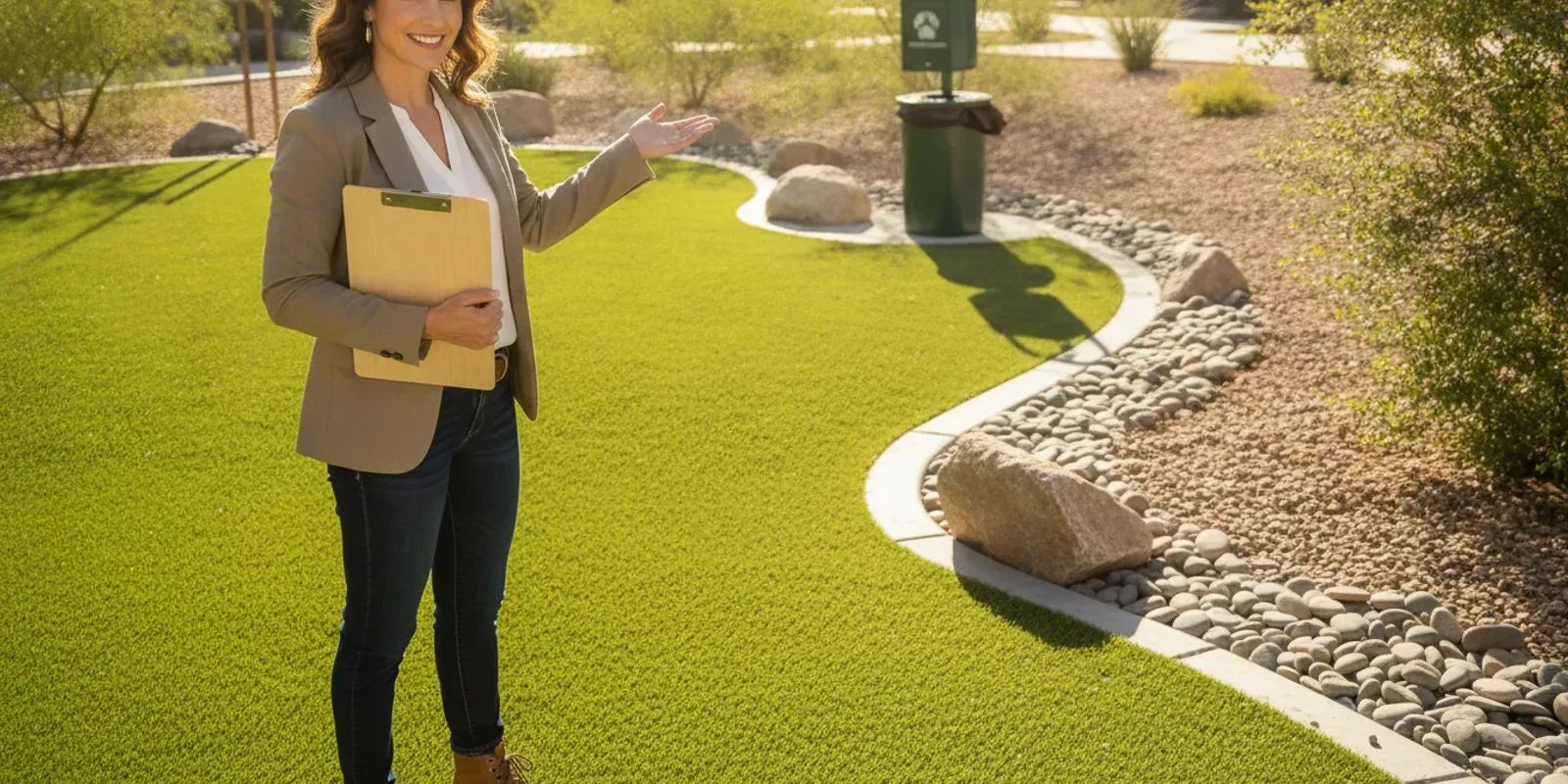
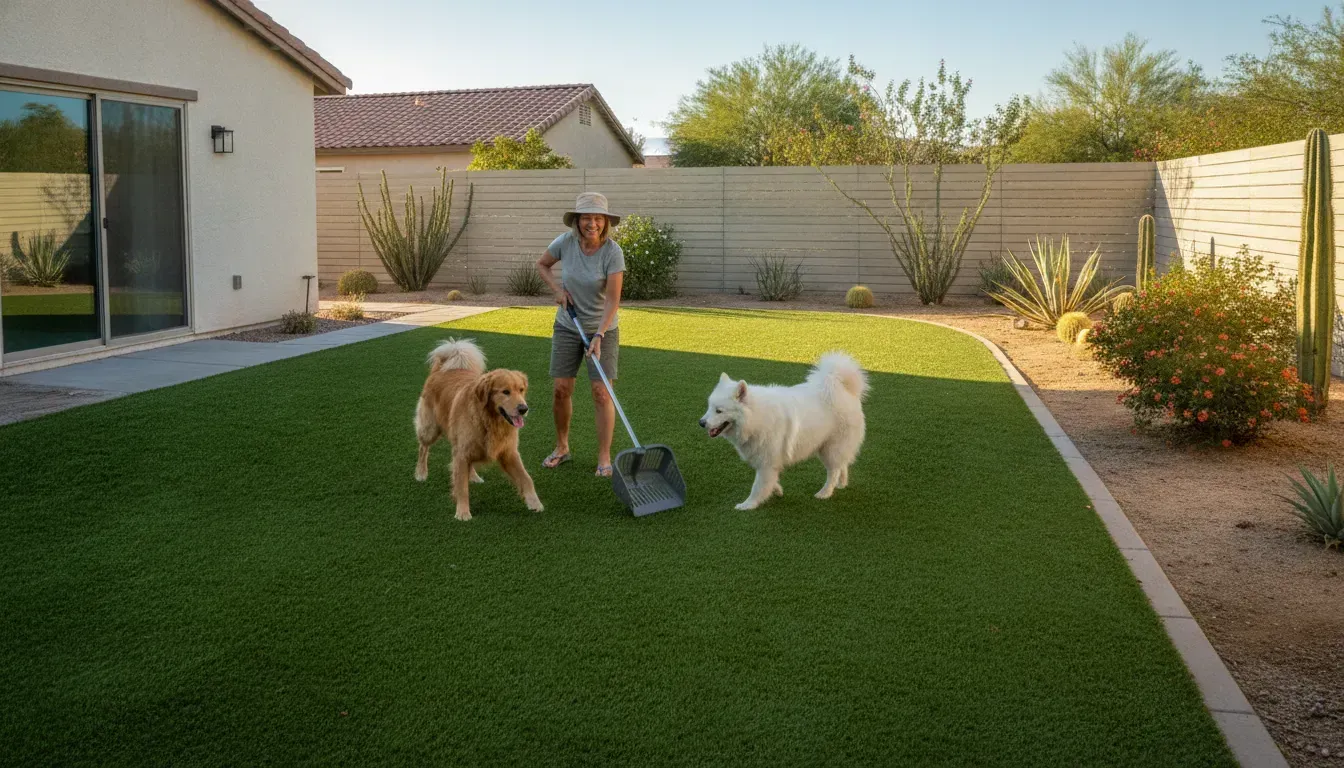
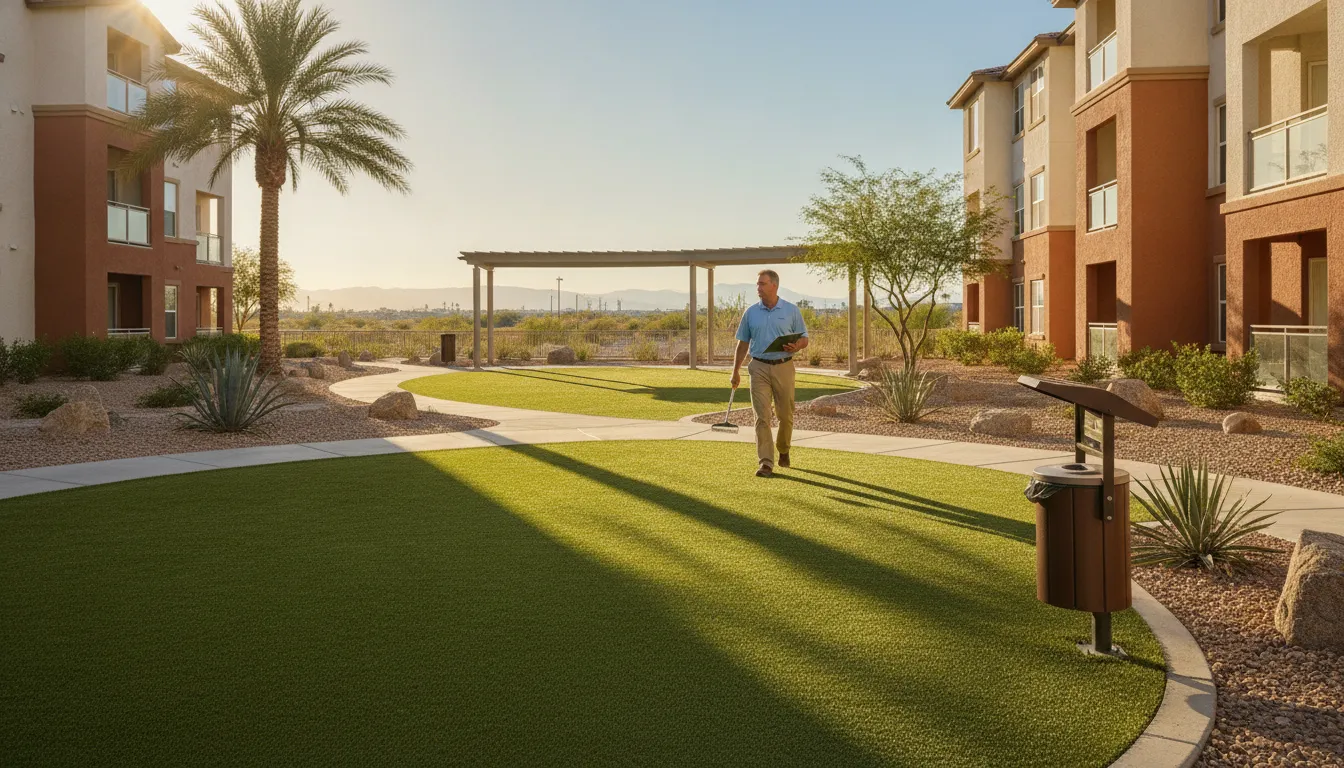 A clearly scoped dog-relief area makes recurring maintenance easier to manage.
How Should You Plan Frequency, Stations, and Resident Communication?
A practical plan matches frequency and station service to the property's pet traffic, common-area layout, and resident expectations. A1 Pet Maintenance can help managers identify high-use routes, document station responsibilities, and establish a communication path for missed access, supply issues, and recurring problem areas.
Match frequency to traffic and risk areas
Map high-traffic areas first. Include sidewalks, building entrances, mail areas, parks, dog-relief zones, and paths connecting parking areas to residences. Then note conditions that may affect demand, such as move-in periods, community events, warmer weather, or a newly opened dog park.
The CDC advises picking up pet waste daily, bagging or burying it, and disposing of it in the trash. The agency also explains that Toxocara eggs can take two to four weeks in the environment to develop enough to cause infection and may persist for extended periods under suitable conditions. These facts support prompt, consistent sanitation, but they do not establish one universal contractor schedule or mean that every deposit is infectious. Read the CDC guidance on how toxocariasis spreads.
Place and service stations where residents need them
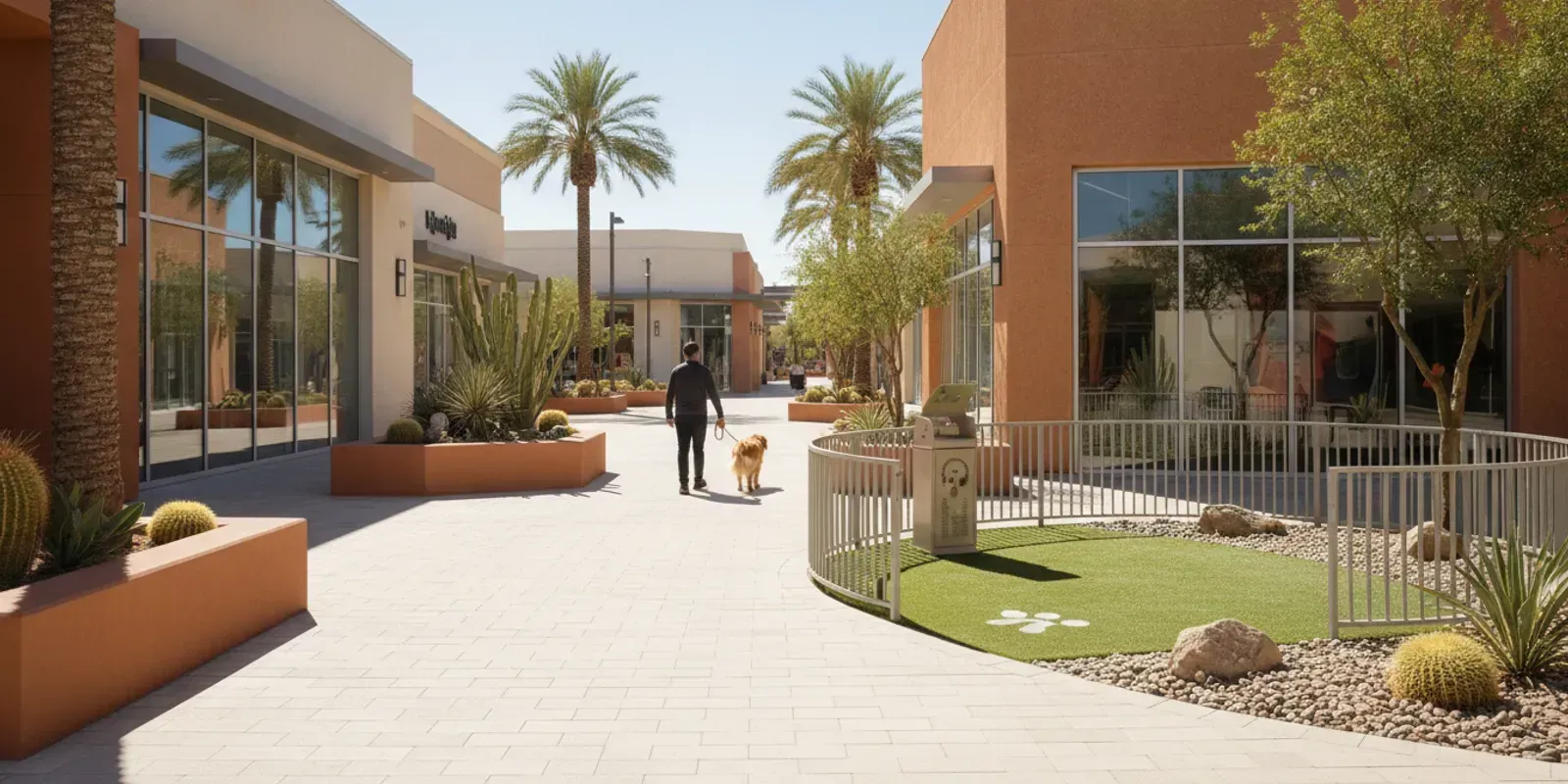
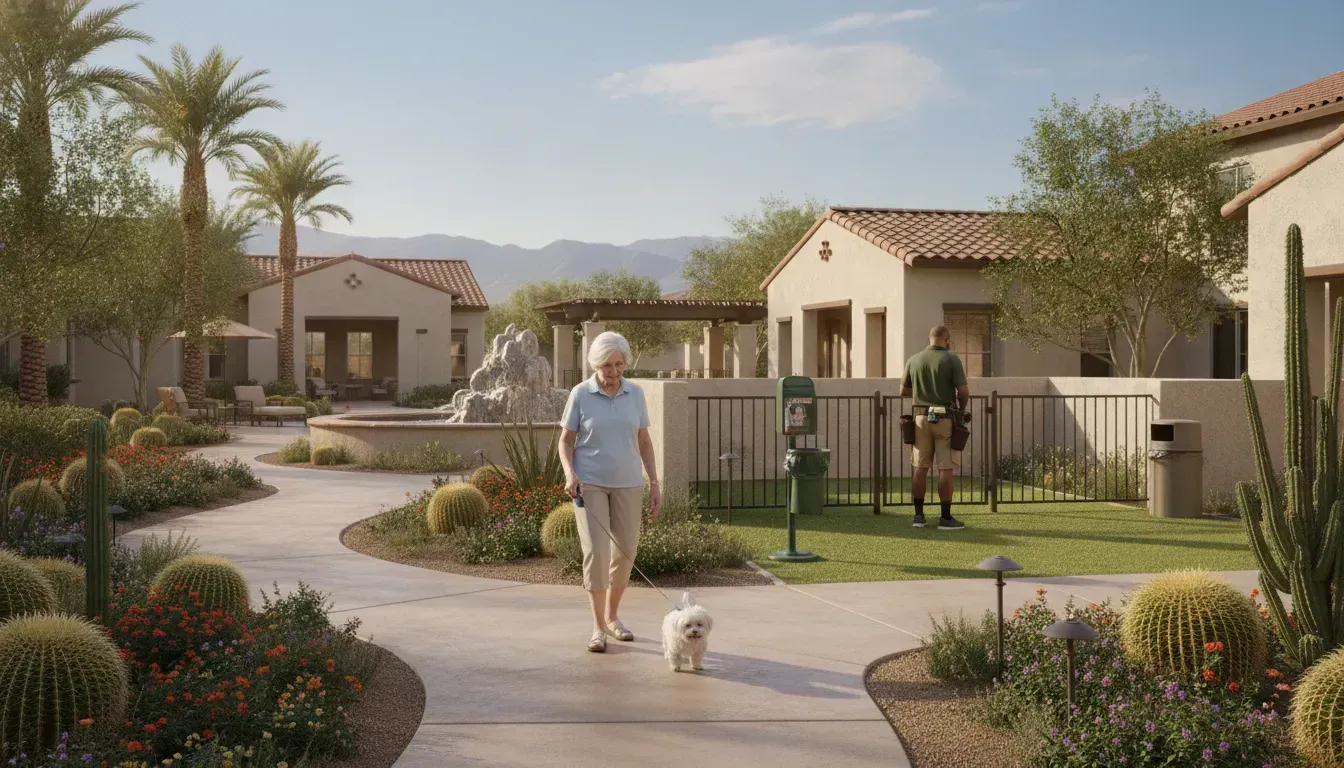
Stations should be visible and convenient without obstructing sidewalks or creating conflicts with playgrounds and gathering spaces. Consider entrances to dog-relief areas, long walkway segments, and locations where residents report recurring waste. Confirm who supplies bags, removes filled receptacles, checks for damage, and reports a station that needs relocation.
Properties with artificial turf may need a separate sanitation conversation in addition to routine pickup. The commercial artificial turf cleaning guide can help a manager distinguish waste removal from surface-cleaning needs.
Make communication useful
Resident notices work best when they are specific. Explain where stations and bags are located, how to dispose of waste, and how residents can report an overflowing receptacle or overlooked location. Use community email, signage, resident portals, or move-in materials as appropriate for the property. Present the program as a shared sanitation standard that complements responsible pet ownership.
Define escalation before service begins. Establish the contact for missed service, overflowing stations, repeated problem areas, access issues, and event-related changes. A brief service note or recurring review can help the manager distinguish an isolated report from a pattern that requires a route, station, or frequency adjustment.
What Does Launching Recurring Service Look Like in Las Vegas?
Launching recurring commercial dog waste removal in Las Vegas should begin with a site walk and end with a documented route that staff can review. A1 Pet Maintenance can use the property's layout, access conditions, station count, and observed demand to build a practical starting scope and refine it as the site changes.
- Start with a site walk. Review entrances, sidewalks, parks, dog-relief areas, pet stations, landscaped spaces, and other common areas. Note accumulation points, difficult access, construction, and surfaces that need special handling. Separate routine pickup from one-time cleanup or additional sanitation.
- Confirm the scope in writing. Record service areas, station duties, disposal expectations, access requirements, exclusions, and the process for missed areas. If the community has separate buildings or amenity areas, identify them individually.
- Set access and scheduling details. Identify gates, keys, codes, loading areas, restricted hours, construction zones, and a property contact. Agree on the recurring schedule and the procedure for blocked access or unusual accumulation.
- Prepare a resident notice. Tell residents when service begins, which areas are included, and how to report an overlooked location or access concern. Reinforce that residents remain responsible for picking up after their own pets.
- Review the first service. Inspect the agreed areas with the vendor or property contact. Confirm that the route matched actual conditions, stations were addressed, and any needed refinements are documented.
- Use ongoing reviews. Revisit the scope when occupancy, landscaping, pet amenities, construction, or resident use changes. A1 Pet Maintenance has more than 26 years of experience. It services more than 400 properties weekly, providing context for evaluating an established operator without promising a specific result for every property.
A no-contract, subscription-based commercial model may help a property adjust its service relationship as needs evolve. The right arrangement is the one whose scope, cadence, access rules, and reporting process are clear enough for the property team to manage.
For a different property type, see the commercial dog waste removal for parks guide. It can help managers identify which public-facing areas require separate route and access considerations.
What Questions Should You Ask Before Signing a Commercial Service Plan?
Before signing, ask the provider to explain exactly what is included, how visits are documented, and what happens when property conditions change. A1 Pet Maintenance encourages managers to use these questions to replace vague promises with an operating plan that staff and residents can understand.
What exactly is included?
Ask the provider to identify every included area, including sidewalks, shared lawns, dog-relief spaces, play-adjacent areas, and pet stations. Confirm whether station servicing, bag replacement, litter around stations, and visible waste outside the normal route are included or treated as separate requests. Clarify how locked gates, restricted areas, construction zones, and multiple entrances are handled.
How will accountability work?
Ask who receives completion notices, what a service note contains, how missed areas are reported, and how recurring issues are escalated. A useful process gives the property manager enough information to follow up without personally inspecting every route. It should also identify the contact responsible for schedule changes and access problems.
How can the plan change?
Discuss seasonal use, community events, new pet amenities, landscaping changes, construction, and changes in occupancy. Ask how a scope review is requested and whether one-time cleanups or extra visits can be discussed separately. A clear review process helps the property avoid both under-serving busy areas and paying for a scope that no longer fits.
Managers can also review the dog waste station guide for apartment communities when stations are a major part of the service scope. The best proposal is not necessarily the longest or shortest. It is the one that makes responsibilities, communication, and follow-through easiest to verify.
Call A1 Pet Maintenance Today: (702) 521-2624
Frequently Asked Questions
What should commercial dog waste removal include?
A practical scope covers common areas, dog-relief zones, walkways, parks, pet stations, access requirements, service frequency, reporting, and procedures for missed access or unusual conditions. Defining these details upfront helps a vendor maintain consistent standards across the property.
How often should a property schedule dog-waste removal?
Frequency should reflect property size, pet traffic, station locations, resident expectations, and how quickly deposits accumulate. A site review can translate those conditions into a workable recurring schedule. The CDC recommends daily pickup and proper disposal, which supports prompt removal in shared spaces.
Is recurring service better than a one-time cleanup?
Recurring service is usually the better fit when a property needs ongoing sanitation for common areas, stations, parks, or walkways. A one-time cleanup can address an immediate backlog or prepare a property for recurring maintenance. The service model should match the property's ongoing need.
What information does a vendor need to prepare a proposal?
Provide the property address, approximate size, layout or map, common-area locations, dog-relief zones, station count, access instructions, preferred frequency, and recurring problem areas. Also explain whether the scope includes parks, walkways, receptacles, artificial turf, or other shared spaces.
How does professional pickup support property sanitation?
Scheduled removal keeps waste from accumulating in shared areas and takes an unpleasant manual task away from on-site staff. It supports cleaner parks, walkways, and common areas while helping managers maintain a consistent sanitation process and resident experience.
Ready to Plan Your Commercial Dog-Waste Service?
A clear site scope helps property managers compare service options and establish a practical recurring plan for shared areas. A1 Pet Maintenance can discuss your property's needs, access considerations, and preferred operating approach so the next step is straightforward.
Call A1 Pet Maintenance at (702) 521-2624 TodayThe body content of your post goes here. To edit this text, click on it and delete this default text and start typing your own or paste your own from a different source.