Apartment Complex Dog Waste Removal Cost Guide
Plan apartment complex dog waste removal cost in Las Vegas, Southern Nevada, and Tucson. Compare one-time or recurring scope before requesting a proposal.

For an apartment community, pet waste service is not a simple household expense. Managers are planning for shared lawns, pet relief areas, walkways, stations, resident expectations, and a service schedule that maintenance teams can rely on.
There is no universal apartment complex dog waste removal cost. Commercial service is custom-priced through a property-specific proposal, because the right budget depends on the agreed scope and operating needs rather than residential per-dog rates. A1 Pet Maintenance provides one-time cleanup plus weekly or bi-weekly recurring service for apartments, HOAs, and other multifamily properties in Southern Nevada and Tucson.
Call A1 Pet Maintenance at (702) 521-2624 today.
The most useful starting point is to define what the budget must cover before comparing proposals. That makes the approval conversation clearer and helps vendors prepare a scope that your property can actually use.
What Should an Apartment Complex Cleanup Budget Include?
A useful apartment cleanup budget should account for more than the act of picking up waste. It should help the community plan for dependable grounds maintenance, clear service expectations, and fewer avoidable questions for the onsite team. A1 provides one-time and recurring service for commercial properties, including apartments, HOAs, and other multifamily communities.
Start with these budget categories:
- Service scope: Identify the shared outdoor areas that need attention, such as lawns, pet-relief areas, walkways, landscaped edges, and recurring trouble spots. A defined boundary makes it easier for managers and vendors to agree on what is included.
- Visit planning: Decide whether the community needs a one-time cleanup, a recurring weekly schedule, or a bi-weekly schedule. The right choice depends on the property's maintenance goals and current conditions, not on a household rate.
- Waste handling: Confirm whether collected waste will be bagged, hauled away, and disposed of through city sanitation. A1 identifies those steps as part of its commercial service process.
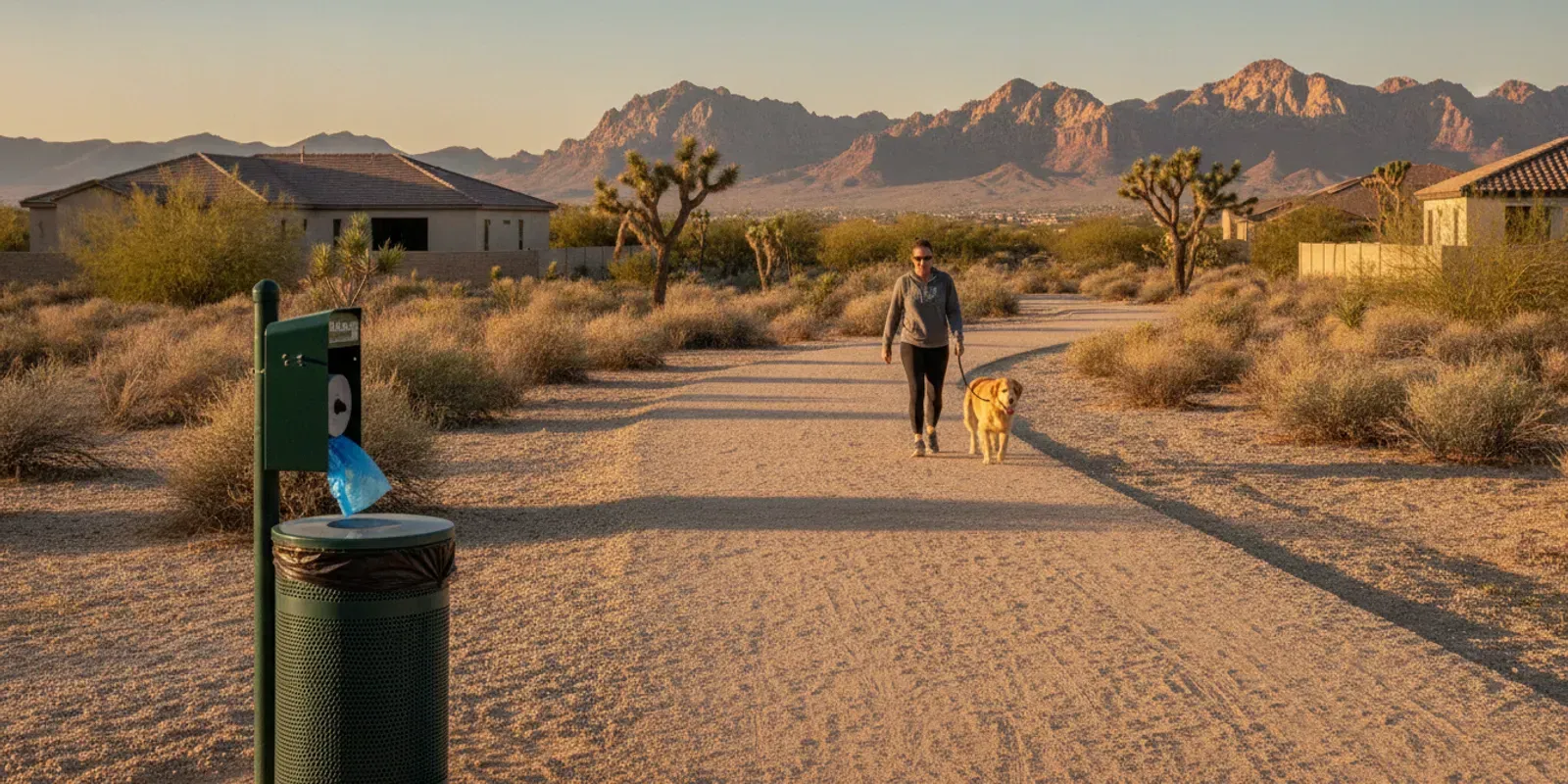
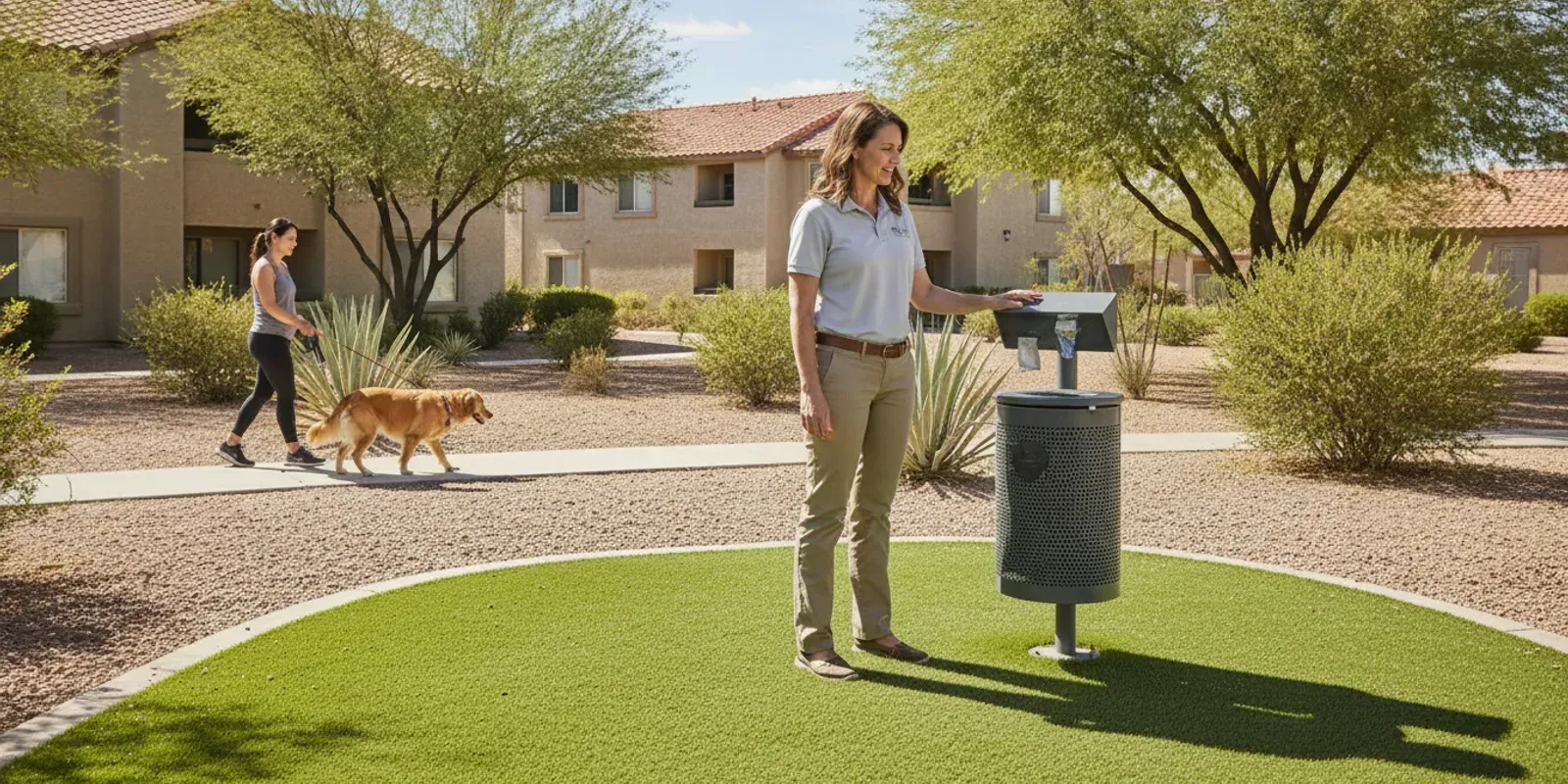
- Station and supply support: Ask whether the proposal addresses bag availability, receptacle servicing, and basic station condition. The EPA describes pet waste stations as including bag dispensers, signs, and trash bins, so these details can affect how usable the common areas remain.
- Administrative coordination: Allow time for access instructions, resident notices, service documentation, and a contact for questions or missed-area reports.
Before approval, ask the provider to state exactly what is included, what is excluded, how service completion is documented, and how changes to the property will be handled. Also ask whether the proposal is written specifically for the community. Commercial apartment service is custom-priced through a property-specific proposal, so published residential per-dog rates should not be used as the apartment budget.
Managers comparing vendors may also benefit from this guide to commercial pet waste removal in Las Vegas, which addresses operational planning for shared properties.
How Does Apartment Complex Dog Waste Removal Cost Fit Into a Property Budget?
Apartment complex dog waste removal cost is best handled as a planned operating expense, not as a household per-dog rate multiplied across a community. Commercial property service is custom-priced through a proposal because the service needs to match the property's approved scope. A1's commercial guidance specifically separates apartment and other commercial proposals from residential rate tiers. See the commercial pet waste removal in Las Vegas manager's guide for context.
Build the budget around an approved service scope
For a useful budget conversation, describe what the property needs the vendor to maintain and how the work should be managed. The proposal can then translate that scope into a recurring operating expense or a one-time cleanup line item. Ask for the service description, included work areas, visit schedule, disposal responsibilities, documentation, and any conditions that could change the final proposal. This gives an owner or board something concrete to review instead of an unsupported rate estimate.
A1 reports more than 19 commercial clients and an average client tenure of 18.2 years. Those figures do not establish a price, but they can help a manager evaluate whether the provider has experience with ongoing commercial relationships. The more useful question is whether the proposal clearly explains the work your team is authorizing and the result the community should expect.
Present recurring service without false precision
When presenting the request internally, label the amount as a proposal-based estimate until A1 has reviewed the property details. Do not substitute published residential per-dog weekly or bi-weekly rates. Those tiers apply to residential service, not to an apartment-complex quote. Likewise, A1's published one-time cleanup guidance is not a commercial apartment rate.
A clean budget memo can show separate lines for initial cleanup, recurring service, and any approved optional work. It should also state the assumptions behind each line and identify what still needs confirmation. This format helps a property manager compare proposals on scope and accountability, not just on the lowest headline number. For a property-specific budget discussion, request a commercial proposal from A1 Pet Maintenance after confirming the areas and service expectations your ownership group needs covered.
When Is One-Time Cleanup or Recurring Service the Better Fit?
The right service model depends on whether the property needs a reset, a predictable maintenance rhythm, or a practical middle ground. A one-time cleanup can help after a backlog, before a resident event, or while a manager evaluates ongoing needs. Recurring service creates a defined schedule for shared lawns, relief areas, walkways, and other pet-traffic zones.
A1 offers one-time, weekly, and bi-weekly service for commercial properties, including apartments and HOAs. The best choice should be based on the property's current condition, management goals, and expectations for follow-through. Collected waste is bagged, hauled away, and disposed of through city sanitation.
A1's published $50-$150 range is guidance for non-commercial one-time cleanups, with the amount varying by yard size and waste accumulation. It is not apartment-complex pricing and should not be used as a commercial budget quote. Commercial apartment service is custom-priced through a property-specific proposal, rather than a standard rate.
Managers comparing recurring options can review how a weekly dog waste removal service works week by week. Then request a proposal that clearly states the selected cadence, included areas, and confirmation items. This gives the property team a usable planning document without forcing a household pricing model onto a commercial site.
What Should an Apartment Service Scope Cover?
A useful apartment service scope turns a vague cleanup request into a repeatable property plan. It should identify the areas included, the access needed, the stations to service, how collected waste will be handled, and what residents and onsite teams remain responsible for. Clear boundaries help a manager compare proposals and reduce surprises after work begins.
Define the route and access points
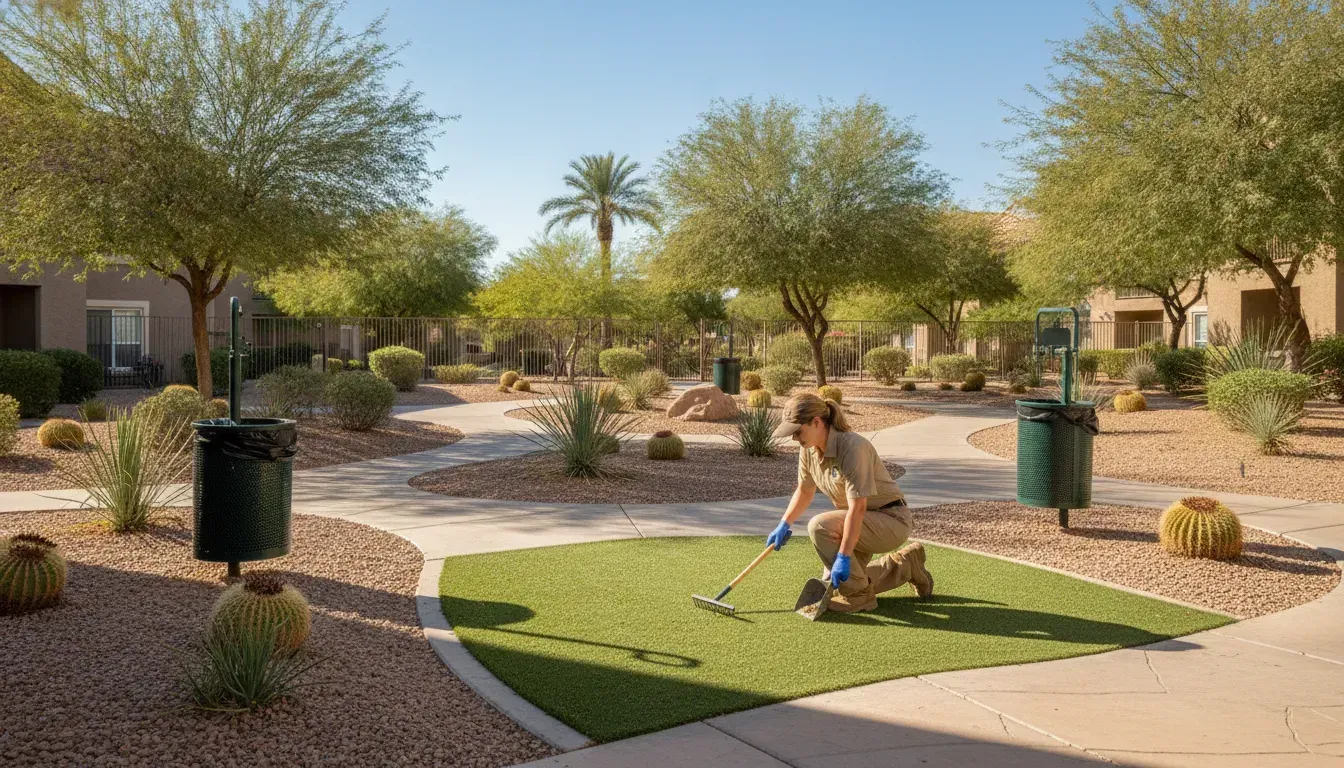
Map the route before requesting a proposal. The scope can include shared lawns, dog-relief zones, walkways, landscaped edges, and recurring hotspots where residents regularly walk their pets. Identify gates, locked areas, maintenance yards, pet amenities, and any access windows. A defined boundary and dependable schedule give the maintenance team a practical plan instead of leaving coverage to assumption.
Ask the provider to state whether the service covers only common areas or also includes specific courtyards, perimeter paths, and waste stations. If a property has multiple buildings or entrances, list them so the proposed route can be checked against the site.
Specify stations, bagging, and haul-away
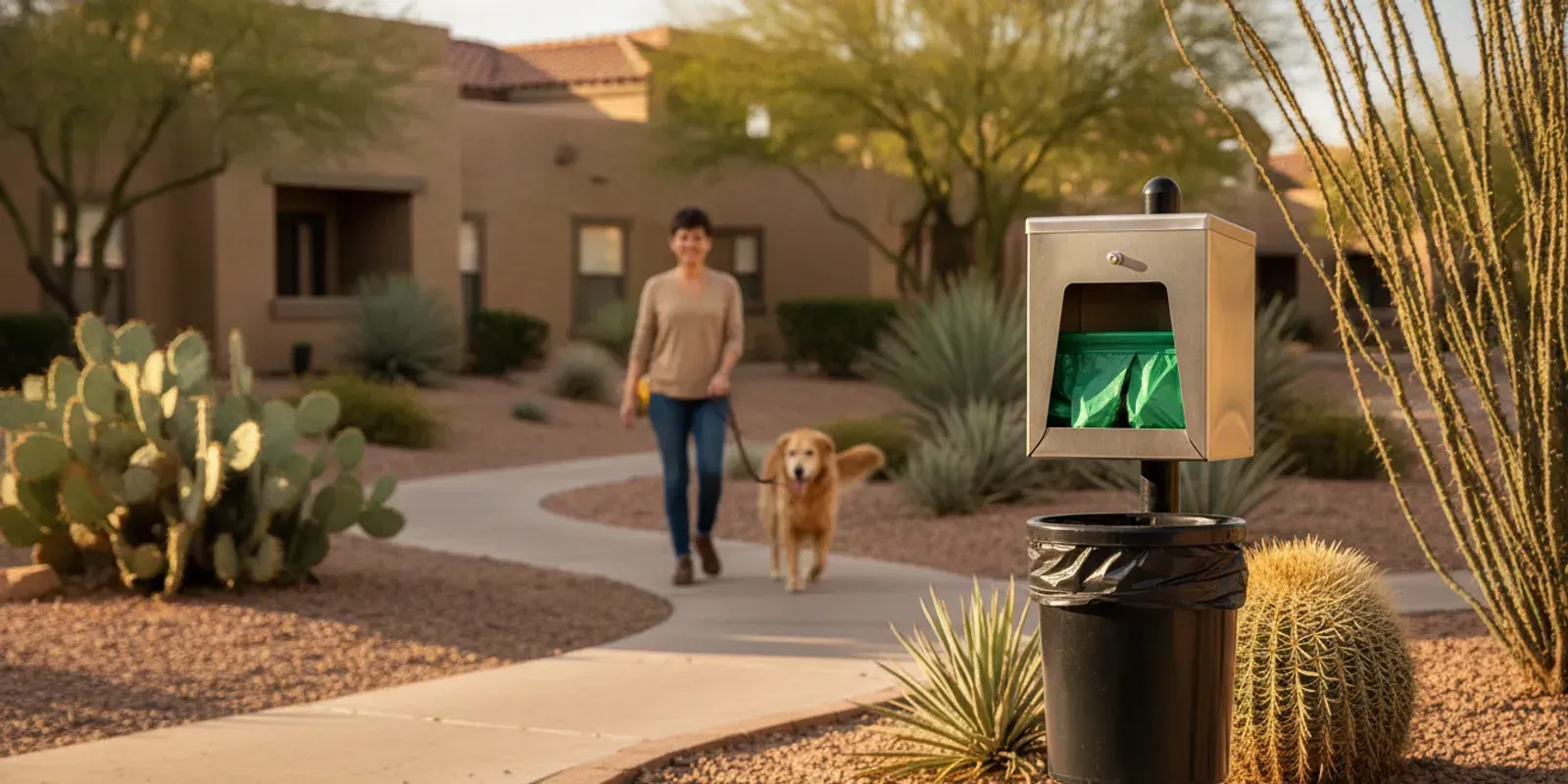
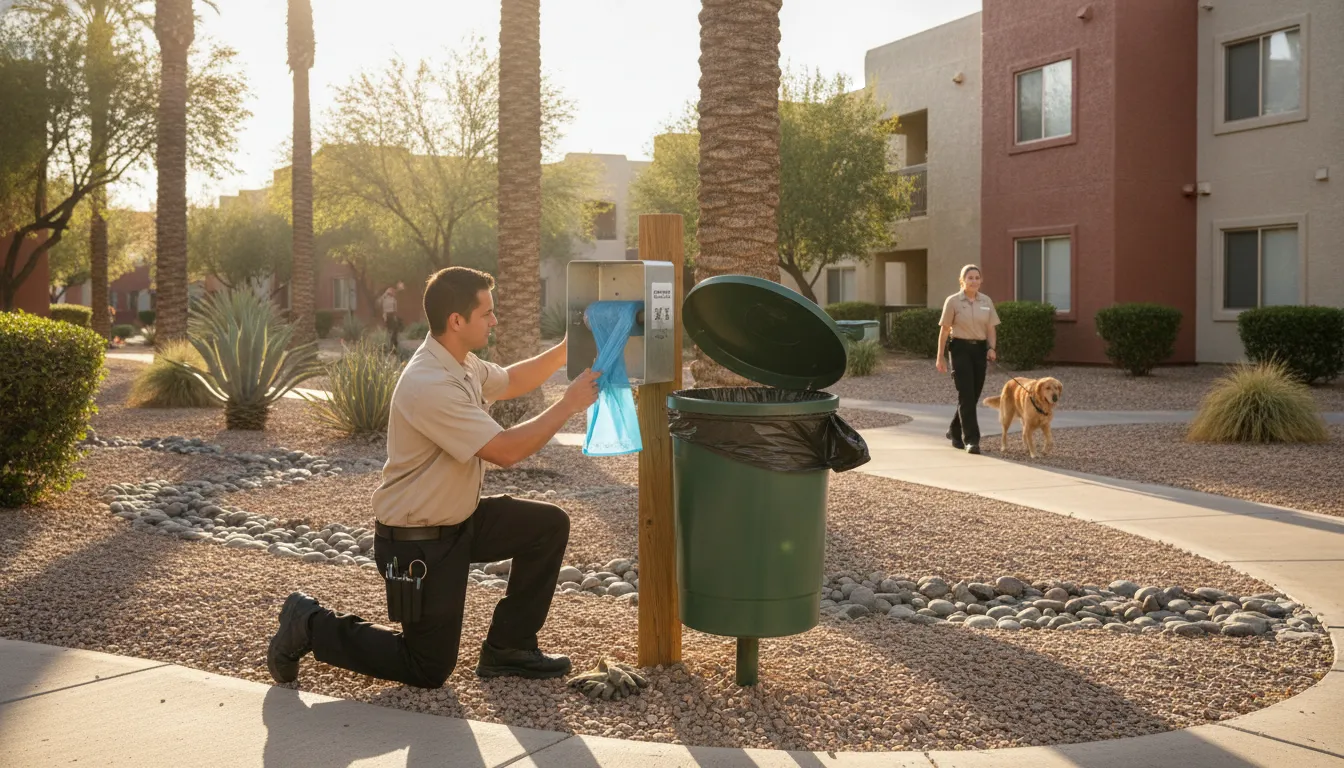
Station responsibilities should be explicit. The EPA describes pet waste stations as systems that can include bag dispensers, signs, and trash bins. A scope should say whether the provider checks dispensers, replaces or replenishes bags, empties receptacles, and reports damaged hardware or missing signage. Regular servicing matters because an overflowing or foul-smelling bin can make a station difficult to use.
Confirm the disposal method as well. A1 states that collected waste is bagged, hauled away, and disposed of through city sanitation. If that is part of the proposal, it should appear in writing rather than being assumed from the phrase cleanup service. The EPA's pet waste management guidance also identifies stations as part of responsible waste-management planning.
Include documentation and resident responsibility
Request a simple service record showing the date, covered route, station issues, access problems, and follow-up items. This gives managers a usable record for maintenance coordination without promising that every resident will comply. Residents remain responsible for picking up after their dogs immediately. Provider service supports cleaner shared spaces, but it does not replace community rules, resident communication, or onsite reporting of hazards.
How Can Managers Compare Commercial Pet Waste Proposals?
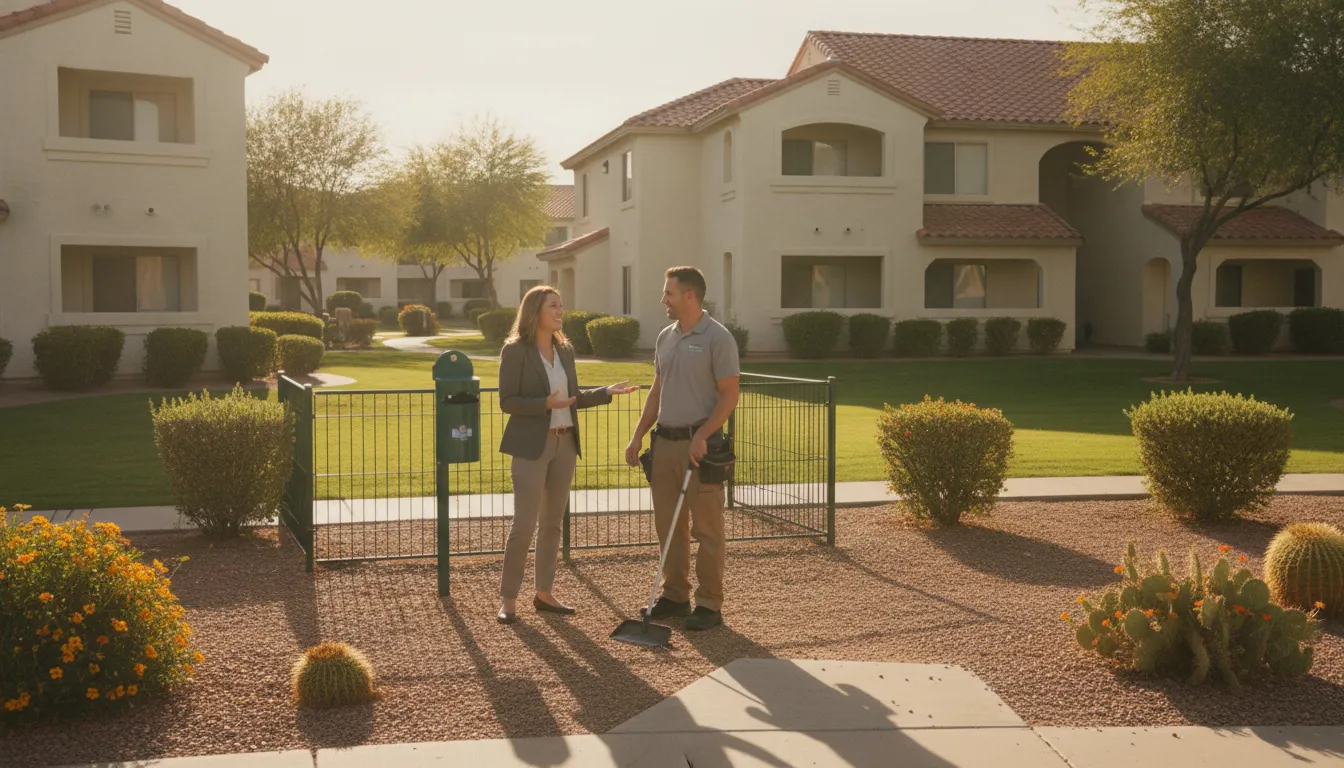
Once a property-specific proposal is in hand, compare more than the total line item. Commercial apartment service is custom-priced through proposals, so the most useful review asks whether each provider is pricing the same scope. A proposal that looks lower may simply leave important tasks, areas, or disposal responsibilities undefined.
Use this checklist when reviewing bids:
- Scope: Are shared lawns, pet-relief areas, walkways, landscaped edges, stations, and known hot spots clearly identified?
- Schedule: Does the proposal state whether service is weekly, bi-weekly, or one-time, and explain what each visit includes?
- Waste handling: Does it say who bags, hauls away, and disposes of collected waste?
- Site access: Are gates, locked areas, access windows, parking limitations, and contact procedures addressed?
- Station responsibilities: Does the scope clarify whether bag dispensers, receptacles, signage, or station-area cleanup are included?
- Documentation: Will the manager receive service notes, route confirmation, issue reporting, or another practical record of completed work?
- Resident expectations: Does the plan distinguish contractor maintenance from residents' responsibility to pick up after their dogs immediately?
Consistency matters because a defined service boundary gives maintenance teams a dependable point of reference. It also makes renewals easier: managers can compare actual performance against the agreed scope instead of trying to reconstruct what a vague proposal meant months later.
For a more detailed review, use this commercial pet-waste removal bid checklist. Managers evaluating local operations can also review A1's guide to commercial pet waste removal in Las Vegas. A1 reports serving commercial clients, including multifamily properties and HOAs, with proposals built around the property rather than assumed household rates. This approach gives decision-makers a clearer basis for comparing service coverage, operational fit, and management support without inventing an apartment-complex price.
What Changes Between Las Vegas, Southern Nevada, and Tucson?
The property address changes the planning conversation, even when the service goal is the same: cleaner shared areas and a more predictable maintenance plan. A1 Pet Maintenance serves Las Vegas, Henderson, broader Southern Nevada, and Tucson, Arizona, so an apartment community should identify its market before requesting an estimate.
Las Vegas and nearby Southern Nevada communities
In Las Vegas communities, property teams may need to give extra attention to how quickly odors become noticeable during hot conditions. Especially around pet-friendly amenities and other areas with repeated daily traffic. That does not create a standard price. It does create a reason to describe the affected areas clearly in the proposal request. Including where residents and pets move through the property and which shared spaces need consistent attention.
For Henderson and other Southern Nevada locations, the same cost-planning principle applies. A proposal should reflect the community's actual service area and operating expectations rather than using a Las Vegas household rate as a substitute for commercial planning. Commercial work is custom-priced through a property-specific proposal.
Tucson properties
Tucson communities should likewise request planning around their actual layout, resident use patterns, and selected service cadence. The goal is not to force a Southern Nevada template onto an Arizona property. It is to give the service provider enough local and property-specific context to prepare a useful commercial proposal.
A1 has served Southern Nevada since 1998 and reports servicing more than 400 properties weekly. That background can help property managers begin a practical conversation, but it does not replace a site-specific scope. When comparing options across markets, compare the clarity of the proposed coverage, schedule, documentation, and assumptions. This keeps the apartment complex dog waste removal cost discussion tied to the property being managed instead of an unrelated local benchmark.
What Should You Prepare Before Requesting a Property Proposal?
A property-specific proposal is easier to evaluate when the service request reflects how your community actually operates. Gather the following information before contacting a provider. You do not need a perfect measurement or a finalized service plan. Clear, practical details help the provider ask better follow-up questions and distinguish a commercial scope from household pricing.
- Property identity and location. Provide the community name, address, city, and the best contact for the proposal. A1 serves Las Vegas, Henderson, broader Southern Nevada, and Tucson, so the service address helps confirm routing and local availability.
- Community type and access details. Note whether the site is an apartment community, HOA, condominium, or another multifamily property. Explain gate access, locked areas, maintenance hours, parking restrictions, and any escort or notification requirements.
- A simple map or service-area description. Identify shared lawns, dog-relief zones, walkways, landscaped edges, pet amenities, and recurring problem areas. A defined route gives the proposal a usable service boundary instead of leaving important areas open to interpretation.
- Current station and waste conditions. List the approximate locations of pet waste stations, whether dispensers and bins are functional, and any recurring overflow or odor concerns. Include photos if they clarify the condition. This information helps separate waste pickup from station-related maintenance needs.
- Your preferred service approach. Say whether you need a one-time cleanup, weekly recurring service, or bi-weekly recurring service. One-time and recurring options are available for commercial properties, and the right starting point may depend on current accumulation and the community's ongoing maintenance goals.
- Disposal and documentation expectations. Ask how collected waste will be bagged, hauled away, and disposed of through city sanitation. Also specify whether your team needs visit notes, service-area confirmation, issue photographs, or notifications about access problems.
- Budget and approval requirements. Share your target approval date, purchasing process, contract requirements, and whether the proposal must separate initial cleanup from recurring maintenance. Commercial service is custom-priced through a proposal, so do not substitute residential per-dog rates for an apartment estimate. For more planning context, review this dog-waste service for property managers.
With these details assembled, you can request a proposal that matches the property, access conditions, and service expectations. That makes it easier to compare scope and confirm what is included before approval.
Call A1 Pet Maintenance at (702) 521-2624 today.
Frequently Asked Questions
What should a property manager include when requesting a proposal?
Share the community address, property type, service areas, current pain points, desired start date, and whether you need a one-time cleanup or recurring maintenance. Photos, site maps, and vendor requirements can also help the provider prepare a clearer proposal.
Should an apartment community choose one-time cleanup or recurring service?
Choose a one-time cleanup when the property needs a reset before an inspection, turnover, event, or new vendor start. Recurring service is usually the better planning option when shared pet areas need consistent attention. A1 offers weekly and bi-weekly recurring schedules, along with one-time service.
What should be compared in apartment dog waste removal proposals?
Compare the service areas covered, visit schedule, cleanup expectations, waste handling, communication process, start-up requirements, and cancellation terms. A low number is not useful if the proposal leaves responsibilities or high-traffic areas unclear.
How is collected dog waste handled after cleanup?
Collected waste should be bagged, removed from the property, and disposed of through the applicable sanitation process. A1 states that collected waste is bagged, hauled away, and disposed of through city sanitation.
Can the same service plan work in Las Vegas and Tucson?
The planning process can be similar, but each community still needs a property-specific proposal. Site conditions, access, community operations, and local service logistics can affect the practical scope. A1 serves Las Vegas, Henderson, broader Southern Nevada, and Tucson, Arizona.
Ready to Plan Your Property-Specific Service?
A clear proposal can help your team align service scope, shared-area needs, and budget expectations before approval. For an apartment, HOA, or multifamily property in Southern Nevada or Tucson, discuss the details with A1 Pet Maintenance and choose a practical next step.
Call A1 Pet Maintenance at (702) 521-2624 to discuss your property-specific proposal.