How to Catch a Stray Cat: Humane Guide
Learn how to catch a stray cat safely with humane trap steps, bait, placement, and monitoring. Get aftercare and A1 trap-rental guidance for Nevada and Tucson.

Seeing a cat outdoors does not always mean it needs to be chased, cornered, or picked up. A calm plan protects the cat, nearby people, and any caregivers who may need to help afterward.
The safest answer to how to catch a stray cat is to use a humane box trap in a familiar feeding area, prepare a receiving or veterinary plan first, and monitor the trap continuously. Never hand-capture an unfamiliar cat or improvise with nets, darts, or tranquilizers. Humane trapping guidance recommends using equipment designed for cats and planning the next step before setting it (Alley Cat Allies).
Call A1 Pet Maintenance at (702) 521-2624 for cat-trap rental information.
Whether you are helping one cat near your home or coordinating a community effort in Southern Nevada or Tucson, the details matter. Start by assessing the situation and preparing for a safe, humane capture.
How to Catch a Stray Cat Safely and Humanely?
The safest approach is to use a humane box trap, prepare a clear receiving plan, and monitor the trap continuously. Do not try to grab an unfamiliar cat, even if it appears calm or friendly. A frightened cat can thrash, scratch, or bite when it feels cornered. For humane box-trap guidance, Alley Cat Allies recommends using only humane box traps and avoiding nets, darts, and tranquilizer guns.
- Identify the cat and the capture area. Start with a specific location where the cat regularly appears, rather than placing equipment at random. Note whether the cat seems injured, ill, very young, or accompanied by kittens. If the cat may need veterinary, rescue, or animal-control help, arrange that support before trapping. For a planned TNR effort, schedule the spay or neuter appointment first, then time the capture so the cat does not remain confined unnecessarily.
- Use the right trap and prepare it carefully. Choose a humane box trap designed to safely contain a cat. Do not improvise with a carrier, crate, net, or hand capture. Line the trap floor with newspaper or cardboard to make it more comfortable for the cat's paws. Use a strong-smelling bait, such as tuna in oil or sardines. And place it at the very back of the trap so the cat must enter fully to reach it.
- Place the trap on stable ground. Set it in a quiet, hidden location where the cat is already comfortable eating. Keep the trap flat and stable, away from hazards and extreme weather. If multiple traps are needed, stagger them and face them in different directions. Never set a trap and leave the area; an unattended trap can expose a cat to injury, theft, wildlife, or other harm. San Jose guidance states plainly: "NEVER LEAVE A TRAP UNATTENDED."
- Watch from a safe distance. Remain close enough to respond promptly but far enough away that the cat can approach without feeling pressured. Once the cat enters, do not open the trap or put your hands inside. A trapped cat may struggle. Cover the entire trap with a towel or blanket to reduce visual stimulation. Then move it only if you can do so safely and according to the receiving plan.
- Transfer responsibility to the appropriate provider. Keep the cat in a quiet, protected place for the shortest practical time and follow the appointment or rescue instructions you arranged in advance. A1 Pet Maintenance can provide equipment rental in documented service markets, but it is not a veterinary, rescue, animal-control, transport, or trap-and-release provider. Contact the appropriate agency when the situation requires care beyond equipment.
What Should You Do Before Setting a Cat Trap?
Before you try to catch a stray cat, confirm what you are seeing, where the cat is spending time, and what will happen after capture. Watch from a distance rather than attempting hand capture. If the cat may be a nursing mother, look carefully for kittens and pause until you have a safe plan for the family.
For a planned spay or neuter, arrange the appointment and confirm that the receiving clinic, rescue partner, or other responsible contact can accept the cat. Oklahoma State's trapping guidance emphasizes having a plan for trapped cats before setting equipment: review its trapping guidance before trapping day. Do not set a trap if you cannot monitor it and transport the cat safely.
 Coordinate feeding with anyone else who cares for the cat or colony. County humane-trapping guidance recommends withholding food for 24 hours before a planned trapping while continuing to provide water. And notifying other caregivers so they do not feed the cat during that window. Follow the receiving provider's instructions if they differ.
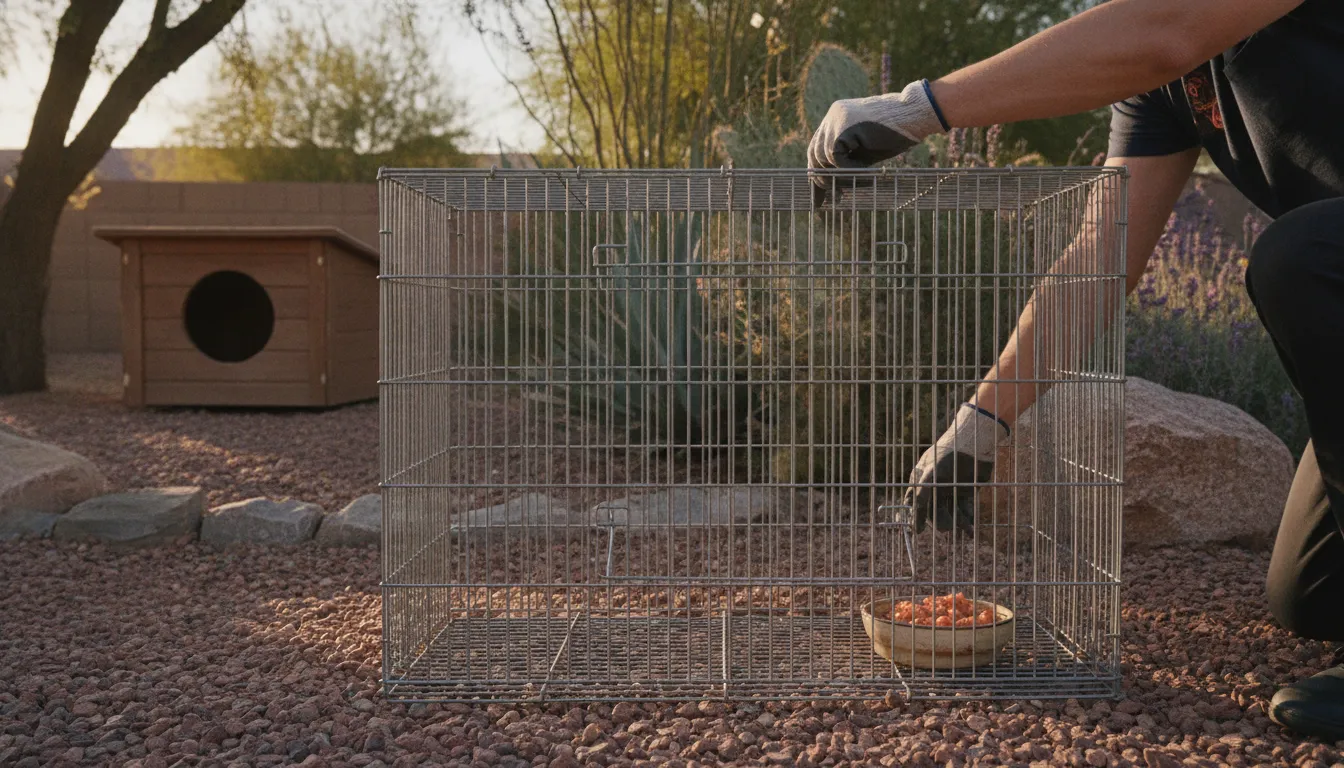
Prepare the trap before placing it. Line the floor with newspaper or cardboard to make it more comfortable for paws, and consider attaching a label with the discovery address or street. Use a quiet, mild-weather window when you can remain nearby. Have a carrier or transport plan, a secure vehicle space, and a blanket ready for the next step. San Jose's community-cat trapping guidance also stresses planning ahead and monitoring the equipment rather than leaving it unattended.
If temperatures, wildlife activity, traffic, or the cat's condition make the setup unsafe, wait and ask an appropriate veterinary, rescue, or animal-control contact for direction.
Which Humane Trap and Bait Should You Use?
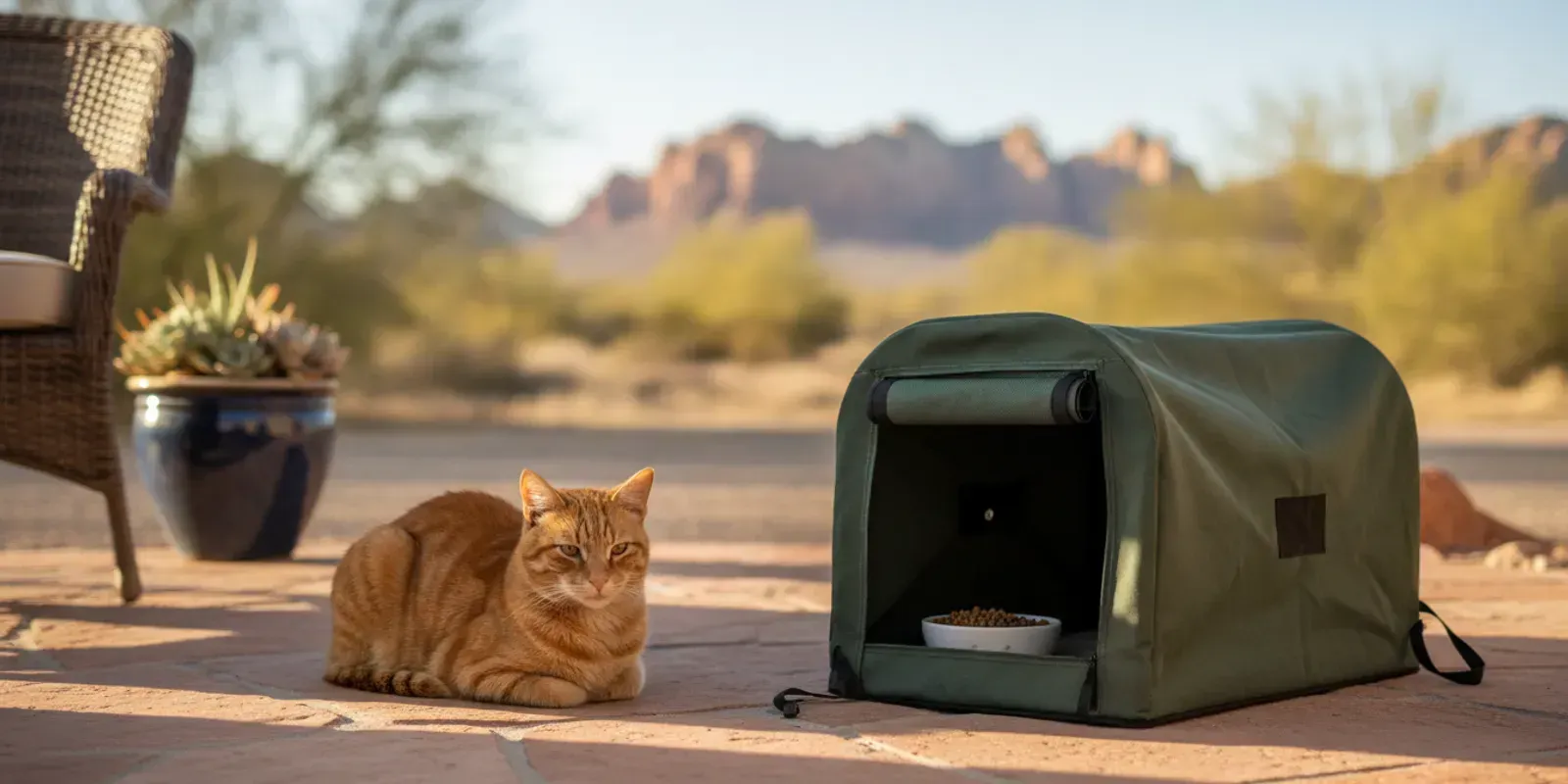
For most situations, choose a humane box trap designed for cats. It gives you a contained way to catch the animal without direct handling. Use bait that smells strong, place it at the far end of the trap, and avoid methods that can injure or panic a cat.
Options for safely catching a stray catMethodBest useRecommendationHumane box trapMost planned captures when you can monitor the trap and arrange the cat's next step.Recommended. Use a cat-sized humane trap on stable ground, with the bait at the back.Drop trap with experienced guidanceSituations where a knowledgeable rescue or trapping team has assessed the cat and setup.Use only with experienced guidance. Do not improvise the equipment or attempt a first capture without help.Direct hand captureNot a safe general method for an unfamiliar or feral cat.Not recommended. Never directly pick up a feral cat, even if it appears friendly.Improvised equipment, nets, darts, or tranquilizersNone. These methods can cause injury, stress, or unintended harm.Not recommended. Use only humane box traps; Alley Cat Allies specifically warns against nets, darts, and tranquilizer guns.
What bait works best?
Strong-smelling food such as tuna in oil or sardines can help draw a cat into the trap. Put the food at the very back so the cat must enter fully to reach it. A light trail of bait juice toward the entrance may help guide a hesitant cat, but keep the setup simple and avoid leaving extra food outside the trap.
County humane-trapping guidance also recommends using only humane traps and not handling a feral cat directly. If you need equipment for a careful outdoor capture plan, A1 offers humane cat-trap rentals; rental equipment does not replace a receiving, rescue, or veterinary plan.
Where Should You Place and Monitor the Trap?
Choose a location the cat already recognizes, ideally near its regular feeding area. Set the humane box trap on flat, stable ground so it will not rock, tip, or shift when the cat enters. A quiet, partially hidden spot can make a wary cat more comfortable approaching. San Jose Animal Care Services identifies a familiar eating area as the best placement when possible.
Keep the trap away from busy walkways, doors, sprinklers, and other places where people, dogs, or vehicles could create sudden noise. You should be close enough to observe it continuously from a safe position, but do not crowd the entrance or stand over the trap. If you set more than one, stagger them and face them in different directions. Count every trap before starting and keep track of where each one is located.
Check the weather before you begin. Do not trap in rain or the heat of the day unless each trap has adequate protection, such as reliable shade and shelter. Oklahoma State University's Operation Catnip guidance specifically warns against trapping in rain or daytime heat without protection. Avoid locations where runoff, direct sun, flooding, or falling debris could expose a confined cat to additional stress.
Wildlife and other animals may investigate the bait, so choose the site with local wildlife in mind. Most importantly, never leave a set trap unattended. San Jose's guidance warns that an unattended trap can be stolen, allow a cat to be harmed or injure itself, or capture wildlife. Stay ready to respond as soon as the door closes. Once a cat enters, approach calmly and follow your prepared after-capture plan rather than walking away and returning later.
For a planned trapping effort, coordinate the timing with whoever will receive the cat or provide veterinary care. Oklahoma State advises planning so the cat does not remain confined longer than necessary: Operation Catnip trapping guidance. The full no-unattended-trap instruction is also stated by San Jose Animal Care Services.
What Should You Do After the Cat Enters the Trap?
Expect the cat to be frightened and possibly struggle once the door closes. Do not open the trap to reassure it, reach through the bars, or attempt to move the cat into a carrier by hand. A frightened unfamiliar cat can scratch or bite, even when it seemed calm before capture.
Cover the trap and reduce stimulation
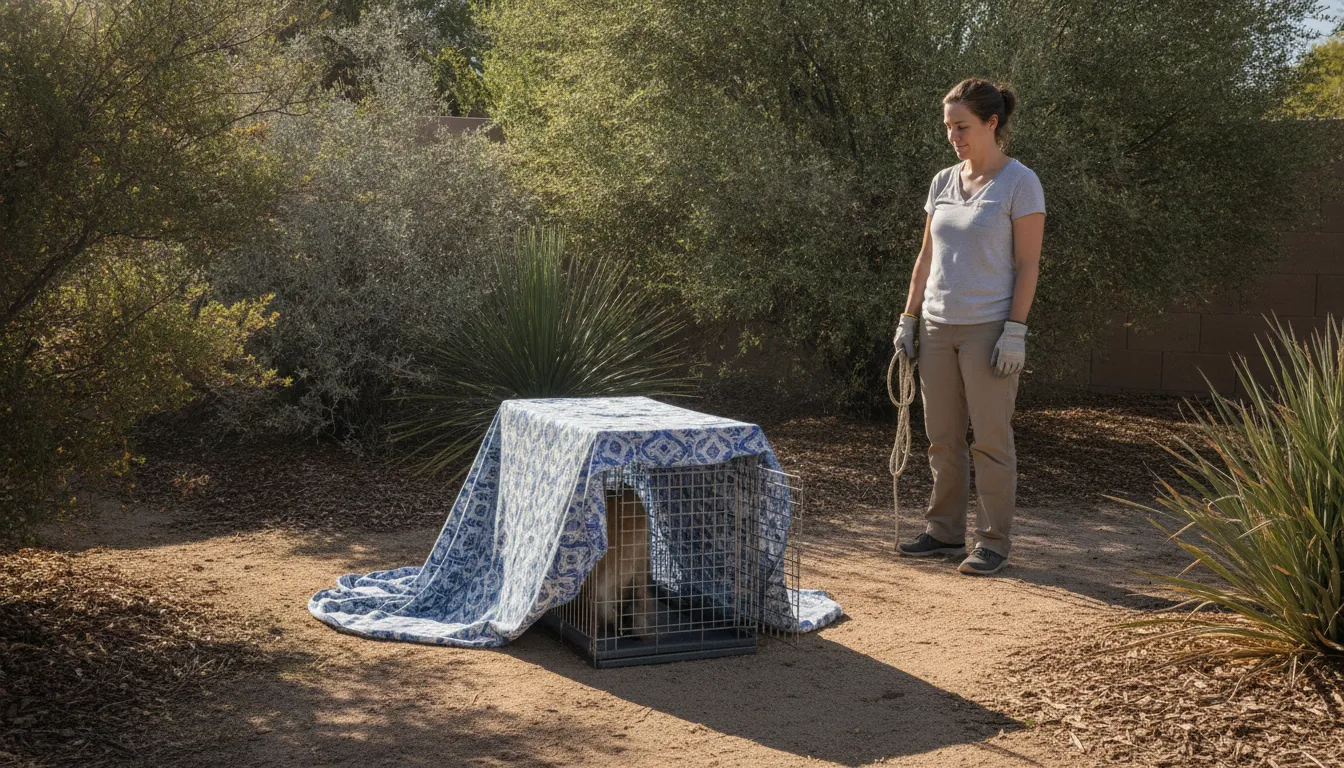
Place a towel or blanket over the entire trap as soon as it is safe to do so. Full coverage blocks visual activity and can help the cat feel more secure. San Jose animal-care guidance also recommends covering the trap immediately and moving it to a quiet area. Choose a sheltered location away from direct sun, wind, rain, loud activity, and other animals. Keep the trap level while moving it, and use caution because the cat may shift its weight or thrash.
Do not leave the trap unattended. Stay close enough to respond, and follow the receiving plan you arranged before capture. For a planned spay, neuter, or other veterinary appointment, trap as close to that appointment as practical. One county guidance source advises that cats should not remain confined in a trap for more than 48 hours; the shorter the holding time, the better. Keep the cat in the trap until the receiving provider gives different instructions. Do not release it in an unfamiliar location or transfer it by hand.
Protect yourself after handling the equipment
Wash your hands after handling the trap, blanket, food, or anything soiled around the capture area. The CDC notes that cats can carry harmful germs and that bites or scratches can spread germs even when a wound looks minor. If you are bitten or scratched, wash the area promptly with soap and water and contact a healthcare professional for advice. Especially if the wound is deep, painful, or becomes red or swollen. A1 Pet Maintenance rents equipment, but veterinary, rescue, and animal-control providers should handle medical or placement needs.
When Should You Pause and Ask for Help?
Knowing how to catch a stray cat also means knowing when not to continue alone. Pause the plan if the cat appears injured, seriously ill, unusually weak, or distressed. Do not try to hand-capture an unfamiliar cat. Contact a veterinarian, qualified rescue, shelter, or animal-control agency for guidance on the safest next step.
Get professional guidance for vulnerable cats
Kittens and lactating cats need extra care. A mother may be nearby even when kittens are not immediately visible, and separating them without a plan can put the litter at risk. Before trapping, ask a local rescue, shelter, or animal-care professional how to proceed. If your goal is TNR, coordinate the veterinary appointment before setting the trap. One county's humane-trapping guidance recommends trapping the day before surgery when possible and says cats should not remain confined for more than 48 hours: review the full trapping guidance.
Stop when conditions are unsafe
Do not set a trap if you cannot monitor it or if you have no safe receiving plan for the cat. Traps should never be left unattended, and a captured cat may thrash inside. If a cat is caught, cover the entire trap with a towel or blanket to help reduce stress, then follow the receiving organization's instructions. Avoid trapping during unsafe heat, cold, storms, or other weather that could expose the cat to harm. Wildlife in the trap is another reason to stop and contact the appropriate animal-care or animal-control agency instead of improvising.
A1 Pet Maintenance can provide equipment rental information, including Southern Nevada cat trap rental. A1 does not provide veterinary care, rescue, transport, animal control, or trap-and-release services, so arrange those resources before renting equipment.
How Can A1 Pet Maintenance Help With the Equipment?
Once you have a safe plan, a receiving arrangement, and a humane reason to trap, equipment rental may be a practical next step. A1 Pet Maintenance offers humane cat-trap rentals for customers in documented markets including Las Vegas, Henderson, Clark County, Tucson, and Pima County. The company has operated since 1998, but its role here is limited to providing equipment, not handling the cat or managing the entire rescue process.
You can review the Southern Nevada cat trap rental option before deciding whether it fits your situation. Ask about availability, rental terms, how to use the specific trap, and how it should be returned. Keep the trap in working condition and follow the rental provider's cleaning instructions when you return it.
A rental does not replace the parts of the plan that must come first. Before setting the trap, identify who will monitor it, confirm where the cat will go after capture. And arrange help from an appropriate veterinarian, rescue organization, shelter, or animal-control agency when the situation requires it. A1 does not provide veterinary, rescue, animal-control, transport, or trap-and-release services.
Community teams can also review Las Vegas TNR trapping guidance, humane trapping safety for HOAs, or humane cat trapping for homeowners for adjacent planning context. Those pages support the rental decision; this guide remains focused on safe capture steps.
For an HOA or property team, assigning one person to coordinate the equipment and another to monitor the trap can reduce confusion. For an individual homeowner, keep the plan just as clear: use only the humane box trap, never attempt hand capture, and do not leave it unattended.
Call A1 Pet Maintenance at (702) 521-2624 to ask about cat-trap rental equipment today.
Frequently Asked Questions
How can I tell if a stray cat is feral?
A feral cat is usually unsocialized and may avoid people, hide, hiss, or struggle when approached. A stray cat may be more comfortable near humans, but behavior can change when the cat is frightened. Treat any unfamiliar cat cautiously and use a humane box trap rather than relying on a quick visual judgment.
Is it cruel to trap a feral cat?
Humane trapping is not cruel when you use suitable equipment, monitor it closely, and have a clear plan for the cat afterward. Covering a captured cat and moving it to a quiet, secure location can reduce stress. Humane trapping is commonly used as part of community-cat care and TNR programs. County humane-trapping guidance supports using humane traps and careful handling.
Can I catch a stray cat without a trap?
Do not chase, corner, or try to grab an unfamiliar cat with your hands, a towel, or improvised equipment. Even a cat that appears friendly may bite or scratch when frightened. Use a purpose-built humane box trap, or ask an experienced rescue, animal-control agency, or veterinary professional what support is appropriate.
What should I do after the cat enters the trap?
Approach calmly, cover the entire trap with a towel or blanket, and move it to a quiet, temperature-controlled area. Do not open the trap or attempt a hand transfer. Follow the receiving clinic or rescue plan promptly, and wash your hands after handling the trap or materials.
What should I do if I find a stray cat?
First assess whether the cat appears injured, ill, very young, or connected to nursing kittens. Contact a veterinarian, shelter, rescue, or animal-control agency when professional help is needed. If trapping is appropriate, arrange where the cat will go before setting the trap, and never leave a set trap unattended.
Ready to Prepare for a Humane Cat Capture?
Having the right equipment can make a planned capture safer and more manageable for you, the cat, and anyone helping. Once you have confirmed your humane capture plan, call A1 Pet Maintenance at (702) 521-2624 for cat-trap rental information. A team member can help you take the next equipment-related step without turning the process into a rushed or improvised rescue attempt.