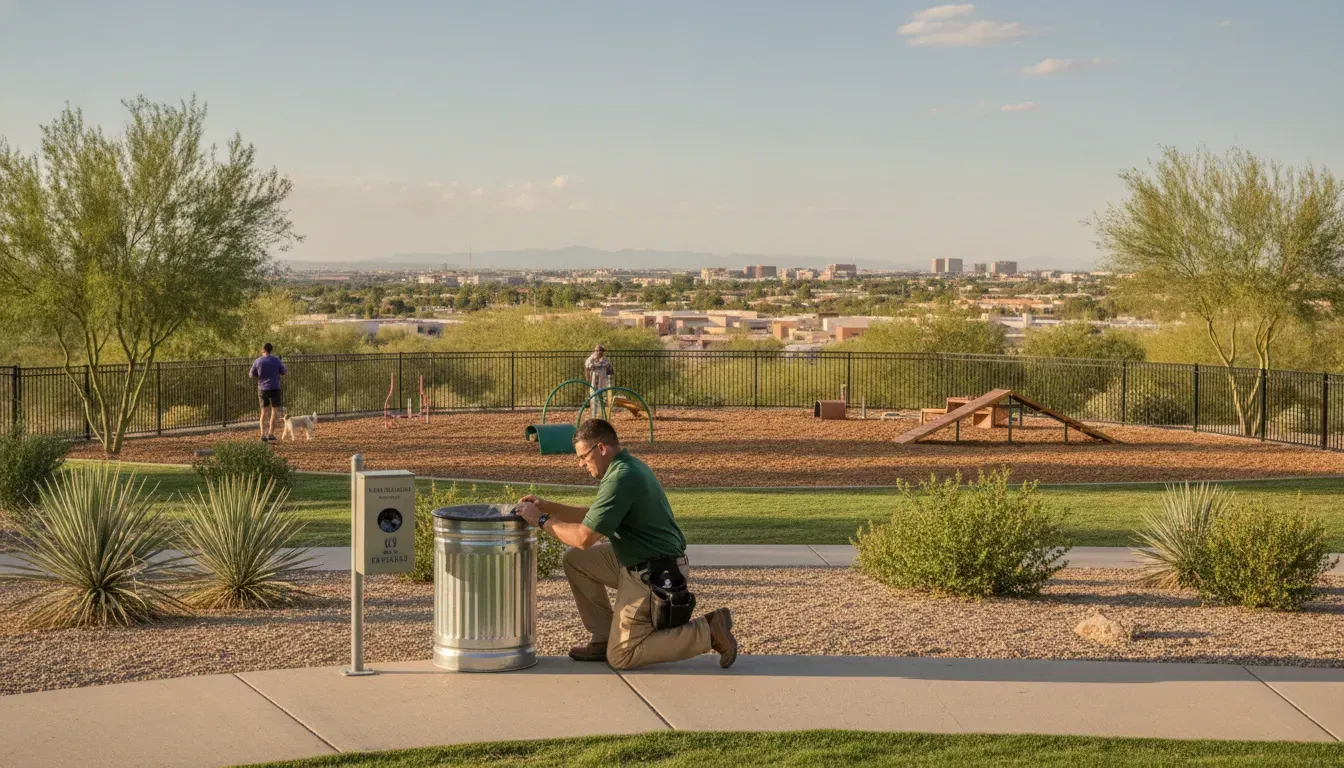
Cost of Pet Waste Removal for Mobile Home Parks
This is a subtitle for your new post

Budgeting pet waste service for a mobile-home park starts with the property, not a generic per-unit number. Shared lawns, pet-relief areas, waste stations, access conditions, and resident traffic can create very different workloads from one community to the next.
The cost of pet waste removal for mobile home parks is usually based on a custom commercial proposal that considers property size and layout. It also considers waste volume, service areas, access, desired frequency, and added cleanup or turf-care needs. Weekly, twice-weekly, or custom scheduling may all be appropriate, so a residential rate grid should not be used as the park budget.
A clear quote should make the recurring scope easy to compare, including what technicians inspect, collect, bag, haul, and dispose of on each service day. A1 has operated since 1998 and serves more than 400 properties weekly, bringing established route and scheduling experience to commercial proposals. Before comparing totals, look closely at what each service structure includes and how the scope matches your community.
What Does the Cost of Pet Waste Removal for Mobile Home Parks Include?
The cost of pet waste removal for mobile home parks is based on the work required across the property, not on a universal residential rate. A park may have shared lawns, pet relief areas, walking paths, waste stations, different access conditions, and varying levels of resident traffic. Those details affect the time, frequency, and service coverage needed to keep common areas maintained.
For that reason, commercial pricing is proposal-based. A property manager should expect the provider to review the park's layout, service zones, waste volume, access requirements, preferred schedule, and any additional cleanup needs before presenting terms. A residential price chart may be useful for understanding how a small private yard is serviced, but it should not be used as the budget for a mobile home park.
What does a commercial proposal typically account for?
A useful proposal should make the service scope clear enough for a manager to compare it with an operating budget. It may identify the areas included, the planned visit frequency, how technicians access the property, and what happens to collected waste after service. A1's documented process includes scheduled arrival, property access, inspection, collection, double-bagging, and hauling waste away for city sanitation disposal.
The proposal can also separate recurring maintenance from work that is requested only when needed. For example, an accumulated-waste cleanup may be evaluated according to current site conditions rather than folded into a standard recurring route. Artificial grass cleaning, deodorizing, or other specialized maintenance should likewise be identified separately and priced according to the property's needs.
How should managers plan the budget?
Start by mapping every area where residents and pets are likely to travel. Note the number of waste stations, access instructions, problem areas, and the service frequency the community can support. Ask whether the proposal uses predictable recurring billing and whether any additional fees or fuel surcharges apply. A1 states that its documented recurring service uses transparent monthly billing with no hidden fees or fuel surcharges. Commercial terms should still be confirmed in the property-specific proposal.
A1 has operated since 1998 and serves more than 400 properties weekly in Southern Nevada and Tucson. Managers can review commercial pet waste removal for property managers before requesting a site-specific proposal. The goal is not to find a generic number. It is to define the work clearly enough that the monthly budget reflects the actual park, its residents, and its shared spaces.
Which Service Structures Should Mobile Home Parks Compare?
The right comparison is not simply one provider's monthly total against another. First, define the service structure your community needs. A park may need a predictable recurring route, an initial cleanup that resets neglected areas, or a broader program that includes turf and related pet-waste work. Keeping these options separate makes a proposal easier to evaluate and helps prevent a one-time need from being confused with an ongoing operating cost.
Service structures to compare for a mobile home parkService structureBest fitWhat to clarify in the proposalRecurring scheduled serviceCommunities that need regular coverage of common areas, pet zones, or waste stations.Service days, covered areas, visit frequency, access procedures, collection and disposal responsibilities, and how completion is documented.One-time cleanupProperties with accumulated waste, a newly acquired service area, or a need to restore conditions before a recurring route begins.Areas included, current site conditions, removal and disposal process, preparation required from the property team, and whether recurring service is recommended afterward.Expanded scopeCommunities that want pet-waste removal coordinated with artificial-grass care or other defined sanitation needs.Which surfaces and zones are included, whether deodorizing or rinsing is needed, how often added work occurs, and which tasks are included in the custom proposal.
A recurring program is usually the planning foundation because it turns waste removal into a defined route rather than an occasional response. The service process should spell out the practical work: scheduled arrival, property access, inspection, collection, double-bagging, and hauling waste away for city sanitation disposal. Ask the provider to identify exactly which common areas and pet zones are covered so the community is not budgeting for a vague promise of general cleanup.
A one-time cleanup serves a different purpose. It addresses accumulated waste or a change in site conditions, and its scope depends on what the technician finds. A park considering this option can review A1's one-time cleanup before recurring service information, then request a property-specific proposal. Do not treat a one-time reset as a substitute for ongoing coverage where resident traffic and waste volume continue.
Expanded scope should also remain distinct in the comparison. Artificial-grass work may include waste removal, debris clearing, enzyme-based deodorizing, deep rinsing, agitation, or optional infill recommendations. Listing those tasks separately lets managers decide whether they belong in the core route, a periodic add-on, or a separate work order. Commercial pricing is custom, so the clearest comparison is the service delivered, the areas covered, and the operating terms, not an assumed universal rate.
What Factors Change a Mobile Home Park Pet Waste Quote?
A commercial pet waste quote is built around the work required at a specific property, not a standard residential rate. The most useful starting point is a clear site plan that shows the community footprint, shared areas, pet-friendly zones, waste stations, and any locations that need special attention. A1 uses custom proposals for commercial properties, so accurate site information helps the proposal reflect the actual service scope.
Property size, layout, and pet traffic
A larger property generally requires more walking, collection time, and route planning. Layout matters as well. A compact community with clearly defined pet areas may be simpler to service than a smaller property with scattered lawns, long paths, multiple entrances, or restricted sections. The number of residents with pets and the level of pet traffic also affect how quickly waste accumulates. Managers should identify common lawns, pet relief areas, dog-walk zones, and other locations where residents regularly take pets.
Waste volume is another practical variable. A quote should reflect expected collection conditions rather than relying only on the number of homes or units. A site with heavy traffic may need a different schedule or more service time than a similarly sized community with limited pet use.
Frequency, access, and disposal requirements
Visit frequency affects both the service plan and the amount of waste present at each visit. A1 structures regular service around scheduled weekly or twice-weekly visits, with custom schedules available. The right frequency depends on the property’s traffic, sanitation expectations, seasonality, and management priorities. Managers should also explain gate codes, access windows, locked areas, parking restrictions, and any escort or check-in requirements before the quote is prepared.
Service scope should make disposal responsibilities clear. A1’s documented process includes scheduled arrival, property access, inspection, collection, double-bagging, and hauling waste away for city sanitation disposal. These details matter because collection, bagging, hauling, and disposal are part of the work being planned, not incidental assumptions.
Route timing, communication, and route density
Fixed routes, geographic grouping, and consistent service days can support predictable recurring operations. Route density may improve scheduling efficiency when nearby properties can be served within the same service area. However, it is an operational consideration, not a promised discount. Any commercial rate, billing structure, or service-day commitment should be confirmed in the written proposal.
Finally, include communication needs in the quote discussion. The manager may need a defined service day, completion notes, a contact protocol, or special instructions for residents and onsite staff. Providing these details up front gives the provider a more accurate picture of the work and helps avoid changes after service begins. For a broader look at commercial pet waste removal for property managers, review the related service information.
What Should a Complete Park Service Scope Cover?
A useful commercial scope should make it clear what happens on each service day, which areas are included, and how collected waste is handled. That detail helps a property manager compare proposals accurately instead of comparing a low number for limited coverage with a higher number for a more complete program.
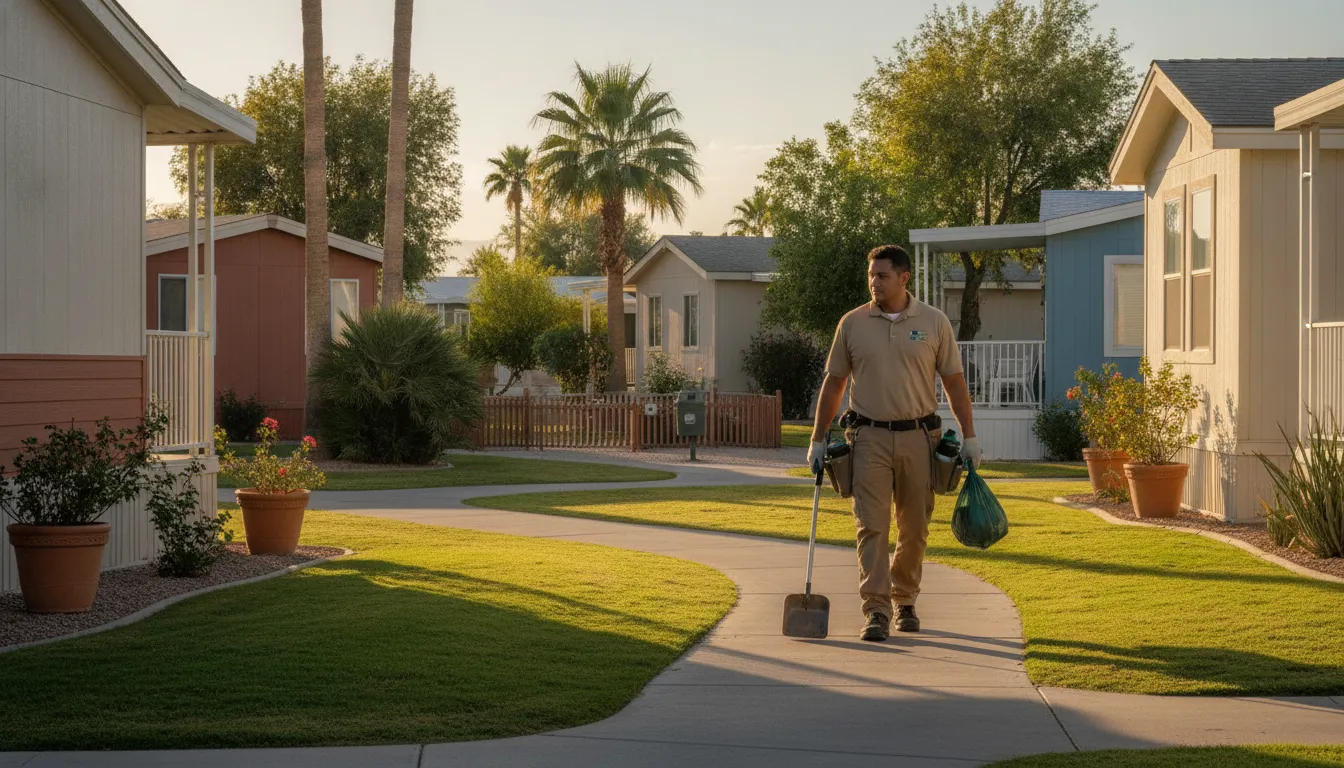
Start with access and a defined inspection area
Service begins with a scheduled arrival and an agreed method for accessing the property. The scope should identify the areas technicians will inspect, such as common lawns, pet-friendly zones, walking routes, relief areas, and other designated shared spaces. If the park has controlled gates, restricted areas, or changing access instructions, those details belong in the proposal.
A technician then walks the included areas and checks for pet waste. Clear boundaries matter. They prevent confusion about whether a particular greenbelt, perimeter, station area, or resident-facing common space is part of the recurring route. They also give the manager a practical way to confirm that the service matches the approved plan.
Specify collection, bagging, hauling, and disposal
The core scope should state that waste is collected during the inspection, double-bagged, and hauled away from the property for city sanitation disposal. These steps are part of A1's documented service process, rather than tasks left for onsite staff after the technician departs. They also make the proposal easier to evaluate because the manager can distinguish complete removal from a service that only identifies or bags waste.
If the park uses pet-waste stations, ask whether station areas and nearby common spaces are included in the route. Confirm how full containers, scattered waste, and high-traffic areas will be handled. The exact station maintenance responsibilities should be written into the commercial proposal so expectations are clear on both sides.
Separate optional turf and specialty work
Artificial grass may need more than ordinary waste pickup. Depending on the site, an expanded scope can include debris clearing, enzyme-based deodorizing, deep rinsing, agitation, and optional infill recommendations. This work is custom-priced and should be listed separately from the recurring collection route. Review A1's artificial grass cleaning and deodorizing service when turf areas are part of the park's maintenance plan.
Finally, the proposal should identify the service frequency, included zones, billing approach, and any one-time cleanup needed before recurring visits begin. A complete scope gives managers a dependable basis for comparing the cost of pet waste removal for mobile home parks without assuming that every property requires the same amount of work.
How Can Managers Compare Commercial Proposals?
The lowest-looking proposal is not always the easiest one to manage. For a mobile home park, compare what each provider will do, where the crew will work, how often service will occur, and what documentation your team will receive. A useful proposal should make the ongoing scope clear enough that managers can compare service rather than trying to compare incomplete price lines.
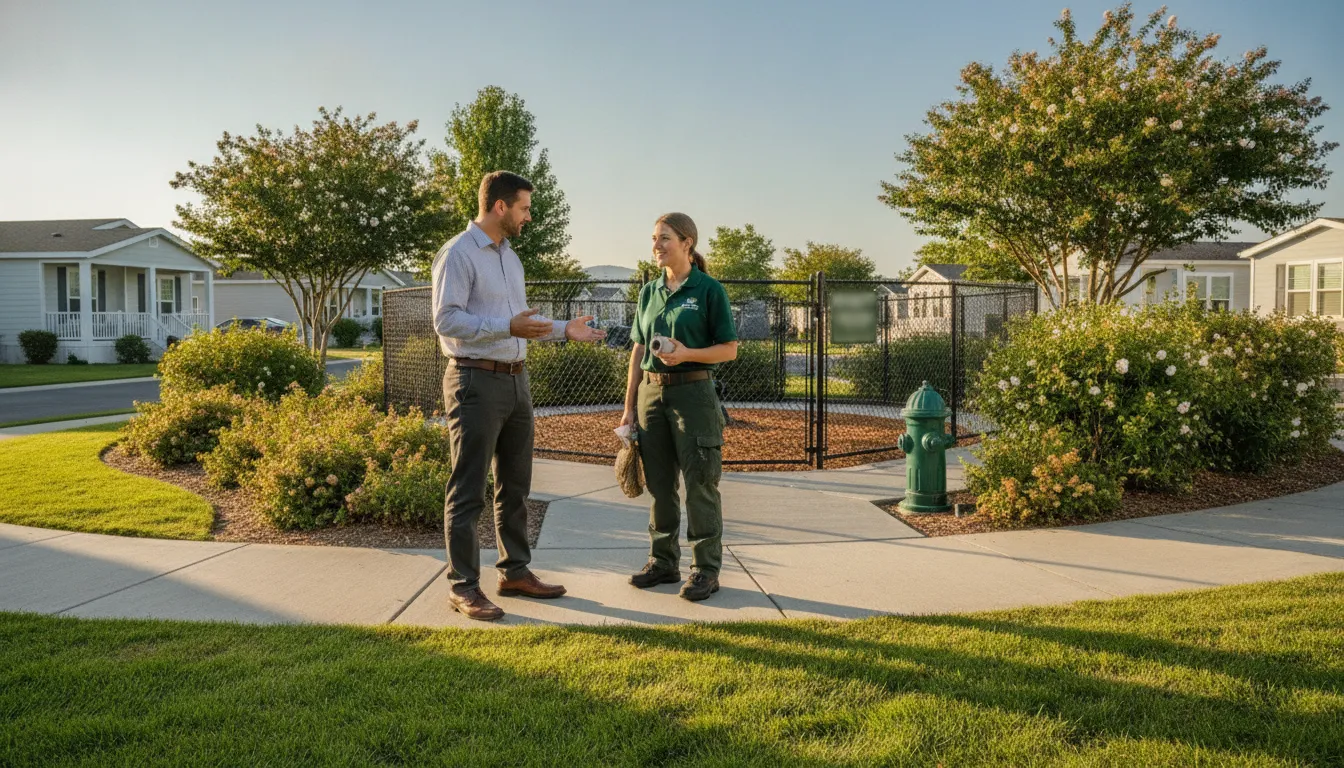
Start with the service map
Ask each provider to identify the areas included in the proposal. That may include common lawns, pet relief areas, walking routes, community edges, and waste stations. The proposal should also explain how the provider will handle access. Confirm whether gates, locked areas, resident coordination, or an onsite contact could affect the scheduled visit.
Next, check the service cadence. Is the plan weekly, twice weekly, or another schedule based on the park's conditions? Does the proposal identify regular service days, or does it leave frequency open? Fixed routes, geographic grouping, and consistent service days can support predictable recurring operations, so ask how the proposed schedule will be managed. The goal is not to demand a guarantee that every property operates identically. It is to make sure the schedule fits the volume and layout your team is responsible for.
Confirm what happens on each visit
A complete scope should describe the service-day workflow, not just say "pet waste removal." Look for language covering arrival, access, inspection, collection, bagging, and waste removal. Ask whether station servicing, bag refills, or trash removal are included or priced separately.
If artificial-grass cleaning, deodorizing, or an initial cleanup is needed, make sure it appears as a separate line with its own scope rather than being assumed.
Also compare communication and reporting. Will the property receive a completion note, service log, issue report, or other record? What should the manager do if an access problem or unusual accumulation is found? Clear answers reduce back-and-forth for onsite staff and create a practical record of recurring work.
Review provider qualifications and terms
Ask for current proof of insurance and confirm whether the provider is licensed for the work required in your market. A1 Pet Maintenance is licensed and insured, has served commercial properties for more than 26 years, and provides service to more than 400 properties weekly. Those operating details do not replace a property-specific review, but they can help managers evaluate experience alongside the proposed scope.
Finally, read the billing and cancellation terms carefully. Confirm whether billing is monthly, whether there are fuel or other added charges, how scope changes are approved, and what notice is required to pause or cancel service. For more planning context, review this property management dog-waste service guide. A proposal that answers these questions gives your team a clearer basis for comparing the cost of pet waste removal for mobile home parks.
How Can a Park Control Cost Without Cutting Service Quality?
Cost control starts with matching service effort to the way residents and pets use the property. A low frequency may look economical, but it can leave waste accumulating in high-traffic areas and create more work during each visit. A higher frequency may be appropriate for busy pet zones, while a custom schedule may fit quieter areas. A1 describes regular service around weekly or twice-weekly visits, with custom schedules available. Managers can discuss the pattern that fits the park rather than forcing every property into the same plan.
Set the frequency from actual traffic
Review where residents walk their dogs, where pets relieve themselves, and when those areas are busiest. Then identify the zones that need dependable recurring attention. This approach protects service quality because the schedule reflects observed use, not an arbitrary calendar. It also gives the provider useful information when preparing the commercial proposal. The cost of pet waste removal for mobile home parks depends on the scope and workload documented for that specific community.
Define service zones before requesting a quote
Use a site map or property walk to mark common lawns, pet-friendly zones, walking routes, relief areas, station locations, and any restricted spaces. Separating included zones from optional work prevents paying for coverage the park does not need, while avoiding vague boundaries that lead to missed expectations. Route-based programs can cover common areas, pet zones, and waste stations on a defined schedule. Fixed routes and geographic grouping also support predictable recurring operations, although route efficiency should not be treated as a guaranteed discount.
Handle accumulated waste before recurring service
If waste has built up, ask for a separate one-time cleanup before the regular route begins. A1 offers one-time cleanups for accumulated waste, with pricing based on site conditions. Keeping that initial correction separate from the recurring scope makes the ongoing plan easier to evaluate. Do not apply residential cleanup ranges to a commercial park quote.
Finally, document the service day, included zones, access instructions, frequency, collection and disposal expectations, billing terms, and the process for requesting added work. Clear documentation reduces repeat calls and helps onsite teams verify completion. The goal is not simply to select the lowest proposal. It is to build a schedule and scope that keep shared spaces consistently manageable without paying for undefined or unnecessary work.
Frequently Asked Questions
What affects the cost of pet waste removal for mobile home parks?
Commercial pricing depends on the park's size and layout, waste volume, number of pet areas, access conditions, service frequency, and any added cleanup or turf-care needs. Because these variables differ by property, a provider should prepare a custom proposal rather than apply a residential rate.
How often should a mobile home park schedule pet waste removal?
Many parks compare weekly and twice-weekly visits, while some properties need a different recurring schedule. The right frequency depends on resident and pet traffic, waste accumulation, shared-area use, and the standard managers want to maintain. A site review can help match frequency to actual conditions.
What should a recurring service visit include?
Confirm that the scope identifies the service zones, access process, inspection and collection work, bagging, hauling, disposal, and any waste-station responsibilities. A clearly written scope prevents assumptions about common areas, pet relief zones, stations, or optional artificial-grass cleaning.
Can a mobile home park schedule a one-time cleanup first?
Yes. A one-time cleanup can address accumulated waste before a recurring route begins. Its cost is based on site conditions and should not be confused with a residential cleanup range. Ask the provider to separate initial cleanup work from the ongoing commercial proposal.
Are contracts required for commercial pet waste removal?
Contract terms vary by provider and proposal. A1's standard recurring model does not require long-term contracts, but managers should confirm the commercial terms, billing schedule, service frequency, cancellation process, and any scope changes in writing before service starts.
Ready to Plan Your Park's Pet Waste Service?
A property-specific proposal can help you match service frequency and scope to your park's layout, shared spaces, and management goals. To request a custom commercial pet waste removal proposal for your mobile-home park, call A1 Pet Maintenance at (702) 521-2624 and speak with our team about your property.